Old Pottery Dog
Recent Sales
Vintage 1950s Japanese Showa Antiquities
Pottery
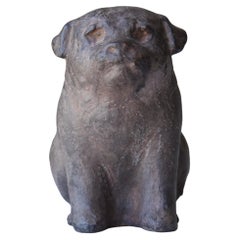

Early 20th Century Japanese Showa Ceramics
Pottery
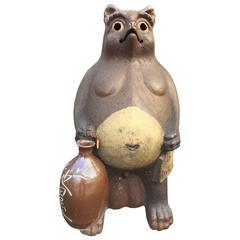
Finding the Right Asian-art-furniture for You
From Japanese handmade earthenware pottery, originating circa 14,500 B.C. and adorned with elaborate corded patterns known as jōmon, to natural elm case pieces and storage cabinets built in Qing dynasty–era China to mid-century Thai rice-paper charcoal rubbings, antique and vintage Asian art and furniture make for wonderful additions to all kinds of contemporary interiors.
Eastern elements elevate any home’s decor. Introduce zen sensibility to your living room, dining room and bedroom with the neutral color palettes and the natural materials such as rattan, bamboo and elm that we typically associate with traditional Asian furniture. Decorative handwoven embroideries and textiles originating from India and elsewhere on the continent, which can be draped over a bed or sofa or used as a wall hanging, can be as practical as they are functional, just as you wouldn’t seek out Japanese room-divider screens — often decorated with paintings but constructed to be lightweight and mobile — merely for privacy.
With everything from blanket chests to lighting fixtures to sculptures and carvings, it’s easy to tastefully bring serenity to your living space by looking to the treasures for which the East has long been known.
For British-born furniture designer Andrianna Shamaris, the Japanese concept of beauty in imperfection isn’t limited to her Wabi Sabi collection. She embraces it in her New York City apartment as well. In the living area, for instance, she retained the fireplace’s original black marble while swathing its frame and the rest of the room in bright white.
“We left the fireplace very clean and wabi-sabi, so that it blended into the wall,” says Shamaris, who further appointed the space with a hand-carved antique daybed whose plush pillows are upholstered in antique textiles from the Indonesian island of Sumba.
In the growing antique and vintage Asian art and furniture collection on 1stDibs, find ceramics from China, antiquities from Cambodia and a vast range of tables, seating, dining chairs and other items from Japan, India and other countries.
- How old is Meakin pottery?1 Answer1stDibs ExpertApril 5, 2022Meakin pottery was first made by J. G. Meakin, a pottery manufacturing company founded in England in 1851. In 1970, the company was taken over by the Wedgwood Group, and in 2000, Meakin pottery stopped being produced. Shop antique and vintage Meakin pottery from top sellers on 1stDibs.
- How old is Anasazi pottery?1 Answer1stDibs ExpertMay 5, 2023The earliest Anasazi pottery is more than 2000 years old, dating back to 200 CE. These pieces were produced out of clays sourced from floodplains or soil and contain large amounts of iron, giving the pottery a rich brown color. On 1stDibs, shop a range of Native American pottery.
- 1stDibs ExpertMay 5, 2023Pottery marked Germany is likely to have been produced between 1887 and 1949. A certified appraiser can help you determine the exact age of a particular piece. On 1stDibs, find a selection of Germany pottery from some of the world's top sellers.
- 1stDibs ExpertApril 5, 2022How old blue and white pottery is depends on its type. Asian blue and white pottery may date back all the way to the 14th century or be much newer. Delftware pottery came into production during the 16th century. Shop a large selection of blue and white pottery on 1stDibs.
- 1stDibs ExpertAugust 15, 2024To tell how old your Belleek pottery is, use the maker's mark, which appears on all genuine pieces made by the Irish manufacturer. Belleek has used many different markings over the years and has images of each one on its official website. By comparing the mark on your piece to these images, you can estimate its age. If you run into any difficulty, seek the help of a certified appraiser or other knowledgeable expert. On 1stDibs, shop a range of Belleek pottery.
- 1stDibs ExpertOctober 24, 2024To tell how old Hull pottery is, conduct research on your piece using trusted online resources. The maker's mark is a good starting point because, over the years, Hull used an array of marks. By cross-referencing the mark on your pottery with images found in online reference guides, you can get a rough idea of when it was produced. Some pieces also display a letter code that corresponds to its line. You can also search online catalogues to locate your piece and find its production year. Another approach is to have a certified appraiser or knowledgeable antique dealer date it for you. Shop a selection of Hull pottery on 1stDibs.
- 1stDibs ExpertOctober 24, 2024To tell how old Moorcroft pottery is, turn it upside down and look at the maker's mark. The wording, size and font of the marking can help you determine the rough age of a piece, as Moorcroft has changed its backstamps many times over the years. In 1990, Moorcroft also started adding a symbol called a cipher to its pottery. Each year has its own cipher, making it easy to determine the age of these newer pieces. For example, an arrow indicates a production year of 1990, while a pineapple stands for 2005. You can find a full listing of ciphers for each year and images of Moorcroft's various maker's marks on trusted online resources. Should you need any assistance with the dating process, enlist the help of a certified appraiser or experienced antique dealer. Explore a variety of Moorcroft pottery on 1stDibs.
- 1stDibs ExpertNovember 20, 2024To tell how old Roseville pottery is, use the maker's marks, which usually appear on the bottoms of pieces. Roseville has updated its markings frequently throughout its history and has used special marks to denote some lines. As a result, the marks are useful for dating pieces. You can find images of Roseville's historic marks on trusted online resources and compare them to what's on your piece to get a rough idea of its age. For example, a blue “RV” ink stamp usually means a manufacturing date somewhere between 1910 and 1928, while an incised “Roseville” mark typically corresponds to production years between 1936 and 1938. For assistance with dating your pottery, seek the help of a certified appraiser or knowledgeable antique dealer. On 1stDibs, shop a wide range of Roseville pottery.