Plywood Chair Jasper Morrison
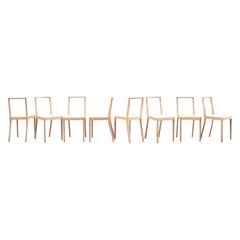
Early 2000s German Minimalist Chairs
Birch, Plywood

Recent Sales
21st Century and Contemporary Italian Modern Chairs
Foam, Beech, Plywood
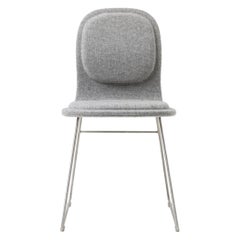


21st Century and Contemporary Italian Modern Chairs
Foam, Beech, Plywood
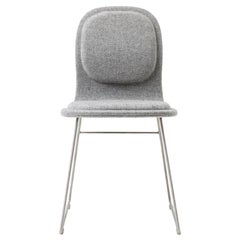
21st Century and Contemporary Italian Modern Chairs
Foam, Beech, Plywood
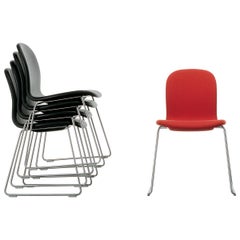


Early 2000s German Modern Chairs
Plywood, Birch
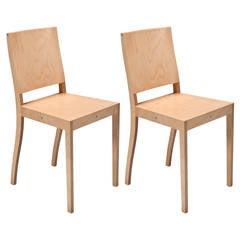
Early 2000s German Modern Chairs
Plywood
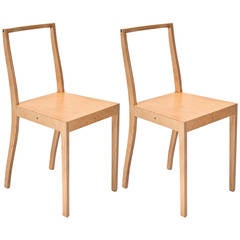
People Also Browsed
Vintage 1970s American Sofas
Velvet, Rattan
Late 20th Century American Modern Sofas
Linen
Antique 1860s Danish Neoclassical Chairs
Brass
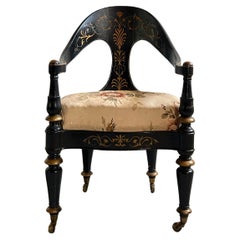
Vintage 1920s French Art Deco Armchairs
Mahogany
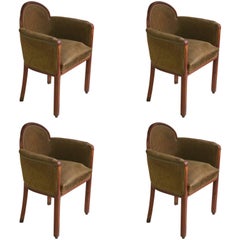
2010s British Art Deco Lounge Chairs
Alpaca, Beech
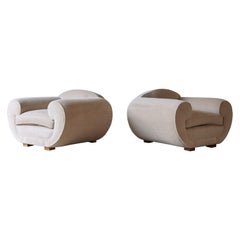
21st Century and Contemporary American Neoclassical Patio and Garden Fur...
Iron
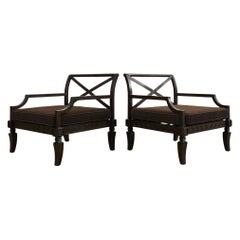
Vintage 1970s Italian Mid-Century Modern Coffee and Cocktail Tables
Wood
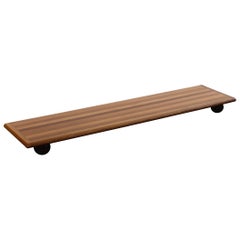
Vintage 1930s French Art Deco Bedroom Sets
Bronze
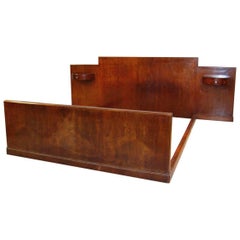
Vintage 1940s Armchairs
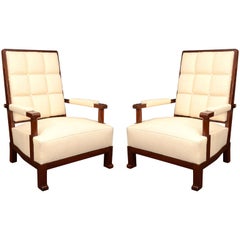
Antique Early 19th Century English Regency Armchairs
Wood
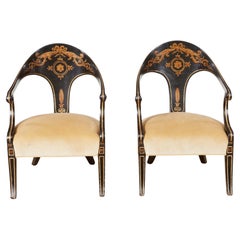
Vintage 1980s Italian Chairs
Metal
Antique 1820s English Console Tables
Marble
Mid-20th Century French Art Deco Dining Room Tables
Granite, Wrought Iron
Vintage 1930s Italian Art Deco Slipper Chairs
Vintage 1970s Italian Space Age Table Lamps
Ceramic
Vintage 1970s Brazilian Mid-Century Modern Stools
Pine
Plywood Chair Jasper Morrison For Sale on 1stDibs
How Much is a Plywood Chair Jasper Morrison?
Jasper Morrison for sale on 1stDibs
For all the people who think designer objects need to make bold statements with attention-grabbing forms and materials, the revered British designer Jasper Morrison has a message: The quieter objects are often the better products.
Some of Morrison’s earliest creations, such as the 1986 Thinking Man’s chair, with its snaking tubular steel armrests, and the 1991 3 sofa deluxe, whose sculpted seat resembles an enormous wave (both produced by the Italian manufacturer Cappellini, one of the planet's preeminent producers of cutting-edge home decor), display the eye-catching moves that were expected among his contemporaries.
At the same, Morrison was clearly searching for a different language. In 1988, just three years after he graduated from London’s Royal College of Art, he stunned many in the design world with “Some New Items for the Home,” an exhibition in Berlin featuring simple plywood furniture he had designed and made himself as a direct rebuke to the over-the-top colors and geometries of the Memphis movement. As Morrison increasingly came to see statement-making design as flawed and wasteful, he began producing the subtler objects that eventually became his greatest hits and inspired a new generation of designers.
Morrison’s Glo-Ball lamps for FLOS, for instance, feature opalescent blown-glass diffusers that resemble ever-so-slightly squished spheres with a striking visual softness. Designed in 1998, the pieces were instantly popular and have remained a best seller for the legendary Italian lighting maker. Morrison’s Cork Family stools for Vitra, designed in 2004, have proved similarly timeless, with simple silhouettes reminiscent of thread spools whose unexpected material — solid cork — makes them particularly alluring.
By 2005, Morrison had befriended another designer working in a similar manner — Japan’s Naoto Fukasawa. That year, Fukasawa introduced his Déjà-vu stool for Magis at the Salone del Mobile in Milan and was dismayed when fairgoers barely noticed it. Crestfallen, Fukasawa talked to Morrison, who saw the scenario differently: The fact that people instinctively used the stool meant that it was successful. To cheer up Fukasawa, Morrison described his design as “super normal.” Morrison and Fukasawa latched onto this phrase as an ideal term for what they were up to.
Launched in 2006, Morrison and Fukasawa’s “Super Normal” — a traveling exhibition and a book that served as a visual manifesto — documented more than 200 utilitarian yet beautiful objects, ranging from a paper clip, a plastic bucket and a ballpoint pen to an Alessi citrus basket, Vitsoe’s 606 universal shelving system by Dieter Rams and Vitra’s Joyn office system by Ronan and Erwan Bouroullec. That same year, Morrison began playing with extreme simplicity and introduced the Crate, a wooden bedside table for Established Sons that was modeled on an old wine crate he used for his own bedside table.
Today, Morrison delights in finding the correct balance in his designs, turning out products that seem appealingly natural and precisely what they should be.
Find Jasper Morrison chairs, lighting, stools and other furniture for sale on 1stDibs.
A Close Look at Modern Furniture
The late 19th and early 20th centuries saw sweeping social change and major scientific advances — both of which contributed to a new aesthetic: modernism. Rejecting the rigidity of Victorian artistic conventions, modernists sought a new means of expression. References to the natural world and ornate classical embellishments gave way to the sleek simplicity of the Machine Age. Architect Philip Johnson characterized the hallmarks of modernism as “machine-like simplicity, smoothness or surface [and] avoidance of ornament.”
Early practitioners of modernist design include the De Stijl (“The Style”) group, founded in the Netherlands in 1917, and the Bauhaus School, founded two years later in Germany.
Followers of both groups produced sleek, spare designs — many of which became icons of daily life in the 20th century. The modernists rejected both natural and historical references and relied primarily on industrial materials such as metal, glass, plywood, and, later, plastics. While Bauhaus principals Marcel Breuer and Ludwig Mies van der Rohe created furniture from mass-produced, chrome-plated steel, American visionaries like Charles and Ray Eames worked in materials as novel as molded plywood and fiberglass. Today, Breuer’s Wassily chair, Mies van der Rohe’s Barcelona chair — crafted with his romantic partner, designer Lilly Reich — and the Eames lounge chair are emblems of progressive design and vintage originals are prized cornerstones of collections.
It’s difficult to overstate the influence that modernism continues to wield over designers and architects — and equally difficult to overstate how revolutionary it was when it first appeared a century ago. But because modernist furniture designs are so simple, they can blend in seamlessly with just about any type of décor. Don’t overlook them.
Finding the Right Chairs for You
Chairs are an indispensable component of your home and office. Can you imagine your life without the vintage, new or antique chairs you love?
With the exception of rocking chairs, the majority of the seating in our homes today — Windsor chairs, chaise longues, wingback chairs — originated in either England or France. Art Nouveau chairs, the style of which also originated in those regions, embraced the inherent magnificence of the natural world with decorative flourishes and refined designs that blended both curved and geometric contour lines. While craftsmanship and styles have evolved in the past century, chairs have had a singular significance in our lives, no matter what your favorite chair looks like.
“The chair is the piece of furniture that is closest to human beings,” said Hans Wegner. The revered Danish cabinetmaker and furniture designer was prolific, having designed nearly 500 chairs over the course of his lifetime. His beloved designs include the Wishbone chair, the wingback Papa Bear chair and many more.
Other designers of Scandinavian modernist chairs introduced new dynamics to this staple with sculptural flowing lines, curvaceous shapes and efficient functionality. The Paimio armchair, Swan chair and Panton chair are vintage works of Finnish and Danish seating that left an indelible mark on the history of good furniture design.
“What works good is better than what looks good, because what works good lasts,” said Ray Eames.
Visionary polymaths Ray and Charles Eames experimented with bent plywood and fiberglass with the goal of producing affordable furniture for a mass market. Like other celebrated mid-century modern furniture designers of elegant low-profile furnishings — among them Ludwig Mies van der Rohe and Finn Juhl — the Eameses considered ergonomic support, durability and cost, all of which should be top of mind when shopping for the perfect chair. The mid-century years yielded many popular chairs.
The Eameses introduced numerous icons for manufacturer Herman Miller, such as the Eames lounge chair and ottoman, molded plywood dining chairs the DCM and DCW (which can be artfully mismatched around your dining table) and a wealth of other treasured pieces for the home and office.
A good chair anchors us to a place and can become an object of timeless appeal. Take a seat and browse the rich variety of vintage, new and antique chairs on 1stDibs today.