R Way Furniture Neoclassical
Recent Sales
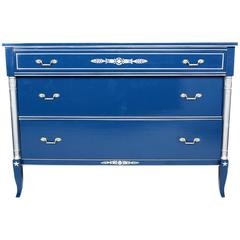
Vintage 1950s American Neoclassical Dressers
Nickel

A Close Look at Neoclassical Furniture
Neoclassical design emerged in Europe in the 1750s, as the Age of Enlightenment reached full flower. Neoclassical furniture took its cues from the styles of ancient Rome and Athens: symmetrical, ordered, dignified forms with such details as tapered and fluted chair and table legs, backrest finials and scrolled arms.
Over a period of some 20 years, first in France and later in Britain, neoclassical design — also known as Louis XVI, or Louis Seize — would supersede the lithe and curvaceous Rococo or Louis XV style.
The first half of the 18th century had seen a rebirth of interest in classical antiquity. The "Grand Tour" of Europe, codified as a part of the proper education of a patrician gentleman, included an extended visit to Rome. Some ventured further, to sketch the ruins of ancient Greece. These drawings and others — particularly those derived from the surprising and rich archaeological discoveries in the 1730s and ’40s at the sites of the Roman cities of Pompeii and Herculaneum — caused great excitement among intellectuals and aesthetes alike.
Neoclassical furniture is meant to reflect both grace and power. The overall appearance of neoclassical chairs, tables and cabinetry is strong and rectilinear. These pieces are, in effect, classical architecture in miniature: chair and table legs are shaped like columns; cabinets are constructed with elements that mirror friezes and pediments.
Yet neoclassicism is enlivened by gilt and silver leaf, marquetry, and carved and applied ornamental motifs based on Greek and Roman sculpture: acanthus leaves, garlands, laurel wreaths, sheaves of arrow, medallions and chair splats are carved in the shapes of lyres and urns. Ormolu — or elaborate bronze gilding — was essential to French design in the 18th and 19th centuries as a cornerstone of the neoclassical and Empire styles.
As you can see from the furniture on these pages, there is a bit of whimsy in such stately pieces — a touch of lightness that will always keep neoclassicism fresh.
Find antique neoclassical furniture today on 1stDibs.
Finding the Right Dressers for You
Antique, new and vintage dressers are a staple in any household. Whether it’s a 19th-century solid pine or oak Welsh kitchen dresser you’re using to store tableware or a Broyhill Brasilia highboy in your bedroom, these furniture fixtures are essential for making the most of your space.
The first step in finding the perfect dresser is considering your particular needs. Most tall dressers offer anywhere from five to seven drawers, essentially allowing for the organization of an entire wardrobe, while shorter, waist-height dresser varieties can be equipped with a convenient vanity mirror.
A highboy dresser is usually around six feet tall, with some versions standing even taller at seven feet or so. Highboys, which began to appear with frequency during the early 17th century in England, are essentially very tall dressers with lots of drawers, whereas a lowboy is a different type of storage furniture in that it's a dressing table with one or two rows of drawers.
When shopping for your antique or vintage dresser, consider those that bear the hallmarks of solid construction. Good furniture means making an investment, and solid hardwood pieces of maple, walnut or cherry will prove far more durable than a bedroom dresser made of particleboard.
If you’re looking for a mid-century modern case piece that boasts a subdued pairing of wood grains and uncomplicated drawer pulls, browse elegant dressers designed by Florence Knoll, Harvey Probber, Paul McCobb and other furniture makers associated with the celebrated style on 1stDibs.
Dressers characterized by bolder designs are also popular: Not only will your new piece of furniture be a storage solution, but it'll also make a statement.
Art Deco furniture makers preferred to work with dark woods and typically incorporated decorative embellishments. An ornately carved French or Italian Art Deco dresser complete with vanity mirror and cabriole scrolled feet might better complement the other pieces in your home. Alternatively, if you favor sumptuous antique furniture with curving lines and floral flourishes, the collection on 1stDibs also includes sophisticated 1800s-era Victorian walnut dressers and washstands with marble tops.
After all, a good case piece isn’t merely for minimizing clutter in your space. The style of your chosen dresser and its specific attributes should add something to your decor and your home. Modern creations include one-of-a-kind shapes, like the venturesome chests of drawers in leather, marble and wood crafted by the likes of Roberto Cavalli.
Explore a broad array of antique and vintage dressers today on 1stDibs.
- 1stDibs ExpertNovember 13, 2024To identify early American furniture, you can evaluate your piece on your own or seek the opinion of a certified appraiser or experienced antique dealer. Although many pieces from the Colonial era are unmarked, double-checking your furniture for signatures, stamps and labels is still a good first step. Using trusted online resources, you can research any markings to determine if the maker was active in America during the 16th and early 17th centuries. When identifying unmarked furniture, it's generally necessary to consider the style and details of the piece. Due to its handcrafted origins, early American furniture tends to have visible tool marks and irregularities in its carvings. Early American furnishings tended to be simple in style but often had one or two refined details, such as cabriole legs. Looking at images of authentic early American furniture can be helpful when making an identification. On 1stDibs, find a collection of 18th-century American furniture.