Rampant Lion Pendant
Recent Sales
21st Century and Contemporary American Contemporary Pendant Necklaces
Lapis Lazuli, 18k Gold
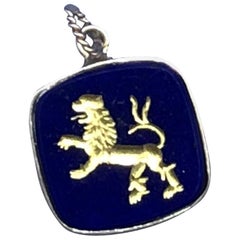
Rampant Lion Pendant For Sale on 1stDibs
How Much is a Rampant Lion Pendant?
A Close Look at Contemporary Jewelry
Contemporary jewelry is inextricably linked with the moment in which it is created, frequently reflecting current social, cultural and political issues such as environmental consciousness, identity and sustainability. It’s informed by fashion trends, from the chokers of the 1990s to the large chain necklaces of the early 2000s.
Jewelry is one of the oldest forms of adornment. Lockets made of silver or gold have been treasured gifts for hundreds of years, for example, and charm bracelets, which have existed since prehistoric times, didn’t become especially popular until the 19th-century reign of Queen Victoria. For many centuries, fine jewelry was used primarily to express wealth or status through lavish materials. Then, in the 1960s, a concept known as the “critique of preciousness” emerged, with jewelers creating pieces that did not get their value from gemstones or precious metals. Instead, it was the jeweler’s artistic vision that was prized and elevated.
This shift still informs Contemporary jewelry being made by artists today. Whether they are using cheap, found materials and working with provocative geometric shapes or seeking out the rarest stones, they are imbuing their work with meaning through their skills, techniques and ideas. Innovative designers such as Elsa Peretti, who popularized sculptural sterling-silver jewelry for Tiffany Co., and David Yurman, who twisted metal into the simple yet striking Cable bracelet, have also influenced the direction of Contemporary jewelry’s forms and aesthetics.
Meanwhile, technological advancements like metal alloys and laser engraving have led to new possibilities in jewelry design. Now, edgy makers and brands as well as minimalist designers are pushing Contemporary jewelry forward into the 21st century.
Find a collection of Contemporary rings, earrings, necklaces and other jewelry on 1stDibs.
Finding the Right Pendant-necklaces for You
Whether you’re layering multiple jewelry pieces or opting for a single strand, vintage pendant necklaces are versatile accessories that can elevate your casual wear as easily as they can add a creative flourish to your formal attire.
The earliest jewelry was less about accessorizing than it was about wearers arming themselves with amulets. In Ancient Egypt, some amulets featured a loop so that they could be strung around one’s neck. While rubies have long been one of the few gemstones that can give diamonds a run for their money, members of some ancient civilizations valued the stones from the get-go, donning ruby pendants as well as other stones with the belief that these adornments would bring protection, healing powers or strength. Today, we still wear our charm bracelets and charm pendants around our necks for good luck.
Later, pendant necklaces, like most fine jewelry, were worn strictly by royalty or the upper class and conferred wealth and prestige. This changed over time, thankfully, as wearing jewelry became more widespread, a democratized means of personal expression.
During the 18th and 19th centuries, pendant necklaces evolved from their status as spiritual amulets, but the jewels still carried deep personal significance. Victorian pendants, in particular, were part of the “mourning jewelry” tradition. Wearers would embed their pendants with locks of hair from a deceased loved one as a way of grieving in the wake of a loss. In the case of cameo jewelry, some pendants were even decorated with miniature hand-carved portraits in a detailed raised relief. Today, portraiture is still a characteristic of many of the hand-carved pendant necklaces offered by Italian jewelry house Scala Gioielli.
Luxury fine jewelry brands such as Cartier, BVLGARI and David Yurman offer their own unique interpretations of the cherished accessory, embellishing platinum or gold pendant necklaces with diamonds, sapphires and other stones.
On 1stDibs, find an extraordinary range of vintage pendant necklaces and other necklaces today.