Rattan Bistro Counter Stool
Recent Sales
Mid-20th Century Bohemian Stools
Bamboo, Rattan
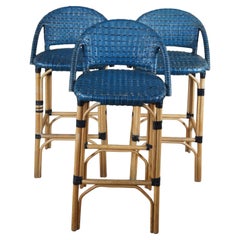

Rattan Bistro Counter Stool For Sale on 1stDibs
How Much is a Rattan Bistro Counter Stool?
A Close Look at Bohemian Furniture
Defying design conventions and embracing all tastes, Bohemian style, or Boho style, is eclectic, bold and, above all, individual. Vintage Bohemian-style furniture and decor feature bright colors, natural materials and a global spirit, ranging from statement pieces such as peacock chairs constructed with wicker and handmade art-glass vases to jewel-toned plush seating like turquoise sofas.
Although Bohemian furniture is not rooted in a specific time and can include Victorian lamps alongside Space Age chairs, its name dates back to the 19th century. Its exact origins are unclear, with some sources linking it to a counterculture formed in the wake of the French Revolution and others to a pejorative for the Romani people in France who were erroneously believed to be from Bohemia, which was part of what is now the Czech Republic.
By the 1850s, “bohemian” was used to describe someone who led an itinerant life, usually an artist, actor or author. This helped shift the term from disparaging to something romantic and evoking creativity, culture and travel. In the 20th century, to be a bohemian was fashionable, and the celebration of free expression in the 1960s gave the Bohemian style a hippie flair. It has remained popular over the years, especially with younger generations seeking to express their personality and individual perspective through furniture, folk art, antiques and other collectibles.
A Bohemian interior exuberantly mixes textures and patterns, particularly through textiles from around the world in tapestries, rugs and upholstery. Bohemian decor can include Japanese shibori, Indonesian ikat and Kazakhstani suzani prints mingling with Moroccan lanterns, Turkish carpets and wall hangings from India. Saturated earthy colors like burnt orange and marigold yellow are common to bring together the mix of vintage, modern and global design.
Find a collection of vintage Bohemian tables, mirrors, rugs and carpets, decorative objects and more furniture on 1stDibs.
Materials: Bamboo Furniture
Bamboo — the reed-like, woody grass revered the world over for its attractiveness, durability and unbeatable versatility — has a purity and elegance that Ming Dynasty dignitaries, European royals and workaday folks alike have appreciated for centuries. Antique and vintage bamboo furniture can help introduce an air of relaxation in any space, and pairs well with chinoiserie decor and a range of porcelain decorative objects.
So why is bamboo — in its many forms — so enduringly popular? The grass itself is classic-looking and pleasingly geometric, and it evokes a subtle exoticism that’s both glamorous and (due in large part to its sustainability) highly attainable.
Bamboo is harder than mahogany. It’s a rigid and hollow reed, and as such it is not rattan, which is dense, steamable and bendable, and has become its own ultimate decorative-arts chameleon over the years. But like rattan, bamboo is an organic material that provides a link to nature, helping us to bring a bit of the outside in, in an elegant yet no-frills way that seems comforting and familiar. Plus, bamboo’s lightness and slight irregularities make it the perfect counterpoint to heavy-feeling interiors.
For organic modern interiors — or any space that would benefit from a dose of the natural world — a variety of vintage bamboo outdoor furniture, side tables, dining chairs and more can be found on 1stDibs.
Finding the Right Chairs for You
Chairs are an indispensable component of your home and office. Can you imagine your life without the vintage, new or antique chairs you love?
With the exception of rocking chairs, the majority of the seating in our homes today — Windsor chairs, chaise longues, wingback chairs — originated in either England or France. Art Nouveau chairs, the style of which also originated in those regions, embraced the inherent magnificence of the natural world with decorative flourishes and refined designs that blended both curved and geometric contour lines. While craftsmanship and styles have evolved in the past century, chairs have had a singular significance in our lives, no matter what your favorite chair looks like.
“The chair is the piece of furniture that is closest to human beings,” said Hans Wegner. The revered Danish cabinetmaker and furniture designer was prolific, having designed nearly 500 chairs over the course of his lifetime. His beloved designs include the Wishbone chair, the wingback Papa Bear chair and many more.
Other designers of Scandinavian modernist chairs introduced new dynamics to this staple with sculptural flowing lines, curvaceous shapes and efficient functionality. The Paimio armchair, Swan chair and Panton chair are vintage works of Finnish and Danish seating that left an indelible mark on the history of good furniture design.
“What works good is better than what looks good, because what works good lasts,” said Ray Eames.
Visionary polymaths Ray and Charles Eames experimented with bent plywood and fiberglass with the goal of producing affordable furniture for a mass market. Like other celebrated mid-century modern furniture designers of elegant low-profile furnishings — among them Ludwig Mies van der Rohe and Finn Juhl — the Eameses considered ergonomic support, durability and cost, all of which should be top of mind when shopping for the perfect chair. The mid-century years yielded many popular chairs.
The Eameses introduced numerous icons for manufacturer Herman Miller, such as the Eames lounge chair and ottoman, molded plywood dining chairs the DCM and DCW (which can be artfully mismatched around your dining table) and a wealth of other treasured pieces for the home and office.
A good chair anchors us to a place and can become an object of timeless appeal. Take a seat and browse the rich variety of vintage, new and antique chairs on 1stDibs today.