Robot Bar Cart
Vintage 1970s Italian Minimalist Carts and Bar Carts
Metal

People Also Browsed
Vintage 1970s Art Deco Carts and Bar Carts
Late 20th Century French Mid-Century Modern Wardrobes and Armoires
Glass, Wood, Oak
Vintage 1960s American Mid-Century Modern Dining Room Sets
Metal
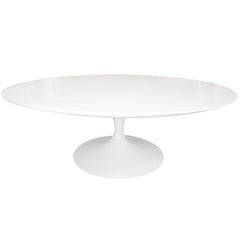
Vintage 1960s American Mid-Century Modern Coffee and Cocktail Tables
Metal
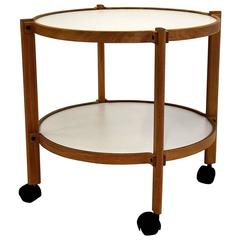
Vintage 1980s Danish Mid-Century Modern Carts and Bar Carts
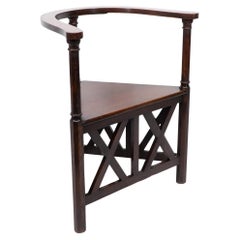
Antique Late 19th Century Vienna Secession Corner Chairs
Oak
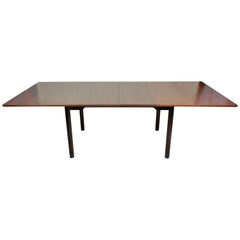
Vintage 1950s American Mid-Century Modern Dining Room Tables
Leather, Walnut
Vintage 1940s American Mid-Century Modern Sculptures
Plaster
21st Century and Contemporary Italian Modern Wall Mirrors
Leather, Mirror
Vintage 1960s Danish Scandinavian Modern Side Tables
Pine
Mid-20th Century Brazilian Mid-Century Modern Coffee and Cocktail Tables
Jacaranda
20th Century Italian Modern Wall Lights and Sconces
Aluminum
Vintage 1950s Italian Mid-Century Modern Coffee and Cocktail Tables
Metal
20th Century French Desks
Metal
Vintage 1950s American Mid-Century Modern Serving Bowls
Brass

20th Century American Coffee and Cocktail Tables
Stainless Steel
Bruno Munari for sale on 1stDibs
A Close Look at Minimalist Furniture
A revival in the popularity of authentic Minimalist furniture is rooted in history while reflecting the needs and tastes of the 21st century. Designer Ludwig Mies van der Rohe’s aphorism that “less is more” influenced the evolution of 20th-century interiors with an emphasis on function and order. This was a shift from the 19th century, with its lavish Victorian decorating, and was spread around the world through design styles including Bauhaus and brutalism.
Yet Minimalism was present in furniture design long before the clean lines of modernism, such as in the simple and elegant utility of Shaker furniture. Although the Minimalist art movement of the 1960s and ’70s had little crossover with furniture design, artist Donald Judd was inspired by the Shakers in creating his own spare daybeds and tables from sturdy wood. (Judd, whose advocacy of symmetry also informed his architectural projects, furnished his Manhattan loft with unassuming but poetic works by iconic modernist designers such as Gerrit Rietveld and Alvar Aalto.)
Understatement rather than ornamentation and open space instead of clutter are central themes for a Minimalist living room and bedroom. As opposed to Maximalism, the focus for Minimalist furniture and decor is on simplicity and considering the design and purpose of every object.
Furnishings are usually made in neutral or monochrome colors and pared down to their essentials — think nesting coffee tables, sectional sofas and accent pieces such as ottomans. And Minimalist ceramics can help achieve a decor that is both timeless and of the moment. The organic textures and personalization of handmade craftsmanship associated with these works have served as a sort of anti-Internet to screen-weary decorators. That said, while the thoughtful ergonomics of Scandinavian modern furniture, with its handcrafted teak frames, are at home in Minimalist spaces, so are the quietly striking pieces by Japanese designer Naoto Fukasawa that employ industrial materials like stainless steel, aluminum and plastic.
Minimalist furniture is not for making flashy statements; it boasts subdued appeal and excels at harmonizing with any room. And, as it encompasses many different movements and eras of design, it also never goes out of style, owing to its tasteful refinement.
Find a collection of Minimalist tables, seating, lighting and more furniture on 1stDibs.
Finding the Right Bar-carts for You
Forever a sleek and elegant furnishing that evokes luxury and sophistication, a vintage bar cart will prove both functional and fabulous in your living room.
Bar carts as we know them were originally conceived as tea trolleys — a modest-sized table on wheels, sometimes featuring both an upper and lower shelf — to help facilitate tea service during the Victorian era in England. Modern bar carts weren’t really a common fixture in American interiors until after the end of Prohibition in the 1930s, when they were rolled onto the sets of Hollywood films. There, they suggested wealth and status in the dining rooms of affluent characters.
As tough as the 1930s had been on the average working American, the postwar era yielded economic stability and growth in homeownership. Increasingly, bar carts designed by the likes of Edward Wormley and other furniture makers became an integral part of sunken living rooms across the United States in the 1950s.
Bar carts were a must-have addition to the sensuous and sleek low-profile furnishings that we now call mid-century modern, each outfitted with the finest spirits and savory snacks that people had to offer. And partially owing to critical darlings like Mad Men, vintage cocktail carts have since seen a resurgence and have even become a selling point in restaurants.
Bar carts not only boast tremendous utilitarian value but also introduce a fun, nostalgic dynamic to the layout of your space, be it in the bar area or elsewhere. In addition to showcasing your favorite bottles of rye and local small-batch gin — or juices and mocktail ingredients — there is an undeniable allure to stacking statement glassware, vintage martini cocktail shakers and Art Deco decanter sets atop your fully stocked mid-century modern bar cart. And one size or style doesn’t fit all — an evolution of cocktail cart design throughout history has yielded all manner of metal bar carts, rattan carts and more.
We invite you to add a few more dashes of class to cocktail hour — peruse the vast collection of antique and vintage carts and bar carts on 1stDibs today.
- What is Bruno Munari famous for?1 Answer1stDibs ExpertJanuary 10, 2025Bruno Munari is famous for his work as an artist and designer. In his prolific career, he was known for various contributions to art, industrial design, film, architecture, art theory and technology. Munari’s principles and beliefs were built upon his early involvement in the Futurist movement, which he joined at the age of 19 using the pseudonym “Bum.” During the 1930s, Munari began to move towards Constructivism, particularly with his kinetic sculptures, called Useless Machines (begun 1933), meant to transform or complicate their surrounding environments. Shop a range of Bruno Munari art on 1stDibs.