Roma Oil Paintings
18th Century Old Masters Paintings
Oil
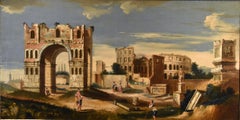

18th Century Old Masters Paintings
Oil
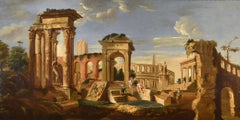
Antique 19th Century European Other Paintings
Canvas
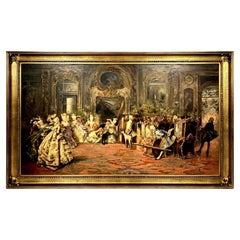
17th Century Baroque Paintings
Canvas, Oil
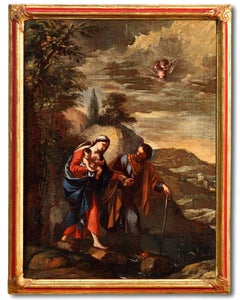
17th Century Old Masters Paintings
Canvas, Oil
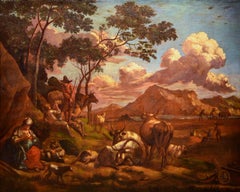
17th Century Old Masters Paintings
Oil
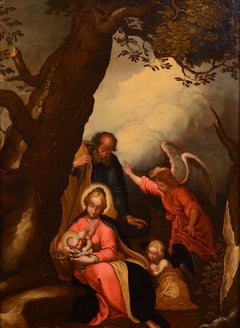
17th Century Old Masters Paintings
Oil
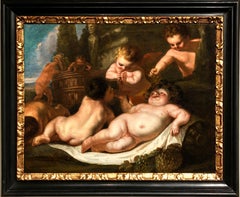
17th Century Old Masters Paintings
Oil
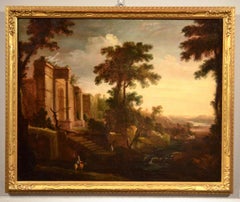
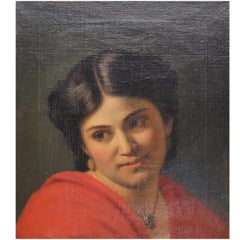
1860s Romantic Portrait Paintings
Canvas, Oil
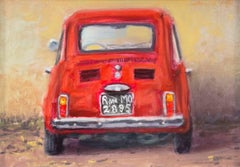
2010s Contemporary Still-life Paintings
Oil, Panel
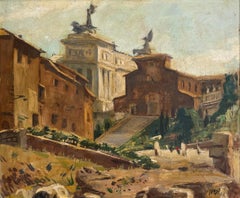
1940s Italian School Landscape Paintings
Oil
Late 20th Century American Paintings
Canvas
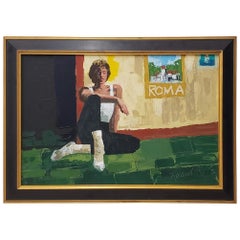
1950s Modern Portrait Paintings
Canvas, Oil

17th Century Realist Figurative Paintings
Oil, Canvas
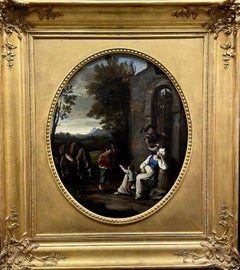
Mid-20th Century English Mid-Century Modern Paintings
Paint
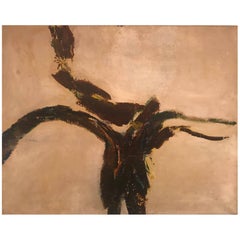
19th Century Other Art Style Figurative Paintings
Canvas, Oil
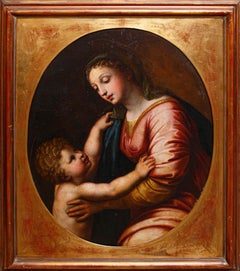
- 1
Roma Oil Paintings For Sale on 1stDibs
How Much are Roma Oil Paintings?
Finding the Right Paintings for You
Painting is an art form that has spanned innumerable cultures, with artists using the medium to tell stories, explore and communicate ideas and express themselves. To bring abstract paintings, landscape paintings, still-life paintings and other original paintings into your home is to celebrate and share in the long tradition of this discipline.
When we look at paintings, particularly those that originated in the past, we learn about history, other cultures and countries of the world. Like every other work of art, paintings — whether they are contemporary creations or works that were made during the 19th century — can often help us clearly see and understand the world around us in a meaningful and interesting way.
Cave walls were the canvases for what were arguably the world’s first landscape paintings, which depict natural scenery through art. Portrait paintings and drawings, which, along with sculpture, were how someone’s appearance was recorded prior to the advent of photography, are at least as old as Ancient Egypt. In the Netherlands, landscapes were a major theme for painters as early as the 1500s. Later, artists in Greece, Rome and elsewhere created vast wall paintings to decorate stately homes, churches and tombs.
Today, creating a wall of art is a wonderful way to enhance your space, showcase beautiful pieces and tie an interior design together.
No matter your preference, whether you favor Post-Impressionist paintings, animal paintings, Surrealism, Pop art or another movement or specific period, arranging art on a blank wall allows you to evoke emotions in a room while also showing off your tastes and interests. A symmetrical wall arrangement may comprise a grid of four to six pieces or, for an odd number of works, a horizontal row. Asymmetrical arrangements, which may be small clusters of art or large, salon-style gallery walls, have a more collected and eclectic feel.
Download the 1stDibs app, which includes a handy “View on Wall” feature that allows you to see how a particular artwork will look on a particular wall, and read about how to arrange wall art. And if you’re searching for the perfect palette for your interior design project, what better place to turn than to the art world’s masters of color?
On 1stDibs, you’ll find an expansive collection of paintings and other fine art for your home or office. Browse abstract paintings, portrait paintings, paintings by emerging artists and more today.
- What is abstract oil painting?1 AnswerLilac Gallery Ltd.March 17, 2021An abstract oil painting and an artwork that is made with oil paint on a medium like canvas, wood board, or other panels like canvas board. And the 'abstract' term refers to the Movement Style of the piece. As abstraction indicates a departure from reality in the depiction of imagery in art, the artist creates a painting where the subject, shape, form, color, and line, is created with no particular references of the world but as a composition that may exist with a degree of independence from its vision.
- 1stDibs ExpertMarch 22, 2024To maintain oil paintings that you purchased for your home, experts suggest that you keep them out of direct sunlight. Prolonged exposure to the sunlight coming in from a window can fade the colors in your painting. Do not hang your oil painting near a heat source or where it can get wet (bathrooms and kitchens are not safe for your oil painting).
You may wish to dust your oil painting so that layers of dust don’t begin to gather on its surface. This should only be considered to remove loose dust. Never spray any chemical substance on your oil painting. Do not use a damp cloth to dust your oil painting. (Again, your painting should not be exposed to moisture.)
To remove loose dust, use a soft brush that measures approximately one to two inches wide with natural-hair bristles. Do not use a dust cloth or a feather duster, as those items may catch or leave threads or feathers behind. Do not apply pressure or dust your painting for an extended period of time.
If you think that your oil painting is considerably dirty or believe that other issues may be at work, experts strongly suggest that you consult with a professional conservator.
Read about how to arrange your wall art and find oil paintings for sale on 1stDibs. - 1stDibs ExpertFebruary 13, 2024To identify an oil painting, look closely at its surface. Compared to other paintings, pieces produced in oils usually show off a variety of textures across the canvas, and the paint will appear layered on. If you're looking to determine the name, age or creator of a work, try snapping a photo with your smartphone’s camera and conducting a reverse image search online. Shop a diverse assortment of oil paintings on 1stDibs.
- When was oil paint invented?1 Answer1stDibs ExpertFebruary 27, 2024Oil paint was invented during the 7th century A.D. The earliest examples of oil paintings have been traced to Afghanistan and depict scenes related to the Buddhist religion. Records dating back to the 12th century indicate that early Christian monks in Europe used oil paints to decorate furniture, and a century later, some artists began finishing tempera paintings with touches of oil paint. It wasn't until the 15th century that oil paints became a common medium for European painters, when Flemish artists like Jan van Eyck began favoring them over tempera. Explore a variety of oil paintings on 1stDibs.
- 1stDibs ExpertMay 3, 2024Jan van Eyck is widely considered by art historians to be the father of oil painting. While the usage of oil paints dates back to 7th-century China, the Flemish painter popularized the material, using oils to produce highly detailed works such as The Arnolfini Portrait. The Northern Renaissance master also influenced many other artists, such as Hugo van der Goes and Gerard David. Shop an assortment of fine art on 1stDibs.
- 1stDibs ExpertMay 3, 2024A few things make an oil painting valuable. Age has a major impact on price, with pieces made over a century ago tending to fetch the highest prices. Who created the painting also matters. The more famous the artist, the higher the selling price for a painting is likely to be. Finally, the condition of the work and whether it is in its original frame will also impact how much it is worth. Find a diverse assortment of oil paintings on 1stDibs.
- 1stDibs ExpertAugust 20, 2024The difference between a lithograph and an oil painting comes down to uniqueness and technique. To produce an oil painting, an artist applies oil-based paints to a canvas or another surface using a brush. The process results in a single work of art. Lithography is a form of printmaking that begins by drawing on or painting on a stone surface with an oil-based substance, such as a greasy crayon or tusche, an oily wash. The stone is then covered with water, which is repelled by the oily areas. Oil-based ink is then applied to the wet stone, adhering only to the oily image. Through lithography, an artist can produce dozens, or even thousands, of copies of a single image. On 1stDibs, shop a large selection of lithographs and oil paintings.
- 1stDibs ExpertMarch 22, 2024Yes, sunlight affects oil paintings. Keep your oil paintings away from direct sunlight.
To maintain oil paintings that you purchased for your home, experts suggest that you keep them out of sunlight. Prolonged exposure to the sunlight coming in from a window can fade the colors in your painting. Do not hang your oil painting near a heat source or where it can get wet (bathrooms and kitchens are not safe for your oil painting).
You may wish to dust your oil painting so that layers of dust don’t begin to gather on its surface. This should only be considered to remove loose dust. Never spray any chemical substance on your oil painting. Do not use a damp cloth to dust your oil painting. (Again, your painting should not be exposed to moisture.)
To remove loose dust, use a soft brush that measures approximately one to two inches wide with natural-hair bristles. Do not use a dust cloth or a feather duster, as those items may catch or leave threads or feathers behind. Do not apply pressure or dust your painting for an extended period of time.
If you think that your oil painting is considerably dirty or believe that other issues may be at work, experts strongly suggest that you consult with a professional conservator.
Read about how to arrange your wall art and find oil paintings for sale on 1stDibs. - 1stDibs ExpertApril 5, 2022To tell if your oil painting is authentic, first check the signature of the artist to start your research. Use a magnifying glass to check the texture of the painting, and finally check the back for the painting’s original stretchers. Shop a selection of expertly vetted artwork from some of the world’s top art dealers on 1stDibs.
- 1stDibs ExpertFebruary 13, 2023Because the value of an oil painting can vary greatly based on the artist, the subject and the condition of the piece, it's generally best to work with a certified appraiser. A knowledgeable professional can evaluate the piece and estimate its value. Shop a variety of authentic oil paintings from some of the world’s top galleries on 1stDibs.
- La ChrysomeleFebruary 24, 2021Any artwork is worth and only worth the price someone is willing to pay for it (unfortunately, whether one can afford it or not is another story). Different people may have different reasons to attribute value to an artwork, from the purest (falling in love with it) to what is often considered as the most vile (speculation), going through remembrance, pride of ownership, or brag, among other reasons. For most living artists, the price of the artworks is usually set by the artist and/or the gallery which represent him or her, by type and size of artwork, and corresponds to an equilibrium price between the rate at which artworks are sold and the rate at which new artworks are produced by the artist. For artworks from dead artists sold by professional dealers, the price is often based on auctions results for similar pieces of the same artists. Oil paintings are usually pricier than other techniques because it is considered more difficult to master, but also because oil paintings are known for their ability to last centuries.
- How much do oil paintings cost?1 Answer1stDibs ExpertSeptember 25, 2019
On 1stdibs, oil paintings cost between $60 and $6,200,000.
- 1stDibs ExpertApril 5, 2022The best place to find oil paintings and discover new artists is at local art galleries. There are also many online art dealers who provide information about artists and sell their works. On 1stDibs, you’ll discover a variety of art styles from master oil painters.
- 1stDibs ExpertApril 5, 2022To find the artist of an oil painting, look on the back of the canvas. Sometimes, you will find the artist’s name and the year of production on the back. If the canvas is in a frame, gently peel away the paper covering the back to access the canvas. In the event you cannot find any identifying information, seek the help of a licensed art appraiser. Shop a selection of oil paintings on 1stDibs.
- 1stDibs ExpertMarch 22, 2024Yes, oil paintings darken over time. As oil paint is made of pigment particles, the range of substances that are used as pigment in oil paint can render certain colors susceptible to aging. Slowing the aging process for an oil painting involves storing your painting properly and keeping the work out of exposed sunlight. Temperature control and humidity are also important in preserving the life of an oil painting and slowing the aging process.
To maintain oil paintings that you purchased for your home, experts suggest that you keep them out of direct sunlight. Prolonged exposure to the sunlight coming in from a window can fade the colors in your painting. Do not hang your oil painting near a heat source or where it can get wet (bathrooms and kitchens are not safe for your oil painting).
You may wish to dust your oil painting so that layers of dust don’t begin to gather on its surface. This should only be considered to remove loose dust. Never spray any chemical substance on your oil painting. Do not use a damp cloth to dust your oil painting. (Again, your painting should not be exposed to moisture.)
To remove loose dust, use a soft brush that measures approximately one to two inches wide with natural-hair bristles. Do not use a dust cloth or a feather duster, as those items may catch or leave threads or feathers behind. Do not apply pressure or dust your painting for an extended period of time.
If you think that your oil painting is considerably dirty or believe that other issues may be at work, experts strongly suggest that you consult with a professional conservator.
Read about how to arrange your wall art and find oil paintings for sale on 1stDibs. - Did Dali use oil paint?1 Answer1stDibs ExpertApril 5, 2022Yes, Dali did indeed use oil paint. Although he used oil paints in the traditional method, he would at times add natural resin or linseed oil to play with fluidity and texture. You can shop a selection of Salvador Dali’s pieces from some of the world’s top art dealers on 1stDibs.
- Can you use oil paint on wood?1 Answer1stDibs ExpertFebruary 22, 2021You can use oil paint on wood as long as you prep the wood first. The first thing you should do is seal the wood with a primer. Ideally, paint two coats of sealer onto the wood so that the paint doesn't cause the wood to rot over time.
- 1stDibs ExpertAugust 15, 2024To tell how old an oil painting is, research the artist who produced it. You can use the mobile app Smartify to snap a photo of the signature on your painting and identify the artist. Read biographical information about the artist online and look at images of their work to estimate the age of your piece. Alternatively, you can get the opinion of a knowledgeable art dealer or certified appraiser. Explore a wide variety of oil paintings on 1stDibs.
- 1stDibs ExpertApril 5, 2022The largest oil painting in the world is in the main hall of the Doge's Palace located in Venice, Italy. Its name is Il Paradiso. Tintoretto painted it around 1592, and it measures 22 meters by 7 meters. Shop a large collection of oil paintings on 1stDibs.
- 1stDibs ExpertSeptember 25, 2019
Varnishing an oil is not necessary, but it is recommended because it protects the painting and corrects surface irregularities.
Read More
Impressionist Rebel Camille Pissarro Made the Everyday Feel Radical
In Denver, a major new retrospective reveals how the painter’s devotion to ordinary life — and his fearless shifts in style — shaped modern art.
The Real World Portraitist of “The Gilded Age,” Season Three
Only the best painter could suit the calculatedly extravagant Bertha Russell.
See Kent Monkman’s Magical Realist Take on Frontier History
With a solo show at the Denver Art Museum and a commission from the Met, the Cree Canadian painter has become an international sensation.
Yale’s Trove of British Art Is Back on View in a Refreshed Louis Kahn Building
After a two-year closure, they Yale Center for British Art opens its doors again, with all sorts of changes to its building and programming.
At 89, Artist Lucio Pozzi Is Reaching New Career Heights
The Italian-American’s 2020 abstract painting “The Hoe” personifies his “art of not knowing.”
The 1stDibs Guide to Types of Abstract Art
Get to know the key movements and artists who have influenced visual culture for more than a century.
With a Show at MoMA, Marlon Mullen Paints Pictures That Are beyond Words
The nonspeaking California artist is having a moment, with vivacious paintings that play on art-magazine covers as well as more mysterious abstractions.
The Vibrant Beauty of Orphist Art Supersedes Its Perplexing Name
This kaleidoscopic early-modern art style has long deserved another look. Now, the Guggenheim museum is doing just that.