Scandinavian 1930s Chairs
Vintage 1930s Danish Scandinavian Modern Rocking Chairs
Leather, Mahogany
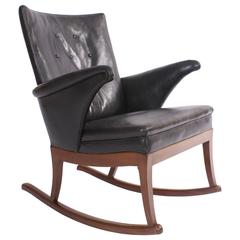

Vintage 1930s Danish Scandinavian Modern Lounge Chairs
Fabric, Teak
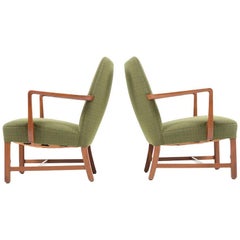
Vintage 1930s Danish Scandinavian Modern Lounge Chairs
Sheepskin
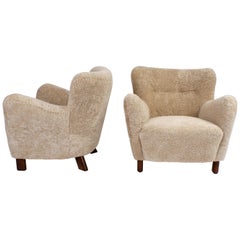
Vintage 1930s Danish Scandinavian Modern Lounge Chairs
Sheepskin
Vintage 1930s Danish Scandinavian Modern Lounge Chairs
Sheepskin
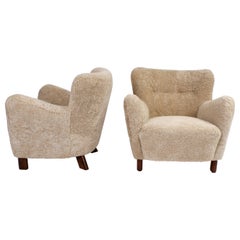
Vintage 1930s Danish Scandinavian Modern Lounge Chairs
Sheepskin
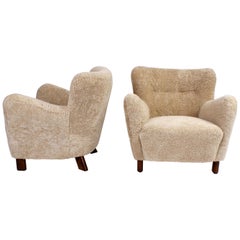
Vintage 1930s Danish Scandinavian Modern Lounge Chairs
Sheepskin
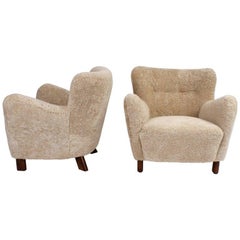
Vintage 1930s Danish Scandinavian Modern Lounge Chairs
Sheepskin
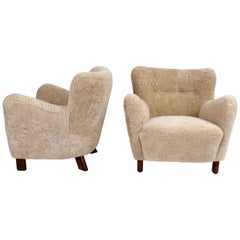
Vintage 1930s Danish Scandinavian Modern Lounge Chairs
Sheepskin
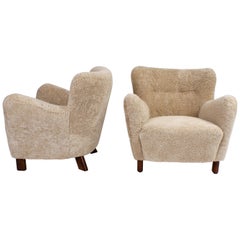
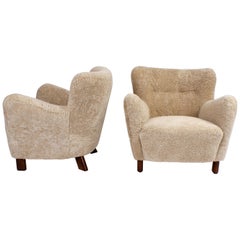
Vintage 1930s Danish Scandinavian Modern Lounge Chairs
Sheepskin
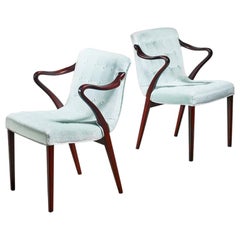
Vintage 1930s Swedish Scandinavian Modern Side Chairs
Wool, Wood
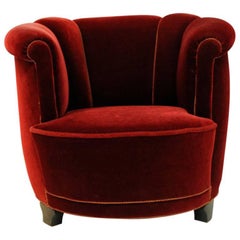
Vintage 1930s Danish Scandinavian Modern Armchairs
Velvet, Wood
- 1
Scandinavian 1930s Chairs For Sale on 1stDibs
How Much are Scandinavian 1930s Chairs?
A Close Look at Scandinavian-modern Furniture
Scandinavian modernism is perhaps the warmest and most organic iteration of modernist design. The work of the designers associated with vintage Scandinavian modern furniture was founded on centuries-old beliefs in both quality craftsmanship and the ideal that beauty should enhance even the humblest accessories of daily life.
ORIGINS OF SCANDINAVIAN MODERN FURNITURE DESIGN
- Emerged in the 1930s
- Scandinavian design and Nordic design originated primarily in Denmark, Sweden, Finland, Iceland and Norway
- Introduced in the United States in mid-20th century
- Informed by the Bauhaus; influenced American mid-century modernism
CHARACTERISTICS OF SCANDINAVIAN MODERN FURNITURE DESIGN
- Bold, clean lines and simple, sturdy symmetries
- Use of natural materials — native woods such as pine, ash and beech
- Open, airy spaces
- Promotion of functionality
- Emphasis on craftsmanship; rooted in cabinetry profession and traditional construction techniques
- Minimal ornamentation (little to no embellishment)
- A neutral or light color palette owing to prominence of light woods
SCANDINAVIAN MODERN FURNITURE DESIGNERS TO KNOW
- Alvar Aalto
- Hans Wegner
- Kaare Klint
- Arne Jacobsen
- Greta Magnusson Grossman
- Finn Juhl
- Arne Vodder
- Verner Panton
ICONIC SCANDINAVIAN MODERN FURNITURE DESIGNS
VINTAGE SCANDINAVIAN MODERN FURNITURE ON 1STDIBS
The gentle, organic contours that are typical of Scandinavian design appear in the furnishings and decor created by Danish, Finnish and Swedish designers not as a stylistic gesture, but rather as a practical, ergonomic — and, as importantly, elegant — response to the human form.
Each nation produced exceptional talents in all areas of the applied arts, yet each had its forté. Sweden was home to Greta Magnusson Grossman and Bruno Mathsson — creators of the classic Grasshopper lighting series and Berlin daybed, respectively — but the country excelled most notably at ceramics. In the 1920s at the great Gustavsberg porcelain manufactory, Wilhelm Kåge introduced pieces in the Scandinavian style based on influences from folklore to Cubism; his skills were passed on to his versatile and inspired pupils Berndt Friberg and Stig Lindberg.
Likewise, Finland produced a truly ingenious Scandinavian modern furniture designer in the architect Alvar Aalto, a master at melding function and artistic form in works like the Paimio chair, created in collaboration with his first wife, Aino. Yet Finnish glassware was pre-eminent, crafted in expressive, sculptural designs by Tapio Wirkkala and Timo Sarpaneva.
The Danes excelled at chairs. Hans Wegner and Arne Jacobsen were exemplars of the country’s facility with wood, particularly teak.
Wegner created such iconic pieces as the Round chair and the Wishbone chair; Jacobsen — while the revolutionary architect and furniture innovator produced the best-selling plywood Ant chair — designed two classic upholstered pieces of the 1950s: the Swan chair and Egg chair. The list of great Danes could go on and on, including Finn Juhl, a stylistic maverick and maker of the bold Chieftain chair; Poul Kjaerholm, with his lean metal-and-rattan aesthetic; and Verner Panton, who introduced a vibrant Pop note into international design.
Today, decades after their heyday, the prolific, ever-evolving Scandinavian modernists continue to amaze and delight, and interior designers all over the world use their pieces to bring warmth to any given space.
On 1stDibs, you will note both instantly recognizable vintage Scandinavian modern chairs, sofas, rugs and tables — those that have earned iconic status over time — and many new discoveries.
Finding the Right Seating for You
With entire areas of our homes reserved for “sitting rooms,” the value of quality antique and vintage seating cannot be overstated.
Fortunately, the design of side chairs, armchairs and other lounge furniture — since what were, quite literally, the early perches of our ancestors — has evolved considerably.
Among the earliest standard seating furniture were stools. Egyptian stools, for example, designed for one person with no seat back, were x-shaped and typically folded to be tucked away. These rudimentary chairs informed the design of Greek and Roman stools, all of which were a long way from Sori Yanagi's Butterfly stool or Alvar Aalto's Stool 60. In the 18th century and earlier, seats with backs and armrests were largely reserved for high nobility.
The seating of today is more inclusive but the style and placement of chairs can still make a statement. Antique desk chairs and armchairs designed in the style of Louis XV, which eventually included painted furniture and were often made of rare woods, feature prominently curved legs as well as Chinese themes and varied ornaments. Much like the thrones of fairy tales and the regency, elegant lounges crafted in the Louis XV style convey wealth and prestige. In the kitchen, the dining chair placed at the head of the table is typically reserved for the head of the household or a revered guest.
Of course, with luxurious vintage or antique furnishings, every chair can seem like the best seat in the house. Whether your preference is stretching out on a plush sofa, such as the Serpentine, designed by Vladimir Kagan, or cozying up in a vintage wingback chair, there is likely to be a comfy classic or contemporary gem for you on 1stDibs.
With respect to the latest obsessions in design, cane seating has been cropping up everywhere, from sleek armchairs to lounge chairs, while bouclé fabric, a staple of modern furniture design, can be seen in mid-century modern, Scandinavian modern and Hollywood Regency furniture styles.
Admirers of the sophisticated craftsmanship and dark woods frequently associated with mid-century modern seating can find timeless furnishings in our expansive collection of lounge chairs, dining chairs and other items — whether they’re vintage editions or alluring official reproductions of iconic designs from the likes of Hans Wegner or from Charles and Ray Eames. Shop our inventory of Egg chairs, designed in 1958 by Arne Jacobsen, the Florence Knoll lounge chair and more.
No matter your style, the collection of unique chairs, sofas and other seating on 1stDibs is surely worthy of a standing ovation.
- 1stDibs ExpertMay 5, 2023Yes, people had record players in the 1930s. In fact, record players began to become more common during the decade and continued to grow in popularity throughout the 1940s, 50s and 60s. Thomas Edison made the first phonograph record player in 1877. Shop a variety of record players on 1stDibs.
- 1stDibs ExpertJune 30, 2023What brides wore in the 1930s varied. Some wore long flowing dresses made of satin or silk. Long sleeves were popular and designs often featured only minimal embellishments like appliqués and beading. Because many people faced difficult financial situations due to the Great Depression, brides also sometimes simply wore their best dresses on their wedding days. On 1stDibs, shop a collection of vintage wedding dresses.
- 1stDibs ExpertNovember 26, 2024To identify 1930s furniture, first see if you can spot a maker's mark in hidden areas, such as the back, base, inside of drawers or under tabletops and seats. Trusted online resources can help you determine who produced your furniture based on these markings, and from there, you can research more to get a rough idea of how old your item is. A piece's characteristics can also be helpful when dating furniture. Many items made during the 1930s are examples of Art Deco furniture. Art Deco furniture is characterized by geometric patterns and luxurious materials, such as shagreen, marble, mother of pearl, mirrored glass, exotic animal hides and rare woods like mahogany, ebony and zebra wood. A certified appraiser or experienced antique dealer can provide an expert opinion on when your piece was likely made. On 1stDibs, explore a range of 1930s furniture.
- 1stDibs ExpertMarch 31, 2023In the 1930s, phones typically looked like rotary telephones. They had either a round or square base with a numbered dial that spun when you dialed and a handset receiver with both an earpiece and a mouthpiece. A cord connected the handset to the base. Find a variety of rotary phones on 1stDibs.
Read More
The 21 Most Popular Mid-Century Modern Chairs
You know the designs, now get the stories about how they came to be.
Design Icon Ilse Crawford on Her Colorful New Hans Wegner Chairs
If anyone is brave, humble and adept enough to recolor these mid-century masterpieces, it’s Ilse Crawford. Here, she gives us the details on her five earthy paint choices and tells us how she feels about design collaborations.
113 Chairs That Prove Danish Design Isn’t Limited to Denmark
In an innovative display, the Designmuseum Danmark is permanently exhibiting the 20th century's most iconic seats.
April’s Most-Liked Interiors on Instagram
Our feed is filled with the world's most beautiful spaces. See the 10 our followers have deemed the best of the best this month.