Schumacher Chinoiserie
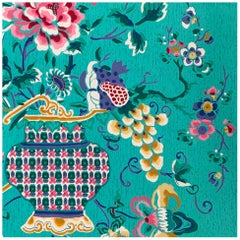
20th Century American Chinoiserie Wallpaper
Paper

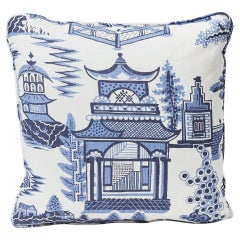
21st Century and Contemporary American Chinoiserie Pillows and Throws
Linen
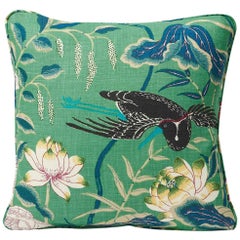
21st Century and Contemporary Thai Chinoiserie Pillows and Throws
Linen
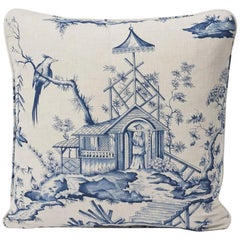
21st Century and Contemporary French Chinoiserie Pillows and Throws
Cotton, Linen
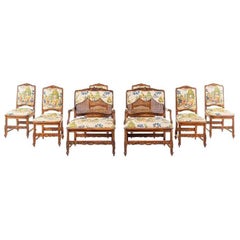
Early 20th Century American French Provincial Dining Room Chairs
Metal
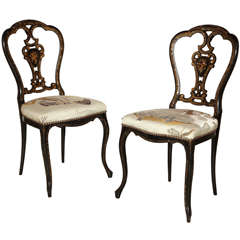
Antique 19th Century Victorian Side Chairs
Wood, Mother-of-Pearl, Silk, Cotton
- 1
Schumacher Chinoiserie For Sale on 1stDibs
How Much is a Schumacher Chinoiserie?
Schumacher for sale on 1stDibs
Schumacher is an esteemed American textile company known for its fine pillows, wallpaper and carpets. The family-owned business is still managed by its founder’s descendants. While committed to its history and traditions, the brand has evolved to maintain its vaulted status for more than 130 years.
Schumacher was established in 1889 in New York by Frederic Schumacher, who was born in France and moved to America that same year. By 1898, the Gilded Age elite were patrons of the company’s exquisite imported European fabrics. Schumacher became one of the first to produce luxury textiles in America and its fabrics began appearing in upscale properties like the Waldorf-Astoria hotel.
Schumacher grew in prestige in the early 20th century due to its partnerships with top designers such as Josef Frank and Dorothy Draper. Its textiles graced the White House and captured the attention of leading decorators, including Edith Wharton and Elsie de Wolfe.
In the 1920s, Schumacher was a favorite at Mar-a-Lago estates and Newport’s ritzy summer cottages. In the 1930s, French fashion designer Paul Poiret helped usher in the company’s Art Deco era. Schumacher textiles could be found on the sets of Hollywood films, most notably the Hydrangea Drape wallpaper in Gone with the Wind.
After World War II, Schumacher began a decades-long partnership with designer Vera Neumann, whose scarves were worn by the likes of Marilyn Monroe and Grace Kelly. In 1955, legendary architect Frank Lloyd Wright developed a textile line with Schumacher. Known as the Taliesin line, it was the first commercial venture of the architect’s career.
In 2011, Andrew and Stephen Puschel became the fifth generation of Schumacher’s descendants to join the family business. The company continues to exemplify a spirit of innovation by partnering with exciting modern designers like Miles Redd, Mary McDonald, David Kaihoi, Veere Grenney and David Oliver. Under the creative direction of Dara Caponigro, Schumacher has also partnered with the biannual luxury interiors magazine Cabana.
On 1stDibs, find Schumacher textiles, wall decorations, rugs and more.
A Close Look at Chinoiserie Furniture
Emerging in the 17th century, chinoiserie appropriated the aesthetics and imagery of popular East Asian design for European-made versions. Reflecting the exoticization of China, Japan and other countries in this era, the word directly translates from French to “Chinese-esque,” which reveals its shortcomings as a style of furniture and decor that often stereotypically and reductively mimics Asian culture rather than showcasing and paying tribute to its artistic traditions.
The enthusiastically decorative chinoiserie style was propelled by influential tastemakers including French King Louis XIV, whose Trianon de Porcelaine in 1670 was inspired by Chinese architecture. Expanded trade between the East and West led to a demand for porcelain, lacquer objects, silk and other goods, which further informed the fanciful furniture being crafted in Europe.
Artisans working in the chinoiserie style used materials and elements like pagoda shapes, bamboo, lacquer surfaces, bird and flower motifs and other interpretations of Asian design on pieces that were frequently set against vibrant wallcoverings. This whimsical approach yielded chinoiserie furniture that boasted dramatic flourishes drawing on the natural world and reflected the dominance of Rococo during the 18th century.
As chinoiserie was shaped by approximations of Asian design by European creators, it had regional variations, such as Chinese Chippendale in England where cabinets, chairs and tea tables had wooden fretwork designs and “japanned” surfaces intended to resemble lacquer work that was created in East Asia. In North America, furniture makers in Boston and New York integrated chinoiserie-painted scenes into Queen Anne furniture.
Antique chinoiserie furniture has continued to be fashionable, from its popularity with decorators of the Hollywood Regency era — James Mont, Tommi Parzinger, William Haines and Samuel Marx favored the style — to contemporary interior designers, although it brings with it a complex history.
Find a collection of chinoiserie bedroom furniture, cabinets, decorative objects and more on 1stDibs.