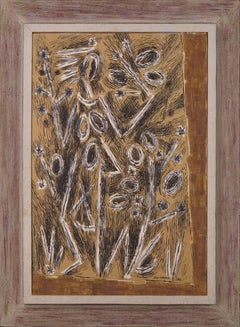
Taos 6 Painters For Sale on 1stDibs
An assortment of taos 6 painters is available on 1stDibs. Browse a selection of
contemporary,
modern or
Impressionist versions of these works for sale today — there are 13
contemporary, 9
modern and 1
Impressionist examples available. These items have been made for many years, with versions that date back to the 20th Century alongside those produced as recently as the 21st Century. You can search the taos 6 painters that we have for sale on 1stDibs by color — popular works were created in bold and neutral palettes with elements of
gray,
brown and
beige. These artworks have been a part of the life’s work for many artists, but the versions made by
Stefanie Schneider,
Marsden Hartley,
John Ward Lockwood,
Theodore Lukits and
John Marin are consistently popular. The range of these distinct pieces — often created in
paper,
archival paper and
c print — can elevate any room of your home.
How Much are Taos 6 Painters?
Taos 6 painters can differ in price owing to various characteristics — the average selling price for items in our inventory is $650, while the lowest priced sells for $266 and the highest can go for as much as $150,000.
John Ward Lockwood for sale on 1stDibs
Born in Kansas, Ward Lockwood studied at the University of Kansas from 1912-1914. Following that, he attended the Pennsylvania Academy of Fine Art until 1916. Like many other artists at the time, he took a brief hiatus from his studies to begin a two-year enlistment in the Army during World War I. His time in the service allowed him to experience European cultures first hand. Lockwood was deeply impacted in France by the works of artists Paul Cezanne and Vincent Van Gogh. In 1921, after his release from the service, he returned to Paris to study at the Academie Ranson.
In Paris, he met fellow Kansan, Kenneth Adams. The two artists then traveled the French countryside, practicing their craft. In 1922, Lockwood’s fascination with French culture was satiated as he returned to Kansas to work as a commercial artist.
By 1926, Lockwood had married Clyde Bonebrake. The newlyweds quickly settled in Taos, New Mexico, due to the encouragement of Kenneth Adams. Lockwood soon established himself as a member of the Taos Society of Artists. In an effort to generate greater financial stability, Lockwood did a variety of murals for the Federal Arts Project and went on to teach at the Broadmoor Academy in Colorado Springs. At this time, he taught painting and lithography and worked on Works Progress Administration murals with his mentor, Andrew Dasburg. In 1938, due to his continuous development as an artist and professor, he was awarded the chair of the Department of Art at the University of Texas in Austin.
During the 1950’s, he taught at the University of California at Berkeley and at the University of Kansas at Lawrence. In 1940, he moved to San Francisco and experimented with abstraction and assemblage but was again in the Army during World War II, advancing to the rank of colonel.
After he completed his time in the service, he returned to California where he resumed teaching. Although he was highly involved in the art circles of California, Lockwood made frequent trips to Taos and finally settled there in his later years.
Exhibited: Salon d’Automne, Paris, 1922; Salons of America, 1925; Corcoran Gallery biennials, 1928-41; Pennsylvania Academy of Fine Art Annex, 1929, 34, 38-39; Art Institute of Chicago (prizes 1931, 1952); Denver Art Museum; Nebraska Art Institute; de Young Museum, (prize 1950); San Francisco Art Festival, (prize 1950); Santa Rosa California (prize 1954); University of Utah, 1955; San Francisco Art Association, (purchase prize1957); Cranbrook Academy; Whitney Museum of American Art; Metropolitan Museum of Art; Weyhe Gallery; Dayton Art Institute; University of Illinois; Colorado Springs Fine Art Center; Museum of New Mexico; Dallas Museum of Fine Art; Texas General Exhibit; Mulvane Art Museum (solo); Rehn Gallery (solo); Wichita Art Museum (solo); Crocker Art Gallery (solo); University of Texas (solo); Museum of Fine Art, Houston (solo); St. Louis Art Museum (solo); Luyber Gallery (solo).
©David Cook Galleries, LLC
Finding the Right Figurative-paintings for You
Figurative art, as opposed to abstract art, retains features from the observable world in its representational depictions of subject matter. Most commonly, figurative paintings reference and explore the human body, but they can also include landscapes, architecture, plants and animals — all portrayed with realism.
While the oldest figurative art dates back tens of thousands of years to cave wall paintings, figurative works made from observation became especially prominent in the early Renaissance. Artists like Michelangelo, Leonardo da Vinci and other Renaissance masters created naturalistic representations of their subjects.
Pablo Picasso is lauded for laying the foundation for modern figurative art in the 1920s. Although abstracted, this work held a strong connection to representing people and other subjects. Other famous figurative artists include Francis Bacon and Lucian Freud. Figurative art in the 20th century would span such diverse genres as Expressionism, Pop art and Surrealism.
Today, a number of figural artists — such as Sedrick Huckaby, Daisy Patton and Eileen Cooper — are making art that uses the human body as its subject.
Because figurative art represents subjects from the real world, natural colors are common in these paintings. A piece of figurative art can be an exciting starting point for setting a tone and creating a color palette in a room.
Browse an extensive collection of figurative paintings on 1stDibs.