Theodore Alexander Caned Chair
Recent Sales
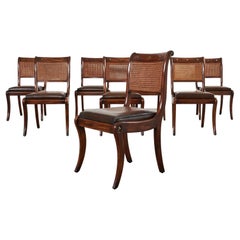
Late 20th Century Regency Chairs
Upholstery, Cane, Mahogany
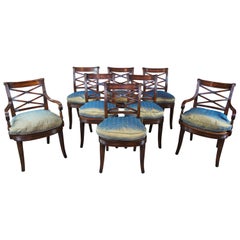

Late 20th Century Regency Dining Room Chairs
Upholstery, Cane, Mahogany
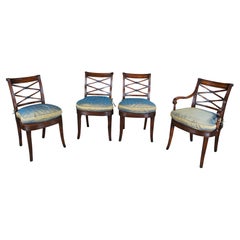
Late 20th Century Vietnamese Regency Armchairs
Cane
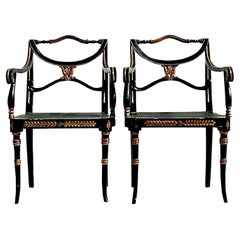
20th Century French Louis XVI Bergere Chairs
Cane, Walnut
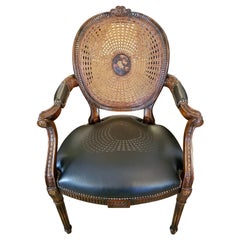
20th Century Regency Chairs
Bronze
Theodore Alexander for sale on 1stDibs
Renowned as one of the world’s finest luxury furniture brands, Theodore Alexander designs and produces handcrafted, high-quality pieces that are not only functional but beautiful and original.
Theodore Alexander was founded in 1996 by famed British curator, designer and entrepreneur Paul Maitland-Smith. From an early age, Maitland-Smith was a keen collector of antiques, leading to his work as a London-based antique dealer in the 1950s.
During the 1970s, Maitland-Smith lived in Southeast Asia, where he began his production of Chippendale-style chairs. He later focused on manufacturing reproduction furniture and decorative objects using materials such as porcelain, bronze, brass, leather, lacquer and shagreen. To produce his intricate designs, Maitland-Smith taught local craftspeople a range of techniques, including gilding, marquetry, inlay, reverse-painted glass and lost wax brass casting. In 2019, Maitland-Smith was inducted into the American Home Furnishings Hall of Fame.
Theodore Alexander has an extensive collection of designs reflecting styles spanning from Regency to mid-century modern. Among its most popular pieces are dining room tables, consoles, side tables, end tables, coffee tables and armchairs, each produced with exquisite finishes and details. Theodore Alexander’s Living History collection includes pieces like hardwood cabinets, chests of drawers and a rare authorized copy of a Thomas Chippendale library bookcase from Princess Diana’s childhood home, the Althorp Estate.
Theodore Alexander’s furniture remains highly sought after by interior designers and luxury furniture collectors worldwide. Its pieces have been featured in leading publications, including Architectural Digest and Florida Design magazine.
On 1stDibs, discover vintage and contemporary Theodore Alexander tables, case pieces, storage cabinets, seating and more.
A Close Look at Regency Furniture
Like France’s Empire style, Regency-style furniture was rooted in neoclassicism; the characteristics of its bedroom furniture, armchairs, dining room tables and other items include clean lines, angular shapes and elegant details.
Dating roughly from the 1790s to 1830s, antique Regency-style furniture gets its name from Prince George of Wales — formally King George IV — who became Prince Regent in 1811 after his father, George III, was declared unfit to rule. England’s Regency style is one of the styles represented in Georgian furniture.
George IV’s arts patronage significantly influenced the development of the Regency style, such as the architectural projects under John Nash, which included the renovation of Buckingham House into the formidable Buckingham Palace with a grand neoclassical facade. Celebrated designers of the period include Thomas Sheraton, Henry Holland and Thomas Hope. Like Nash, Hope instilled his work with classical influences, such as saber-legged chairs based on the ancient Greek klismos. He is credited with introducing the term “interior decoration” to English with the 1807 publishing of Household Furniture and Interior Decoration.
Although more subdued than previous styles like Rococo and Baroque, Regency interiors incorporated copious use of chintz fabrics and wallpaper adorned in chinoiserie-style art. Its furniture featured fine materials and luxurious embellishments. Furniture maker George Bullock, for instance, regularly used detailed wood marquetry and metal ornaments on his pieces.
Archaeological discoveries in Egypt and Greece informed Regency-era details, such as carved scrollwork, sphinxes and palmettes, as well as the shape of furniture. A Roman marble cinerary chest, for example, would be reinterpreted into a wooden cabinet. The Napoleonic Wars also inspired furniture, with martial designs like tented beds and camp-style chairs becoming popular. While the reddish-brown mahogany was prominent in this range of pieces, imported woods like zebrawood and ebony were increasingly in demand.
Find a collection of antique Regency tables, seating, decorative objects and other furniture on 1stDibs.
Materials: Cane Furniture
If the interiors people have been saving on Instagram lately are any indication, we’ll be seeing a lot more antique, new and vintage cane furniture in the years ahead.
Cane — the material of the moment that is inspiring a new generation of designers — has been cropping up everywhere, from sleek armchairs to lounge chairs, side tables and desks.
In case you’re wondering, cane refers to the peeled-off bark of rattan, an Old World species of climbing palm, while wicker may be used to describe natural or synthetic materials that were woven into a pattern. Raffia, another term thrown around when discussing woven furniture, refers to a palm tree native to tropical regions in Africa.
Of course, designers’ obsession with traditional artisanal techniques is nothing new. Marcel Breuer’s tubular Cesca chair, a design originally conceived in the 1920s, has drawn renewed attention in the past few years. And the popularity of materials like raffia and wicker reflects our desire for all things handmade.
Find a wide range of antique, new and vintage cane furniture on 1stDibs.
Finding the Right Seating for You
With entire areas of our homes reserved for “sitting rooms,” the value of quality antique and vintage seating cannot be overstated.
Fortunately, the design of side chairs, armchairs and other lounge furniture — since what were, quite literally, the early perches of our ancestors — has evolved considerably.
Among the earliest standard seating furniture were stools. Egyptian stools, for example, designed for one person with no seat back, were x-shaped and typically folded to be tucked away. These rudimentary chairs informed the design of Greek and Roman stools, all of which were a long way from Sori Yanagi's Butterfly stool or Alvar Aalto's Stool 60. In the 18th century and earlier, seats with backs and armrests were largely reserved for high nobility.
The seating of today is more inclusive but the style and placement of chairs can still make a statement. Antique desk chairs and armchairs designed in the style of Louis XV, which eventually included painted furniture and were often made of rare woods, feature prominently curved legs as well as Chinese themes and varied ornaments. Much like the thrones of fairy tales and the regency, elegant lounges crafted in the Louis XV style convey wealth and prestige. In the kitchen, the dining chair placed at the head of the table is typically reserved for the head of the household or a revered guest.
Of course, with luxurious vintage or antique furnishings, every chair can seem like the best seat in the house. Whether your preference is stretching out on a plush sofa, such as the Serpentine, designed by Vladimir Kagan, or cozying up in a vintage wingback chair, there is likely to be a comfy classic or contemporary gem for you on 1stDibs.
With respect to the latest obsessions in design, cane seating has been cropping up everywhere, from sleek armchairs to lounge chairs, while bouclé fabric, a staple of modern furniture design, can be seen in mid-century modern, Scandinavian modern and Hollywood Regency furniture styles.
Admirers of the sophisticated craftsmanship and dark woods frequently associated with mid-century modern seating can find timeless furnishings in our expansive collection of lounge chairs, dining chairs and other items — whether they’re vintage editions or alluring official reproductions of iconic designs from the likes of Hans Wegner or from Charles and Ray Eames. Shop our inventory of Egg chairs, designed in 1958 by Arne Jacobsen, the Florence Knoll lounge chair and more.
No matter your style, the collection of unique chairs, sofas and other seating on 1stDibs is surely worthy of a standing ovation.