Tiffany Glass Doors
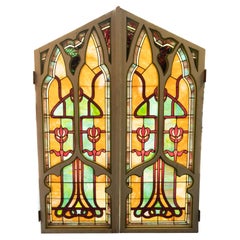
Antique Early 1900s American Art Nouveau Windows
Stained Glass

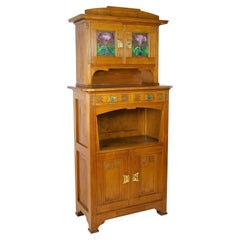
Early 20th Century Austrian Art Nouveau Buffets
Brass
People Also Browsed
Vintage 1930s Danish Art Nouveau Table Lamps
Rattan
Antique 19th Century Unknown Moorish Doors and Gates
Wrought Iron, Brass
Vintage 1920s Art Deco Wall Lights and Sconces
Stained Glass
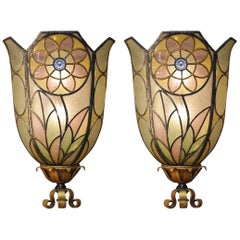
Antique 19th Century Austrian Vienna Secession Beds and Bed Frames
Bentwood
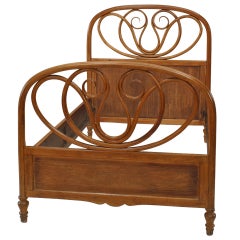
Vintage 1930s German Folk Art Historical Memorabilia
Wire
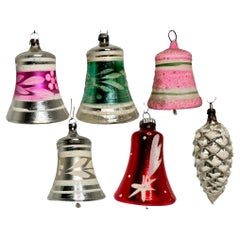
Vintage 1920s Hungarian Art Deco Side Tables
Beech, Bentwood
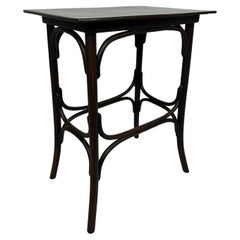
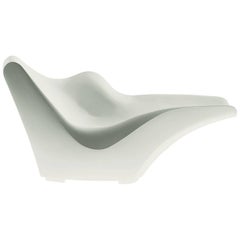
21st Century and Contemporary Italian Modern Daybeds
Plastic
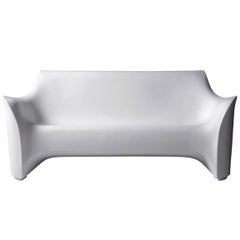
21st Century and Contemporary Italian Modern Sofas
Plastic
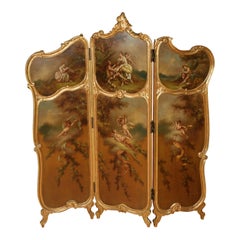
Antique 19th Century French Rococo Screens and Room Dividers
Giltwood
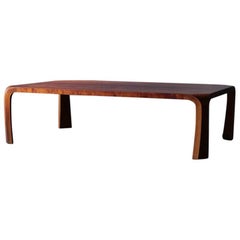
Vintage 1960s Japanese Japonisme Coffee and Cocktail Tables
Bentwood
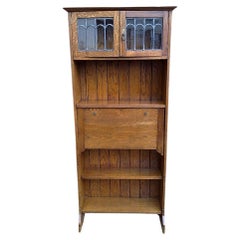
Antique Early 1900s Arts and Crafts Bookcases
Oak
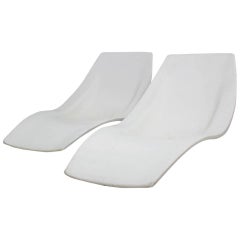
Vintage 1960s French Mid-Century Modern Lounge Chairs
Polyester
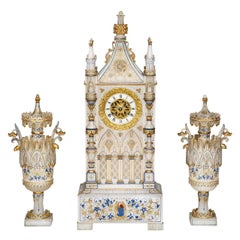
Antique 19th Century French Gothic Mantel Clocks
Alabaster, Ormolu
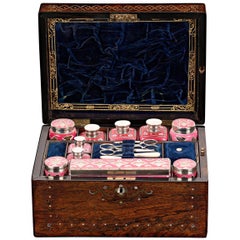
Antique 19th Century English Victorian Jewelry Boxes
Velvet, Glass, Wood
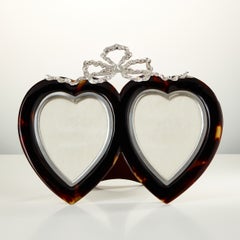
Antique 1890s English Picture Frames
Silver
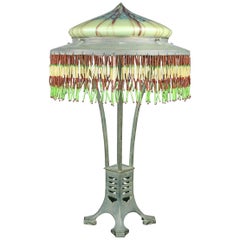
Early 20th Century Austrian Art Nouveau Table Lamps
Bronze
Tiffany Glass Doors For Sale on 1stDibs
How Much are Tiffany Glass Doors?
A Close Look at Art-nouveau Furniture
In its sinuous lines and flamboyant curves inspired by the natural world, antique Art Nouveau furniture reflects a desire for freedom from the stuffy social and artistic strictures of the Victorian era. The Art Nouveau movement developed in the decorative arts in France and Britain in the early 1880s and quickly became a dominant aesthetic style in Western Europe and the United States.
ORIGINS OF ART NOUVEAU FURNITURE DESIGN
- Emerged during the late 19th century
- Popularity of this modernizing style declined in the early 20th century
- Originated in France and Britain but variants materialized elsewhere
- Informed by Rococo, Pre-Raphaelite art, Japanese art (and Japonisme), Arts and Crafts; influenced modernism, Bauhaus
CHARACTERISTICS OF ART NOUVEAU FURNITURE DESIGN
- Sinuous, organic and flowing lines
- Forms that mimic flowers and plant life
- Decorative inlays and ornate carvings of natural-world motifs such as insects and animals
- Use of hardwoods such as oak, mahogany and rosewood
ART NOUVEAU FURNITURE DESIGNERS TO KNOW
ANTIQUE ART NOUVEAU FURNITURE ON 1STDIBS
Art Nouveau — which spanned furniture, architecture, jewelry and graphic design — can be easily identified by its lush, flowing forms suggested by flowers and plants, as well as the lissome tendrils of sea life. Although Art Deco and Art Nouveau were both in the forefront of turn-of-the-20th-century design, they are very different styles — Art Deco is marked by bold, geometric shapes while Art Nouveau incorporates dreamlike, floral motifs. The latter’s signature motif is the "whiplash" curve — a deep, narrow, dynamic parabola that appears as an element in everything from chair arms to cabinetry and mirror frames.
The visual vocabulary of Art Nouveau was particularly influenced by the soft colors and abstract images of nature seen in Japanese art prints, which arrived in large numbers in the West after open trade was forced upon Japan in the 1860s. Impressionist artists were moved by the artistic tradition of Japanese woodblock printmaking, and Japonisme — a term used to describe the appetite for Japanese art and culture in Europe at the time — greatly informed Art Nouveau.
The Art Nouveau style quickly reached a wide audience in Europe via advertising posters, book covers, illustrations and other work by such artists as Aubrey Beardsley, Henri de Toulouse-Lautrec and Alphonse Mucha. While all Art Nouveau designs share common formal elements, different countries and regions produced their own variants.
In Scotland, the architect Charles Rennie Mackintosh developed a singular, restrained look based on scale rather than ornament; a style best known from his narrow chairs with exceedingly tall backs, designed for Glasgow tea rooms. Meanwhile in France, Hector Guimard — whose iconic 1896 entry arches for the Paris Metro are still in use — and Louis Majorelle produced chairs, desks, bed frames and cabinets with sweeping lines and rich veneers.
The Art Nouveau movement was known as Jugendstil ("Youth Style") in Germany, and in Austria the designers of the Vienna Secession group — notably Koloman Moser, Josef Hoffmann and Joseph Maria Olbrich — produced a relatively austere iteration of the Art Nouveau style, which mixed curving and geometric elements.
Art Nouveau revitalized all of the applied arts. Ceramists such as Ernest Chaplet and Edmond Lachenal created new forms covered in novel and rediscovered glazes that produced thick, foam-like finishes. Bold vases, bowls and lighting designs in acid-etched and marquetry cameo glass by Émile Gallé and the Daum Freres appeared in France, while in New York the glass workshop-cum-laboratory of Louis Comfort Tiffany — the core of what eventually became a multimedia decorative-arts manufactory called Tiffany Studios — brought out buoyant pieces in opalescent favrile glass.
Jewelry design was revolutionized, as settings, for the first time, were emphasized as much as, or more than, gemstones. A favorite Art Nouveau jewelry motif was insects (think of Tiffany, in his famed Dragonflies glass lampshade).
Like a mayfly, Art Nouveau was short-lived. The sensuous, languorous style fell out of favor early in the 20th century, deemed perhaps too light and insubstantial for European tastes in the aftermath of World War I. But as the designs on 1stDibs demonstrate, Art Nouveau retains its power to fascinate and seduce.
There are ways to tastefully integrate a touch of Art Nouveau into even the most modern interior — browse an extraordinary collection of original antique Art Nouveau furniture on 1stDibs, which includes decorative objects, seating, tables, garden elements and more.
- What is a beveled glass door?1 Answer1stDibs ExpertOctober 5, 2021Beveled glass door has edges that give it the name. The word 'beveled' refers to cuts made at angles less than 90 degrees. Find a variety of vintage and antique beveled glass doors on 1stDibs.
- Is Tiffany glass real glass?1 Answer1stDibs ExpertOctober 7, 2024Yes, Tiffany glass is real glass. Louis Comfort Tiffany and his workshop, Tiffany Studios, produced many types of decorative glassware, such as opalescent glass, Favrile glass, streamer glass, fracture glass and ripple glass. While the colors, patterns, thicknesses and other characteristics of these materials vary, they are all forms of glass. Find a diverse assortment of antique Tiffany lamps on 1stDibs.
- What is Tiffany Favrile glass?1 Answer1stDibs ExpertApril 5, 2022Louis Comfort Tiffany created Favrile glass, which is a very attractive iridescent art glass. Tiffany patented his unique process, which ingrains the color into the glass, in 1894 and produced the glass for manufacturing for the first time in 1896. Shop iconic Tiffany glass from some of the world’s top boutiques on 1stDibs.
- 1stDibs ExpertApril 5, 2022It depends, some cabinets have glass installed within them or are customizable to fit glass panels into their doors. Glass cabinets are a great way to proudly display collectible sculptures, rare books or decorative objects, and these furnishings add an open look to any room of your home. Shop a wide collection of cabinets, with and without glass on 1stDibs.
- 1stDibs ExpertNovember 2, 2021A bookcase with glass doors is also called a barrister bookcase. Designed in a cabinet style, these bookcases’ glass doors protect books and collectibles from gathering dust and allow guests to peruse your treasured volumes. The name “barrister” owes to the legal profession — barristers are experts in case law in England and traditionally required numerous law books for reference purposes to travel from chamber to chamber, and the sturdy and portable cabinets that were used to do so earned this nickname. Shop a collection of antique, vintage, and contemporary bookcases from some of the world’s top dealers on 1stDibs.
- 1stDibs ExpertApril 5, 2022A curio cabinet is a type of cabinet with glass doors on it. The purpose of a curio cabinet is to display all your curiosities, such as porcelain figures or your favorite china collection. On 1stDibs, find vintage and antique curio cabinets from top sellers around the world.
- 1stDibs ExpertFebruary 22, 2021The cost of a sliding glass door depends on material, sizes and installation costs. Therefore, the total cost of a sliding glass door fluctuates. You can expect to pay anywhere from $1,000 to $5,000 for sliding glass doors.
- 1stDibs ExpertApril 5, 2022It depends, some doors have panels that can include stained glass but not necessarily all doors. The ideal doors for stained glass are doors that contain a windowpane that can be swapped out. Shop a selection of doors on 1stDibs.
- 1stDibs ExpertNovember 20, 2024The difference between Tiffany glass and stained glass is that one relates to a brand and the other is a type of glass. Stained glass is colorful glass made by adding metallic oxides to molten glass during the blowing process. Named after Louis Comfort Tiffany who established Tiffany Studios, Tiffany glass involves a technique where copper foil, rather than the traditional lead oxide, serves as the joining material for individual stained glass pieces. Another key characteristic of Tiffany glass is that it often has an opalescent effect that creates variations in color and texture across its surface. On 1stDibs, shop a collection of Tiffany glass and other stained glass pieces.
- 1stDibs ExpertSeptember 9, 2024To tell if stained glass is Tiffany, first examine the piece and look for a maker's mark. Tiffany Studios changed its hallmarks many times over the years. By comparing the marking on your piece to images of hallmarks found on authentic items shared on trustworthy websites, you can begin to identify your glass. The base can provide an additional clue if your stained glass piece is a lamp. Many Tiffany lamps have a gray metal ring located under the cap. If you spot one, your piece may be made by Tiffany. Because there are many reproductions on the market, it is often wise to have a certified appraiser or knowledgeable antique dealer assist with the identification process. Find a range of Tiffany glass on 1stDibs.
- 1stDibs ExpertSeptember 9, 2024To tell if Tiffany glass is Favrile, first check the piece for markings. Many pieces will have the word "Favrile" etched into an inconspicuous area, such as on the base. The iridescent quality of the glass can also be a good indicator of whether or not it is Favrile. However, it can be difficult to identify without experience and training. As a result, you may wish to consult a certified appraiser or knowledgeable antique dealer if you don't locate a Favrile marking on your piece. Shop a collection of Tiffany glass on 1stDibs.
- 1stDibs ExpertOctober 12, 2021The type of glass door used for exterior doors is a toughened glass, also known as tempered glass. A tempered glass offers resistance to heat that is five times better than ordinary glass. It protects against harmful UV rays and shows high resilience against impact. It’s also called safety glass. On 1stDibs, shop a range of vintage and antique exterior doors.
- 1stDibs ExpertFebruary 22, 2021The cost of a sliding glass door depends on material, sizes and installation costs. Therefore, the total cost of a sliding glass door fluctuates. You can expect to pay anywhere from $1,000 to $5,000 for sliding glass doors.
- 1stDibs ExpertApril 5, 2022Louis Comfort Tiffany’s favrile glass is said to be special because of the deep incandescent colors, which are reminiscent of a butterfly’s wing or a peacock’s neck. On 1stDibs, find a collection of authentic favrile glass pieces from some of the world’s top sellers.
Read More
Art Nouveau Master Alphonse Mucha Created Much More Than Parisian Posters
Aside from his iconic commercial prints, the Czech artist endeavored to make works that spoke to the soul.
Everything You’d Want to Know about Enamel Jewelry
From vibrant to subtle, elegant to cheeky, enamel jewelry encompasses a wide range of colors and styles, and there are almost as many techniques for creating these distinctive pieces.
What Makes Art Nouveau Jewelry So Collectible?
The first art and design movement of the 20th century was all about celebrating beauty of women and nature.