Tiffany Kitchen Utensils
20th Century Italian Sterling Silver
Sterling Silver
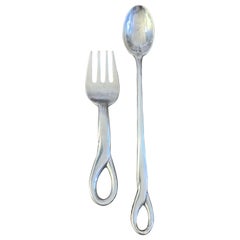

People Also Browsed
Vintage 1930s American Art Deco Historical Memorabilia
Copper
Antique 19th Century Irish Victorian Vases
Crystal
21st Century and Contemporary Organic Modern Night Stands
Wood, Oak
Early 20th Century English Side Tables
Brass
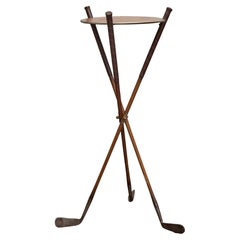
Early 20th Century French Louis XVI Armchairs
Upholstery, Beech
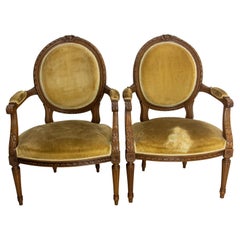
Vintage 1950s Italian Sterling Silver
Sterling Silver
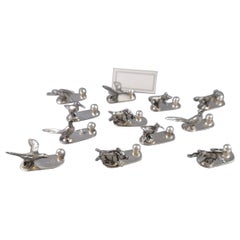
Vintage 1940s Finnish Mid-Century Modern Table Lamps
Brass
20th Century Books
Paper

Mid-20th Century American Rustic Dining Room Tables
Wrought Iron
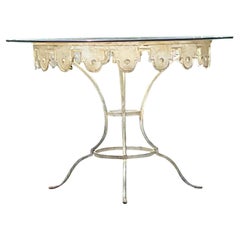
Antique 15th Century and Earlier Historical Memorabilia
Stone
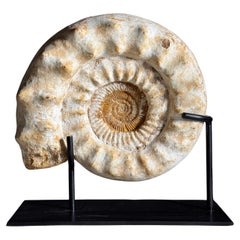
1990s French Modern Books
Paper
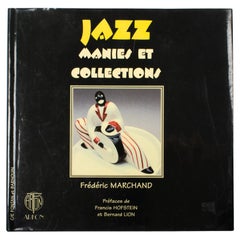
Early 20th Century American Art Deco Table Clocks and Desk Clocks
Bronze
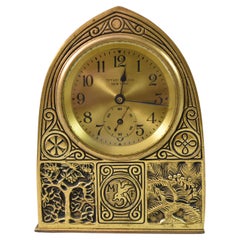
Early 20th Century Canadian International Style Sterling Silver
Sterling Silver
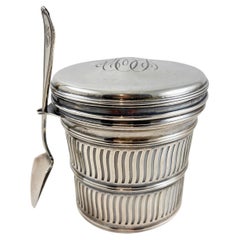
Antique 19th Century English Victorian Sports Equipment and Memorabilia
Wood
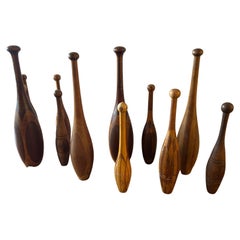
21st Century and Contemporary English Sterling Silver
Sterling Silver
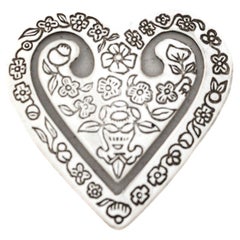
Antique 1880s Persian Persian Rugs
Wool
Tiffany Kitchen Utensils For Sale on 1stDibs
How Much are Tiffany Kitchen Utensils?
Elsa Peretti for Tiffany Co. for sale on 1stDibs
In an era of social upheaval, venerable Tiffany Co. designer Elsa Peretti reimagined diamonds as jewelry that working women bought for themselves rather than receiving it from a suitor.
By the time the Italian-born Peretti (1940–2021) arrived in New York City, she’d already studied design in Rome, worked for a Milanese architect and taught Italian, French and skiing in Switzerland. She settled on interior design as her potential career path but then chose an altogether different route: modeling. Peretti modeled in Barcelona, Spain, and on the advice of Wilhelmina Cooper — a former model who’d by then founded Wilhelmina Modeling Agency — moved to Manhattan in 1968. When she relocated, Peretti was inspired to pick up jewelry design.
After modeling for designer Halston, the undisputed fashion king of Studio 54, Peretti became his close friend and collaborator, eventually creating jewelry and teardrop-shaped perfume bottles for him. By way of her association with Halston, Peretti took to the disco scene, flourishing in a social circle that included artist Andy Warhol and fashion designer Giorgio di Sant’Angelo.
It wasn’t long before models on di Sant’Angelo’s runway were donning two-inch sterling-silver vases, complete with a rose stem, suspended on leather thongs around their necks. The accessory was Peretti’s inaugural piece of jewelry — she designed it in 1969 after finding a flower vase at a flea market. It was hardly the only time that Peretti found motifs in nature and in organic forms. In the years that followed, her Bean pendant necklace, Starfish earrings and other sensuous accessories would draw on human emotion as well as the natural world around her. Each evocative and wholly versatile design is universally adored decades later, and each was made for a storied American jewelry house with which Peretti would be associated for nearly 50 years.
It was Halston who introduced Peretti to Tiffany Co. She had her own boutique at Bloomingdale’s by 1972, and her partnership with the firm, which signed the venturesome and unorthodox designer to an exclusive contract in 1974, would cement her place in the lofty annals of jewelry legend. Peretti’s simple but sophisticated designs — the Teardrop collection, her minimalist Diamonds by the Yard necklace and Open Heart ring, to name a few — elevated sterling silver, previously considered unsuitable for fine jewelry, and created an enthusiastic young audience for Tiffany’s offerings. In 1977, Peretti’s designs earned the jewelry house more than $6 million. (In some years, her work has accounted for 10 percent of the company’s sales.)
In 2012, Peretti signed a 20-year, $47.3 million contract with Tiffany Co., but she passed away in 2021, at age 80. Today, her designs are in the permanent collections of the Metropolitan Museum of Art in New York City and the British Museum.
Find an exquisite collection of Elsa Peretti jewelry today on 1stDibs.
Finding the Right Sterling-silver for You
Dining and entertaining changed drastically when we began to set our tables with sterling silver for holiday gatherings, wedding receptions, engagement parties and, in some of today’s homes, everyday meals.
Often called the “Queen of metals,” silver has been universally adored for thousands of years. It is easy to see why it has always been sought after: It is durable, strong and beautiful. (Louis XIV had tables made entirely of silver.) Sterling silver is an alloy that is made of 92.5 percent silver — the “925” stamp that identifies sterling-silver jewelry refers to this number. The other 7.5 percent in sterling silver is typically sourced from copper.
Neoclassical-style sterling-silver goods in Europe gained popularity in the late 18th century — a taste for sterling-silver tableware as well as tea sets had taken shape — while in the United States, beginning in the 19th century, preparing the dinner table with sterling-silver flatware had become somewhat of a standard practice. Indeed, owning lots of silver goods during the Victorian era was a big deal. Back then, displaying fine silver at home was a status symbol for middle-class American families. And this domestic silver craze meant great profitability for legendary silversmith manufacturers such as Reed Barton, Gorham Manufacturing Company and the International Silver Company, which was incorporated in Meriden, Connecticut, in 1898, a major hub of silver manufacturing nicknamed “Silver City.”
Today, special occasions might call for ceremonial silver designed by Tiffany Co. or the seductive sterling-silver cutlery from remarkable Danish silversmith Georg Jensen, but there really doesn’t have to be an event on the calendar to trot out your finest tableware.
Event- and wedding-planning company maestro Tara Guérard says that some “investment pieces,” such as this widely enamored alloy, should see everyday use, and we’re inclined to agree.
“Sterling-silver flatware is a must-have that you can use every single day, even to eat cereal,” she says. “Personally, I want a sterling-silver goblet set for 12 to 20; I would use them every time I had a dinner party. Ultimately, there are no criteria for buying vintage pieces: Buy what you love, and make it work.”
Whether you’re thinking “ceremonial” or “cereal,” browse a versatile collection of vintage, new and antique sterling-silver wares on 1stDibs today.