Tobacco Honor Box
Recent Sales
Antique 1850s Great Britain (UK) Victorian Snuff Boxes and Tobacco Boxes
Brass
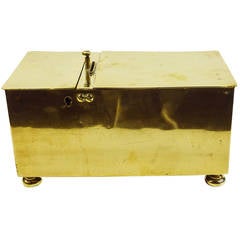

Antique 1850s British Victorian Snuff Boxes and Tobacco Boxes
Brass
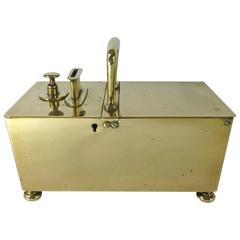
Materials: Brass Furniture
Whether burnished or lacquered, antique, new and vintage brass furniture can elevate a room.
From traditional spaces that use brass as an accent — by way of brass dining chairs or brass pendant lights — to contemporary rooms that embrace bold brass decor, there are many ways to incorporate the golden-hued metal.
“I find mixed metals to be a very updated approach, as opposed to the old days, when it was all shiny brass of dulled-out silver tones,” says interior designer Drew McGukin. “I especially love working with brass and blackened steel for added warmth and tonality. To me, aged brass is complementary across many design styles and can trend contemporary or traditional when pushed either way.”
He proves his point in a San Francisco entryway, where a Lindsey Adelman light fixture hangs above a limited-edition table and stools by Kelly Wearstler — also an enthusiast of juxtapositions — all providing bronze accents. The walls were hand-painted by artist Caroline Lizarraga and the ombré stair runner is by DMc.
West Coast designer Catherine Kwong chose a sleek brass and lacquered-parchment credenza by Scala Luxury to fit this San Francisco apartment. “The design of this sideboard is reminiscent of work by French modernist Jean Prouvé. The brass font imbues the space with warmth and the round ‘portholes’ provide an arresting geometric element.”
Find antique, new and vintage brass tables, case pieces and other furnishings now on 1stDibs.
Finding the Right Snuff-boxes for You
Today antique snuffboxes and tobacco boxes — as well as a lot of other vintage tobacco accessories — are collectibles and charming pieces of decor for any display case or to elevate your bookshelves.
Snuff, made of ground tobacco, was especially popular with Europeans in the 1600s. The ornate boxes to keep the powder dry became highly decorative by the 18th century. It was considered a must-have item, particularly for nobility.
The most important feature of a snuffbox was that it was airtight. The box protected the snuff from oxygen. Another crucial component was the flat lid.
Snuffboxes could be small enough to fit into a pocket or a larger container for communal use at the table. They also came in different shapes. Porcelain containers were prevalent and often designed to look like trunks. Others were oval or square. Boxes made with cowrie shells were rare and more expensive.
Snuffboxes were usually crafted from silver, gold, horn or tortoiseshell. Some of the most prestigious snuffboxes were French tabatières made of gold and sometimes glass. They could be adorned with amethysts, sapphires and diamonds and enameled, engraved or chased.
Sheffield, England, was known for its silver snuffboxes in the late 18th century as its silver-plating technologies perfected these containers. By the early 19th century, the silver industry in Birmingham, England, was producing elegant snuffboxes with images of abbeys and castles on the sides and top.
Another type of tobacco box was the snuff mull or mill. It was made out of horn or an entire ram’s head and topped with a metal lid, frequently featuring engravings and decorative hinges. These were fashionable in Scotland during the 19th century. The origin of its name is unclear.
On 1stDibs, find a plentiful range of antique snuffboxes and tobacco boxes to complement any home decor or furniture style. You can browse the collection by style, which includes Victorian, Georgian and Art Deco, or by material to find pieces in silver and gold.