Vintage Breastfeeding Art
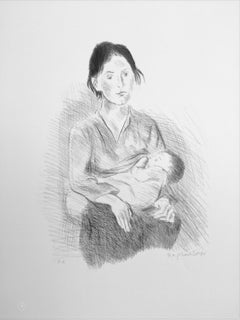
1970s Realist Vintage Breastfeeding Art
Lithograph

1970s Realist Vintage Breastfeeding Art
Lithograph

1970s Realist Vintage Breastfeeding Art
Lithograph


1970s Realist Vintage Breastfeeding Art
Lithograph
People Also Browsed
Early 20th Century French Art Nouveau Vintage Breastfeeding Art
Bronze
1970s Vintage Breastfeeding Art
Lithograph
1960s American Chinoiserie Vintage Breastfeeding Art
Copper, Pewter
1970s English Mid-Century Modern Vintage Breastfeeding Art
Velvet, Wood, Upholstery

1970s Realist Vintage Breastfeeding Art
Lithograph
1960s French Mid-Century Modern Vintage Breastfeeding Art
Paper
1970s Realist Vintage Breastfeeding Art
Lithograph
Early 2000s American Modern Vintage Breastfeeding Art
Canvas, Oil
1960s American Mid-Century Modern Vintage Breastfeeding Art
Bronze, Pewter

Early 1900s Modern Vintage Breastfeeding Art
Etching, Aquatint
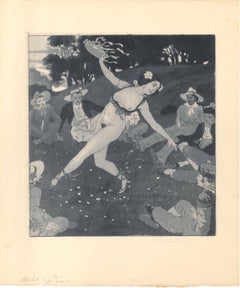
1890s Vintage Breastfeeding Art
Drypoint, Aquatint
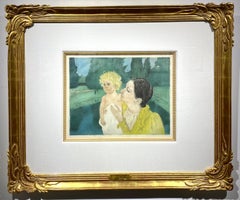
1970s Realist Vintage Breastfeeding Art
Lithograph
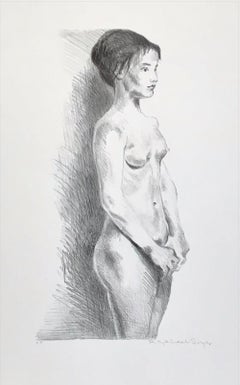
1970s Realist Vintage Breastfeeding Art
Lithograph
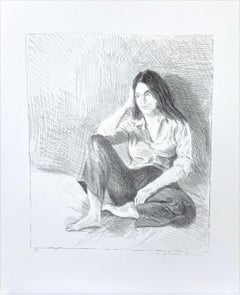
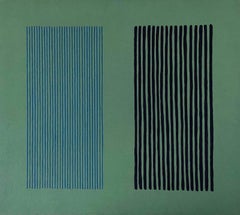
1980s Abstract Geometric Vintage Breastfeeding Art
Screen
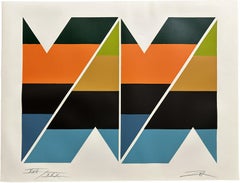
1970s Abstract Geometric Vintage Breastfeeding Art
Screen
Mid-19th Century Qing Vintage Breastfeeding Art
Paper, Ink, Watercolor

Raphael Soyer for sale on 1stDibs
Raphael Soyer, a Russian-born artist, was best known for his compassionate, naturalistic depictions of urban subjects. His sensitive, penetrating portrayals include a broad range of city dwellers, dancers, shoppers, office workers and fellow artists. Historically, Soyer is associated with the social realist artists of the 1930s, whose art championed the cause of social justice. Soyer was referred to as an American scene painter. He is identified as a Social Realist because of his interest in men and women viewed in contemporary settings which included the streets, subways, salons and artists' studios of New York City. He also wrote several books on his life and art. His brothers Moses and Issac were also notable artists.
A Close Look at Realist Art
Realist art attempts to portray its subject matter without artifice. Similar to naturalism, authentic realist paintings and prints see an integration of true-to-life colors, meticulous detail and linear perspectives for accurate portrayals of the world.
Work that involves illusionistic techniques of realism dates back to the classical world, such as the deceptive trompe l’oeil used since ancient Greece. Art like this became especially popular in the 17th century when Dutch artists like Evert Collier painted objects that appeared real enough to touch. Realism as an artistic movement, however, usually refers to 19th-century French realist artists such as Honoré Daumier exploring social and political issues in biting lithographic prints, while the likes of Gustave Courbet and Jean-François Millet painting people — particularly the working class — with all their imperfections, navigating everyday urban life. This was a response to the dominant academic art tradition that favored grand paintings of myth and history.
By the turn of the 20th century, European artists, such as the Pre-Raphaelites, were experimenting with nearly photographic realism in their work, as seen in the attention to every botanical attribute of the flowers surrounding the drowned Ophelia painted by English artist John Everett Millais.
Although abstraction was the guiding style of 20th-century art, the realism trend in American modern art endured in Edward Hopper, Andrew Wyeth and other artists’ depictions of the complexities of the human experience. In the late 1960s, Photorealism emerged with artists like Chuck Close and Richard Estes giving their paintings the precision of a frame of film.
Contemporary artists such as Jordan Casteel, LaToya Ruby Frazier and Aliza Nisenbaum are now using the unvarnished realist approach for honest representations of people and their worlds. Alongside traditional mediums, technology such as virtual reality, artificial intelligence and immersive installations are helping artists create new sensations of realism in art.
Find authentic realist paintings, sculptures, prints and more art on 1stDibs.
Finding the Right Prints-works-on-paper for You
Decorating with fine art prints — whether they’re figurative prints, abstract prints or another variety — has always been a practical way of bringing a space to life as well as bringing works by an artist you love into your home.
Pursued in the 1960s and ’70s, largely by Pop artists drawn to its associations with mass production, advertising, packaging and seriality, as well as those challenging the primacy of the Abstract Expressionist brushstroke, printmaking was embraced in the 1980s by painters and conceptual artists ranging from David Salle and Elizabeth Murray to Adrian Piper and Sherrie Levine.
Printmaking is the transfer of an image from one surface to another. An artist takes a material like stone, metal, wood or wax, carves, incises, draws or otherwise marks it with an image, inks or paints it and then transfers the image to a piece of paper or other material.
Fine art prints are frequently confused with their more commercial counterparts. After all, our closest connection to the printed image is through mass-produced newspapers, magazines and books, and many people don’t realize that even though prints are editions, they start with an original image created by an artist with the intent of reproducing it in a small batch. Fine art prints are created in strictly limited editions — 20 or 30 or maybe 50 — and are always based on an image created specifically to be made into an edition.
Many people think of revered Dutch artist Rembrandt as a painter but may not know that he was a printmaker as well. His prints have been preserved in time along with the work of other celebrated printmakers such as Pablo Picasso, Salvador Dalí and Andy Warhol. These fine art prints are still highly sought after by collectors.
“It’s another tool in the artist’s toolbox, just like painting or sculpture or anything else that an artist uses in the service of mark making or expressing him- or herself,” says International Fine Print Dealers Association (IFPDA) vice president Betsy Senior, of New York’s Betsy Senior Fine Art, Inc.
Because artist’s editions tend to be more affordable and available than his or her unique works, they’re more accessible and can be a great opportunity to bring a variety of colors, textures and shapes into a space.
For tight corners, select small fine art prints as opposed to the oversized bold piece you’ll hang as a focal point in the dining area. But be careful not to choose something that is too big for your space. And feel free to lean into it if need be — not every work needs picture-hanging hooks. Leaning a larger fine art print against the wall behind a bookcase can add a stylish installation-type dynamic to your living room. (Read more about how to arrange wall art here.)
Find fine art prints for sale on 1stDibs today.