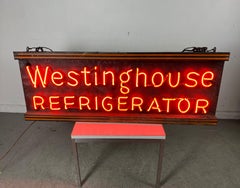
Vintage Westinghouse Refrigerator
Recent Sales
1940s American Art Deco Vintage Westinghouse Refrigerator
Metal

A Close Look at Art-deco Furniture
Art Deco furniture is characterized by its celebration of modern life. More than its emphasis on natural wood grains and focus on traditional craftsmanship, vintage Art Deco dining chairs, tables, desks, cabinets and other furniture — which typically refers to pieces produced during the 1920s and 1930s — is an ode to the glamour of the “Roaring Twenties.”
ORIGINS OF ART DECO FURNITURE DESIGN
- Emerged in the 1920s
- Flourished while the popularity of Art Nouveau declined
- Term derives from 1925’s Exposition Internationale des Arts Décoratifs et Industriels Modernes (International Exhibition of Modern Decorative and Industrial Arts) in Paris, France
- Informed by Ancient Egypt, Cubism, Futurism, Louis XVI, De Stijl, modernism and the Vienna Secession; influenced Streamline Moderne and mid-century modernism
CHARACTERISTICS OF ART DECO FURNITURE DESIGN
- Bold geometric lines and forms, floral motifs
- Use of expensive materials such as shagreen or marble as well as exotic woods such as mahogany, ebony and zebra wood
- Metal accents, shimmering mirrored finishes
- Embellishments made from exotic animal hides, inlays of mother-of-pearl or ivory
ART DECO FURNITURE DESIGNERS TO KNOW
VINTAGE ART DECO FURNITURE ON 1STDIBS
Few design styles are as universally recognized and appreciated as Art Deco. The term alone conjures visions of the Roaring Twenties, Machine Age metropolises, vast ocean liners, sleek typography and Prohibition-era hedonism. The iconic movement made an indelible mark on all fields of design throughout the 1920s and ’30s, celebrating society’s growing industrialization with refined elegance and stunning craftsmanship.
Widely known designers associated with the Art Deco style include Émile-Jacques Ruhlmann, Eileen Gray, Maurice Dufrêne, Paul Follot and Jules Leleu.
The term Art Deco derives from the name of a large decorative arts exhibition held in Paris in 1925. “Art Deco design” is often used broadly, to describe the work of creators in associated or ancillary styles. This is particularly true of American Art Deco, which is also called Streamline Moderne or Machine Age design. (Streamline Moderne, sometimes known as Art Moderne, was a phenomenon largely of the 1930s, post–Art Nouveau.)
Art Deco textile designers employed dazzling floral motifs and vivid colors, and while Art Deco furniture makers respected the dark woods and modern metals with which they worked, they frequently incorporated decorative embellishments such as exotic animal hides as well as veneers in their seating, case pieces, living room sets and bedroom furniture.
From mother-of-pearl inlaid vitrines to chrome aviator chairs, bold and inventive works in the Art Deco style include chaise longues (also known as chaise lounges) and curved armchairs. Today, the style is still favored by interior designers looking to infuse a home with an air of luxury and sophistication.
The vintage Art Deco furniture for sale on 1stDibs includes dressers, coffee tables, decorative objects and more.
Finding the Right Signs for You
Vintage and antique signs are popular collector’s items loved not only for the charm and pops of color they add to a space but also for the unique story each one has to tell. An interesting sign can help set the mood for a room and spark dozens of lively conversations.
Before and during the 18th century, many European peasants and colonists in the Americas couldn’t read, so shopkeepers, in an effort to promote their goods and services, hung trade signs with limited amounts of text.
Indeed, symbols and representational physical objects comprised early-day advertising efforts. In lieu of painted words on a wooden board, trade signs made use of handmade three-dimensional symbols to indicate the function of the shop. The iconic red, white and blue pole could be found outside barbershops, while a figural trade sign mounted to an apothecary’s storefront might be a mortar and pestle sculpted from bronze in order to indicate to passers-by that inside there were apothecary cabinets full of remedies for common ailments and a druggist to carefully dispense them.
As literacy rates improved, signs evolved into rectangular, round or square shapes that featured text. Short and sweet, early iterations were characterized by a mere few words, such as “tavern,” “boarding room” or “apothecary.”
During the 19th century, proprietors endeavored to render their signs more appealing. This meant the introduction of more color, font types and other pictorial representations. After the Civil War ended, logos, branding and advertising became increasingly more important, and the design of signage evolved. Trade signs were still in use during the 20th century, and you will likely find hand-painted tin eyeglasses for an optometrist’s office or an oversize bowling pin that likely had a home in the front window of a bowling alley.
Today, collectors and art aficionados alike collect and display antique and vintage signs. Old signs hearken back to a long-gone era, infusing any interior with warmth and nostalgia.
A vintage sign can help anchor a room — think of decorating with signs as you would arranging any kind of wall art. A large-scale sign in particular can prove a distinguishing feature in a living room or dining room, a focal point so prominent that it might lessen the burden of introducing any additional decorative elements to this particular space. Smaller signs work wonders too — pepper sparsely decorated corners with small colorful signs or add a humorous or graphic element to your gallery-style hang with a small text-based sign or two.
On 1stDibs, find metal, wood and glass antique and vintage signs that span a number of styles, including mid-century modern, industrial and folk art.