Waterford Crystal Bud Vase
Recent Sales
Late 20th Century German Modern Vases
Crystal
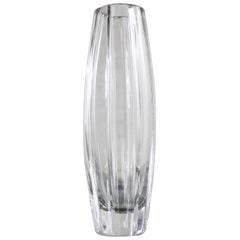

Marquis by Waterford for sale on 1stDibs
Introduced in 1991 by iconic glass design firm Waterford, the Marquis by Waterford range of vases, bowls and other wares were versatile, priced for everyday use and intended for use in modern homes. It was the first new brand debuted by the company in what was then its more than two-century history.
Among glassware aficionados, the name Waterford has earned a place of eminence — both for antique crystal vases, glasses and serveware made by the original Irish company in the 18th and 19th centuries, and for new versions of the firm’s classic patterns produced after its rebirth in the 1940s. With either iteration, Waterford is a byword for traditional elegance.
Waterford crystal was born of a tax loophole. In 1783, business-minded brothers George and William Penrose founded the Waterford Glass House in southeastern Ireland because Irish glass was exempt from steep British import duties. The two wanted to make fine-quality wares and hired artisans from England, including master glassmaker John Hill. The factory’s flint glass — a precursor to lead crystal — soon won a clientele among British and continental aristocrats.
One of Hill’s aesthetic innovations was to polish glassware after a pattern was cut, to buff off the resulting frosted surface. The look became a Waterford trademark. Through the fame of its wine goblets, claret jugs and decanters, the firm continued to win honors at the many industrial expositions of the early Victorian era. But over those years, higher and higher luxury excise taxes were placed on fine crystal. Waterford products became prohibitively expensive, and the company closed in 1851.
The brand’s renown was still intact when it was revived in 1947 by a Czech glass manufacturer named Charles Bacik, who moved to Ireland after the Communist takeover of his country. For centuries, the region now called the Czech Republic had been the great glassware center of Middle Europe — the source of crystal to legendary Viennese glass design firms such as Lobmeyr and Bakalowits. So Bacik brought with him the master glassblower and designer Miroslav Havel.
In Dublin, Havel studied the old Waterford style book archives kept in the National Museum. He used these classic patterns as the basis for new ones such as Lismore, with its crosshatching and flame-like vertical cuts, and Alana, with its heavily textured diamond cuts. Past and present are thus linked at Waterford.
As you will see on 1stDibs, antique or recently made, Waterford crystal is the essence of refinement.
Find Marquis by Waterford crystal vases, serveware and other collectibles for sale on 1stDibs.
A Close Look at Modern Furniture
The late 19th and early 20th centuries saw sweeping social change and major scientific advances — both of which contributed to a new aesthetic: modernism. Rejecting the rigidity of Victorian artistic conventions, modernists sought a new means of expression. References to the natural world and ornate classical embellishments gave way to the sleek simplicity of the Machine Age. Architect Philip Johnson characterized the hallmarks of modernism as “machine-like simplicity, smoothness or surface [and] avoidance of ornament.”
Early practitioners of modernist design include the De Stijl (“The Style”) group, founded in the Netherlands in 1917, and the Bauhaus School, founded two years later in Germany.
Followers of both groups produced sleek, spare designs — many of which became icons of daily life in the 20th century. The modernists rejected both natural and historical references and relied primarily on industrial materials such as metal, glass, plywood, and, later, plastics. While Bauhaus principals Marcel Breuer and Ludwig Mies van der Rohe created furniture from mass-produced, chrome-plated steel, American visionaries like Charles and Ray Eames worked in materials as novel as molded plywood and fiberglass. Today, Breuer’s Wassily chair, Mies van der Rohe’s Barcelona chair — crafted with his romantic partner, designer Lilly Reich — and the Eames lounge chair are emblems of progressive design and vintage originals are prized cornerstones of collections.
It’s difficult to overstate the influence that modernism continues to wield over designers and architects — and equally difficult to overstate how revolutionary it was when it first appeared a century ago. But because modernist furniture designs are so simple, they can blend in seamlessly with just about any type of décor. Don’t overlook them.
Finding the Right Vases for You
Whether it’s a Chinese Han dynasty glazed ceramic wine vessel, a work of Murano glass or a hand-painted Scandinavian modern stoneware piece, a fine vase brings a piece of history into your space as much as it adds a sophisticated dynamic.
Like sculptures or paintings, antique and vintage vases are considered works of fine art. Once offered as tributes to ancient rulers, vases continue to be gifted to heads of state today. Over time, decorative porcelain vases have become family heirlooms to be displayed prominently in our homes — loved pieces treasured from generation to generation.
The functional value of vases is well known. They were traditionally utilized as vessels for carrying dry goods or liquids, so some have handles and feature an opening at the top (where they flare back out). While artists have explored wildly sculptural alternatives over time, the most conventional vase shape is characterized by a bulbous base and a body with shoulders where the form curves inward.
Owing to their intrinsic functionality, vases are quite possibly versatile in ways few other art forms can match. They’re typically taller than they are wide. Some have a neck that offers height and is ideal for the stems of cut flowers. To pair with your mid-century modern decor, the right vase will be an elegant receptacle for leafy snake plants on your teak dining table, or, in the case of welcoming guests on your doorstep, a large ceramic floor vase for long tree branches or sticks — perhaps one crafted in the Art Nouveau style — works wonders.
Interior designers include vases of every type, size and style in their projects — be the canvas indoors or outdoors — often introducing a splash of color and a range of textures to an entryway or merely calling attention to nature’s asymmetries by bringing more organically shaped decorative objects into a home.
On 1stDibs, you can browse our collection of vases by material, including ceramic, glass, porcelain and more. Sizes range from tiny bud vases to massive statement pieces and every size in between.