Yamaguchi Painting

Late 18th Century Japanese Framed Painting, God of Thunder by Yamaguchi Soken
Located in Kyoto, JP
Raijin - God of Thunder Yamaguchi Soken (1759-1818) Mid to Late Edo period, circa 1800
Category

Antique Late 18th Century Asian Edo Paintings and Screens

Materials

Paper

Recent Sales

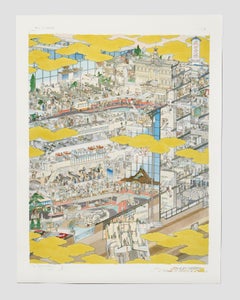
Narita International Airport: View of Flourishing New South Wing
By Yamaguchi Akira
Located in Santa Fe, NM
and often humorous. Yamaguchi’s paintings expand the limits of the imagination by dramatically bending
Category

2010s Contemporary Prints and Multiples

Materials

Archival Pigment

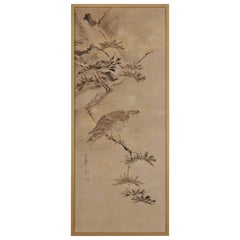
Japanese Painting, Framed, 17th-18th Century, Falcon by Yamaguchi Sekkei
Located in Kyoto, JP
Yamaguchi Sekkei (1644-1732) Falcon Framed panel, ink and gold fleck on paper Dimensions
Category

Antique Early 1700s Japanese Edo Paintings and Screens

Materials

Wood, Paper

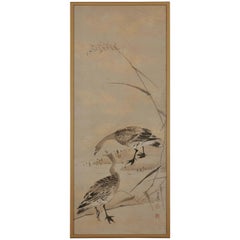
Japanese Painting, Framed, 17th-18th Century, Geese Reeds by Yamaguchi Sekkei
Located in Kyoto, JP
escape the excess heat of summer. Rather than painting in the prevailing styles of his time, Yamaguchi
Category

Antique Early 1700s Edo Paintings and Screens

Materials

Wood, Paper

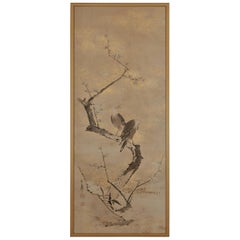
Japanese Painting, Framed, 17th-18th Century, Plum Bird by Yamaguchi Sekkei
Located in Kyoto, JP
Yamaguchi Sekkei (1644-1732) Spring plum and birds Framed panel, ink and gold fleck on paper
Category

Antique Early 1700s Japanese Edo Paintings and Screens

Materials

Wood, Paper

People Also Browsed

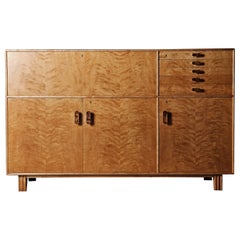
Chunky cabinet by Axel Larsson for Bodafors, Sweden, 1930s
By Axel Larsen, SMF Svenska Möbelfabriken Bodafors
Located in Eskilstuna, SE
Big cabinet designed by Axel Larsson and produced by Bodafors, Sweden, during the 1930s. Chunky model made in birch with tons of storage and a writing desk.
Category

Mid-20th Century Swedish Scandinavian Modern Cabinets

Materials

Brass

Set of Four Bertha Schaefer Dining Chairs Italian Mid Century
By M. Singer Sons, Bertha Schaefer
Located in New York, NY
A set of sculptural light/medium walnut chairs by Bertha Schaefer for Singer and Son. Reupholstered in a golden cream/off white cotton/linen blend. Original Tag. Chairs were made in ...
Category

Vintage 1950s Italian Mid-Century Modern Dining Room Chairs

Materials

Walnut, Cotton

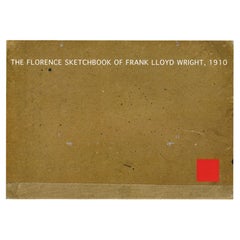
Florence Sketchbook of Frank Lloyd Wright (Book)
Located in North Yorkshire, GB
This is a limited edition facsimile of the manuscript sketchbook by Frank Lloyd Wright which served as the maquette or layout for the famous Wasmuth portfolio of 1910 entitled "Studi...
Category

Early 20th Century Books

Materials

Paper

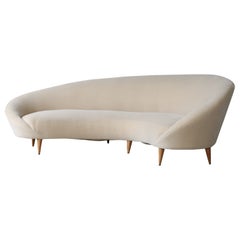
Curved Sofa Attributed to Federico Munari, Italy, 1950s
By Ico Parisi, Federico Munari
Located in Lewes, East Sussex
An curved comma sofa, by Federico Munari, Italy. Newly reupholstered in ivory coloured, premium, pure mohair fabric. Makers label to underside.
Category

Mid-20th Century Italian Mid-Century Modern Sofas

Materials

Fabric, Wood

Curved Sofa Attributed to Federico Munari, Italy, 1950s
On Hold
$16,248
H 31.11 in W 90.56 in D 37.41 in
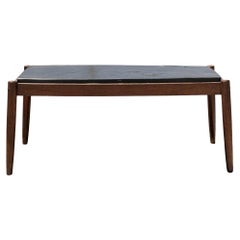
French Brutalist Pierre Chapo Style Coffee Table With Slate Top
By Jean Prouvé, Pierre Chapo, Pierre Jeanneret, Atelier Marolles, Jacques Adnet
Located in Houston, TX
French Brutalist Pierre Chapo Style Coffee Table With Slate Top. Our handsome French mid century Pierre Chapo style Brutalist rectangular cocktail table is stunning from every angle ...
Category

Vintage 1960s French Brutalist Coffee and Cocktail Tables

Materials

Slate

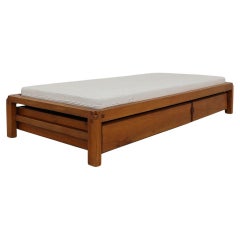
1960 s Pierre Chapo L03 Daybed in Solid Elm with Newly Upholstered Mattress
By Pierre Chapo
Located in Los Angeles, CA
1960's 'L03' daybed by Pierre Chapo with new upholstered light gray mattress. This piece is made from solid elm wood, features Chapo's signature handcrafted joints and includes two d...
Category

Mid-20th Century French Mid-Century Modern Daybeds

Materials

Upholstery, Elm

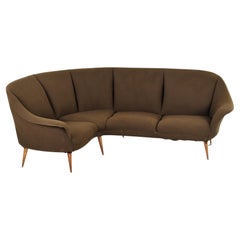
1950s Italian Mid Century Corner Sofa
Located in Berkeley, CA
Origin: Italy Designer: Unknown Manufacturer: Unknown Era: 1950s Materials: Wool, Beech Measurements: 78.75″ wide x 25.5″ deep x 31.5″ tall Condition: In good original condition wit...
Category

Mid-20th Century Italian Mid-Century Modern Sofas

Materials

Wool, Beech

1950s Italian Mid Century Corner Sofa
$7,800
H 31.5 in W 78.75 in D 25.5 in
Rare Desk with Chair by Brown Saltman
By Brown Saltman
Located in Torrance, CA
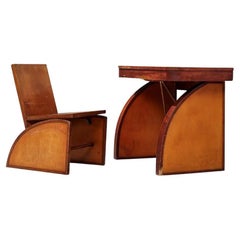
Brown Saltman, desk with chair, wood, United States, circa 1940s A cubist desk with chair. This set holds a similar idiom with clear forms and lines. Both the chair and the desk ...
Category

Vintage 1940s Mid-Century Modern Desks

Materials

Wood

Rare Desk with Chair by Brown Saltman
$18,999
H 31.3 in W 19.69 in D 25.2 in
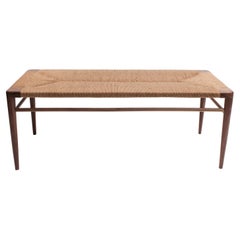
44" Woven Rush Bench in Walnut by Mel Smilow
By Mel Smilow
Located in New York, NY
Originally designed by Mel Smilow in 1956, the Woven Rush Benches have been redesigned by Judy Smilow and officially reintroduced in 2013. This collection’s handwoven seating and han...
Category

21st Century and Contemporary American Mid-Century Modern Benches

Materials

Rush, Walnut

44" Woven Rush Bench in Walnut by Mel Smilow
$3,900 / item
H 17 in W 44 in D 18 in
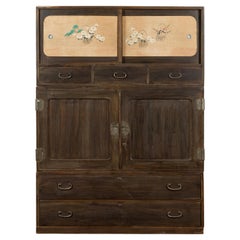
Early 20th Century Japanese Taishō Cabinet with Hand-Painted Woodblock Prints
Located in Yonkers, NY
This stunning Japanese Taisho vintage cabinet is a favorite addition to our antique and vintage cabinets collection. Crafted during the early 20th century, this large vintage cabinet...
Category

Early 20th Century Japanese Taisho Cabinets

Materials

Wood

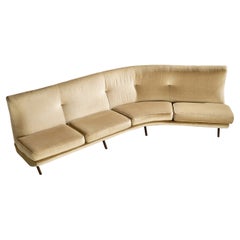
Marco Zanuso, Sofa, Velvet, Brass, Italy, 1950s
By Marco Zanuso, Arflex
Located in High Point, NC
A curved velvet and brass sofa designed by Marco Zanuso and produced by Arflex, Italy, c. 1950s. Seat Height: 15.5" All upholstered furniture can be reupholstered upon request for ...
Category

Vintage 1950s Italian Mid-Century Modern Sofas

Materials

Brass

Marco Zanuso, Sofa, Velvet, Brass, Italy, 1950s
$8,900
H 33 in W 115.75 in D 42.5 in
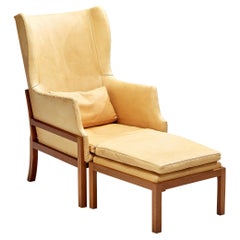
Mogens Koch for K. Ivan Schlechter Fireside Wingback Chair with Ottoman
By Mogens Koch, Rud Rasmussen
Located in Waalwijk, NL
Mogens Koch for K. Ivan Schlechter, 'fireside' wingback lounge chair and ottoman, model MK50, mahogany, leather, Denmark, design 1936, production 1964-1979. Mogens Koch's wingback c...
Category

Vintage 1930s Danish Scandinavian Modern Lounge Chairs

Materials

Leather, Mahogany

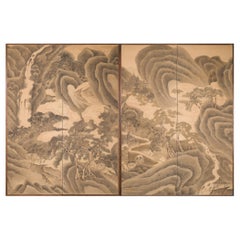
Pair of Two Panel Japanese Screens: Mountain Landscape with Waterfalls and River
Located in Hudson, NY
Rivers of mist, falling water and moss draped trees evolve into a mystical landscape. Ink on silk, bordered in fine mulberry paper. Sold as a pair.
Category

Antique Late 19th Century Japanese Paintings and Screens

Materials

Silk

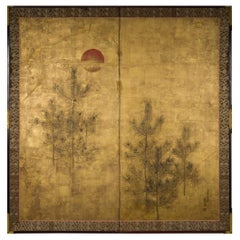
Japanese Two Panel Screen Pine and Red Sun on Gold
Located in Hudson, NY
Mineral pigments on gold leaf. Signature and seal read: Anei H-eishin Boshun ga, dated: late spring 1766 with a dedication to Okyo (Maruyama).
Category

Antique Mid-18th Century Japanese Paintings and Screens

Materials

Gold Leaf

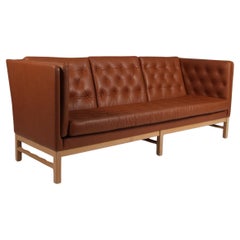
Erik Jørgensen Three-Seat Sofa
By Erik Jørgensen
Located in Esbjerg, DK
Erik Jørgensen three-seat new upholstered with cognac pure anilin leather. Frame of oak. Model EJ 315/3, made by Erik Jørgensen.
Category

Vintage 1960s Danish Scandinavian Modern Sofas

Materials

Leather, Oak

Erik Jørgensen Three-Seat Sofa
$6,965
H 30.71 in W 83.08 in D 31.89 in
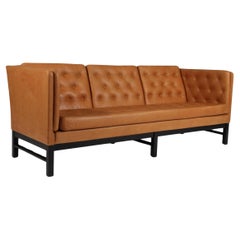
Erik Jørgensen Three-Seat Sofa
By Erik Jørgensen
Located in Esbjerg, DK
Erik Jørgensen three-seat new upholstered with vintage tan anilin leather. Frame of black lacquered wood. Model EJ 315/3, made by Erik Jørgensen.
Category

Vintage 1960s Danish Scandinavian Modern Sofas

Materials

Leather

Erik Jørgensen Three-Seat Sofa
$6,965
H 30.71 in W 83.08 in D 31.89 in
Get Updated with New Arrivals
Save "Yamaguchi Painting", and we’ll notify you when there are new listings in this category.

Yamaguchi Painting For Sale on 1stDibs

At 1stDibs, there are many versions of the ideal yamaguchi painting for your home. A yamaguchi painting — often made from paper, ceramic and porcelain — can elevate any home. There are many kinds of the yamaguchi painting you’re looking for, from those produced as long ago as the 18th Century to those made as recently as the 20th Century. Many designers have produced at least one well-made yamaguchi painting over the years, but those crafted by Mitani Toshuku are often thought to be among the most beautiful.

How Much is a Yamaguchi Painting?

Prices for a yamaguchi painting start at $1,050 and top out at $47,500 with the average selling for $12,800.

A Close Look at Edo Furniture

Edo furniture was created during a flourishing time for the decorative arts owing to the stability of the Tokugawa shogunate rule in Japan. Spanning from 1603 to 1867, this era of peace and economic growth supported artistic advancements in lacquer, woodblock printing, porcelain and other artisanal trades. Because the country was largely isolated, there was little outside influence, leading to centuries of exceptional attention to the design of its furnishings and the quality of its traditional arts.

Unlike during the Meiji period that followed, with an increase in domestic and international markets, furniture during the Edo period was predominately commissioned by the ruling class, although people from across social groups benefited from the burgeoning metropolitan hubs for artisanal trades. For instance, Kyoto became a major center for lacquer art. Most furniture pieces were made from wood such as cedar or ash, including the era’s sashimono cabinets, which involved fine joinery and were rooted in the Heian period.

Sashimono cabinets, which were built by master craftsmen in a range of different wood types owing to the various trees that populate Japan, occasionally featured a stack of slender drawers as well as sliding doors. They were popular with everyone from samurai to kabuki actors. Tansu storage chests crafted from wood with metal fittings were also common in Edo-period homes. Some were designed to be easily portable while others were made to double as staircases.

Painted folding screens, called byōbu, were also fashionable, with Japanese artists inspired by nature, literature and scenes of history and daily life to create vivid works. In Buddhist temples and the palatial homes of the aristocratic class, fusuma, or large sliding panels, would sometimes be adorned with gold or silver leaf. These dividers allowed interiors to change throughout the day, closing in small spaces for personal use or reflecting candlelight to illuminate communal spaces after dark.

Find a collection of Edo tables, lighting, decorative objects, wall decorations and more furniture on 1stDibs.

Finding the Right Paintings-screens for You

Traditional Asian paintings were often created on scrolls and folding screens. Artisans made screens that could be folded up or spread out by connecting several panels using hinges. Today, antique Asian folding screens and paintings are sophisticated decorative accents that can serve as makeshift partitions to ensure privacy.

The original folding screens were created by Chinese artists. The earliest record of screens comes from the 2nd century B.C., and surviving examples date back to the Ming dynasty. Chinese painting utilizes many of the same tools as calligraphy — these screens were crafted from wood with painted panels featuring striking art or calligraphy that told cultural stories or represented nature and life in the area.

The practice was introduced to Japan, where paintings for screens were made on paper and silk, in the 8th century. These paintings frequently feature subjects such as landscapes, animals, flowers and Buddhist religious themes. Along with screens for tea ceremonies and dance backgrounds, there were screens for use in Shinto and Buddhist temples.

In the 17th century, screens began to be imported to Europe where their popularity grew. Coco Chanel famously collected Coromandel folding screens.

Traditional Asian paintings can make a tasteful addition to any wall, and screens can be used as decoration or, in the case of larger iterations, as an aesthetic way to divide a large room. Browse the selection of antique Asian paintings and screens from a variety of styles and eras on 1stDibs.