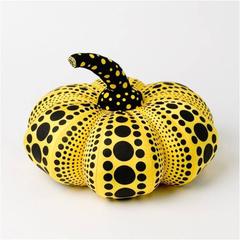
Yayoi Kusama Pumpkin
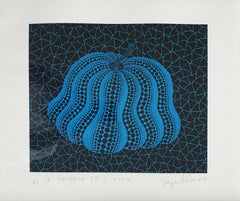
1990s Pop Art Figurative Prints
Paper, Screen
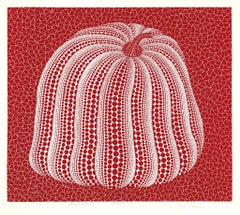
Early 2000s Pop Art Abstract Prints
Paper, Screen
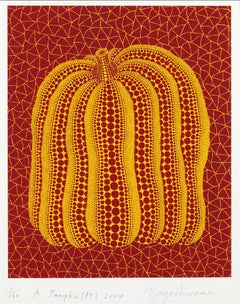
Early 2000s Pop Art Still-life Prints
Paper, Screen
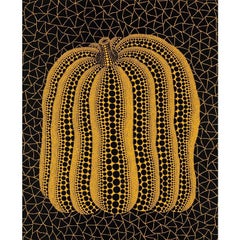
Early 2000s Pop Art Abstract Prints
Screen
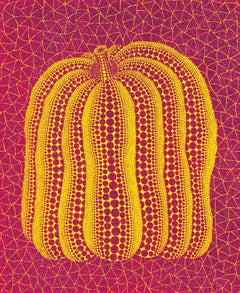
Early 2000s Minimalist Abstract Prints
Screen
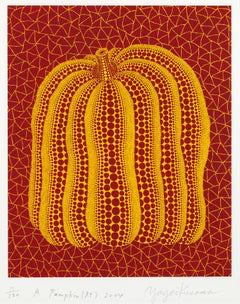
Early 2000s Minimalist Abstract Prints
Screen
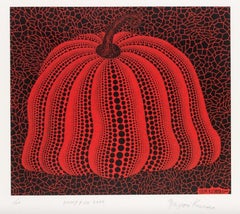
Early 2000s Minimalist Still-life Prints
Screen
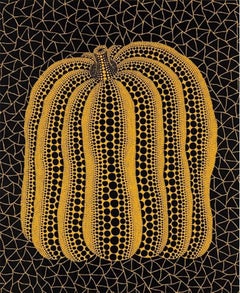
Early 2000s Minimalist Abstract Prints
Paper, Screen
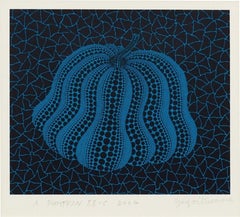
Early 2000s Pop Art Abstract Prints
Screen
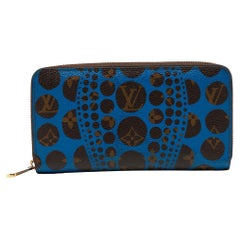
2010s French Wallets

2010s French Structured Shoulder Bags

1990s Pop Art Prints and Multiples
Screen
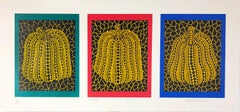
2010s Still-life Sculptures
Resin, Acrylic
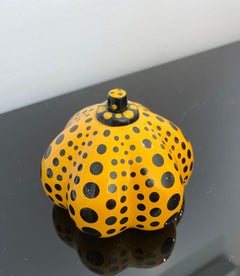
21st Century and Contemporary Sculptures
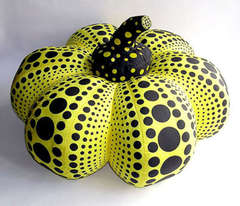
2010s Pop Art Figurative Sculptures
Resin
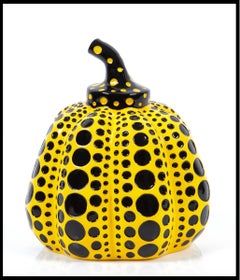
2010s More Art
Resin
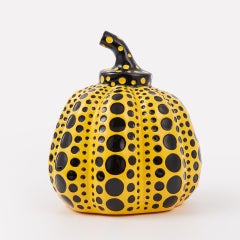
2010s More Art
Resin
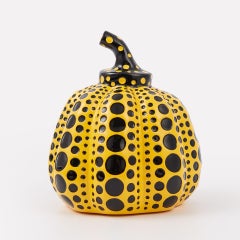
Early 2000s Sculptures
Nylon
- 1
- ...
Yayoi Kusama Pumpkin For Sale on 1stDibs
How Much is a Yayoi Kusama Pumpkin?
Yayoi Kusama for sale on 1stDibs
Widely inspirational and innovative artist Yayoi Kusama has a body of work that is exceptionally varied, ranging from graphic prints and paintings to polka-dot pumpkin sculptures, hypnotic collages, large-scale installations and fashion design.
Even if you don’t know her name, you’ve likely experienced Kusama’s art — or have seen it on Instagram. Her soft sculptures and dazzling “Infinity Mirrors” are the stuff of selfie-takers’ dreams, but Kusama’s impressive decades-long career certainly holds far more cachet than it does fodder for today’s aspiring social-media influencers.
Born in Matsumoto, Japan, in 1929, Kusama has worked with her signature polka dots since the age of 10, when she began to experience vivid hallucinations and claimed that patterns and dots were moving around her, swallowing up everything in view. She started to incorporate them into her paintings as a child. Kusama saw circular forms and nets on every surface and became especially fascinated with the pebbles that lined the bottom of the creek near her childhood home. Her family was sternly opposed to her art and her mother physically abused Kusama and discouraged her at a very early age. She has suffered psychological turmoil her whole life and is vocal about her mental illness. Today, Kusama is a voluntary resident at a psychiatric facility in Tokyo, and she calls her work “art medicine.”
At the Kyoto School of Arts and Crafts, Kusama trained in Nihonga, a traditional style of Japanese painting that originated during the Meiji period. On advice she solicited from painter Georgia O'Keeffe, a pioneer of modernism in America whom she greatly admired, she subsequently moved to New York City in 1958. There, Kusama flourished, creating prescient sculptures and large-scale monochrome paintings that bridged current styles with minimalism, which hadn’t yet achieved any kind of prominence as an art movement. She pushed boundaries with her “Accumulations” series, which saw her transforming found furniture pieces into sexualized objects, as well as with an avant-garde staging of theatrical orgies on the street — both stemming from her anxieties about sex as well as an endeavor to make a feminist statement about patriarchal authority and sexism.
Kusama was captivated by Surrealists as well as the Abstract Expressionists and greatly influenced the Pop artists who followed, befriending such icons as Donald Judd — who called her work “the best paintings being done” — and Andy Warhol, with whom she exhibited and later accused of stealing her ideas. Kusama moved with ease through artistic circles and made a point to draw attention to her “otherness” as a Japanese woman by wearing kimonos to her openings.
In 2021, Kusama brought her floral and vegetal sculptures to the New York Botanical Garden and her works can be found in the collections of many of the world’s top museums, including the Museum of Modern Art in New York, the Centre Pompidou in Paris and the National Museum of Modern Art in Tokyo. She famously collaborated with Louis Vuitton in 2012, and she created a 34-foot-tall balloon for the Macy’s Thanksgiving Day Parade in Manhattan in 2019, becoming the first female artist to design a work for the event. In addition to her visual artwork, Kusama is a writer, publishing poetry, novels and an autobiography.
Find a collection of Yayoi Kusama art on 1stDibs.
Finding the Right Sculptures for You
The history of sculpture as we know it is believed to have origins in Ancient Greece, while small sculptural carvings are among the most common examples of prehistoric art. In short, sculpture as a fine art has been with us forever. A powerful three-dimensional means of creative expression, sculpture has long been most frequently associated with religion — consider the limestone Great Sphinx in Giza, Egypt — while the tradition of collecting sculpture, which has also been traced back to Greece as well as to China, far precedes the emergence of museums.
Technique and materials in sculpture have changed over time. Stone sculpture, which essentially began as images carved into cave walls, is as old as human civilization itself. The majority of surviving sculpted works from ancient cultures are stone. Traditionally, this material and pottery as well as metal — bronze in particular — were among the most common materials associated with this field of visual art. Artists have long sought new ways and materials in order to make sculptures and express their ideas. Material, after all, is the vehicle through which artists express themselves, or at least work out the problems knocking around in their heads. It also allows them to push the boundaries of form, subverting our expectations and upending convention. As an influential sculptor as much as he was a revolutionary painter and printmaker, Pablo Picasso worked with everything from wire to wood to bicycle seats.
If you are a lover of art and antiques or are thinking of bringing a work of sculpture into your home for the first time, there are several details to keep in mind. As with all other works of art, think about what you like. What speaks to you? Visit local galleries and museums. Take in works of public art and art fairs when you can and find out what kind of sculpture you like. When you’ve come to a decision about a specific work, try to find out all you can about the piece, and if you’re not buying from a sculptor directly, work with an art expert to confirm the work’s authenticity.
And when you bring your sculpture home, remember: No matter how big or small your new addition is, it will make a statement in your space. Large- and even medium-sized sculptures can be heavy, so hire some professional art handlers as necessary and find a good place in your home for your piece. Whether you’re installing a towering new figurative sculpture — a colorful character by KAWS or hyperreal work by Carole A. Feuerman, perhaps — or an abstract work by Won Lee, you’ll want the sculpture to be safe from being knocked over. (You’ll find that most sculptures should be displayed at eye level, while some large busts look best from below.)
On 1stDibs, find a broad range of exceptional sculptures for sale. Browse works by your favorite creator, style, period or other attribute.