Abraham Walkowitz Abstract Drawings and Watercolors

American, 1878-1965

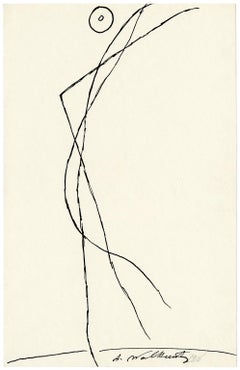
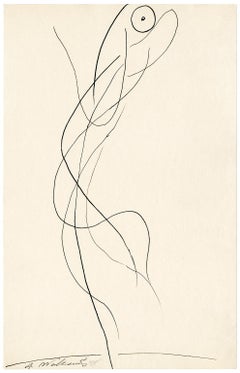
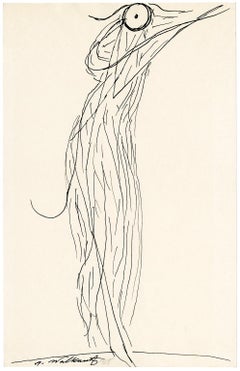
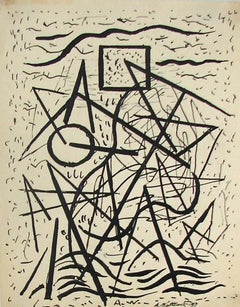
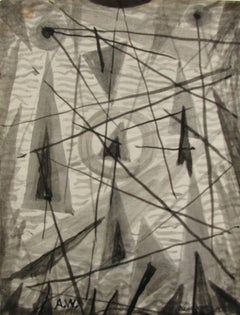
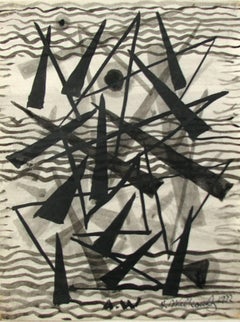
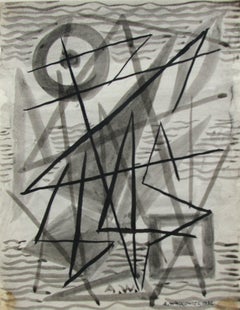
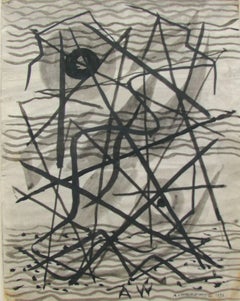
Abraham Walkowitz is perhaps best known for his watercolor studies of Isadora Duncan and the dance. However, Walkowitz laid claim to being the first to exhibit truly modernist paintings in the United States. After 1909, he became an intimate of Alfred Stieglitz's 291 Gallery, and while there became a participant in the debate over modern art in America. Walkowitz was an outspoken proponent of the continuous experimentation in the arts, which was his definition of modernism. As an artist, Walkowitz embodied the changing role of the modernist painter in the United States, as modernism moved from an avant-garde protest against established modes to become an accepted style and tradition. 

Abraham Walkowitz was a Russian born, turn-of-the-century immigrant to the United States, who grew up in New York's Lower East Side. He first studied art at the Educational Alliance, the Cooper Union and the National Academy of Design. In 1906, he journeyed to Europe where he studied at the Académie Julian in Paris. Upon his return to the United States in 1907, he became a fully-fledged convert to modernism, and his first exhibit, at the Haas Gallery in that year, brought him a measure of notoriety as well as the attention of Stieglitz and other pioneers of non-objective art. In subsequent years, he became one of the most exhibited painters shown at the 291 Gallery, a fact which was also reflected in the pages of Stieglitz's polemical journal of modernism, camera work. As a result of this early attention, by the time of the Armory Show of 1913, to which Walkowitz contributed several paintings, his work was widely known to both fellow modernists as well as their opponents. 

Walkowitz was clearly part of the new vocabulary of American art and criticism. During the 1920s and 1930s, as the first-generation modernists lost their revolutionary cast, and as American realism gained in favor, Walkowitz continued his experiments with form and line, especially in his series of Duncan studies. Although his paintings received less critical attention than they once had, Walkowitz was clearly one of the grand old folk of American modernism. During the depression, Walkowitz was politically active on behalf of unemployed artists supporting various new-deal initiatives in the arts. In the 1940s, Walkowitz gained national attention when he explored the varieties of the modernist vision in the form of an exhibit of 100 portraits of him by 100 artists. The result was widely discussed and was featured in Life magazine in 1944. 

In 1945, Walkowitz traveled to Kansas, where he painted landscapes made up largely of strip mines and barns. This was his last venture in active painting — by 1946, glaucoma, which led to his eventual blindness, began to impair his vision and limit his ability to work. Walkowitz then turned to the preparation of a series of volumes of his drawings, designed to illustrate the development of modernism in the 20th century, and in so doing, established his role as a pioneer American modernist.

to
8
Overall Width
to
Overall Height
to
8
2
2
6
2
5
3
1
4
3
2
2
1
26
135
110
94
77
4
4
4
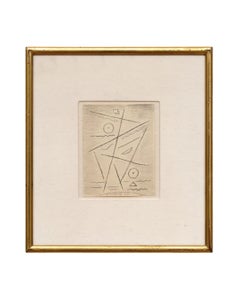
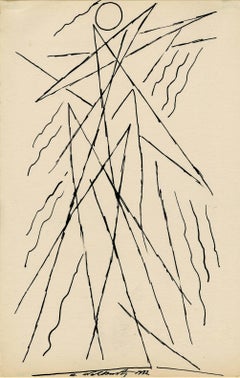
Artist: Abraham Walkowitz
Abstraction
By Abraham Walkowitz
Located in Fairlawn, OH
Signed and dated in ink lower center Provenance: Charlotte Bergman, noted collector and patron of Walkowitz. See photo for additional information.
Category

1930s Modern Abraham Walkowitz Abstract Drawings and Watercolors

Materials

Ink, Pen

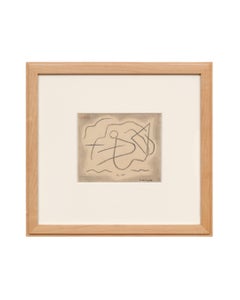
Abstract #2
By Abraham Walkowitz
Located in London, GB
“If it brings to me a harmonious sensation…” Walkowitz once said, “…I then try to find the concrete elements that are likely to record the sensation in visual forms.” This philosoph...
Category

Mid-20th Century American Modern Abraham Walkowitz Abstract Drawings and Watercolors

Materials

Pencil

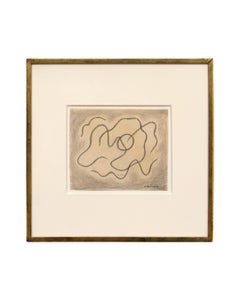
Early Abstraction
By Abraham Walkowitz
Located in London, GB
This soft and inviting work is the first in a series of abstractions. Walkowitz utilises innovative drawing techniques, the side of the pencil becomes a valuable tool in creating a b...
Category

Early 20th Century American Modern Abraham Walkowitz Abstract Drawings and Watercolors

Materials

Paper, Photographic Film

"Abstract Cityscape" NYC Early 20th Century American Scene Social Realism Ashcan
By Abraham Walkowitz
Located in New York, NY
"Abstract Cityscape" NYC Early 20th Century American Scene Social Realism Ashcan Abraham Walkowitz (American, 1878-1965) Abstract Cityscape Sight: 6 1/4' x 8 1/2 inches Mixed media...
Category

1910s Abstract Abraham Walkowitz Abstract Drawings and Watercolors

Materials

Paper, Mixed Media

Early Abstraction II
By Abraham Walkowitz
Located in London, GB
This soft and inviting work is the second in a series of abstractions by Walkowitz. Containing a central sequence of wavey lines and a singular circle, it evokes a feelings of joy in...
Category

Early 20th Century American Modern Abraham Walkowitz Abstract Drawings and Watercolors

Materials

Pencil

Untitled
By Abraham Walkowitz
Located in London, GB
In ‘Untitled’ 1932, Walkowitz crafts a memorable image. Tessellating lines are centred on the page and form geometric shapes. Faint pencil marking reveal the artists forward planning...
Category

Early 20th Century American Modern Abraham Walkowitz Abstract Drawings and Watercolors

Materials

Pen, Pencil

Untitled (Figurative Abstraction of Isadora Duncan #7)
By Abraham Walkowitz
Located in Myrtle Beach, SC
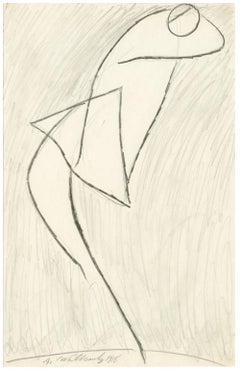
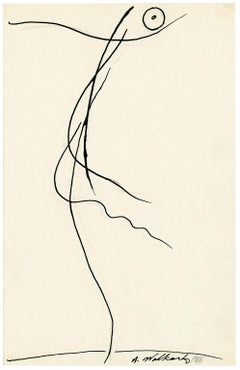
Abraham Walkowitz, Untitled (Figurative Abstraction of Isadora Duncan #7), pencil, 1918. Signed and dated in pencil, bottom center. A fine, spon...
Category

1910s American Modern Abraham Walkowitz Abstract Drawings and Watercolors

Materials

Pencil

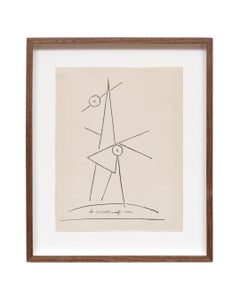
Abstraction
By Abraham Walkowitz
Located in Fairlawn, OH
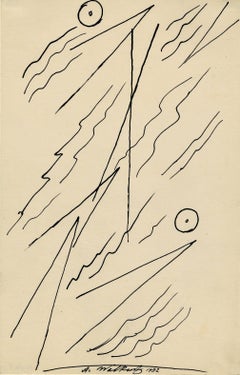
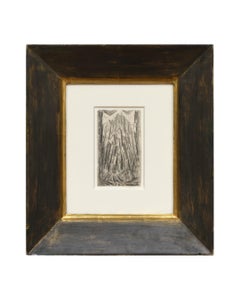
Untitled Abstraction Pen and ink on paper, 1932 Signed and dated in ink lower center Condition: Excellent Sheet/Image size: 10 3/8 x 6 1/4 inches Frame size: 16 1/2 x 12 1/2" Provena...
Category

1930s Abstract Geometric Abraham Walkowitz Abstract Drawings and Watercolors

Materials

Ink, Pen

Related Items
Ca. 1950, Black White Ink Abstraction by Notable Artist Jan Matulka
By Jan Matulka
Located in Chicago, IL
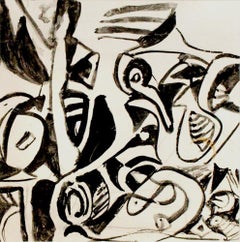
A handsome ca. 1950 black & white Abstraction by important Modernist artist Jan Matulka. Image size: 6" x 6 1/2". Framed size: 12 3/4" x 12 3/4". Born in Prague, Czechoslovakia...
Category

1950s American Modern Abraham Walkowitz Abstract Drawings and Watercolors

Materials

Ink, Graphite

Rainstorm Sunset
By Robert Noel Blair
Located in Buffalo, NY
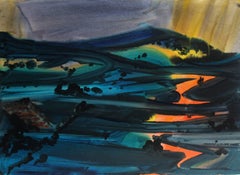
You are viewing a modernist American watercolor painting by Robert Noel Blair. Robert Noel Blair (American, 1912-2003) was an American artist, painter, sculptor, printmaker and te...
Category

American Modern Abraham Walkowitz Abstract Drawings and Watercolors

Materials

Paper, Watercolor

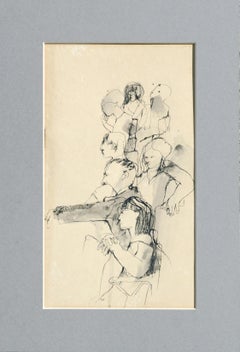
The Sketch Class, Figurative Study Line Drawing
By David Rosen (b.1912)
Located in Soquel, CA
Expressive line drawing figure study featuring a group of figures in a classroom by David Rosen (Canadian, 1912-2004). Unsigned, but was acquire...
Category

Late 20th Century American Modern Abraham Walkowitz Abstract Drawings and Watercolors

Materials

Paper, Pen, Watercolor

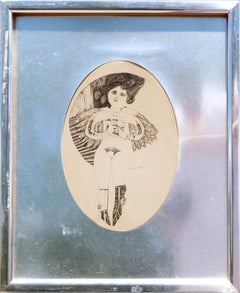
"I Think I Will" Modern Oval Drawing of a Nude Woman with Wings and Boots
By Charles Pebworth
Located in Houston, TX
Modern oval figurative drawing of a nude, tattooed woman with wings and cowboy boots by Houston, TX artist Charles Pebworth. Signed by the artist next to the figure's right hip. Hung...
Category

1970s Modern Abraham Walkowitz Abstract Drawings and Watercolors

Materials

Ink, Pen

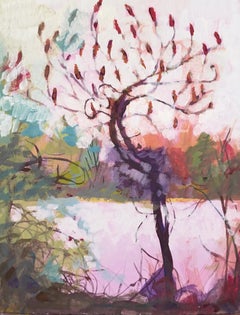
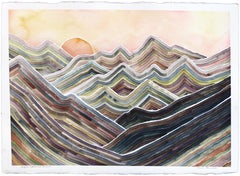
Sumac, colorful Abstract Impressionist landscape gouache
By Sandy Litchfield
Located in New York, NY
Sandy Litchfield found peace and inspiration in regular solitary walks through nature throughout the pandemic. Her most recent body of work diaristically documents her constitutional...
Category

2010s Abstract Impressionist Abraham Walkowitz Abstract Drawings and Watercolors

Materials

Paper, Gouache

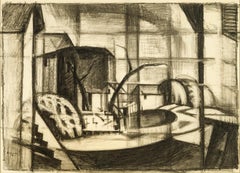
Study for Old Canal, Red and Blue (Rockaway, Morris Canal)
By Oscar Florianus Bluemner
Located in New York, NY
Oscar Bluemner was a German and an American, a trained architect who read voraciously in art theory, color theory, and philosophy, a writer of art criticism both in German and English, and, above all, a practicing artist. Bluemner was an intense man, who sought to express and share, through drawing and painting, universal emotional experience. Undergirded by theory, Bluemner chose color and line for his vehicles; but color especially became the focus of his passion. He was neither abstract artist nor realist, but employed the “expressional use of real phenomena” to pursue his ends. (Oscar Bluemner, from unpublished typescript on “Modern Art” for Camera Work, in Bluemner papers, Archives of American Art, Smithsonian Institution, as cited and quoted in Jeffrey R. Hayes, Oscar Bluemner [1991], p. 60. The Bluemner papers in the Archives [hereafter abbreviated as AAA] are the primary source for Bluemner scholars. Jeffrey Hayes read them thoroughly and translated key passages for his doctoral dissertation, Oscar Bluemner: Life, Art, and Theory [University of Maryland, 1982; UMI reprint, 1982], which remains the most comprehensive source on Bluemner. In 1991, Hayes published a monographic study of Bluemner digested from his dissertation and, in 2005, contributed a brief essay to the gallery show at Barbara Mathes, op. cit.. The most recent, accessible, and comprehensive view of Bluemner is the richly illustrated, Barbara Haskell, Oscar Bluemner: A Passion for Color, exhib. cat. [New York: Whitney Museum of American Art, 2005.]) Bluemner was born in the industrial city of Prenzlau, Prussia, the son and grandson of builders and artisans. He followed the family predilection and studied architecture, receiving a traditional and thorough German training. He was a prize-winning student and appeared to be on his way to a successful career when he decided, in 1892, to emigrate to America, drawn perhaps by the prospect of immediate architectural opportunities at the Chicago World’s Fair, but, more importantly, seeking a freedom of expression and an expansiveness that he believed he would find in the New World. The course of Bluemner’s American career proved uneven. He did indeed work as an architect in Chicago, but left there distressed at the formulaic quality of what he was paid to do. Plagued by periods of unemployment, he lived variously in Chicago, New York, and Boston. At one especially low point, he pawned his coat and drafting tools and lived in a Bowery flophouse, selling calendars on the streets of New York and begging for stale bread. In Boston, he almost decided to return home to Germany, but was deterred partly because he could not afford the fare for passage. He changed plans and direction again, heading for Chicago, where he married Lina Schumm, a second-generation German-American from Wisconsin. Their first child, Paul Robert, was born in 1897. In 1899, Bluemner became an American citizen. They moved to New York City where, until 1912, Bluemner worked as an architect and draftsman to support his family, which also included a daughter, Ella Vera, born in 1903. All the while, Oscar Bluemner was attracted to the freer possibilities of art. He spent weekends roaming Manhattan’s rural margins, visiting the Bronx, Brooklyn, Queens, and New Jersey, sketching landscapes in hundreds of small conté crayon drawings. Unlike so many city-based artists, Bluemner did not venture out in search of pristine countryside or unspoiled nature. As he wrote in 1932, in an unsuccessful application for a Guggenheim Fellowship, “I prefer the intimate landscape of our common surroundings, where town and country mingle. For we are in the habit to carry into them our feelings of pain and pleasure, our moods” (as quoted by Joyce E. Brodsky in “Oscar Bluemner in Black and White,” p. 4, in Bulletin 1977, I, no. 5, The William Benton Museum of Art, Storrs, Connecticut). By 1911, Bluemner had found a powerful muse in a series of old industrial towns, mostly in New Jersey, strung along the route of the Morris Canal. While he educated himself at museums and art galleries, Bluemner entered numerous architectural competitions. In 1903, in partnership with Michael Garven, he designed a new courthouse for Bronx County. Garven, who had ties to Tammany Hall, attempted to exclude Bluemner from financial or artistic credit, but Bluemner promptly sued, and, finally, in 1911, after numerous appeals, won a $7,000 judgment. Barbara Haskell’s recent catalogue reveals more details of Bluemner’s architectural career than have previously been known. Bluemner the architect was also married with a wife and two children. He took what work he could get and had little pride in what he produced, a galling situation for a passionate idealist, and the undoubted explanation for why he later destroyed the bulk of his records for these years. Beginning in 1907, Bluemner maintained a diary, his “Own Principles of Painting,” where he refined his ideas and incorporated insights from his extensive reading in philosophy and criticism both in English and German to create a theoretical basis for his art. Sometime between 1908 and 1910, Bluemner’s life as an artist was transformed by his encounter with the German-educated Alfred Stieglitz, proprietor of the Little Galleries of the Photo-Secession at 291 Fifth Avenue. The two men were kindred Teutonic souls. Bluemner met Stieglitz at about the time that Stieglitz was shifting his serious attention away from photography and toward contemporary art in a modernist idiom. Stieglitz encouraged and presided over Bluemner’s transition from architect to painter. During the same period elements of Bluemner’s study of art began to coalesce into a personal vision. A Van Gogh show in 1908 convinced Bluemner that color could be liberated from the constraints of naturalism. In 1911, Bluemner visited a Cézanne watercolor show at Stieglitz’s gallery and saw, in Cézanne’s formal experiments, a path for uniting Van Gogh’s expressionist use of color with a reality-based but non-objective language of form. A definitive change of course in Bluemner’s professional life came in 1912. Ironically, it was the proceeds from his successful suit to gain credit for his architectural work that enabled Bluemner to commit to painting as a profession. Dividing the judgment money to provide for the adequate support of his wife and two children, he took what remained and financed a trip to Europe. Bluemner traveled across the Continent and England, seeing as much art as possible along the way, and always working at a feverish pace. He took some of his already-completed work with him on his European trip, and arranged his first-ever solo exhibitions in Berlin, Leipzig, and Elberfeld, Germany. After Bluemner returned from his study trip, he was a painter, and would henceforth return to drafting only as a last-ditch expedient to support his family when his art failed to generate sufficient income. Bluemner became part of the circle of Stieglitz artists at “291,” a group which included Marsden Hartley, John Marin, and Arthur Dove. He returned to New York in time to show five paintings at the 1913 Armory Show and began, as well, to publish critical and theoretical essays in Stieglitz’s journal, Camera Work. In its pages he cogently defended the Armory Show against the onslaught of conservative attacks. In 1915, under Stieglitz’s auspices, Bluemner had his first American one-man show at “291.” Bluemner’s work offers an interesting contrast with that of another Stieglitz architect-turned-artist, John Marin, who also had New Jersey connections. The years after 1914 were increasingly uncomfortable. Bluemner remained, all of his life, proud of his German cultural legacy, contributing regularly to German language journals and newspapers in this country. The anti-German sentiment, indeed mania, before and during World War I, made life difficult for the artist and his family. It is impossible to escape the political agenda in Charles Caffin’s critique of Bluemner’s 1915 show. Caffin found in Bluemner’s precise and earnest explorations of form, “drilled, regimented, coerced . . . formations . . . utterly alien to the American idea of democracy” (New York American, reprinted in Camera Work, no. 48 [Oct. 1916], as quoted in Hayes, 1991, p. 71). In 1916, seeking a change of scene, more freedom to paint, and lower expenses, Bluemner moved his family to New Jersey, familiar terrain from his earlier sketching and painting. During the ten years they lived in New Jersey, the Bluemner family moved around the state, usually, but not always, one step ahead of the rent collector. In 1917, Stieglitz closed “291” and did not reestablish a Manhattan gallery until 1925. In the interim, Bluemner developed relationships with other dealers and with patrons. Throughout his career he drew support and encouragement from art cognoscenti who recognized his talent and the high quality of his work. Unfortunately, that did not pay the bills. Chronic shortfalls were aggravated by Bluemner’s inability to sustain supportive relationships. He was a difficult man, eternally bitter at the gap between the ideal and the real. Hard on himself and hard on those around him, he ultimately always found a reason to bite the hand that fed him. Bluemner never achieved financial stability. He left New Jersey in 1926, after the death of his beloved wife, and settled in South Braintree, Massachusetts, outside of Boston, where he continued to paint until his own death in 1938. As late as 1934 and again in 1936, he worked for New Deal art programs designed to support struggling artists. Bluemner held popular taste and mass culture in contempt, and there was certainly no room in his quasi-religious approach to art for accommodation to any perceived commercial advantage. His German background was also problematic, not only for its political disadvantages, but because, in a world where art is understood in terms of national styles, Bluemner was sui generis, and, to this day, lacks a comfortable context. In 1933, Bluemner adopted Florianus (definitively revising his birth names, Friedrich Julius Oskar) as his middle name and incorporated it into his signature, to present “a Latin version of his own surname that he believed reinforced his career-long effort to translate ordinary perceptions into the more timeless and universal languages of art” (Hayes 1982, p. 189 n. 1). In 1939, critic Paul Rosenfeld, a friend and member of the Stieglitz circle, responding to the difficulty in categorizing Bluemner, perceptively located him among “the ranks of the pre-Nazi German moderns” (Hayes 1991, p. 41). Bluemner was powerfully influenced in his career by the intellectual heritage of two towering figures of nineteenth-century German culture, Johann Wolfgang von Goethe and Georg Wilhelm Friedrich Hegel. A keen student of color theory, Bluemner gave pride of place to the formulations of Goethe, who equated specific colors with emotional properties. In a November 19, 1915, interview in the German-language newspaper, New Yorker Staats-Zeitung (Abendblatt), he stated: I comprehend the visible world . . . abstract the primary-artistic . . . and after these elements of realty are extracted and analyzed, I reconstruct a new free creation that still resembles the original, but also . . . becomes an objectification of the abstract idea of beauty. The first—and most conspicuous mark of this creation is . . . colors which accord with the character of things, the locality . . . [and which] like the colors of Cranach, van der Weyden, or Durer, are of absolute purity, breadth, and luminosity. . . . I proceed from the psychological use of color by the Old Masters . . . [in which] we immediately recognize colors as carriers of “sorrow and joy” in Goethe’s sense, or as signs of human relationship. . . . Upon this color symbolism rests the beauty as well as the expressiveness, of earlier sacred paintings. Above all, I recognize myself as a contributor to the new German theory of light and color, which expands Goethe’s law of color through modern scientific means (as quoted in Hayes 1991, p. 71). Hayes has traced the global extent of Bluemner’s intellectual indebtedness to Hegel (1991, pp. 36–37). More specifically, Bluemner made visual, in his art, the Hegelian world view, in the thesis and antithesis of the straight line and the curve, the red and the green, the vertical and the horizontal, the agitation and the calm. Bluemner respected all of these elements equally, painting and drawing the tension and dynamic of the dialectic and seeking ultimate reconciliation in a final visual synthesis. Bluemner was a keen student of art, past and present, looking, dissecting, and digesting all that he saw. He found precedents for his non-naturalist use of brilliant-hued color not only in the work Van Gogh and Cezanne, but also in Gauguin, the Nabis, and the Symbolists, as well as among his contemporaries, the young Germans of Der Blaue Reiter. Bluemner was accustomed to working to the absolute standard of precision required of the architectural draftsman, who adjusts a design many times until its reality incorporates both practical imperatives and aesthetic intentions. Hayes describes Bluemner’s working method, explaining how the artist produced multiple images playing on the same theme—in sketch form, in charcoal, and in watercolor, leading to the oil works that express the ultimate completion of his process (Hayes, 1982, pp. 156–61, including relevant footnotes). Because of Bluemner’s working method, driven not only by visual considerations but also by theoretical constructs, his watercolor and charcoal studies have a unique integrity. They are not, as is sometimes the case with other artists, rough preparatory sketches. They stand on their own, unfinished only in the sense of not finally achieving Bluemner’s carefully considered purpose. The present charcoal drawing is one of a series of images that take as their starting point the Morris Canal as it passed through Rockaway, New Jersey. The Morris Canal industrial towns that Bluemner chose as the points of departure for his early artistic explorations in oil included Paterson with its silk mills (which recalled the mills in the artist’s childhood home in Elberfeld), the port city of Hoboken, Newark, and, more curiously, a series of iron ore mining and refining towns, in the north central part of the state that pre-dated the Canal, harkening back to the era of the Revolutionary War. The Rockaway theme was among the original group of oil paintings that Bluemner painted in six productive months from July through December 1911 and took with him to Europe in 1912. In his painting journal, Bluemner called this work Morris Canal at Rockaway N.J. (AAA, reel 339, frames 150 and 667, Hayes, 1982, pp. 116–17), and exhibited it at the Galerie Fritz Gurlitt in Berlin in 1912 as Rockaway N. J. Alter Kanal. After his return, Bluemner scraped down and reworked these canvases. The Rockaway picture survives today, revised between 1914 and 1922, as Old Canal, Red and Blue (Rockaway River) in the collection of the Hirshhorn Museum and Sculpture Garden, Smithsonian Institution, Washington D. C. (color illus. in Haskell, fig. 48, p. 65). For Bluemner, the charcoal expression of his artistic vision was a critical step in composition. It represented his own adaptation of Arthur Wesley’s Dow’s (1857–1922) description of a Japanese...
Category

20th Century American Modern Abraham Walkowitz Abstract Drawings and Watercolors

Materials

Paper, Charcoal

Horse and Tree
By Robert Noel Blair
Located in Buffalo, NY
You are viewing a modernist American watercolor painting by Robert Noel Blair Robert Noel Blair (American, 1912-2003) was an American artist, painter, sculptor, printmaker and te...
Category

1960s American Modern Abraham Walkowitz Abstract Drawings and Watercolors

Materials

Archival Ink, Paper, Watercolor

Italy Goes to War
By Arthur Dove
Located in Bryn Mawr, PA
Italy Goes to War, 1941 Watercolor 3 1/8 x 7 3/8 inches (7.9 x 18.7 cm) Signed lower center: Dove Provenance An American Place, New York; World House Galleries, New York, 1953; Private collection, New York; Betty Krulik Fine Art, 2007; Avery Galleries until present Exhibitions An American Place, New York, Exhibition of New Arthur G. Dove Paintings...
Category

1940s American Modern Abraham Walkowitz Abstract Drawings and Watercolors

Materials

Paper, Watercolor

Italy Goes to War
Italy Goes to War
$47,500
H 3.13 in W 7.38 in
"NY Street Signs" Mid-20th Century WPA 1938 Modernist Abstract Realism Pop Art
By Stuart Davis
Located in New York, NY
"NY Street Signs" Mid-20th Century WPA 1938 Modernist Abstract Realism Pop Art Stuart Davis (American, 1892-1964) "Street Signs" Modernist gouache and traces of pencil on paper in the proto-pop art style Davis is celebrated for, 1938, signed to lower right, framed. Image: 11 1/4 x 15 1/4 inches. Frame by Bark: 18 1/2 x 22 inches. LITERATURE: A, Boyajian, M. Rutkowski, Stuart Davis, A Catalogue Raisonne, Vol. 2, New Haven, Connecticut, 2007, vol. II, p. 632, no. 1232, illustrated. EXHIBITIONS: ACA Galleries, New York American Artists' Congress: Group Exhibition of Paintings and Sculpture, Dec. 3-16, 1939 (SDAB I, 12/3/39, p. 129). Outlines Gallery, Pittsburgh, Stuart Davis, Mar. 3-16, 1946. Coleman Art Gallery, Philadelphia, 5 Prodigal Sons: Former Philadelphia Artists: Ralston Crawford, Stuart Davis, Charles Demuth, Julian Levi, Charles Sheeler, Oct 4 - 30, 1947 (pamphlet), no. 12. PROVENANCE: The artist; Mr. and Mrs. Frank Bowles, New York, Apr. 3, 1956; thence by descent, Private Collection, New York. NOTES: According to the Catalogue Raissonne, "the title 'Street Signs' is recorded in the artist's account books...
Category

1930s American Modern Abraham Walkowitz Abstract Drawings and Watercolors

Materials

Paper, Gouache, Pencil

Abstract Work on Paper Mid-Century Modernism Greek American Gouache Drawing
By Jean Xceron
Located in New York, NY
Abstract Work on Paper Mid-Century Modernism Greek American Gouache Drawing. A modernist artist who emigrated to America from Greece in 1904, when he was fourteen years old, Jean Xceron is described as having a reputation as an artist that has mysteriously fallen into obscurity---especially since he was reportedly quite prominent during his lifetime. However, a partial explanation of that omission is the fact that many of his papers and early records have been lost. He was a painter of biomorphic abstractions and did collages, which were influenced by Dadaism. Xceron was active in New York City when modernism was gaining influence. Of him during this period, it was written that his artistic role was "a vital link between what is commonly termed as the first-generation (the Stieglitz group, the Synchromists, etc.) and second-generation, the American Abstract Artists, the Transcendental Painting...
Category

1940s American Modern Abraham Walkowitz Abstract Drawings and Watercolors

Materials

Paper, Gouache

A Striking 1940s Cubist Still Life Drawing by Modern Artist Stanley Bielecky
By Stanley Bielecky
Located in Chicago, IL
A striking 1940s Modern cubist still life drawing by Notable Chicago and Michigan artist Stanley Bielecky. Image size: 4 x 5 inches. Archivally matted to 13 1/4 x 16 inches. Estate stamped and numbered 58, lower left. Stanley Bielecky was an Indiana artist who painted the American Scene, from the industrial factories and workers around East Chicago to the pastoral settings of Mackinac Island...
Category

1940s American Modern Abraham Walkowitz Abstract Drawings and Watercolors

Materials

Graphite, Paper

Angeles National Forest - Abstract Muted Colorful Landscape Nature Painting
Located in Los Angeles, CA
Heidi Lowell is a multidisciplinary artist based in Austin, Texas, whose practice is deeply rooted in the earth itself. Harvesting site-specific soils and plant materials from across...
Category

2010s Abstract Abraham Walkowitz Abstract Drawings and Watercolors

Materials

Paper, Watercolor

Previously Available Items
City Abstraction II
By Abraham Walkowitz
Located in London, GB
This intimate abstract work, depicting towering buildings emerging from the smog filled city, is one of many drawings the artist did of New York City in the early 20th century. A den...
Category

Early 20th Century American Modern Abraham Walkowitz Abstract Drawings and Watercolors

Materials

Pencil

"Untitled Abstraction"
By Abraham Walkowitz
Located in Wellesley, MA
Abraham Walkowitz (1878 -1965) NOTE: This drawing is signed 'A.W' lower left in ink. The provenance is Estate of the Artist. Abraham Walkowitz was a Russian-born American artist who arrived in New York in 1889 and who went to Paris in 1906 where he met the Steins and the leaders of the avant-garde, as well as famed dancer Isadora Duncan in Rodin’s studio. The meeting was electric. Isadora became the subject of many now famous watercolors, whose fluid gestures drawn in pen...
Category

1930s Abstract Geometric Abraham Walkowitz Abstract Drawings and Watercolors

Materials

Paper, India Ink

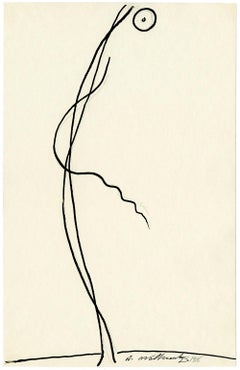
Untitled (Figurative Abstraction of Isadora Duncan #6)
By Abraham Walkowitz
Located in Myrtle Beach, SC
Abraham Walkowitz, Untitled (Figurative Abstraction of Isadora Duncan #6), pen and ink, pencil, 1918. Signed in ink, dated in pencil, bottom center. A f...
Category

1910s American Modern Abraham Walkowitz Abstract Drawings and Watercolors

Materials

Ink, Pen, Pencil

Untitled (Figurative Abstraction of Isadora Duncan #5)
By Abraham Walkowitz
Located in Myrtle Beach, SC
Abraham Walkowitz, Untitled (Figurative Abstraction of Isadora Duncan #5), pen and ink, pencil, 1918. Signed in ink, dated in pencil, bottom center. A f...
Category

1910s American Modern Abraham Walkowitz Abstract Drawings and Watercolors

Materials

Ink, Pen, Pencil

Untitled (Figurative Abstraction of Isadora Duncan #4)
By Abraham Walkowitz
Located in Myrtle Beach, SC
Abraham Walkowitz, Untitled (Figurative Abstraction of Isadora Duncan #4), pen and ink, 1918. Signed in ink, dated in pencil, bottom center. A fine, spo...
Category

1910s American Modern Abraham Walkowitz Abstract Drawings and Watercolors

Materials

Ink, Pen

Untitled (Figurative Abstraction of Isadora Duncan #3)
By Abraham Walkowitz
Located in Myrtle Beach, SC
Abraham Walkowitz, Untitled (Figurative Abstraction of Isadora Duncan #3), pen and ink, 1918. Signed in ink, dated in pencil, bottom center. A f...
Category

1910s American Modern Abraham Walkowitz Abstract Drawings and Watercolors

Materials

Ink, Pen

Untitled (Figurative Abstraction of Isadora Duncan #2)
By Abraham Walkowitz
Located in Myrtle Beach, SC
Abraham Walkowitz, Untitled (Figurative Abstraction of Isadora Duncan #2), pen and ink, 1918. Signed in ink, dated in pencil, bottom center. A fine, spo...
Category

1910s American Modern Abraham Walkowitz Abstract Drawings and Watercolors

Materials

Ink, Pen

"Untitled Abstraction" Pen and Ink Drawing Black and White Greyscale Geometric
By Abraham Walkowitz
Located in Wellesley, MA
Abraham Walkowitz (1878 -1965) Abraham Walkowitz was a Russian-born American artist who arrived in New York in 1889 and who went to Paris in 1906 where he met the Steins and the ...
Category

1930s American Modern Abraham Walkowitz Abstract Drawings and Watercolors

Materials

Ink, Pen

"Untitled Abstraction" Pen and Ink Drawing Black and White Greyscale Geometric
By Abraham Walkowitz
Located in Wellesley, MA
Abraham Walkowitz (1878 -1965) Abraham Walkowitz was a Russian-born American artist who arrived in New York in 1889 and who went to Paris in 1906 where he met the Steins and the ...
Category

1930s American Modern Abraham Walkowitz Abstract Drawings and Watercolors

Materials

Ink, Pen

"Untitled Abstraction" Pen and Ink Drawing Black and White Greyscale Geometric
By Abraham Walkowitz
Located in Wellesley, MA
Abraham Walkowitz (1878 -1965) Abraham Walkowitz was a Russian-born American artist who arrived in New York in 1889 and who went to Paris in 1906 where he met the Steins and the ...
Category

1930s American Modern Abraham Walkowitz Abstract Drawings and Watercolors

Materials

Ink, Pen

"Untitled Abstraction" Pen and Ink Drawing Black and White Greyscale Geometric
By Abraham Walkowitz
Located in Wellesley, MA
Abraham Walkowitz (1878 -1965) Abraham Walkowitz was a Russian-born American artist who arrived in New York in 1889 and who went to Paris in 1906 where he met the Steins and the ...
Category

1930s American Modern Abraham Walkowitz Abstract Drawings and Watercolors

Materials

Ink, Pen

"Untitled Abstraction" Pen and Ink Drawing Black and White Greyscale Geometric
By Abraham Walkowitz
Located in Wellesley, MA
Abraham Walkowitz (1878 -1965) Abraham Walkowitz was a Russian-born American artist who arrived in New York in 1889 and who went to Paris in 1906 where he met the Steins and the ...
Category

1930s American Modern Abraham Walkowitz Abstract Drawings and Watercolors

Materials

Ink, Pen

Abraham Walkowitz abstract drawings and watercolors for sale on 1stDibs.

Find a wide variety of authentic Abraham Walkowitz abstract drawings and watercolors available for sale on 1stDibs. You can also browse by medium to find art by Abraham Walkowitz in ink, pen, pencil and more. Much of the original work by this artist or collective was created during the 20th century and is mostly associated with the modern style. Not every interior allows for large Abraham Walkowitz abstract drawings and watercolors, so small editions measuring 6 inches across are available. Customers who are interested in this artist might also find the work of Jerry Opper, Pawel Kontny, and Andre Delfau. Abraham Walkowitz abstract drawings and watercolors prices can differ depending upon medium, time period and other attributes. On 1stDibs, the price for these items starts at $550 and tops out at $2,000, while the average work can sell for $1,800.