Achille-Émile Othon Friesz Landscape Paintings
French, 1879-1949
Othon Friesz was a native of Le Havre France 1879-1949. He was a French artist of the Fauvist movement. He was a good friend of Raoul Dufy and met Matisse, Marquet and Rouault and exhibited with them in 1907. In his later years he painted in a style very different than his earlier years. He respected Cezanne's style of logical composition, simple tonality, solidity of volume and distinct separation of planes and a baroque flavor to his style. He is known for Fauve and traditional painting, landscapes, still lifes and figurative style. He admired the works of modernists. Hi works are in major museums throughout the world.to
1
1
1
3
Overall Width
to
Overall Height
to
5
1
2
3
4
1
2
1
1
4
4
2
2
1
11
653
604
320
316
4
3
2
Artist: Achille-Émile Othon Friesz
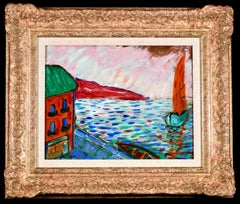
Etude Barque au Quai - Normandy - Post Impressionist Seascape Oil - Othon Friesz
By Achille-Émile Othon Friesz
Located in Marlow, Buckinghamshire
Signed oil on paper laid on panel seascape c.1907 by French post impressionist painter Achille-Emile Othon Friesz. The piece is a study of a view of a boat in a quay at Normandy, Fra...
Category
Early 1900s Post-Impressionist Achille-Émile Othon Friesz Landscape Paintings
Materials
Oil, Panel, Laid Paper
Port of Le Havre
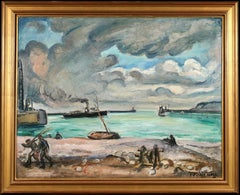
Sainte-Adrese- Post Impressionist Seascape Oil - Othon Friesz
By Achille-Émile Othon Friesz
Located in Marlow, Buckinghamshire
Signed and dated oil on canvas seascape by French post impressionist painter Achille-Emile Othon Friesz. The piece depicts a view of Le Havre, a port city in Normandy, France, locate...
Category
1920s Post-Impressionist Achille-Émile Othon Friesz Landscape Paintings
Materials
Canvas, Oil
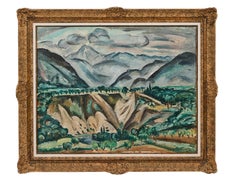
Untitled
By Achille-Émile Othon Friesz
Located in Los Angeles, CA
Oil on canvas landscape signed by listed, French artist Achille- Émile Othon Friesz.
Dated 1920. Carved and painted frame.
Category
1920s Achille-Émile Othon Friesz Landscape Paintings
Materials
Canvas, Oil
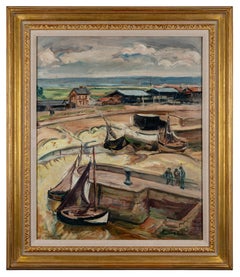
Vieux Bassin de Honfleur
By Achille-Émile Othon Friesz
Located in Sheffield, MA
Achille-Emile Othon Friesz
French, 1879-1949
Vieux Bassin de Honfleur
Oil on canvas
23 ½ by 28 ¾ in, w/ frame 31 ⅜ by 36 ½ in
Signed lower right
Achille-Emile Othon Friesz, who lat...
Category
Early 20th Century Fauvist Achille-Émile Othon Friesz Landscape Paintings
Materials
Oil
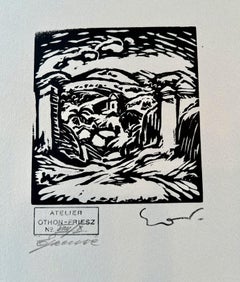
Les Collines 1908 Woodcut Print, Signed, Limited Edition Artwork
By Achille-Émile Othon Friesz
Located in Belgrade, MT
This black and white wood cut print is part of my private collection. It is artist signed and approved and a limited edition.
Category
Early 20th Century Achille-Émile Othon Friesz Landscape Paintings
Materials
Woodcut
Related Items
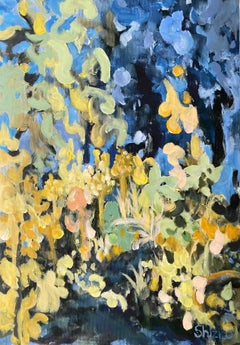
Hand-Painted Artist Proof-Summer Night-British Awarded Artist-One Off large size
Located in London, GB
This stunning Artist's Proof is an one-off, hand-painted by the artist Shizico , signed at front and on the back label too; the proof is 90% hand painted with original oil paint by S...
Category
2010s Abstract Impressionist Achille-Émile Othon Friesz Landscape Paintings
Materials
Gesso, Archival Ink, Acrylic, Archival Paper, Giclée

$535
H 39.38 in W 27.56 in D 0.04 in
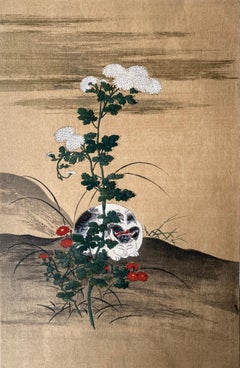
Authentic Japanese Woodblock Print-White Cat-Hanabusa Itchō-Edo-Re-carved 1920s
Located in London, GB
This rare Original 1920s authentic print is a Taisho Period Woodblock print published from the Japan 1920's The Nippon Mokuhan Gasui, Masterpieces Series.;
it is authentically hand ...
Category
1920s Edo Achille-Émile Othon Friesz Landscape Paintings
Materials
Ink, Handmade Paper
$394 Sale Price
30% Off
H 11.82 in W 7.72 in D 0.04 in
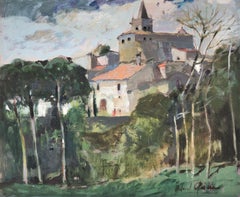
Landscape with castle oil on canvas painting
By Rafael Griera Calderón
Located in Sitges, Barcelona
Frame size 78x87 cm.
Rafael Griera Calderón was born incidentally in Las Palmas de Gran Canaria in 1934. After residing in Olot from 1942 to 19...
Category
1990s Post-Impressionist Achille-Émile Othon Friesz Landscape Paintings
Materials
Canvas, Oil
$550 Sale Price
54% Off
H 18.12 in W 21.66 in
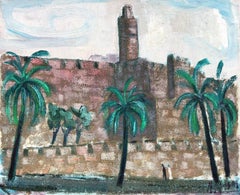
Jerusalem wall urban landscape original oil on canvas painting
By Manuel Capdevila Massana
Located in Sitges, Barcelona
Unframed
Manuel Capdevila i Massana (Barcelona, December 28, 1910 - April 18, 2006) was a Catalan painter and goldsmith, son of the goldsmith Joaquín Capdevila y Meya and father of the also goldsmith, Joaquim Capdevila y Gaya.
In 1950 he was invited to The 1950 Pittsburgh International contest at the Carnegie Institute, Pennsylvania, where he presented the painting The Priest, which is currently part of the MNAC collection. A year later the Museum of Modern Art in Panama acquired the work Crisantemos.
He was part of the Morera Prize Jury in 1953. Two years later he signed the manifesto that Alexandre Cirici drafted, creating the Institute of Industrial Design, as a member of the IDIB Management Board of Directors.
At the request of Lluís Maria Güell, director of the Massana School, he assumed the creation of the Open Jewelery Classroom in 1959, from where he made students think and reflect on the new possibilities of contemporary jewelry. He establishes contacts with the Kunst Werkschule in Pforzheim, a pioneering school...
Category
1980s Fauvist Achille-Émile Othon Friesz Landscape Paintings
Materials
Canvas, Oil
$837 Sale Price
61% Off
H 23.63 in W 28.75 in
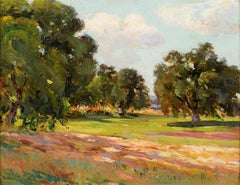
Emile Chaumont (1877-1927) - Summer landscape in Dordogne
Located in BELEYMAS, FR
Emile CHAUMONT
(Perigueux 1877 - 1927)
Summer landscape in Périgord
Oil on panel
H. 32 cm; L. 41 cm
Signed lower left, dated 1912
Provenance: Private c...
Category
1910s Post-Impressionist Achille-Émile Othon Friesz Landscape Paintings
Materials
Oil, Panel
$1,435
H 12.6 in W 16.15 in
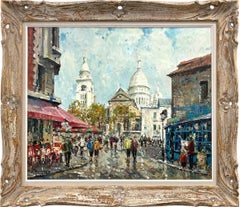
"Montmartre" Post-Impressionist Lively Paris Scene Oil Painting on Canvas Framed
By Jean Salabet
Located in New York, NY
A beautiful oil on canvas painting by the French artist, Jean Salabet. Salabet was a Parisian painter known for his colorful cityscapes depicting the times of his generation. His wor...
Category
1950s Post-Impressionist Achille-Émile Othon Friesz Landscape Paintings
Materials
Canvas, Oil
$10,000
H 30 in W 35 in D 2.5 in
Pacific Sunset Waves, Contemporary Cyanotype on Paper, Navy Blue, Beach House
By Kind of Cyan
Located in Barcelona, ES
This is an exclusive handprinted limited edition cyanotype.
"Pacific Sunset Waves" is an original cyanotype that abstractly shows the sunset reflections on the sea.
Details:
+ Titl...
Category
2010s Realist Achille-Émile Othon Friesz Landscape Paintings
Materials
Emulsion, Mixed Media, Watercolor, Photographic Paper, Lithograph, Monop...

$312 Sale Price
20% Off
H 28 in W 40 in
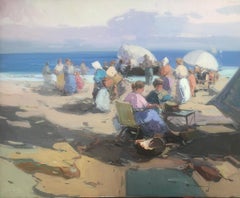
Spanish fishermen on the beach Spain oil on canvas painting mediterranean sea
By Gabriel Casarrubios
Located in Sitges, Barcelona
Gabriel Casarrubios Martín (1953) - Fishermen - Oil on canvas
Oil size 60x73 cm.
Frameless.
Gabriel Casarrubios Martín (1953)
The Toledo artist trained in Fine Arts in Madrid, at t...
Category
21st Century and Contemporary Post-Impressionist Achille-Émile Othon Friesz Landscape Paintings
Materials
Oil, Canvas
$1,136 Sale Price
40% Off
H 23.63 in W 28.75 in
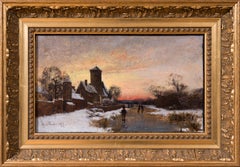
Skaters at Sunset by the Village Creek
Located in Stockholm, SE
This small painting by Oscar Törnå captures the poetic serenity of a Swedish winter evening in the late 19th century. Set along a frozen stream near a village, the composition presen...
Category
1870s Post-Impressionist Achille-Émile Othon Friesz Landscape Paintings
Materials
Oil, Wood Panel
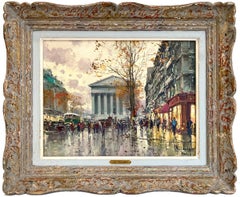
"La Madeleine" Impressionist Parisian Street Scene Oil Painting on Canvas Framed
By Jean Salabet
Located in New York, NY
A beautiful oil on canvas painting by the French artist, Jean Salabet. Salabet was a Parisian painter known for his colorful cityscapes depicting the times of his generation. His wor...
Category
20th Century Post-Impressionist Achille-Émile Othon Friesz Landscape Paintings
Materials
Canvas, Oil
$6,000
H 15.75 in W 18.75 in D 2 in
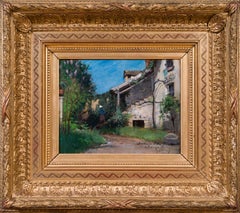
A French Barbizon Garden by Swedish Artist Carl Skånberg
Located in Stockholm, SE
Carl Skånberg (1850-1883) Sweden
A Barbizon Garden (1879)
oil on wood panel
signed C. Skånberg, dated 1879 (lower front)
unframed: 19 × 24 cm (7.5 × 9.4 inches)
framed: 40 × 45 cm ...
Category
1870s Post-Impressionist Achille-Émile Othon Friesz Landscape Paintings
Materials
Oil, Wood Panel
$5,262
H 15.75 in W 17.72 in
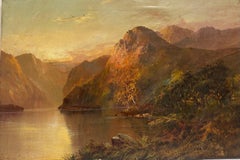
Antique Scottish Highlands Oil Painting Sunset Loch Landscape with Mountains
By Francis E. Jamieson
Located in Cirencester, Gloucestershire
"Sunset"
by F. E. Jamieson (British 1895-1950)
signed lower corner
oil painting on canvas, unframed
canvas: 16 x 24 inches
Fine quality antique oil painting by the much admired an...
Category
Early 20th Century Victorian Achille-Émile Othon Friesz Landscape Paintings
Materials
Canvas, Oil
$1,923 Sale Price
20% Off
H 16 in W 24 in D 1 in
Previously Available Items
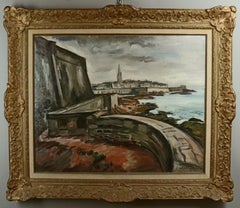
Remparts De La Ville De Saint-malo Signed Othon Friesz
By Achille-Émile Othon Friesz
Located in ROUEN, FR
Very beautiful oil on canvas painting representing the ramparts of the city of Saint-Malo from the national fort. It is signed by OTHO FRIEST (1879-1949).
Dimensions : W: 105 cm H: 9...
Category
1930s French School Achille-Émile Othon Friesz Landscape Paintings
Materials
Oil
H 35.83 in W 41.34 in
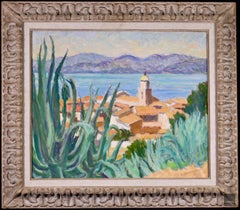
Vue de Saint Tropez - Post Impressionist Oil, Coastal Landscape by Othon Friesz
By Achille-Émile Othon Friesz
Located in Marlow, Buckinghamshire
Signed and dated oil on canvas coastal landscape by French post impressionist painter Achille-Emile Othon Friesz. The piece depicts a view of Saint Tropez from a hill looking out over the red roofs of the town and the blue sea beyond. Mountains can be seen in the distance.
Signature:
Signed and dated 1925 lower right
Dimensions:
Framed: 25"x29"
Unframed: 18"x22"
Provenance:
This work was authenticated by Robert Martin author of the catalogue raisonne on the 1st Feb 1994 and is included in the archives of the painter managed by Mme. Odile Aittouarès
Christies - London, 28 June 1994 - Impressionist & Modern Paintings - Lot 394
Achille Friesz was the son of a family of sailors from Le Havre. From 1885 he often spent time in Marseilles visiting his maternal uncles. As a child he dreamed of going to sea, but from the age of 12 he developed a passion for art, and after secondary school he attended the École des Beaux-Arts in Le Havre. There, from 1896 to 1898, he studied under Charles-Marie Lhullier who had been a friend of Jongkind and whom, like Dufy and Braque, he remembered fondly throughout his life. Lhullier introduced his students to the work of Chardin, Corot, Géricault and Delacroix. After receiving a bursary from the local authorities in 1898, he went to Paris and, while his friends Matisse, Rouault and Marquet studied under Gustave Moreau, enrolled at the École des Beaux-Arts at the studio of Léon Bonnat, where he was joined by Dufy. However, he scarcely attended the studio, preferring to go to the Louvre and make copies of the works of Clouet, Veronese, Rubens, Claude Lorraine and Delacroix. He did his military service in Paris in 1902 but continued with his art. Around this time he met Camille Pissarro and sought his advice. As a young man he began to make frequent trips away, not necessarily travelling very far, but looking for subjects for his work, usually landscapes. Among the places he visited were the Creuse region around 1903, Antwerp in 1905, returning there with Braque in 1906, and La Ciotat, Cassis and L'Estaque in 1906-1907, again in the company of Braque. In Paris he frequently moved lodgings until 1914. He moved in with Henri Matisse at the Couvent des Oiseaux from 1905-1910, that is to say at the period when Fauvism was at its height. In 1908 he returned to his native Normandy to reimmerse himself in his early environment; he would return to the region throughout his life. He made a trip to Munich with Dufy in 1909, and visited Portugal in 1911-1912 and Belgium in 1912. In 1914 he was called up and assigned to technical services, not being demobilised until March 1919, although he did manage to maintain a certain independence. From 1914 until his death he lived in Paris at 73 Rue Notre-Dame-des-Champs, where he occupied Bouguereau's old studio. He made frequent trips to Cap-Brun near Toulon where, in 1923, he acquired a property called Les Jarres, as well as making numerous visits to Normandy and Le Havre. In 1925 he received the highest commendation at the Carnegie Prize in Pittsburgh for Portrait of the Decorative Artist Paul Paquereau. Also in 1925, at the same time as Matisse, he was made a Chevalier of the Légion d'Honneur, rising to in Officier in 1933 and Commandeur in 1937. He was also made Commander of the Swedish order of Vasa in 1934. Throughout his life, Friesz was a teacher: from 1913 at the Académie Moderne; from 1929 at the Académie Scandinave; and from 1941 until his death at the Académie de la Grande-Chaumière. Alongside his activity as a painter, he illustrated several works of literature, including: in 1920 Le Pacte de l'Écolier Juan by Jules Tellier; in 1924 Échelles de Soie by Jean Pédron; in 1926 Le Jardin sur l'Oronte by Maurice Barrès; in 1926 En Suivant la Seine by Gustave Coquiot; in 1929 Rouen by André Maurois; in 1931 The Song of Songs; in 1934 Poésies by Pierre de Ronsard; in 1945 Le Bouquet de la Mariée by Gabriel-Joseph Gros; in 1947 Paul et Virginie by Bernardin de St-Pierre; in 1949 Le Livre de Job by Pierre Poussard; in 1949 Petronius's Satyricon, and in 1949 a collection of 12 unpublished lithographs for Le Désert de l'Amour by François Mauriac. He also designed several pieces of decorative art: from 1906 to 1909 ceramics executed by Metthey among others; a façade for a private house in Le Havre; a china service for two for the Le Havre writer J.-G. Aubry; vases, dishes and plates; in 1912 four sets for La Lumière by Georges Duhamel, performed at the Odéon; in 1916 a screen for the Le Havre collector Léon Pédron; in 1918 panels for Pédron's dining room; in 1920 a mural entitled Children Dancing (Enfants Dansant); in 1920 Les Volières for the apartment of Vicomte Amédée de Flers; in 1935 Peace (La Paix), a Gobelins tapestry presented by France to the Palais des Nations in Geneva; in 1937 La Seine in collaboration with Dufy for the Palais de Chaillot, with each artist taking half of the river's course - From the Source to Paris by Friesz and From Paris to the Estuary by Dufy. The Fauves were producing Fauve paintings before they knew it: it was not until the critic Louis Vauxcelles saw their work at the Salon des Indépendants in 1905 and mockingly used the word Fauve to describe it that the term was born. It is known that Vlaminck and Derain worked together and that the École de Chatou was composed of just these two artists. Friesz was living with Matisse and after his first trip to Antwerp in 1905, he returned in 1906 with Braque. In 1906-1907 Friesz and Braque went to La Ciotat to paint and there they met up with Matisse. The paintings Friesz produced in Antwerp are Fauve inasmuch as they are painted in pure colours and are more or less free of the divisionism of the Impressionists, although the draughtsmanship is fairly standard; these works include The Port, The Escaut, The Canals, The Dock with Sailing Ships and The Red Slipway. Those of Braque the following year, in particular Terrace on the Escaut, show great similarities with those Friesz painted of the same subject. Friesz was already avoiding the hardness of pure flat tints by graduating them in thin glazes, allowing the whiteness of the canvas to penetrate the transparency, a technique that came to characterise his entire Fauve period. At La Ciotat Friesz and Braque adopted completely different Fauve styles, with Braque composing his paintings on horizontal and vertical orthogonals painted in small, regular, spaced-out touches, whereas Friesz developed his own personal rhythmical style of wide arabesques of colour in works such as The Bec-de-l'Aigle, Women Bathing and L'Estaque. Many of Friesz's Fauve works were produced in the south of France, and his Portrait of Fernand Fleuret also dates from this period. When he returned to Normandy in 1908 the period that he described as his 'return to form' began; with compromise paintings such as Entrance to the Port of Honfleur, Côte de Grâce Landscape, The 'Bains Marie-Christine' in Le Havre and the great compositions characteristic of this period - Autumn Labours, Spring, Fisherman on a Rock and Women Bathing. His draughtsmanship retains something of the rhythm of the Fauve period, his figures following the lines of the landscape and the colour remaining clear and resonant. In 1909 he painted the Cirque Médrano series: The Trapeze Artist, The Clown and The Horsewoman. In the south of France he also painted the Olive Trees series. He made a trip to Munich with Raoul Dufy resulting in Winter in Munich. This was also the year of his first trip to Italy. Boat in a Rocky Inlet of 1910 marks one of the pivotal points between a totally rhythmic drawing style of sensual curves typical of his Fauve period and a reduced palette of muted ochres, browns and blues. From 1910 onwards, the final traces of Fauvism become less and less apparent in his work. His use of colour follows the same course, towards the transcription of reality, with broken tones, ochres and browns. After his demobilisation, as well as in his studio in Paris, Friesz spent time in his house in Toulon, returned to Normandy and Le Havre and continued to make frequent, often local, forays in search of new subjects: in 1919 to Jura, producing the series Forests, Pine Trees, Road in the Snow and Invitation to Skate; in 1920 to Italy producing Piedmont Village, Florence Grape Pickers; in 1920 to Le Havre, producing The Étretat Cliffs, People Bathing at Étretat; in 1923 to his house in Toulon, producing View of Coudon, Women Bathing, Grape Harvesting, Jars; in 1924 he painted the Large Nude (which he exhibited at the Salon d'Automne the same year) and landscapes of Toulon; in 1928 he made a trip to Algiers, producing The Algiers Kasbah and its Phantoms; in 1931 to Annecy, producing Women Bathers by a Lake; in 1934-1935 to Dinan and St-Malo producing The Great Dinan Viaduct, The Dock with the Terre-Neuvas, After Bathing; in 1936 to Honfleur; in 1941-1944, remaining in Paris because of the war, he painted mainly still-lifes, including Studio Corner, Earthenware. In 1946 he returned to Honfleur; and in 1947 to La Rochelle producing The Port Tower, Tuna Boats, The Red Sail. Numerically Friesz's work is dominated by landscapes but it should be remembered that throughout his career he tackled more ambitious compositions and appeared to do so with great ease. These include Boat in a Rocky Inlet of 1910 with its frolicking women bathers, Allegory of War of 1915 executed in 24 hours, Invitation to Skate of 1919, numerous paintings of Women Bathing over several periods and much later Women beside a Pond of 1944, which clearly demonstrates his attachment to Cézanne. He exhibited at the Salon des Artistes Français from 1901 to 1903 and then at the Salon des Artistes Indépendants. From 1906 he exhibited annually at the Salon d'Automne, of which he later became a committee and jury member. In 1923 he took part in the founding of the Salon des Tuileries and became head of two of the Salon's sections. His work has been exhibited at countless group exhibitions all over the world. Among the most recent thematic exhibitions is Fauvism in Black and White. From Gauguin to Vlaminck, Fauvist Engraving and its Setting (Le Fauvisme en Noir et Blanc. De Gauguin à Vlaminck, l'Estampe des Fauves et son Environnement) at the Musée d'Art Moderne in Villeneuve d'Ascq in 2001. He also showed his work in numerous solo exhibitions in Paris: his first in 1904 at the Galerie des Collectionneurs and another the same year at the Société des Peintres du Paris Moderne...
Category
1920s Post-Impressionist Achille-Émile Othon Friesz Landscape Paintings
Materials
Canvas, Oil
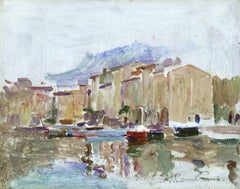
Boats in a Harbour - 20th Century Oil Boats in Seascape Landscape by A Friesz
By Achille-Émile Othon Friesz
Located in Marlow, Buckinghamshire
Oil on panel. Signed with artist's cachet lower right. This painting is not currently framed but a suitable frame can be sourced if required.
Achille Friesz was the son of a family of sailors from Le Havre. From 1885 he often spent time in Marseilles visiting his maternal uncles. As a child he dreamed of going to sea, but from the age of 12 he developed a passion for art, and after secondary school he attended the École des Beaux-Arts in Le Havre. There, from 1896 to 1898, he studied under Charles-Marie Lhullier who had been a friend of Jongkind and whom, like Dufy and Braque, he remembered fondly throughout his life. Lhullier introduced his students to the work of Chardin, Corot, Géricault and Delacroix.
After receiving a bursary from the local authorities in 1898, he went to Paris and, while his friends Matisse, Rouault and Marquet studied under Gustave Moreau, enrolled at the École des Beaux-Arts at the studio of Léon Bonnat, where he was joined by Dufy. However, he scarcely attended the studio, preferring to go to the Louvre and make copies of the works of Clouet, Veronese, Rubens, Claude Lorraine and Delacroix. He did his military service in Paris in 1902 but continued with his art. Around this time he met Camille Pissarro and sought his advice.
As a young man he began to make frequent trips away, not necessarily travelling very far, but looking for subjects for his work, usually landscapes. Among the places he visited were the Creuse region around 1903, Antwerp in 1905, returning there with Braque in 1906, and La Ciotat, Cassis and L'Estaque in 1906-1907, again in the company of Braque. In Paris he frequently moved lodgings until 1914. He moved in with Henri Matisse at the Couvent des Oiseaux from 1905-1910, that is to say at the period when Fauvism was at its height. In 1908 he returned to his native Normandy to reimmerse himself in his early environment; he would return to the region throughout his life. He made a trip to Munich with Dufy in 1909, and visited Portugal in 1911-1912 and Belgium in 1912. In 1914 he was called up and assigned to technical services, not being demobilised until March 1919, although he did manage to maintain a certain independence. From 1914 until his death he lived in Paris at 73 Rue Notre-Dame-des-Champs, where he occupied Bouguereau's old studio. He made frequent trips to Cap-Brun near Toulon where, in 1923, he acquired a property called Les Jarres, as well as making numerous visits to Normandy and Le Havre.
In 1925 he received the highest commendation at the Carnegie Prize in Pittsburgh for Portrait of the Decorative Artist Paul Paquereau. Also in 1925, at the same time as Matisse, he was made a Chevalier of the Légion d'Honneur, rising to in Officier in 1933 and Commandeur in 1937. He was also made Commander of the Swedish order of Vasa in 1934. Throughout his life, Friesz was a teacher: from 1913 at the Académie Moderne; from 1929 at the Académie Scandinave; and from 1941 until his death at the Académie de la Grande-Chaumière.
Alongside his activity as a painter, he illustrated several works of literature, including: in 1920 Le Pacte de l'Écolier Juan by Jules Tellier; in 1924 Échelles de Soie by Jean Pédron; in 1926 Le Jardin sur l'Oronte by Maurice Barrès; in 1926 En Suivant la Seine by Gustave Coquiot; in 1929 Rouen by André Maurois; in 1931 The Song of Songs; in 1934 Poésies by Pierre de Ronsard; in 1945 Le Bouquet de la Mariée by Gabriel-Joseph Gros; in 1947 Paul et Virginie by Bernardin de St-Pierre; in 1949 Le Livre de Job by Pierre Poussard; in 1949 Petronius's Satyricon, and in 1949 a collection of 12 unpublished lithographs for Le Désert de l'Amour by François Mauriac. He also designed several pieces of decorative art: from 1906 to 1909 ceramics executed by Metthey among others; a façade for a private house in Le Havre; a china service for two for the Le Havre writer J.-G. Aubry; vases, dishes and plates; in 1912 four sets for La Lumière by Georges Duhamel, performed at the Odéon; in 1916 a screen for the Le Havre collector Léon Pédron; in 1918 panels for Pédron's dining room; in 1920 a mural entitled Children Dancing (Enfants Dansant); in 1920 Les Volières for the apartment of Vicomte Amédée de Flers; in 1935 Peace (La Paix), a Gobelins tapestry presented by France to the Palais des Nations in Geneva; in 1937 La Seine in collaboration with Dufy for the Palais de Chaillot, with each artist taking half of the river's course - From the Source to Paris by Friesz and From Paris to the Estuary by Dufy.
The Fauves were producing Fauve paintings before they knew it: it was not until the critic Louis Vauxcelles saw their work at the Salon des Indépendants in 1905 and mockingly used the word Fauve to describe it that the term was born. It is known that Vlaminck and Derain worked together and that the École de Chatou was composed of just these two artists. Friesz was living with Matisse and after his first trip to Antwerp in 1905, he returned in 1906 with Braque. In 1906-1907 Friesz and Braque went to La Ciotat to paint and there they met up with Matisse. The paintings Friesz produced in Antwerp are Fauve inasmuch as they are painted in pure colours and are more or less free of the divisionism of the Impressionists, although the draughtsmanship is fairly standard; these works include The Port, The Escaut, The Canals, The Dock with Sailing Ships and The Red Slipway. Those of Braque the following year, in particular Terrace on the Escaut, show great similarities with those Friesz painted of the same subject. Friesz was already avoiding the hardness of pure flat tints by graduating them in thin glazes, allowing the whiteness of the canvas to penetrate the transparency, a technique that came to characterise his entire Fauve period.
At La Ciotat Friesz and Braque adopted completely different Fauve styles, with Braque composing his paintings on horizontal and vertical orthogonals painted in small, regular, spaced-out touches, whereas Friesz developed his own personal rhythmical style of wide arabesques of colour in works such as The Bec-de-l'Aigle, Women Bathing and L'Estaque. Many of Friesz's Fauve works were produced in the south of France, and his Portrait of Fernand Fleuret also dates from this period.
When he returned to Normandy in 1908 the period that he described as his 'return to form' began; with compromise paintings such as Entrance to the Port of Honfleur, Côte de Grâce Landscape, The 'Bains Marie-Christine' in Le Havre and the great compositions characteristic of this period - Autumn Labours, Spring, Fisherman on a Rock and Women Bathing. His draughtsmanship retains something of the rhythm of the Fauve period, his figures following the lines of the landscape and the colour remaining clear and resonant. In 1909 he painted the Cirque Médrano series: The Trapeze Artist, The Clown and The Horsewoman. In the south of France he also painted the Olive Trees series. He made a trip to Munich with Raoul Dufy resulting in Winter in Munich. This was also the year of his first trip to Italy. Boat in a Rocky Inlet of 1910 marks one of the pivotal points between a totally rhythmic drawing style of sensual curves typical of his Fauve period and a reduced palette of muted ochres, browns and blues. From 1910 onwards, the final traces of Fauvism become less and less apparent in his work. His use of colour follows the same course, towards the transcription of reality, with broken tones, ochres and browns.
After his demobilisation, as well as in his studio in Paris, Friesz spent time in his house in Toulon, returned to Normandy and Le Havre and continued to make frequent, often local, forays in search of new subjects: in 1919 to Jura, producing the series Forests, Pine Trees, Road in the Snow and Invitation to Skate; in 1920 to Italy producing Piedmont Village, Florence Grape Pickers; in 1920 to Le Havre, producing The Étretat Cliffs, People Bathing at Étretat; in 1923 to his house in Toulon, producing View of Coudon, Women Bathing, Grape Harvesting, Jars; in 1924 he painted the Large Nude (which he exhibited at the Salon d'Automne the same year) and landscapes of Toulon; in 1928 he made a trip to Algiers, producing The Algiers Kasbah and its Phantoms; in 1931 to Annecy, producing Women Bathers by a Lake; in 1934-1935 to Dinan and St-Malo producing The Great Dinan Viaduct, The Dock with the Terre-Neuvas, After Bathing; in 1936 to Honfleur; in 1941-1944, remaining in Paris because of the war, he painted mainly still-lifes, including Studio Corner, Earthenware. In 1946 he returned to Honfleur; and in 1947 to La Rochelle producing The Port Tower, Tuna Boats, The Red Sail.
Numerically Friesz's work is dominated by landscapes but it should be remembered that throughout his career he tackled more ambitious compositions and appeared to do so with great ease. These include Boat in a Rocky Inlet of 1910 with its frolicking women bathers, Allegory of War of 1915 executed in 24 hours, Invitation to Skate of 1919, numerous paintings of Women Bathing over several periods and much later Women beside a Pond of 1944, which clearly demonstrates his attachment to Cézanne.
He exhibited at the Salon des Artistes Français from 1901 to 1903 and then at the Salon des Artistes Indépendants. From 1906 he exhibited annually at the Salon d'Automne, of which he later became a committee and jury member. In 1923 he took part in the founding of the Salon des Tuileries and became head of two of the Salon's sections. His work has been exhibited at countless group exhibitions all over the world. Among the most recent thematic exhibitions is Fauvism in Black and White. From Gauguin to Vlaminck, Fauvist Engraving and its Setting (Le Fauvisme en Noir et Blanc. De Gauguin à Vlaminck, l'Estampe des Fauves et son Environnement) at the Musée d'Art Moderne in Villeneuve d'Ascq in 2001.
He also showed his work in numerous solo exhibitions in Paris: his first in 1904 at the Galerie des Collectionneurs and another the same year at the Société des Peintres du Paris Moderne...
Category
Mid-20th Century Post-Impressionist Achille-Émile Othon Friesz Landscape Paintings
Materials
Oil, Panel
Achille-émile Othon Friesz landscape paintings for sale on 1stDibs.
Find a wide variety of authentic Achille-Émile Othon Friesz landscape paintings available for sale on 1stDibs. You can also browse by medium to find art by Achille-Émile Othon Friesz in oil paint, paint, canvas and more. Much of the original work by this artist or collective was created during the 20th century and is mostly associated with the Impressionist style. Not every interior allows for large Achille-Émile Othon Friesz landscape paintings, so small editions measuring 14 inches across are available. Customers who are interested in this artist might also find the work of Gabriel Deschamps, Édouard Leon Cortès, and Henri Duhem. Achille-Émile Othon Friesz landscape paintings prices can differ depending upon medium, time period and other attributes. On 1stDibs, the price for these items starts at $38,279 and tops out at $62,119, while the average work can sell for $50,199.