(After) Anthony Van Dyck Paintings
Dutch, 1599-1641
Sir Anthony van Dyck (22 March 1599 – 9 December 1641) was a Flemish Baroque artist who became the leading court painter for Charles I of England. Sir Anthony Van Dyck was born in the Netherlands and painted from an early age becoming a successful independent painter in his late teens, and a master in the Antwerp Guild in 1618. He painted in the studio of Peter Paul Rubens who became a major influence on his work. Van Dyck worked in London for some months in 1621, then returned to Flanders and travelled to Italy, where he stayed until 1627, mostly in Genoa. He spent five years in Flanders after his return from Italy, and was court painter for the archduchess Isabella, Habsburg Governor of Flanders. In 1632 he returned to London to become the main court painter to Charles I of England.
After Holbein, van Dyck and his contemporary Diego Valezquez were the first painters of pre-eminent to work mainly as court portraitists, revolutionising the genre. Van Dyck is best known for his portraits of the royals and aristocracy, most notably Charles I, and his family and associates. Van Dyck widely influenced English portrait painting for the next 150 years. His portrait style changed considerably between the different countries he worked in, culminating in the relaxed elegance of his last English period. His influence extends into the modern period. During his lifetime, Charles I granted him a knighthood, and after his death Van Dyck was buried in St Paul’s Cathedral, an indication of his high standing at the time of his death.to
1
1
Overall Width
to
Overall Height
to
1
1
1
1
1
2
781
712
712
689
1
1
Artist: (After) Anthony Van Dyck
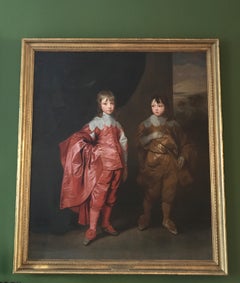
Double Portrait Oil Painting Brothers George, 2nd Duke Buckingham
Lord Francis
By (After) Anthony Van Dyck
Located in London, GB
Aftrer Anthony VAN DYCK - maybe Studio (1599, Antwerp – 1641, London) Flemish
Double Portrait of George Villiers, 2nd Duke of Buckingham (1628-1687) & Lord Francis Villiers (1629-1648)
Oil on Canvas
170 x 147 cm
Anthony Van Dyck (1599-1641)
No painter has done more to define an era than Anthony van Dyck. He spent only seven and a half years of his short life (1599- 1641) in England. He grew up in Antwerp, where his precocious talent was recognised by Peter Paul Rubens, the greatest painter of his age. He worked in Rubens’s studio and imitated his style as a religious artist, painting biblical scenes redolent of the lush piety of the counter-reformation. But soon he was on the move. In 1620, he visited London for a few months, long enough to paint a history picture, The Continence of Scipio, for the royal favourite, George Villiers, Marquess of Buckingham, and a portrait of his other English patron, the great art collector, Thomas Howard, 2nd Earl of Arundel.
After a stint in Italy, making imposing portraits of the wealthy aristocracy and sketching and copying works by Titian, he returned to the Spanish Netherlands in 1627, becoming court artist to Archduchess Isabella before departing for The Hague in 1631 to paint the Dutch ruler Frederick Henry, Prince of Orange. Charles I’s invitation in 1632 led Van Dyck back to London where he was knighted, paid an annual salary of £200 and installed in a house in Blackfriars with a special jetty at which the royal barge might tie up when the King was visiting his studio. By this time Van Dyck was recognised as the leading court painter in Europe, with Velazquez at the court of Philip IV of Spain his only rival. He also excelled as a superbly observant painter of children and dogs.
Van Dyck’s notoriety in depicting children led to the introduction of groups of children without their parents as a new genre into English painting (amongst other new genres).
For the next 300 years, Van Dyck was the major influence on English portraiture. Nearly all the great 18th Century portraitists, from Pompeo Batoni and Allan Ramsay to Thomas Gainsborough and Joshua Reynolds, copied Van Dyck’s costumes, poses and compositions.
George Duke of Buckingham & his brother Francis Villiers
Painted in 1635, this double portrait was originally commissioned by Charles I, who raised the two brothers after their father, George Villiers, was assassinated in 1628. Together with their sister, Lady Mary Villiers, they enjoyed the King’s favour absolutely. Francis whose absolute ‘inimitable handsomeness’ was noted by Marvell (who was killed in a skirmish near Kingston upon Thames). The young duke who commanded a regiment of horse at the Battle of Worcester, remained closely associated with Charles II, held a number of high offices after the Restoration and was one of the most cynical and brilliant members of the King’s entourage, immortalised as ‘Zimri’ in Dryden’s Absalom and Achitopbel. As a young man he had sold his father’s great collection of pictures in the Spanish Netherlands, many of them to the Archduke Leopold Willhelm.
Painted for Charles I and placed near the portrait of their sister in the Gallery at St James’ Palace. The handling of both costumes is very rich, and the heads are very carefully and sensitively worked. That of the younger boy in particular is more solidly built up than the lower part of the figure. A preparatory drawing for the younger boy is in the British Museum.
There are copies at, e.g., Highclere Castle...
Category
17th Century Old Masters (After) Anthony Van Dyck Paintings
Materials
Oil
Related Items
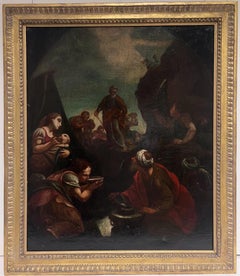
17th Century Italian Old Master Oil Painting Moses Striking Water from the Rock
By Pier (Pietro) Dandini
Located in Cirencester, Gloucestershire
Moses Striking Water from the Rock;
Circle of Pietro Dandini, Italian 1646-1712
Italian School, late 17th century
oil on canvas, framed
framed: 3...
Category
Early 18th Century Old Masters (After) Anthony Van Dyck Paintings
Materials
Canvas, Oil

$5,948 Sale Price
30% Off
H 32 in W 28 in D 1 in
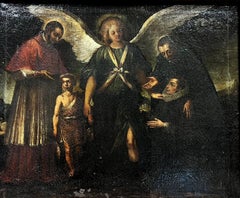
Fine Italian Old Master Oil Painting Angel
Saints Appearing to Figures
Located in Cirencester, Gloucestershire
Artist/ School: Italian Old Master, 18th century
Title: Angel and Saints appearing to figures, one dressed in a white ruff collar.
Medium: oil on canvas...
Category
Early 18th Century Old Masters (After) Anthony Van Dyck Paintings
Materials
Canvas, Oil
$4,758 Sale Price
30% Off
H 22 in W 26 in
Early 1800
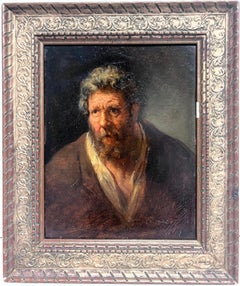
s Italian Oil Painting Portrait of Bearded Man Saint Peter Apostle
Located in Cirencester, Gloucestershire
Italian School, early 19th century
'Portrait of a Bearded Man' - possibly Saint Peter?
oil on board, framed
framed: 16 x 13.5 inches
board: 12.5 x 9.5 inches
provenance: private col...
Category
Early 19th Century Old Masters (After) Anthony Van Dyck Paintings
Materials
Oil
$1,475 Sale Price
30% Off
H 16 in W 13.5 in
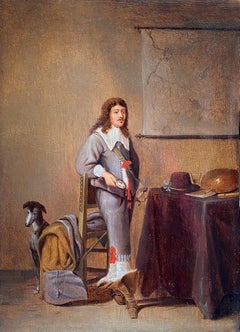
Soldier in an Interior, Early 17th Century Dutch Oil
Located in London, GB
Pieter Symonsz Potter
Dutch 1600 - 1652
Soldier in an Interior
Oil on oak panel, red seal to reverse
Image size: 15 x 10 3/4 inches
Dutch Ebonised frame
Bathed in a well lit roo...
Category
Early 17th Century Old Masters (After) Anthony Van Dyck Paintings
Materials
Oil, Board
$10,197
H 15 in W 10.75 in
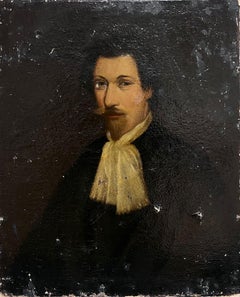
18th Century French Portrait of Mysterious Man Oil on Canvas for restoration
Located in Cirencester, Gloucestershire
Portrait of a Gentleman
French School, 18th century
oil on canvas, unframed
canvas : 25 x 20 inches
provenance: private collection, France
condition: the painting is in sound conditi...
Category
18th Century Old Masters (After) Anthony Van Dyck Paintings
Materials
Oil
$951 Sale Price
30% Off
H 25 in W 20 in
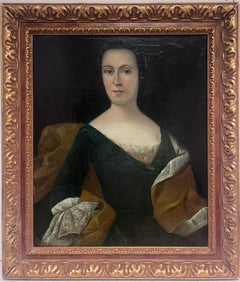
Large 18th Century European Oil Painting Portrait of Noble Lady Lace Collars
Located in Cirencester, Gloucestershire
Portrait of a Noble Lady
European School, 18th century
oil on canvas, framed
framed: 37.5 inches
canvas: 30 x 24.5 inches
provenance: private collection, France
condition: very good ...
Category
18th Century Old Masters (After) Anthony Van Dyck Paintings
Materials
Oil, Canvas
$1,855 Sale Price
30% Off
H 37.5 in W 32 in
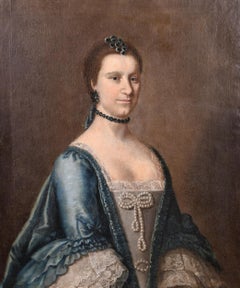
Large 18th Century English Oil Painting Portrait of Aristocratic Lady in Blue
Located in Cirencester, Gloucestershire
Portrait of a Noble Lady
English artist, mid 18th century
circle of Thomas Gainsborough (English 1727-1788)
oil on canvas, unframed
canvas: 30 x 25 inches
provenance: private collect...
Category
Mid-18th Century Old Masters (After) Anthony Van Dyck Paintings
Materials
Oil, Canvas
$4,473 Sale Price
30% Off
H 30 in W 25 in
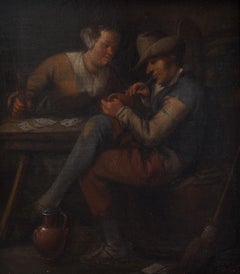
The Card Players by a Flemish 1600s Artist
By Flemish School, 17th Century
Located in Stockholm, SE
Flemish 1600s School
The Card Players
oil on oak panel
panel dimensions 22.5 x 20 cm
frame included
Provenance:
From a Swedish private collection.
Condition:
Flat and stabl...
Category
17th Century Old Masters (After) Anthony Van Dyck Paintings
Materials
Oak, Oil, Panel
$2,494
H 8.86 in W 7.88 in
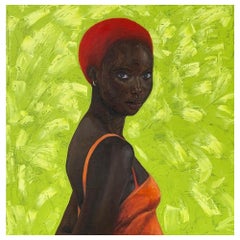
Answer Within
Located in Ibadan, Oyo
Painting
Ships in a well-protected tube from Nigeria
This work is unique, this is not a print or other type of copy.
Accompanied by a Certificate of Authenticity (Issued by the Gallery)
Category
21st Century and Contemporary Old Masters (After) Anthony Van Dyck Paintings
Materials
Canvas, Oil
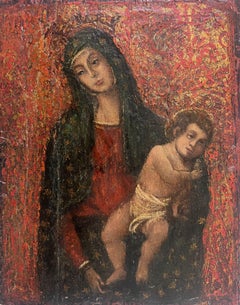
Fine 17th Century Italian Old Master Oil Painting Madonna with Christ Child
Located in Cirencester, Gloucestershire
The Madonna & Christ Child
Italian, 17th century
oil on wood panel, unframed
board: 9.5 x 7.5 inches
provenance: private collection, Paris
condition: very good and sound condition fo...
Category
17th Century Old Masters (After) Anthony Van Dyck Paintings
Materials
Oil
$4,663 Sale Price
30% Off
H 9.5 in W 7.5 in
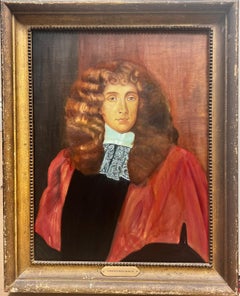
Fine British Aristocratic Portrait of a Nobleman Lord Jeffreys of Wem
Located in Cirencester, Gloucestershire
Portrait of Lord Jeffreys of Wem
British School, 20th century (presumably after an earlier work)
oil painting on canvas, framed
framed: 30.5 x 24.5 inches
canvas: 26 x 20 inches
prov...
Category
20th Century Old Masters (After) Anthony Van Dyck Paintings
Materials
Oil, Canvas
$951 Sale Price
30% Off
H 35.5 in W 28.5 in
Fine Dutch Old Master Large Oil Painting Portrait Gentleman in Ruff Collar Robes
Located in Cirencester, Gloucestershire
Portrait of a Gentleman in Ruff Collar and Robes
Dutch School, 18th century
oil on canvas laid over panel, unframed
board: 28.5 x 24 inches
provenance: private collection
condition: ...
Category
Mid-20th Century Old Masters (After) Anthony Van Dyck Paintings
Materials
Oil
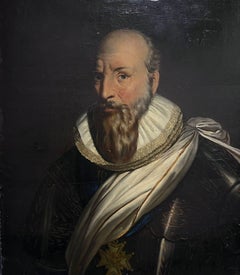
$2,365 Sale Price
30% Off
H 28.5 in W 23 in
(after) Anthony Van Dyck paintings for sale on 1stDibs.
Find a wide variety of authentic (After) Anthony Van Dyck paintings available for sale on 1stDibs. You can also browse by medium to find art by (After) Anthony Van Dyck in canvas, fabric, oil paint and more. Much of the original work by this artist or collective was created during the 18th century and earlier and is mostly associated with the Old Masters style. Not every interior allows for large (After) Anthony Van Dyck paintings, so small editions measuring 30 inches across are available. (After) Anthony Van Dyck paintings prices can differ depending upon medium, time period and other attributes. On 1stDibs, the price for these items starts at $53,681 and tops out at $53,681, while the average work can sell for $53,681.
Questions About (After) Anthony Van Dyck Paintings
- 1stDibs ExpertOctober 30, 2024How much a van Dyck painting is worth varies based on its historical significance, condition and size. At a London auction in 2009, a self-portrait of the artist sold for $13.5 million. Sir Anthony van Dyck was a Flemish Baroque artist who became the leading court painter for Charles I of England. He is best known for his portraits of royalty and aristocracy, most notably Charles I and his family and associates. His style changed considerably between the countries he worked in, culminating in the relaxed elegance of his last English period. Van Dyck widely influenced English portrait painting for the next 150 years, and his influence extended into the modern period. If you own a van Dyck piece, use the services of a certified appraiser or knowledgeable art dealer to learn how much it may be worth. On 1stDibs, find a variety of Baroque art.