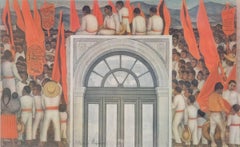
(after) Diego Rivera Figurative Prints

Mexican, 1886-1957

Diego Rivera was a prominent Mexican painter. His large frescoes helped establish the mural movement in Mexican and international art. Rivera was born as one of the twin boys in Guanajuato, Mexico, to María del Pilar Barrientos and Diego Rivera Acosta, a well-to-do couple. His twin brother Carlos died two years after they were born. They were said to have Converso ancestry. After moving to Paris, Rivera met Angelina Beloff, an artist from the pre-Revolutionary Russian Empire. They married in 1911 and had a son, Diego (1916–1918), who died young. Rivera died in Mexico City on November 24, 1957.

to
4
Overall Width
to
Overall Height
to
3
5
889
385
374
310
4
4
2
2
4
4
3
2
1
1
1
4
4
Artist: (after) Diego Rivera
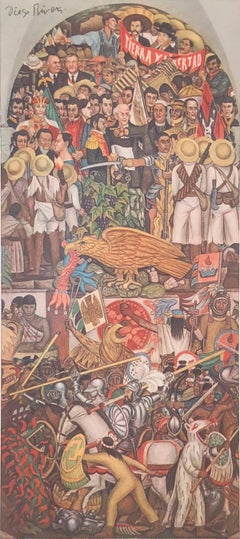
National Palace Mexico City, Persecution of the Indian, Revolution, Independence
By (after) Diego Rivera
Located in Missouri, MO
(after) Diego Rivera "National Palace Mexico City, Central Stairway" (Persecution of the Indian, Revolution, Independence) 1933 from the portfolio "Frescoes of Diego Rivera" Published by the Museum of Modern Art, NY Hand-Signed by the Artist Diego Rivera was born on December 13, 1886 in the mountain town of Guanajuato in Mexico. His mother was an ardent Catholic and his father was a rich and aristocratic revolutionary fighter and an atheist. Little Diego decided in favor of atheism. He swore his family had to leave Guanajuato when he was six because of his diatribes against the Church. When he was eleven he attended the San Carlos Academy of Fine Arts; his real teacher was Jose Posada...
Category

1930s Realist (after) Diego Rivera Figurative Prints

Materials

Lithograph

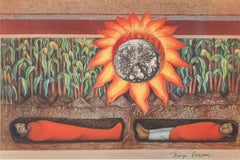
Chapel of the Agriculture School, Chapingo (Forces Under the Earth)
By (after) Diego Rivera
Located in Missouri, MO
(after) Diego Rivera "Chapel, Agriculture School, Chapingo" (Forces Under the Earth) 1933 from the portfolio "Frescoes of Diego Rivera" Published by the Museum of Modern Art, NY Approx. 18.5 x 13.5 with Matting Hand-Signed by the Artist Diego Rivera was born on December 13, 1886 in the mountain town of Guanajuato in Mexico. His mother was an ardent Catholic and his father was a rich and aristocratic revolutionary fighter and an atheist. Little Diego decided in favor of atheism. He swore his family had to leave Guanajuato when he was six because of his diatribes against the Church. When he was eleven he attended the San Carlos Academy of Fine Arts; his real teacher was Jose Posada...
Category

1930s Modern (after) Diego Rivera Figurative Prints

Materials

Lithograph

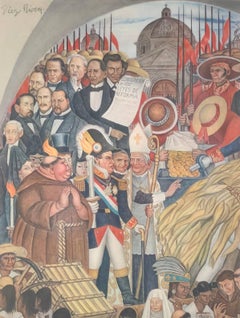
National Palace, Mexico City (Juarez and the Reform Laws)
By (after) Diego Rivera
Located in Missouri, MO
(after) Diego Rivera "National Palace, Mexico City (Juarez and the Reform Laws) 1933 from the portfolio "Frescoes of Diego Rivera" Published by the Museum of Modern Art, NY Hand-Signed by the Artist Diego Rivera was born on December 13, 1886 in the mountain town of Guanajuato in Mexico. His mother was an ardent Catholic and his father was a rich and aristocratic revolutionary fighter and an atheist. Little Diego decided in favor of atheism. He swore his family had to leave Guanajuato when he was six because of his diatribes against the Church. When he was eleven he attended the San Carlos Academy of Fine Arts; his real teacher was Jose Posada...
Category

1930s Modern (after) Diego Rivera Figurative Prints

Materials

Lithograph

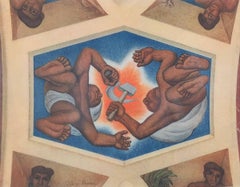
Chapel of the Agricultural School, Chapingo (Ceiling Detail, Workers)
By (after) Diego Rivera
Located in Missouri, MO
(after) Diego Rivera "Chapel of the Agricultural School, Chapingo" (Ceiling Detail, Workers) 1933 from the portfolio "Frescoes of Diego Rivera" Published by the Museum of Modern Art, NY Size with the Matt: 18.5 x 13.5 inches Hand-Signed by the Artist Diego Rivera was born on December 13, 1886 in the mountain town of Guanajuato in Mexico. His mother was an ardent Catholic and his father was a rich and aristocratic revolutionary fighter and an atheist. Little Diego decided in favor of atheism. He swore his family had to leave Guanajuato when he was six because of his diatribes against the Church. When he was eleven he attended the San Carlos Academy of Fine Arts; his real teacher was Jose Posada...
Category

1930s Modern (after) Diego Rivera Figurative Prints

Materials

Lithograph

Related Items
Greek Sculpture- Lithograph - 19th Century
Located in Roma, IT
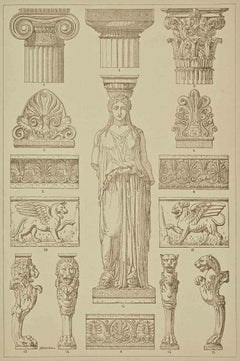
Greek Sculpture is an artwork realized in 19th century. Lithograph on paper.
Category

19th Century Modern (after) Diego Rivera Figurative Prints

Materials

Lithograph

Afghan Girl iconic poster: Sharbat Gula, Pakistan (Hand Signed by Steve McCurry)
By Steve McCurry
Located in New York, NY
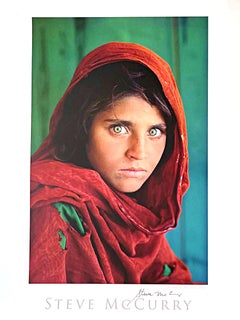
Steve McCurry Sharbat Gula, Afghan Girl, Pakistan (Hand Signed), 1984 Offset Lithograph poster Hand signed by the photographer in black felt pen on the front 24 × 20 inches Unframed...
Category

1980s Realist (after) Diego Rivera Figurative Prints

Materials

Felt Pen, Lithograph, Offset

"Labor in a Diesel Plant" Machine Age American Scene Industrial Mid 20th Century
By Letterio Calapai
Located in New York, NY
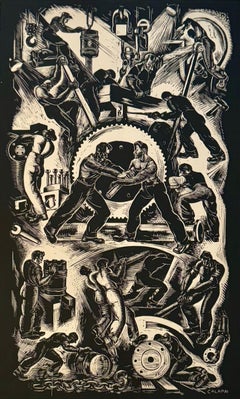
"Labor in a Diesel Plant" Machine Age American Scene Industrial Mid 20th Century Letterio Calapai (American 1902-1993) ''Labor in A Diesel Plant'' Wood engraving, 1940 17 x 10 1/2...
Category

1940s American Modern (after) Diego Rivera Figurative Prints

Materials

Lithograph

The House of Shango — African American artist
By Samella Lewis
Located in Myrtle Beach, SC
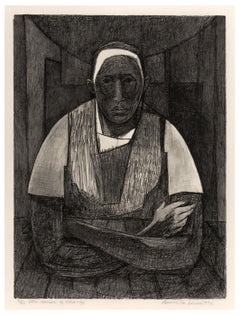
Samella Sanders Lewis, 'The House of Shango', lithograph, 1992, edition 60. Signed, dated, titled, and numbered '31/60' in pencil. A superb, richly-inked impression, on Arches cream wove paper; the full sheet with margins (1 1/4 to 3 1/2 inches), in excellent condition. Image size 24 x 18 inches (610 x 457 mm); sheet size 30 inches x 22 1/4 inches (762 x 565 mm). Archivally matted to museum standards, unframed. ABOUT THIS WORK “The title of this piece is an unmistakable harkening to African roots. Shango is a religious practice with origins in Yoruba (Nigerian) belief, deifying a god of thunder by the same name. Shango has been adopted in the Caribbean, most notably in Trinidad and Tobago, a fact that underscores the importance of transnationalism to Samella Lewis’s piece. Her work often grapples with issues of race in the U.S., and The House of Shango is no exception. Through a reliance on the gradual transformation of Shango—one that took place across continents and time—Lewis’s piece forms a powerful link between black Americans and their African and Caribbean counterparts. The figure depicted in the piece appears to emerge, quite literally, from the house of Shango. Given the roots and transformative process of the religion, The House of Shango can draw attention to the historical intersections to which black American culture is indebted.” —Laura Woods, Scripps College, Ruth Chander Williamson Gallery, Collection Highlights, 2018 ABOUT THE ARTIST Samella Lewis’ lifelong career as an artist, art historian, critic, curator, collector, and advocate of African American art has helped empower generations of artists in the United States and worldwide, earning her the designation “the Godmother of African American art.” Born and raised in Jim Crow era New Orleans, Lewis began her art education at Dillard University in 1941, transferring to Hampton University in Virginia, where she earned her B. A. and master's degrees. She completed her master's and a doctorate in art history and cultural anthropology at Ohio State University in 1951, becoming the first female African American to earn a doctorate in fine art and art history. Lewis taught art at Morgan State University while completing her doctorate. She became the first Chair of the Fine Arts Department at Florida A&M University in 1953. That same year Lewis also became the first African American to convene the National Conference of African American artists held at Florida A&M University. She was a professor at the State University of New York, California State University, Long Beach, and at Scripps College in Claremont, California. Lewis co-founded, with Bernie Casey, the Contemporary Crafts Gallery in Los Angeles in 1970. In 1973, she served on the selection committee for the exhibition BLACKS: USA: 1973 held at the New York Cultural Center. Samella Lewis's 1969 catalog 'Black Artists on Art', featured accomplished black artists typically overlooked in mainstream art galleries. She said of the book, "I wanted to make a chronology of African American artists, and artists of African descent, to document our history. The historians weren't doing it. It was really about the movement." From the 1960s through the 1970s, her work, which included lithographs, linocuts, and serigraphs, reflected her concerns with the values of human dignity, democracy, and freedom of expression. Between 1969 and 70, Lewis and E.J. Montgomery were consultants for a groundbreaking exhibition at the Oakland Public L designed to create greater awareness of African American history and art. Lewis was the founder of the International Review of African American Art in 1975. In 1976, she founded the Museum of African-American Art with a group of artistic, academic, business, and community leaders in Los Angeles, California. Lewis, the museum’s senior curator, organized exhibitions and developed new ways of educating the public about African American art. She celebrated African American art as an 'art of experience’ inspired by the artists’ lives. And she espoused the concept of African American art as an 'art of tradition', urging museums to explore the African roots of African American art. In 1984, Lewis produced an extensive monograph on Elizabeth Catlett, her beloved mentor at Dillard University. Lewis has been collecting art since 1942, focusing primarily on the WPA era and work created during the Harlem Renaissance. Pieces from her collection were acquired by the Hampton University Museum in Virginia, the world’s earliest collection of African American fine art...
Category

1990s Realist (after) Diego Rivera Figurative Prints

Materials

Lithograph

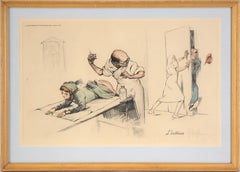
"L intrus" - Satirical French Illustration - Hand Colored Lithograph
By Gaston Hoffmann
Located in Soquel, CA
Comical illustration by Gaston Hoffmann (French, 1883-1977). A doctor is giving a shot to a female patient, while a nurse tries to prevent a man from barging in. Pencil signed "G Ho...
Category

1950s Realist (after) Diego Rivera Figurative Prints

Materials

Paper, Watercolor, Lithograph

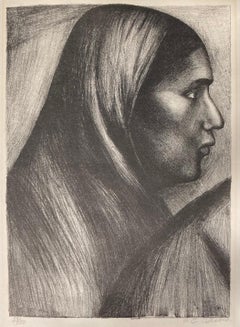
SCARCE EARLY OROZCO - CABEZA DE MUJER -
By Jose Clemente Orozco
Located in Santa Monica, CA
JOSE CLEMENTE OROZCO (1883 – 1949) CABEZA DE MUJER, ( Woman's Head: Mexican Woman) 1929 (Orozco 9) Lithograph, signed and numbered 23/50. in pencil. Pri...
Category

1920s Realist (after) Diego Rivera Figurative Prints

Materials

Lithograph

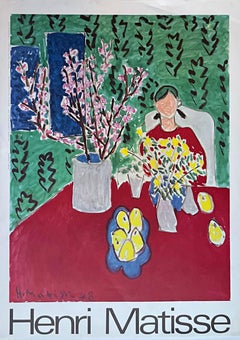
Plum Blossoms 1948, 1971, rare offset lithograph poster published in Switzerland
By Henri Matisse
Located in New York, NY
After Henri Matisse Plum Blossoms, 1948, 1971 Offet lithograph poster Offset lithograph poster Published in Zurich Switzerland on the occasion of the exhibition "Twenty Important Pai...
Category

Mid-20th Century Modern (after) Diego Rivera Figurative Prints

Materials

Lithograph, Offset

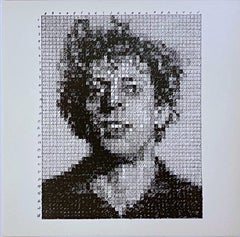
Phil, Pop print Portrait of Philip Glass, pencil numbered ed of 1000, w/envelope
By Chuck Close
Located in New York, NY
Chuck Close Phil, 1976 Limited Edition rubber stamp print on Strathmore 3-Ply Paper. Pencil numbered from the edition of 1000 on the verso. Artist's printed copyright name verso. Acc...
Category

1970s Realist (after) Diego Rivera Figurative Prints

Materials

Lithograph, Offset

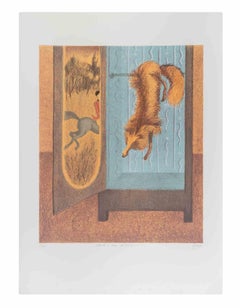
The Fox - Lithograph by Enrico Benaglia - 1990s
By Enrico Benaglia
Located in Roma, IT
Lithograph hand colored realized by Enrico Benaglia. Edition of 100. Hand signed and numbered in pencil.
Category

1990s Modern (after) Diego Rivera Figurative Prints

Materials

Lithograph

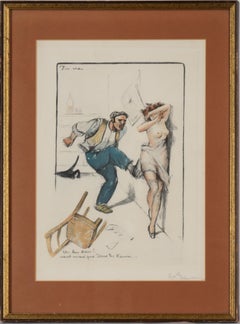
Satirical French Illustration of Man and Woman
By Gaston Hoffmann
Located in Soquel, CA
Satirical French Illustration of Man and Woman Comical illustration by Gaston Hoffmann (French, 1883-1967) titled "un bon tien vant amieux que deux tu l'auras" in French, "one real ...
Category

Mid-20th Century Realist (after) Diego Rivera Figurative Prints

Materials

Paper, Lithograph

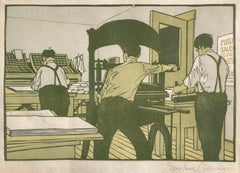
The Print Shop
By Gustave Baumann
Located in Santa Monica, CA
GUSTAVE BAUMANN (1881 – 1971) THE PRINT SHOP 1910 (Chamberlain 27) Color woodcut signed in pencil. Unnumbed from an edition 100 as published in the Hills o’ Brown Portfolio, (plate 11 of 12). Image 9 x 13 1/8, sheet 10 ¼ x 13 7/8 with deckle edge at the bottom. The print portrays the Brown County...
Category

1910s American Modern (after) Diego Rivera Figurative Prints

Materials

Lithograph

The Print Shop
The Print Shop
$4,750
H 10.25 in W 13.125 in
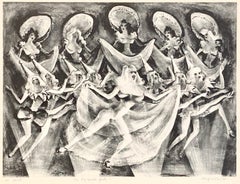
Adolf Dehn, The Big-Hearted Girls (The Last Veil), 1932, burlesque lithograph
By Adolf Dehn
Located in New York, NY
Adolf Dehn's, lithograph about burlesque, The Big Hearted Girls #2 (also known as The Last Veil), is filled with dancing girls and fabulous costumes. That central figure is a marvel!...
Category

1940s American Modern (after) Diego Rivera Figurative Prints

Materials

Lithograph

Previously Available Items
Ministry of Education, Mexico City (Workers Meeting)
By (after) Diego Rivera
Located in Missouri, MO
after Diego Rivera "Ministry of Education, Mexico City" (Workers' Meeting) 1933 from the portfolio "Frescoes of Diego Rivera" Published by the Museum of Modern Art, NY Signed by the artist lower center Diego Rivera was born on December 13, 1886 in the mountain town of Guanajuato in Mexico. His mother was an ardent Catholic and his father was a rich and aristocratic revolutionary fighter and an atheist. Little Diego decided in favor of atheism. He swore his family had to leave Guanajuato when he was six because of his diatribes against the Church. When he was eleven he attended the San Carlos Academy of Fine Arts; his real teacher was Jose Posada...
Category

1930s Modern (after) Diego Rivera Figurative Prints

Materials

Lithograph

(after) Diego Rivera figurative prints for sale on 1stDibs.

Find a wide variety of authentic (after) Diego Rivera figurative prints available for sale on 1stDibs. You can also browse by medium to find art by (after) Diego Rivera in lithograph and more. Much of the original work by this artist or collective was created during the 1930s and is mostly associated with the modern style. Not every interior allows for large (after) Diego Rivera figurative prints, so small editions measuring 14 inches across are available. (after) Diego Rivera figurative prints prices can differ depending upon medium, time period and other attributes. On 1stDibs, the price for these items starts at $1,500 and tops out at $1,500, while the average work can sell for $1,500.
Questions About (after) Diego Rivera Figurative Prints
  • 1stDibs ExpertMarch 22, 2022
    Yes, Diego Rivera did 20 self-portraits during the course of his life. However, his wife, Frida Kahlo, produced one of the best-known depictions of the artist in her painting Diego and I, which depicts him with a third eye. You'll find a variety of Diego Rivera art on 1stDibs.
  • 1stDibs ExpertApril 16, 2024
    You can see Diego Rivera's paintings in many places. His work is in the collections of museums across the world, such as the Art Institute of Chicago, the Museum of Modern Art in New York City, the Museo Mural Diego Rivera in Mexico City and the Peggy Guggenheim Collection in Venice, Italy. In addition, you can view the artist's murals in many of their original locations, including the City Club in San Francisco and the Detroit Institute of Arts. On 1stDibs, shop a range of Diego Rivera art.
  • 1stDibs ExpertFebruary 13, 2024
    Diego Rivera's style of art was Cubism. However, the Mexican artist developed his own distinctive version of the style. In 1909, he settled in Paris, where he befriended the Spanish artist Pablo Picasso and esteemed French painter Georges Braque, both of whom were pioneers of Cubism. Rivera built on their work, creating works in bright colors and varying the thickness of paint to produce bold textural effects. In addition to his experimentation with Cubism, Rivera also worked in the social realism style later in his career. On 1stDibs, explore a variety of Diego Rivera art.
  • 1stDibs ExpertApril 5, 2022
    Some of Mexican painter Diego Rivera’s large murals can be seen today in Mexico City, Detroit, and San Francisco, and his paintings are displayed in numerous museums across Mexico and the United States. Shop a selection of Diego Rivera paintings from top art dealers on 1stDibs.