Ai Weiwei Still-life Prints

Chinese, b. 1957

Ai Weiwei was born in northwest China but was sent to a labor camp in Beidahuang, Heilongjiang, when he was only a year old. There he was raised for the early years of his life. His father Aì Qīng’s involvement in the Anti-Rightist Movement led to the family's exile shortly afterward to Shihezi, Xinjiang, where Ai spent the duration of his childhood. Upon Mao Zedong’s death, the family returned to Beijing in 1976.

Following the family’s return home, Ai enrolled in the Beijing Film Academy to study animation in 1978. He was one of the founders of the avant-garde art group the Stars alongside contemporaries Ma Desheng, Wang Keping, Mao Lizi, Huang Rui, Li Shuang, Ah Cheng and Qu Leilei. The Stars disbanded in the 1980s, but Ai participated in regular shows that recalled the ten years that the group had been together, including at the Hanart Gallery in 1989 and the retrospective 2007 exhibition at Beijing's Origin Point.

Ai moved to the USA in 1981, among the earliest of students to study abroad following China’s reform in 1980, which afforded him the opportunity to take the TOEFL in 1981. He lived in Philadelphia and then in San Francisco, studying English at the University of California, Berkeley. Afteward, Ai studied at Parsons School of Design in New York City and attended the Art Students League of New York from 1983 to 1986. He initially made a living by drawing street portraits.

Immersing himself in the Pop art scene, which was rapidly gaining popularity, Ai began creating conceptual art and photography. Ai returned to China after his father became ill in 1993, and while there he helped to establish the experimental art scene called Beijing East Village. In 1999, Ai built a studio house in Beijing — his first architectural project. Ai founded the architecture studio FAKE Design in 2003, and co-curated the art exhibition "Fuck Off" with Feng Boyi in Shanghai.

In 2011, Ai was arrested and jailed. Released after 81 days, the government confiscated his passport. His release was in part due to the uproar of the art world against his charges of tax evasion; the Solomon R. Guggenheim Foundation and the International Council of Museums both organized petitions, collecting almost 100,000 signatures calling for his release. When he reclaimed his passport in 2015, Ai moved to Berlin and lived in a studio. It became a base for him to create his international work.

Ai is the artistic director of China Art Archives Warehouse. The experimental gallery and archive, co-founded by Ai in 1997, concentrates on experimental art from the People’s Republic of China, initiating and facilitating exhibitions both in China and internationally.

Ai's work is in the collections of museums worldwide, including the Tate, London; Arken, London; Brooklyn Museum, New York; and the RA, London. His international architectural collaborations, including the Beijing National Stadium and the Serpentine Gallery Pavilion, have consistently been met with critical acclaim.

Find a variety of authentic Ai Weiwei prints, paintings and other art today on 1stDibs.

to
1
1
1
1
Overall Width
to
Overall Height
to
3
86
95
72
67
59
3
2
1
1
1
1
1
1
1
1
2
1
1
2
3
Artist: Ai Weiwei
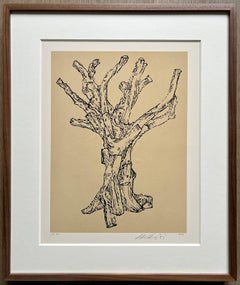
Cedar - Printer s Proof - Chinese Contemporary Modern Activism Tree Tradition
By Ai Weiwei
Located in London, GB
Cedar, 2022 Screenprint on Somerset Velvet Antique 280gsm hand-signed and numbered 52.6 x 44.2 cm - Framed 48 x 38 cm - sheet Printer's Proof - Edition 1 of 3 To commemorate Ai Weiw...
Category

2010s Contemporary Ai Weiwei Still-life Prints

Materials

Screen

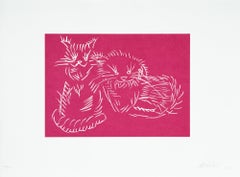
Cats (Pink)
By Ai Weiwei
Located in London, GB
Screen print on Saunders Waterford 300gsm paper Hand-signed, dated, and numbered by the artist 45 x 62 cm Edition 78 of 300 The print was editioned by master printer, Kip Gresham at The Print Studio, Cambridge for Kettle's Yard. It was made using an original drawing ‘cut’ into an acrylic sheet. The image is then reversed when printed. Description from the publisher: "Drawing has been fundamental to Ai Weiwei’s artistic practice from an early age. He also has a longstanding love of cats, and they appear frequently in the artist’s social media posts. Many cats used to roam his studio in Beijing. As part of the Kettle’s Yard exhibition, Ai’s ‘Cats wallpaper...
Category

2010s Contemporary Ai Weiwei Still-life Prints

Materials

Screen

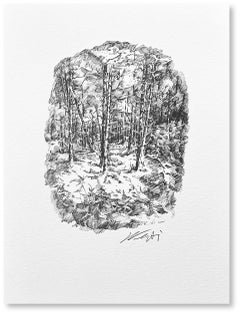
Forest, 1977
By Ai Weiwei
Located in London, GB
Ai Weiwei “Forest (1977)”, 2024 Limited edition offset lithograph print Edition of 200 Hand-signed by the artist Published by Damocle Edizioni, Venice, 2024 Each edition comes with...
Category

2010s Contemporary Ai Weiwei Still-life Prints

Materials

Lithograph, Offset

Related Items
London is the Place for Me by Eliza Southwood
By Eliza Southwood
Located in Deddington, GB
Eliza Southwood London is the Place for Me Limited Edition Screen Print Edition of 100 Sheet Size: H 75.5cm x W 50cm Image Size: H 73cm x W 48cm Signed and Numbered Sold Unframed Ple...
Category

2010s Symbolist Ai Weiwei Still-life Prints

Materials

Paper, Screen

Wilderness, Orange Contemporary Surrealist Graphic Style Handmade Print
By Chris Keegan
Located in Deddington, GB
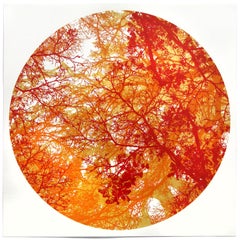
Wilderness by Chris Keegan [2022] Please note that insitu images are purely an indication of how a piece may look This is a hand-pulled limited edition screen print in three colours including Gold metallic ink. The inspiration for this print comes from wandering through a forest, looking up and seeing the changing patterns and shapes as the different types of trees overlap and intersect with each other. Limited edition of 50. Its 40 x 40 cm. Artwork printed on Southbank smooth 250 gsm. £. Chris Keegan artist online and in Wychwood Art Gallery...
Category

2010s Contemporary Ai Weiwei Still-life Prints

Materials

Paper, Screen

Henri Matisse, The Swimming Pool II, from Verve, Revue Artistique, 1958 (after)
By Henri Matisse
Located in Southampton, NY
This exquisite lithograph after Henri Matisse (1869–1954), titled La Piscine II (The Swimming Pool II), from Verve, Revue Artistique et Litteraire, Vol. IX, No. 35–36, originates from the 1958 issue published by Editions de la revue Verve, Paris, under the direction of Teriade, Editeur, Paris, and printed by Mourlot Freres, Paris, 1958. La Piscine II is one of the most expansive and lyrical compositions from Matisse’s late cut-out period, inspired by his deep fascination with the movement of water, light, and the human form. The work’s sweeping arrangement of floating blue shapes and rhythmic negative space evokes swimmers and sea life in motion, transforming a simple visual theme into a poetic meditation on fluidity, serenity, and the joy of life. Through its monumental simplicity and chromatic brilliance, La Piscine II exemplifies Matisse’s mastery of “painting with scissors” and his ability to translate motion into pure visual harmony. Executed as a lithograph on velin du Marais paper, this work measures 14 x 40.5 inches, with trifold as issued. Unsigned and unnumbered as issued. The edition exemplifies the superb craftsmanship of the Mourlot Freres atelier, faithfully capturing the luminosity, rhythm, and tactile beauty of Matisse’s original gouache cut-outs. Artwork Details: Artist: After Henri Matisse (1869–1954) Title: La Piscine II (The Swimming Pool II), from Verve, Revue Artistique et Litteraire, Vol. IX, No. 35–36, 1958 Medium: Lithograph on velin du Marais paper Dimensions: 14 x 40.5 inches, with trifold as issued Inscription: Unsigned and unnumbered as issued Date: 1958 Publisher: Editions de la revue Verve, Paris, under the direction of Teriade, Editeur, Paris Printer: Mourlot Freres, Paris Catalogue raisonne reference: Duthuit, Claude. Henri Matisse: Catalogue raisonne des ouvrages illustres. Editions Claude Duthuit, Paris, 1988, illustration 139 Condition: Well preserved, consistent with age and medium Provenance: From Verve, Revue Artistique et Litteraire, Vol. IX, No. 35–36, published by Editions de la revue Verve, Paris, 1958 Notes: Excerpted from the publication, Verve, Revue Artistique et Litteraire, Vol. IX, No. 35–36, published under the direction of Teriade, Editeur, Paris, and printed by Mourlot Freres, Paris, 1958. This double issue of Verve was entirely devoted to the final works of Henri Matisse, composed of his celebrated gouache cut-outs, which the artist called “painting with scissors.” Completed shortly before his death, this issue represents the culmination of Matisse’s lifelong exploration of color, rhythm, and spiritual joy through the simplest means of expression. About the Publication: Verve, Revue Artistique et Litteraire was one of the most influential art periodicals of the 20th century, founded in Paris in 1937 by the visionary Greek-born publisher Teriade (Stratis Eleftheriades). Conceived as a synthesis of art and literature, Verve brought together the greatest modern artists and writers of its time—Henri Matisse, Pablo Picasso, Marc Chagall, Georges Braque, Joan Miro, Fernand Leger, and others—alongside poets and philosophers such as Paul Eluard, Albert Camus, and Jean-Paul Sartre. Each issue was a work of art in itself, luxuriously printed by master lithographers such as Mourlot Freres and produced in collaboration with leading typographers and designers. Verve became a platform for avant-garde creativity, publishing original lithographs and essays that reflected the evolving spirit of modernism. Matisse collaborated closely with Teriade from the magazine’s inception, producing some of its most iconic issues, including those devoted to his paper cut-outs. The final Verve issue of 1958, which featured La Tristesse du Roi, the Nu Bleu series, Poisson Chinois, and Vigne, stands as a testament to Matisse’s enduring genius and to the publication’s legacy as the definitive meeting of art, poetry, and printing craftsmanship in 20th-century France. About the Artist: Henri Matisse (1869–1954) was a French painter, sculptor, draughtsman, and printmaker whose revolutionary vision redefined modern art through his daring use of color, line, and form. Celebrated as one of the greatest artists of the 20th century, Matisse led the Fauvist movement and devoted his life to the pursuit of balance, beauty, and emotional expression in visual art. His early works burst with vibrant hues and liberated brushwork, while his later “cut-out” compositions achieved a poetic simplicity that transformed the relationship between color and space. Deeply influenced by the work of Paul Cezanne, Vincent van Gogh, and Georges Seurat, as well as by the rhythmic patterns of Islamic art, Byzantine mosaics, and Japanese prints, Matisse forged a new visual language that celebrated joy, movement, and serenity. He was part of an extraordinary generation of artists who shaped the evolution of modernism, maintaining lifelong dialogue and friendly rivalry with contemporaries such as Pablo Picasso, Georges Braque, Marc Chagall, Andre Derain, Albert Marquet, and Raoul Dufy—peers who, like him, sought to expand the expressive potential of color and composition. Matisse’s influence extended across generations, inspiring modern and contemporary masters including Alexander Calder, Alberto Giacometti, Salvador Dali, Joan Miro, Wassily Kandinsky, Marcel Duchamp, and Man Ray, each of whom drew upon his fearless experimentation and refined visual harmony. His paintings, sculptures, and works on paper are held in the most prestigious museums in the world, including the Museum of Modern Art, the Centre Pompidou, the Tate, and the Hermitage Museum, where his art continues to symbolize the essence of creativity and human emotion. The highest price ever paid for a Henri Matisse artwork is approximately $80.8 million USD, achieved in 2018 at Christie’s New York for Odalisque couchee aux magnolias (1923). Henri Matisse La Piscine...
Category

1950s Modern Ai Weiwei Still-life Prints

Materials

Lithograph

Red Poppies, Donald Sultan
By Donald Sultan
Located in Fairfield, CT
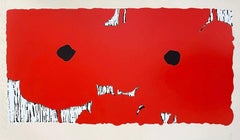
Artist: Donald Sultan (1951) Title: Red Poppies Year: 2012 Medium: Silkscreen with Tar & Flocking on Museum Board Edition: 10/75, plus proofs Size: 23 x 39 inches Condition: Excellen...
Category

2010s Pop Art Ai Weiwei Still-life Prints

Materials

Tar, Screen

Red Poppies, Donald Sultan
$6,800 Sale Price
20% Off
H 23 in W 39 in
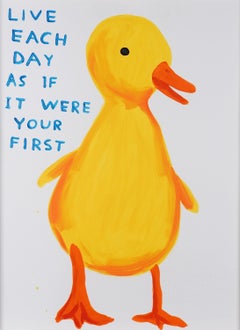
Live Each Day As If It Were Your First
By David Shrigley
Located in Manchester, GB
David Shrigley, I Can Sing For You, 2022 Hand-signed and dated on the reverse Edition 76 of 125 75 x 56 cm Screenprint in colours Private Collection UK
Category

2010s Contemporary Ai Weiwei Still-life Prints

Materials

Screen

Three Deer, Pop Art Screenprint by Hunt Slonem
By Hunt Slonem
Located in Long Island City, NY
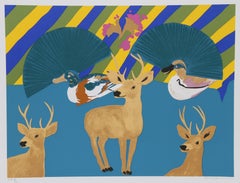
Artist: Hunt Slonem, American (1951 - ) Title: Three Deer Year: 1980 Medium: Screenprint, signed and numbered in pencil Edition: AP 30 Image Size: 24 x 32 inches Size: 26 in. ...
Category

1980s Pop Art Ai Weiwei Still-life Prints

Materials

Screen

Wine
By David Shrigley
Located in Manchester, GB
David Shrigley, Wine, 2021 Hand-signed and dated on the reverse Edition 29 of 125 75 x 56 cm Screenprint in colours Private Collection UK
Category

2010s Contemporary Ai Weiwei Still-life Prints

Materials

Screen

Wine
$8,842
H 29.93 in W 22.05 in
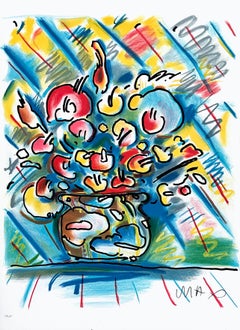
Vase of Flowers, Peter Max
By Peter Max
Located in Fairfield, CT
Artist: Peter Max (1937) Title: Vase of Flowers Year: 1979 Edition: 138/350, plus proofs Medium: Lithograph on Somerset paper Size: 30 x 22 inches Condition: Excellent Inscription: S...
Category

1970s Pop Art Ai Weiwei Still-life Prints

Materials

Lithograph

Vase of Flowers, Peter Max
$876 Sale Price
20% Off
H 30 in W 22 in
The Celestial Hippocampus (Ed. 88/140)
Located in Dallas, TX
"The Scar by China Miéville is a novel which has been a part of my life for many years, and has travelled as my companion through since adolescence. I've attempted to depict the Avan...
Category

21st Century and Contemporary Surrealist Ai Weiwei Still-life Prints

Materials

Screen

Spotted Leopard and Iris, Photorealist Screenprint by Lowell Nesbitt
By Lowell Nesbitt
Located in Long Island City, NY
Photorealist flower screenprint by American artist Lowell Blair Nesbitt, signed and numbered in pencil. Title: Spotted Leopard and Iris Year: 1981 Medium: Serigraph, signed and num...
Category

1980s American Realist Ai Weiwei Still-life Prints

Materials

Screen

Yellow Tulips - Contemporary, 21st Century, Silkscreen, Limited Edition, Katz
By Alex Katz
Located in Zug, CH
Alex Katz, Yellow Tulips Contemporary, 21st Century, Silkscreen, Limited Edition Edition of 50 + 5 PP + 15 AP 122,5 x 195,7 cm (48.2 x 77 in.) Signed and numbered on the front In mint condition, as acquired from the publisher (Lococo) PLEASE NOTE: Edition numbers could vary from the one shown in the images. All edition available come from the edition /50 The pictures are only for illustrative reasons, the work is offered unframed. “Yellow Tulips” is part of the famous flower painting series by Alex Katz. The aesthetics of flowers such as flags, tulips, and roses has been continuously explored by the artist throughout his career. "I generally start with oil sketches, because I can paint more quickly than I can draw. In this way I try to capture the sensation of what I’m doing, getting into the unconscious and creating the images, and then figuring out what I did." — Alex Katz Katz has been painting flowers since the 1960s, often during his summer residencies in Maine. The cropped, flattened composition displays a debt to Japanese woodblock art printing. The American artist is well-known for his large paintings, whose bold simplicity and unmodulated colours are now seen as precursors of Pop Art. "Yellow Tulips" is another of Katz's wonderfully bright exploration of nature and the landscape. He represents the volumes and colors created by the natural light, this artwork breathes nature, the radiant yellow delights the vision against the limitless black background. The painting “Tulips 4” which this edition is based on belongs to the Collection of Museum of Modern Art (MoMA) in New York. ALEX KATZ Alex Katz (American, born 1927) is the outstanding protagonist of figurative painting and one of our era's most acclaimed artists. In the late 1950s, the artist began to develop his mature style, characterized by elegance, simplicity, and stylized abstraction, which typifies his entire production. Alex Katz’s paintings...
Category

2010s Contemporary Ai Weiwei Still-life Prints

Materials

Screen

Henri Matisse, Plants, from Verve, Revue Artistique, 1958 (after)
By Henri Matisse
Located in Southampton, NY
This exquisite lithograph after Henri Matisse (1869–1954), titled Vegetaux (Plants), from Verve, Revue Artistique et Litteraire, Vol. IX, No. 35–36, originates from the 1958 issue pu...
Category

1950s Modern Ai Weiwei Still-life Prints

Materials

Lithograph

Previously Available Items
Cedar (small)
By Ai Weiwei
Located in London, GB
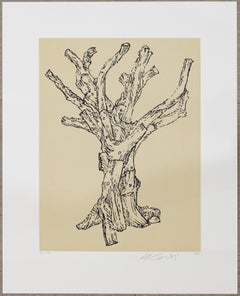
Cedar (small), 2022 Screenprint on Somerset Velvet Antique 280gsm hand-signed and numbered 47.5 x 38 cm Edition 64 of 150 To commemorate Ai Weiwei’s gift of a tree sculpture, Cedar, 2022, to Downing...
Category

2010s Contemporary Ai Weiwei Still-life Prints

Materials

Screen

Cedar (small)
Cedar (small)
H 18.71 in W 14.97 in

Ai Weiwei still-life prints for sale on 1stDibs.

Find a wide variety of authentic Ai Weiwei still-life prints available for sale on 1stDibs. You can also browse by medium to find art by Ai Weiwei in screen print and more. Much of the original work by this artist or collective was created during the 21st century and contemporary and is mostly associated with the contemporary style. Not every interior allows for large Ai Weiwei still-life prints, so small editions measuring 20 inches across are available. Customers who are interested in this artist might also find the work of Martin Kállay, Gavin Dobson, and Ryan Rivadeneyra. Ai Weiwei still-life prints prices can differ depending upon medium, time period and other attributes. On 1stDibs, the price for these items starts at $1,650 and tops out at $1,650, while the average work can sell for $1,650.
Questions About Ai Weiwei Still-life Prints
  • 1stDibs ExpertApril 5, 2022
    Yes, Ai Weiwei does paint. While Ai Weiwei is known more for his poetry, sculpture and photography, he did occasionally paint and use paint in his sculptural work. Ai Weiwei is known for his activism and his artwork often encapsulated his political leanings. Shop a selection Ai Weiwei works on 1stDibs.
  • 1stDibs ExpertApril 5, 2022
    What Ai Weiwei's art represents depends on the piece. Some of the Chinese artist's works seem to symbolize how the Chinese Community party stripped away individuality and demanded conformity. Many of his pieces communicate messages about various human rights violations. Shop a range of Ai Weiwei art on 1stDibs.
  • 1stDibs ExpertFebruary 13, 2024
    Ai Weiwei made Sunflower Seeds to provide a political critique. During his childhood, the Chinese artist frequently saw propaganda posters depicting Mao Zedong, founder of the Chinese Communist Party, as the sun and the citizens of China as sunflowers thriving beneath his rays. His installation featuring 100 million individually handmade sunflower seeds symbolized the poverty that the artist experienced while growing up in Communist China and the reduction of people as individuals / the grouping of individual human beings into a mass that occurred under Communist rule. Shop a collection of Ai Weiwei art on 1stDibs.

Recently Viewed

View All