Alberto Martini Prints and Multiples
Italian, 1876-1954
Alberto Martini was an Italian painter, engraver and graphic designer. He was born on November 24, 1876, in Italy. Critics have described Martini's range of work from elegant and epic to grotesque and macabre and consider him one of the precursors of Surrealism. He died on November 8, 1954, in Milan.
to
29
Overall Width
to
Overall Height
to
8
34
1,220
972
913
839
29
17
4
29
28
14
11
11
8
6
6
5
4
4
3
2
2
2
2
1
1
1
1
1
15
10
4
3
1
23
Artist: Alberto Martini
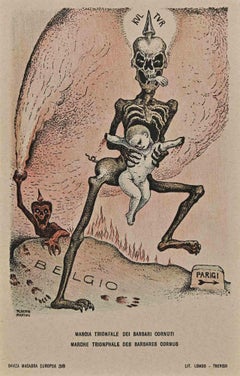
The European Macabre Dance N.38 - Lithograph by A. Martini - 1915
By Alberto Martini
Located in Roma, IT
The European Macabre Dance N.38 is a hand-colored lithograph, from the Series "La Danza Macabra Europea" illustrated by Alberto Martini (Oderzo, 1876 – Milan, 1954) in 1915.
Signed ...
Category
1910s Symbolist Alberto Martini Prints and Multiples
Materials
Lithograph
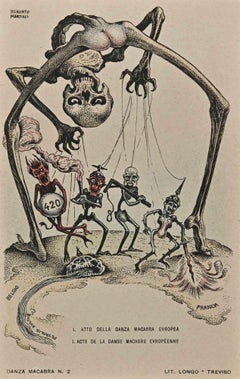
The European Macabre Dance N.2 - Lithograph by A. Martini - 1915
By Alberto Martini
Located in Roma, IT
The European Macabre Dance N.2 is an hand-colored lithograph, from the Series "La Danza Macabra Europea" illustrated by Alberto Martini (Oderzo, 1876 – Milan, 1954) in 1915.
Signed...
Category
1910s Symbolist Alberto Martini Prints and Multiples
Materials
Lithograph
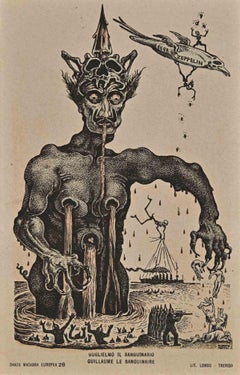
The European Macabre Dance N.28 - Lithograph by A. Martini - 1915
By Alberto Martini
Located in Roma, IT
The European Macabre Dance N.28 is a hand-colored lithograph, from the Series "La Danza Macabra Europea" illustrated by Alberto Martini (Oderzo, 1876 – Milan, 1954) in 1915.
Signed...
Category
1910s Symbolist Alberto Martini Prints and Multiples
Materials
Lithograph
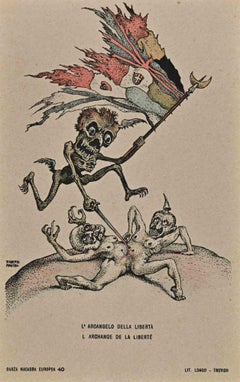
The European Macabre Dance N.40 - Lithograph by A. Martini - 1915
By Alberto Martini
Located in Roma, IT
The European Macabre Dance N.40 is a hand-colored lithograph, from the Series "La Danza Macabra Europea" illustrated by Alberto Martini (Oderzo, 1876 – Milan, 1954) in 1915.
Signed on the plate, Original Edition.
Published by Domenico Longo, Treviso.
Handcolored lithographic postcards.
Very good conditions.
Alberto Martini (Oderzo, 1876 - Milan, 1954); was an Italian draftsman, painter, engraver and illustrator, forerunner of the surrealist movement...
Category
1910s Symbolist Alberto Martini Prints and Multiples
Materials
Lithograph
Ex Libris - Giorgio Balbi - Etching by Alberto Martini - Mid-20th Century
By Alberto Martini
Located in Roma, IT
Ex Libris - Giorgio Balbi di Angelo is an Artwork in Mid 20th Century.
Etching. Hand signed.
Good conditions.
Category
Mid-20th Century Symbolist Alberto Martini Prints and Multiples
Materials
Etching
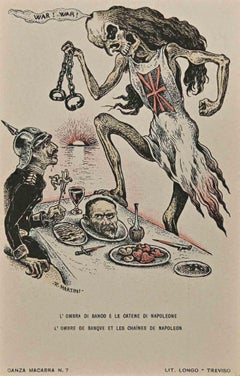
The European Macabre Dance N.7 - Lithograph by A. Martini - 1915
By Alberto Martini
Located in Roma, IT
The European Macabre Dance N.7 is a hand-colored lithograph, from the Series "La Danza Macabra Europea" illustrated by Alberto Martini (Oderzo, 1876 – Milan, 1954) in 1915.
Signed on the plate, Original Edition.
Published by Domenico Longo, Treviso.
Handcolored lithographic postcards.
Very good conditions.
Alberto Martini (Oderzo, 1876 - Milan, 1954); was an Italian draftsman, painter, engraver and illustrator, forerunner of the surrealist movement...
Category
1910s Symbolist Alberto Martini Prints and Multiples
Materials
Lithograph
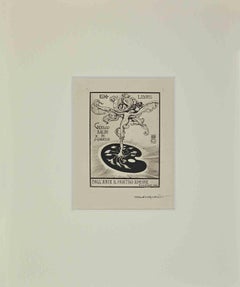
Ex Libris - Giorgio Balbi - Etching by Alberto Martini - Mid-20th Century
By Alberto Martini
Located in Roma, IT
Ex Libris - Giorgio Balbi - Piu Forte della Morte è Amore is an Artwork realized by Alberto Martini in Mid 20th Century.
Category
Mid-20th Century Symbolist Alberto Martini Prints and Multiples
Materials
Etching
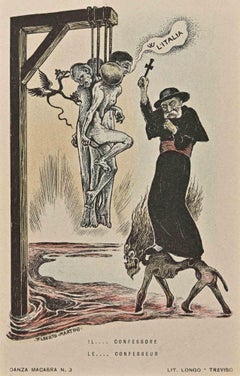
The European Macabre Dance N.3 - Lithograph by A. Martini - 1915
By Alberto Martini
Located in Roma, IT
The European Macabre Dance N.3 is a hand-colored lithograph, from the Series "La Danza Macabra Europea" illustrated by Alberto Martini (Oderzo, 1876 – Milan, 1954) in 1915.
Signed ...
Category
1910s Symbolist Alberto Martini Prints and Multiples
Materials
Lithograph
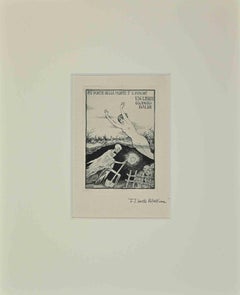
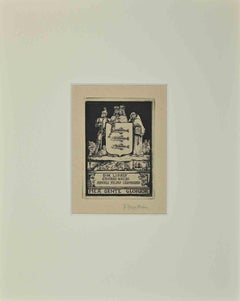
Ex-Libris Giorgio Balbi - Woodcut Print - 1944
By Alberto Martini
Located in Roma, IT
Ex Libris. Dr. Giorgio Balbi is an artwork realized by Alberto Martini (Oderzo, 1876 – Milan, 1954) in 1944.
Etching on paper. Hand-signed on the lower right margin. Limited edition...
Category
1940s Modern Alberto Martini Prints and Multiples
Materials
Woodcut
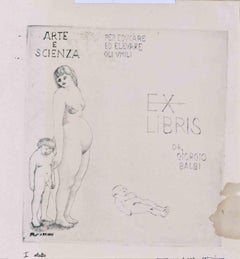
Ex Libris - Angelo Giorgio - Woodcut by Alberto Martini - Mid-20th Century
By Alberto Martini
Located in Roma, IT
Ex Libris - Angelo Giorgio - Me Ne Rido Della Serietà is an Artwork in Mid 20th Century.
Woodcut.
Good conditions.
Category
Mid-20th Century Modern Alberto Martini Prints and Multiples
Materials
Etching
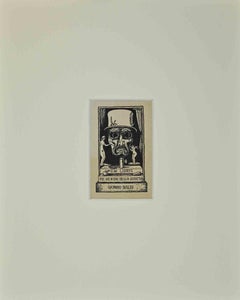
The European Macabre Dance N.1 - Lithograph by A. Martini - 1915
By Alberto Martini
Located in Roma, IT
The European Macabre Dance N.1 is an hand-colored lithograph, from the Series "La Danza Macabra Europea" illustrated by Alberto Martini (Oderzo, 1876 – Milan, 1954) in 1915.
Signed...
Category
1910s Symbolist Alberto Martini Prints and Multiples
Materials
Lithograph
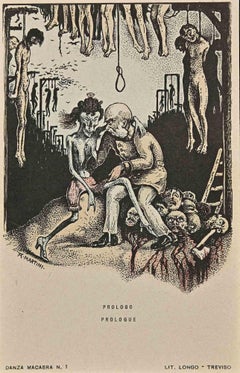
The European Macabre Dance N.8 - Lithograph by A. Martini - 1915
By Alberto Martini
Located in Roma, IT
The European Macabre Dance N.8 is a hand-colored lithograph, from the Series "La Danza Macabra Europea" illustrated by Alberto Martini (Oderzo, 1876 – Milan, 1954) in 1915.
Signed ...
Category
1910s Symbolist Alberto Martini Prints and Multiples
Materials
Lithograph
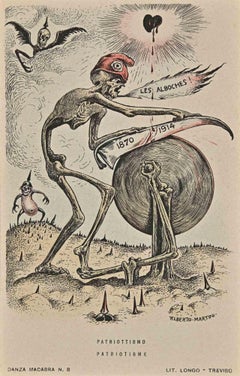
Banquet of Love - Etching by Alberto Martini - 1917
By Alberto Martini
Located in Roma, IT
Banquet of love is a modern artwork realized by Alberto Martini in 1917.
Etching and drypoint. Second state of three.
Signed on plate
Printed in 1945 in 25 specimen.
Alberto Mar...
Category
1910s Symbolist Alberto Martini Prints and Multiples
Materials
Etching
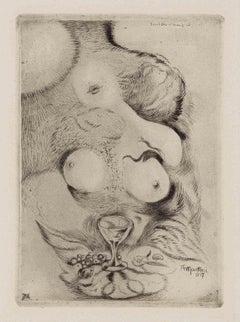
Ex Libris - Giorgio Balbi - Etching by Alberto Martini - Mid-20th Century
By Alberto Martini
Located in Roma, IT
Ex Libris - Giorgio Balbi is an Artwork realized by Alberto Martini in Mid 20th Century.
Etching. Hand signed.
Good conditions.
Category
Mid-20th Century Modern Alberto Martini Prints and Multiples
Materials
Etching
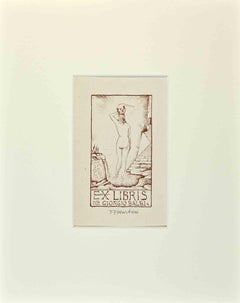
Ex Libris - Giorgio Balbi - Woodcut by Alberto Martini - Mid-20th Century
By Alberto Martini
Located in Roma, IT
Ex Libris - Giorgio Balbi - Sine Labe is an Artwork in Mid 20th Century.
Woodcut.
Good conditions.
Category
Mid-20th Century Symbolist Alberto Martini Prints and Multiples
Materials
Etching
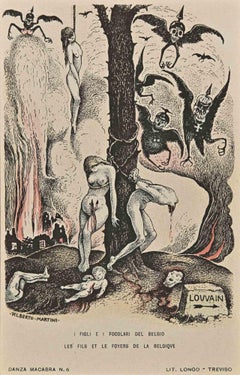
The European Macabre Dance N.6 - Lithograph by A. Martini - 1915
By Alberto Martini
Located in Roma, IT
The European Macabre Dance N.6 is a hand-colored lithograph, from the Series "La Danza Macabra Europea" illustrated by Alberto Martini (Oderzo, 1876 – Milan, 1954) in 1915.
Signed ...
Category
1910s Symbolist Alberto Martini Prints and Multiples
Materials
Lithograph
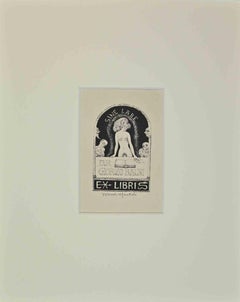
Ex Libris - Giorgio Balbi - Poesia Bellezza - Etching - Mid-20th Century
By Alberto Martini
Located in Roma, IT
Ex Libris - Giorgio Balbi - Mea Gente Glorior is an Artwork realized by Alberto Martini in Mid 20th Century.
Etching.
Good conditions.
Category
Mid-20th Century Symbolist Alberto Martini Prints and Multiples
Materials
Etching
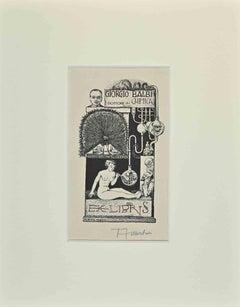
Ex Libris - Chimica - Etching by Alberto Martini - Mid-20th Century
By Alberto Martini
Located in Roma, IT
Ex Libris - Chimica is an Artwork realized by Alberto Martini for Giorgio Balbi in Mid 20th Century.
Etching. Hand signed.
Good conditions.
Category
Mid-20th Century Modern Alberto Martini Prints and Multiples
Materials
Etching
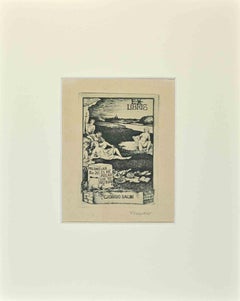
Ex Libris - Giorgio Balbi - Etching by Alberto Martini - Mid-20th Century
By Alberto Martini
Located in Roma, IT
Ex Libris - Giorgio Balbi is an Artwork realized by Alberto Martini in Mid 20th Century.
Black and white etching.
Very Good conditions.
Category
Mid-20th Century Modern Alberto Martini Prints and Multiples
Materials
Etching
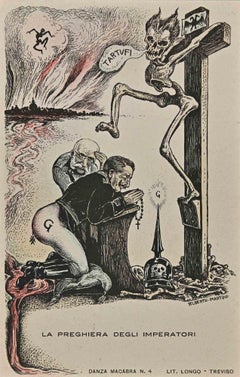
The European Macabre Dance N.4 - Lithograph by A. Martini - 1915
By Alberto Martini
Located in Roma, IT
The European Macabre Dance N.4 is a hand-colored lithograph, from the Series "La Danza Macabra Europea" illustrated by Alberto Martini (Oderzo, 1876 – Milan, 1954) in 1915.
Signed ...
Category
1910s Symbolist Alberto Martini Prints and Multiples
Materials
Lithograph
Ex Libris Giorgio Balbi - Woodcut - Mid-20th Century
By Alberto Martini
Located in Roma, IT
Ex Libris Giorgio Balbi is an artwork realized by Alberto Martini in 1942.
Dedication on the sheet: "To the alchemist and art writer Giorgio Balbi. I dedicate this satirical Ex Lib...
Category
1940s Modern Alberto Martini Prints and Multiples
Materials
Paper, Woodcut
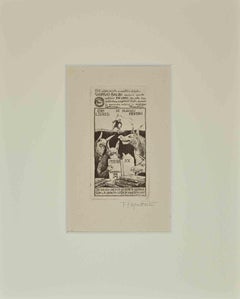
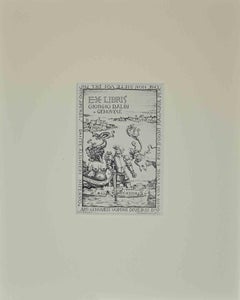
Ex Libris Giorgio Balbi - Woodcut - 1942
By Alberto Martini
Located in Roma, IT
Ex Libris Giorgio Balbi is an artwork realized by Alberto Martini in 1942.
Representation of the Maritime Republics, with passage from Hell: Ai Genovesi, uomini diversi d'ogni cost...
Category
1940s Modern Alberto Martini Prints and Multiples
Materials
Paper, Woodcut
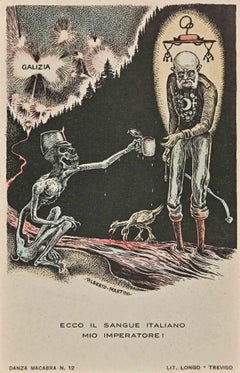
The European Macabre Dance N.12 - Lithograph by A. Martini - 1915
By Alberto Martini
Located in Roma, IT
The European Macabre Dance N.12 is a hand-colored lithograph, from the Series "La Danza Macabra Europea" illustrated by Alberto Martini (Oderzo, 1876 – Milan, 1954) in 1915.
Origina...
Category
1910s Symbolist Alberto Martini Prints and Multiples
Materials
Lithograph
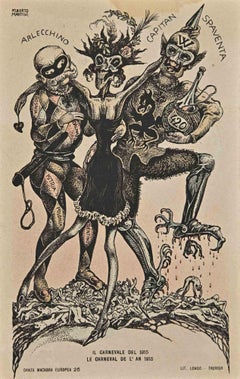
The European Macabre Dance n.25 - Lithograph by A. Martini - 1915
By Alberto Martini
Located in Roma, IT
The European Macabre Dance n.25 is a hand-colored lithograph, from the Series "La Danza Macabra Europea" illustrated by Alberto Martini (Oderzo, 1876 – Milan, 1954) in 1915.
Origina...
Category
1910s Symbolist Alberto Martini Prints and Multiples
Materials
Lithograph
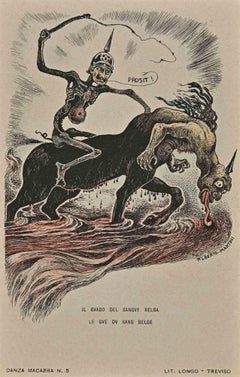
The European Macabre Dance N.5 - Lithograph by A. Martini - 1915
By Alberto Martini
Located in Roma, IT
The European Macabre Dance N.5 is a hand-colored lithograph, from the Series "La Danza Macabra Europea" illustrated by Alberto Martini (Oderzo, 1876 – Milan, 1954) in 1915.
Signed ...
Category
1910s Symbolist Alberto Martini Prints and Multiples
Materials
Lithograph
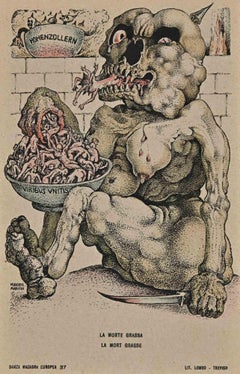
The European Macabre Dance N.37 - Lithograph by A. Martini - 1915
By Alberto Martini
Located in Roma, IT
The European Macabre Dance N.37 is a hand-colored lithograph, from the Series "La Danza Macabra Europea" illustrated by Alberto Martini (Oderzo, 1876 – Milan, 1954) in 1915.
Signed...
Category
1910s Symbolist Alberto Martini Prints and Multiples
Materials
Lithograph
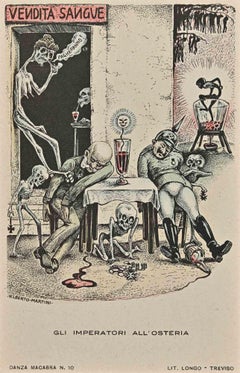
The European Macabre Dance N.10 - Lithograph by A. Martini - 1915
By Alberto Martini
Located in Roma, IT
The European Macabre Dance N.10 is a hand-colored lithograph, from the Series "La Danza Macabra Europea" illustrated by Alberto Martini (Oderzo, 1876 – Milan, 1954) in 1915.
Original Edition.
Published by Domenico Longo, Treviso.
Handcolored lithographic postcards.
Very good conditions.
Alberto Martini (Oderzo, 1876 - Milan, 1954); was an Italian draftsman, painter, engraver and illustrator, forerunner of the surrealist movement...
Category
1910s Symbolist Alberto Martini Prints and Multiples
Materials
Lithograph
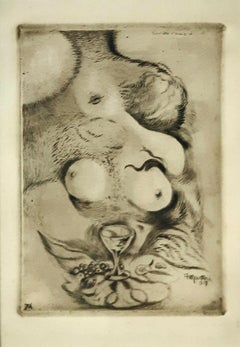
Banchetto d’Amore - Original Etching by A. Martini - 1917
By Alberto Martini
Located in Roma, IT
Banchetto d’Amore is an original etching and aquatint, realized by Alberto Martini in 1917, signed in the plate, 2nd state on 3, edition 25 copies in 1945 .
Included a frame.
In v...
Category
1910s Alberto Martini Prints and Multiples
Materials
Drypoint, Etching
Ex Libris Giorgio Balbi - Woodcut - 1944
By Alberto Martini
Located in Roma, IT
Ex Libris For Giorgio Balbi, realized by Alberto Martini in 1944.
It includes passepartout, 30 x 24 cm.
Woodcut, sheet 18 x 10 cm.
Signed on plate bottom right.
Good conditions.
Category
1940s Modern Alberto Martini Prints and Multiples
Materials
Paper, Woodcut
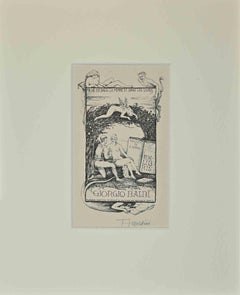
Related Items
Abel Pann Israeli Bezalel School Lithograph Judaica Biblical Print Jewish Art
By Abel Pann
Located in Surfside, FL
Abel Pann (1883–1963) was a European Jewish painter who settled in the Talpiot neighborhood of Jerusalem in the early twentieth century and taught at the Bezalel Academy of Art under...
Category
Mid-20th Century Symbolist Alberto Martini Prints and Multiples
Materials
Lithograph

$800
H 11.5 in W 15.5 in
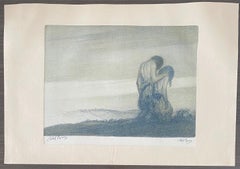
1001 Nights - SURREALIST WOMAN DEAD IN A TREASURE BOX
Located in Santa Monica, CA
RICHARD TESCHNER (Prague 1879 – 1948)
From: A Thousand and One Nights -
SURREALIST WOMAN DEAD IN A TREASURE BOX, 1917 Aquatint, Proof no. 17. Aqua...
Category
1910s Symbolist Alberto Martini Prints and Multiples
Materials
Aquatint
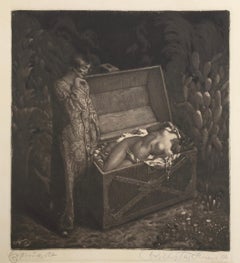
Mother Earth
By William Strang, R.A., R.E.
Located in New York, NY
William Strang (1859-1921), Mother Earth, 1897, etching, drypoint, aquatint ); signed in pencil lower right, and signed by the printer David Strang and...
Category
1890s Symbolist Alberto Martini Prints and Multiples
Materials
Drypoint, Etching, Aquatint
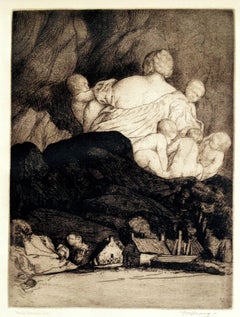
Exterminating Angel
By James Ensor
Located in New York, NY
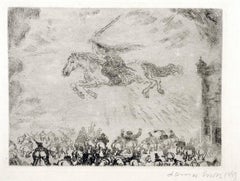
James Ensor (1860-1949), Exterminating Angel (L'Ange Exterminateur), etching with drypoint, 1889, signed and dated in pencil lower right, also titled and countersigned verso. Referen...
Category
1880s Symbolist Alberto Martini Prints and Multiples
Materials
Drypoint, Etching
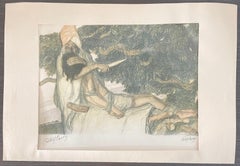
Abel Pann Israeli Bezalel School Lithograph Judaica Biblical Print Jewish Art
By Abel Pann
Located in Surfside, FL
Abel Pann (1883–1963) was a European Jewish painter who settled in the Talpiot neighborhood of Jerusalem in the early twentieth century and taught at the Bezalel Academy of Art under...
Category
Mid-20th Century Symbolist Alberto Martini Prints and Multiples
Materials
Lithograph
$800
H 11.5 in W 15.5 in
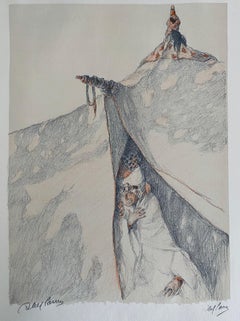
Abel Pann Israeli Bezalel School Lithograph Judaica Biblical Print Jewish Art
By Abel Pann
Located in Surfside, FL
Abel Pann (1883–1963) was a European Jewish painter who settled in the Talpiot neighborhood of Jerusalem in the early twentieth century and taught at the Bezalel Academy of Art under...
Category
Mid-20th Century Symbolist Alberto Martini Prints and Multiples
Materials
Lithograph
$800
H 15.5 in W 11.5 in
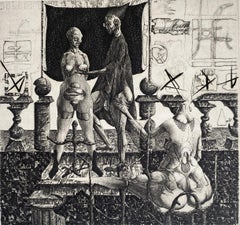
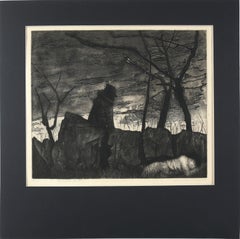
Session VI, paper/etching, 63/75, 11x12 cm, 1988
Located in Riga, LV
Session VI, paper/etching, 63/75, 11x12 cm, 1988
Category
1980s Symbolist Alberto Martini Prints and Multiples
Materials
Paper, Etching
$571 Sale Price
20% Off
H 4.34 in W 4.73 in D 0.04 in
"The Graces Lie Shy" Intaglio Etching
Located in Soquel, CA
"The Graces Lie Shy" intaglio etching by Chaim Koppelman (American b.1920 d.2009).
Moody etching by prominent American printmaker and educator Chaim Koppelman. In this piece a nude...
Category
1950s Symbolist Alberto Martini Prints and Multiples
Materials
Paper, Etching, Intaglio
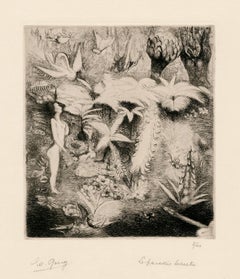
Le Paradis Terrestre
(Paradise on Earth) — French Symbolism
By Edouard Goerg
Located in Myrtle Beach, SC
Edouard Goerg, 'Le Paradis Terrestre' (Paradise on Earth), etching, 1931, edition 40. Signed, titled, and numbered '3/40' in pencil. A fine richly-inked impression, on heavy, cream w...
Category
1930s Symbolist Alberto Martini Prints and Multiples
Materials
Etching
$650
H 7.75 in Dm 7 in
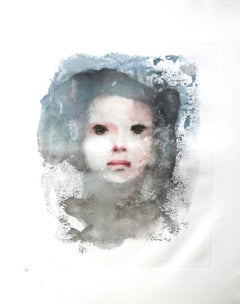
Portrait de Jeune Fille Portrait of a Girl 1970 original aquatint Leonor Fini
By Leonor Fini
Located in Paonia, CO
Portrait de Jeune Fille is a haunting portrait of a young girl also known as .. Justine… she could be either fading into the distance or just materializing out of a dream state. Her hair and the air around her is in shades of pale blue and the background is the white of the paper. This is a limited edition ( 170/300) aquatint , signed in the plate. In good condition with a 1" repaired tear midway on the right border which will not show when framed.
Argentinian-born artist Leonor Fini (1907-1996) is considered one of the great female artists of the twentieth century. She moved to Paris in the early 1930’s where she spent most of her life and almost immediately formed friendships with Salvador Dali, Cartier- Bresson, Max Ernst and other intellectuals of the time. At twenty five she had her first one person show in Paris and was included in the 1936 pivotal exhibition at MOMA…Fantastic Art, Dada and Surrealism…..and that same year had an exhibition at a famous avant garde gallery in New York. Although Fini never considered herself a Surrealist she maintained close personal relationships with several members of the group. One can see how their ideology influenced her work but she remained firmly rooted in the tradition of Symbolism, Metaphysics and Italian and German Romanticism Her works can be found in most important collections of modern art around the world.
Fini was renowned as a portraitist and as a painter of erotic sexual tensions with a mysterious atmosphere. She was adamant about being independent and not belonging to any one group. She lived life on her own terms and is sometimes referred to as …..the female Dali. She was also involved with designing for fashion and creating elaborate sets for opera and theatre. As a feminist she was definitely ahead of the times. She produced the first erotic male nude...
Category
20th Century Symbolist Alberto Martini Prints and Multiples
Materials
Aquatint
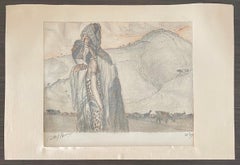
Abel Pann Israeli Bezalel School Lithograph Judaica Biblical Print Jewish Art
By Abel Pann
Located in Surfside, FL
Abel Pann (1883–1963) was a European Jewish painter who settled in the Talpiot neighborhood of Jerusalem in the early twentieth century and taught at the Bezalel Academy of Art under...
Category
Mid-20th Century Symbolist Alberto Martini Prints and Multiples
Materials
Lithograph
$800
H 11.5 in W 15.5 in
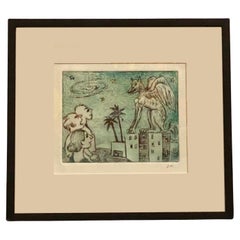
Green Sphinx Etching by John Marx
Located in Pasadena, CA
In this polychrome etching, signed with his initials in pencil, John Marx constructs a scene that oscillates between strangeness and collective introspection. The winged, sphinx-like...
Category
Late 20th Century Symbolist Alberto Martini Prints and Multiples
Materials
Etching
Previously Available Items
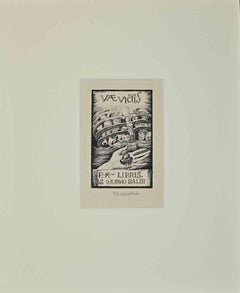
Ex Libris - Giorgio Balbi - Etching - Mid-20th Century
By Alberto Martini
Located in Roma, IT
Ex Libris - Giorgio Balbi is an Artwork realized by Alberto Martini in Mid 20th Century.
Etching
Good conditions.
Category
Mid-20th Century Modern Alberto Martini Prints and Multiples
Materials
Etching
H 5.12 in W 3.35 in D 0.04 in
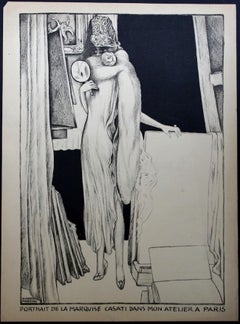
Portrait - Original Lithograph by A. Martini - 1925
By Alberto Martini
Located in Roma, IT
Portrait is an original lithograph, realized by Alberto Martini in 1925, titled" Portrait de la marquise Casati dans mon atelier à Paris".
In very good conditions.
The artwork repre...
Category
1920s Alberto Martini Prints and Multiples
Materials
Lithograph
H 14.38 in W 10.63 in D 0.08 in
Alberto Martini prints and multiples for sale on 1stDibs.
Find a wide variety of authentic Alberto Martini prints and multiples available for sale on 1stDibs. You can also browse by medium to find art by Alberto Martini in lithograph, drypoint, engraving and more. Not every interior allows for large Alberto Martini prints and multiples, so small editions measuring 4 inches across are available. Customers who are interested in this artist might also find the work of Walter Richard Rehn, Henry de Groux, and Andra Samelson. Alberto Martini prints and multiples prices can differ depending upon medium, time period and other attributes. On 1stDibs, the price for these items starts at $410 and tops out at $919, while the average work can sell for $410.