Alexander Calder Interior Prints

American, 1898-1976

The American sculptor Alexander Calder is known as the father of the mobile, a moving artwork composed of delicately balanced sculptural forms suspended from the ceiling.

Because Calder's parents, both artists themselves, did not want him to suffer the hardships of trying to make a living in art, they encouraged the young Calder to study mechanical engineering at the Stevens Institute of Technology, in Hoboken, New Jersey. He worked a number of jobs, including as a hydraulic engineer and draftsman for the New York Edison Company, before deciding to pursue an artistic career. He never abandoned his engineering background, however, applying his understanding of gears and moving parts in all his artworks, from mechanical toys like the Cirque Calder (1931) and his revered prints to his free-standing abstract sculptures, called stabiles.

In 1926, Calder moved to Paris and established a studio in the Montparnasse quarter. He began creating the many parts of his famous miniature circus from found materials, such as wire, string, cloth, rubber and cork. Designed to be transportable, Cirque grew to fill five suitcases over the years. Always interested in putting forms in motion, Calder also pioneered a new art form called wire sculptures, which he described as “drawings in space.” Like his famous mobiles, the wire sculptures were suspended so that they turned with any movement of the air, presenting different forms when viewed from different angles.

In the 1950s, Calder returned to his roots in mechanical engineering, creating monumental abstract sculptures that verged on the architectural. He worked from loose gestural drawings like this preparatory sketch for his Man Stabile, from 1966. Throughout his career, he also worked as a set designer for the theater, as well as an illustrator and printmaker, producing vibrant, whimsical drawings for books and journals.

Find original Alexander Calder art today on 1stDibs.

to
2
Overall Width
to
Overall Height
to
1
1
372
106
79
41
30
2
2
2
2
2
2
Artist: Alexander Calder
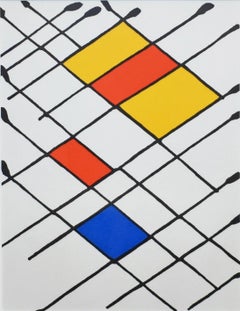
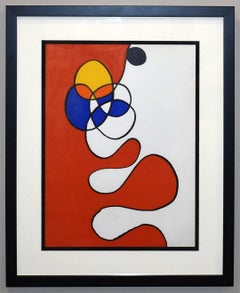
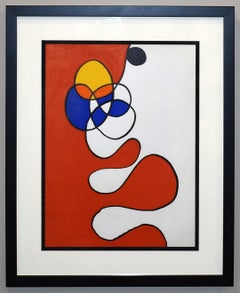
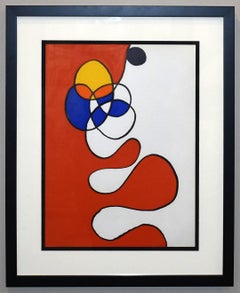
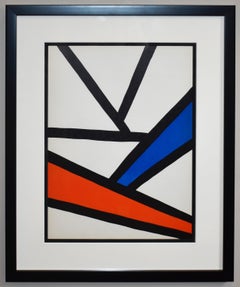
Damier, from Derriere Le Miroir #156
By Alexander Calder
Located in Washington, DC
Artist: Alexander Calder Medium: Original lithograph Title: Damier Portfolio: Derriere le Miroir #156 Year: 1966 Edition: Unnumbered Framed Size: 21 1/4" x 17 1/4" Sheet Size: 15" x...
Category

1960s Abstract Geometric Alexander Calder Interior Prints

Materials

Lithograph

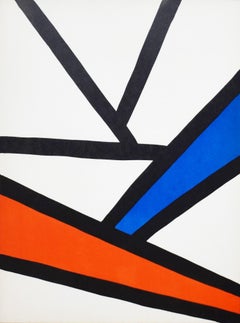
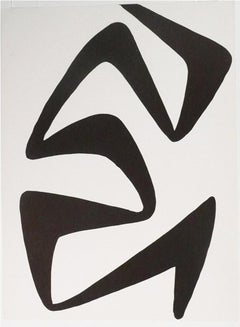
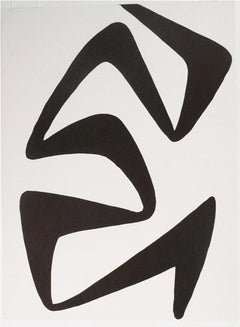
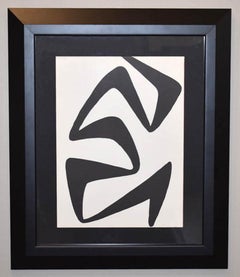
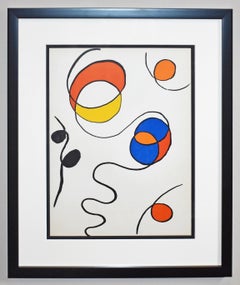
Plate 3, from Derriere Le Miroir #173
By Alexander Calder
Located in Washington, DC
Artist: Alexander Calder Title: Plate 3 Portfolio: Derriere le Miroir #173 Medium: Lithograph Date: 1968 Edition: Unnumbered Frame Size: 21 1/4" x 17 1/4" Sheet Size: 15" x 11" Image...
Category

1960s Modern Alexander Calder Interior Prints

Materials

Lithograph

Related Items
Barbara Kruger, I Shop Therefore I Am - Printed Paper Shopping Bag
By Barbara Kruger
Located in Hamburg, DE
Barbara Kruger (1945, American) I Shop Therefore I Am, 1990 Medium: Photolithograph on paper shopping bag Edition size: 9000 Dimensions: 17 5/16 x 10 3/4 in (43.9 x 27.3 cm) Publishe...
Category

20th Century Pop Art Alexander Calder Interior Prints

Materials

Lithograph

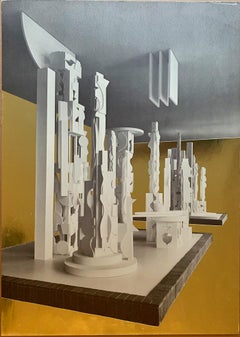
Bicentennial Dawn Lithograph and gold foil, Louise Nevelson sculpture signed/N
By Louise Nevelson
Located in New York, NY
Louise Nevelson Bicentennial Dawn, 1976 Photolithograph, silkscreen and gold foil on white wove paper hand signed, dated and numbered 15/100 with incised signature on the front 35 × ...
Category

1970s Abstract Alexander Calder Interior Prints

Materials

Foil

Very Special Arts Gallery photolithograph (Hand Signed by Frank Stella) Framed
By Frank Stella
Located in New York, NY
Frank Stella (after) Untitled, for the Very Special Arts Gallery (Hand Signed by Frank Stella), 1992 Photo lithograph and offset litho on thin board (hand signed) Frame included:: el...
Category

1990s Abstract Expressionist Alexander Calder Interior Prints

Materials

Lithograph, Offset

Rare 1970s offset lithograph exhibition poster (pencil signed by Philip Guston)
By Philip Guston
Located in New York, NY
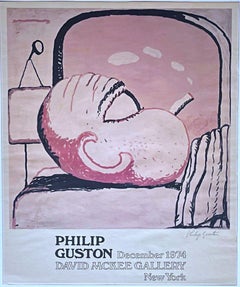
Philip Guston at David McKee Gallery (pencil signed by Philip Guston), 1974 Lithograph and offset lithograph poster Signed in graphite pencil under the image 24 1/2 × 20 inches Unframed, unnumbered Rare vintage lithographic poster of 1974 Guston exhibition at David McKee Gallery Signed under the image in graphite pencil by Philip Guston Another hand signed edition is in the permanent collection of Vassar College; otherwise we haven't seen another besides the present work; a true collectors item when hand signed by the artist. Philip Guston Biography Philip Guston (1913 – 1980) is one of the great luminaries of twentieth-century art. His commitment to producing work from genuine emotion and lived experience ensures its enduring impact. Guston’s legendary career spanned a half century, from 1930 to 1980. His paintings—particularly the liberated and instinctual forms of his late work—continue to exert a powerful influence on younger generations of contemporary painters. Born in Montreal, Canada, in 1913 to poor Russian Jewish émigrés, Guston moved with his family to California in 1919. Briefly attending the Otis Art Institute in Los Angeles in 1930, he was otherwise completely self-taught. Guston’s first precocious work, Mother and Child, was completed when he was only seventeen years of age. Influenced by the social and political landscape of the 1930s, his earliest works evoked the stylized forms of Giorgio de Chirico and Pablo Picasso, social realist motifs of the Mexican muralists, and classical properties of Italian Renaissance frescoes of Piero della Francesca and Masaccio that he had seen only in reproduction. Painted in Mexico with another young artist, the huge fresco The Struggle Against War and Fascism drew national attention in the US. Guston’s success continued in the WPA, a Depression-era government program that commissioned American artists to create murals in public buildings. While not widely known today, the young artist’s early experiences as a mural painter allowed a development of narrative and scale that he would draw upon in his late figurative work. In the early 1940s, as the WPA program was ending, Guston found work teaching at universities in the Midwestern United States. In his studio, he was working in oils on easel paintings that were more personal and smaller in scale, focusing on portraits and allegories, like Martial Memory and If This Be Not I. His first solo exhibition in Iowa was well received and, within a few years, he was offered his first solo show in New York City. Guston was awarded a Prix de Rome, allowing him to leave teaching and spend a year in Italy, studying firsthand the Italian masters he loved. By the time he had finished The Tormentors, Guston’s move to abstraction was all but complete. On his return from Italy, he continued dividing his time between the artists’ colony of Woodstock in Upstate New York and New York City, which was then emerging as the center of the postwar art world. He rented a studio on 10th Street, where abstract expressionists Jackson Pollock, Willem de Kooning and Mark Rothko also worked. For Guston, success was never what mattered most. He was already impatient with the language of pure abstraction and experimenting with larger forms, using a limited palette of grays, pinks and blacks. As his forms became still more reduced, he stopped painting altogether and embarked on a series of simplified abstract “pure drawings” in brush or charcoal. At this juncture, Guston removed himself from the art scene in New York, living and working in Woodstock for the remainder of his life. Guston’s move ­was hardly a withdrawal. Freed from the distractions and formal constraints of the art world and the opinions of critics, he was able to experiment with new forms and to engage more deeply with the issues that mattered to him. The 1960s was a period of great social upheaval in the United States, characterized by assassinations and violence, civil rights and anti-war protests. “When the 1960s came along I was feeling split, schizophrenic,” Guston later said. “The war, what was happening to America, the brutality of the world. What kind of man am I, sitting at home, reading magazines...
Category

1970s Abstract Expressionist Alexander Calder Interior Prints

Materials

Lithograph, Offset

EARTH FLOWERS Signed Lithograph, Abstract Floral, Pop Art, Brown Purple Magenta
By Peter Max
Located in Union City, NJ
EARTH FLOWERS is an original hand drawn lithograph by the renowned American Pop artist, Peter Max, printed in 1979 in an edition of 165, using traditional hand lithography techniques...
Category

1970s Pop Art Alexander Calder Interior Prints

Materials

Lithograph

Laure Prouvost: Ideally this print would want to share all it knows with you
Located in Hamburg, DE
Laure Prouvost (French, b. 1978) Ideally this print would want to share all it knows with you, 2020 Medium: Lithograph on paper Dimensions: 49.5 x 76 cm Edition of 40: Hand-signed an...
Category

21st Century and Contemporary Conceptual Alexander Calder Interior Prints

Materials

Lithograph

Charlie Davies, Winter winds, Contemporary Limited Edition Botanical Prints
By Charlie Davies
Located in Deddington, GB
Charlie Davies Winter winds Original botanical etching Soft ground etching on paper Image Size: 35 cm x 35 cm x 1 cm Sheet/Canvas Size: 50 cm x 50 cm x 1 c...
Category

21st Century and Contemporary Abstract Impressionist Alexander Calder Interior Prints

Materials

Paper, Etching

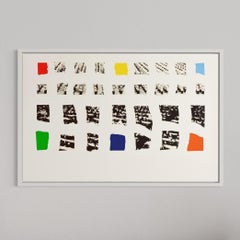
John Baldessari, Two Assemblages (with R, O, Y, G, B, V Opaque) - Signed Print
By John Baldessari
Located in Hamburg, DE
John Baldessari (American, 1931-2020) Two Assemblages (with R, O, Y, G, B, V Opaque), 2003 Medium: Lithograph and screen print on vellum Dimensions: 61.6 x 91.5 cm Edition of 50: Han...
Category

21st Century and Contemporary Abstract Alexander Calder Interior Prints

Materials

Lithograph, Screen

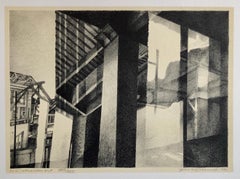
Chicago Scene Modernist Architectural Lithograph, Nevada Artist
Located in Surfside, FL
Jim McCormick was born in Chicago in 1936. He attended the University of Tulsa where he received a bachelor’s degree in art in 1958, then a M.A. in paint...
Category

1980s American Modern Alexander Calder Interior Prints

Materials

Lithograph

David Shapiro: Rene Ricard vintage poetry tombstone print "carved in stone"
By Rene Ricard
Located in New York, NY
The title of this poetic, abstract work is written across the top of the sheet. The hand-written cursive below reads: "David Shapiro / Told me he was going to / Carve his poems in stone / "That's one way to make them lost" / I don't have to / Rene Ricard". A poet, art historian and art critic, David Shapiro was friends with Ricard, and a part of the 1980's art scene in New York. Shapiro became famous briefly during the 1968 anti-Vietnam student uprising at Columbia University, when a photograph of him smoking a cigar behind the desk of the Columbia University president was published in Life magazine, and he became the face of the student protest...
Category

1980s Contemporary Alexander Calder Interior Prints

Materials

Lithograph

Installation Floor Plan for Any Space Surrounded by Four Walls, print, 917/1000
By Barry Le Va
Located in New York, NY
Barry Le Va Installation Floor Plan for Any Space Surrounded by Four Walls Rubber stamp print on Doric paper Stamp made by Unity Engraving Company, Inc. Printed by Aaron Arnow Paper ...
Category

1970s Abstract Alexander Calder Interior Prints

Materials

Lithograph

Harriet Hoult, At-Ha, Signed Limited Edition Print Abstract Print
By Harriet Hoult
Located in Deddington, GB
Harriet Hoult At-ha Limited Edition Giclee Print Edition of 50 Sheet Size: H 91cm x W 63cm x D 0.1cm Signed by the Artist This is a signed, Limited Edition Giclée print of the origi...
Category

2010s Abstract Alexander Calder Interior Prints

Materials

Giclée

Previously Available Items
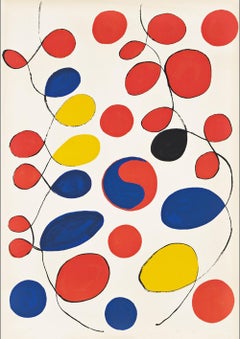
Loops and Yin Yang Lithograph proof 1969
By Alexander Calder
Located in Pembroke Pines, FL
ALEXANDER CALDER (1898-1976) 'Loops and Yin Yang' Original Limited Edition Lithograph on Arches paper, 1969. Edition Size: Proof aside from the signed edition of 90. Paper Size: 32 ...
Category

1970s Contemporary Alexander Calder Interior Prints

Materials

Lithograph

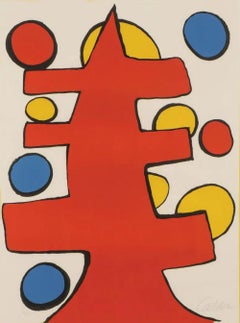
Christmas tree
By Alexander Calder
Located in Pembroke Pines, FL
Artist: Alexander Calder (American, 1898–1976) Title: Untitled, Christmas tree or Red tree Year: c1970 Medium: color lithograph Size: 77.5 x 57.8 cm. (...
Category

1970s Contemporary Alexander Calder Interior Prints

Materials

Lithograph

Christmas tree
Christmas tree
H 30.5 in W 22.8 in D 1 in
Plate 6, from Derriere Le Miroir #173
By Alexander Calder
Located in Washington, DC
Artist: Alexander Calder Medium: Original lithograph Title: Plate 6, from Derriere le Miroir #173 Portfolio: Derriere le Miroir #173 Year: 1968 Edition: Unnumbered Framed Size: 20 5/...
Category

1960s Alexander Calder Interior Prints

Materials

Lithograph

Plate 6, from Derriere Le Miroir #173
By Alexander Calder
Located in Washington, DC
Artist: Alexander Calder Medium: Original lithograph Title: Plate 6, from Derriere le Miroir #173 Portfolio: Derriere le Miroir #173 Year: 1968 Edition: Unnumbered Framed Size: 20 5/...
Category

1960s Alexander Calder Interior Prints

Materials

Lithograph

Plate 4, from Derriere Le Miroir #173
By Alexander Calder
Located in Washington, DC
Alexander Calder Derriere le Miroir #173 (Plate 4) Artist: Alexander Calder Medium: Original lithograph Title: Derriere le Miroir #173 (Plate 4) Portfolio: Derriere le Miroir #173 Ye...
Category

1960s Abstract Alexander Calder Interior Prints

Materials

Lithograph

Plate 4, from Derriere Le Miroir #173
By Alexander Calder
Located in Washington, DC
Alexander Calder Derriere le Miroir #173 (Plate 4) Artist: Alexander Calder Medium: Original lithograph Title: Derriere le Miroir #173 (Plate 4) Portfolio: Derriere le Miroir #173 Ye...
Category

1960s Abstract Alexander Calder Interior Prints

Materials

Lithograph

Plate 6, from Derriere Le Miroir #173
By Alexander Calder
Located in Washington, DC
Artist: Alexander Calder Medium: Original lithograph Title: Plate 6, from Derriere le Miroir #173 Portfolio: Derriere le Miroir #173 Year: 1968 Edition: Unnumbered Framed Size: 20 5/...
Category

1960s Alexander Calder Interior Prints

Materials

Lithograph

Plate 4, from Derriere Le Miroir #173
By Alexander Calder
Located in Washington, DC
Alexander Calder Derriere le Miroir #173 (Plate 4) Artist: Alexander Calder Medium: Original lithograph Title: Derriere le Miroir #173 (Plate 4) Portfolio: Derriere le Miroir #173 Ye...
Category

1960s Abstract Alexander Calder Interior Prints

Materials

Lithograph

Plate 6, from Derriere Le Miroir #173
By Alexander Calder
Located in Washington, DC
Artist: Alexander Calder Medium: Original lithograph Title: Plate 6, from Derriere le Miroir #173 Portfolio: Derriere le Miroir #173 Year: 1968 Edition: Unnumbered Framed Size: 20 5/...
Category

1960s Alexander Calder Interior Prints

Materials

Lithograph

Plate 1, from Derriere Le Miroir #173
By Alexander Calder
Located in Washington, DC
Artist: Alexander Calder Medium: Original lithograph Title: Plate 1, from Derriere le Miroir #173 Portfolio: Derriere le Miroir #173 Year: 1968 Edition: Unnumbered Framed Size: 20 3/...
Category

1960s Alexander Calder Interior Prints

Materials

Lithograph

Plate 3, from Derriere Le Miroir #173
By Alexander Calder
Located in Washington, DC
Artist: Alexander Calder Medium: Original lithograph Title: Plate 3, from Derriere le Miroir #173 Portfolio: Derriere le Miroir #173 Year: 1968 Edition: Unnumbered Framed Size: 21 x ...
Category

1960s Alexander Calder Interior Prints

Materials

Lithograph

Plate 1, from Derriere Le Miroir #173
By Alexander Calder
Located in Washington, DC
Artist: Alexander Calder Medium: Original lithograph Title: Plate 1, from Derriere le Miroir #173 Portfolio: Derriere le Miroir #173 Year: 1968 Edition: Unnumbered Framed Size: 21 x ...
Category

1960s Alexander Calder Interior Prints

Materials

Lithograph

Alexander Calder interior prints for sale on 1stDibs.

Find a wide variety of authentic Alexander Calder interior prints available for sale on 1stDibs. You can also browse by medium to find art by Alexander Calder in lithograph and more. Much of the original work by this artist or collective was created during the 1960s and is mostly associated with the abstract style. Not every interior allows for large Alexander Calder interior prints, so small editions measuring 17 inches across are available. Customers who are interested in this artist might also find the work of Jonathan Moss, Sumit Mehndiratta, and Howard Hodgkin. Alexander Calder interior prints prices can differ depending upon medium, time period and other attributes. On 1stDibs, the price for these items starts at $495 and tops out at $4,000, while the average work can sell for $545.
Questions About Alexander Calder Interior Prints
  • 1stDibs ExpertAugust 15, 2024
    Alexander Calder was famous for his work as an artist. The American sculptor is known as the father of the mobile, a moving artwork composed of delicately balanced sculptural forms suspended from the ceiling. He also created large-scale sculptures that frequently involved kinetic elements. Some of his best-known works include Mobile (Arc of Petals), Cirque Calder, Josephine Baker (III), Fish and A Universe. On 1stDibs, explore a selection of Alexander Calder art.
  • 1stDibs ExpertApril 5, 2022
    Alexander Calder’s artwork has found its home in many museums and art galleries around the world, including the Museum of Modern Art and the Guggenheim Museum. Shop a selection of Alexander Calder’s pieces from some of the world’s top art dealers on 1stDibs.
  • 1stDibs ExpertApril 5, 2022
    The American sculptor Alexander Calder invented the mobile, a moving artwork composed of delicately balanced sculptural forms suspended from the ceiling. His mobiles were an innovative feat and initially used motors for movement, which he later abandoned for air currents alone. Calder was also a pioneer of wire sculptures. Shop a selection of Alexander Calder pieces from some of the world’s top art dealers on 1stDibs.
  • 1stDibs ExpertOctober 15, 2024
    Most artists consider Alexander Calder to be a Kinetic artist rather than a Surrealist. The American sculptor is known as the father of the mobile, a moving artwork composed of delicately balanced sculptural forms usually suspended from the ceiling. Calder also pioneered a new art form with wire sculptures, which he described as “drawings in space.” Like his famous mobiles, the wire sculptures were suspended so that they turned with any air movement, presenting different forms when viewed from different angles. Explore a diverse assortment of Alexander Calder art on 1stDibs.
  • 1stDibs ExpertOctober 12, 2021
    The American sculptor Alexander Calder is known as the father of the mobile, a moving artwork composed of delicately balanced sculptural forms suspended from the ceiling. On 1stDibs, find a variety of vintage Alexander Calder drawings and other sculptures.
  • 1stDibs ExpertApril 5, 2022
    Alexander Calder's mobiles were revolutionary because he largely pioneered the art form of creating hanging sculptures that were able to move freely in response to airflow. Calder was a prolific artist believed to have produced more than 22,000 works during his life. Shop a variety of Alexander Calder art on 1stDibs.
  • 1stDibs ExpertApril 5, 2022
    American artist Alexander Calder is best known for his work in sculpture, particularly his monumental sculptures and innovative ‘mobiles’ in the tradition of kinetic art. Shop a collection of authentic Alexander Calder pieces from some of the world’s top art dealers on 1stDibs.
  • 1stDibs ExpertMay 3, 2024
    Alexander Calder mostly made sculptures, although he also worked in printmaking, painting, performance and other media. He is known as the father of the mobile, a moving artwork composed of delicately balanced sculptural forms suspended from the ceiling. Some of his most famous works include Cirque Calder, A Universe, Josephine Baker (III), Mobile (Arc of Petals), Devil Fish, Romulus and Remus and Fish. On 1stDibs, find a variety of Alexander Calder art.
  • 1stDibs ExpertMarch 22, 2022
    Alexander Calder is best known for his sculptures. He produced large, playful freestanding and hanging works in vibrant colors. Examples include Mobile-Stabile, Lobster Trap and Fish Tail and Flying Dragon. On 1stDibs, you can shop a selection of Alexander Calder art.
  • 1stDibs ExpertApril 3, 2024
    Alexander Calder invented the mobile, a moving artwork composed of delicately balanced sculptural forms suspended from the ceiling. The revered American sculptor's mobiles were an innovative feat and initially used motors for movement, which he later abandoned for air currents alone. Calder was also a pioneer of wire sculptures. (He was a celebrated modernist printmaker, too, and while jewelry was a secondary métier for him, interest in his wearable art has accelerated in recent years.)

    For Calder, the fascinating moment of artistic alchemy comes sometime between his representational canvases of the late 1920s and 1931, the year of his first show of abstract sculpture. Moving to Paris helped spur his creativity, as it did for so many artists and writers. The moment Calder arrived, he began working on one of his most seminal pieces, Cirque Calder (1931), his delightful distillation of the circus into what are essentially three-dimensional line drawings made with wire. 

    Shop authentic Alexander Calder prints, sculptures and other art from some of the world’s top art dealers on 1stDibs.
  • 1stDibs ExpertApril 16, 2024
    Alexander Calder used many of the elements of art when producing his works. The American sculptor is known as the father of the mobile, a moving artwork composed of delicately balanced sculptural forms suspended from the ceiling. These kinetic pieces use color, shape and space to convey a sense of unity, and the form of the art allows it to interact with its environment. Find a variety of Alexander Calder art on 1stDibs.
  • 1stDibs ExpertMay 3, 2024
    The art movement that Alexander Calder was connected to was kinetic art. The term refers to art that moves or has the appearance of movement. With their ability to sway and turn once suspended, Calder's mobiles are often referenced as examples of kinetic art. On 1stDibs, find a selection of Alexander Calder art.
  • 1stDibs ExpertOctober 24, 2024
    How much an Alexander Calder mobile is worth depends on its historical significance, size, condition and other factors. In 2012, his 1945 piece Lily of Force sold for $18.5 million at auction in New York City. The American sculptor is known as the father of the mobile, a moving artwork composed of delicately balanced sculptural forms suspended from the ceiling. Always interested in putting forms in motion, Calder also pioneered a new art form called “wire sculptures,” which he described as “drawings in space.” Like his famous mobiles, the wire sculptures were suspended so that they turned with any movement of the air, presenting different forms when viewed from different angles. If you're in possession of a Calder mobile, a certified appraiser or knowledgeable art dealer can help you determine how much it may be worth. On 1stDibs, explore a range of Alexander Calder art.
  • 1stDibs ExpertApril 5, 2022
    There are several interpretations of how to describe the characteristics of Alexander Calder’s sculptures. Some say they are abstract, with life-like elements, others say they are flat, simplified shapes that intersect at opposing angles. See the magic for yourself — shop a selection of Alexander Calder pieces from some of the world’s top art dealers on 1stDibs.
  • 1stDibs ExpertApril 5, 2022
    The term ‘mobile’, which was coined by Marcel Duchamp, was used to describe Alexander Calder’s work, as Calder’s sculptures often moved with the help of motors or wind. ‘Mobiles’ was a French pun which meant ‘motion’. On 1stDibs, find a variety of original artwork from Alexander Calder.
  • 1stDibs ExpertMarch 13, 2024
    Alexander Calder produced more than 22,000 works of art during his lifetime. The prolific artist made paintings, drawings, prints, tapestries, stage sets, jewelry and other types of art. Some of his most famous pieces include Cirque Calder, Josephine Baker (III), A Universe, Mobile (Arc of Petals) and Devil Fish. Shop a diverse assortment of Alexander Calder art on 1stDibs.
  • 1stDibs ExpertApril 5, 2022
    Like all meaningful works of art, the mood that best describes American artist Alexander Calder’s sculptures is subject to interpretation. Common descriptors for his abstract work include “playful” or “whimsical.” Calder is best known as the father of the mobile, a moving artwork composed of delicately balanced sculptural forms suspended from the ceiling. Shop a selection of Alexander Calder pieces from some of the world’s top art dealers on 1stDibs.

Recently Viewed

View All