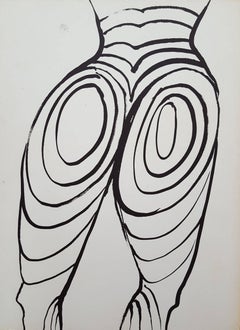
Alexander Calder Nude Prints

American, 1898-1976

The American sculptor Alexander Calder is known as the father of the mobile, a moving artwork composed of delicately balanced sculptural forms suspended from the ceiling.

Because Calder's parents, both artists themselves, did not want him to suffer the hardships of trying to make a living in art, they encouraged the young Calder to study mechanical engineering at the Stevens Institute of Technology, in Hoboken, New Jersey. He worked a number of jobs, including as a hydraulic engineer and draftsman for the New York Edison Company, before deciding to pursue an artistic career. He never abandoned his engineering background, however, applying his understanding of gears and moving parts in all his artworks, from mechanical toys like the Cirque Calder (1931) and his revered prints to his free-standing abstract sculptures, called stabiles.

In 1926, Calder moved to Paris and established a studio in the Montparnasse quarter. He began creating the many parts of his famous miniature circus from found materials, such as wire, string, cloth, rubber and cork. Designed to be transportable, Cirque grew to fill five suitcases over the years. Always interested in putting forms in motion, Calder also pioneered a new art form called wire sculptures, which he described as “drawings in space.” Like his famous mobiles, the wire sculptures were suspended so that they turned with any movement of the air, presenting different forms when viewed from different angles.

In the 1950s, Calder returned to his roots in mechanical engineering, creating monumental abstract sculptures that verged on the architectural. He worked from loose gestural drawings like this preparatory sketch for his Man Stabile, from 1966. Throughout his career, he also worked as a set designer for the theater, as well as an illustrator and printmaker, producing vibrant, whimsical drawings for books and journals.

Find original Alexander Calder art today on 1stDibs.

to
1
Overall Width
to
Overall Height
to
1
377
93
62
56
56
1
1
1
1
Artist: Alexander Calder
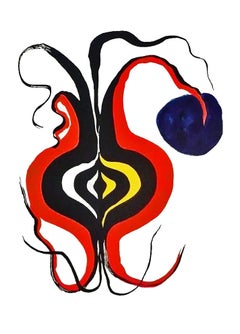
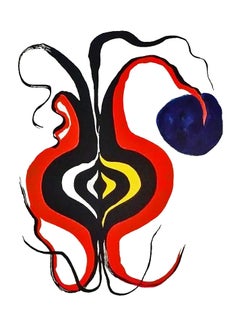
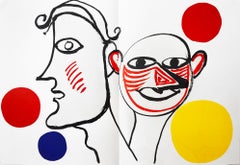
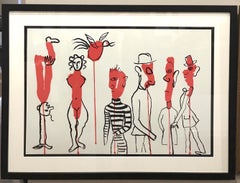
Alexander Calder lithograph Derrière le miroir (Calder prints)
By Alexander Calder
Located in NEW YORK, NY
Alexander Calder Lithograph c. 1967 from Derrière le miroir: Lithograph in colors; 15 x 11 inches. Very good overall vintage condition; well-preserved. Unsigned from an edition of u...
Category

Mid-20th Century Abstract Alexander Calder Nude Prints

Materials

Lithograph

Related Items
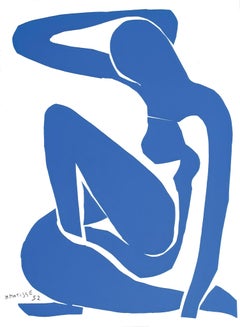
Henri Matisse, Blue Nude VI, from Verve, Revue Artistique, 1958 (after)
By Henri Matisse
Located in Southampton, NY
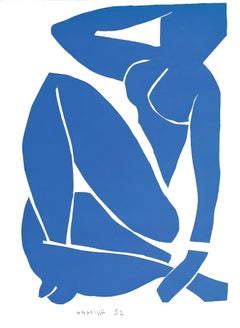
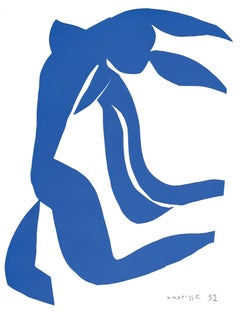
This exquisite lithograph after Henri Matisse (1869–1954), titled Nu Bleu VI (Blue Nude VI), from Verve, Revue Artistique et Litteraire, Vol. IX, No. 35–36, originates from the 1958 ...
Category

1950s Modern Alexander Calder Nude Prints

Materials

Lithograph

Man Ray, Composition, Man Ray (after)
By Man Ray
Located in Southampton, NY
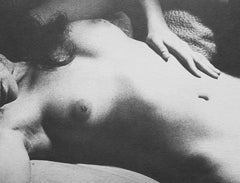
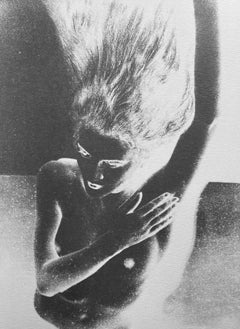
Lithograph on vélin paper. Inscription: unsigned and unnumbered, as issued. Good condition. Notes: From the folio, Man Ray, 1984. Published by Centre National des Arts Plastiques, Ni...
Category

1980s Surrealist Alexander Calder Nude Prints

Materials

Lithograph

Man Ray, Composition, Man Ray (after)
$716 Sale Price
20% Off
H 10.83 in W 8.27 in
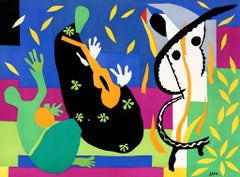
Henri Matisse, The Sorrow of the King, Verve, Revue Artistique, 1958 (after)
By Henri Matisse
Located in Southampton, NY
This exquisite lithograph after Henri Matisse (1869–1954), titled La Tristesse du Roi (The Sorrow of the King), from Verve, Revue Artistique et Litteraire, Vol. IX, No. 35–36, origin...
Category

1950s Modern Alexander Calder Nude Prints

Materials

Lithograph

Rene Magritte, A Bombardon Releases its Bouquet of Flames, 1968 (after)
By René Magritte
Located in Southampton, NY
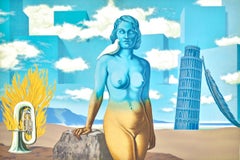
This exquisite lithograph after Rene Magritte (1898–1967), titled Un Bombardon Libere son Bouquet de Flammes (A Bombardon Releases its Bouquet of Flames), from the folio Les Enfants Trouves de Magritte (The Found Children of Magritte), 1968, originates from the edition published by A.C. Mazo et Cie, Paris, and printed by Mourlot Freres, Paris, on November 20, 1968. The work embodies Magrittes sustained inquiry into semiotics and visual epistemology, translating his characteristic strategies of displacement, symbolic inversion, and conceptual ambiguity into an image that operates as both a poetic metaphor and a philosophical proposition concerning the instability of meaning. Executed as a lithograph on grand velin dArches paper, this work measures 17.5 x 23.5 inches (44.5 x 59.7 cm). Signed in the plate by the artist; hand signed by Fernand Mourlot, Editeur. The edition exemplifies the technical mastery of the Mourlot atelier. Artwork Details: Artist: After Rene Magritte (1898–1967) Title: Un Bombardon Libere son Bouquet de Flammes (A Bombardon Releases its Bouquet of Flames), from the folio Les Enfants Trouves de Magritte (The Found Children of Magritte) Medium: Lithograph on grand velin dArches paper Dimensions: 17.5 x 23.5 inches (44.5 x 59.7 cm) Inscription: Signed in the plate by the artist; hand signed by Fernand Mourlot, Editeur Date: 1968 Publisher: A.C. Mazo et Cie, Paris Printer: Mourlot Freres, Paris Catalogue Raisonne: Magritte, Rene, et al. Rene Magritte: Catalogue Raisonne, Vol. 3. Menil Foundation; Philip Wilson Publishers; Distributed in the USA and Canada by Rizzoli International, 1992, nos. 791–792 and 1056; vol. 5, p. 218, Bibliography entry 68.28. Condition: Well preserved, consistent with age and medium Provenance: From the folio Les Enfants Trouves de Magritte, 1968 Notes: Excerpted from the folio (translated from French), Finished printing in Paris on November 20, 1968, on the presses of Mourlot, for the lithographs. The unpublished text by Louis Scutenaire was composed in Elzevir Casion corps 28 and printed by Fequet et Baudier, typographers. The unpublished compositions numbered from I to IV were specially made by Rene Magritte for this album. The compositions of the Enchanted Domain, are the renderings of the eight paintings of the mural of the Casino de Knokke. They were printed with the benevolent authorization of Mr. Gustave J. Nellens. Justification of the draw, this album was taken from CCCL examples on grand velin dArches numbered from I to CCCL, plus a few examples for collaborators and assistants. About the Publication: Les Enfants Trouves de Magritte (The Found Children of Magritte), published in 1968 by A.C. Mazo et Cie, Paris, represents one of the most significant late life print projects devoted to Rene Magrittes work. Conceived as both a literary and visual tribute, the folio pairs texts by the Belgian writer Louis Scutenaire, Magrittes close friend and fellow Surrealist, with lithographic interpretations produced at the Mourlot atelier, the premier lithographic workshop of twentieth century France. The album includes compositions by Magritte alongside lithographic renderings of the celebrated Enchanted Domain mural from the Casino de Knokke, printed with the authorization of Gustave J. Nellens, who commissioned the original mural. Issued in a single edition of CCCL examples on grand velin dArches, the folio stands as a testament to the collaboration between artist, writer, publisher, and master printer, and remains one of the most culturally important Surrealist print albums of the post war era. About the Artist: Rene Magritte (1898–1967) was a Belgian Surrealist painter whose visionary, intellectual, and poetic imagery redefined twentieth century art and forever changed how the world perceives reality and illusion. Celebrated for his calm precision and thought provoking juxtapositions of ordinary objects in extraordinary contexts, Magritte used painting as a philosophical tool, transforming the everyday into visual paradoxes that challenged the boundaries between what is seen and what is known. Born in Lessines, Belgium, and trained at the Academie Royale des Beaux Arts in Brussels, he absorbed early influences from Cubism, Futurism, and Symbolism before embracing Surrealism, where he found his true voice. In Paris, he became part of the avant garde circle that included Pablo Picasso, Alexander Calder, Alberto Giacometti, Salvador Dali, Joan Miro, Wassily Kandinsky, Marcel Duchamp, and Man Ray—all artists whose radical ideas helped him forge his distinctive synthesis of logic and mystery. Unlike Dalis dream...
Category

1960s Surrealist Alexander Calder Nude Prints

Materials

Lithograph

Henri Matisse, Nu Bleu IX, from Verve, Revue Artistique, 1958 (after)
By Henri Matisse
Located in Southampton, NY
This exquisite lithograph after Henri Matisse (1869–1954), titled Nu Bleu IX (Blue Nude IX), from Verve, Revue Artistique et Litteraire, Vol. IX, No. 35–36, originates from the 1958 ...
Category

1950s Modern Alexander Calder Nude Prints

Materials

Lithograph

Henri Matisse, Blue Nude, The Frog, from Verve, Revue Artistique, 1958 (after)
By Henri Matisse
Located in Southampton, NY
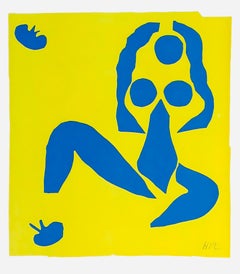
This exquisite lithograph after Henri Matisse (1869–1954), titled Nu Bleu, La Grenouille (Blue Nude, The Frog), from Verve, Revue Artistique et Litteraire, Vol. IX, No. 35–36, origin...
Category

1950s Modern Alexander Calder Nude Prints

Materials

Lithograph

Henri Matisse, The Parakeet and the Mermaid, Verve, Revue, 1958 (after)
By Henri Matisse
Located in Southampton, NY
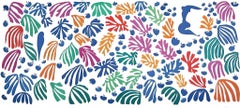
This exquisite lithograph after Henri Matisse (1869–1954), titled La Perruche et la Sirene (The Parakeet and the Mermaid), from Verve, Revue Artistique et Litteraire, Vol. IX, No. 35...
Category

1950s Modern Alexander Calder Nude Prints

Materials

Lithograph

Rene Magritte, A Young Woman Presents with Grace, 1968 (after)
By René Magritte
Located in Southampton, NY
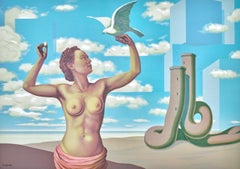
This exquisite lithograph after Rene Magritte (1898–1967), titled Une Jeune Femme Presente avec Grace (A Young Woman Presents with Grace), from the folio Les Enfants Trouves de Magritte (The Found Children of Magritte), 1968, originates from the edition published by A.C. Mazo et Cie, Paris, and printed by Mourlot Freres, Paris, on November 20, 1968. The work embodies Magrittes sustained inquiry into semiotics and visual epistemology, translating his characteristic strategies of displacement, symbolic inversion, and conceptual ambiguity into an image that operates as both a poetic metaphor and a philosophical proposition concerning the instability of meaning. Executed as a lithograph on grand velin dArches paper, this work measures 17.5 x 23.5 inches (44.5 x 59.7 cm). Signed in the plate by the artist; hand signed by Fernand Mourlot, Editeur. The edition exemplifies the technical mastery of the Mourlot atelier. Artwork Details: Artist: After Rene Magritte (1898–1967) Title: Une Jeune Femme Presente avec Grace (A Young Woman Presents with Grace), from the folio Les Enfants Trouves de Magritte (The Found Children of Magritte) Medium: Lithograph on grand velin dArches paper Dimensions: 17.5 x 23.5 inches (44.5 x 59.7 cm) Inscription: Signed in the plate by the artist; hand signed by Fernand Mourlot, Editeur Date: 1968 Publisher: A.C. Mazo et Cie, Paris Printer: Mourlot Freres, Paris Catalogue Raisonne: Magritte, Rene, et al. Rene Magritte: Catalogue Raisonne, Vol. 3. Menil Foundation; Philip Wilson Publishers; Distributed in the USA and Canada by Rizzoli International, 1992, nos. 791–792 and 1056; vol. 5, p. 218, Bibliography entry 68.28. Condition: Well preserved, consistent with age and medium Provenance: From the folio Les Enfants Trouves de Magritte, 1968 Notes: Excerpted from the folio (translated from French), Finished printing in Paris on November 20, 1968, on the presses of Mourlot, for the lithographs. The unpublished text by Louis Scutenaire was composed in Elzevir Casion corps 28 and printed by Fequet et Baudier, typographers. The unpublished compositions numbered from I to IV were specially made by Rene Magritte for this album. The compositions of the Enchanted Domain, are the renderings of the eight paintings of the mural of the Casino de Knokke. They were printed with the benevolent authorization of Mr. Gustave J. Nellens. Justification of the draw, this album was taken from CCCL examples on grand velin dArches numbered from I to CCCL, plus a few examples for collaborators and assistants. About the Publication: Les Enfants Trouves de Magritte (The Found Children of Magritte), published in 1968 by A.C. Mazo et Cie, Paris, represents one of the most significant late life print projects devoted to Rene Magrittes work. Conceived as both a literary and visual tribute, the folio pairs texts by the Belgian writer Louis Scutenaire, Magrittes close friend and fellow Surrealist, with lithographic interpretations produced at the Mourlot atelier, the premier lithographic workshop of twentieth century France. The album includes compositions by Magritte alongside lithographic renderings of the celebrated Enchanted Domain mural from the Casino de Knokke, printed with the authorization of Gustave J. Nellens, who commissioned the original mural. Issued in a single edition of CCCL examples on grand velin dArches, the folio stands as a testament to the collaboration between artist, writer, publisher, and master printer, and remains one of the most culturally important Surrealist print albums of the post war era. About the Artist: Rene Magritte (1898–1967) was a Belgian Surrealist painter whose visionary, intellectual, and poetic imagery redefined twentieth century art and forever changed how the world perceives reality and illusion. Celebrated for his calm precision and thought provoking juxtapositions of ordinary objects in extraordinary contexts, Magritte used painting as a philosophical tool, transforming the everyday into visual paradoxes that challenged the boundaries between what is seen and what is known. Born in Lessines, Belgium, and trained at the Academie Royale des Beaux Arts in Brussels, he absorbed early influences from Cubism, Futurism, and Symbolism before embracing Surrealism, where he found his true voice. In Paris, he became part of the avant garde circle that included Pablo Picasso, Alexander Calder, Alberto Giacometti, Salvador Dali, Joan Miro, Wassily Kandinsky, Marcel Duchamp, and Man Ray—all artists whose radical ideas helped him forge his distinctive synthesis of logic and mystery. Unlike Dalis dream...
Category

1960s Surrealist Alexander Calder Nude Prints

Materials

Lithograph

Henri Matisse, Blue Nude XI, from Verve, Revue Artistique, 1958 (after)
By Henri Matisse
Located in Southampton, NY
This exquisite lithograph after Henri Matisse (1869–1954), titled Nu Bleu XI (Blue Nude XI), from Verve, Revue Artistique et Litteraire, Vol. IX, No. 35–36, originates from the 1958 ...
Category

1950s Modern Alexander Calder Nude Prints

Materials

Lithograph

SPELLBOUND Signed Lithograph, Reclining Nude Woman, Golden Sunset, Erotic Art
By Frank Licsko
Located in Union City, NJ
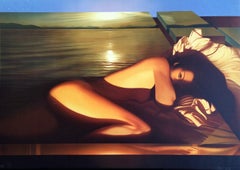
SPELLBOUND is an original hand drawn lithograph(not a photo reproduction or digital print) printed using traditional hand lithography techniques on archival Arches paper, 100% acid f...
Category

1980s Contemporary Alexander Calder Nude Prints

Materials

Lithograph

Man Ray, Composition, Man Ray (after)
By Man Ray
Located in Southampton, NY
Lithograph on vélin paper. Inscription: unsigned and unnumbered, as issued. Good condition. Notes: From the folio, Man Ray, 1984. Published by Centre National des Arts Plastiques, Ni...
Category

1980s Surrealist Alexander Calder Nude Prints

Materials

Lithograph

Man Ray, Composition, Man Ray (after)
$716 Sale Price
20% Off
H 10.83 in W 8.27 in
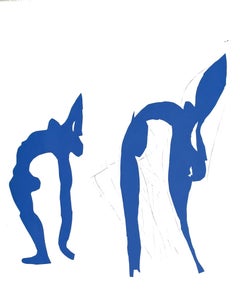
Henri Matisse, Acrobates, from Verve, Revue Artistique, 1958 (after)
By Henri Matisse
Located in Southampton, NY
This exquisite lithograph after Henri Matisse (1869–1954), titled Acrobates (Acrobats), from Verve, Revue Artistique et Litteraire, Vol. IX, No. 35–36, originates from the 1958 issue...
Category

1950s Modern Alexander Calder Nude Prints

Materials

Lithograph

Previously Available Items
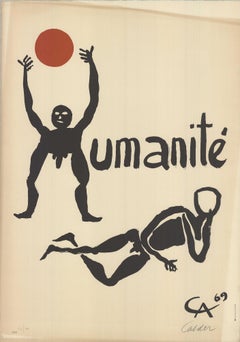
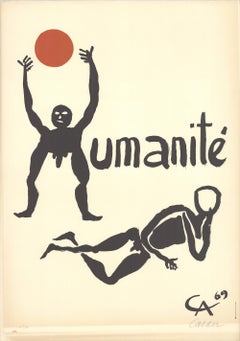
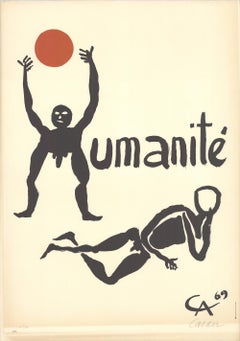
Alexander Calder - Fete de L’Humanite - HAND SIGNED
By Alexander Calder
Located in Brooklyn, NY
Paper Size: 32 x 22.5 inches ( 81.28 x 57.15 cm ) Image Size: 32 x 22.5 inches ( 81.28 x 57.15 cm ) Framed: No Condition: B: Very Good Condition, with signs of handling or age Supple...
Category

1960s Contemporary Alexander Calder Nude Prints

Materials

Lithograph

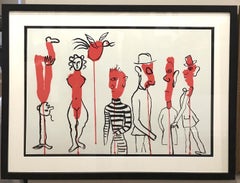
Alexander Calder lithograph Derrière le miroir (Calder prints)
By Alexander Calder
Located in NEW YORK, NY
Alexander Calder Lithograph c. 1967 from Derrière le miroir: Lithograph in colors; 15 x 11 inches. Very good overall vintage condition; well-preserved. Unsigned from an edition of u...
Category

Mid-20th Century Abstract Alexander Calder Nude Prints

Materials

Lithograph

Alexander Calder - Fete de L’Humanite - HAND SIGNED
By Alexander Calder
Located in Brooklyn, NY
Sku: MI1151-B Artist: Alexander Calder Title: Fete de L’Humanite Year: 1969 Signed: Yes Medium: Lithograph Paper Size: 32 x 22.5 inches ( 81.28 x 57.15 cm ) Image Size: 32 x 22.5 in...
Category

1960s Contemporary Alexander Calder Nude Prints

Materials

Lithograph

Alexander Calder lithograph derrière le miroir (Calder prints)
By Alexander Calder
Located in NEW YORK, NY
Alexander Calder Lithograph c. 1975 from Derrière le miroir: Lithograph in colors; 15 x 22 inches. c.1975. Some corner bending on both upper areas; in otherwise good overall vintage...
Category

1960s American Modern Alexander Calder Nude Prints

Materials

Lithograph

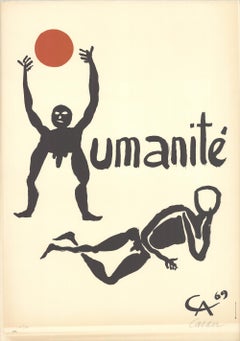
Alexander Calder - Fete de L’Humanite - 1969 Lithograph - SIGNED 32" x 22.5"
By Alexander Calder
Located in Brooklyn, NY
Sku: MI1151-B Artist: Alexander Calder Title: Fete de L’Humanite Year: 1969 Signed: Yes Medium: Lithograph Paper Size: 32 x 22.5 inches ( 81.28 x 57.15 cm ) Image Size: 32 x 22.5 in...
Category

1960s Surrealist Alexander Calder Nude Prints

Materials

Lithograph

Plate 2, from Derriere Le Miroir #156
By Alexander Calder
Located in Washington, DC
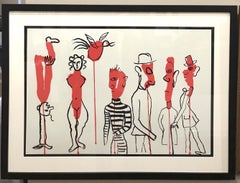
Artist: Alexander Calder Medium: Original lithograph Portfolio: Derriere le Miroir #156 Year: 1966 Edition: Unnumbered Framed Size: 27 3/4 x 20 3/4 inches Image Size: 22 x 15 inches ...
Category

1960s Abstract Alexander Calder Nude Prints

Materials

Lithograph

1970s Alexander Calder lithograph (from Derrière le miroir)
By Alexander Calder
Located in NEW YORK, NY
Alexander Calder Lithograph c. 1973: Portfolio: Derrière le miroir. Published by: Galerie Maeght, Paris. Lithograph in colors; 11 x 15 inches. Very good overall vintage condition. U...
Category

1970s Modern Alexander Calder Nude Prints

Materials

Lithograph

Alexander Calder - Fete de L’Humanite - 1969 Lithograph - SIGNED 32" x 22.5"
By Alexander Calder
Located in Brooklyn, NY
Sku: MI1151-B Artist: Alexander Calder Title: Fete de L’Humanite Year: 1969 Signed: Yes Medium: Lithograph Paper Size: 32 x 22.5 inches ( 81.28 x 57.15 cm ) Image Size: 32 x 22.5 in...
Category

1960s Surrealist Alexander Calder Nude Prints

Materials

Lithograph

Plate 2, from Derriere Le Miroir #156
By Alexander Calder
Located in Washington, DC
Artist: Alexander Calder Medium: Original lithograph Portfolio: Derriere le Miroir #156 Year: 1966 Edition: Unnumbered Framed Size: 27 3/4 x 20 3/4 inches Image Size: 22 x 15 inches ...
Category

1960s Abstract Alexander Calder Nude Prints

Materials

Lithograph

Fete de L’Humanite
By Alexander Calder
Located in Brooklyn, NY
Edition of 200, signed and numbered. Image created for the United Nations portfolio titled "La Fete de l'Humanite". Paris Province. Color Lithograph on velin d'Arches paper. Referenc...
Category

1960s Surrealist Alexander Calder Nude Prints

Materials

Lithograph

Plate 2, from Derriere Le Miroir #156
By Alexander Calder
Located in Washington, DC
Artist: Alexander Calder Medium: Original lithograph Portfolio: Derriere le Miroir #156 Year: 1966 Edition: Unnumbered Framed Size: 27 3/4 x 20 3/4 inches Image Size: 22 x 15 inches ...
Category

1960s Alexander Calder Nude Prints

Materials

Lithograph

Derriere Le Miroir No. 173 (back cover)
By Alexander Calder
Located in Saint Augustine, FL
An original one page lithograph on smooth wove paper by American artist Alexander Calder (1898-1976) titled "Derriere Le Miroir No. 173 (front cover)", 1968. Edition issued by Galeri...
Category

1960s Modern Alexander Calder Nude Prints

Materials

Lithograph

Alexander Calder nude prints for sale on 1stDibs.

Find a wide variety of authentic Alexander Calder nude prints available for sale on 1stDibs. You can also browse by medium to find art by Alexander Calder in lithograph and more. Much of the original work by this artist or collective was created during the 20th century and is mostly associated with the Surrealist style. Not every interior allows for large Alexander Calder nude prints, so small editions measuring 11 inches across are available. Customers who are interested in this artist might also find the work of Hans Bellmer, Charles Long, and Enrico Baj. Alexander Calder nude prints prices can differ depending upon medium, time period and other attributes. On 1stDibs, the price for these items starts at $425 and tops out at $1,500, while the average work can sell for $963.
Questions About Alexander Calder Nude Prints
  • 1stDibs ExpertApril 5, 2022
    Alexander Calder’s artwork has found its home in many museums and art galleries around the world, including the Museum of Modern Art and the Guggenheim Museum. Shop a selection of Alexander Calder’s pieces from some of the world’s top art dealers on 1stDibs.
  • 1stDibs ExpertApril 5, 2022
    The American sculptor Alexander Calder invented the mobile, a moving artwork composed of delicately balanced sculptural forms suspended from the ceiling. His mobiles were an innovative feat and initially used motors for movement, which he later abandoned for air currents alone. Calder was also a pioneer of wire sculptures. Shop a selection of Alexander Calder pieces from some of the world’s top art dealers on 1stDibs.
  • 1stDibs ExpertAugust 15, 2024
    Alexander Calder was famous for his work as an artist. The American sculptor is known as the father of the mobile, a moving artwork composed of delicately balanced sculptural forms suspended from the ceiling. He also created large-scale sculptures that frequently involved kinetic elements. Some of his best-known works include Mobile (Arc of Petals), Cirque Calder, Josephine Baker (III), Fish and A Universe. On 1stDibs, explore a selection of Alexander Calder art.
  • 1stDibs ExpertOctober 15, 2024
    Most artists consider Alexander Calder to be a Kinetic artist rather than a Surrealist. The American sculptor is known as the father of the mobile, a moving artwork composed of delicately balanced sculptural forms usually suspended from the ceiling. Calder also pioneered a new art form with wire sculptures, which he described as “drawings in space.” Like his famous mobiles, the wire sculptures were suspended so that they turned with any air movement, presenting different forms when viewed from different angles. Explore a diverse assortment of Alexander Calder art on 1stDibs.
  • 1stDibs ExpertOctober 12, 2021
    The American sculptor Alexander Calder is known as the father of the mobile, a moving artwork composed of delicately balanced sculptural forms suspended from the ceiling. On 1stDibs, find a variety of vintage Alexander Calder drawings and other sculptures.
  • 1stDibs ExpertApril 5, 2022
    American artist Alexander Calder is best known for his work in sculpture, particularly his monumental sculptures and innovative ‘mobiles’ in the tradition of kinetic art. Shop a collection of authentic Alexander Calder pieces from some of the world’s top art dealers on 1stDibs.
  • 1stDibs ExpertMay 3, 2024
    Alexander Calder mostly made sculptures, although he also worked in printmaking, painting, performance and other media. He is known as the father of the mobile, a moving artwork composed of delicately balanced sculptural forms suspended from the ceiling. Some of his most famous works include Cirque Calder, A Universe, Josephine Baker (III), Mobile (Arc of Petals), Devil Fish, Romulus and Remus and Fish. On 1stDibs, find a variety of Alexander Calder art.
  • 1stDibs ExpertApril 5, 2022
    Alexander Calder's mobiles were revolutionary because he largely pioneered the art form of creating hanging sculptures that were able to move freely in response to airflow. Calder was a prolific artist believed to have produced more than 22,000 works during his life. Shop a variety of Alexander Calder art on 1stDibs.
  • 1stDibs ExpertMarch 22, 2022
    Alexander Calder is best known for his sculptures. He produced large, playful freestanding and hanging works in vibrant colors. Examples include Mobile-Stabile, Lobster Trap and Fish Tail and Flying Dragon. On 1stDibs, you can shop a selection of Alexander Calder art.
  • 1stDibs ExpertOctober 24, 2024
    How much an Alexander Calder mobile is worth depends on its historical significance, size, condition and other factors. In 2012, his 1945 piece Lily of Force sold for $18.5 million at auction in New York City. The American sculptor is known as the father of the mobile, a moving artwork composed of delicately balanced sculptural forms suspended from the ceiling. Always interested in putting forms in motion, Calder also pioneered a new art form called “wire sculptures,” which he described as “drawings in space.” Like his famous mobiles, the wire sculptures were suspended so that they turned with any movement of the air, presenting different forms when viewed from different angles. If you're in possession of a Calder mobile, a certified appraiser or knowledgeable art dealer can help you determine how much it may be worth. On 1stDibs, explore a range of Alexander Calder art.
  • 1stDibs ExpertApril 16, 2024
    Alexander Calder used many of the elements of art when producing his works. The American sculptor is known as the father of the mobile, a moving artwork composed of delicately balanced sculptural forms suspended from the ceiling. These kinetic pieces use color, shape and space to convey a sense of unity, and the form of the art allows it to interact with its environment. Find a variety of Alexander Calder art on 1stDibs.
  • 1stDibs ExpertMay 3, 2024
    The art movement that Alexander Calder was connected to was kinetic art. The term refers to art that moves or has the appearance of movement. With their ability to sway and turn once suspended, Calder's mobiles are often referenced as examples of kinetic art. On 1stDibs, find a selection of Alexander Calder art.
  • 1stDibs ExpertApril 3, 2024
    Alexander Calder invented the mobile, a moving artwork composed of delicately balanced sculptural forms suspended from the ceiling. The revered American sculptor's mobiles were an innovative feat and initially used motors for movement, which he later abandoned for air currents alone. Calder was also a pioneer of wire sculptures. (He was a celebrated modernist printmaker, too, and while jewelry was a secondary métier for him, interest in his wearable art has accelerated in recent years.)

    For Calder, the fascinating moment of artistic alchemy comes sometime between his representational canvases of the late 1920s and 1931, the year of his first show of abstract sculpture. Moving to Paris helped spur his creativity, as it did for so many artists and writers. The moment Calder arrived, he began working on one of his most seminal pieces, Cirque Calder (1931), his delightful distillation of the circus into what are essentially three-dimensional line drawings made with wire. 

    Shop authentic Alexander Calder prints, sculptures and other art from some of the world’s top art dealers on 1stDibs.
  • 1stDibs ExpertApril 5, 2022
    There are several interpretations of how to describe the characteristics of Alexander Calder’s sculptures. Some say they are abstract, with life-like elements, others say they are flat, simplified shapes that intersect at opposing angles. See the magic for yourself — shop a selection of Alexander Calder pieces from some of the world’s top art dealers on 1stDibs.
  • 1stDibs ExpertApril 5, 2022
    The term ‘mobile’, which was coined by Marcel Duchamp, was used to describe Alexander Calder’s work, as Calder’s sculptures often moved with the help of motors or wind. ‘Mobiles’ was a French pun which meant ‘motion’. On 1stDibs, find a variety of original artwork from Alexander Calder.
  • 1stDibs ExpertMarch 13, 2024
    Alexander Calder produced more than 22,000 works of art during his lifetime. The prolific artist made paintings, drawings, prints, tapestries, stage sets, jewelry and other types of art. Some of his most famous pieces include Cirque Calder, Josephine Baker (III), A Universe, Mobile (Arc of Petals) and Devil Fish. Shop a diverse assortment of Alexander Calder art on 1stDibs.
  • 1stDibs ExpertApril 5, 2022
    Like all meaningful works of art, the mood that best describes American artist Alexander Calder’s sculptures is subject to interpretation. Common descriptors for his abstract work include “playful” or “whimsical.” Calder is best known as the father of the mobile, a moving artwork composed of delicately balanced sculptural forms suspended from the ceiling. Shop a selection of Alexander Calder pieces from some of the world’s top art dealers on 1stDibs.

Still Thinking About These?

All Recently Viewed