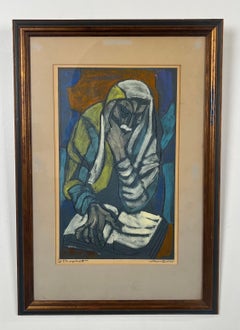
Alfred Lomnitz Art

British, German, 1892-1953

Alfred Lomnitz was a German painter, graphic artist and designer of Jewish denomination, later exile artist in England. He is attributed to the artists of the lost generation. Lomnitz attended the elementary school and the Friedrich-Wilhelm secondary school in Eschwege. His career aspiration as graphic artist and painter surprised no one in his family, as already several painters, poets and authors came from the family. On September 14, 1909, Lomnitz left Eschwege and moved to Kassel. There he probably did an internship for his future job. From October 1910 to October 1912, he attended the Grand-Ducal Saxon School of Applied Arts in Weimar. He was a student of Professor Henry van de Velde, but was strongly influenced by Paul Klee, who also taught there. Afterwards, Lomnitz returned to Kassel once more and on 9th October 1912, he left for Berlin. There he continued his education. When he was conscripted for military service, he already described himself as a painter. After the First World War, he was back in Eschwege for a while. In 1923, Lomnitz married in Berlin. In three districts, he ran the studios Litz for painting, graphics and design. In addition to his actual work as a painter and graphic designer, he designed vending machines for coffee and sandwiches.

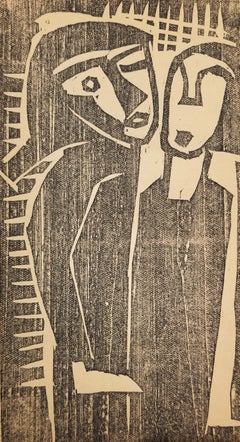
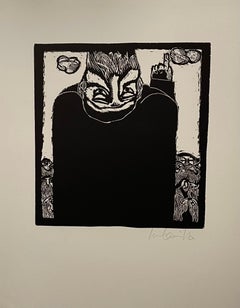
Despite the then poor economic situation, Lomnitz undertook study trips to Paris, Ascona and Lake Maggiore. In 1926, he exhibited again in the gallery Neumann, which is now known as Neumann-Nierendorf, in which Max Beckmann, Marc Chagall, Otto Dix, Paul Klee, Oskar Kokoschka and other world-renowned artists were offered. Many of these painters knew Lomnitz personally. Lomnitz recognized early on the dangers that emanated from the National Socialist government in 1933, and emigrated to England. In London, he first worked as a freelance graphic designer and had an exhibition of his works in 1934 at the Ryman Gallery in Oxford. He worked as a graphic artist and window designer for well-known companies such as Lyons Tea, Brodericks, Simpsons, Wolseley and finally as an advertising manager for Swears and Wells. Since Lomnitz was a German citizen, he was in 1940 or 1941, interned in the Liverpool suburb of Huyton. After the war, he did not return to Germany - only through his exhibitions in the Free Secession and in the November Group. In 1919, Lomnitz had his first own exhibition in the Berlin gallery Neumann under the title “Woodcuts by Alfred Lomnitz.” The works were predominantly signed with LOM. For the time until 1923, there are no documents about his further career and whereabouts. His middle name indicates his affiliation to the Jewish community.

to
1
Overall Width
to
Overall Height
to
1
1
1
1
1
1
9,962
2,753
1,376
1,373
1
Artist: Alfred Lomnitz
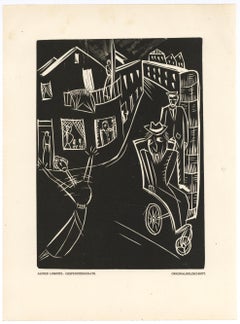
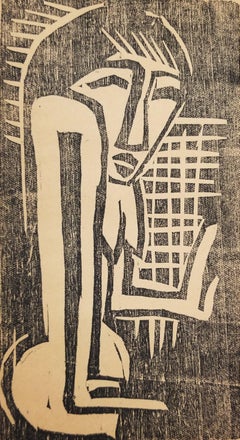
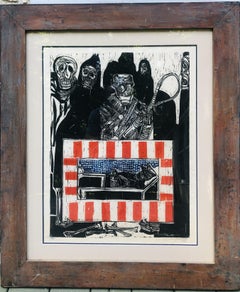
"Gespenstersonate" original woodcut
By Alfred Lomnitz
Located in Henderson, NV
Medium: original woodcut. Executed in 1920 for Das Kunstblatt, published in Berlin by Verlag Gustav Kiepenheuer. The total sheet measures 10 3/4 x 8 3/4 inches (275 x 210mm); the ima...
Category

1920s Expressionist Alfred Lomnitz Art

Materials

Woodcut

Related Items
Max Weber Woodcut Print from "Primitives" Poetry Book Signed
By Max Weber
Located in Detroit, MI
ONE WEEK ONLY SALE This woodcut print is an expressionist print on one of the poems from Max Weber's poetry collection "Primitives: Poems and Woodcuts". This work is signed in penci...
Category

1920s Expressionist Alfred Lomnitz Art

Materials

Woodcut

Dancing in the Dark
By Joan Snyder
Located in New York, NY
Joan Snyder has been called an autobiographical, even confessional artist, who draws from her experiences and surroundings to create her paintings. While her subjects vary widely, Sn...
Category

1980s Expressionist Alfred Lomnitz Art

Materials

Woodcut

SITZENDER HARLEKIN
By Heinrich Campendonk
Located in Portland, ME
Campendonk, Heinrich. SITZENDER HARLEKIN. Engels/Sohn 59. Woodcut, 1922. 15 x 11 3/8 inches; 380 x 290 mm. Signed in pencil. In Excellent condition. Framed.
Category

20th Century Expressionist Alfred Lomnitz Art

Materials

Woodcut

Plate 12
By Wassily Kandinsky
Located in Fairlawn, OH
Plate 12 From: 10 Origi, 1942 Signed in the block with the artist's initials lower left (printed) From: 10 Origin Not from the First edition 100, published by Allianz-Verlag, Zurich,...
Category

1970s Expressionist Alfred Lomnitz Art

Materials

Woodcut

Plate 12
Plate 12
$600
H 8.32 in W 6.63 in
Dancers, 1936 Woodcut by Georges Rouault
By Georges Rouault
Located in Long Island City, NY
Dancers Georges Rouault, French (1871–1958) Date: 1936 Woodcut, initialed in the stone Size: 3 x 2 in. (7.62 x 5.08 cm) Frame Size: 9.5 x 8.25 inches
Category

1930s Expressionist Alfred Lomnitz Art

Materials

Woodcut

Der Gartner (The Gardener) — German Expressionism
By Karl Michel
Located in Myrtle Beach, SC
Karl Michel, 'Der Gartner' (The Gardener), woodcut, c. 1925. Signed, titled, and numbered '15/50' in pencil. Signed in the block, lower left and right. A fine, richly-inked impression on buff wove paper, with full margins (1 1/2 to 2 3/4 inches), in excellent condition. Matted to museum standards, unframed. Scarce. Image size 5 1/4 x 3 7/8 inches (133 x 98 mm); sheet size 10 x 7 3/4 inches (254 x 198 mm). ABOUT THE ARTIST Karl Michel (1889-1984) was a noted graphic designer and expressionist printmaker during Germany's pre-Nazi Weimar Republic (1919 - 1933). In 1920, his work was featured in the influential German graphic design magazine Das Plakat...
Category

1920s Expressionist Alfred Lomnitz Art

Materials

Woodcut

Elisabeth — German Expressionism
By Karl Michel
Located in Myrtle Beach, SC
Karl Michel, 'Elisabeth', woodcut, edition 20, 1923. Signed, dated, and numbered 'op.142b' and '12/20' in pencil. Signed in the block, lower left. Annotated 'Vorgesdruck' [artist’s proof] in pencil. A fine impression, on heavy fibrous Japan paper, with full margins (1 3/16 to 3 1/2 inches), in good condition. Printed by the artist, With the artist’s blindstamp in the bottom center margin. Scarce. Matted to museum standards, unframed. Image size 4 15/16 x 6 inches (131 x 152 mm); sheet size 10 x 6 inches (254 x 152 mm). ABOUT THE ARTIST Karl Michel (1889-1984) was a noted graphic designer and expressionist printmaker during Germany's pre-Nazi Weimar Republic (1919-1933). Michel’s work was the subject of a feature article in the influential German graphic design magazine Das Plakat (The Poster) in 1920. An anti-war advocate, Michel created a suite of 12 wood engravings depicting his impressions of the humanitarian toll of WWII entitled ‘Humanitas’ (Humanity). The German publishing house Greifenverlag published the series in a reduced folio of unsigned prints. Michel’s graphic work is held in the permanent collections of the Auckland War Memorial Museum (New Zealand), Frederikshavn Kunstmuseum & Exlibrissamling (Denmark), Museum of Applied Arts (Budapest), The Robert Gore Rifkind Center for German Expressionist Studies at the Los Angeles County Museum of Art, and the German Expressionism...
Category

1920s Expressionist Alfred Lomnitz Art

Materials

Woodcut

My Work
By Joan Snyder
Located in New York, NY
Joan Snyder has been called an autobiographical, even confessional artist, who draws from her experiences and surroundings to create her paintings. While her subjects vary widely, Sn...
Category

1990s Expressionist Alfred Lomnitz Art

Materials

Etching, Woodcut

My Work
$3,500
H 22 in W 25.25 in
Mehr Sonne fur 1924 (More Sun for 1924)— German Expressionism
By Karl Michel
Located in Myrtle Beach, SC
Karl Michel, 'Mehr Sonne fur 1924. Viel Gluck Wunscht Karl Michel U. Frau', woodcut, 1924, edition 20. Signed, dated, and numbered 'op. 162' and '15/20' in pencil. Signed in the image, lower left. A fine, richly-inked impression on buff wove paper, with full margins (1 1/2 to 2 3/4 inches), in very good condition. Printed by the artist. Scarce. Matted to museum standards, unframed. New Year's Greeting – English translation: "More Sun for 1924. Good Luck Wishes from Karl Michel and his Wife." Image size 4 5/8 x 4 3/4 inches (118 x 121 mm); sheet size 7 3/4 x 10 inches (198 x 254 mm). ABOUT THE ARTIST Karl Michel (1889-1984) was a noted graphic designer and expressionist printmaker during Germany's pre-Nazi Weimar Republic (1919-1933). Michel’s work was the subject of a feature article in the influential German graphic design magazine Das Plakat...
Category

1920s Expressionist Alfred Lomnitz Art

Materials

Woodcut

Improvisation 7 original first ed. woodcut from Klänge by Wassily Kandinsky
By Wassily Kandinsky
Located in Milwaukee, WI
The present woodcut print comes from 'Klänge (Sounds),' a book of original graphics and poetry by Wassily Kandinsky. This first edition was released in an edition of 300, each book signed and numbered by the artist. The title of the album and this particular print, 'Improvisation,' demonstrated Kandinsky's interest in music and how abstract musical forms could be translated into images on a two-dimensional surface. This particular composition is difficult to read, but through the abstraction, one can make out various figures and a landscape beyond. 7.5 x 5 inches, image 22 x 19.5 inches, frame Woodcut in black ink on laid paper (watermark Van Gelder Zonen) Signed with encircled 'K' in the block, lower right Framed to conservation standards using 100 percent acid free archival materials including silk-lined matting with 1/4 inch bevel, museum glass, and a gold-gilded moulding Ref. Roethel 124 The Museum of Modern Art described 'Klänge (Sounds)' as follows: Vasily Kandinsky's self-described "musical album," Klänge (Sounds), consists of thirty-eight prose-poems he wrote between 1909 and 1911 and fifty-six woodcuts he began in 1907. In the woodcuts Kandinsky veiled his subject matter, creating increasingly indecipherable images (though the horse and rider, his symbol for overcoming objective representation, runs through as a leitmotif). This process proved crucial for the development of abstraction in his art. Kandinsky said his choice of media sprang from an "inner necessity" for expression: the woodcuts were not merely illustrative, nor were the poems purely verbal descriptions. Kandinsky sought a synthesis of the arts, in which meaning was created through the interaction of, and space between, text and image, sound and meaning, mark and blank space. The experimental typography shows his interest in the physical aspects of the book. Klänge is one of three major publications by Kandinsky that appeared shortly before World War I, alongside Über die Geistige in der Kunst (Concerning the Spiritual in Art) and the Blaue Reiter almanac...
Category

1910s Blue Rider Alfred Lomnitz Art

Materials

Woodcut

Improvisation 7 second ed. woodcut from Klänge by Wassily Kandinsky
By Wassily Kandinsky
Located in Milwaukee, WI
'Improvisation 7' second ed. woodcut from 'Klänge' is a woodcut print created by Wassily Kandinsky. The present woodcut print comes from the second edition of 'Klänge (Sounds),' a book of original graphics and poetry by Wassily Kandinsky. The title of the album and of this print, 'Improvisation,' demonstrated Kandinsky's interest in music and how abstract musical forms could be translated into images on a two-dimensional surface. This particular composition is difficult to read, but through the abstraction, one can make out various figures and a landscape beyond. Originally carved and printed in 1911, this second edition print was done ca. 1938. It is a woodcut in black ink on woven paper. Signed with encircled 'K' in the block, lower right (from the book, signed in ink, ed. 117/300) Image Size: 7 1/2" x 5 inches Frame Size: 22 1/4" x 18 3/4" Ref. Roethel 124 Artist Bio: The Museum of Modern Art described 'Klänge (Sounds)' as follows: Vasily Kandinsky's self-described "musical album," Klänge (Sounds), consists of thirty-eight prose-poems he wrote between 1909 and 1911 and fifty-six woodcuts he began in 1907. In the woodcuts Kandinsky veiled his subject matter, creating increasingly indecipherable images (though the horse and rider, his symbol for overcoming objective representation, runs through as a leitmotif). This process proved crucial for the development of abstraction in his art. Kandinsky said his choice of media sprang from an "inner necessity" for expression: the woodcuts were not merely illustrative, nor were the poems purely verbal descriptions. Kandinsky sought a synthesis of the arts, in which meaning was created through the interaction of, and space between, text and image, sound and meaning, mark and blank space. The experimental typography shows his interest in the physical aspects of the book. Klänge is one of three major publications by Kandinsky that appeared shortly before World War I, alongside Über die Geistige in der Kunst (Concerning the Spiritual in Art) and the Blaue Reiter almanac...
Category

1910s Blue Rider Alfred Lomnitz Art

Materials

Woodcut, Laid Paper

Ecce Homo VII
By Werner Drewes
Located in Fairlawn, OH
Ecce Homo VII Woodcut, 1921 Signed, titled, and dated in pencil by the artist One of only three known impressions Created while the artist was studying at the Bauhaus in Weimar, Germany. Extreme rarity-One of three know impressions Note: In 1921 Drewes went to the Bauhaus in Weimar, where, after completing the compulsory preliminary course with Johannes Itten, he continued to study with Paul Klee, Oskar Schlemmer and Georg Muche and initially went to the wall painting workshop. He then traveled extensively through Europe, North America and Asia. After returning to Germany in 1927, he went back to the Bauhaus, this time to his new location in Dessau, where he studied in the classes of László Moholy-Nagy and Wassily Kandinsky. He was one of the first artists to introduce the groundbreaking concepts of the Bauhaus School in the United States through his painting, printmaking, and teaching. Condition: Excellent Missing small voids in the upper margin from removal of the original hinges. Image size: 9 7/8 x 8 3/16 inches Reference: Rose 30 Provenance: From the estate of Drewes's teacher at the Bauhaus. During the pasot WW2 the professor lived in East Germany. WERNER DREWES 1899-1985 Werner Drewes initially studied architecture before enrolling, in 1921-22, at the Bauhaus in Weimar under Klee, Kandinsky, Itten and Feininger. For four years - 1923 to 1927 - he travelled the world with his bride, before completing his Bauhaus training in Dessau in 1929. He immigrated to the United States in 1930, documenting that move to New York through series of woodcuts. In 1936/37 he was an active founder of the American Abstract Artists and participated in the Federal Arts Project in New York before moving on to a teaching career at Washington University in St. Louis. As an artist for over sixty five years, he employed various media from drawing and watercolor, through woodcut and etching, to painting and collage. Translating an early interest in subjective cubistic forms, his work evolved into nonobjective abstraction. He was creative until the day of his death. Courtesy: Toby C. Moss Werner Drewes (1899–1985) was a painter, printmaker, and art teacher. Considered to be one of the founding fathers of American abstraction, he was one of the first artists to introduce concepts of the Bauhaus school within the United States. His mature style encompassed both nonobjective and figurative work and the emotional content of this work was consistently more expressive than formal. Drewes was as highly regarded for his printmaking as for his painting. In his role as teacher as well as artist he was largely responsible for bringing the Bauhaus aesthetic to America. Early life and education Drewes was born in 1899 to Georg Drewes, a Lutheran pastor, and Martha Schaefer Drewes. The family lived in the village of Canig within Lower Lusatia, Germany. From age eight to eighteen he attended the Saldria Gymnasium, a boarding school in Brandenburg an der Havel. There, he showed talent both for painting and woodblock printing. Graduating from Saldria in 1917, he was drafted by the German army and served in France from then until the close of the war. About this period of his life he is reported to have said that the horrors of life at the front were only made tolerable by his sketchbook, a copy of Goethe's Faust and a volume of Nietzsche. For a decade following the close of the war he studied, made paintings and prints, and traveled widely. His friend, Herwarth Walden, helped shape his appreciation for expressionist literature and art. Walden produced the quarterly magazine, Der Sturm and ran a gallery of contemporary art, Galerie Der Sturm, from which, in 1919, Drewes purchased an expressionist painting by William Wauer titled Blutrausch (Bloodlust). In the same year he made the acquaintance of Heinrich Vogeler and participated in Vogeler's socialist utopian artists' commune, Barkenhoff, at Worpswede, Lower Saxony. In 1919 Drewes also enrolled at the Königlich Technischen Hochschule Charlottenburg to study architecture and the following year he studied the same subject at the Technischen Hochschule Stuttgart. Preferring art over architecture, he then enrolled in Stuttgart's school of applied arts (Kunstgewerbeschule) where he studied life drawing and learned to work with colored glass. At this time he joined a group of artists and architects associated with the newly formed Merz Akademie, a college of design, art, and media in Stuttgart. In 1921 his friendship with a French artist, Sébastien Laurent, led him to begin studies in Weimar at Bauhaus, then a new school which taught an integrated approach to the fine and applied arts. His instructors were Johannes Itten and Lyonel Feininger, whose paintings were expressionist and abstract, and Paul Klee, who taught bookbinding, stained glass, and murals. While at Bauhaus Drewes produced a portfolio of ten woodblock prints entitled "Ecce Homo." In 1923 and 1924 he studied art during travels throughout Italy, Spain, the United States, and Central America and in 1926 he traveled to San Francisco, Japan, and Korea, thence taking the Trans-Siberian railway to Manchuria, Moscow, and Warsaw. He later said the El Grecos he saw proved to be most influential in his work. While traveling, he exhibited: (1) etchings in Madrid (1923) and Montevideo (1924), oils and etchings in Buenos Aires and St. Louis (1925), and (3) etchings in San Francisco (1926). He paid his way by the sales these exhibits produced and by taking commissions to paint portraits. While in San Francisco he set up a shop from which he sold prints he had made in Spain and South America. After his return to Germany in 1927 he resumed study at Bauhaus, which had been forced to relocate in Dessau, Saxony-Anhalt. His instructors at that time were László Moholy-Nagy (metal work), Wassily Kandinsky, and (painting), and Lyonel Feininger (prints). At this time he also worked and exhibited in Frankfurt. With the rise of Nazism abstract artists found it increasingly difficult to sell their work and, in 1930, Drewes, finding the political pressure unbearable, emigrated to the United States. There, despite the world economic crisis, Drewes was able to earn a living as a professional artist. Mature style After Drewes moved to New York, Kandinsky, who was both friend and mentor, continued to exert a strong influence over his style. Later in life he said he had a hard time getting away from Kandinsky's influence as he developed his own style. In time he was able to bring a more emotional approach to his work and to base it, more than Kandinsky did, on natural forms. In 1930 Drewes had a solo exhibition at the 135th Street Branch of the New York Public Library and a two-person show at the S.P.R. Penthouse Gallery...
Category

1920s Expressionist Alfred Lomnitz Art

Materials

Woodcut

Ecce Homo VII
Ecce Homo VII
$3,000
H 9.88 in W 8.19 in

Alfred Lomnitz art for sale on 1stDibs.

Find a wide variety of authentic Alfred Lomnitz art available for sale on 1stDibs. You can also browse by medium to find art by Alfred Lomnitz in oil paint, paint, woodcut print and more. Much of the original work by this artist or collective was created during the 1920s and is mostly associated with the Post-Impressionist style. Not every interior allows for large Alfred Lomnitz art, so small editions measuring 6 inches across are available. Customers who are interested in this artist might also find the work of Achille-Émile Othon Friesz, Angèle Delasalle, and Joseph Floch. Alfred Lomnitz art prices can differ depending upon medium, time period and other attributes. On 1stDibs, the price for these items starts at $150 and tops out at $4,677, while the average work can sell for $2,414.

Artists Similar to Alfred Lomnitz

Recently Viewed

View All