Amphora Pitchers
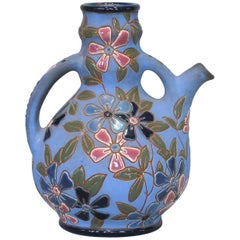
Jugendstil—the Germanic name for the sinuous, ethereal design style best known as Art Nouveau—rarely found better expression in ceramics that at the kilns of Amphora. In 1892, Austrian potter Alfred Stellmacher and four relatives opened a workshop that produced earthenware featuring plants, animals, mythical creatures, simulated jewels and even portraits in the style of Gustav Klimt and other fashionable painters of the era. Each piece was signed Amphora. The factory also produced ewers, bowls, tureens, and other diverse shapes. Located in the former spa resort town of Turn-Teplitz (now part of the Czech Republic), the Amphora factory took advantage of the abundant kaolin in the local riverbeds—as well as the energy produced by the rivers themselves—in manufacturing their arresting wares.
Amphora pieces were painstakingly produced via a method that included detailed sketches, intricate carving and molding and luminous iridescent glazing. All culminated with repeated firings of the clay—sometimes as many as ten times. As a result, the firm won worldwide acclaim, taking gold medals at the Chicago and St. Louis World’s Fairs. Its wares were sold by luxury emporiums like Tiffany Co.
Collectors prize Amphora vases for their delicate, naturalistic designs, and larger pieces often command prices in the tens of thousands. Equally sought after are portrait busts featuring religious, literary and allegorical themes. If you’re mourning the end of Downton Abbey and you’d like to add a dash of Lady Edith’s bohemian flair to your home, an Amphora vase or bowl will serve as a unique conversation piece.
Early 20th Century Czech Greek Revival Amphora Pitchers
Earthenware
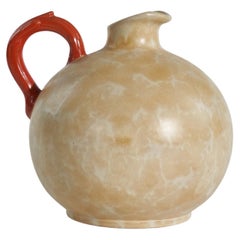
1930s Swedish Art Deco Vintage Amphora Pitchers
Earthenware

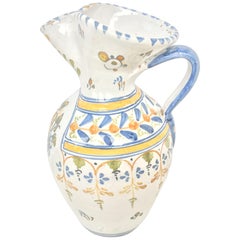
Mid-20th Century Spanish Spanish Colonial Amphora Pitchers
Ceramic
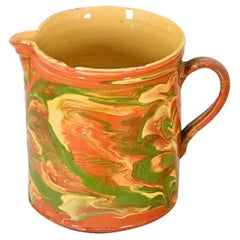
19th Century French French Provincial Antique Amphora Pitchers
Ceramic
1920s Czech Vintage Amphora Pitchers
Pottery

1940s American Art Deco Vintage Amphora Pitchers
Ceramic
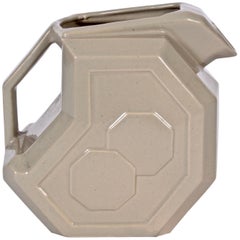
1940s Czech Folk Art Vintage Amphora Pitchers
Porcelain
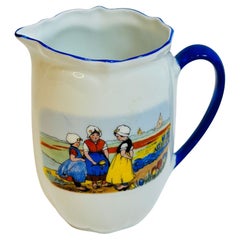
1960s French French Provincial Vintage Amphora Pitchers
Ceramic, Majolica
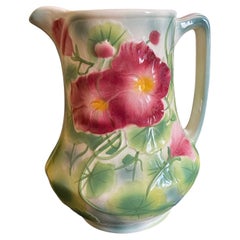
1950s French Mid-Century Modern Vintage Amphora Pitchers
Ceramic
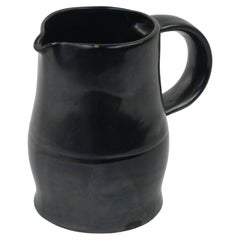
Early 20th Century Spanish Spanish Colonial Amphora Pitchers
Ceramic
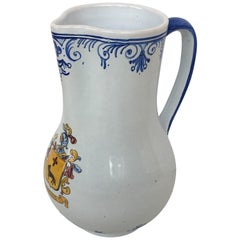
1960s Mid-Century Modern Vintage Amphora Pitchers
Ceramic
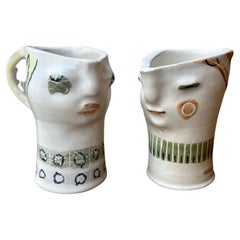
1930s Swedish Scandinavian Modern Vintage Amphora Pitchers
Earthenware
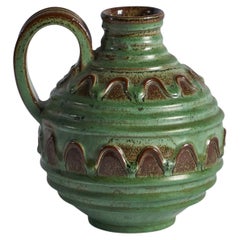
1970s Italian Vintage Amphora Pitchers
Ceramic
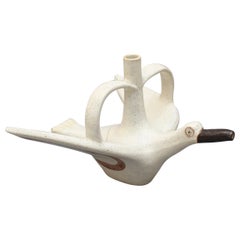
Amphora pitchers for sale on 1stDibs.
- What is a terracotta amphora?1 Answer1stDibs ExpertApril 5, 2022A terracotta amphora is a type of earthenware vessel that dates back to Ancient Greece. It featured a wide mouth, curved body, pedestal base and two arched side handles. The Ancient Greeks used the vases to store wine, oil, grain and other items. On 1stDibs, shop a range of terracotta amphora vases.
- Where did amphorae originate?1 Answer1stDibs ExpertJune 15, 2023Amphorae originated along the coasts of what are now Syria and Lebanon. From there, the vessels used to store oil, wine, grains and other foods and drinks spread to Phoenicia and Greece. On 1stDibs, shop a collection of amphora vases from some of the world’s top sellers.
- 1stDibs ExpertFebruary 17, 2023Amphoras were decorated with a number of motifs by the ancient Greeks. Common designs included depictions of the gods, everyday people, plants and animals. On 1stDibs, shop a selection of amphora vases.
- What are amphorae in history?1 Answer1stDibs ExpertMay 5, 2023Historically, amphorae are vessels made of pottery that feature elongated bodies and curved handles on either side of their necks. The Ancient Greeks used amphorae to store grain and liquids like oil, milk and wine. On 1stDibs, shop an assortment of amphorae.
- What was an amphora used for?1 Answer1stDibs ExpertMarch 31, 2023The Ancient Greeks used an amphora for storing items like milk, oil, wine or grain. Today, people use amphora vases to hold fresh and artificial floral arrangements and as standalone decorative accents. Shop a variety of amphora vases on 1stDibs.
- 1stDibs ExpertAugust 15, 2024The difference between a vase and an amphora comes down to specificity. An amphora is a vessel that features arched handles positioned on either side of its neck. A vase is any decorative container that can be used to hold a flower arrangement. Amphoras can be used as vases, but not all vases are amphoras. Explore an assortment of vases and vessels on 1stDibs.
- Which Greek vase is an amphora?1 Answer1stDibs ExpertApril 5, 2022An amphora vase is the Greek vase that has an urn-like shape with a wide mouth, medium-length neck and curved body supported by a footed or flat base. Amphora vases usually have two arched handles. Shop a selection of amphora vases on 1stDibs.
- Is amphora Greek or Latin?1 Answer1stDibs ExpertApril 5, 2022An amphora, a two-handled pot with a large body and a narrow neck, is a Greek form of pottery. It was largely used for storage. You can shop a collection of amphoras from some of the world’s top sellers on 1stDibs.
- 1stDibs ExpertOctober 7, 2024The difference between a pelike and an amphora is that one vessel is a specific type of the other. An amphora is a vessel with a tapered, pointed bottom and a narrow, elongated neck, often flanked by arched handles. A pelike is an amphora with its widest point close to the bottom, giving it a rotund appearance. Find a diverse assortment of amphoras and pelikes on 1stDibs.