Andy Warhol Abstract Photography

American, 1928-1987

The name of American artist Andy Warhol is all but synonymous with Pop art, the movement he helped shape in the 1960s. He was phenomenally prolific, and the archive of original photography, prints, drawings, paintings and other art that he left behind is beyond vast.

Andy Warhol is known for his clever appropriation of motifs and images from popular advertising and commercials, which he integrated into graphic, vibrant works that utilized mass-production technologies such as printmaking, photography and silkscreening. Later in his career, Warhol expanded his oeuvre to include other forms of media, founding Interview magazine and producing fashion shoots and films on-site at the Factory, his world-famous studio in New York.

Born and educated in in Pittsburgh, Warhol moved to New York City in 1949 and built a successful career as a commercial illustrator. Although he made whimsical drawings as a hobby during these years, his career as a fine artist began in the mid-1950s with ink-blot drawings and hand-drawn silkscreens. The 1955 lithograph You Can Lead a Shoe to Water illustrates how he incorporated in his artwork advertising styles and techniques, in this case shoe commercials.

As a child, Warhol was often sick and spent much of his time in bed, where he would make sketches and put together collections of movie-star photographs. He described this period as formative in terms of his skills and interests. Indeed, Warhol remained obsessed with celebrities throughout his career, often producing series devoted to a famous face or an object from the popular culture, such as Chairman Mao or Campbell’s tomato soup. The 1967 silkscreen Marilyn 25 embodies his love of bright color and famous subjects.

Warhol was a prominent cultural figure in New York during the 1960s, ’70s and ’80s. The Factory was a gathering place for the era’s celebrities, writers, drag queens and fellow artists, and collaboration was common. To this day, Warhol remains one of the most important artists of the 20th century and continues to exert influence on contemporary creators.

Find a collection of original Andy Warhol art on 1stDibs.

to
2
Overall Width
to
Overall Height
to
2
1
1
1
2
1
1
1
1
1
1
627
477
451
127
93
1
2
Artist: Andy Warhol
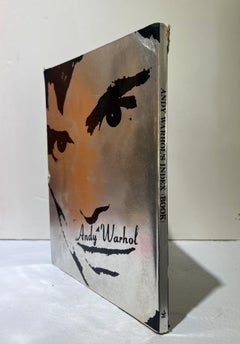
POSTWAR Rare BRILLO Andy WARHOL Index Book Brillo Hologram
By Andy Warhol
Located in New York, NY
An original hard copy of Andy Warhol's Brillo book. 11.25" h x 8.75" w. Wear consistent with age and use. Some wear at corners, as in the images. Andy Warhol, an American artist,...
Category

Mid-20th Century Post-War Andy Warhol Abstract Photography

Materials

Lithograph

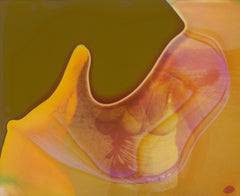
Polaroid Photograph of Shadow Painting Detail (Abstract Red and Blue)
By Andy Warhol
Located in Beverly Hills, CA
This work is unique photographic work taken by Andy Warhol of one of his Shadow Paintings. The work is initialed by the artist on the front side of the polaroid. Polaroid dimension...
Category

1980s Pop Art Andy Warhol Abstract Photography

Materials

Polaroid

Related Items
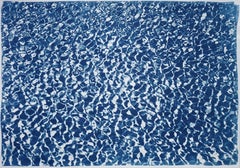
Infinity Pool Water Reflections, Blue White Pattern, Handmade Cyanotype Print
By Kind of Cyan
Located in Barcelona, ES
This is an exclusive handprinted limited edition cyanotype. "Infinity Pool" is a sophisticated image that captures the water reflections shimmering over ...
Category

2010s Abstract Andy Warhol Abstract Photography

Materials

Emulsion, Watercolor, Photographic Paper, C Print, Lithograph, Monotype
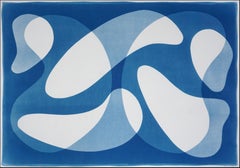
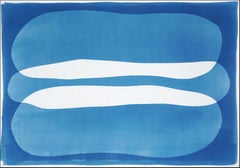
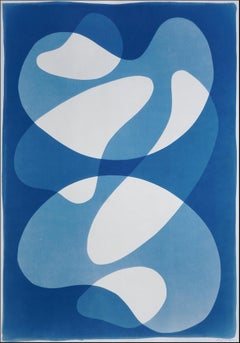
Mid-Century Shapes, White and Blue Abstract Shapes, Handmade Cyanotype Monotype
By Kind of Cyan
Located in Barcelona, ES
This unique monotype cyanotype, rendered in rich blue tones, draws inspiration from mid-century modern shapes to explore themes of balance and duality. Abstract forms echo harmony an...
Category

2010s Post-Modern Andy Warhol Abstract Photography

Materials

Paper, Watercolor, Lithograph, Monotype
Organic Mid-Century Floating Shapes in Blue Tones, Monotype Cyanotype on Paper
By Kind of Cyan
Located in Barcelona, ES
Mid-Century Shapes XIII is a captivating cyanotype monotype that draws on the visual language of mid-century abstraction. Featuring fluid, interlocking forms rendered in rich Prussi...
Category

2010s Post-Modern Andy Warhol Abstract Photography

Materials

Paper, Lithograph, Monotype

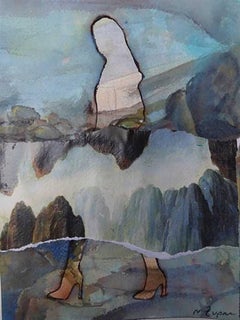
Eternal Recurrence #3. Large limited edition color photograph
By Natasha Zupan
Located in Miami Beach, FL
Zupan combines images from old masters, alchemical prints, contemporary artists, and bits from magazines and newspapers to create overlapping, intersecting worlds of transparencies a...
Category

2010s Pop Art Andy Warhol Abstract Photography

Materials

Color, Archival Pigment

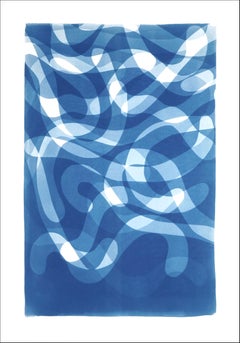
Falling Swirls, Organic Curvy Layers in Blue Tones, Handmade Cyanotype on Paper
By Kind of Cyan
Located in Barcelona, ES
This is an exclusive handprinted unique cyanotype that takes its inspiration from the mid-century modern shapes. It's made by layering paper cutouts and different exposures using uv-...
Category

2010s Post-Modern Andy Warhol Abstract Photography

Materials

Watercolor, Rag Paper, Lithograph

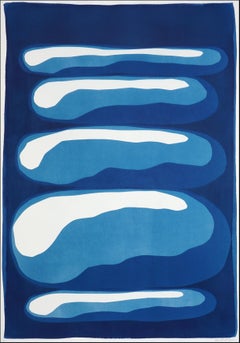
Stacking Stones, Unique Monotype Cyanotype in Indigo Blue, Minimalist Organic
By Kind of Cyan
Located in Barcelona, ES
“Stacking Stones” is a unique cyanotype monotype by Kind of Cyan that explores balance, rhythm, and form through organic abstraction. Created using traditional light-sensitive proces...
Category

2010s Modern Andy Warhol Abstract Photography

Materials

Paper, Lithograph, Monotype

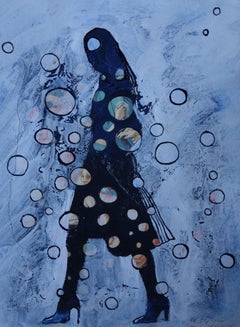
Living in a Dream (Till Death do us Part) - Contemporary, Polaroid, Women
By Stefanie Schneider
Located in Morongo Valley, CA
Living in a Dream (Till Death do us Part) - 2005 20x20cm, Edition of 10, Archival C-Print print, based on the Polaroid. Certificate and Signature label, artist Inventory No. 9781. Not mounted. on offer is a piece from the movie "Till Death do us Part" Stefanie Schneider’s Till Death Do Us Part or “There is Only the Desert for You.” BY DREW HAMMOND Stefanie Schneider’s Til Death to Us Part is a love narrative that comprises three elements: 1. A montage of still images shot and elaborated by means of her signature technique of using Polaroid formats with outdated and degraded film stock in natural light, with the resulting im ages rephotographed (by other means) enlarged and printed in such a way as to generate further distortions of the image. 2. Dated Super 8 film footage without a sound track and developed by the artist. 3. Recorded off-screen narration of texts written by the actors or photographic subjects, and selected by the artist. At the outset, this method presupposes a tension between still and moving image; between the conventions about the juxtaposition of such images in a moving image presentation; and, and a further tension between the work’s juxtaposition of sound and image, and the conventional relationship between sound and image that occurs in the majority of films. But Till Death Do Us Part also conduces to an implied synthesis of still and moving image by the manner in which the artist edits or cuts the work. First, she imposes a rigorous criterion of selection, whether to render a section as a still or moving image. The predominance of still images is neither an arbitrary residue of her background as a still photographer—in fact she has years of background in film projects; nor is it a capricious reaction against moving picture convention that demands more moving images than stills. Instead, the number of still images has a direct thematic relation to the fabric of the love story in the following sense. Stills, by definition, have a very different relationship to time than do moving images. The unedited moving shot occurs in real time, and the edited moving shot, despite its artificial rendering of time, all too 2009often affords the viewer an even greater illusion of experiencing reality as it unfolds. It is self-evident that moving images overtly mimic the temporal dynamic of reality. Frozen in time—at least overtly—still photographic images pose a radical tension with real time. This tension is all the more heightened by their “real” content, by the recording aspect of their constitution. But precisely because they seem to suspend time, they more naturally evoke a sense of the past and of its inherent nostalgia. In this way, they are often more readily evocative of other states of experience of the real, if we properly include in the real our own experience of the past through memory, and its inherent emotions. This attribute of stills is the real criterion of their selection in Til Death Do Us Part where consistently, the artist associates them with desire, dream, memory, passion, and the ensemble of mental states that accompany a love relationship in its nascent, mature, and declining aspects. A SYNTHESIS OF MOVING AND STILL IMAGES BOTH FORMAL AND CONCEPTUAL It is noteworthy that, after a transition from a still image to a moving image, as soon as the viewer expects the movement to continue, there is a “logical” cut that we expect to result in another moving image, not only because of its mise en scène, but also because of its implicit respect of traditional rules of film editing, its planarity, its sight line, its treatment of 3D space—all these lead us to expect that the successive shot, as it is revealed, is bound to be another moving image. But contrary to our expectation, and in delayed reaction, we are startled to find that it is another still image. One effect of this technique is to reinforce the tension between still and moving image by means of surprise. But in another sense, the technique reminds us that, in film, the moving image is also a succession of stills that only generate an illusion of movement. Although it is a fact that here the artist employs Super 8 footage, in principle, even were the moving images shot with video, the fact would remain since video images are all reducible to a series of discrete still images no matter how “seamless” the transitions between them. Yet a third effect of the technique has to do with its temporal implication. Often art aspires to conflate or otherwise distort time. Here, instead, the juxtaposition poses a tension between two times: the “real time” of the moving image that is by definition associated with reality in its temporal aspect; and the “frozen time” of the still image associated with an altered sense of time in memory and fantasy of the object of desire—not to mention the unreal time of the sense of the monopolization of the gaze conventionally attributed to the photographic medium, but which here is associated as much with the yearning narrator as it is with the viewer. In this way, the work establishes and juxtaposes two times for two levels of consciousness, both for the narrator of the story and, implicitly, for the viewer: A) the immediate experience of reality, and B) the background of reflective effects of reality, such as dream, memory, fantasy, and their inherent compounding of past and present emotions. In addition, the piece advances in the direction of a Gesammtkunstwerk, but in a way that reconsiders this synaesthesia as a unified complex of genres—not only because it uses new media that did not exist when the idea was first enunciated in Wagner’s time, but also because it comprises elements that are not entirely of one artist’s making, but which are subsumed by the work overall. The totality remains the vision of one artist. In this sense, Till Death Do Us Part reveals a further tension between the central intelligence of the artist and the products of other individual participants. This tension is compounded to the degree that the characters’ attributes and narrated statements are part fiction and part reality, part themselves, and part their characters. But Stefanie Schneider is the one who assembles, organizes, and selects them all. THE RELATIONSHIP BETWEEN THIS IDEA (above) AND PHOTOGRAPHY This selective aspect of the work is an expansion of idea of the act of photography in which the artistic photographer selects that which is already there, and then, by distortion, definition or delimitation, compositional and lighting emphasis, and by a host of other techniques, subsumes that which is already there to transform it into an image of the artist’s contrivance, one that is no less of the artist’s making than a work in any other medium, but which is distinct from many traditional media (such as painting) in that it retains an evocation of the tension between what is already there and what is of the artist’s making. Should it fail to achieve this, it remains, to that degree, mere illustration to which aesthetic technique has been applied with greater or lesser skill. The way Til Death Do Us Part expands this basic principle of the photographic act, is to apply it to further existing elements, and, similarly, to transform them. These additional existing elements include written or improvised pieces narrated by their authors in a way that shifts between their own identities and the identities of fictional characters. Such characters derive partially from their own identities by making use of real or imagined memories, dreams, fears of the future, genuine impressions, and emotional responses to unexpected or even banal events. There is also music, with voice and instrumental accompaniment. The music slips between integration with the narrative voices and disjunction, between consistency and tension. At times it would direct the mood, and at other times it would disrupt. Despite that much of this material is made by others, it becomes, like the reality that is the raw material of an art photo, subsumed and transformed by the overall aesthetic act of the manner of its selection, distortion, organization, duration, and emotional effect. * * * David Lean was fond of saying that a love story is most effective in a squalid visual environment. In Til Death Do Us Part, the squalor of the American desert...
Category

Early 2000s Contemporary Andy Warhol Abstract Photography

Materials

Archival Paper, Photographic Paper, C Print, Color, Polaroid
Grand Canyon River, Organic Minimalism, Soft Blue Cyanotype, Abstract Landscape
By Kind of Cyan
Located in Barcelona, ES
This unique cyanotype monotype transforms organic, river-like forms into a serene field of flowing blues. Soft, undulating shapes echo water, canyon horizons, and desert calm, giving...
Category

2010s Post-Modern Andy Warhol Abstract Photography

Materials

Paper, Lithograph, Monotype

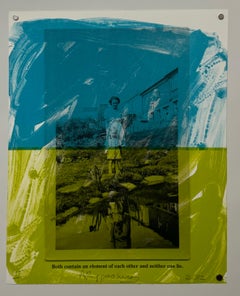
Conceptual Artist Allen Ruppersberg Hand Printed Lithograph Prints Photographs
By Allen Ruppersberg
Located in Surfside, FL
Allen Ruppersberg (American, 1944-) Lithograph, Mixed media From the Top Ten Historical Similarities (and Differences) Between Prints and Photographs. This sale is of one print not t...
Category

2010s Conceptual Andy Warhol Abstract Photography

Materials

Mixed Media, Lithograph

Mid-Century Shapes, White and Blue Abstract Shapes, Handmade Cyanotype Monotype
By Kind of Cyan
Located in Barcelona, ES
This is an exclusive handprinted unique cyanotype that takes its inspiration from the mid-century modern shapes. It's made by layering paper cutouts and different exposures using uv-...
Category

2010s Post-Minimalist Andy Warhol Abstract Photography

Materials

Watercolor, Lithograph, Monotype, Paper
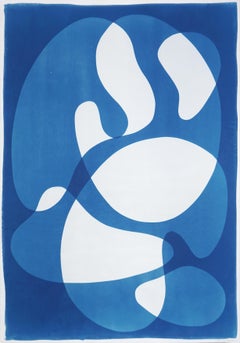
Eternal Recurrence #42. Large limited edition color photograph
By Natasha Zupan
Located in Miami Beach, FL
Eternal Recurrence #42 by Natasha Zupan Archival pigment print on photographic paper Image size: 60 in. H x 53.5 in. W Edition of 5 2015 All Prices are quoted as "initial price". ...
Category

2010s Pop Art Andy Warhol Abstract Photography

Materials

Archival Pigment, Color

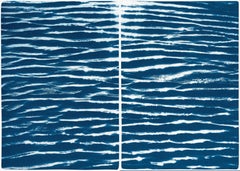
Tranquil Water Patterns, Abstract Nautical Diptych in Blue, Handmade Seascape
By Kind of Cyan
Located in Barcelona, ES
This is an exclusive handprinted limited edition cyanotype. This beautiful diptych is titled "Tranquil Water Patterns", and depicts calming ocean ripples at low tide. Details: + ...
Category

2010s Minimalist Andy Warhol Abstract Photography

Materials

Emulsion, Lithograph, Monotype, Paper

Andy Warhol abstract photography for sale on 1stDibs.

Find a wide variety of authentic Andy Warhol abstract photography available for sale on 1stDibs. You can also browse by medium to find art by Andy Warhol in lithograph, silver gelatin print and more. Much of the original work by this artist or collective was created during the 20th century and is mostly associated with the post-war style. Not every interior allows for large Andy Warhol abstract photography, so small editions measuring 8 inches across are available. Customers who are interested in this artist might also find the work of and Natasha Zupan. Andy Warhol abstract photography prices can differ depending upon medium, time period and other attributes. On 1stDibs, the price for these items starts at $2,600 and tops out at $18,000, while the average work can sell for $10,300.
Questions About Andy Warhol Abstract Photography
  • 1stDibs ExpertFebruary 22, 2021
    Andy Warhol was a leading visual artist in the Pop art movement. He is known for his bright and colorful silkscreens, photography and more. Find a sprawling collection of Andy Warhol art on 1stDibs.
  • 1stDibs ExpertMay 30, 2024
    Andy Warhol is so famous due to the impact that he had on the art world by contributing to the development of Pop art. In fact, his name is all but synonymous with the movement that he helped shape in the 1960s. Warhol was phenomenally prolific, and the archive of original photography, prints, drawings, paintings and other art that he left behind is vast. He is best known for his clever appropriation of motifs and images from popular culture, advertising and commercials, which he integrated into graphic, vibrant works that utilized mass-production technologies such as printmaking, photography and silkscreening. Later in his career, Warhol expanded his oeuvre to include other forms of media, founding Interview magazine and producing fashion shoots and films on-site at the Factory, his world-famous studio in New York. On 1stDibs, shop a range of Andy Warhol art.
  • 1stDibs ExpertFebruary 1, 2024
    Andy Warhol is known for helping to shape the Pop art movement during the 1960s. He is famous for his clever appropriation of motifs and images from popular culture, advertising and commercials, which he integrated into graphic, vibrant works that utilized mass-production technologies such as printmaking, photography and silkscreening. Later in his career, Warhol expanded his oeuvre to include other forms of media, founding Interview magazine and producing fashion shoots and films on-site at the Factory, his world-famous studio in New York. On 1stDibs, find a variety of Andy Warhol art.
  • 1stDibs ExpertMay 3, 2024
    Here are some facts about Andy Warhol. He was born in Pittsburgh, Pennsylvania, on August 6, 1928, and he attended Carnegie Mellon University in his hometown. He moved to New York City in 1949 and built a successful career as a commercial illustrator. Although he made whimsical drawings as a hobby during these years, his career as a fine artist began in the mid-1950s with ink-blot drawings and hand-drawn silkscreens. As a child, Warhol was often sick and spent much of his time in bed, where he would make sketches and put together collections of movie-star photographs. He described this period as formative in terms of his skills and interests. Indeed, Warhol remained obsessed with celebrities throughout his career, often producing series devoted to a famous face or an object from popular culture, such as Chairman Mao or Campbell's tomato soup. The 1962 silkscreen Marilyn Diptych embodies his love of bright color and famous subjects. Warhol was a prominent cultural figure in New York during the 1960s, '70s and '80s. His studio, the Factory, was a gathering place for the era's celebrities, writers, drag queens and fellow artists, and collaboration was common. Find an assortment of Andy Warhol art on 1stDibs.
  • 1stDibs ExpertFebruary 27, 2024
    There are more than 9,000 Andy Warhol paintings. The American Pop artist also produced more than 12,000 drawings and more than 19,000 prints. The largest collection of Warhol's work is at the Andy Warhol Museum, located in the artist's hometown, Pittsburgh, Pennsylvania. Shop a selection of Andy Warhol art on 1stDibs.
  • 1stDibs ExpertApril 5, 2022
    Yes, Andy Warhol is one of the most famous artists to work with screen printing, so much so that the technique is frequently associated with him. He first began working with it in 1962, and used it to create his photographic screen prints. Shop an array of Andy Warhol art on 1stDibs.
  • 1stDibs ExpertApril 5, 2022
    Yes, Andy Warhol did paint cats. Before reaching the height of his success, he lived in a New York apartment with his mother and 25 cats. He would paint his cats in his spare time. Find a collection of expertly vetted Andy Warhol pieces from some of the world’s top reputable sellers on 1stDibs.
  • 1stDibs ExpertFebruary 15, 2024
    Who owns individual Andy Warhol paintings will vary over time owing to auctions or sales conducted outside of auction houses. With respect to public collections, the American artist’s paintings, prints and other works are held in some of the most prominent museums and institutions in the world. The largest collection of original Andy Warhol art is held at the Andy Warhol Museum in Pittsburgh, Pennsylvania. Other museums in the United States that feature Warhol in their collections are the Metropolitan Museum of Art, the Whitney Museum of American Art and the Broad in Los Angeles, California. Portland, Oregon native Jordan D. Schnitzer has amassed one of the largest private collections of the Pop master’s multiples and works on paper. It includes nearly 1,500 prints, drawings and photographs. Elsewhere, there are reportedly between 800 and 1,000 Warhol works in the collection of the New York-based Mugrabi family. Shop an assortment of Andy Warhol prints on 1stDibs.
  • 1stDibs ExpertFebruary 7, 2024
    The most famous picture by Andy Warhol is open to debate. During his career, the Pennsylvania-born Pop artist produced more than 20,000 works, including paintings, sculptures and drawings. Some of his best known works include Campbell's Soup Cans, Marilyn Diptych, Banana, Mao and Self Portrait (Fright Wig). Shop a selection of Andy Warhol art on 1stDibs.
  • 1stDibs ExpertApril 5, 2022
    Andy Warhol painted his beloved Cow Wallpaper in 1966. He used a screen printing technique over wallpaper to create the pop art design. Shop a selection of Andy Warhol pieces from some of the world’s top art dealers on 1stDibs.
  • 1stDibs ExpertMarch 22, 2022
    Andy Warhol painted Moonwalk in 1987. However, it is more accurate to say he screened it then, as the work is a silkscreen on museum board, not a painting. Warhol used a photograph of Buzz Aldrin taken by Neil Armstrong during the moon landing as the basis for his design. Shop a variety of Andy Warhol art on 1stDibs.
  • 1stDibs ExpertApril 5, 2022
    Andy Warhol is known for his influence on Pop art in modern culture and 20th-century art and many pieces of his work are considered famous. Some of his most notable works include Campbell’s Soup Cans, Marilyn Diptych, Banana and Eight Elvises. Shop a selection of Andy Warhol’s pieces from some of the world’s top art dealers on 1stDibs.
  • 1stDibs ExpertApril 5, 2022
    Andy Warhol's Electric Chair is in the collection of the Tate Museum in London, UK. The artist produced the work in 1964 by applying screen printing techniques and acrylic paint to canvas. Shop a range of Andy Warhol art on 1stDibs.
  • 1stDibs ExpertApril 22, 2024
    Andy Warhol used a variety of media over the course of his career. He produced paintings, prints and sculptures. In addition, he worked in photography and filmmaking, designed fashion and wrote music. On 1stDibs, find a wide range of Andy Warhol art from some of the world's top galleries and dealers.
  • 1stDibs ExpertApril 5, 2022
    Andy Warhol used a wide array of symbols in his art, as well as symbolizing famous figures, pop culture references, brands and more. This use of symbolism was used to evoke feelings in an observer. Browse a range of authentic Andy Warhol pieces on 1stDibs.
  • 1stDibs ExpertSeptember 25, 2019

    Andy Warhol was a Pop artist.

  • 1stDibs ExpertSeptember 9, 2024
    How much an Andy Warhol painting is worth depends on its size, subject matter, condition and other factors. In 2022, his Shot Sage Blue Marilyn sold for $195 million at auction, establishing a new record for the American artist. Warhol is all but synonymous with Pop art, the movement he helped shape in the 1960s. He was phenomenally prolific, and the archive of original photography, prints, drawings, paintings and other art he left behind is vast. If you're in possession of a Warhol, consult a certified appraiser or experienced art dealer to learn about its value. Explore a selection of Andy Warhol art on 1stDibs.
  • 1stDibs ExpertApril 5, 2022
    What the meaning of Andy Warhol's artwork Soup Cans is largely comes down to personal interpretation. When asked about his work, Warhol said he painted the cans because he liked soup. Some art critics believe they represent consumerism because Campbell's is a popular soup brand. You'll find a collection of Andy Warhol art on 1stDibs.
  • 1stDibs ExpertAugust 26, 2024
    The difference between Andy Warhol and Roy Lichtenstein is what inspired their art. While both artists were leading figures in the Pop art movement, they produced different types of work. Lichtenstein is famous for drawing inspiration from comic books and appropriating techniques of commercial printing in his paintings. Andy Warhol tended to produce paintings and prints depicting celebrities, such as Marilyn Monroe, and everyday objects like Campbell's soup cans. On 1stDibs, shop a variety of Pop art.
  • 1stDibs ExpertMarch 22, 2022
    Which of Andy Warhol's art pieces is his most famous is largely a matter of personal opinion. Some of his most well-known works include Marilyn Diptych, Campbell's Soup Cans, the “Cow” series, Mao, Dollar Signs and the “Flower” series. On 1stDibs, shop a range of Andy Warhol artwork.

Still Thinking About These?

All Recently Viewed