Antonio Recalcati Still-life Prints
Italian, b. 1938
Antonio Recalcati was born in Bresso, Italy, in 1938, debuted as an artist in 1957 with a solo show at the Galleria Totti in Milan. After a journey in the United States, where he learned about pop painting, he focused on the theme of the landscape. From the mid-70s, he also dedicated himself to theatrical scenography. In 1976, the Pompidou Center in Paris organized a retrospective on him, followed in 1987 by a large anthological exhibition in Milan, at the Palazzo Reale. In the 90s, he mostly dealt with the theme of death.
to
1
1
Overall Width
to
Overall Height
to
1
6
94
72
67
59
1
1
1
1
1
1
1
Artist: Antonio Recalcati
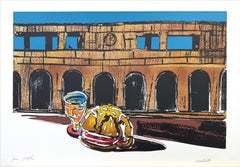
HOMAGE TO DE CHIRICO Signed Lithograph, Surreal Landscape, Archeology, Sandwich
By Antonio Recalcati
Located in Union City, NJ
HOMAGE TO DE CHIRICO is an original, hand drawn, stone lithograph by the Italian artist Antonio Recalcati (1938-2022) printed in Paris France c. 1973 using hand lithography techniques on archival printmaking paper, 100% acid free. HOMAGE TO DE CHIRICO presents a pop art style, surreal landscape depicting an ancient Roman monument and empty town square with a lone shadowy figure visible in the upper window; a mysterious still life arrangement is set in the foreground featuring a sandwich on a roll and drinking goblet positioned in the center. HOMAGE TO DE CHIRICO is very intriguing and somewhat amusing composition that keeps us guessing.
Print size - 20.25 x 28.75 in., unframed, very good condition, vivid colors, pencil signed by Antonio Recalcati, Printer's Proof dedicated "Pour Joseph"
In 1973, Paris Recalcati painted a series of pictures titled “The Boheme de Chirico”. It is an unconventional and ironic reading of the great Giorgio de Chirico. The metaphysical monuments in the squares are transformed into physical objects such as a sandwich, macaroni dish, Parma ham, etc. The exhibition at the “Galérie Mathias Fels” in Paris received great success from the critics. The text in the exhibition catalogue is by Alain Jouffroy. President Georges Pompidou, had sent a jeep from Élysée Palace to have some paintings to view.
Recalcati took up the theme of "ham" several times, for example in a painting from 1973, "La bohème de Chirico, place d'Italie" or in the work "Jambon de Paris" from 1972. Recalcati often exhibited in the 1970's in Italy, Paris, Caracas, and New York. During this time the 'Ham series' was created.
About the artist -
Antonio Recalcati (2 May 1938 – 4 December 2022) was an Italian painter and sculptor, born in a working-class family in Bresso, a suburb of Milan.
Born in 1938 in Bresso, near Milan, who died on 4 December 2022, Antonio Recalcati was a major artist of the second half of the 20th century. Known first as a painter of the New Figuration in Paris, he was later more closely related to the movement of the Narrative Figuration.
Without an artistic background, he was noted in the first half of the 1960s by his "Imprections" (Impronte), paintings made by applying directly to the canvas and in oil his own body or empty clothes (shirts, underpants, body jerseys). This process is then of total originality. It carries an unprecedented expressionist charge, and it becomes enigmatic when combined with abstract shapes or narrative devices (space of the canvas separated into several boxes, such as a page of comics).
Exhibited both in Italy; in Paris in the salons and galleries (Gallery Mathias Fels, gallery Claude Levin, Galerie André Schoeller); in Brussels (Fragmy Gallery, Lanzberg Gallery); in New York (Odissey gallery); he participates in historical exhibitions such as: (Paris, 1964); and ,
During these same years, he befriended poets (Jacques Prévert) and novelists (Dino Buzatti), and he participated – with other artists such as Gilles Aillaud, Eduardo Arroyo, and Jean-Jacques Lebel – in several collective works that had become emblematic of the commitment of a new generation of painters: Grand Tableau...
Category
1970s Surrealist Antonio Recalcati Still-life Prints
Materials
Lithograph
Related Items
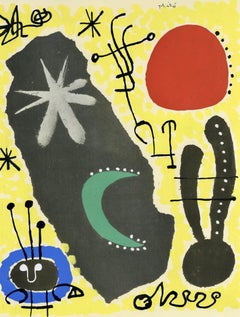
Joan Miro, The Woman and the Bird, from XXe Siecle, 1956
By Joan Miró
Located in Southampton, NY
This exquisite lithograph and pochoir by Joan Miro (1893–1983), titled La Femme et l’Oiseau (The Woman and the Bird), from the album XXe Siecle, Nouvelle serie No. 6, originates from...
Category
1950s Surrealist Antonio Recalcati Still-life Prints
Materials
Lithograph

$1,036 Sale Price
20% Off
H 12.4 in W 9.65 in
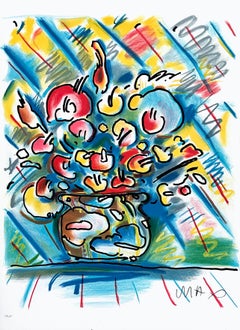
Vase of Flowers, Peter Max
By Peter Max
Located in Fairfield, CT
Artist: Peter Max (1937)
Title: Vase of Flowers
Year: 1979
Edition: 138/350, plus proofs
Medium: Lithograph on Somerset paper
Size: 30 x 22 inches
Condition: Excellent
Inscription: S...
Category
1970s Pop Art Antonio Recalcati Still-life Prints
Materials
Lithograph
Henri Matisse, The Swimming Pool II, from Verve, Revue Artistique, 1958 (after)
By Henri Matisse
Located in Southampton, NY
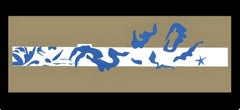
This exquisite lithograph after Henri Matisse (1869–1954), titled La Piscine II (The Swimming Pool II), from Verve, Revue Artistique et Litteraire, Vol. IX, No. 35–36, originates from the 1958 issue published by Editions de la revue Verve, Paris, under the direction of Teriade, Editeur, Paris, and printed by Mourlot Freres, Paris, 1958. La Piscine II is one of the most expansive and lyrical compositions from Matisse’s late cut-out period, inspired by his deep fascination with the movement of water, light, and the human form. The work’s sweeping arrangement of floating blue shapes and rhythmic negative space evokes swimmers and sea life in motion, transforming a simple visual theme into a poetic meditation on fluidity, serenity, and the joy of life. Through its monumental simplicity and chromatic brilliance, La Piscine II exemplifies Matisse’s mastery of “painting with scissors” and his ability to translate motion into pure visual harmony.
Executed as a lithograph on velin du Marais paper, this work measures 14 x 40.5 inches, with trifold as issued. Unsigned and unnumbered as issued. The edition exemplifies the superb craftsmanship of the Mourlot Freres atelier, faithfully capturing the luminosity, rhythm, and tactile beauty of Matisse’s original gouache cut-outs.
Artwork Details:
Artist: After Henri Matisse (1869–1954)
Title: La Piscine II (The Swimming Pool II), from Verve, Revue Artistique et Litteraire, Vol. IX, No. 35–36, 1958
Medium: Lithograph on velin du Marais paper
Dimensions: 14 x 40.5 inches, with trifold as issued
Inscription: Unsigned and unnumbered as issued
Date: 1958
Publisher: Editions de la revue Verve, Paris, under the direction of Teriade, Editeur, Paris
Printer: Mourlot Freres, Paris
Catalogue raisonne reference: Duthuit, Claude. Henri Matisse: Catalogue raisonne des ouvrages illustres. Editions Claude Duthuit, Paris, 1988, illustration 139
Condition: Well preserved, consistent with age and medium
Provenance: From Verve, Revue Artistique et Litteraire, Vol. IX, No. 35–36, published by Editions de la revue Verve, Paris, 1958
Notes:
Excerpted from the publication, Verve, Revue Artistique et Litteraire, Vol. IX, No. 35–36, published under the direction of Teriade, Editeur, Paris, and printed by Mourlot Freres, Paris, 1958. This double issue of Verve was entirely devoted to the final works of Henri Matisse, composed of his celebrated gouache cut-outs, which the artist called “painting with scissors.” Completed shortly before his death, this issue represents the culmination of Matisse’s lifelong exploration of color, rhythm, and spiritual joy through the simplest means of expression.
About the Publication:
Verve, Revue Artistique et Litteraire was one of the most influential art periodicals of the 20th century, founded in Paris in 1937 by the visionary Greek-born publisher Teriade (Stratis Eleftheriades). Conceived as a synthesis of art and literature, Verve brought together the greatest modern artists and writers of its time—Henri Matisse, Pablo Picasso, Marc Chagall, Georges Braque, Joan Miro, Fernand Leger, and others—alongside poets and philosophers such as Paul Eluard, Albert Camus, and Jean-Paul Sartre. Each issue was a work of art in itself, luxuriously printed by master lithographers such as Mourlot Freres and produced in collaboration with leading typographers and designers. Verve became a platform for avant-garde creativity, publishing original lithographs and essays that reflected the evolving spirit of modernism. Matisse collaborated closely with Teriade from the magazine’s inception, producing some of its most iconic issues, including those devoted to his paper cut-outs. The final Verve issue of 1958, which featured La Tristesse du Roi, the Nu Bleu series, Poisson Chinois, and Vigne, stands as a testament to Matisse’s enduring genius and to the publication’s legacy as the definitive meeting of art, poetry, and printing craftsmanship in 20th-century France.
About the Artist:
Henri Matisse (1869–1954) was a French painter, sculptor, draughtsman, and printmaker whose revolutionary vision redefined modern art through his daring use of color, line, and form. Celebrated as one of the greatest artists of the 20th century, Matisse led the Fauvist movement and devoted his life to the pursuit of balance, beauty, and emotional expression in visual art. His early works burst with vibrant hues and liberated brushwork, while his later “cut-out” compositions achieved a poetic simplicity that transformed the relationship between color and space. Deeply influenced by the work of Paul Cezanne, Vincent van Gogh, and Georges Seurat, as well as by the rhythmic patterns of Islamic art, Byzantine mosaics, and Japanese prints, Matisse forged a new visual language that celebrated joy, movement, and serenity. He was part of an extraordinary generation of artists who shaped the evolution of modernism, maintaining lifelong dialogue and friendly rivalry with contemporaries such as Pablo Picasso, Georges Braque, Marc Chagall, Andre Derain, Albert Marquet, and Raoul Dufy—peers who, like him, sought to expand the expressive potential of color and composition. Matisse’s influence extended across generations, inspiring modern and contemporary masters including Alexander Calder, Alberto Giacometti, Salvador Dali, Joan Miro, Wassily Kandinsky, Marcel Duchamp, and Man Ray, each of whom drew upon his fearless experimentation and refined visual harmony. His paintings, sculptures, and works on paper are held in the most prestigious museums in the world, including the Museum of Modern Art, the Centre Pompidou, the Tate, and the Hermitage Museum, where his art continues to symbolize the essence of creativity and human emotion. The highest price ever paid for a Henri Matisse artwork is approximately $80.8 million USD, achieved in 2018 at Christie’s New York for Odalisque couchee aux magnolias (1923).
Henri Matisse La Piscine...
Category
1950s Modern Antonio Recalcati Still-life Prints
Materials
Lithograph
$796 Sale Price
66% Off
H 13.25 in W 40.5 in
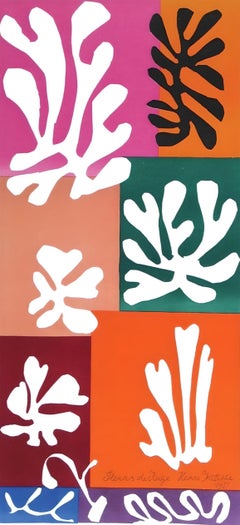
Henri Matisse, Snow Flowers, from Verve, Revue Artistique, 1958 (after)
By Henri Matisse
Located in Southampton, NY
This exquisite lithograph after Henri Matisse (1869–1954), titled Fleurs de Neige (Snow Flowers), from Verve, Revue Artistique et Litteraire, Vol. IX, No. 35–36, originates from the ...
Category
1950s Modern Antonio Recalcati Still-life Prints
Materials
Lithograph
$956 Sale Price
20% Off
H 13.25 in W 10.25 in
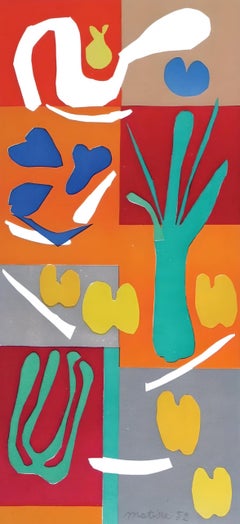
Henri Matisse, Plants, from Verve, Revue Artistique, 1958 (after)
By Henri Matisse
Located in Southampton, NY
This exquisite lithograph after Henri Matisse (1869–1954), titled Vegetaux (Plants), from Verve, Revue Artistique et Litteraire, Vol. IX, No. 35–36, originates from the 1958 issue pu...
Category
1950s Modern Antonio Recalcati Still-life Prints
Materials
Lithograph
$796 Sale Price
33% Off
H 13.25 in W 10.25 in
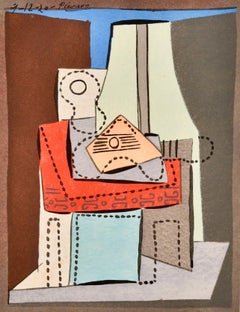
Pablo Picasso, Seated Woman in an Armchair, from Oeuvres 1920-1926 (after)
By Pablo Picasso
Located in Southampton, NY
This exquisite lithograph and pochoir after Pablo Picasso (1881–1973), titled Femme Assise dans un Fauteuil (Seated Woman in an Armchair), from the album, Picasso, Oeuvres 1920-1926, 1926, originates from the 1926 edition published and printed by Editions des Cahiers d'Art, Paris, under the direction of Christian Zervos, Editeur, Paris, December 10, 1926. Femme Assise dans un Fauteuil (Seated Woman in an Armchair) captures Picasso’s evolving exploration of form, movement, and emotion during the mid-1920s—a pivotal period in which he redefined the relationship between classical representation and modern abstraction. With its bold contouring, stylized anatomy, and rhythmic color balance, the composition embodies the harmony between structural precision and sensual fluidity that characterized Picasso’s work in this era.
Executed as a lithograph and pochoir on velin paper, this work measures 11 x 8.75 inches. Signed in the plate and unnumbered as issued. The edition exemplifies the refined craftsmanship of Editions des Cahiers d'Art and the technical excellence of Parisian printmaking in the interwar period.
Artwork Details:
Artist: After Pablo Picasso (1881–1973)
Title: Femme Assise dans un Fauteuil (Seated Woman in an Armchair), from the album, Picasso, Oeuvres 1920-1926, 1926
Medium: Lithograph and pochoir on velin paper
Dimensions: 11 x 8.75 inches (27.94 x 22.23 cm)
Inscription: Signed in the plate and unnumbered as issued
Date: 1926
Publisher: Editions des Cahiers d'Art, Paris, under the direction of Christian Zervos, Editeur, Paris
Printer: Ducros & Colas, Paris
Catalogue raisonne references: Cramer, Patrick. Pablo Picasso, The Illustrated Books: Catalogue Raisonne. Patrick Cramer, 1983, illustration 15; Bloch, Georges. Pablo Picasso: Catalogue of the Printed Graphic Work 1904–1967. Kornfeld & Klipstein, 1968, illustration 56
Condition: Well preserved, consistent with age and medium
Provenance: From the album, Picasso, Oeuvres 1920-1926, published and printed by Editions des Cahiers d'Art, Paris, under the direction of Christian Zervos, Editeur, Paris, 1926
Notes:
Excerpted from the album (translated from French), This volume was completed to be printed by the Ducros & Colas printing house, 7, rue Croulebarbe in Paris, for the Editions des Cahiers d'Art, on December 10th MCMXXVI, DCC numbered examples, VI on Japon Imperial with an etching by Picasso, numbered from I to VI, L examples on paper by papier de Hollande, Van Gelder, with an etching by Picasso, numbered from VII to LVI, DCXL examples on velin, numbered from LVII to DCC, plus II examples intended for legal deposit.
About the Publication:
The album Picasso, Oeuvres 1920-1926 was issued in 1926 by Editions des Cahiers d'Art under the direction of Christian Zervos, one of the most influential editors, critics, and publishers of 20th-century modernism. Conceived as both a visual and intellectual tribute to Pablo Picasso’s mastery during a crucial transitional period, the volume presents a series of lithographs and pochoirs that chronicle his stylistic evolution from synthetic Cubism toward a renewed engagement with the human figure. Published in conjunction with the legendary Cahiers d'Art journal, the edition reflects Zervos’s vision of uniting scholarship, craftsmanship, and artistic authenticity in the modern book arts. Each composition was executed by the master printers Ducros & Colas and colored using the pochoir technique, faithfully translating the tonal subtleties and compositional balance of Picasso’s original drawings and gouaches. Completed on December 10, 1926, the edition comprised DCC examples—VI on Japon Imperial, L on Hollande Van Gelder, and DCXL on velin paper, plus II copies reserved for legal deposit—each numbered and printed to exacting standards. The volume stands as one of the earliest major Cahiers d'Art collaborations with Picasso, preceding the monumental Catalogue Raisonne des Oeuvres de Picasso that Zervos would later dedicate his life to producing. Today, Picasso, Oeuvres 1920-1926 remains a cornerstone of interwar art publishing, representing the confluence of avant-garde innovation, technical excellence, and intellectual rigor that defined the Parisian art world of the 1920s.
About the Artist:
Pablo Picasso (1881–1973) was a Spanish painter, sculptor, printmaker, and ceramicist whose extraordinary vision revolutionized modern art and defined the visual language of the 20th century. A child prodigy from Malaga, Spain, Picasso's career spanned more than seven decades and encompassed an astonishing range of styles and innovations—from the melancholic Blue and romantic Rose periods to his pioneering invention of Cubism with Georges Braque, which shattered conventional notions of perspective and form. Influenced by the bold expressiveness of El Greco, the structure of Cezanne, and the vitality of African and Iberian sculpture, Picasso became a central figure of the Paris avant-garde, working in creative dialogue with contemporaries such as Henri Matisse, Alexander Calder, Alberto Giacometti, Salvador Dali, Joan Miro, Wassily Kandinsky, Marcel Duchamp, and Man Ray. His insatiable experimentation extended across painting, drawing, printmaking, ceramics, and sculpture, forever expanding the boundaries of artistic expression. A master of reinvention, Picasso profoundly shaped generations of artists who followed—from Andy Warhol, Roy Lichtenstein, David Hockney, and Jean-Michel Basquiat to Jeff Koons and Banksy—cementing his status as a timeless cultural icon whose works remain among the most sought after worldwide. His landmark painting Les Femmes d'Alger (Version O) achieved a record-breaking sale of 179,365,000 USD at Christie's, New York, on May 11, 2015, affirming Picasso's enduring legacy as one of the most influential and valuable artists in history.
Pablo Picasso Femme Assise dans un Fauteuil (Seated Woman in an Armchair), Picasso Oeuvres 1920-1926, Picasso Zervos Cahiers d'Art, Picasso pochoir...
Category
1920s Cubist Antonio Recalcati Still-life Prints
Materials
Lithograph, Stencil
$2,396 Sale Price
20% Off
H 11 in W 8.75 in
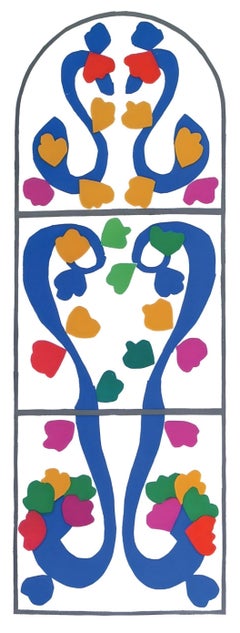
Henri Matisse, Vine, from Verve, Revue Artistique, 1958 (after)
By Henri Matisse
Located in Southampton, NY
This exquisite lithograph after Henri Matisse (1869–1954), titled Vigne (Vine), from Verve, Revue Artistique et Litteraire, Vol. IX, No. 35–36, originates from the 1958 issue publish...
Category
1950s Modern Antonio Recalcati Still-life Prints
Materials
Lithograph
$956 Sale Price
20% Off
H 13.25 in W 10.25 in
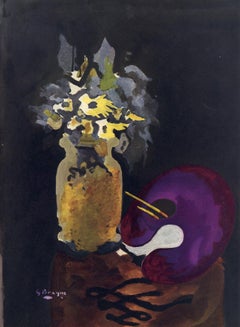
Georges Braque, The Palette and the Vase of Flowers, 1955 (after)
By Georges Braque
Located in Southampton, NY
This exquisite lithograph after Georges Braque (1882–1963), titled La Palette et le vase de fleurs (The Palette and the Vase of Flowers), from Carnets intimes (Private Sketchbooks), ...
Category
1950s Modern Antonio Recalcati Still-life Prints
Materials
Lithograph
$716 Sale Price
40% Off
H 13.25 in W 10.25 in
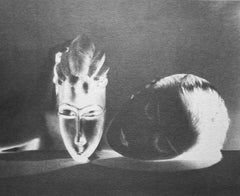
Man Ray, Composition, Man Ray (after)
By Man Ray
Located in Southampton, NY
Lithograph on vélin paper. Inscription: unsigned and unnumbered, as issued. Good condition. Notes: From the folio, Man Ray, 1984. Published by Centre National des Arts Plastiques, Ni...
Category
1980s Surrealist Antonio Recalcati Still-life Prints
Materials
Lithograph
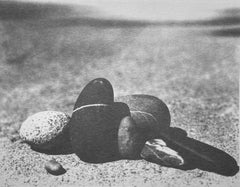
Man Ray, Composition, Man Ray (after)
By Man Ray
Located in Southampton, NY
Lithograph on vélin paper. Inscription: unsigned and unnumbered, as issued. Good condition. Notes: From the folio, Man Ray, 1984. Published by Centre National des Arts Plastiques, Ni...
Category
1980s Surrealist Antonio Recalcati Still-life Prints
Materials
Lithograph
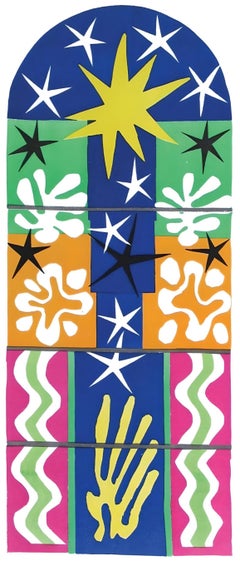
Henri Matisse, Christmas Night, from Verve, Revue Artistique, 1958 (after)
By Henri Matisse
Located in Southampton, NY
This exquisite lithograph after Henri Matisse (1869–1954), titled Nuit de Noel (Christmas Night), from Verve, Revue Artistique et Litteraire, Vol. IX, No. 35–36, originates from the 1958 issue published by Editions de la revue Verve, Paris, under the direction of Teriade, Editeur, Paris, and printed by Mourlot Freres, Paris, 1958. Created during Matisse’s final period, Nuit de Noel embodies his profound synthesis of form, color, and spirituality. The composition, evoking the calm radiance of the nativity, expresses a sense of universal harmony through luminous shapes and vibrant contrasts. This piece exemplifies Matisse’s late cut-out technique, where visual rhythm and color convey the serenity and joy of life and faith.
Executed as a lithograph on velin du Marais paper, this work measures 14 x 10.5 inches. Unsigned and unnumbered as issued. The edition exemplifies the superb craftsmanship of the Mourlot Freres atelier, faithfully capturing the coloristic richness and compositional rhythm of Matisse’s late paper cut-outs.
Artwork Details:
Artist: After Henri Matisse (1869–1954)
Title: Nuit de Noel (Christmas Night), from Verve, Revue Artistique et Litteraire, Vol. IX, No. 35–36, 1958
Medium: Lithograph on velin du Marais paper
Dimensions: 14 x 10.5 inches
Inscription: Unsigned and unnumbered as issued
Date: 1958
Publisher: Editions de la revue Verve, Paris, under the direction of Teriade, Editeur, Paris
Printer: Mourlot Freres, Paris
Catalogue raisonne reference: Duthuit, Claude. Henri Matisse: Catalogue raisonne des ouvrages illustres. Editions Claude Duthuit, Paris, 1988, illustration 139
Condition: Well preserved, consistent with age and medium
Provenance: From Verve, Revue Artistique et Litteraire, Vol. IX, No. 35–36, published by Editions de la revue Verve, Paris, 1958
Notes:
Excerpted from the publication, Verve, Revue Artistique et Litteraire, Vol. IX, No. 35–36, published under the direction of Teriade, Editeur, Paris, and printed by Mourlot Freres, Paris, 1958. This double issue of Verve was entirely devoted to the final works of Henri Matisse, composed of his celebrated gouache cut-outs, which the artist called “painting with scissors.” Completed shortly before his death, this issue represents the culmination of Matisse’s lifelong exploration of color, rhythm, and spiritual joy through the simplest means of expression.
About the Publication:
Verve, Revue Artistique et Litteraire was one of the most influential art periodicals of the 20th century, founded in Paris in 1937 by the visionary Greek-born publisher Teriade (Stratis Eleftheriades). Conceived as a synthesis of art and literature, Verve brought together the greatest modern artists and writers of its time—Henri Matisse, Pablo Picasso, Marc Chagall, Georges Braque, Joan Miro, Fernand Leger, and others—alongside poets and philosophers such as Paul Eluard, Albert Camus, and Jean-Paul Sartre. Each issue was a work of art in itself, luxuriously printed by master lithographers such as Mourlot Freres and produced in collaboration with leading typographers and designers. Verve became a platform for avant-garde creativity, publishing original lithographs and essays that reflected the evolving spirit of modernism. Matisse collaborated closely with Teriade from the magazine’s inception, producing some of its most iconic issues, including those devoted to his paper cut-outs. The final Verve issue of 1958, which featured La Tristesse du Roi, the Nu Bleu series, and Nuit de Noel, stands as a testament to Matisse’s enduring genius and to the publication’s legacy as the definitive meeting of art, poetry, and printing craftsmanship in 20th-century France.
About the Artist:
Henri Matisse (1869–1954) was a French painter, sculptor, draughtsman, and printmaker whose revolutionary vision redefined modern art through his daring use of color, line, and form. Celebrated as one of the greatest artists of the 20th century, Matisse led the Fauvist movement and devoted his life to the pursuit of balance, beauty, and emotional expression in visual art. His early works burst with vibrant hues and liberated brushwork, while his later “cut-out” compositions achieved a poetic simplicity that transformed the relationship between color and space. Deeply influenced by the work of Paul Cezanne, Vincent van Gogh, and Georges Seurat, as well as by the rhythmic patterns of Islamic art, Byzantine mosaics, and Japanese prints, Matisse forged a new visual language that celebrated joy, movement, and serenity. He was part of an extraordinary generation of artists who shaped the evolution of modernism, maintaining lifelong dialogue and friendly rivalry with contemporaries such as Pablo Picasso, Georges Braque, Marc Chagall, Andre Derain, Albert Marquet, and Raoul Dufy—peers who, like him, sought to expand the expressive potential of color and composition. Matisse’s influence extended across generations, inspiring modern and contemporary masters including Alexander Calder, Alberto Giacometti, Salvador Dali, Joan Miro, Wassily Kandinsky, Marcel Duchamp, and Man Ray, each of whom drew upon his fearless experimentation and refined visual harmony. His paintings, sculptures, and works on paper are held in the most prestigious museums in the world, including the Museum of Modern Art, the Centre Pompidou, the Tate, and the Hermitage Museum, where his art continues to symbolize the essence of creativity and human emotion. The highest price ever paid for a Henri Matisse artwork is approximately $80.8 million USD, achieved in 2018 at Christie’s New York for Odalisque couchee aux magnolias (1923).
Henri Matisse Nuit de Noel...
Category
1950s Modern Antonio Recalcati Still-life Prints
Materials
Lithograph
$956 Sale Price
20% Off
H 13.25 in W 10.25 in
Henri Matisse, Chinese Fish, from Verve, Revue Artistique, 1958 (after)
By Henri Matisse
Located in Southampton, NY
This exquisite lithograph after Henri Matisse (1869–1954), titled Poisson Chinois (Chinese Fish), from Verve, Revue Artistique et Litteraire, Vol. IX, No. 35–36, originates from the ...
Category
1950s Modern Antonio Recalcati Still-life Prints
Materials
Lithograph
$956 Sale Price
20% Off
H 13.25 in W 10.25 in
Antonio Recalcati still-life prints for sale on 1stDibs.
Find a wide variety of authentic Antonio Recalcati still-life prints available for sale on 1stDibs. You can also browse by medium to find art by Antonio Recalcati in lithograph and more. Much of the original work by this artist or collective was created during the 1970s and is mostly associated with the Surrealist style. Not every interior allows for large Antonio Recalcati still-life prints, so small editions measuring 29 inches across are available. Customers who are interested in this artist might also find the work of Fred Deux, Valton Tyler, and Guntars Sietins. Antonio Recalcati still-life prints prices can differ depending upon medium, time period and other attributes. On 1stDibs, the price for these items starts at $850 and tops out at $850, while the average work can sell for $850.