Carlos García de la Nuez Prints and Multiples
to
5
2
3
1
Overall Width
to
Overall Height
to
11
11
1,221
970
913
840
1
10
1
11
10
5
5
5
4
11
Artist: Carlos García de la Nuez
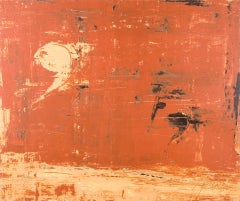
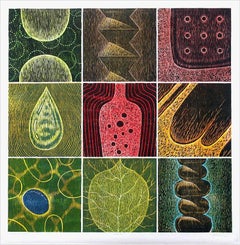
"Pauses" 2006 Original Abstract Hand Signed silkscreen Print Cuban Artist
By Carlos García de la Nuez
Located in Miami, FL
Carlos Garcia De La Nuez (Cuba, 1959)
'Pausas', 2006
silkscreen on paper
19.7 x 23.7 in. (50 x 60 cm.)
Edition of 99
Unframed
ID: GAR1649-006-104
____________________________________________
"Carlos García de la Nuez. Born in Havana, Cuba, 1959. Lives and works in Mexico City, Mexico.
He is a member of the renowned 1980s generation of Cuban artists, whose works differentiated from other contemporaries, noticeably in their intentional distancing from political criticism as a form of expression. This generation was interested in establishing and legitimizing new values of art for art’s sake, gathering inspiration from art movements happening outside of Cuba. Born in Havana, Cuba in 1959, the artist’s paintings explore abstraction and semiotics through the use of color, texture and scale. García de la Nuez participated in the historic 1982 exhibition titled 4x4 with colleagues Gustavo Acosta...
Category
Early 2000s Contemporary Carlos García de la Nuez Prints and Multiples
Materials
Ink, Screen
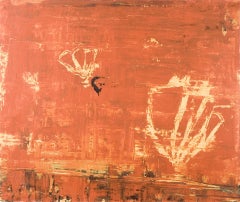
"Night Seashell" 2006 Original Abstract Hand Signed silkscreen Print Cuban Art
By Carlos García de la Nuez
Located in Miami, FL
"Carlos Garcia De La Nuez (Cuba, 1959)
'Caracoles nocturnos', 2006
silkscreen on paper
19.7 x 23.7 in. (50 x 60 cm.)
Edition of 104
ID: GAR1649-007-104"
____________________________________________
"Carlos García de la Nuez. Born in Havana, Cuba, 1959. Lives and works in Mexico City, Mexico.
He is a member of the renowned 1980s generation of Cuban artists, whose works differentiated from other contemporaries, noticeably in their intentional distancing from political criticism as a form of expression. This generation was interested in establishing and legitimizing new values of art for art’s sake, gathering inspiration from art movements happening outside of Cuba. Born in Havana, Cuba in 1959, the artist’s paintings explore abstraction and semiotics through the use of color, texture and scale. García de la Nuez participated in the historic 1982 exhibition titled 4x4 with colleagues Gustavo Acosta...
Category
Early 2000s Contemporary Carlos García de la Nuez Prints and Multiples
Materials
Ink, Screen
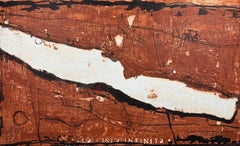
"The Infinite Island" Artist Proof engraving abstract texture 42x71in (video)
By Carlos García de la Nuez
Located in Miami, FL
"Carlos Garcia de la Nuez (Cuba, 1959)
'La Isla Infinita', 2014
P/A (Artist Proof)
woodcut and collagraph on paper Velin Arches 300 g.
42.2 x 70.9 in. (107 x 180 cm.)
Edition of 20
I...
Category
2010s Contemporary Carlos García de la Nuez Prints and Multiples
Materials
Woodcut
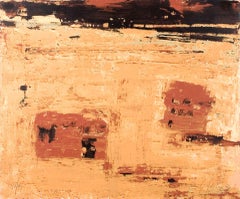
"My Two Houses" 2006 Original Abstract Hand Signed silkscreen Print Cuban Artist
By Carlos García de la Nuez
Located in Miami, FL
"Carlos Garcia De La Nuez (Cuba, 1959)
'Mis dos casas', (My Two Houses) 2006
silkscreen on paper
19.7 x 23.7 in. (50 x 60 cm.)
Edition of 99
ID: GAR1649-005-104"
____________________________________________
"Carlos García de la Nuez. Born in Havana, Cuba, 1959. Lives and works in Mexico City, Mexico.
He is a member of the renowned 1980s generation of Cuban artists, whose works differentiated from other contemporaries, noticeably in their intentional distancing from political criticism as a form of expression. This generation was interested in establishing and legitimizing new values of art for art’s sake, gathering inspiration from art movements happening outside of Cuba. Born in Havana, Cuba in 1959, the artist’s paintings explore abstraction and semiotics through the use of color, texture and scale. García de la Nuez participated in the historic 1982 exhibition titled 4x4 with colleagues Gustavo Acosta...
Category
Early 2000s Contemporary Carlos García de la Nuez Prints and Multiples
Materials
Ink, Screen
Carlos Garcia De La Nuez Cuban Artist Original Hand Signed silkscreen
By Carlos García de la Nuez
Located in Miami, FL
Carlos Garcia De La Nuez (Cuba, 1959)
'No hay color', 1991
silkscreen on paper
19.7 x 27.6 in. (50 x 70 cm.)
Edition of 50
Unframed
ID: GAR1649-000-050
____________________________________________
"Carlos García de la Nuez. Born in Havana, Cuba, 1959. Lives and works in Mexico City, Mexico.
He is a member of the renowned 1980s generation of Cuban artists, whose works differentiated from other contemporaries, noticeably in their intentional distancing from political criticism as a form of expression. This generation was interested in establishing and legitimizing new values of art for art’s sake, gathering inspiration from art movements happening outside of Cuba. Born in Havana, Cuba in 1959, the artist’s paintings explore abstraction and semiotics through the use of color, texture and scale. García de la Nuez participated in the historic 1982 exhibition titled 4x4 with colleagues Gustavo Acosta...
Category
1990s Contemporary Carlos García de la Nuez Prints and Multiples
Materials
Paper, Ink, Engraving, Aquatint
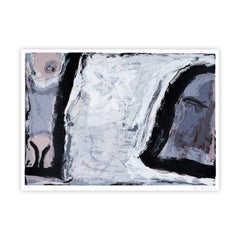
Carlos Garcia de la Nuez "El juego", 2005, Etching 28x40in
By Carlos García de la Nuez
Located in Miami, FL
Carlos Garcia de la Nuez (Cuban, 1959)
'El juego', 2005
Engraving
71 x 101 cm. (28 x 39.8 in.)
Edition of 99
Category
2010s Contemporary Carlos García de la Nuez Prints and Multiples
Materials
Paper, Ink, Etching
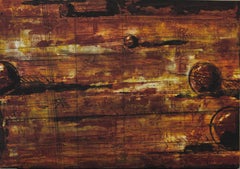
"My DNA" 2006 Original Abstract Hand Signed silkscreen Print Cuban Artist
By Carlos García de la Nuez
Located in Miami, FL
"Carlos Garcia De La Nuez (Cuba, 1959)
'My DNA', 2006
silkscreen on paper
19.7 x 23.7 in. (50 x 60 cm.)
Edition of 99
ID: GAR1649-004-104"
____________________________________________
"Carlos García de la Nuez. Born in Havana, Cuba, 1959. Lives and works in Mexico City, Mexico.
He is a member of the renowned 1980s generation of Cuban artists, whose works differentiated from other contemporaries, noticeably in their intentional distancing from political criticism as a form of expression. This generation was interested in establishing and legitimizing new values of art for art’s sake, gathering inspiration from art movements happening outside of Cuba. Born in Havana, Cuba in 1959, the artist’s paintings explore abstraction and semiotics through the use of color, texture and scale. García de la Nuez participated in the historic 1982 exhibition titled 4x4 with colleagues Gustavo Acosta...
Category
Early 2000s Contemporary Carlos García de la Nuez Prints and Multiples
Materials
Ink, Screen
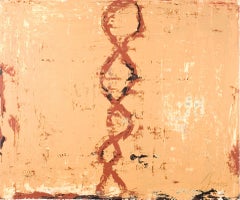
"Games" 2006 Original Abstract Hand Signed silkscreen Print Cuban Artist
By Carlos García de la Nuez
Located in Miami, FL
"Carlos Garcia De La Nuez (Cuba, 1959)
'Juegos', 2006
silkscreen on paper
19.7 x 23.7 in. (50 x 60 cm.)
Edition of 99
ID: GAR1649-003-104"
____________________________________________
"Carlos García de la Nuez. Born in Havana, Cuba, 1959. Lives and works in Mexico City, Mexico.
He is a member of the renowned 1980s generation of Cuban artists, whose works differentiated from other contemporaries, noticeably in their intentional distancing from political criticism as a form of expression. This generation was interested in establishing and legitimizing new values of art for art’s sake, gathering inspiration from art movements happening outside of Cuba. Born in Havana, Cuba in 1959, the artist’s paintings explore abstraction and semiotics through the use of color, texture and scale. García de la Nuez participated in the historic 1982 exhibition titled 4x4 with colleagues Gustavo Acosta...
Category
Early 2000s Contemporary Carlos García de la Nuez Prints and Multiples
Materials
Ink, Screen
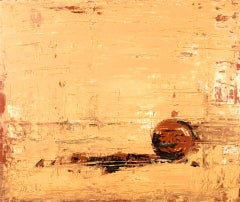
Carlos Garcia De La Nuez Cuban Artist Original Hand Signed engraving
By Carlos García de la Nuez
Located in Miami, FL
"Carlos Garcia De La Nuez (Cuba, 1959)
'El juego', 2005
engraving on iron
27.6 x 39.4 in. (70 x 100 cm.)
Edition of 106
ID: GAR1649-001-106"
____________________________________________
"Carlos García de la Nuez. Born in Havana, Cuba, 1959. Lives and works in Mexico City, Mexico.
He is a member of the renowned 1980s generation of Cuban artists, whose works differentiated from other contemporaries, noticeably in their intentional distancing from political criticism as a form of expression. This generation was interested in establishing and legitimizing new values of art for art’s sake, gathering inspiration from art movements happening outside of Cuba. Born in Havana, Cuba in 1959, the artist’s paintings explore abstraction and semiotics through the use of color, texture and scale. García de la Nuez participated in the historic 1982 exhibition titled 4x4 with colleagues Gustavo Acosta...
Category
Early 2000s Contemporary Carlos García de la Nuez Prints and Multiples
Materials
Paper, Ink, Engraving, Aquatint
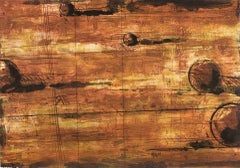
Carlos García de la Nuez, ¨Amor III¨, 2004, Engraving, 12.6x29.9 in
By Carlos García de la Nuez
Located in Miami, FL
"Carlos Garcia de la Nuez (Cuba, 1959)
'Amor III', 2004
engraving on paper Guarro Biblos 250g.
12.6 x 30 in. (32 x 76 cm.)
Edition of 50
ID: GAC-110"
Category
Early 2000s Contemporary Carlos García de la Nuez Prints and Multiples
Materials
Paper, Ink, Engraving, Aquatint
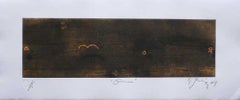
Carlos García de la Nuez, ¨Desde una isla¨, 2005, Engraving, 28x39.8 in
By Carlos García de la Nuez
Located in Miami, FL
Carlos Garcia de la Nuez (Cuba, 1959)
'Desde una Isla', 2005
engraving on paper Velin Arches 300 g.
28 x 39.8 in. (71 x 101 cm.)
Edition of 99
Unframed
ID: GAC-111
Hand-signed by author
___________________________________________________________
Carlos García de la Nuez. Born in Havana, Cuba, 1959. Lives and works in Mexico City, Mexico.
He is a member of the renowned 1980s generation of Cuban artists, whose works differentiated from other contemporaries, noticeably in their intentional distancing from political criticism as a form of expression. This generation was interested in establishing and legitimizing new values of art for art’s sake, gathering inspiration from art movements happening outside of Cuba. Born in Havana, Cuba in 1959, the artist’s paintings explore abstraction and semiotics through the use of color, texture and scale. García de la Nuez participated in the historic 1982 exhibition titled 4x4 with colleagues Gustavo Acosta, José Franco and Moses Finalé.
In 1979 García de la Nuez entered the San Alejandro Academy of Arts and in 1983 completed his studies at the Instituto Superior de Arte in Havana. He received his Masters of Arts in 1988 from the Massachusetts College of Art and Design in Boston, upon receiving a scholarship from the Rockefeller Foundation. He spent a decade working and living in Paris, where he exhibited across Europe and was selected to participate in a silkscreen portfolio, Kinderstem, published by Domberger-Edition in Germany that featured García de la Nuez along with Max Bill, Sol LeWitt, Keith Haring, Christo, among others. In the early 1990’s García de la Nuez relocated in Mexico City, where he currently works and lives.
The artist’s works have been exhibited in various museums around the world including Boston, New York, Miami, Buenos Aires, Sao Paulo, Rio de Janeiro, Bogota, Mexico City, San Jose, Panama City, Canada, Paris, Berlin, Stuttgart, London, Madrid, Moscow and Havana.
His work has been awarded the Painting Award 13 de Marzo...
Category
Early 2000s Contemporary Carlos García de la Nuez Prints and Multiples
Materials
Paper, Ink, Engraving, Aquatint
Related Items
L
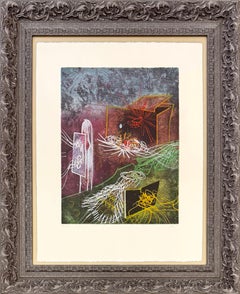
Explosion Qui Eclaire Mon Abime (framed signed aquatint and etching)
By Roberto Matta
Located in Aventura, FL
Aquatint and etching on paper. Hand signed lower right by Roberto Matta. Hand numbered 90/100 lower left. Image size: 14.1 x 18.6 inches. Sheet size: 26 x 19.6 inches. Frame siz...
Category
Early 2000s Contemporary Carlos García de la Nuez Prints and Multiples
Materials
Paper, Etching, Aquatint

$1,500 Sale Price
25% Off
H 35.25 in W 28.75 in D 1 in
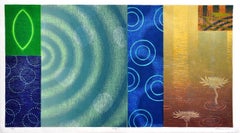
Lotus
By Hiroki Morinoue
Located in Lyons, CO
Color woodcut, Edition 30.
Lotus is a twenty-six color woodcut from seven woodblocks printed in an edition of 30, plus proofs, on white Thai Mulberry paper. In this print, a compe...
Category
21st Century and Contemporary Contemporary Carlos García de la Nuez Prints and Multiples
Materials
Woodcut
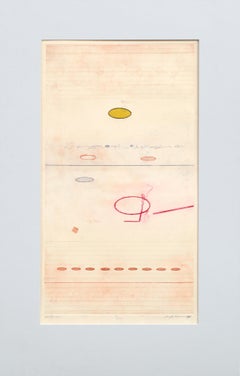
"Orange Row", Abstract Geometric Minimalist Composition w Ovals, Limited Edition
By Geoffrey Bowman
Located in Soquel, CA
"Orange Row", Abstract Geometric Minimalist Composition w Ovals, Limited Edition
Delicate and perfect ovals in orange, yellow, red, and blue are purposefully arranged on lined paper...
Category
1990s Abstract Geometric Carlos García de la Nuez Prints and Multiples
Materials
Paper, Ink, Lithograph, Etching
$556 Sale Price
20% Off
H 32 in W 20 in D 0.25 in
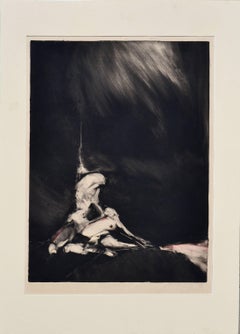
Vintage Abstract Figurative Etching -- "Embrace"
By Patricia Way
Located in Soquel, CA
Vintage abstract figural "Embrace", a lithograph by Patricia Ann Way (American, 20th Century). Signed "Patricia Way" and dated "76" lower right. Slight crease to lower center and s...
Category
1970s Abstract Expressionist Carlos García de la Nuez Prints and Multiples
Materials
Paper, Ink, Etching
$1,240 Sale Price
20% Off
H 36 in W 22 in D 1 in
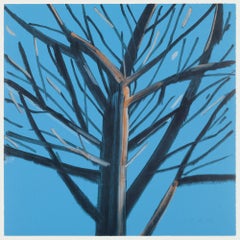
Tree 8
By Alex Katz
Located in Miami, FL
Technical Information:
Alex Katz
Tree 8
2022
Woodcut and Lithograph
39 3/4 x 39 1/4 in.
Edition of 60
Pencil signed and numbered
Category
21st Century and Contemporary Contemporary Carlos García de la Nuez Prints and Multiples
Materials
Lithograph, Woodcut
Earth Cycle
By Hiroki Morinoue
Located in Lyons, CO
Color woodcut, Edition 30.
In all of Morinoue's work there is a compelling sense of place--the ocean shoreline, lava flows and Japanese gardens. He is a patient observer of nature...
Category
21st Century and Contemporary Contemporary Carlos García de la Nuez Prints and Multiples
Materials
Woodcut
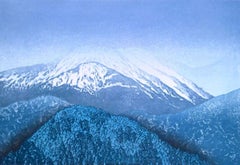
Blue, Ukiyo-e landscape woodcut print, 2014
By Keiji Shinohara
Located in New York, NY
Keiji Shinohara was born and raised in Osaka, Japan. After 10 years as an apprentice to the renowned Keiichiro Uesugi in Kyoto, he became a Master Printmaker and moved to the United ...
Category
2010s Contemporary Carlos García de la Nuez Prints and Multiples
Materials
Woodcut
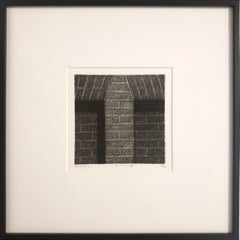
Amsterdam VIII ed 28/50 black-white canal house facade aquatint etch print
By Olivier Julia
Located in Doetinchem, NL
Amsterdam VIII is an intriguing early career aquatint dry-needle etch print by renowned French-Dutch artist Olivier Julia. It depicts a detail of an old Amsterdam house facade and is...
Category
1980s Contemporary Carlos García de la Nuez Prints and Multiples
Materials
Rag Paper, Etching, Aquatint
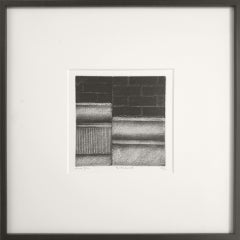
Amsterdam V ed 12/50 black-white canal house facade aquatint etch print
By Olivier Julia
Located in Doetinchem, NL
Amsterdam V is an intriguing early career aquatint dry-needle etch print by renowned French-Dutch artist Olivier Julia. It depicts a detail of an old Amsterdam house facade and is bo...
Category
1980s Contemporary Carlos García de la Nuez Prints and Multiples
Materials
Rag Paper, Etching, Aquatint
$533
H 9.85 in W 9.85 in
Amsterdam III ed 12/50 black-white canal house facade aquatint etch print
By Olivier Julia
Located in Doetinchem, NL
Amsterdam III is an intriguing early career aquatint dry-needle etch print by renowned French-Dutch artist Olivier Julia. It depicts a detail of an old Amsterdam house facade and is ...
Category
1980s Contemporary Carlos García de la Nuez Prints and Multiples
Materials
Rag Paper, Etching, Aquatint
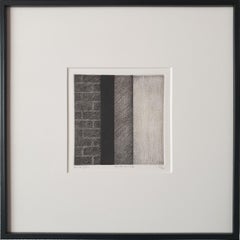
$533
H 9.85 in W 9.85 in
Amsterdam I ed 28/50 black-white canal house facade aquatint etch print
By Olivier Julia
Located in Doetinchem, NL
Amsterdam I is an intriguing early career aquatint dry-needle etch print by renowned French-Dutch artist Olivier Julia. It depicts a detail of an old Amsterdam house facade and is bo...
Category
1980s Contemporary Carlos García de la Nuez Prints and Multiples
Materials
Rag Paper, Etching, Aquatint
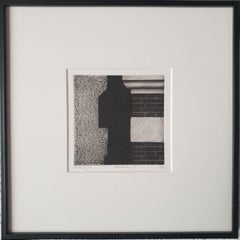
$533
H 9.85 in W 9.85 in
Amsterdam X ed 28/50 black-white canal house facade aquatint etch print
By Olivier Julia
Located in Doetinchem, NL
Amsterdam X is an intriguing early career aquatint dry-needle etch print by renowned French-Dutch artist Olivier Julia. It depicts a detail of an old Amsterdam house facade and is bo...
Category
1980s Contemporary Carlos García de la Nuez Prints and Multiples
Materials
Rag Paper, Etching, Aquatint
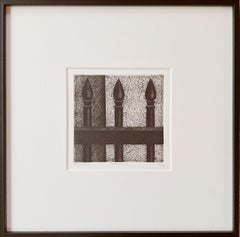
$533
H 9.85 in W 9.85 in
Previously Available Items
"Love" 2003 Engraving in copper metal 15x19.5 in abstract
By Carlos García de la Nuez
Located in Miami, FL
Carlos Garcia de la Nuez (Cuba, 1959)
'Amor ', (Love) 2003
Engraving on paper
15 x 19.5 in. (38 x 49.5 cm.)
Edition of 20
ID: GAC-101
Category
Early 2000s Contemporary Carlos García de la Nuez Prints and Multiples
Materials
Engraving
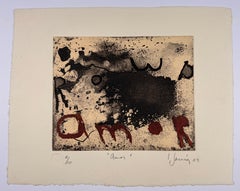
Carlos García de la Nuez, ¨Desde una isla¨, 2005, Engraving, 28x39.8 in
By Carlos García de la Nuez
Located in Miami, FL
"Carlos Garcia de la Nuez (Cuba, 1959)
'Desde una Isla', 2005
engraving on paper Velin Arches 300 g.
28 x 39.8 in. (71 x 101 cm.)
Edition of 99
ID: GAC-111"
Category
Early 2000s Contemporary Carlos García de la Nuez Prints and Multiples
Materials
Paper, Ink, Engraving, Aquatint
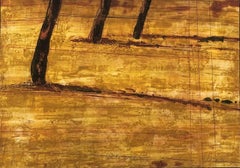
Carlos García De La Nuez prints and multiples for sale on 1stDibs.
Find a wide variety of authentic Carlos García de la Nuez prints and multiples available for sale on 1stDibs. You can also browse by medium to find art by Carlos García de la Nuez in etching, ink, paper and more. Much of the original work by this artist or collective was created during the 21st century and contemporary and is mostly associated with the contemporary style. Not every interior allows for large Carlos García de la Nuez prints and multiples, so small editions measuring 24 inches across are available. Carlos García de la Nuez prints and multiples prices can differ depending upon medium, time period and other attributes. On 1stDibs, the price for these items starts at $500 and tops out at $1,200, while the average work can sell for $600.