Caroline Durieux More Art

American, 1896-1989

Caroline Durieux was a  printmaker, painter, satirist, innovator and social activist. She was born in New Orleans and was already making sketches, by the age of four. Her formal art training was at Newcomb College (1912–17) and the Pennsylvania Academy of Fine Arts (1918–20). Carl Zigrosser of the Philadelphia Museum of Art encouraged Durieux to try lithography. While living in Mexico, she learned lithography from Emilio Amero and later, worked with Diego Rivera and the other Mexican masters. Her lithographs of the 1930s and 1940s rank as some of the finest satirical pieces ever made. Durieux joined the art faculty at Newcomb College and taught there from 1938–43. She also served as the director for Louisiana’s WPA Art Project, which she administered without regard for the race of the participants, within a segregated society. In 1943, she left New Orleans to teach at Louisiana State University, wherein in the early 1950s, she began experimental work on electron printmaking, demonstrating the peaceful use of atomic technology. She also successfully produced the first color cliché verres, while simultaneously, perfecting her technique for making electron prints. Durieux’s work is exhibited in the Museum of Modern Art, the Chicago Art Institute, the National Gallery of Art, the New Orleans Museum of Art, the Library of Congress and the Philadelphia Museum of Art.

to
1
Overall Width
to
Overall Height
to
1
1
1
6
328
230
120
117
1
Artist: Caroline Durieux
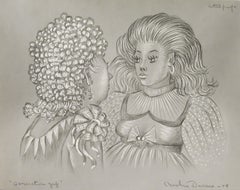
Generation Gap
By Caroline Durieux
Located in San Francisco, CA
This artwork titled "Generation Gap" c1978 is an original Cliche Verre on paper by noted New Orleans artist Caroline Spellman Wogan Durieux, 1896-1989. It is hand signed, titled, dated and inscribed artist proof in pencil by the artist. The image size is 8.75 x 11.75 inches, sheet size is 10.75 x 13.65 inches. It is in excellent condition, two small pieces of hanging tape from previous framing remaining on the back. About the artist: As a Southern female satirist, Caroline Spellman Wogan Durieux was a rare phenomenon in the early twentieth century. Today, she is highly regarded for her stinging lithographs that touch on human foibles as well as some of the important issues of her day. Born to a family of Creole descent in New Orleans, young Caroline was precocious; she began drawing at age four and completed a portfolio of watercolors depicting her city by the time she was twelve. She took lessons from Mary Butler, a member of the art faculty at Sophie Newcomb College, and, beginning in 1912, matriculated at the school full-time, where her instructors included Ellsworth Woodward, chair of the art department. She graduated with a bachelor’s degree in design in 1916 and one in education in 1917. Awarded a scholarship by the New Orleans Art Association, Durieux pursued further coursework at the Pennsylvania Academy of the Fine Arts from 1918 to 1920. Years later, she was encouraged to try lithography by Carl Zigrosser, an expert curator of prints at the Philadelphia Museum of Art, who became her mentor. With her husband Pierre Durieux—an importer of Latin American goods and later the chief representative of General Motors for South America—Caroline Durieux spent time in Cuba during the early 1920s. The couple moved in 1926 to Mexico City, where she met the great muralist Diego Rivera and became involved in the local art community. Following a short interval in New York City, Durieux went back to Mexico in 1931 and enrolled at the Academy of San Carlos (now the National University of Mexico) to study lithography. She returned to New Orleans seven years later and was hired to teach at her alma mater, Newcomb College, from 1938 to 1943. Starting in 1939, Durieux served as the director of Louisiana’s Works Progress Administration program, and her division was the only one in the state not to practice racial discrimination. This was a matter she felt strongly about, stating: “I had a feeling that an artist is an artist and it doesn’t make any difference what color he or she is.” From 1943 until her retirement in 1964, Durieux was a member of the faculty at Louisiana State University in Baton Rouge. Durieux’s forte was lithography, a technique popular in the mid-nineteenth century and long associated with social commentary, and her prints proved no exception. Her work in the 1930s and 1940s coincided with a rise in art that dealt with poverty, racism, and totalitarianism. She often presented stereotyped social climbers...
Category

Late 20th Century American Modern Caroline Durieux More Art

Materials

Other Medium

Related Items
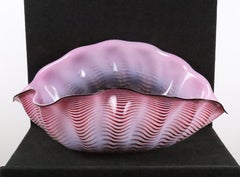
Cameo Pink Seaform with Black Lip Wrap (94.678.s1)
By Dale Chihuly
Located in Missouri, MO
Cameo Pink Seaform with Black Lip Wrap (94.678.s1), 1994 Dale Chihuly (American, b. 1941) 14 x 32 x 18 inches Born in Tacoma, Washington, Dale Chihuly became the most famous ornate ...
Category

1990s American Modern Caroline Durieux More Art

Materials

Glass, Blown Glass

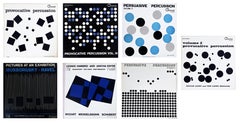
Josef Albers LP Cover Art, set of 7 (Josef Albers album art)
By Josef Albers
Located in NEW YORK, NY
Josef Albers Album Art complete set of 7 circa late 1950s: A set of 7 vinyl record covers (containing their records) brilliantly designed by Josef Albers between 1958 and 1960. The s...
Category

Mid-20th Century American Modern Caroline Durieux More Art

Materials

Offset

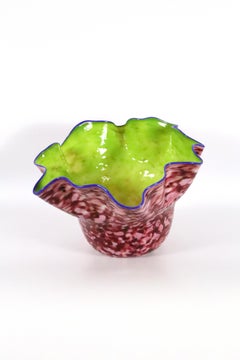
Zephyr Green Macchia with Blue Lip Wrap
By Dale Chihuly
Located in Missouri, MO
Zephyr Green Macchia with Blue Lip Wrap, 1996 Dale Chihuly (American, b. 1941) 8 x 10 x 10 inches Signed and Dated on Bottom Born in Tacoma, Washington, Dale Chihuly became the most...
Category

1990s American Modern Caroline Durieux More Art

Materials

Glass, Blown Glass

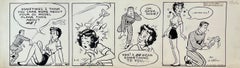
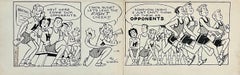
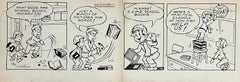
Rare 1950s Vintage Syndicated Ink Drawing Cartoon Strip Susie Q Smith Comic Art
Located in Surfside, FL
SUSIE Q. SMITH Medium: Newspaper comics Distributed by: King Features Syndicate First Appeared: 1945 Creators: Linda and Jerry Walter 5.5 X 19.5 Dated August 13, 1954 in top right corner. Like her contemporaries, Aggie Mack, Candy and Patsy Walker (before her conversion to a superhero), Susie Q. Smith was a female Archie-type — not exactly an imitator, because Archie, who had started only four years earlier, hadn't yet become popular enough to spawn imitators, but part of his genre. She attended high school, where her teachers often seemed unreasonable to her, interacted with the opposite gender in a typically adolescent way, and her parents didn't completely understand her. And she was cute and perky as only a teenage girl can be. Susie was the star of a comic strip distributed by King Features, the biggest of the comic strip syndicates, whose other offerings have ranged from Jackys Diary to Prince Valiant. King launched the strip in both daily and Sunday form in 1945. Daily, she was only in a panel at first, but it expanded into a full, multi-panel strip on February 7, 1953. In a very odd turn of events, in 1953 the Walters chose to leave King Features behind and hitch their wagon at the McNaught Syndicate. The creators were Harold "Jerry" Walter and his wife, Linda. Jerry was also responsible for Jellybean Jones, who has nothing to do with Jughead Jones's young sister, a modern-day addition to the Archie cast of characters. Together, they did The Lively Ones during the 1960s. Though each was capable of doing both major jobs in comic strip production, their usual working method was for Jerry to dream up the ideas and write the dialog, while Linda did the artwork. The Walters also collaborated on a series of Susie Q. Smith comic books for Dell Comics. Instead of reprinting newspaper strips, these ran new stories by the Walters. Between 1951 and '54, four issues were published as part of the Four Color Comics series, where many minor comic strips, including Dotty Dripple, Timmy and Rusty Riley had found a home. It had no other media spin-offs. Susie Q. Smith had a respectable run in the newspapers, but it ended in 1959. Jerry Walter (1915 - 2007) was an abstract expressionist artist whose output of energetic and colorful paintings were the products of the rich artistic milieu of post-war New York City. He was born Harold Frank Walter in Mount Pleasant, Iowa on November 25, 1915. After graduating from Colgate University in 1937, Walter moved to New York City, where he studied drawing and painting at the New School and the Art Students’ League. Before concentrating seriously on his art, he spent several years as a successful copywriter and idea man for the advertising agencies of J. Walter Thompson, McCann Ericson, and BBDO. During this time, he also worked as a syndicated cartoonist. Collaborating with his wife, Linda, his best-known series was Susie Q. Smith, which first appeared in 1945 and described as a “female Archie type.” Very popular, the cartoon was later the subject of a series of comic books published from 1951 to 1954. After serving in the United States Army for three years during World War II, Walter began to paint seriously. He ascribed his earliest artistic influence to Joan Miró, whose Dog Barking at the Moon (1926) he viewed when he was twelve, the year he published his first cartoon. Walter later wrote that jazz, “the first native expression of so-called modernism” was a strong influence on his work. During the later 1940s, Walters spent time at the Research Studio in Maitland, Florida. Founded in 1937 by artist and architect J. André Smith and supported by the philanthropist Mary Curtis Bok, the Research Studio was a lively colony that hosted prominent artists, including Milton Avery, Ralston Crawford, and Doris Lee. While at the Studio, Walter’s work was purchased by Frank Crowninshield. A founding trustee of the Museum of Modern Art and editor of Vanity Fair, Crowinshield was a noted collector; his collection included important works by Pablo Picasso, Marc Chagall, Henri Matisse, Edgar Degas, George Bellows, and Pierre Bonnard. Returning to New York after his time at the Studio, Walter became an active member of the New York school of the abstract expressionist movement, and in the summer of 1956, Walter exhibited 13 paintings and a selection of drawings at New York’s Chase Gallery. The adroit manipulation of both color and composition evident in his work shows the influence of Abstract Expressionism, particularly Willem de Kooning, Arshile Gorky, and Hans Hofmann. illustrator and female cartoonist Linda Walter was the talented female mind behind the beloved "Susie Q. Smith" comic strip. She played an instrumental role in shaping the cultural landscape through her vibrant illustrations. Known for the timeless charm of the "Susie Q. Smith" comic strip, Linda's artistry brought joy and laughter to countless readers during the 1950s and continues to resonate with fans across generations. She was part of the Woodstock artists community. from Women in Comics: Linda Walter was the artist of newspaper strip Susie Q. Smith, which was written by her husband, Jerry. It was syndicated by King Features Syndicate and ran from 1945 to 1959. The Walters also contributed original Susie Q. Smith stories to Dell's Four Color comic books from 1951 to 1954. From 1964-1965, they created a singled panel comic called The Lively Ones. Vintage Golden Age of Comics era. The Golden Age of Comic Books describes an era in the history of American comic books from 1938 to 1956. During this time, modern comic books were first published and rapidly increased in popularity. The superhero archetype was created. Between 1939 and 1941 Detective Comics (DC) and its sister company, All-American Publications, introduced popular superheroes such as Batman and Robin, Wonder Woman, the Flash, Green Lantern, Doctor Fate, the Atom, Hawkman, Green Arrow and Aquaman. Timely Comics, the 1940s predecessor of Marvel Comics, had million-selling titles featuring the Human Torch, the Sub-Mariner, and Captain America. Another notable series was The Spirit by Will Eisner. Dell Comics' non-superhero characters (particularly the licensed Walt Disney animated-character comics) outsold the superhero comics of the day. The publisher featured licensed movie and literary characters such as Mickey Mouse, Donald Duck, Roy Rogers and Tarzan. Additionally, MLJ's introduction of Archie Andrews in Pep Comics #22 (December 1941) gave rise to teen humor comics, with the Archie Comics...
Category

1950s American Modern Caroline Durieux More Art

Materials

Paper, Ink

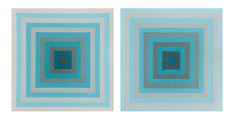
Oceans Apart
By Angele LaSalle
Located in East Hampton, NY
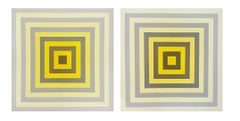
fun with Color Theory As seen at Art on Paper 2024 at The Mannix Project East Hampton NY 12"x12" (14"x14" framed) each These come in a white frame. Acrylic on Paper Artist Statement...
Category

2010s American Modern Caroline Durieux More Art

Materials

Acrylic, Archival Paper

Oceans Apart
Oceans Apart
$2,500
H 12 in W 24 in D 1 in
Reflection No. 1
By Angele LaSalle
Located in East Hampton, NY
fun with Color Theory As seen at Art on Paper 2024 at The Mannix Project East Hampton NY 12"x12" (14"x14" framed) each These come in a white frame. Acrylic on Paper Artist Statement...
Category

2010s American Modern Caroline Durieux More Art

Materials

Acrylic, Archival Paper

Reflection No. 1
Reflection No. 1
$2,500
H 12 in W 24 in D 1 in
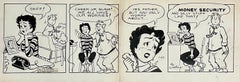
Vintage Golden Age Syndicated Ink Drawing Cartoon Strip Susie Q Smith Comic Art
Located in Surfside, FL
SUSIE Q. SMITH Medium: Newspaper comics Distributed by: King Features Syndicate First Appeared: 1945 Creators: Linda and Jerry Walter 6.5 X 19.5 Like her contemporaries, Aggie Mack, Candy and Patsy Walker (before her conversion to a superhero), Susie Q. Smith was a female Archie-type — not exactly an imitator, because Archie, who had started only four years earlier, hadn't yet become popular enough to spawn imitators, but part of his genre. She attended high school, where her teachers often seemed unreasonable to her, interacted with the opposite gender in a typically adolescent way, and her parents didn't completely understand her. And she was cute and perky as only a teenage girl can be. Susie was the star of a comic strip distributed by King Features, the biggest of the comic strip syndicates, whose other offerings have ranged from Jackys Diary to Prince Valiant. King launched the strip in both daily and Sunday form in 1945. Daily, she was only in a panel at first, but it expanded into a full, multi-panel strip on February 7, 1953. In a very odd turn of events, in 1953 the Walters chose to leave King Features behind and hitch their wagon at the McNaught Syndicate. The creators were Harold "Jerry" Walter and his wife, Linda. Jerry was also responsible for Jellybean Jones, who has nothing to do with Jughead Jones's young sister, a modern-day addition to the Archie cast of characters. Together, they did The Lively Ones during the 1960s. Though each was capable of doing both major jobs in comic strip production, their usual working method was for Jerry to dream up the ideas and write the dialog, while Linda did the artwork. The Walters also collaborated on a series of Susie Q. Smith comic books for Dell Comics. Instead of reprinting newspaper strips, these ran new stories by the Walters. Between 1951 and '54, four issues were published as part of the Four Color Comics series, where many minor comic strips, including Dotty Dripple, Timmy and Rusty Riley had found a home. It had no other media spin-offs. Susie Q. Smith had a respectable run in the newspapers, but it ended in 1959. Jerry Walter (1915 - 2007) was an abstract expressionist artist whose output of energetic and colorful paintings were the products of the rich artistic milieu of post-war New York City. He was born Harold Frank Walter in Mount Pleasant, Iowa on November 25, 1915. After graduating from Colgate University in 1937, Walter moved to New York City, where he studied drawing and painting at the New School and the Art Students’ League. Before concentrating seriously on his art, he spent several years as a successful copywriter and idea man for the advertising agencies of J. Walter Thompson, McCann Ericson, and BBDO. During this time, he also worked as a syndicated cartoonist. Collaborating with his wife, Linda, his best-known series was Susie Q. Smith, which first appeared in 1945 and described as a “female Archie type.” Very popular, the cartoon was later the subject of a series of comic books published from 1951 to 1954. After serving in the United States Army for three years during World War II, Walter began to paint seriously. He ascribed his earliest artistic influence to Joan Miró, whose Dog Barking at the Moon (1926) he viewed when he was twelve, the year he published his first cartoon. Walter later wrote that jazz, “the first native expression of so-called modernism” was a strong influence on his work. During the later 1940s, Walters spent time at the Research Studio in Maitland, Florida. Founded in 1937 by artist and architect J. André Smith and supported by the philanthropist Mary Curtis Bok, the Research Studio was a lively colony that hosted prominent artists, including Milton Avery, Ralston Crawford, and Doris Lee. While at the Studio, Walter’s work was purchased by Frank Crowninshield. A founding trustee of the Museum of Modern Art and editor of Vanity Fair, Crowinshield was a noted collector; his collection included important works by Pablo Picasso, Marc Chagall, Henri Matisse, Edgar Degas, George Bellows, and Pierre Bonnard. Returning to New York after his time at the Studio, Walter became an active member of the New York school of the abstract expressionist movement, and in the summer of 1956, Walter exhibited 13 paintings and a selection of drawings at New York’s Chase Gallery. The adroit manipulation of both color and composition evident in his work shows the influence of Abstract Expressionism, particularly Willem de Kooning, Arshile Gorky, and Hans Hofmann. illustrator and female cartoonist Linda Walter was the talented female mind behind the beloved "Susie Q. Smith" comic strip. She played an instrumental role in shaping the cultural landscape through her vibrant illustrations. Known for the timeless charm of the "Susie Q. Smith" comic strip, Linda's artistry brought joy and laughter to countless readers during the 1950s and continues to resonate with fans across generations. She was part of the Woodstock artists community. from Women in Comics: Linda Walter was the artist of newspaper strip Susie Q. Smith, which was written by her husband, Jerry. It was syndicated by King Features Syndicate and ran from 1945 to 1959. The Walters also contributed original Susie Q. Smith stories to Dell's Four Color comic books from 1951 to 1954. From 1964-1965, they created a singled panel comic called The Lively Ones. Vintage Golden Age of Comics era. The Golden Age of Comic Books describes an era in the history of American comic books from 1938 to 1956. During this time, modern comic books were first published and rapidly increased in popularity. The superhero archetype was created. Between 1939 and 1941 Detective Comics (DC) and its sister company, All-American Publications, introduced popular superheroes such as Batman and Robin, Wonder Woman, the Flash, Green Lantern, Doctor Fate, the Atom, Hawkman, Green Arrow and Aquaman. Timely Comics, the 1940s predecessor of Marvel Comics, had million-selling titles featuring the Human Torch, the Sub-Mariner, and Captain America. Another notable series was The Spirit by Will Eisner. Dell Comics' non-superhero characters (particularly the licensed Walt Disney animated-character comics) outsold the superhero comics of the day. The publisher featured licensed movie and literary characters such as Mickey Mouse, Donald Duck, Roy Rogers and Tarzan. Additionally, MLJ's introduction of Archie Andrews in Pep Comics #22 (December 1941) gave rise to teen humor comics, with the Archie Comics...
Category

1950s American Modern Caroline Durieux More Art

Materials

Paper, Ink

Original Vintage Syndicated Ink Drawing Cartoon Strip Susie Q Smith Comic Art
Located in Surfside, FL
SUSIE Q. SMITH Medium: Newspaper comics Distributed by: King Features Syndicate First Appeared: 1945 Creators: Linda and Jerry Walter 6.5 X 18 Like her contemporaries, Aggie Mack, Candy and Patsy Walker (before her conversion to a superhero), Susie Q. Smith was a female Archie-type — not exactly an imitator, because Archie, who had started only four years earlier, hadn't yet become popular enough to spawn imitators, but part of his genre. She attended high school, where her teachers often seemed unreasonable to her, interacted with the opposite gender in a typically adolescent way, and her parents didn't completely understand her. And she was cute and perky as only a teenage girl can be. Susie was the star of a comic strip distributed by King Features, the biggest of the comic strip syndicates, whose other offerings have ranged from Jackys Diary to Prince Valiant...
Category

1950s American Modern Caroline Durieux More Art

Materials

Paper, Ink

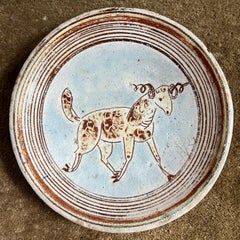
Plate with Ram (Untitled)
By Henry Varnum Poor
Located in Los Angeles, CA
(Note: This work is part of our exhibition Connected by Creativity: WPA Era Works from the Collection of Leata and Edward Beatty Rowan) Glazed and...
Category

1920s American Modern Caroline Durieux More Art

Materials

Ceramic

Rare 1950s Original Syndicated Ink Drawing Cartoon Strip Susie Q Smith Comic Art
Located in Surfside, FL
SUSIE Q. SMITH Medium: Newspaper comics Distributed by: King Features Syndicate First Appeared: 1945 Creators: Linda and Jerry Walter 6.25 X 18.25 Like her contemporaries, Aggie Ma...
Category

1950s American Modern Caroline Durieux More Art

Materials

Paper, Ink

Nude in Lavender
By Kenneth B Walsh
Located in East Hampton, NY
Nude In Lavender NOT framed Neo Cubism About the Artist: Kenneth B Walsh (1922-1980) In the 1950s, Kenneth Bonar Walsh came to Montauk from New York City to paint seascapes, catch ...
Category

1970s American Modern Caroline Durieux More Art

Materials

Canvas, Acrylic

Nude in Lavender
Nude in Lavender
$2,850
H 36 in W 24 in D 1 in
Two Volkswagons
By Gerard Giliberti
Located in East Hampton, NY
Black & White Photo of two rusted Volkswagon's sitting in a desert Comes unframed Also available in 20"x30" About the Artist: My intent is to create a mythic dreamscape that explo...
Category

1960s American Modern Caroline Durieux More Art

Materials

Archival Pigment

Caroline Durieux more art for sale on 1stDibs.

Find a wide variety of authentic Caroline Durieux more art available for sale on 1stDibs. Much of the original work by this artist or collective was created during the 20th century and is mostly associated with the modern style. Not every interior allows for large Caroline Durieux more art, so small editions measuring 14 inches across are available. Customers who are interested in this artist might also find the work of Kenneth B Walsh, Angele LaSalle, and Ron Galella. Caroline Durieux more art prices can differ depending upon medium, time period and other attributes. On 1stDibs, the price for these items starts at $1,400 and tops out at $1,400, while the average work can sell for $1,400.

Recently Viewed

View All