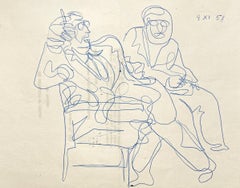
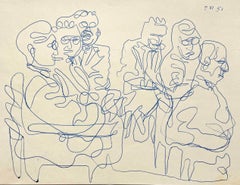
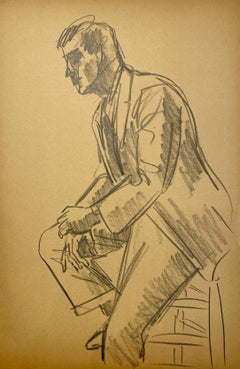
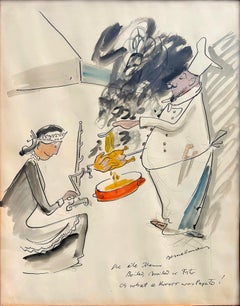
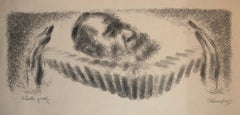
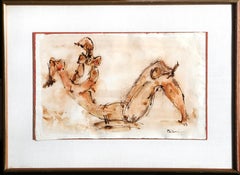
Chaim Gross Figurative Drawings and Watercolors
American, 1904-1991

Chaim Gross was one of the most important American sculptors of the 20th century. Along with other noted sculptors William Zorach and Jose de Creeft, Gross was primarily a practitioner of the direct carving method, and a majority of his work was carved from wood. Born in Ukraine in 1904, Gross studied at the art academy in Budapest under painter Béla Uitz, followed by art studies at the Kunstgewerbeschule in Vienna. He immigrated to the United States with two of his brothers in 1921 and continued his studies at the Beaux-Arts Institute of Design with Elie Nadelman and others, and the Art Students League with sculptor and direct carver Robert Laurent. He also attended the Educational Alliance Art School at the same time as Peter Blume, Adolph Gottlieb and Moses and Raphael Soyer. Thereafter, Gross began an illustrious career that included important public commissions via his work for the Works Progress Administration and solo and group shows at prestigious galleries and museums such as the Whitney and the Smithsonian. Gross was also recognized with a silver medal at the Exposition Universelle de 1937 in Paris and 1942 with a purchase prize at the Metropolitan Museum of Art’s Artists for Victory exhibition for his wood sculpture of famed circus performer Lillian Leitzel. Gross also had a long career as a professor of printmaking and sculpture at various institutions including the The New School for Social Research, Art Students League and New Art School (which Gross ran briefly with fellow artists Alexander Dobkin and Moses and Raphael Soyer). But he had his longest tenure of 50 years as a professor at his alma mater, the Educational Alliance Art School, where he taught Louise Nevelson in 1934 and helped guide her transition from painter to one of the most important female sculptors of her generation. Gross received multiple honorary doctorates in the 70s and 80s and his work can be found in major museums and private collections throughout the United States, with substantial holdings at the Hirshhorn Museum and Sculpture Garden in Washington DC. Gross died in 1991.

to
1
3
1
Overall Width
to
Overall Height
to
5
1
4
1
3
2
1
1
1
1
5
4
4
1
1
59
938
320
228
191
2
5
Artist: Chaim Gross
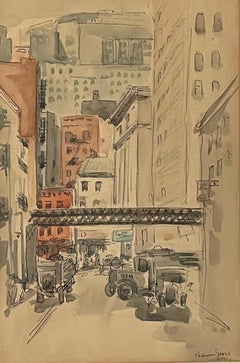
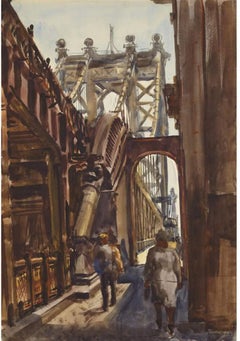
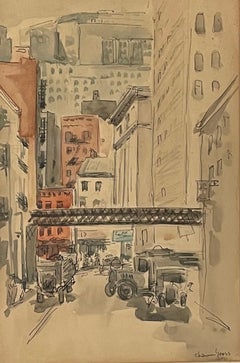
Rare Chaim Gross Watercolor Painting Manhattan Skyscrapers Train NYC WPA Artist
By Chaim Gross
Located in Surfside, FL
This appears to be dated 1927. It came in with a piece dated 1929. A very early, rare work. Framed 22.5 x 18. Image 14.5 x 9 A great New York city street scene with an El train (elev...
Category

Mid-20th Century American Modern Chaim Gross Figurative Drawings and Watercolors

Materials

Paper, Watercolor

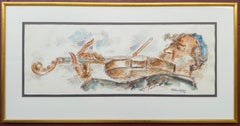
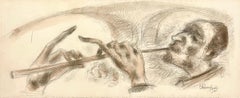
Violin Player Watercolor Ink
By Chaim Gross
Located in Lake Worth Beach, FL
Violin Player 1960/65 work size 11x29, with frame 18x36 inches, artist signed. Chaim Gross (1904 Austria–1991 USA) will always be remembered as one of the foremost American artist : ...
Category

1960s Expressionist Chaim Gross Figurative Drawings and Watercolors

Materials

Ink, Watercolor, Pen, Archival Paper

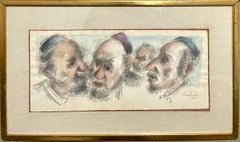
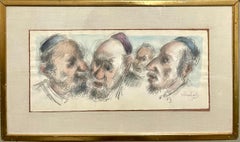
Chaim Gross Mid Century Mod Judaica Jewish Watercolor Painting Rabbis WPA Artist
By Chaim Gross
Located in Surfside, FL
Chaim Gross (American, 1904-1991) Watercolor painting Rabbinical Talmudic Discussion Hand signed 17 x 29 framed, paper 10 x 22 Chaim Gross (March 17, 1904 – May 5, 1991) was an ...
Category

Mid-20th Century American Modern Chaim Gross Figurative Drawings and Watercolors

Materials

Paper, Watercolor

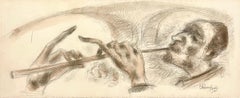
Chaim Gross Judaica Jewish Watercolor Painting Rabbi Klezmer Music WPA Artist
By Chaim Gross
Located in Surfside, FL
Chaim Gross (American, 1904-1991) Watercolor with pencil painting Rabbi Klezmer music concert, flute player. Hand signed framed: 15 X 28.5, paper: 9.5 X 23 Chaim Gross (March 17...
Category

Mid-20th Century American Modern Chaim Gross Figurative Drawings and Watercolors

Materials

Paper, Watercolor

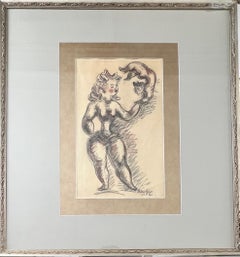
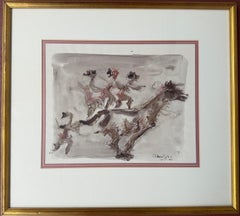
Chain Gross Acrobat with Cat Original Drawing from The Acrobats series, Signed
By Chaim Gross
Located in Plainview, NY
Chaim Gross (American, 1904–1991) Acrobat with Cats, ca. 1950s Original drawing from The Acrobats series, Signed and dated lower right This expressive ink and wash drawing by Chaim...
Category

20th Century American Modern Chaim Gross Figurative Drawings and Watercolors

Materials

Paper

Related Items
Vintage Male Erotica 1951 Figure Study of a by Artist Harold Haydon
By Harold Haydon
Located in Chicago, IL
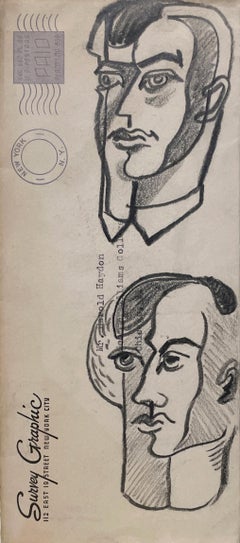
A 1951 graphite on paper, black and white figure study of a nude male, from 1951, by artist Harold Haydon. Artwork size: 19" x 12 1/2". Archivally matted to 24" x 20". Provenance...
Category

1950s American Modern Chaim Gross Figurative Drawings and Watercolors

Materials

Graphite, Paper

Clinton Hill, (Nude #2), 1950, drawing, figure/abstraction
By Clinton Hill
Located in New York, NY
Clinton Hill (1922-2003), created quintessential mid-century images, but figures are unusual in his work. This is from a very early period. From 1949 to 1951 he attended the Brooklyn...
Category

Mid-20th Century American Modern Chaim Gross Figurative Drawings and Watercolors

Materials

Gouache

Estes Park Colorado American Modernist Watercolor Landscape Painting, WPA 1930s
By James Russell Sherman
Located in Denver, CO
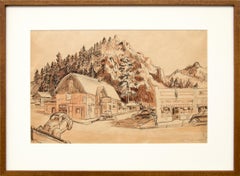
Vintage 1930s watercolor and ink painting of Estes Park, Colorado, by American artist James Russell Sherman (1906-1989). This captivating work features a detailed view of storefronts...
Category

1930s American Modern Chaim Gross Figurative Drawings and Watercolors

Materials

Watercolor

Chapel and houses along a lake, New England Landscape - American School, 19th C
Located in Middletown, NY
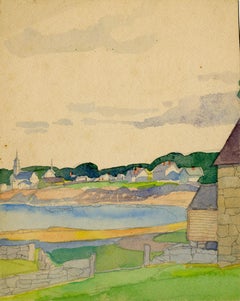
Watercolor and pencil on buff wove watercolor paper, 10 x 8 inches (255 x 203 mm). In good condition with overall minor toning. Some watercolor paint splatters on the verso, contem...
Category

Early 1900s American Modern Chaim Gross Figurative Drawings and Watercolors

Materials

Watercolor, Pencil

Vintage Male Erotica 1951 Graphite on Paper Figure Study by Artist Harold Haydon
By Harold Haydon
Located in Chicago, IL
A 1951 black and white figure study of a nude male, by artist Harold Haydon. Artwork size: 19" x 12 1/2". Archivally matted to 24" x 20". Provenance: Estate of the Artist. Esta...
Category

1950s American Modern Chaim Gross Figurative Drawings and Watercolors

Materials

Graphite, Paper

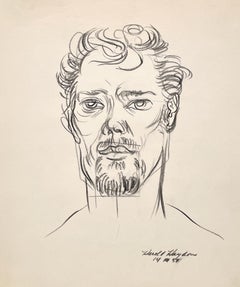
A 1951 Ink on Paper Figure Study of a Conversation by Artist Harold Haydon
By Harold Haydon
Located in Chicago, IL
A ink on paper figure study by artist Harold Haydon depicting a conversation. Artwork size: 12" x 9 1/2". Archivally matted to 14" x 16". Provenance: Estate of the artist. Haro...
Category

1950s American Modern Chaim Gross Figurative Drawings and Watercolors

Materials

Ink, Paper

A Fine 1946 Modern Figure Study of a Handsome Young Male Model Wearing a Suit
By Harold Haydon
Located in Chicago, IL
A Fine 1940s, Mid-Century Modern Academic Figure Study Portrait of a Handsome, Seated Male Model Wearing a Suit by Notable Chicago Artist, Harold Haydon (Am. 1909-1994). An exceptionally well executed early 1940s charcoal...
Category

Mid-20th Century American Modern Chaim Gross Figurative Drawings and Watercolors

Materials

Paper, Charcoal

Saint Patrick s Cathedral from Midtown Manhattan
Located in Middletown, NY
Graphite with watercolor and black crayon on cream wove paper mounted to board, 12 1/2 x 10 1/2 inches (318 x 267 mm), full margins. Signed in pencil on the mount. In excellent condi...
Category

Early 20th Century American Modern Chaim Gross Figurative Drawings and Watercolors

Materials

Crayon, Watercolor, Graphite

"6th Avenue El" American Scene Social Realism Mid-20th Century Cityscape Modern
By Max Arthur Cohn
Located in New York, NY
"6th Avenue El" American Scene Social Realism Mid-20th Century Cityscape Modern Max Arthur Cohn (1903-1998) 6th Avenue Elevated 19 1/4 x 13 3/4 inches Watercolor on paper Signed an...
Category

1920s American Modern Chaim Gross Figurative Drawings and Watercolors

Materials

Paper, Watercolor

1951 Ink on Paper Figure Study of a Conversation by Artist Harold Haydon
By Harold Haydon
Located in Chicago, IL
A 1951 ink on paper figure study by artist Harold Haydon depicting a conversation. Artwork size: 12" x 9 1/2". Archivally matted to 14" x 16". Provenance: Estate of the artist....
Category

1950s American Modern Chaim Gross Figurative Drawings and Watercolors

Materials

Ink, Paper

WPA 1940s Framed Figurative Village Landscape with Figures, Houses Mountains
By Charles Ragland Bunnell
Located in Denver, CO
This evocative watercolor on paper painting, titled The Way War First Comes (1940), was created by noted American artist Charles Ragland Bunnell (1897-1968) during the Depression era...
Category

1940s American Modern Chaim Gross Figurative Drawings and Watercolors

Materials

Watercolor

6th Avenue El at 8th St NYC Cityscape American Scene Social Realism Mid-Century
By Max Arthur Cohn
Located in New York, NY
6th Avenue El at 8th St NYC Cityscape American Scene Social Realism Mid-Century Max Arthur Cohn (1903-1998) 6th Avenue El at 8th Street 13 x 18 inches Watercolor on paper, c. 1930 ...
Category

1930s American Modern Chaim Gross Figurative Drawings and Watercolors

Materials

Paper, Watercolor

Previously Available Items
Circus Performers
By Chaim Gross
Located in Lake Worth Beach, FL
Circus Performers 1960 work size 11x13.5 Chaim Gross (1904 Austria–1991 USA) will always be remembered as one of the foremost American artist : painter, sculptors who practice direct...
Category

1960s Expressionist Chaim Gross Figurative Drawings and Watercolors

Materials

Paper, Ink, Watercolor, Pen

Chaim Gross Judaica Jewish Watercolor Painting Rabbi Klezmer Music WPA Artist
By Chaim Gross
Located in Surfside, FL
Chaim Gross (American, 1904-1991) Watercolor with pencil painting Rabbi Klezmer music concert, flute player. Hand signed framed: 15 X 28.5, paper: 9.5 X 23 Chaim Gross (March 17, 1904 – May 5, 1991) was an American modernist sculptor and educator. Gross was born to a Jewish family in Austrian Galicia, in the village of Wolowa (now known as Mezhgorye, Ukraine), in the Carpathian Mountains. In 1911, his family moved to Kolomyia (which was annexed into the Ukrainian USSR in 1939 and became part of newly independent Ukraine in 1991). When World War I ended, Gross and brother Avrom-Leib went to Budapest to join their older siblings Sarah and Pinkas. Gross applied to and was accepted by the art academy in Budapest and studied under the painter Béla Uitz, though within a year a new regime under Miklos Horthy took over and attempted to expel all Jews and foreigners from the country. After being deported from Hungary, Gross began art studies at the Kunstgewerbeschule in Vienna, Austria shortly before immigrating to the United States in 1921. Gross's studies continued in the United States at the Beaux-Arts Institute of Design, where he studied with Elie Nadelman and others, and at the Art Students League of New York, with Robert Laurent. He also attended the Educational Alliance Art School, studying under Abbo Ostrowsky, at the same time as Moses Soyer and Peter Blume. In 1926 Gross began teaching at The Educational Alliance, and continued teaching there for the next 50 years. Louise Nevelson was among his students at the Alliance (in 1934), during the time she was transitioning from painting to sculpture. In the late 1920s and early 1930s he exhibited at the Salons of America exhibitions at the Anderson Galleries and, beginning in 1928, at the Whitney Studio Club. In 1929, Gross experimented with printmaking, and created an important group of 15 linocuts and lithographs of landscapes, New York City streets and parks, women in interiors, the circus, and vaudeville. The entire suite is now in the collection of the Philadelphia Museum of Art. Gross returned to the medium of printmaking in the 1960s, and produced approximately 200 works in the medium over the next two decades. For more than sixty years Chaim Gross's art has expressed optimistic, affirming themes, Judaica, balancing acrobats, cyclists, trapeze artists and mothers and children convey joyfulness, modernism, exuberance, love, and intimacy. This aspect of his work remained consistent with his Jewish Hasidic heritage, which teaches that only in his childlike happiness is man nearest to God. In March 1932 Gross had his first solo exhibition at Gallery 144 in New York City. For a short time they represented Gross, as well as his friends Milton Avery, Moses Soyer, Ahron Ben-Shmuel and others. Gross was primarily a practitioner of the direct carving method, with the majority of his work being carved from wood. Other direct carvers in early 20th-century American art include William Zorach, Jose de Creeft, and Robert Laurent. Works by Chaim Gross can be found in major museums and private collections throughout the United States, with substantial holdings (27 sculptures) at the Hirshhorn Museum and Sculpture Garden. A key work from this era, now at the Smithsonian American Art Museum, is the 1932 birds-eye maple Acrobatic Performers, which is also only one and one quarter inch thick. In 1933 Gross joined the government's PWAP (Public Works of Art Project), which transitioned into the WPA (Works Progress Administration), which Gross worked for later in the 1930s. Under these programs Gross taught and demonstrated art, made sculptures that were placed in schools and public colleges, made work for Federal buildings including the Federal Trade Commission Building, and for the France Overseas and Finnish Buildings at the 1939 New York World's Fair. Gross was also recognized during these years with a silver medal at the Exposition universelle de 1937 in Paris, and in 1942, with a purchase prize at the Metropolitan Museum of Art's "Artists for Victory" exhibition for his wood sculpture of famed circus performer Lillian Leitzel. In 1949 Gross sketched Chaim Weizmann, Israeli President, at several functions in New York City where Weizmann was speaking, Gross completed the bust in bronze later that year. Gross returned to Israel for three months in 1951 (the second of many trips there in the postwar years) to paint a series of 40 watercolors of life in various cities. This series was exhibited at the Jewish Museum (Manhattan) in 1953. He also did some important Hebrew medals. In the 1950s Gross began to make more bronze sculptures alongside his wood and stone pieces, and in 1957 and 1959 he traveled to Rome to work with famed bronze foundries including the Nicci foundry. At the end of the decade Gross was working primarily in bronze which allowed him to create open forms, large-scale works and of course, multiple casts. Gross's large-scale bronze The Family, donated to New York City in 1991 in honor of Mayor Ed Koch, and installed at the Bleecker Street Park at 11th street, is now a fixture of Greenwich Village. In 1959, a survey of Gross's sculpture in wood, stone, and bronze was featured in the exhibit Four American Expressionists curated by Lloyd Goodrich at the Whitney Museum of American Art, with work by Abraham Rattner, Doris Caesar, and Karl Knaths. In 1976, a selection from Gross's important collection of historic African sculpture, formed since the late 1930s, was exhibited at the Worcester Art Museum in the show The Sculptor's Eye: The African Art Collection of Mr. and Mrs. Chaim Gross. Gross was elected into the National Academy of Design as an Associate member, and became a full Academician in 1981. In 1984, he was inducted into the American Academy of Arts and Letters, with Jacob Lawrence and Lukas Foss. In the fall of 1991, Allen Ginsberg gave an important tribute to Gross at the American Academy of Arts and Letters, which is published in their Proceedings. In 1994, Forum Gallery, which now represents the Chaim Gross estate, held a memorial exhibition featuring a sixty-year survey of Gross's work.In March 1932 Gross had his first solo exhibition at Gallery 144 in New York City. For a short time they represented Gross, as well as his friends Milton Avery, Moses Soyer, Ahron Ben-Shmuel and others. Gross was primarily a practitioner of the direct carving method, with the majority of his work being carved from wood. Other direct carvers in early 20th-century American art include William Zorach, Jose de Creeft, and Robert Laurent. Works by Chaim Gross can be found in major museums and private collections throughout the United States, with substantial holdings (27 sculptures) at the Hirshhorn Museum and Sculpture Garden. A key work from this era, now at the Smithsonian American Art Museum, is the 1932 birds-eye maple Acrobatic Performers, which is also only one and one quarter inch thick. In 1933 Gross joined the government's PWAP (Public Works of Art Project), which transitioned into the WPA (Works Progress Administration), which Gross worked for later in the 1930s. Under these programs Gross taught and demonstrated art, made sculptures that were placed in schools and public colleges, made work for Federal buildings including the Federal Trade Commission Building, and for the France Overseas and Finnish Buildings at the 1939 New York World's Fair. Gross was also recognized during these years with a silver medal at the Exposition universelle de 1937 in Paris, and in 1942, with a purchase prize at the Metropolitan Museum of Art's "Artists for Victory" exhibition for his wood sculpture of famed circus performer Lillian Leitzel. In 1949 Gross sketched Chaim Weizmann, President of Israel, at several functions in New York City where Weizmann was speaking, Gross completed the bust in bronze later that year. Gross returned to Israel for three months in 1951 (the second of many trips there in the postwar years) to paint a series of 40 watercolors of life in various cities. This series was exhibited at the Jewish Museum (Manhattan) in 1953. In the 1950s Gross began to make more bronze sculptures alongside his wood and stone pieces, and in 1957 and 1959 he traveled to Rome to work with famed bronze foundries including the Nicci foundry. At the end of the decade Gross was working primarily in bronze which allowed him to create open forms, large-scale works and of course, multiple casts. Gross's large-scale bronze The Family, donated to New York City in 1991 in honor of Mayor Ed Koch, and installed at the Bleecker Street Park at 11th street, is now a fixture of Greenwich Village. In 1959, a survey of Gross's sculpture in wood, stone, and bronze was featured in the exhibit Four American Expressionists curated by Lloyd Goodrich at the Whitney Museum of American Art, with work by Abraham Rattner, Doris Caesar, and Karl Knaths. In 1976, a selection from Gross's important collection of historic African sculpture, formed since the late 1930s, was exhibited at the Worcester Art Museum in the show The Sculptor's Eye: The African Art Collection of Mr. and Mrs. Chaim Gross. Gross was elected into the National Academy of Design as an Associate member, and became a full Academician in 1981. In 1984, he was inducted into the American Academy of Arts and Letters, with Jacob Lawrence and Lukas Foss. In the fall of 1991, Allen Ginsberg gave an important tribute to Gross at the American Academy of Arts and Letters, which is published in their Proceedings. In 1994, Forum Gallery, which now represents the Chaim Gross estate, held a memorial exhibition featuring a sixty-year survey of Gross's work. Gross was a professor of printmaking and sculpture at both the Educational Alliance and the New School for Social Research in New York City, as well as at the Brooklyn Museum Art School, the MoMA art school, the Art Student's League and the New Art School (which Gross ran briefly with Alexander Dobkin...
Category

Mid-20th Century American Modern Chaim Gross Figurative Drawings and Watercolors

Materials

Paper, Watercolor

Chaim Gross Mid Century Mod Judaica Jewish Watercolor Painting Rabbis WPA Artist
By Chaim Gross
Located in Surfside, FL
Chaim Gross (American, 1904-1991) Watercolor painting Rabbinical Talmudic Discussion Hand signed 17 x 29 framed, paper 10 x 22 Chaim Gross (March 17, 1904 – May 5, 1991) was an American modernist sculptor and educator. Gross was born to a Jewish family in Austrian Galicia, in the village of Wolowa (now known as Mezhgorye, Ukraine), in the Carpathian Mountains. In 1911, his family moved to Kolomyia (which was annexed into the Ukrainian USSR in 1939 and became part of newly independent Ukraine in 1991). When World War I ended, Gross and brother Avrom-Leib went to Budapest to join their older siblings Sarah and Pinkas. Gross applied to and was accepted by the art academy in Budapest and studied under the painter Béla Uitz, though within a year a new regime under Miklos Horthy took over and attempted to expel all Jews and foreigners from the country. After being deported from Hungary, Gross began art studies at the Kunstgewerbeschule in Vienna, Austria shortly before immigrating to the United States in 1921. Gross's studies continued in the United States at the Beaux-Arts Institute of Design, where he studied with Elie Nadelman and others, and at the Art Students League of New York, with Robert Laurent. He also attended the Educational Alliance Art School, studying under Abbo Ostrowsky, at the same time as Moses Soyer and Peter Blume. In 1926 Gross began teaching at The Educational Alliance, and continued teaching there for the next 50 years. Louise Nevelson was among his students at the Alliance (in 1934), during the time she was transitioning from painting to sculpture. In the late 1920s and early 1930s he exhibited at the Salons of America exhibitions at the Anderson Galleries and, beginning in 1928, at the Whitney Studio Club. In 1929, Gross experimented with printmaking, and created an important group of 15 linocuts and lithographs of landscapes, New York City streets and parks, women in interiors, the circus, and vaudeville. The entire suite is now in the collection of the Philadelphia Museum of Art. Gross returned to the medium of printmaking in the 1960s, and produced approximately 200 works in the medium over the next two decades. For more than sixty years Chaim Gross's art has expressed optimistic, affirming themes, Judaica, balancing acrobats, cyclists, trapeze artists and mothers and children convey joyfulness, modernism, exuberance, love, and intimacy. This aspect of his work remained consistent with his Jewish Hasidic heritage, which teaches that only in his childlike happiness is man nearest to God. In March 1932 Gross had his first solo exhibition at Gallery 144 in New York City. For a short time they represented Gross, as well as his friends Milton Avery, Moses Soyer, Ahron Ben-Shmuel and others. Gross was primarily a practitioner of the direct carving method, with the majority of his work being carved from wood. Other direct carvers in early 20th-century American art include William Zorach, Jose de Creeft, and Robert Laurent. Works by Chaim Gross can be found in major museums and private collections throughout the United States, with substantial holdings (27 sculptures) at the Hirshhorn Museum and Sculpture Garden. A key work from this era, now at the Smithsonian American Art Museum, is the 1932 birds-eye maple Acrobatic Performers, which is also only one and one quarter inch thick. In 1933 Gross joined the government's PWAP (Public Works of Art Project), which transitioned into the WPA (Works Progress Administration), which Gross worked for later in the 1930s. Under these programs Gross taught and demonstrated art, made sculptures that were placed in schools and public colleges, made work for Federal buildings including the Federal Trade Commission Building, and for the France Overseas and Finnish Buildings at the 1939 New York World's Fair. Gross was also recognized during these years with a silver medal at the Exposition universelle de 1937 in Paris, and in 1942, with a purchase prize at the Metropolitan Museum of Art's "Artists for Victory" exhibition for his wood sculpture of famed circus performer Lillian Leitzel. In 1949 Gross sketched Chaim Weizmann, Israeli President, at several functions in New York City where Weizmann was speaking, Gross completed the bust in bronze later that year. Gross returned to Israel for three months in 1951 (the second of many trips there in the postwar years) to paint a series of 40 watercolors of life in various cities. This series was exhibited at the Jewish Museum (Manhattan) in 1953. He also did some important Hebrew medals. In the 1950s Gross began to make more bronze sculptures alongside his wood and stone pieces, and in 1957 and 1959 he traveled to Rome to work with famed bronze foundries including the Nicci foundry. At the end of the decade Gross was working primarily in bronze which allowed him to create open forms, large-scale works and of course, multiple casts. Gross's large-scale bronze The Family, donated to New York City in 1991 in honor of Mayor Ed Koch, and installed at the Bleecker Street Park at 11th street, is now a fixture of Greenwich Village. In 1959, a survey of Gross's sculpture in wood, stone, and bronze was featured in the exhibit Four American Expressionists curated by Lloyd Goodrich at the Whitney Museum of American Art, with work by Abraham Rattner, Doris Caesar, and Karl Knaths. In 1976, a selection from Gross's important collection of historic African sculpture, formed since the late 1930s, was exhibited at the Worcester Art Museum in the show The Sculptor's Eye: The African Art Collection of Mr. and Mrs. Chaim Gross. Gross was elected into the National Academy of Design as an Associate member, and became a full Academician in 1981. In 1984, he was inducted into the American Academy of Arts and Letters, with Jacob Lawrence and Lukas Foss. In the fall of 1991, Allen Ginsberg gave an important tribute to Gross at the American Academy of Arts and Letters, which is published in their Proceedings. In 1994, Forum Gallery, which now represents the Chaim Gross estate, held a memorial exhibition featuring a sixty-year survey of Gross's work.In March 1932 Gross had his first solo exhibition at Gallery 144 in New York City. For a short time they represented Gross, as well as his friends Milton Avery, Moses Soyer, Ahron Ben-Shmuel and others. Gross was primarily a practitioner of the direct carving method, with the majority of his work being carved from wood. Other direct carvers in early 20th-century American art include William Zorach, Jose de Creeft, and Robert Laurent. Works by Chaim Gross can be found in major museums and private collections throughout the United States, with substantial holdings (27 sculptures) at the Hirshhorn Museum and Sculpture Garden. A key work from this era, now at the Smithsonian American Art Museum, is the 1932 birds-eye maple Acrobatic Performers, which is also only one and one quarter inch thick. In 1933 Gross joined the government's PWAP (Public Works of Art Project), which transitioned into the WPA (Works Progress Administration), which Gross worked for later in the 1930s. Under these programs Gross taught and demonstrated art, made sculptures that were placed in schools and public colleges, made work for Federal buildings including the Federal Trade Commission Building, and for the France Overseas and Finnish Buildings at the 1939 New York World's Fair. Gross was also recognized during these years with a silver medal at the Exposition universelle de 1937 in Paris, and in 1942, with a purchase prize at the Metropolitan Museum of Art's "Artists for Victory" exhibition for his wood sculpture of famed circus performer Lillian Leitzel. In 1949 Gross sketched Chaim Weizmann, President of Israel, at several functions in New York City where Weizmann was speaking, Gross completed the bust in bronze later that year. Gross returned to Israel for three months in 1951 (the second of many trips there in the postwar years) to paint a series of 40 watercolors of life in various cities. This series was exhibited at the Jewish Museum (Manhattan) in 1953. In the 1950s Gross began to make more bronze sculptures alongside his wood and stone pieces, and in 1957 and 1959 he traveled to Rome to work with famed bronze foundries including the Nicci foundry. At the end of the decade Gross was working primarily in bronze which allowed him to create open forms, large-scale works and of course, multiple casts. Gross's large-scale bronze The Family, donated to New York City in 1991 in honor of Mayor Ed Koch, and installed at the Bleecker Street Park at 11th street, is now a fixture of Greenwich Village. In 1959, a survey of Gross's sculpture in wood, stone, and bronze was featured in the exhibit Four American Expressionists curated by Lloyd Goodrich at the Whitney Museum of American Art, with work by Abraham Rattner, Doris Caesar, and Karl Knaths. In 1976, a selection from Gross's important collection of historic African sculpture, formed since the late 1930s, was exhibited at the Worcester Art Museum in the show The Sculptor's Eye: The African Art Collection of Mr. and Mrs. Chaim Gross. Gross was elected into the National Academy of Design as an Associate member, and became a full Academician in 1981. In 1984, he was inducted into the American Academy of Arts and Letters, with Jacob Lawrence and Lukas Foss. In the fall of 1991, Allen Ginsberg gave an important tribute to Gross at the American Academy of Arts and Letters, which is published in their Proceedings. In 1994, Forum Gallery, which now represents the Chaim Gross estate, held a memorial exhibition featuring a sixty-year survey of Gross's work. Gross was a professor of printmaking and sculpture at both the Educational Alliance and the New School for Social Research in New York City, as well as at the Brooklyn Museum Art School, the MoMA art school, the Art Student's League and the New Art School (which Gross ran briefly with Alexander Dobkin...
Category

Mid-20th Century American Modern Chaim Gross Figurative Drawings and Watercolors

Materials

Paper, Watercolor

Rare Chaim Gross Watercolor Painting Manhattan Skyscrapers Train NYC WPA Artist
By Chaim Gross
Located in Surfside, FL
This appears to be dated 1927. It came in with a piece dated 1929. A very early, rare work. Framed 22.5 x 18. Image 14.5 x 9 A great New York city street scene with an El train (elevated subway line) and architectural renderings of buildings. This is a wonderful piece by one of America's most treasured artists, Chaim Gross. Throughout his lifetime Gross has gone through tragedy and a real test of faith however, he has the unique ability to focus and direct his expression to the most joyful and beautiful works of art, such as the present lot. For more than sixty years Chaim Gross's art has expressed optimistic, affirming themes. His acrobats, cyclists, and mothers and children convey joyfulness, exuberance, love, and intimacy. This aspect of his work remained consistent with his Hasidic heritage, which teaches that "only in his childlike happiness is man nearest to God." He often used his creative abilities to explore and experiment with media. In his artwork he retains an optimistic philosophy, even when facing somber issues such as war, depression, and the Holocaust. Chaim Gross (March 17, 1904 – May 5, 1991) was an American sculptor and educator. Gross was born to a Jewish family in Austrian Galicia, in the village of Wolowa (now known as Mezhgorye, Ukraine), in the Carpathian Mountains. In 1911, his family moved to Kolomyia (which was annexed into the Ukrainian USSR in 1939 and became part of newly independent Ukraine in 1991). When World War I ended, Gross and brother Avrom-Leib went to Budapest to join their older siblings Sarah and Pinkas. Gross applied to and was accepted by the art academy in Budapest and studied under the painter Béla Uitz, though within a year a new regime under Miklos Horthy took over and attempted to expel all Jews and foreigners from the country. After being deported from Hungary, Gross began art studies at the Kunstgewerbeschule in Vienna, Austria shortly before immigrating to the United States in 1921. Gross's studies continued in the United States at the Beaux-Arts Institute of Design, where he studied with Elie Nadelman and others, and at the Art Students League of New York, with Robert Laurent. He also attended the Educational Alliance Art School, studying under Abbo Ostrowsky, at the same time as Moses Soyer and Peter Blume. In 1926 Gross began teaching at The Educational Alliance, and continued teaching there for the next 50 years. Louise Nevelson was among his students at the Alliance (in 1934), during the time she was transitioning from painting to sculpture. In the late 1920s and early 1930s he exhibited at the Salons of America exhibitions at the Anderson Galleries and, beginning in 1928, at the Whitney Studio Club. In 1929, Gross experimented with printmaking, and created an important group of 15 linocuts and lithographs of landscapes, New York City streets and parks, women in interiors, the circus, and vaudeville. The entire suite is now in the collection of the Philadelphia Museum of Art. Gross returned to the medium of printmaking in the 1960s, and produced approximately 200 works in the medium over the next two decades. In March 1932 Gross had his first solo exhibition at Gallery 144 in New York City. For a short time they represented Gross, as well as his friends Milton Avery, Moses Soyer, Ahron Ben-Shmuel and others. Gross was primarily a practitioner of the direct carving method, with the majority of his work being carved from wood. Other direct carvers in early 20th-century American art include William Zorach, Jose de Creeft, and Robert Laurent. Works by Chaim Gross can be found in major museums and private collections throughout the United States, with substantial holdings (27 sculptures) at the Hirshhorn Museum and Sculpture Garden. A key work from this era, now at the Smithsonian American Art Museum, is the 1932 birds-eye maple Acrobatic Performers, which is also only one and one quarter inch thick. In 1933 Gross joined the government's PWAP (Public Works of Art Project), which transitioned into the WPA (Works Progress Administration), which Gross worked for later in the 1930s. Under these programs Gross taught and demonstrated art, made sculptures that were placed in schools and public colleges, made work for Federal buildings including the Federal Trade Commission Building, and for the France Overseas and Finnish Buildings at the 1939 New York World's Fair. Gross was also recognized during these years with a silver medal at the Exposition universelle de 1937 in Paris, and in 1942, with a purchase prize at the Metropolitan Museum of Art's "Artists for Victory" exhibition for his wood sculpture of famed circus performer Lillian Leitzel. In 1949 Gross sketched Chaim Weizmann, President of Israel, at several functions in New York City where Weizmann was speaking, Gross completed the bust in bronze later that year. Gross returned to Israel for three months in 1951 (the second of many trips there in the postwar years) to paint a series of 40 watercolors of life in various cities. This series was exhibited at the Jewish Museum (Manhattan) in 1953. In the 1950s Gross began to make more bronze sculptures alongside his wood and stone pieces, and in 1957 and 1959 he traveled to Rome to work with famed bronze foundries including the Nicci foundry. At the end of the decade Gross was working primarily in bronze which allowed him to create open forms, large-scale works and of course, multiple casts. Gross's large-scale bronze The Family, donated to New York City in 1991 in honor of Mayor Ed Koch, and installed at the Bleecker Street Park at 11th street, is now a fixture of Greenwich Village. In 1959, a survey of Gross's sculpture in wood, stone, and bronze was featured in the exhibit Four American Expressionists curated by Lloyd Goodrich at the Whitney Museum of American Art, with work by Abraham Rattner, Doris Caesar, and Karl Knaths. In 1976, a selection from Gross's important collection of historic African sculpture, formed since the late 1930s, was exhibited at the Worcester Art Museum in the show The Sculptor's Eye: The African Art Collection of Mr. and Mrs. Chaim Gross. Gross was elected into the National Academy of Design as an Associate member, and became a full Academician in 1981. In 1984, he was inducted into the American Academy of Arts and Letters, with Jacob Lawrence and Lukas Foss. In the fall of 1991, Allen Ginsberg gave an important tribute to Gross at the American Academy of Arts and Letters, which is published in their Proceedings. In 1994, Forum Gallery, which now represents the Chaim Gross estate, held a memorial exhibition featuring a sixty-year survey of Gross's work. Gross was a professor of printmaking and sculpture at both the Educational Alliance and the New School for Social Research in New York City, as well as at the Brooklyn Museum Art School, the MoMA art school, the Art Student's League and the New Art School (which Gross ran briefly with Alexander Dobkin...
Category

Mid-20th Century American Modern Chaim Gross Figurative Drawings and Watercolors

Materials

Paper, Watercolor

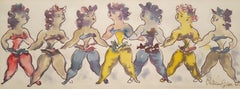
Seven Dancing Acrobats /// Modern Art Chaim Gross Watercolor Figurative Drawing
By Chaim Gross
Located in Saint Augustine, FL
Artist: Chaim Gross (American, 1904-1991) Title: "Seven Dancing Acrobats" *Signed and dated by Gross lower right Year: 1927 Medium: Original Pencil and Watercolor Painting on cream wove paper Framing: Recently framed in a gold and black moulding and fabric matting from Holland Framed size: 12.5" x 21.5" Sheet size: 5.63" x 14.88" Image size: 4.75" x 14" Condition: Some light UV staining to sheet. In otherwise very good condition Notes: Provenance: private collection - Boca Raton, FL. Biography: Chaim Gross was one of the most important American sculptors of the 20th century. Along with other noted sculptors William Zorach and Jose de Creeft, Gross was primarily a practitioner of the direct carving method, and a majority of his work was carved from wood. Born in Ukraine in 1904, Gross studied at the art academy in Budapest under painter Béla Uitz, followed by art studies at the Kunstgewerbeschule in Vienna. He immigrated to the United States with two of his brothers in 1921 and continued his studies at the Beaux-Arts Institute of Design with Elie Nadelman and others, and the Art Students League with sculptor and direct carver Robert Laurent. He also attended the Educational Alliance Art School at the same time as Peter Blume, Adolph Gottlieb and Moses and Raphael Soyer. Thereafter, Gross began an illustrious career that included important public commissions via his work for the Works Progress Administration and solo and group shows at prestigious galleries and museums such as the Whitney and the Smithsonian. Gross was also recognized with a silver medal at the Exposition Universelle de 1937 in Paris and 1942 with a purchase prize at the Metropolitan Museum of Art’s Artists for Victory exhibition for his wood sculpture of famed circus performer Lillian Leitzel. Gross also had a long career as a professor of printmaking and sculpture at various institutions including the The New School for Social Research, Art Students League and New Art School (which Gross ran briefly with fellow artists Alexander Dobkin...
Category

1920s Modern Chaim Gross Figurative Drawings and Watercolors

Materials

Watercolor, Pencil, Graphite

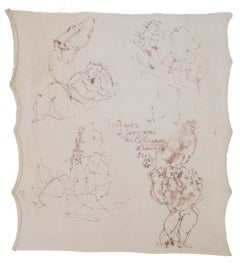
Figural Study
By Chaim Gross
Located in New York, NY
Figural Study, ca. 1949-1959, by Chaim Gross (1902-1991) Ink on fabric 18 x 16 ¼ inches (45.72 x 41.275 cm) 25 x 23 ⅝ inches (63.5 x 60.0075 cm) Inscribed...
Category

Mid-20th Century Modern Chaim Gross Figurative Drawings and Watercolors

Materials

Ink

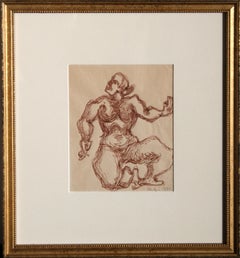
Study for Sculpture
By Chaim Gross
Located in Long Island City, NY
Artist: Chaim Gross, Austrian (1904 - 1991) Title: Study for Sculpture Year: 1934 Medium: Ink on Paper, signed Size: 9.5 in. x 7 in. (24.13 cm x 17.78 cm) Frame Size: 16 x 14 inches
Category

1930s American Modern Chaim Gross Figurative Drawings and Watercolors

Materials

Ink

Judaica Lithograph, Accordion Playing Klezmer Musician Jewish Shtetl Rabbi
By Chaim Gross
Located in Surfside, FL
Gestural drawing of a Klezmer musician playing an Accordion. This is a wonderful lithograph by one of America's most treasured artists, Chaim Gross....
Category

Mid-20th Century American Modern Chaim Gross Figurative Drawings and Watercolors

Materials

Paper, Lithograph

Mother Playing, Watercolor by Chaim Gross
By Chaim Gross
Located in Long Island City, NY
Artist: Chaim Gross, Austrian (1904 - 1991) Title: Mother Playing Medium: Watercolor on Paper, signed l.r. Size: 11 x 17.75 in. (27.94 x 45.09 cm) Frame Size: 18.5 x 25 inches
Category

1960s Modern Chaim Gross Figurative Drawings and Watercolors

Materials

Watercolor

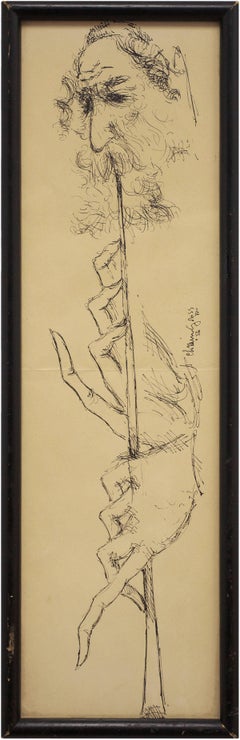
Judaica Drawing, Flute Playing Klezmer Musician Rabbi
By Chaim Gross
Located in Surfside, FL
Gestural drawing of a Klezmer musician playing a flute. This is a wonderful drawing by one of America's most treasured artists, Chaim Gross. Through...
Category

Mid-20th Century Chaim Gross Figurative Drawings and Watercolors

Materials

Paper, Ink

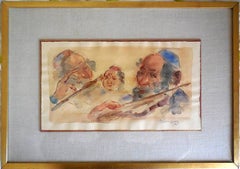
Jewish Klezmer Musicians, Judaica watercolor
By Chaim Gross
Located in Surfside, FL
This depicts shtetl Klezmer musicians, a violinst, flautist and a boy. A lovely piece of history. The work without the original frame measures 14.25X...
Category

Chaim Gross Figurative Drawings and Watercolors

Chaim Gross figurative drawings and watercolors for sale on 1stDibs.

Find a wide variety of authentic Chaim Gross figurative drawings and watercolors available for sale on 1stDibs. You can also browse by medium to find art by Chaim Gross in paint, watercolor, paper and more. Much of the original work by this artist or collective was created during the 20th century and is mostly associated with the modern style. Not every interior allows for large Chaim Gross figurative drawings and watercolors, so small editions measuring 4 inches across are available. Customers who are interested in this artist might also find the work of Abraham Walkowitz, Raphael Soyer, and Harold Haydon. Chaim Gross figurative drawings and watercolors prices can differ depending upon medium, time period and other attributes. On 1stDibs, the price for these items starts at $1,200 and tops out at $12,500, while the average work can sell for $1,550.

Still Thinking About These?

All Recently Viewed