Charles Jervas Art
Irish, 1670-1739
Charles Jervas was born in Dublin in 1675 who later lived in England. After moving to England, Jervas became an apprentice to the painter Sir Godfrey Kneller. He later studied drawing in Rome and then returned (c. 1709) to England. Succeeding Kneller, he became court painter to the English kings George I and George II. His home became a centre for literary figures, among them Alexander Pope and Jonathan Swift, whose portraits Jervas painted, in addition to that of George II (1728). He produced a translation of Miguel de Cervantes’s Don Quixote (published posthumously, with his surname spelled Jarvis, in 1742).to
2
Overall Width
to
Overall Height
to
2
2
1
1
2
1
1
1
1
1
1
2
2
2
2
2
10,222
2,785
2,504
1,384
2
2
Artist: Charles Jervas
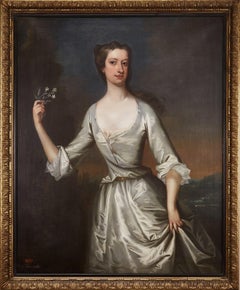
English 18th century portrait of Henrietta Pelham-Holles, Duchess of Newcastle.
By Charles Jervas
Located in Bath, Somerset
Portrait of Henrietta Pelham-Holles (née Godolphin) (1701-1776), Duchess of Newcastle, standing in a wooded landscape with a river beyond, three-quarter length wearing an ivory silk ...
Category
1720s Old Masters Charles Jervas Art
Materials
Canvas, Oil
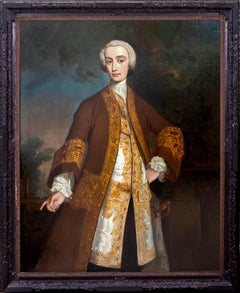
Portrait Of 1st Baron Hawkstone, Sir Rowland Hill, Tory MP for Lichfield
By Charles Jervas
Located in Blackwater, GB
Portrait Of 1st Baron Hawkstone, Sir Rowland Hill, Tory MP for Lichfield (1705-1783)
by Charles JERVAS (1675-1739)
Large 18th Century portrait of Baron Hawkstone, Sir Rowland Hill,...
Category
18th Century Charles Jervas Art
Materials
Canvas, Oil
Related Items
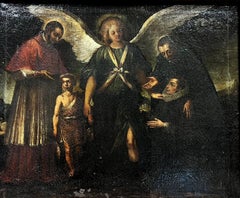
Fine Italian Old Master Oil Painting Angel
Saints Appearing to Figures
Located in Cirencester, Gloucestershire
Artist/ School: Italian Old Master, 18th century
Title: Angel and Saints appearing to figures, one dressed in a white ruff collar.
Medium: oil on canvas...
Category
Early 18th Century Old Masters Charles Jervas Art
Materials
Canvas, Oil

$5,483 Sale Price
20% Off
H 22 in W 26 in
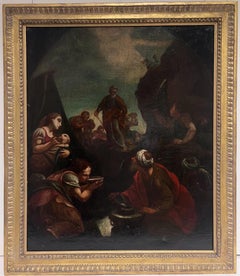
17th Century Italian Old Master Oil Painting Moses Striking Water from the Rock
By Pier (Pietro) Dandini
Located in Cirencester, Gloucestershire
Moses Striking Water from the Rock;
Circle of Pietro Dandini, Italian 1646-1712
Italian School, late 17th century
oil on canvas, framed
framed: 3...
Category
Early 18th Century Old Masters Charles Jervas Art
Materials
Canvas, Oil
$6,854 Sale Price
20% Off
H 32 in W 28 in D 1 in
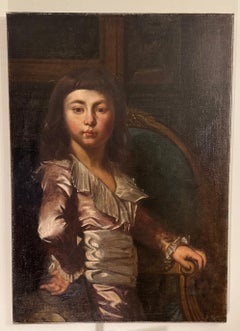
19th century English Portrait of a Young boy in a Cavalier costume
Located in Woodbury, CT
This elegant English 19th-century portrait of a young boy dressed in a Cavalier costume, painted circa 1860, is a striking example of Victorian portraiture that seamlessly combines h...
Category
1860s Old Masters Charles Jervas Art
Materials
Canvas, Oil
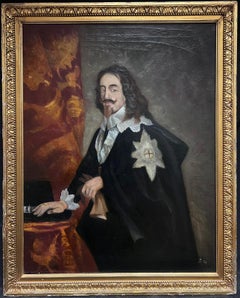
King Charles 1st Antique Oil Painting Portrait of Famous British Monarch
Located in Cirencester, Gloucestershire
King Charles I
British artist, early 20th century
signed with initials
oil on canvas, framed
framed: 36 x 29 inches
canvas: 32 x 26 inches
provenance: p...
Category
Early 1900s Old Masters Charles Jervas Art
Materials
Oil, Canvas
$1,535 Sale Price
20% Off
H 36 in W 29 in
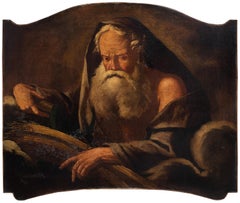
Antique Italian painter - 18th century figure painting
Located in Varmo, IT
Italian painter (18th century) - Chrono.
90.5 x 106 cm.
Antique oil painting on canvas, without frame (not signed).
Condition report: Lined canvas. Good state of conservation of t...
Category
Early 18th Century Old Masters Charles Jervas Art
Materials
Canvas, Oil
$4,759 Sale Price
20% Off
H 35.63 in W 41.74 in
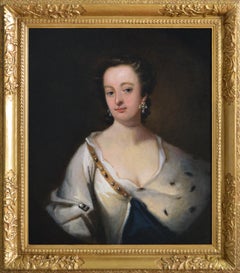
18th Century portrait oil painting of a lady in an ermine trimmed cloak
By Sir Godfrey Kneller
Located in Nr Broadway, Worcestershire
Circle of Sir Godfrey Kneller
Dutch, (1646-1723)
Portrait of a Lady in an Ermine Trimmed Cloak
Oil on canvas
Image size: 26.5 inches x 22.5 inches
Size including frame: 33.5 inches x 29.5 inches
A well-executed half-length portrait of a lady painted in a feigned oval, circle of Sir Godfrey Kneller. The use of a feigned oval was a device used in portraiture to give a sense of depth and add an intimacy to the painting, drawing your attention to the sitter.
The subject, posed without her wig in the undressed fashion of the day, wears a blue ermine trimmed blue cloak over a white silk robe...
Category
18th Century Old Masters Charles Jervas Art
Materials
Canvas, Oil
$7,104
H 33.5 in W 29.5 in D 2.25 in
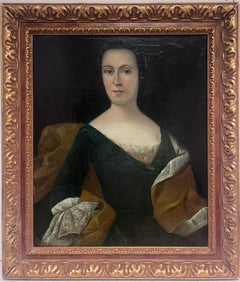
Large 18th Century European Oil Painting Portrait of Noble Lady Lace Collars
Located in Cirencester, Gloucestershire
Portrait of a Noble Lady
European School, 18th century
oil on canvas, framed
framed: 37.5 inches
canvas: 30 x 24.5 inches
provenance: private collection, France
condition: very good ...
Category
18th Century Old Masters Charles Jervas Art
Materials
Oil, Canvas
$2,138 Sale Price
20% Off
H 37.5 in W 32 in
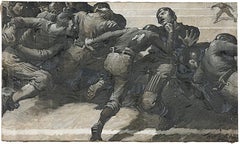
Old Time Football in the 1920s - Football 1920s - Classic Football
By Walt Louderback
Located in Miami, FL
You Got to be a Football Hero to Get Along with a Beautiful Girl. Masterfully composed and dynamic illustration that show a player getting punched in the jaw. During this period, there were no face...
Category
1920s Academic Charles Jervas Art
Materials
Canvas, Oil
$10,000
H 18.8 in W 32 in
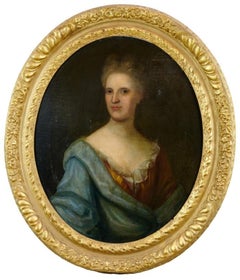
Fine 18th Century English Aristocratic Portrait of a Lady Oval Canvas Gilt Frame
Located in Cirencester, Gloucestershire
Artist/ School: English School, circa 1740's
Title: Portrait of a Lady, traditionally identified as 'Anne of Chesterfield'.
Medium: oil painting on canvas, framed
Size: painting: ...
Category
Early 18th Century Old Masters Charles Jervas Art
Materials
Canvas, Oil
$3,169 Sale Price
20% Off
H 36 in W 31 in D 1 in
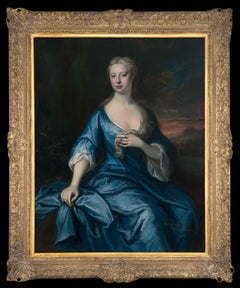
Portrait of Mary Hooper née Davie, Blue Dress, Seated in a Parkland, Provenance
By Jonathan Richardson the Elder
Located in London, GB
Portrait of Mary Hooper (née Davie) in a Blue Dress & Seated in a Parkland c. 1715–1725
Jonathan Richardson the Elder (1667–1745)
This portrait, presented by Titan Fine Art, is of p...
Category
18th Century Old Masters Charles Jervas Art
Materials
Canvas, Oil
$21,729
H 60.24 in W 49.61 in D 3.94 in
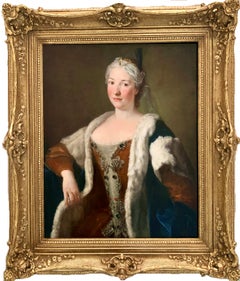
18th century French Old Master Portrait of a woman in oriental costume
Located in Aartselaar, BE
French 18th century old master portrait of a majestic lady dressed "à la Turque"
The sitter at the viewer with a kind and enigmatic smile and twinkling eyes. She looks elegant and kind, yet also has an intelligent and determined aura, reflecting the character of someone who is in charge of her own life and destiny.
De Silvestre paid great attention to her spectacular outfit, which is striking in its portrayal of the sumptuous fabrics and their decorative richness. She is wearing a luxurious royal blue robe à la...
Category
1740s Old Masters Charles Jervas Art
Materials
Canvas, Oil
$22,011
H 31.89 in W 25.6 in D 0.4 in
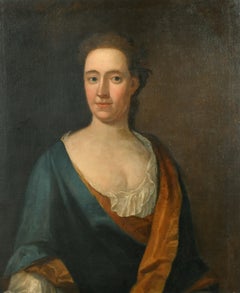
Fine 18th Century British Portrait of an Aristocratic Lady, Large oil painting
Located in Cirencester, Gloucestershire
Circle of Thomas Hudson (1701-1779) British.
18th Century Bust Portrait of a Lady,
Oil on Canvas, Inscribed on a label verso,
canvas: 30" x 25" (76.2 x 63.5cm).
frame: 30 x 25 in...
Category
Mid-18th Century Old Masters Charles Jervas Art
Materials
Canvas, Oil
$2,736 Sale Price
20% Off
H 35 in W 30 in D 1 in
Previously Available Items
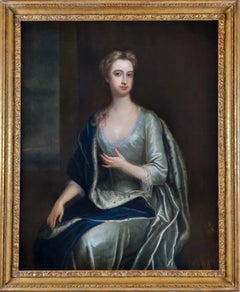
Portrait of Frances, Viscountess Scudamore in a Silver Dress
Blue Cloak
By Charles Jervas
Located in London, GB
Portrait of Frances, Viscountess Scudamore in a Silver Dress and Blue Cloak c.1709-1719
By Charles Jervas (1675-1739)
This elegant and graceful portrait, presented by Titan Fine Ar...
Category
18th Century Old Masters Charles Jervas Art
Materials
Canvas, Oil
H 58.27 in W 48.04 in D 3.15 in
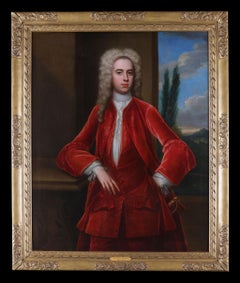
Portrait of a Man possibly Arthur Viscount Irwin, Temple Newsam Oil on canvas
By Charles Jervas
Located in St. Albans, GB
Charles Jervas
Possibly Arthur, 6th Viscount Irwin (Temple Newsam)
Oil on Canvas
Picture Size: 50 x 40"
Outside Frame Size: 58 x 48"
1675 – 1739
Charles Jervas, who was born in Cl...
Category
Early 1700s English School Charles Jervas Art
Materials
Oil
Portrait of a Lady possibly Frances Thynne, Lady Worsley 1673-1750 Oil on canvas
By Charles Jervas
Located in St. Albans, GB
Charles Jervas
Possibly Frances Thynne, Lady Worsley 1673-1750
Oil on Canvas
Picture Size: 50 x 40"
Outside Frame Size: 58 x 48"
1675 – 1739
Charles Jervas, who was born in Clonli...
Category
Early 1700s English School Charles Jervas Art
Materials
Oil
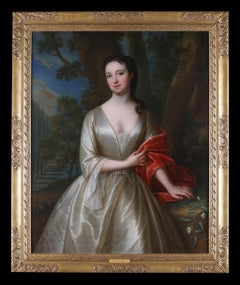
Portrait of Hannah Clements as a Shepherdess c.1730; by Charles Jervas
By Charles Jervas
Located in London, GB
This elegant and graceful portrait is said to represent Hannah Clements (1710-1781) nee Gore. Painted by Charles Jervas - who was in 1723 appointed to the post of King’s Painter by George I and in 1725 to George II - it is one of his finest and most impressive examples. Jervas was considered the supreme practitioner of female portraiture in the 1720s and 1730s, and was the foremost successor to Sir Godfrey Kneller after the latter's death in 1723. Presented in an outstanding carved and gilded antique frame, a remarkable work of art in itself.
The sitter is captured in a moment of relaxation in a country landscape. Jervas continued the idiom of Sir Godfrey Kneller, his master, whilst introducing a new ease and suggestion of informality into his portraits. By depicting the sitter within the landscape with sheep Arcadian simplicity is being suggested. This draws from the tradition of pastoral literature and by the early 17th century was already popular in art; all educated individuals were familiar with Latin and Greek pastoral poetry. The mythological world of Arcady was an idyll that the ladies and gentlemen of the Court could inhabit in the guise of shepherds and shepherdesses. The pastoral tradition in literature and plays had been embraced by an aristocratic class since classical times. Life in the country was perceived as peaceful, contemplative and free of worry of hardships, a time to pursue pleasure. To be painted in such a manner created a tangible expression of power and wealth. When the portrait was painted the pastoral was so ingrained that the mere inclusion of such elements suggested Arcadia to the viewer. And this is further emphasised by painting the light to reflect sunset and the suggestion of tranquillity. Of course, the sitter did not live in such a place and this masterful painting was a flight from chaos to a tranquil world.
Hannah Catherine Clements (nee Gore) (1710-1781) was the daughter of Rev. William Gore (and granddaughter of Sir William Gore, 3rd Baronet), and Honora Prittie. She married Nathaniel Clements (1705-1777), an important Irish politician and financial figure, in January 1730. Nathaniel became the main financial manager of the British and Irish Government in Ireland during the period, and was de facto Minister for Finance from 1740 to 1777. He had an extensive property portfolio, including Abbotstown, County Dublin, estates in County Leitrim and County Cavan and was developer of property in Dublin, including part of Henrietta Street where he lived at No. 7 from 1734 to 1757 in what was described as “Parisian luxury”. The couple had six children.
Charles Jervas was born in Clonliske in Kings Country, Ireland in 1675. He received his artistic training in Kneller’s studio and was later, by the 1690’s, Kneller’s assistant. According to Vertue Jervas made small copies of the Raphael cartoons, then at Hampton Court, in about 1698 and sold them to Dr George Clarke of All Souls, Oxford who lent him £50 to embark on the then essential ‘grand tour’ in 1699. Taking in Paris and settling in Rome by 1703, he furthered his artistic training and became a voracious copyist of the old masters. George Vertue noted that he was known as “Carlo Jervasi” and was a “good, engenious painter”. On his return to London in 1709 Tatler (15th April 1709) remarked that he was 'the last great painter Italy has sent us' and noted that he “painted many ladies as shepherdesses and country girls”. The style that he cultivated made him Kneller's natural successor when that artist died in 1723.
In 1727 he married a widow, Penelope Hume, a lady of considerable means (£20,000). In September 1738 he travelled to Italy seeking some reprieve from his asthma, returning in May 1739. He died in November that year and bequeathed £1000 to his friend, Pope, should he outlive his widow: this did not happen as she survived until 1747. The following spring his considerable art collection was sold in 2265 lots in a sale lasting 9 days.
Apart from royalty Jervas gained the patronage of many of the ruling and intellectual elite. He moved in the highest circles of the literary and social world and became an intimate of Sir Robert Walpole and the poet Alexander Pope, to whom he gave drawing lessons.
Jervas’ portrait of Elizabeth Felton, of Playford, Later Countess of Bristol (1677-1741) realised £45,410 at Christies London 11th June 2002, lot 13. His portrait of Lady Barbara North realised £42,050 at Christies London 11th July 2008, lot 55.
Titan Fine Art are pleased to offer this work, which is representative of the artist’s best work.
Provenance: Private collection, Beal House...
Category
18th Century Old Masters Charles Jervas Art
Materials
Canvas, Oil
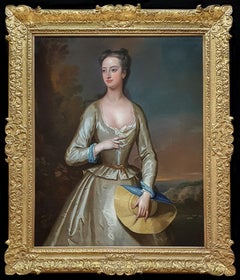
H 60.24 in W 50.4 in D 3.15 in
English 18th century portrait of Henrietta Pelham-Holles, Duchess of Newcastle.
By Charles Jervas
Located in Bath, Somerset
Portrait of Henrietta Pelham-Holles (née Godolphin) (1701-1776), Duchess of Newcastle, standing in a wooded landscape with a river beyond, three-q...
Category
1720s Old Masters Charles Jervas Art
Materials
Canvas, Oil
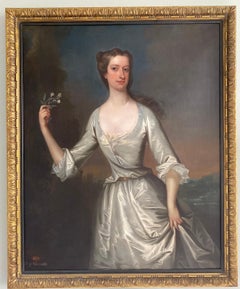
Portrait of William Townshend
By Charles Jervas
Located in Bath, Somerset
Attributed to Charles Jervas (Ireland 1675-1739 London) Portrait of William Townshend (1702-1738), three- quarter length, standing in a landscape wearing a red velvet coat...
Category
18th Century and Earlier Old Masters Charles Jervas Art
Materials
Oil
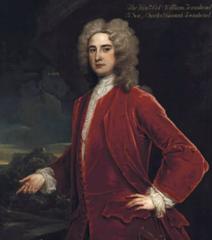
Charles Jervas art for sale on 1stDibs.
Find a wide variety of authentic Charles Jervas art available for sale on 1stDibs. You can also browse by medium to find art by Charles Jervas in canvas, fabric, oil paint and more. Much of the original work by this artist or collective was created during the 18th century and is mostly associated with the Old Masters style. Not every interior allows for large Charles Jervas art, so small editions measuring 41 inches across are available. Customers who are interested in this artist might also find the work of Studio of Sir Peter Lely, Flemish School, 17th Century, and Sir Godfrey Kneller. Charles Jervas art prices can differ depending upon medium, time period and other attributes. On 1stDibs, the price for these items starts at $19,172 and tops out at $19,172, while the average work can sell for $19,172.