Christoffel Bisschop Art
to
1
Overall Width
to
Overall Height
to
1
1
1
1
1
1
1
1
1
1
1
9,980
2,753
1,376
1,373
1
1
Artist: Christoffel Bisschop
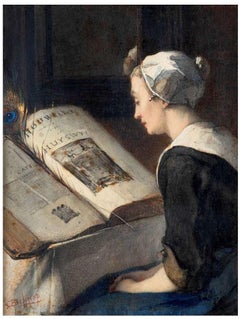
Girl from Zeeland - Original watercolour by Christoffel Bisschop (1828-1904)
By Christoffel Bisschop
Located in Gent, VOV
This delightful watercolour by the famous Dutch painter Christoffel Bisschop transports us to the heart of 19th-century Zeeland. The artist, known for his detailed realism and sensit...
Category
19th Century Realist Christoffel Bisschop Art
Materials
Watercolor
Related Items
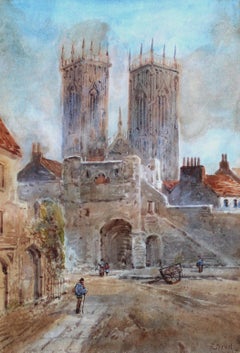
Notre-Dame de Paris. Paper, watercolor, 26.5x18 cm
By Edward Nevil
Located in Riga, LV
Edward Nevil ( 1813 – 1901 )
Notre-Dame de Paris. Paper, watercolor, 26.5x18 cm
Category
Mid-19th Century Realist Christoffel Bisschop Art
Materials
Paper, Watercolor

$608 Sale Price
71% Off
H 10.44 in W 7.09 in D 0.4 in
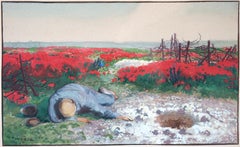
Red blooming war landscape with dead soldier - Bleeding flowers -
Located in Berlin, DE
Johannes Friedrich Heinrich Hänsch (1875-1945), Red blooming war landscape with dead soldier, 1918. Watercolor and gouache on paper, 15 x 24.5 cm (image), 27 x 37 cm (sheet size / frame), monogrammed and dated "19JH18" at lower left.
- Paper slightly darkened
About the artwork
Despite the relatively small format, the watercolor with an internal frame depicts a panoramic view of a flat landscape stretching to the horizon. As far as the eye can see, the poppies bloom in flaming red. The flowers are not rendered individually, however, creating an almost cohesive red surface. The bright red is interspersed with vegetal green. A complementary contrast that creates an intense color effect. In this color contrast, a white area breaks through from the middle ground, widening towards the foreground and surrounding a brown hole. Next to it, in blue, is the actual protagonist of the painting, the first thing that catches the eye: a dead soldier. Next to him is his helmet, revealing the empty interior. The brown, hollow shape corresponds to the hole in the ground. A shell funnel is surrounded by bright ash, which, like the inverted helmet, becomes a sign of death. The soldier's arms point to the funnel, while the empty helmet paraphrases the calotte of the skull and, like the funnel, thematizes the empty darkness of death.
The soldier's body, however, is intact and not - as in Otto Dix's triptych "The War" - a dismembered corpse. Instead, Johannes Hänsch activates the landscape, especially the color, to illustrate a blooming landscape of death that extends from the shell funnel in the foreground to the rising column of smoke on the horizon. If the soldier's body is intact, the tangle of barbed wire emblematically placed over the empty helmet also appears tattered. On the right side of the picture, the barbed wire even seems to stretch its arms to the sky in horror. Against the background of this allegory, the content of the bright red also becomes clear: the landscape is drenched in blood, literally a sea of blood, and the single unknown soldier stands pars pro toto for all those who died on the battlefield. Dying in war is not dying in community, but in solitude. In order to emphasize the isolation in death, Johannes Hänsch has set the blue of the soldier in the axis given by his body in the middle ground of the picture into the red sea.
A master of landscape painting, Hänsch succeeds in creating a natural-looking landscape allegory that illustrates the horror and death of war, without depicting the brutality of war itself. This singular 'war memorial' of the unknown soldier is the opposite of heroization and yet the dignity of the deceased soldier is preserved through the integrity of his body.
About the artist
As the son of the sculptor Adolf Haensch, the young Johannes received his first artistic training in his father's Berlin studio. However, he eventually decided to become a painter, and in 1897 he entered the Berlin Academy of Arts. He initially studied under Paul Vorgang and Eugen Bracht, and was particularly influenced by Bracht's increasingly colourful landscape painting. In 1901 he moved to the class of Friedrich Kallmorgen, with whom he spent several weeks on excursions into nature. In 1905 he became a master pupil of Albert Hertel, who taught him watercolour painting.
From 1903 to 1933 he exhibited annually at the Great Berlin Art Exhibition, the exhibitions of the Berlin Artists' Association and the Munich Glaspalast. In 1905 he was awarded the Carl Blechen...
Category
1910s Realist Christoffel Bisschop Art
Materials
Watercolor
$1,330 Sale Price
20% Off
H 5.91 in W 9.65 in
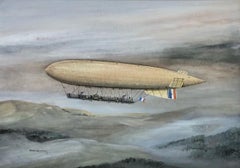
Fleurus Airship French Army
By Norman Wilkinson
Located in Middletown, NY
A portait of the first Allied airship to perform a bombing raid from the sky by a celebrated artist whose work hung on the Titanic.
Watercolor and ink on heavy wove watercolor paper, 10 5/8 x 15 inches (270 x 380 mm). Signed in black watercolor in the lower right image area. In very good condition with minor surface soiling on the verso. Titled "Verdun" in pencil on the verso in the artist's hand. Adhered on the verso to matboard at the extreme margins with non archival tape. Presented handsomely in a simple, period maple frame. Titled, dated, inscribed and initialed by the artist on a label on the frame back.
Born in Cambridge in 1898 and educated at Southsea School of Art, Norman Wilkinson is known for his graphic art, specifically his British Railway poster images, and also for something quite incredible; Wilkinson revolutionized the art of naval camouflage. Having been assigned to submarine patrols in Dardanelles, Gallipoli, and Gibraltar during WWI as a member of the Royal Navy Volunteer Reserve, Wilkinson was deeply troubled by the unprecedented success the German submarine fleet had torpedoing British ships. He hoped to find a solution to this gaping vulnerability, and in a lightning bolt moment, he had an epiphany that would change everything. Wilkinson says in his autobiography, A Brush With Life (Seeley, 1969), that he realized a ship could be painted to hide its shape against the sea and sky. In his own words, Wilkinson states that the hull of a ship could be camouflaged "not for low visibility, but in such a way as to break up her form and thus confuse a submarine officer as to the course on which she was heading." After some preliminary testing, the theory Wilkinson called "dazzle camouflage" was accepted by British Admiralty and Wilkinson was placed in charge of the naval camouflage unit. The unit, which was headquartered in the basement of the Royal Academy of Arts, consisted of Wilkinson and about two dozen "camoufleurs;" they were artists, students, model makers and consultants, including a zoologist. The dazzle schemes were tested on models and then distributed to artists who were stationed at the docks, where the ships would be painted. At the end of the war Wilkinson was formally declared the inventor of dazzle camouflage and awarded for his contribution.
Wilkinson went on to enjoy a long and celebrated career as a painter of maritime scenes, naval vessels, and warships. He served as the president of the Royal Institute of Painter in Water Colours (RI) from 1936 until 1963 (having been elected a member in 1906); he was elected Honourable Marine Painter to the Royal Yacht Squadron in 1919, and he was a member of the Royal Society of British Artists, the Royal Institute of Oil Painters, the Royal Society of Marine Artists, and the Royal Scottish Society of Painters in Watercolour. In 1918 he was appointed an Officer of the Order of the British Empire (OBE), and a Commander of the Order (CBE) in 1948. In January 1920 he was appointed knight (chevalier) of the Belgian Order of the Crown.
Among the many notable points of interest regarding Wilkinson's career is that his painting Plymouth Harbour, which was commissioned by Cunard White Star Lines for the first class smoking room of the RMS Titanic, was lost at sea when it perished with the ship. Wilkinson had also created a comparable painting entitled The Approach to the New World, which hung in the same location on the Titanic's sister ship, the RMS Olympic...
Category
Early 20th Century Realist Christoffel Bisschop Art
Materials
Ink, Watercolor
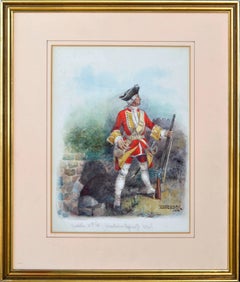
Musketeer 28th Foot (Gloucestershire Regiment) 1746 in Watercolor on Paper
By Clarence F. Bretherick
Located in Soquel, CA
Muskateer 28th Foot (Gloucestershire Regiment) 1746 in Watercolor on Paper
A beautiful watercolor of a British Musketeer of the 28th (North Gloucestershire) Regiment of Foot, in full uniform standing with poise and readiness by English artist Clarence F. Bretherick (b. 1868). Signed lower right. Displayed in a rustic giltwood frame. Image, 12"H x 9"W.
In 1892 Bretherick was appointed permanently on the Liverpool Weekly Post as artist to that journal, to be responsible for all illustrations therein. His great specialty was figure drawing, military figure subjects in particular. This particular watercolor is a fine example of his skill as an artist and his fine attention to detail. 28th (North Gloucestershire) Regiment of Foot. The regiment was first raised in 1694 by Colonel Sir John Gibson, the Lieutenant-Governor of Portsmouth, as Sir John Gibson's Regiment of Foot and was posted to Newfoundland to protect the colony there. They saw action in Flanders during the War of the Austrian Succession...
Category
1910s Realist Christoffel Bisschop Art
Materials
Paper, Watercolor
$1,480 Sale Price
20% Off
H 18 in W 16 in D 1 in
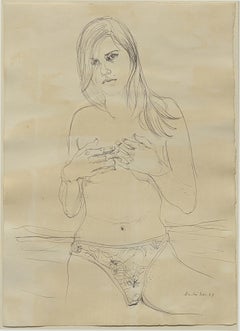
untitled / ohne Titel
By Martin Eder
Located in New York, NY
Martin Eder untitled work on paper executed in ballpoint pen with traces of watercolor. Ohne Titel Arbeit auf Papier, ausgeführt in Kugelschreiber mit Spuren von Aquarell. 2007
Category
Early 2000s Realist Christoffel Bisschop Art
Materials
Ink, Watercolor, Pen
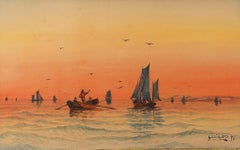
Sunset Sailors is a Watercolor by Swedish Artist Carl L Lindqvist, Painted 1898
Located in Stockholm, SE
Discover this watercolor "Sunset Sailors" by Carl L. Lindqvist (1856-1941).
Step into the enchanting world of the Swedish artist Carl L. Lindqvist with his captivating watercolor pa...
Category
1890s Realist Christoffel Bisschop Art
Materials
Watercolor
$1,781
H 15.36 in W 20.87 in
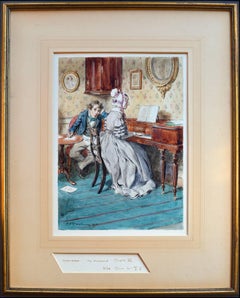
"The Newcomes, Chapter XI" - Early 20th Century Figurative Watercolor with Piano
By Charles Edmund Brock
Located in Soquel, CA
An fine period watercolor, dated 1910, an illustration by Charles Edmund Brock (English, 1870-1938). This, from a novel by William Makepeace Thackeray, "The Newcomes, Memoirs of the Most Respectable Family." The novel was published in 1855. Below this image are two characters from "The Newcomes, Chapter XI". Presented in a rustic giltwood frame. Signed "C.E. Brock" and dated "1910" lower left. Image size, 10"H x 7.5"W.
Charles Edmund Brock was a widely published English painter, line artist and book illustrator, who signed most of his work C. E. Brock. He received his first book commission at the age of 20. He became very successful, and illustrated books for authors such as Jonathan Swift, William Thackeray, Jane Austen, Charles Dickens, and George Eliot. Brock also contributed pieces to several magazines such as The Quiver, The Strand, and Pearsons...
Category
1910s Realist Christoffel Bisschop Art
Materials
Paper, Watercolor
$1,800 Sale Price
20% Off
H 15 in W 13 in D 1 in
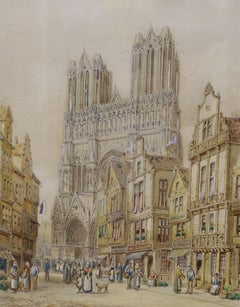
Rheims Cathedral
By Henri Schäfer
Located in Middletown, NY
Watercolor and gouache on cream wove paper. Signed and titled in watercolor in the lower right image area. Small circular pea-sized damp stain in the top center image area (visible in the are of the sky), and some additional small spots of unobtrusive foxing in the upper left sheet area. Otherwise in very good condition with fresh colors and intricate brushwork.
Henri Schäfer...
Category
1870s Realist Christoffel Bisschop Art
Materials
Watercolor, Gouache, Archival Paper
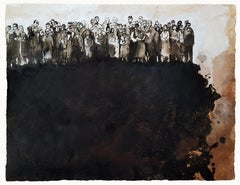
"Persepective", Pigments Watercolor Acrylic Paper Drawing
By Frank Girard
Located in Clermont-Ferrand, Auvergne-Rhône-Alpes
Titled "Perspective", this artwork created by Frank Girard, utilizes pigments, Chinese ink, watercolors, acrylics, and colored pencils on 400g/m2 neutral white paper. It remains unfr...
Category
2010s Realist Christoffel Bisschop Art
Materials
Paper, Ink, Acrylic, Watercolor, Color Pencil, Pigment
$831 Sale Price
20% Off
H 13.39 in W 17.33 in D 0.02 in
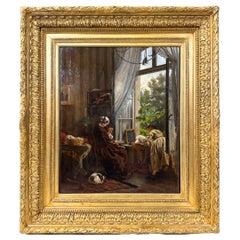
"Spring at Window" 18th Century Antique realism Watercolor painting on Paper
Located in Jacksonville, FL
The painting is signed and dated 1858
Felix Schlesinger (1833-1910) was a German painter known for his charming and detailed portrayals of domestic ...
Category
Mid-18th Century Realist Christoffel Bisschop Art
Materials
Paper, Watercolor
$32,000
H 26.25 in W 21.25 in
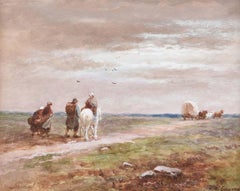
Gipsies with Horses in England Landscape Painting by 19th Century British Artist
Located in Preston, GB
Gipsies with Horses & Covered Wagons in the Wild Moorland Landscape of England. An Original Watercolour Painting by 19th Century British Artist, James Walter Gozzard...
Category
Early 20th Century Realist Christoffel Bisschop Art
Materials
Board, Paint, Watercolor
$1,736 Sale Price
20% Off
H 10 in W 12 in D 1 in
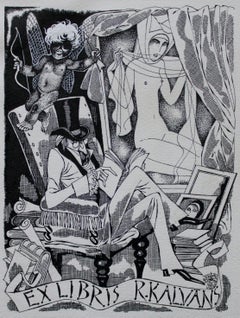
Ex Libris 1982, paper, ink, gouache, 17.5х13 cm
Located in Riga, LV
Ex Libris
1982, paper, ink, gouache, 17,5х13 cm
Information about artist:
Gunārs Vīndedzis (1918 - 1991) - cartoonist, illustrator.
Born in a fami...
Category
1980s Realist Christoffel Bisschop Art
Materials
Paper, Ink, Gouache
$285 Sale Price
20% Off
H 6.89 in W 5.12 in D 0.08 in
Christoffel Bisschop art for sale on 1stDibs.
Find a wide variety of authentic Christoffel Bisschop art available for sale on 1stDibs. Customers who are interested in this artist might also find the work of Ruud van Empel, Frank Dekkers, and Romeyn de Hooghe.