Chryssa Vardea-Mavromichali More Prints
Greek, 1933-2013
Chryssa, (born Chryssa Vardea Mavomichali) is best known for her "Luminist" sculpture in brilliantly colored neon tubing, was born in Greece and now ranks as one of the outstanding and innovative artists in America today.
Chryssa has had individual and collective exhibition shows at the Museum of Modern Art, The Guggenheim, The Whitney -New York. Harvard University; Institute of Contemporary Art at the University of Pennsylvania; Carnegie Institute among many others.to
1
4
Overall Width
to
Overall Height
to
3
1
57
701
453
237
169
5
1
4
3
2
5
1
1
5
Artist: Chryssa Vardea-Mavromichali
1980
s Large Silkscreen Chinese Characters Serigraph Pop Art Print China
By Chryssa Vardea-Mavromichali
Located in Surfside, FL
Chryssa Vardea-Mavromichali (Greek: Χρύσα Βαρδέα-Μαυρομιχάλη; December 31, 1933 – December 23, 2013) was a Greek American artist who worked in a wide variety of media. An American art pioneer in light art and luminist sculpture widely known for her neon, steel, aluminum and acrylic glass installations, she has always used the mononym Chryssa professionally. She worked from the mid-1950s in New York City studios and worked since 1992 in the studio she established in Neos Kosmos, Athens, Greece.
Chryssa was born in Athens into the famous Mavromichalis family from the Mani Peninsula. one of her sisters, who studied medicine, was a friend of the poet and novelist Nikos Kazantzakis.
Chryssa began painting during her teenage years and also studied to be a social worker.In 1953, on the advice of a Greek art critic, her family sent her to Paris to study at the Académie de la Grande Chaumiere where Andre Breton, Edgard Varese, and Max Ernst were among her associates and Alberto Giacometti was a visiting professor.
In 1954, at age twenty-one, Chryssa sailed for the United States, arrived in New York and went to San Francisco, California to study at the California School of Fine Arts. Returning to New York in 1955, she became a United States citizen and established a studio in the city.
Chryssa's first major work was The Cycladic Books preceded American minimalism by seventeen years.
1961, Chryssa's first solo exhibition was mounted at The Guggenheim.
1963, Chryssa's work was shown at the Museum of Modern Art in curator Dorothy Canning Miller's Americans 1963 exhibition. The artists represented in the show also included Richard Anuszkiewicz, Lee Bontecou, Robert Indiana, Richard Lindner, Marisol, Claes Oldenburg, Ad Reinhardt, James Rosenquist and others.
1966, The Gates to Times Square, regarded as "one of the most important American sculptures of all time" and "a thrilling homage to the living American culture of advertising and mass communications." The work is a 10 ft cube installation of two huge letter 'A's through which visitors may walk into "a gleaming block of stainless steel and Plexiglas that seems to quiver in the play of pale blue neon light" which is controlled by programmed timers. First shown in Manhattan's Pace Gallery, it was given to the Albright-Knox Art Gallery in Buffalo, New York in 1972.
1972, The Whitney Museum of American Art mounted a solo exhibition of works by Chryssa.
That's All (early 1970s), the central panel of a triptych related to The Gates of Times Square, was acquired by the Museum of Modern Art between 1975 and 1979.
1973, Chryssa's solo exhibition at the Gallerie Denise René was reviewed for TIME magazine by art critic Robert Hughes before it went on to the Galleries Denise René in Düsseldorf and Paris.
Other works by Chryssa in composite honeycomb aluminum and neon in the 1980s and 1990s include Chinatown, Siren, Urban Traffic, and Flapping Birds.
Chryssa 60/90 retrospective exhibition in Athens in the Mihalarias Art Center. After her long absence from Greece, a major exhibition including large aluminum sculptures - cityscapes, "neon boxes" from the Gates to the Times Square, paintings, drawings etc. was held in Athens.
In 1992, after closing her SoHo studio, which art dealer Leo Castelli had described as "one of the loveliest in the world," Chryssa returned to Greece. She found a derelict cinema which had become a storeroom stacked with abandoned school desks and chairs, behind the old Fix Brewery near the city center in Neos Kosmos, Athens. Using the desks to construct enormous benches, she converted the space into a studio for working on designs and aluminum composite honeycomb sculptures. The Athens National Museum of Contemporary Art, which was founded in 2000 and owns Chryssa's Cycladic Books, is in the process of converting the Fix Brewery into its permanent premises.
Greek Exhibits, European Cultural Center of Delphi (Council of Europe). "Apollo's Heritage"(July 4, 2003 – July 30, 2003). Works by sixteen artists: Giorgio de Chirico, Salvador Dalí, Nikos Hadjikyriakos-Ghikas, Nikos Engonopoulos, Yannis Tsarouchis, Giorgos Sikeliotis, Takis, Arman, Fernando Botero, Chryssa, Dimitris Mytaras...
Category
1980s Pop Art Chryssa Vardea-Mavromichali More Prints
Materials
Screen
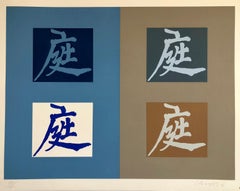
Chinatown Portfolio II Plate Three Signed Silkscreen Large 40 x 38" Greek artist
By Chryssa Vardea-Mavromichali
Located in New York, NY
Chryssa
Chinatown Portfolio II, Plate Three, ca. 1978
Silkscreen on thick wove paper
40 × 30 1/2 inches
(Ships rolled in a tube measuring 35 x 5 x 5)
Pencil signed and numbered 36/150 on the front; bears printers stamp on the back
Unframed
from the Chinatown Portfolio
Printed by Atelier Arco in Paris (with stamp on the back of the print)
from the Chinatown Portfolio
Renowned Greek-American artist Chryssa was preoccupied with the concept of Chinese letters as art forms, which she explores in her Chinatown silkscreen series. Her deliberate experimentations yield an elegant and compelling result.
Chryssa Biography
Chryssa Vardea...
Category
1970s Abstract Chryssa Vardea-Mavromichali More Prints
Materials
Screen, Pencil, Graphite
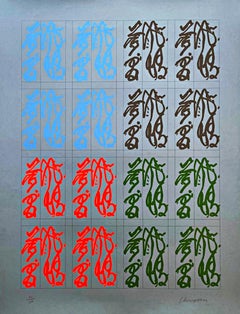
1970
s Large Silkscreen Abstract Geometric Day Glo Serigraph Pop Art Print Neon
By Chryssa Vardea-Mavromichali
Located in Surfside, FL
Silkscreen on Arches paper, Hand signed and Numbered in Pencil. Serigraph in white, back, blue gray (silver).
Chryssa Vardea-Mavromichali (Greek: Χρύσα Βαρδέα-Μαυρομιχάλη; December 31, 1933 – December 23, 2013) was a Greek American artist who worked in a wide variety of media. An American art pioneer in light art and luminist sculpture widely known for her neon, steel, aluminum and acrylic glass installations, she has always used the mononym Chryssa professionally. She worked from the mid-1950s in New York City studios and worked since 1992 in the studio she established in Neos Kosmos, Athens, Greece.
Chryssa was born in Athens into the famous Mavromichalis family from the Mani Peninsula. one of her sisters, who studied medicine, was a friend of the poet and novelist Nikos Kazantzakis.
Chryssa began painting during her teenage years and also studied to be a social worker.In 1953, on the advice of a Greek art critic, her family sent her to Paris to study at the Académie de la Grande Chaumiere where Andre Breton, Edgard Varese, and Max Ernst were among her associates and Alberto Giacometti was a visiting professor.
In 1954, at age twenty-one, Chryssa sailed for the United States, arrived in New York and went to San Francisco, California to study at the California School of Fine Arts. Returning to New York in 1955, she became a United States citizen and established a studio in the city.
Chryssa's first major work was The Cycladic Books preceded American minimalism by seventeen years.
1961, Chryssa's first solo exhibition was mounted at The Guggenheim.
1963, Chryssa's work was shown at the Museum of Modern Art in curator Dorothy Canning Miller's Americans 1963 exhibition. The artists represented in the show also included Richard Anuszkiewicz, Lee Bontecou, Robert Indiana, Richard Lindner, Marisol, Claes Oldenburg, Ad Reinhardt, James Rosenquist and others.
1966, The Gates to Times Square, regarded as "one of the most important American sculptures of all time" and "a thrilling homage to the living American culture of advertising and mass communications." The work is a 10 ft cube installation of two huge letter 'A's through which visitors may walk into "a gleaming block of stainless steel and Plexiglas that seems to quiver in the play of pale blue neon light" which is controlled by programmed timers. First shown in Manhattan's Pace Gallery, it was given to the Albright-Knox Art Gallery in Buffalo, New York in 1972.
1972, The Whitney Museum of American Art mounted a solo exhibition of works by Chryssa.
That's All (early 1970s), the central panel of a triptych related to The Gates of Times Square, was acquired by the Museum of Modern Art between 1975 and 1979.
1973, Chryssa's solo exhibition at the Gallerie Denise René was reviewed for TIME magazine by art critic Robert Hughes before it went on to the Galleries Denise René in Düsseldorf and Paris.
Other works by Chryssa in composite honeycomb aluminum and neon in the 1980s and 1990s include Chinatown, Siren, Urban Traffic, and Flapping Birds.
Chryssa 60/90 retrospective exhibition in Athens in the Mihalarias Art Center. After her long absence from Greece, a major exhibition including large aluminum sculptures - cityscapes, "neon boxes" from the Gates to the Times Square, paintings, drawings etc. was held in Athens.
In 1992, after closing her SoHo studio, which art dealer Leo Castelli had described as "one of the loveliest in the world," Chryssa returned to Greece. She found a derelict cinema which had become a storeroom stacked with abandoned school desks and chairs, behind the old Fix Brewery near the city center in Neos Kosmos, Athens. Using the desks to construct enormous benches, she converted the space into a studio for working on designs and aluminum composite honeycomb sculptures...
Category
1980s Pop Art Chryssa Vardea-Mavromichali More Prints
Materials
Screen
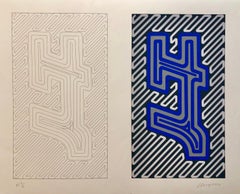
Chinese Characters, Conceptual Art Screenprint by Chryssa
By Chryssa Vardea-Mavromichali
Located in Long Island City, NY
Artist: Chryssa, Greek (1933 - 2013)
Title: Chinese Characters (Tan on Silver)
Medium: Screenprint, signed and numbered in pencil
Edition: 125
Paper ...
Category
1980s Conceptual Chryssa Vardea-Mavromichali More Prints
Materials
Screen
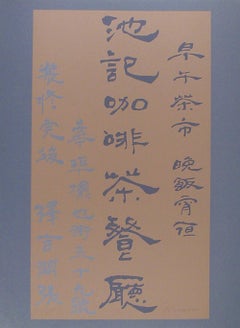
1970
s Large Silkscreen Abstract Geometric Day Glo Serigraph Pop Art Print Neon
By Chryssa Vardea-Mavromichali
Located in Surfside, FL
Silkscreen on Arches paper, Hand signed and Numbered in Pencil. Serigraph in black, gray (silver).
Chryssa Vardea-Mavromichali (Greek: Χρύσα Βαρδέα-Μαυρομιχάλη; December 31, 1933 – December 23, 2013) was a Greek American artist who worked in a wide variety of media. An American art pioneer in light art and luminist sculpture widely known for her neon, steel, aluminum and acrylic glass installations, she has always used the mononym Chryssa professionally. She worked from the mid-1950s in New York City studios and worked since 1992 in the studio she established in Neos Kosmos, Athens, Greece.
Chryssa was born in Athens into the famous Mavromichalis family from the Mani Peninsula. one of her sisters, who studied medicine, was a friend of the poet and novelist Nikos Kazantzakis.
Chryssa began painting during her teenage years and also studied to be a social worker.In 1953, on the advice of a Greek art critic, her family sent her to Paris to study at the Académie de la Grande Chaumiere where Andre Breton, Edgard Varese, and Max Ernst were among her associates and Alberto Giacometti was a visiting professor.
In 1954, at age twenty-one, Chryssa sailed for the United States, arrived in New York and went to San Francisco, California to study at the California School of Fine Arts. Returning to New York in 1955, she became a United States citizen and established a studio in the city.
Chryssa's first major work was The Cycladic Books preceded American minimalism by seventeen years.
1961, Chryssa's first solo exhibition was mounted at The Guggenheim.
1963, Chryssa's work was shown at the Museum of Modern Art in curator Dorothy Canning Miller's Americans 1963 exhibition. The artists represented in the show also included Richard Anuszkiewicz, Lee Bontecou, Robert Indiana, Richard Lindner, Marisol, Claes Oldenburg, Ad Reinhardt, James Rosenquist and others.
1966, The Gates to Times Square, regarded as "one of the most important American sculptures of all time" and "a thrilling homage to the living American culture of advertising and mass communications." The work is a 10 ft cube installation of two huge letter 'A's through which visitors may walk into "a gleaming block of stainless steel and Plexiglas that seems to quiver in the play of pale blue neon light" which is controlled by programmed timers. First shown in Manhattan's Pace Gallery, it was given to the Albright-Knox Art Gallery in Buffalo, New York in 1972.
1972, The Whitney Museum of American Art mounted a solo exhibition of works by Chryssa.
That's All (early 1970s), the central panel of a triptych related to The Gates of Times Square, was acquired by the Museum of Modern Art between 1975 and 1979.
1973, Chryssa's solo exhibition at the Gallerie Denise René was reviewed for TIME magazine by art critic Robert Hughes before it went on to the Galleries Denise René in Düsseldorf and Paris.
Other works by Chryssa in composite honeycomb aluminum and neon in the 1980s and 1990s include Chinatown, Siren, Urban Traffic, and Flapping Birds.
Chryssa 60/90 retrospective exhibition in Athens in the Mihalarias Art Center. After her long absence from Greece, a major exhibition including large aluminum sculptures - cityscapes, "neon boxes" from the Gates to the Times Square, paintings, drawings etc. was held in Athens.
In 1992, after closing her SoHo studio, which art dealer Leo Castelli had described as "one of the loveliest in the world," Chryssa returned to Greece. She found a derelict cinema which had become a storeroom stacked with abandoned school desks and chairs, behind the old Fix Brewery near the city center in Neos Kosmos, Athens. Using the desks to construct enormous benches, she converted the space into a studio for working on designs and aluminum composite honeycomb sculptures...
Category
1980s Pop Art Chryssa Vardea-Mavromichali More Prints
Materials
Screen
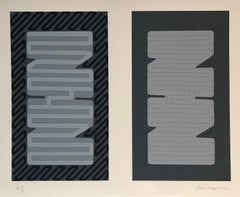
Related Items
Jasper Johns at Ileana Sonnabend (rare early mid century modern European poster)
By Jasper Johns
Located in New York, NY
Jasper Johns
Jasper Johns at Ileana Sonnabend, 1962
Offset Lithograph exhibition poster/invitation
Plate signed on the front
31 3/4 × 21 inches
Unframed
This rare, collectible vintag...
Category
1960s Pop Art Chryssa Vardea-Mavromichali More Prints
Materials
Offset

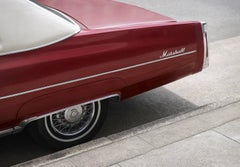
Marshall - large format photograph of iconic cherry red Cadillac automobile
By Frank Schott
Located in San Francisco, CA
large scale photograph of iconic American vintage car with crimson red sheetmetal paint and custom logo tag
Marshall by Frank Schott
25 x 40 inches (64 x 102cm)
signed edition of ...
Category
21st Century and Contemporary Conceptual Chryssa Vardea-Mavromichali More Prints
Materials
Archival Paper, Photographic Paper, Archival Pigment, Archival Ink, Giclée
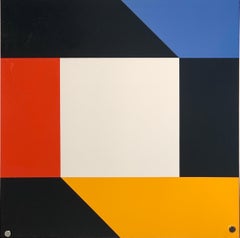
1971 "Ein Domberger Siebdruck-Kalender" Max Bill Silkscreen
By Max Bill
Located in Arp, TX
Max Bill
"Primary Colors"
1971
Silkscreen on paper edition of 2375
"Ein Domberger Siebdruck-Kalender"
11.75"x14" unframed
Unsigned
Born in Switzerland, Max Bill was an artist widely...
Category
1970s Abstract Chryssa Vardea-Mavromichali More Prints
Materials
Paper, Screen

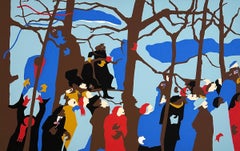
Jacob Lawrence Pop Art Screenprint, 1977, Signed, "The Swearing In"
By Jacob Lawrence
Located in Washington, DC
Artist: Jacob Lawrence
Title: The Swearing In
Portfolio: Inaugural Impressions
Medium: Screenprint
Date: 1977
Edition: 63/100
Sheet Size: 20" x 30"
Frame Size: 27" x 37"
Signature: H...
Category
1970s Pop Art Chryssa Vardea-Mavromichali More Prints
Materials
Screen
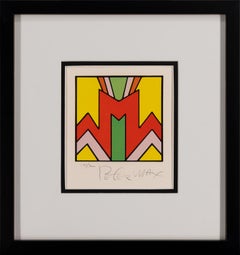
Peter Max "Geometric #2" Vibrant 1976 Signed Lithograph, Limited Edition
By Peter Max
Located in Miami, FL
PETER MAX – "GEOMETRIC #2"
⚜ Lithograph on Paper ⚜ Hand signed lower right ⚜ Framed
AN ICONIC GEOMETRIC STUDY BY PETER MAX
"Geometric #2" (1976) captures Peter Max’s signature use o...
Category
1970s Pop Art Chryssa Vardea-Mavromichali More Prints
Materials
Lithograph
$2,300
H 14.625 in W 13.75 in D 1.125 in
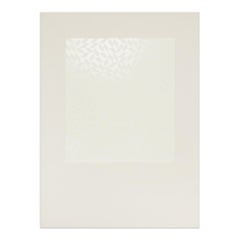
Anni Albers, ST - Original Screen Print from 1971, Geometric Abstraction
By Anni Albers
Located in Hamburg, DE
Anni Albers (1899-1994)
ST, 1971
Medium: Screenprint on cardboard
Dimensions: 83 × 62 cm (32 7/10 × 24 2/5 in)
Edition: Not signed, not numbered outside the edition of 150.
Condition...
Category
20th Century Abstract Chryssa Vardea-Mavromichali More Prints
Materials
Screen
$1,308
H 32.68 in W 24.41 in
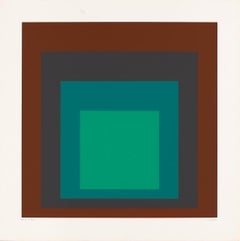
SP I from "SP" - Abstract, Screenprint, Square, Brown, Blue, Green
By Josef Albers
Located in Köln, DE
This screenprint from 1967 is an unsigned copy which was edited alongside the portfolio "SP": portfolio with 12 colour screenprints on Schöllers Hammer Board.
The edition comprises ...
Category
1960s Abstract Geometric Chryssa Vardea-Mavromichali More Prints
Materials
Screen
$7,138
H 24.18 in W 24.18 in
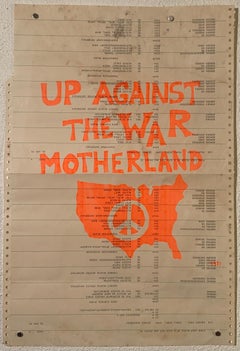
1970s Uc Berkeley Original Silkscreen "Up Against the War Motherland"
Located in Arp, TX
"Up Against the War Motherland"
UC Berkeley Workshop
April 26, 1970
Screenprint on computer paper
14.75"x22" unframed
Unsigned
Poster is printed on tracto...
Category
1970s Pop Art Chryssa Vardea-Mavromichali More Prints
Materials
Paper, Screen
$600
H 22 in W 14.75 in D 0.5 in
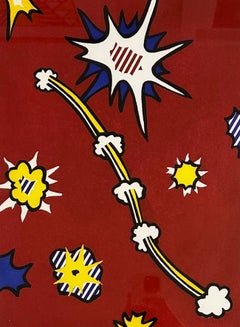
Roy Lichtenstein Pop Art Etching, 1992, Signed, Framed, De Denver au Montana
By Roy Lichtenstein
Located in Washington, DC
Artist: Roy Lichtenstein
Title: Illustration for "De Denver au Montana, Depart 27 Mai 1972" (II)
Medium: Etching and aquatint in colors on Arches paper
Date: 1992
Edition: 37/80
Fram...
Category
1990s Pop Art Chryssa Vardea-Mavromichali More Prints
Materials
Etching, Aquatint
$16,295
H 23.38 in W 19.5 in
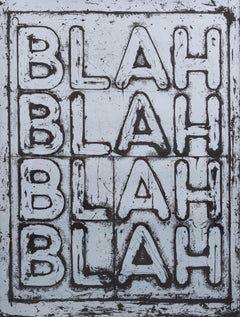
Large Mel Bochner BLAH BLAH BLAH (INVERSE) Silkscreen, 62"H
By Mel Bochner
Located in Lake Worth Beach, FL
Artist/Designer; Manufacturer: Mel Bochner (American, 1940-2025)
Marking(s); notes: signed; ed. 12/30; 2022
Materials: silkscreen on Lanaquarelle paper with diamond dust
Dimensions (...
Category
2010s Pop Art Chryssa Vardea-Mavromichali More Prints
Materials
Screen
$48,000
H 62 in W 46.5 in
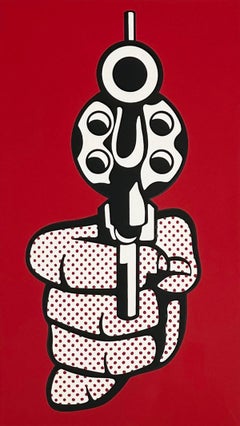
Pistol (from Banner, Multiples Calendar)
By Roy Lichtenstein
Located in Washington, DC
Artist: Roy Lichtenstein
Title: Pistol (from Banner, Multiples Calendar)
Medium: Screenprint in colors
Date: 1969
Edition: Unnumbered
Frame Size: 19 1/4" x 19 3/8"
Sheet Size: 15 3/...
Category
1960s Pop Art Chryssa Vardea-Mavromichali More Prints
Materials
Screen
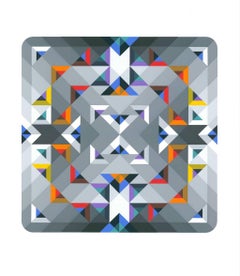
Prizma VI (Geometric Abstraction)
By Marko Spalatin
Located in Kansas City, MO
Prizma VI
Color silkscreen
Signed and titled by hand
Size: 20.3 × 20.3 on 28.9 × 25.0 inches
COA provided
Marko Spalatin was born in Zagreb, Croatia. He immigrated to the US in his ...
Category
1990s Abstract Geometric Chryssa Vardea-Mavromichali More Prints
Materials
Screen
Previously Available Items
"Series 4- Connect One" Modern Grey
Blue Geometric Abstract Serigraph Ed 19/30
By Chryssa Vardea-Mavromichali
Located in Houston, TX
Modern grey and blue geometric abstract serigraph by Grecian artist Chryssa Vardea-Mavromichali, better known as Chryssa. Influenced by the power of lettering and typography, the wor...
Category
1970s Abstract Geometric Chryssa Vardea-Mavromichali More Prints
Materials
Screen
1970
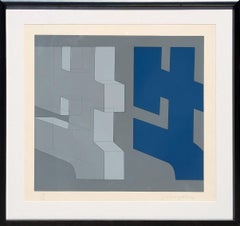
s Large Silkscreen Abstract Geometric Day Glo Serigraph Pop Art Print Neon
By Chryssa Vardea-Mavromichali
Located in Surfside, FL
Silkscreen on Arches paper, Hand signed and Numbered in Pencil. Serigraph in blue gray (silver).
Chryssa Vardea-Mavromichali (Greek: Χρύσα Βαρδέα-Μαυρομιχάλη; December 31, 1933 – December 23, 2013) was a Greek American artist who worked in a wide variety of media. An American art pioneer in light art and luminist sculpture widely known for her neon, steel, aluminum and acrylic glass installations, she has always used the mononym Chryssa professionally. She worked from the mid-1950s in New York City studios and worked since 1992 in the studio she established in Neos Kosmos, Athens, Greece.
Chryssa was born in Athens into the famous Mavromichalis family from the Mani Peninsula. one of her sisters, who studied medicine, was a friend of the poet and novelist Nikos Kazantzakis.
Chryssa began painting during her teenage years and also studied to be a social worker.In 1953, on the advice of a Greek art critic, her family sent her to Paris to study at the Académie de la Grande Chaumiere where Andre Breton, Edgard Varese, and Max Ernst were among her associates and Alberto Giacometti was a visiting professor.
In 1954, at age twenty-one, Chryssa sailed for the United States, arrived in New York and went to San Francisco, California to study at the California School of Fine Arts. Returning to New York in 1955, she became a United States citizen and established a studio in the city.
Chryssa's first major work was The Cycladic Books preceded American minimalism by seventeen years.
1961, Chryssa's first solo exhibition was mounted at The Guggenheim.
1963, Chryssa's work was shown at the Museum of Modern Art in curator Dorothy Canning Miller's Americans 1963 exhibition. The artists represented in the show also included Richard Anuszkiewicz, Lee Bontecou, Robert Indiana, Richard Lindner, Marisol, Claes Oldenburg, Ad Reinhardt, James Rosenquist and others.
1966, The Gates to Times Square, regarded as "one of the most important American sculptures of all time" and "a thrilling homage to the living American culture of advertising and mass communications." The work is a 10 ft cube installation of two huge letter 'A's through which visitors may walk into "a gleaming block of stainless steel and Plexiglas that seems to quiver in the play of pale blue neon light" which is controlled by programmed timers. First shown in Manhattan's Pace Gallery, it was given to the Albright-Knox Art Gallery in Buffalo, New York in 1972.
1972, The Whitney Museum of American Art mounted a solo exhibition of works by Chryssa.
That's All (early 1970s), the central panel of a triptych related to The Gates of Times Square, was acquired by the Museum of Modern Art between 1975 and 1979.
1973, Chryssa's solo exhibition at the Gallerie Denise René was reviewed for TIME magazine by art critic Robert Hughes before it went on to the Galleries Denise René in Düsseldorf and Paris.
Other works by Chryssa in composite honeycomb aluminum and neon in the 1980s and 1990s include Chinatown, Siren, Urban Traffic, and Flapping Birds.
Chryssa 60/90 retrospective exhibition in Athens in the Mihalarias Art Center. After her long absence from Greece, a major exhibition including large aluminum sculptures - cityscapes, "neon boxes" from the Gates to the Times Square, paintings, drawings etc. was held in Athens.
In 1992, after closing her SoHo studio, which art dealer Leo Castelli had described as "one of the loveliest in the world," Chryssa returned to Greece. She found a derelict cinema which had become a storeroom stacked with abandoned school desks and chairs, behind the old Fix Brewery near the city center in Neos Kosmos, Athens. Using the desks to construct enormous benches, she converted the space into a studio for working on designs and aluminum composite honeycomb sculptures...
Category
1980s Pop Art Chryssa Vardea-Mavromichali More Prints
Materials
Screen
1970
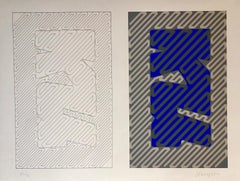
s Large Silkscreen Abstract Geometric Day Glo Serigraph Pop Art Print Neon
By Chryssa Vardea-Mavromichali
Located in Surfside, FL
Silkscreen on Arches paper, Hand signed and Numbered in Pencil. Serigraph in yellow, red, silver
Chryssa Vardea-Mavromichali (Greek: Χρύσα Βαρδέα-Μαυρομιχάλη; December 31, 1933 – December 23, 2013) was a Greek American artist who worked in a wide variety of media. An American art pioneer in light art and luminist sculpture widely known for her neon, steel, aluminum and acrylic glass installations, she has always used the mononym Chryssa professionally. She worked from the mid-1950s in New York City studios and worked since 1992 in the studio she established in Neos Kosmos, Athens, Greece.
Chryssa was born in Athens into the famous Mavromichalis family from the Mani Peninsula. one of her sisters, who studied medicine, was a friend of the poet and novelist Nikos Kazantzakis.
Chryssa began painting during her teenage years and also studied to be a social worker.In 1953, on the advice of a Greek art critic, her family sent her to Paris to study at the Académie de la Grande Chaumiere where Andre Breton, Edgard Varese, and Max Ernst were among her associates and Alberto Giacometti was a visiting professor.
In 1954, at age twenty-one, Chryssa sailed for the United States, arrived in New York and went to San Francisco, California to study at the California School of Fine Arts. Returning to New York in 1955, she became a United States citizen and established a studio in the city.
Chryssa's first major work was The Cycladic Books preceded American minimalism by seventeen years.
1961, Chryssa's first solo exhibition was mounted at The Guggenheim.
1963, Chryssa's work was shown at the Museum of Modern Art in curator Dorothy Canning Miller's Americans 1963 exhibition. The artists represented in the show also included Richard Anuszkiewicz, Lee Bontecou, Robert Indiana, Richard Lindner, Marisol, Claes Oldenburg, Ad Reinhardt, James Rosenquist and others.
1966, The Gates to Times Square, regarded as "one of the most important American sculptures of all time" and "a thrilling homage to the living American culture of advertising and mass communications." The work is a 10 ft cube installation of two huge letter 'A's through which visitors may walk into "a gleaming block of stainless steel and Plexiglas that seems to quiver in the play of pale blue neon light" which is controlled by programmed timers. First shown in Manhattan's Pace Gallery, it was given to the Albright-Knox Art Gallery in Buffalo, New York in 1972.
1972, The Whitney Museum of American Art mounted a solo exhibition of works by Chryssa.
That's All (early 1970s), the central panel of a triptych related to The Gates of Times Square, was acquired by the Museum of Modern Art between 1975 and 1979.
1973, Chryssa's solo exhibition at the Gallerie Denise René was reviewed for TIME magazine by art critic Robert Hughes before it went on to the Galleries Denise René in Düsseldorf and Paris.
Other works by Chryssa in composite honeycomb aluminum and neon in the 1980s and 1990s include Chinatown, Siren, Urban Traffic, and Flapping Birds.
Chryssa 60/90 retrospective exhibition in Athens in the Mihalarias Art Center. After her long absence from Greece, a major exhibition including large aluminum sculptures - cityscapes, "neon boxes" from the Gates to the Times Square, paintings, drawings etc. was held in Athens.
In 1992, after closing her SoHo studio, which art dealer Leo Castelli had described as "one of the loveliest in the world," Chryssa returned to Greece. She found a derelict cinema which had become a storeroom stacked with abandoned school desks and chairs, behind the old Fix Brewery near the city center in Neos Kosmos, Athens. Using the desks to construct enormous benches, she converted the space into a studio for working on designs and aluminum composite honeycomb sculptures...
Category
1980s Pop Art Chryssa Vardea-Mavromichali More Prints
Materials
Screen
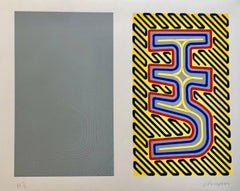
Large 1968 Chryssa Lithograph Abstract Electric Pop Art Vintage Signed Poster
By Chryssa Vardea-Mavromichali
Located in Surfside, FL
"Electric Art" 1968 vintage offset exhibition poster for UCLA Art Galleries.
Hand signed with dedication.
Chryssa Vardea-Mavromichali (Greek: Χρύσα Βαρδέα-Μαυρομιχάλη; December 31, 1933 – December 23, 2013) was a Greek American artist who worked in a wide variety of media. An American art pioneer in light art and luminist sculpture widely known for her neon, steel, aluminum and acrylic glass installations, she has always used the mononym Chryssa professionally. She worked from the mid-1950s in New York City studios and worked since 1992 in the studio she established in Neos Kosmos, Athens, Greece.
Chryssa was born in Athens into the famous Mavromichalis family from the Mani Peninsula. one of her sisters, who studied medicine, was a friend of the poet and novelist Nikos Kazantzakis.
Chryssa began painting during her teenage years and also studied to be a social worker.In 1953, on the advice of a Greek art critic, her family sent her to Paris to study at the Académie de la Grande Chaumiere where Andre Breton, Edgard Varese, and Max Ernst were among her associates and Alberto Giacometti was a visiting professor.
In 1954, at age twenty-one, Chryssa sailed for the United States, arrived in New York and went to San Francisco, California to study at the California School of Fine Arts. Returning to New York in 1955, she became a United States citizen and established a studio in the city.
Chryssa's first major work was The Cycladic Books preceded American minimalism by seventeen years.
1961, Chryssa's first solo exhibition was mounted at The Guggenheim.
1963, Chryssa's work was shown at the Museum of Modern Art in curator Dorothy Canning Miller's Americans 1963 exhibition. The artists represented in the show also included Richard Anuszkiewicz, Lee Bontecou, Robert Indiana, Richard Lindner, Marisol, Claes Oldenburg, Ad Reinhardt, James Rosenquist and others.
1966, The Gates to Times Square, regarded as "one of the most important American sculptures of all time" and "a thrilling homage to the living American culture of advertising and mass communications." The work is a 10 ft cube installation of two huge letter 'A's through which visitors may walk into "a gleaming block of stainless steel and Plexiglas that seems to quiver in the play of pale blue neon light" which is controlled by programmed timers. First shown in Manhattan's Pace Gallery, it was given to the Albright-Knox Art Gallery in Buffalo, New York in 1972.
1972, The Whitney Museum of American Art mounted a solo exhibition of works by Chryssa.
That's All (early 1970s), the central panel of a triptych related to The Gates of Times Square, was acquired by the Museum of Modern Art between 1975 and 1979.
1973, Chryssa's solo exhibition at the Gallerie Denise René was reviewed for TIME magazine by art critic Robert Hughes before it went on to the Galleries Denise René in Düsseldorf and Paris.
Other works by Chryssa in composite honeycomb aluminum and neon in the 1980s and 1990s include Chinatown, Siren, Urban Traffic, and Flapping Birds.
Chryssa 60/90 retrospective exhibition in Athens in the Mihalarias Art Center. After her long absence from Greece, a major exhibition including large aluminum sculptures - cityscapes, "neon boxes" from the Gates to the Times Square, paintings, drawings etc. was held in Athens.
In 1992, after closing her SoHo studio, which art dealer Leo Castelli had described as "one of the loveliest in the world," Chryssa returned to Greece. She found a derelict cinema which had become a storeroom stacked with abandoned school desks and chairs, behind the old Fix Brewery near the city center in Neos Kosmos, Athens. Using the desks to construct enormous benches, she converted the space into a studio for working on designs and aluminum composite honeycomb sculptures. The Athens National Museum of Contemporary Art, which was founded in 2000 and owns Chryssa's Cycladic Books, is in the process of converting the Fix Brewery into its permanent premises.
Greek Exhibits, European Cultural Center of Delphi (Council of Europe). "Apollo's Heritage"(July 4, 2003 – July 30, 2003). Works by sixteen artists: Giorgio de Chirico, Salvador Dalí, Nikos Hadjikyriakos-Ghikas, Nikos Engonopoulos, Yannis Tsarouchis...
Category
1960s Pop Art Chryssa Vardea-Mavromichali More Prints
Materials
Lithograph
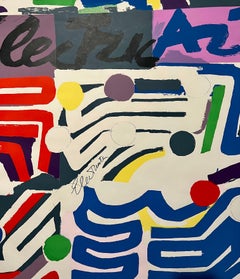
Calligraphy III
By Chryssa Vardea-Mavromichali
Located in New York, NY
Chryssa
Calligraphy III, 1984
Silkscreen on wove paper with deckled edges
30 × 22 1/2 inches
Unframed
pencil signed and numbered 111/125 on the front
Renow...
Category
1980s Pop Art Chryssa Vardea-Mavromichali More Prints
Materials
Screen
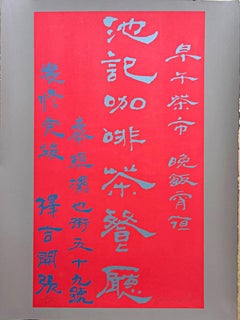
1970
s Large Silkscreen Abstract Geometric Day Glo Serigraph Pop Art Print China
By Chryssa Vardea-Mavromichali
Located in Surfside, FL
Silkscreen on Arches paper, Hand signed and Numbered in Pencil, Title: Series 2.
Chryssa Vardea-Mavromichali (Greek: Χρύσα Βαρδέα-Μαυρομιχάλη; December 31, 1933 – December 23, 2013) was a Greek American artist who worked in a wide variety of media. An American art pioneer in light art and luminist sculpture widely known for her neon, steel, aluminum and acrylic glass installations, she has always used the mononym Chryssa professionally. She worked from the mid-1950s in New York City studios and worked since 1992 in the studio she established in Neos Kosmos, Athens, Greece.
Chryssa was born in Athens into the famous Mavromichalis family from the Mani Peninsula. one of her sisters, who studied medicine, was a friend of the poet and novelist Nikos Kazantzakis.
Chryssa began painting during her teenage years and also studied to be a social worker.In 1953, on the advice of a Greek art critic, her family sent her to Paris to study at the Académie de la Grande Chaumiere where Andre Breton, Edgard Varese, and Max Ernst were among her associates and Alberto Giacometti was a visiting professor.
In 1954, at age twenty-one, Chryssa sailed for the United States, arrived in New York and went to San Francisco, California to study at the California School of Fine Arts. Returning to New York in 1955, she became a United States citizen and established a studio in the city.
Chryssa's first major work was The Cycladic Books preceded American minimalism by seventeen years.
1961, Chryssa's first solo exhibition was mounted at The Guggenheim.
1963, Chryssa's work was shown at the Museum of Modern Art in curator Dorothy Canning Miller's Americans 1963 exhibition. The artists represented in the show also included Richard Anuszkiewicz, Lee Bontecou, Robert Indiana, Richard Lindner, Marisol, Claes Oldenburg, Ad Reinhardt, James Rosenquist and others.
1966, The Gates to Times Square, regarded as "one of the most important American sculptures of all time" and "a thrilling homage to the living American culture of advertising and mass communications." The work is a 10 ft cube installation of two huge letter 'A's through which visitors may walk into "a gleaming block of stainless steel and Plexiglas that seems to quiver in the play of pale blue neon light" which is controlled by programmed timers. First shown in Manhattan's Pace Gallery, it was given to the Albright-Knox Art Gallery in Buffalo, New York in 1972.
1972, The Whitney Museum of American Art mounted a solo exhibition of works by Chryssa.
That's All (early 1970s), the central panel of a triptych related to The Gates of Times Square, was acquired by the Museum of Modern Art between 1975 and 1979.
1973, Chryssa's solo exhibition at the Gallerie Denise René was reviewed for TIME magazine by art critic Robert Hughes before it went on to the Galleries Denise René in Düsseldorf and Paris.
Other works by Chryssa in composite honeycomb aluminum and neon in the 1980s and 1990s include Chinatown, Siren, Urban Traffic, and Flapping Birds.
Chryssa 60/90 retrospective exhibition in Athens in the Mihalarias Art Center. After her long absence from Greece, a major exhibition including large aluminum sculptures - cityscapes, "neon boxes" from the Gates to the Times Square, paintings, drawings etc. was held in Athens.
In 1992, after closing her SoHo studio, which art dealer Leo Castelli had described as "one of the loveliest in the world," Chryssa returned to Greece. She found a derelict cinema which had become a storeroom stacked with abandoned school desks and chairs, behind the old Fix Brewery near the city center in Neos Kosmos, Athens. Using the desks to construct enormous benches, she converted the space into a studio for working on designs and aluminum composite honeycomb sculptures. The Athens National Museum of Contemporary Art, which was founded in 2000 and owns Chryssa's Cycladic Books, is in the process of converting the Fix Brewery into its permanent premises.
Greek Exhibits, European Cultural Center of Delphi (Council of Europe). "Apollo's Heritage"(July 4, 2003 – July 30, 2003). Works by sixteen artists: Giorgio de Chirico, Salvador Dalí, Nikos Hadjikyriakos-Ghikas, Nikos Engonopoulos, Yannis...
Category
1980s Pop Art Chryssa Vardea-Mavromichali More Prints
Materials
Screen
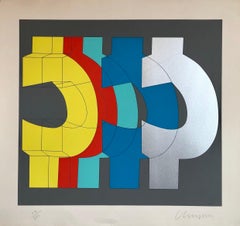
1970
s Large Silkscreen Abstract Geometric Greek Serigraph Pop Art Print Neon
By Chryssa Vardea-Mavromichali
Located in Surfside, FL
Silkscreen on Arches paper, Hand signed and Numbered in Pencil. Serigraph in black, gray (silver).
Chryssa Vardea-Mavromichali (Greek: Χρύσα Βαρδέα-Μαυρομιχάλη; December 31, 1933 – December 23, 2013) was a Greek American artist who worked in a wide variety of media. An American art pioneer in light art and luminist sculpture widely known for her neon, steel, aluminum and acrylic glass installations, she has always used the mononym Chryssa professionally. She worked from the mid-1950s in New York City studios and worked since 1992 in the studio she established in Neos Kosmos, Athens, Greece.
Chryssa was born in Athens into the famous Mavromichalis family from the Mani Peninsula. one of her sisters, who studied medicine, was a friend of the poet and novelist Nikos Kazantzakis.
Chryssa began painting during her teenage years and also studied to be a social worker.In 1953, on the advice of a Greek art critic, her family sent her to Paris to study at the Académie de la Grande Chaumiere where Andre Breton, Edgard Varese, and Max Ernst were among her associates and Alberto Giacometti was a visiting professor.
In 1954, at age twenty-one, Chryssa sailed for the United States, arrived in New York and went to San Francisco, California to study at the California School of Fine Arts. Returning to New York in 1955, she became a United States citizen and established a studio in the city.
Chryssa's first major work was The Cycladic Books preceded American minimalism by seventeen years.
1961, Chryssa's first solo exhibition was mounted at The Guggenheim.
1963, Chryssa's work was shown at the Museum of Modern Art in curator Dorothy Canning Miller's Americans 1963 exhibition. The artists represented in the show also included Richard Anuszkiewicz, Lee Bontecou, Robert Indiana, Richard Lindner, Marisol, Claes Oldenburg, Ad Reinhardt, James Rosenquist and others.
1966, The Gates to Times Square, regarded as "one of the most important American sculptures of all time" and "a thrilling homage to the living American culture of advertising and mass communications." The work is a 10 ft cube installation of two huge letter 'A's through which visitors may walk into "a gleaming block of stainless steel and Plexiglas that seems to quiver in the play of pale blue neon light" which is controlled by programmed timers. First shown in Manhattan's Pace Gallery, it was given to the Albright-Knox Art Gallery in Buffalo, New York in 1972.
1972, The Whitney Museum of American Art mounted a solo exhibition of works by Chryssa.
That's All (early 1970s), the central panel of a triptych related to The Gates of Times Square, was acquired by the Museum of Modern Art between 1975 and 1979.
1973, Chryssa's solo exhibition at the Gallerie Denise René was reviewed for TIME magazine by art critic Robert Hughes before it went on to the Galleries Denise René in Düsseldorf and Paris.
Other works by Chryssa in composite honeycomb aluminum and neon in the 1980s and 1990s include Chinatown, Siren, Urban Traffic, and Flapping Birds.
Chryssa 60/90 retrospective exhibition in Athens in the Mihalarias Art Center. After her long absence from Greece, a major exhibition including large aluminum sculptures - cityscapes, "neon boxes" from the Gates to the Times Square, paintings, drawings etc. was held in Athens.
In 1992, after closing her SoHo studio, which art dealer Leo Castelli had described as "one of the loveliest in the world," Chryssa returned to Greece. She found a derelict cinema which had become a storeroom stacked with abandoned school desks and chairs, behind the old Fix Brewery near the city center in Neos Kosmos, Athens. Using the desks to construct enormous benches, she converted the space into a studio for working on designs and aluminum composite honeycomb sculptures. The Athens National Museum of Contemporary Art, which was founded in 2000 and owns Chryssa's Cycladic Books, is in the process of converting the Fix Brewery into its permanent premises.
Greek Exhibits, European Cultural Center of Delphi (Council of Europe). "Apollo's Heritage"(July 4, 2003 – July 30, 2003). Works by sixteen artists: Giorgio de Chirico, Salvador Dalí, Nikos Hadjikyriakos-Ghikas, Nikos Engonopoulos, Yannis...
Category
1970s Pop Art Chryssa Vardea-Mavromichali More Prints
Materials
Screen
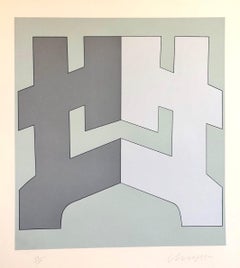
1970
s Large Silkscreen Abstract Geometric Day Glo Serigraph Pop Art Print Neon
By Chryssa Vardea-Mavromichali
Located in Surfside, FL
Silkscreen on Arches paper, Hand signed and Numbered in Pencil. Serigraph in black, gray (silver).
Chryssa Vardea-Mavromichali (Greek: Χρύσα Βαρδέα-Μαυρομιχάλη; December 31, 1933 – December 23, 2013) was a Greek American artist who worked in a wide variety of media. An American art pioneer in light art and luminist sculpture widely known for her neon, steel, aluminum and acrylic glass installations, she has always used the mononym Chryssa professionally. She worked from the mid-1950s in New York City studios and worked since 1992 in the studio she established in Neos Kosmos, Athens, Greece.
Chryssa was born in Athens into the famous Mavromichalis family from the Mani Peninsula. one of her sisters, who studied medicine, was a friend of the poet and novelist Nikos Kazantzakis.
Chryssa began painting during her teenage years and also studied to be a social worker.In 1953, on the advice of a Greek art critic, her family sent her to Paris to study at the Académie de la Grande Chaumiere where Andre Breton, Edgard Varese, and Max Ernst were among her associates and Alberto Giacometti was a visiting professor.
In 1954, at age twenty-one, Chryssa sailed for the United States, arrived in New York and went to San Francisco, California to study at the California School of Fine Arts. Returning to New York in 1955, she became a United States citizen and established a studio in the city.
Chryssa's first major work was The Cycladic Books preceded American minimalism by seventeen years.
1961, Chryssa's first solo exhibition was mounted at The Guggenheim.
1963, Chryssa's work was shown at the Museum of Modern Art in curator Dorothy Canning Miller's Americans 1963 exhibition. The artists represented in the show also included Richard Anuszkiewicz, Lee Bontecou, Robert Indiana, Richard Lindner, Marisol, Claes Oldenburg, Ad Reinhardt, James Rosenquist and others.
1966, The Gates to Times Square, regarded as "one of the most important American sculptures of all time" and "a thrilling homage to the living American culture of advertising and mass communications." The work is a 10 ft cube installation of two huge letter 'A's through which visitors may walk into "a gleaming block of stainless steel and Plexiglas that seems to quiver in the play of pale blue neon light" which is controlled by programmed timers. First shown in Manhattan's Pace Gallery, it was given to the Albright-Knox Art Gallery in Buffalo, New York in 1972.
1972, The Whitney Museum of American Art mounted a solo exhibition of works by Chryssa.
That's All (early 1970s), the central panel of a triptych related to The Gates of Times Square, was acquired by the Museum of Modern Art between 1975 and 1979.
1973, Chryssa's solo exhibition at the Gallerie Denise René was reviewed for TIME magazine by art critic Robert Hughes before it went on to the Galleries Denise René in Düsseldorf and Paris.
Other works by Chryssa in composite honeycomb aluminum and neon in the 1980s and 1990s include Chinatown, Siren, Urban Traffic, and Flapping Birds.
Chryssa 60/90 retrospective exhibition in Athens in the Mihalarias Art Center. After her long absence from Greece, a major exhibition including large aluminum sculptures - cityscapes, "neon boxes" from the Gates to the Times Square, paintings, drawings etc. was held in Athens.
In 1992, after closing her SoHo studio, which art dealer Leo Castelli had described as "one of the loveliest in the world," Chryssa returned to Greece. She found a derelict cinema which had become a storeroom stacked with abandoned school desks and chairs, behind the old Fix Brewery near the city center in Neos Kosmos, Athens. Using the desks to construct enormous benches, she converted the space into a studio for working on designs and aluminum composite honeycomb sculptures. The Athens National Museum of Contemporary Art, which was founded in 2000 and owns Chryssa's Cycladic Books, is in the process of converting the Fix Brewery into its permanent premises.
Greek Exhibits, European Cultural Center of Delphi (Council of Europe). "Apollo's Heritage"(July 4, 2003 – July 30, 2003). Works by sixteen artists: Giorgio de Chirico, Salvador Dalí, Nikos Hadjikyriakos-Ghikas, Nikos Engonopoulos, Yannis...
Category
1980s Pop Art Chryssa Vardea-Mavromichali More Prints
Materials
Screen
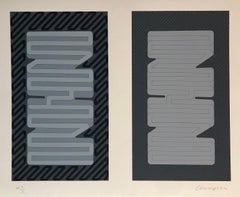
1970
s Large Silkscreen Abstract Geometric Day Glo Serigraph Pop Art Print Neon
By Chryssa Vardea-Mavromichali
Located in Surfside, FL
Silkscreen on Arches paper, Hand signed and Numbered in Pencil. Serigraph in white, back, blue gray (silver).
Chryssa Vardea-Mavromichali (Greek: Χρύσα Βαρδέα-Μαυρομιχάλη; December 31, 1933 – December 23, 2013) was a Greek American artist who worked in a wide variety of media. An American art pioneer in light art and luminist sculpture widely known for her neon, steel, aluminum and acrylic glass installations, she has always used the mononym Chryssa professionally. She worked from the mid-1950s in New York City studios and worked since 1992 in the studio she established in Neos Kosmos, Athens, Greece.
Chryssa was born in Athens into the famous Mavromichalis family from the Mani Peninsula. one of her sisters, who studied medicine, was a friend of the poet and novelist Nikos Kazantzakis.
Chryssa began painting during her teenage years and also studied to be a social worker.In 1953, on the advice of a Greek art critic, her family sent her to Paris to study at the Académie de la Grande Chaumiere where Andre Breton, Edgard Varese, and Max Ernst were among her associates and Alberto Giacometti was a visiting professor.
In 1954, at age twenty-one, Chryssa sailed for the United States, arrived in New York and went to San Francisco, California to study at the California School of Fine Arts. Returning to New York in 1955, she became a United States citizen and established a studio in the city.
Chryssa's first major work was The Cycladic Books preceded American minimalism by seventeen years.
1961, Chryssa's first solo exhibition was mounted at The Guggenheim.
1963, Chryssa's work was shown at the Museum of Modern Art in curator Dorothy Canning Miller's Americans 1963 exhibition. The artists represented in the show also included Richard Anuszkiewicz, Lee Bontecou, Robert Indiana, Richard Lindner, Marisol, Claes Oldenburg, Ad Reinhardt, James Rosenquist and others.
1966, The Gates to Times Square, regarded as "one of the most important American sculptures of all time" and "a thrilling homage to the living American culture of advertising and mass communications." The work is a 10 ft cube installation of two huge letter 'A's through which visitors may walk into "a gleaming block of stainless steel and Plexiglas that seems to quiver in the play of pale blue neon light" which is controlled by programmed timers. First shown in Manhattan's Pace Gallery, it was given to the Albright-Knox Art Gallery in Buffalo, New York in 1972.
1972, The Whitney Museum of American Art mounted a solo exhibition of works by Chryssa.
That's All (early 1970s), the central panel of a triptych related to The Gates of Times Square, was acquired by the Museum of Modern Art between 1975 and 1979.
1973, Chryssa's solo exhibition at the Gallerie Denise René was reviewed for TIME magazine by art critic Robert Hughes before it went on to the Galleries Denise René in Düsseldorf and Paris.
Other works by Chryssa in composite honeycomb aluminum and neon in the 1980s and 1990s include Chinatown, Siren, Urban Traffic, and Flapping Birds.
Chryssa 60/90 retrospective exhibition in Athens in the Mihalarias Art Center. After her long absence from Greece, a major exhibition including large aluminum sculptures - cityscapes, "neon boxes" from the Gates to the Times Square, paintings, drawings etc. was held in Athens.
In 1992, after closing her SoHo studio, which art dealer Leo Castelli had described as "one of the loveliest in the world," Chryssa returned to Greece. She found a derelict cinema which had become a storeroom stacked with abandoned school desks and chairs, behind the old Fix Brewery near the city center in Neos Kosmos, Athens. Using the desks to construct enormous benches, she converted the space into a studio for working on designs and aluminum composite honeycomb sculptures. The Athens National Museum of Contemporary Art, which was founded in 2000 and owns Chryssa's Cycladic Books, is in the process of converting the Fix Brewery into its permanent premises.
Greek Exhibits, European Cultural Center of Delphi (Council of Europe). "Apollo's Heritage"(July 4, 2003 – July 30, 2003). Works by sixteen artists: Giorgio de Chirico, Salvador Dalí, Nikos Hadjikyriakos-Ghikas, Nikos Engonopoulos, Yannis Tsarouchis...
Category
1980s Pop Art Chryssa Vardea-Mavromichali More Prints
Materials
Screen
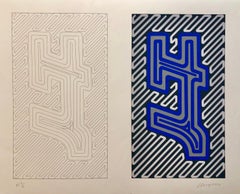
1970
s Large Silkscreen Abstract Geometric Day Glo Serigraph Pop Art Print Neon
By Chryssa Vardea-Mavromichali
Located in Surfside, FL
Silkscreen on Arches paper, Hand signed and Numbered in Pencil. Serigraph in blue gray (silver).
Chryssa Vardea-Mavromichali (Greek: Χρύσα Βαρδέα-Μαυρομιχάλη; December 31, 1933 – December 23, 2013) was a Greek American artist who worked in a wide variety of media. An American art pioneer in light art and luminist sculpture widely known for her neon, steel, aluminum and acrylic glass installations, she has always used the mononym Chryssa professionally. She worked from the mid-1950s in New York City studios and worked since 1992 in the studio she established in Neos Kosmos, Athens, Greece.
Chryssa was born in Athens into the famous Mavromichalis family from the Mani Peninsula. one of her sisters, who studied medicine, was a friend of the poet and novelist Nikos Kazantzakis.
Chryssa began painting during her teenage years and also studied to be a social worker.In 1953, on the advice of a Greek art critic, her family sent her to Paris to study at the Académie de la Grande Chaumiere where Andre Breton, Edgard Varese, and Max Ernst were among her associates and Alberto Giacometti was a visiting professor.
In 1954, at age twenty-one, Chryssa sailed for the United States, arrived in New York and went to San Francisco, California to study at the California School of Fine Arts. Returning to New York in 1955, she became a United States citizen and established a studio in the city.
Chryssa's first major work was The Cycladic Books preceded American minimalism by seventeen years.
1961, Chryssa's first solo exhibition was mounted at The Guggenheim.
1963, Chryssa's work was shown at the Museum of Modern Art in curator Dorothy Canning Miller's Americans 1963 exhibition. The artists represented in the show also included Richard Anuszkiewicz, Lee Bontecou, Robert Indiana, Richard Lindner, Marisol, Claes Oldenburg, Ad Reinhardt, James Rosenquist and others.
1966, The Gates to Times Square, regarded as "one of the most important American sculptures of all time" and "a thrilling homage to the living American culture of advertising and mass communications." The work is a 10 ft cube installation of two huge letter 'A's through which visitors may walk into "a gleaming block of stainless steel and Plexiglas that seems to quiver in the play of pale blue neon light" which is controlled by programmed timers. First shown in Manhattan's Pace Gallery, it was given to the Albright-Knox Art Gallery in Buffalo, New York in 1972.
1972, The Whitney Museum of American Art mounted a solo exhibition of works by Chryssa.
That's All (early 1970s), the central panel of a triptych related to The Gates of Times Square, was acquired by the Museum of Modern Art between 1975 and 1979.
1973, Chryssa's solo exhibition at the Gallerie Denise René was reviewed for TIME magazine by art critic Robert Hughes before it went on to the Galleries Denise René in Düsseldorf and Paris.
Other works by Chryssa in composite honeycomb aluminum and neon in the 1980s and 1990s include Chinatown, Siren, Urban Traffic, and Flapping Birds.
Chryssa 60/90 retrospective exhibition in Athens in the Mihalarias Art Center. After her long absence from Greece, a major exhibition including large aluminum sculptures - cityscapes, "neon boxes" from the Gates to the Times Square, paintings, drawings etc. was held in Athens.
In 1992, after closing her SoHo studio, which art dealer Leo Castelli had described as "one of the loveliest in the world," Chryssa returned to Greece. She found a derelict cinema which had become a storeroom stacked with abandoned school desks and chairs, behind the old Fix Brewery near the city center in Neos Kosmos, Athens. Using the desks to construct enormous benches, she converted the space into a studio for working on designs and aluminum composite honeycomb sculptures. The Athens National Museum of Contemporary Art, which was founded in 2000 and owns Chryssa's Cycladic Books, is in the process of converting the Fix Brewery into its permanent premises.
Greek Exhibits, European Cultural Center of Delphi (Council of Europe). "Apollo's Heritage"(July 4, 2003 – July 30, 2003). Works by sixteen artists: Giorgio de Chirico, Salvador Dalí, Nikos Hadjikyriakos-Ghikas, Nikos Engonopoulos, Yannis...
Category
1980s Pop Art Chryssa Vardea-Mavromichali More Prints
Materials
Screen
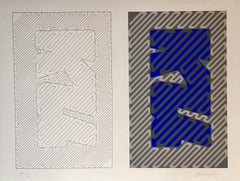
1970
s Large Silkscreen Abstract Geometric Day Glo Serigraph Pop Art Print Neon
By Chryssa Vardea-Mavromichali
Located in Surfside, FL
Silkscreen on Arches paper, Hand signed and Numbered in Pencil. Serigraph in yellow, red, silver
Chryssa Vardea-Mavromichali (Greek: Χρύσα Βαρδέα-Μαυρομιχάλη; December 31, 1933 – December 23, 2013) was a Greek American artist who worked in a wide variety of media. An American art pioneer in light art and luminist sculpture widely known for her neon, steel, aluminum and acrylic glass installations, she has always used the mononym Chryssa professionally. She worked from the mid-1950s in New York City studios and worked since 1992 in the studio she established in Neos Kosmos, Athens, Greece.
Chryssa was born in Athens into the famous Mavromichalis family from the Mani Peninsula. one of her sisters, who studied medicine, was a friend of the poet and novelist Nikos Kazantzakis.
Chryssa began painting during her teenage years and also studied to be a social worker.In 1953, on the advice of a Greek art critic, her family sent her to Paris to study at the Académie de la Grande Chaumiere where Andre Breton, Edgard Varese, and Max Ernst were among her associates and Alberto Giacometti was a visiting professor.
In 1954, at age twenty-one, Chryssa sailed for the United States, arrived in New York and went to San Francisco, California to study at the California School of Fine Arts. Returning to New York in 1955, she became a United States citizen and established a studio in the city.
Chryssa's first major work was The Cycladic Books preceded American minimalism by seventeen years.
1961, Chryssa's first solo exhibition was mounted at The Guggenheim.
1963, Chryssa's work was shown at the Museum of Modern Art in curator Dorothy Canning Miller's Americans 1963 exhibition. The artists represented in the show also included Richard Anuszkiewicz, Lee Bontecou, Robert Indiana, Richard Lindner, Marisol, Claes Oldenburg, Ad Reinhardt, James Rosenquist and others.
1966, The Gates to Times Square, regarded as "one of the most important American sculptures of all time" and "a thrilling homage to the living American culture of advertising and mass communications." The work is a 10 ft cube installation of two huge letter 'A's through which visitors may walk into "a gleaming block of stainless steel and Plexiglas that seems to quiver in the play of pale blue neon light" which is controlled by programmed timers. First shown in Manhattan's Pace Gallery, it was given to the Albright-Knox Art Gallery in Buffalo, New York in 1972.
1972, The Whitney Museum of American Art mounted a solo exhibition of works by Chryssa.
That's All (early 1970s), the central panel of a triptych related to The Gates of Times Square, was acquired by the Museum of Modern Art between 1975 and 1979.
1973, Chryssa's solo exhibition at the Gallerie Denise René was reviewed for TIME magazine by art critic Robert Hughes before it went on to the Galleries Denise René in Düsseldorf and Paris.
Other works by Chryssa in composite honeycomb aluminum and neon in the 1980s and 1990s include Chinatown, Siren, Urban Traffic, and Flapping Birds.
Chryssa 60/90 retrospective exhibition in Athens in the Mihalarias Art Center. After her long absence from Greece, a major exhibition including large aluminum sculptures - cityscapes, "neon boxes" from the Gates to the Times Square, paintings, drawings etc. was held in Athens.
In 1992, after closing her SoHo studio, which art dealer Leo Castelli had described as "one of the loveliest in the world," Chryssa returned to Greece. She found a derelict cinema which had become a storeroom stacked with abandoned school desks and chairs, behind the old Fix Brewery near the city center in Neos Kosmos, Athens. Using the desks to construct enormous benches, she converted the space into a studio for working on designs and aluminum composite honeycomb sculptures. The Athens National Museum of Contemporary Art, which was founded in 2000 and owns Chryssa's Cycladic Books, is in the process of converting the Fix Brewery into its permanent premises.
Greek Exhibits, European Cultural Center of Delphi (Council of Europe). "Apollo's Heritage"(July 4, 2003 – July 30, 2003). Works by sixteen artists: Giorgio de Chirico, Salvador Dalí, Nikos Hadjikyriakos-Ghikas, Nikos Engonopoulos, Yannis...
Category
1980s Pop Art Chryssa Vardea-Mavromichali More Prints
Materials
Screen
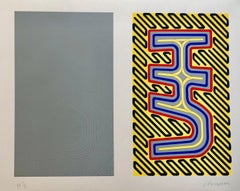
1970
s Large Silkscreen Abstract Geometric Day Glo Serigraph Pop Art Print Chin
By Chryssa Vardea-Mavromichali
Located in Surfside, FL
Silkscreen on Arches paper, Hand signed and Numbered in Pencil, Title: Series 2.
Chryssa Vardea-Mavromichali (Greek: Χρύσα Βαρδέα-Μαυρομιχάλη; December 31, 1933 – December 23, 2013) was a Greek American artist who worked in a wide variety of media. An American art pioneer in light art and luminist sculpture widely known for her neon, steel, aluminum and acrylic glass installations, she has always used the mononym Chryssa professionally. She worked from the mid-1950s in New York City studios and worked since 1992 in the studio she established in Neos Kosmos, Athens, Greece.
Chryssa was born in Athens into the famous Mavromichalis family from the Mani Peninsula. one of her sisters, who studied medicine, was a friend of the poet and novelist Nikos Kazantzakis.
Chryssa began painting during her teenage years and also studied to be a social worker.In 1953, on the advice of a Greek art critic, her family sent her to Paris to study at the Académie de la Grande Chaumiere where Andre Breton, Edgard Varese, and Max Ernst were among her associates and Alberto Giacometti was a visiting professor.
In 1954, at age twenty-one, Chryssa sailed for the United States, arrived in New York and went to San Francisco, California to study at the California School of Fine Arts. Returning to New York in 1955, she became a United States citizen and established a studio in the city.
Chryssa's first major work was The Cycladic Books preceded American minimalism by seventeen years.
1961, Chryssa's first solo exhibition was mounted at The Guggenheim.
1963, Chryssa's work was shown at the Museum of Modern Art in curator Dorothy Canning Miller's Americans 1963 exhibition. The artists represented in the show also included Richard Anuszkiewicz, Lee Bontecou, Robert Indiana, Richard Lindner, Marisol, Claes Oldenburg, Ad Reinhardt, James Rosenquist and others.
1966, The Gates to Times Square, regarded as "one of the most important American sculptures of all time" and "a thrilling homage to the living American culture of advertising and mass communications." The work is a 10 ft cube installation of two huge letter 'A's through which visitors may walk into "a gleaming block of stainless steel and Plexiglas that seems to quiver in the play of pale blue neon light" which is controlled by programmed timers. First shown in Manhattan's Pace Gallery, it was given to the Albright-Knox Art Gallery in Buffalo, New York in 1972.
1972, The Whitney Museum of American Art mounted a solo exhibition of works by Chryssa.
That's All (early 1970s), the central panel of a triptych related to The Gates of Times Square, was acquired by the Museum of Modern Art between 1975 and 1979.
1973, Chryssa's solo exhibition at the Gallerie Denise René was reviewed for TIME magazine by art critic Robert Hughes before it went on to the Galleries Denise René in Düsseldorf and Paris.
Other works by Chryssa in composite honeycomb aluminum and neon in the 1980s and 1990s include Chinatown, Siren, Urban Traffic, and Flapping Birds.
Chryssa 60/90 retrospective exhibition in Athens in the Mihalarias Art Center. After her long absence from Greece, a major exhibition including large aluminum sculptures - cityscapes, "neon boxes" from the Gates to the Times Square, paintings, drawings etc. was held in Athens.
In 1992, after closing her SoHo studio, which art dealer Leo Castelli had described as "one of the loveliest in the world," Chryssa returned to Greece. She found a derelict cinema which had become a storeroom stacked with abandoned school desks and chairs, behind the old Fix Brewery near the city center in Neos Kosmos, Athens. Using the desks to construct enormous benches, she converted the space into a studio for working on designs and aluminum composite honeycomb sculptures. The Athens National Museum of Contemporary Art, which was founded in 2000 and owns Chryssa's Cycladic Books, is in the process of converting the Fix Brewery into its permanent premises.
Greek Exhibits, European Cultural Center of Delphi (Council of Europe). "Apollo's Heritage"(July 4, 2003 – July 30, 2003). Works by sixteen artists: Giorgio de Chirico, Salvador Dalí, Nikos Hadjikyriakos-Ghikas, Nikos Engonopoulos, Yannis...
Category
1980s Pop Art Chryssa Vardea-Mavromichali More Prints
Materials
Screen
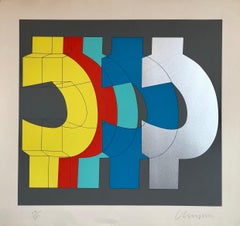
Chryssa Vardea-mavromichali more prints for sale on 1stDibs.
Find a wide variety of authentic Chryssa Vardea-Mavromichali more prints available for sale on 1stDibs. If you’re browsing the collection of more prints to introduce a pop of color in a neutral corner of your living room or bedroom, you can find work that includes elements of blue and other colors. You can also browse by medium to find art by Chryssa Vardea-Mavromichali in screen print and more. Much of the original work by this artist or collective was created during the 20th century and is mostly associated with the Pop Art style. Not every interior allows for large Chryssa Vardea-Mavromichali more prints, so small editions measuring 22 inches across are available. Customers who are interested in this artist might also find the work of Jozsef Jakovits, Eduardo Paolozzi, and Seymour Chwast. Chryssa Vardea-Mavromichali more prints prices can differ depending upon medium, time period and other attributes. On 1stDibs, the price for these items starts at $450 and tops out at $1,600, while the average work can sell for $1,300.