Colin Self Paintings
British, b. 1941
Colin E Self (born 1941 in Rackheath, Norfolk) is an English Pop Artist, whose work has addressed the theme of Cold War politics. As a student at the Slade School of Fine Art from 1961 to 1963 Colin Self received encouragement for his drawings and collages from the artists David Hockney and Peter Blake. Visits to the United States and Canada in 1962 and 1965 heightened his consciousness of Cold War politics and events such as the Cuban Missile Crisis and the CND marches led him to create highly-innovative prints such as Nuclear Bomber No.1 (1963), one of the earliest multiple plate etchings, and paintings such as ‘Waiting Women and Two Nuclear Bombers’ (1962–63). He explored the relationship between violence and sexual threat in drawings of glamorous models and his iconic ‘Leopard-skin Nuclear Bomber’ sculptures.
Following his trip to the US in 1965 he produced a series of drawings based on American nuclear fall-out shelters, Art Deco cinema interiors and of hot dogs, which he described as being ‘as important a 20th century development as a rocket.’ Richard Hamilton called him ‘the best draughtsman in England since William Blake.’ During the 60s Self showed with the Robert Fraser Gallery, London. Self was a central figure in the 1960s boom in printmaking. Drawing images from a variety of commercial sources, he created the Power and Beauty series of screen prints (1968) at Editions Alecto while his etching suite Prelude to the 1000 Temporary Objects of Our Time (1970–71) sought to provide a unique record of society in the event of its possible destruction.
Suspicious of the commercial art world Self worked in isolation during the 1970s, producing atmospheric watercolours and charcoals of the landscapes of his native county Norfolk, and Scotland. A trip to the former Soviet Union in 1985-6 provided further stimulus to his explorations of Cold War culture. His collages from the 1980s to the present day combine his interest in Surrealist juxtaposition and the subconscious, with an inventive visual imagination. Some of these works such as ‘Burning Man Jumping from Building’ (1983) and ‘New York Disaster’ (1998) appear remarkably prescient in the light of events such as the attack on the World Trade Center in 2001, while others create lighter, often humorous narratives from found material in everyday life – an extension of the language of Pop art. In 1997 the Tate Gallery held a show of all its holdings of his work. Since 2000 Self has worked on his ‘Odyssey/Iliad’ suite of etchings, in which the artist has returned to his 1960s technique of multiple-plate etching to re-tell the classical story by Homer using contemporary found-imagery and themes.
A retrospective of his work entitled 'Colin Self: Art in the Nuclear Age' was held at Pallant House Gallery in 2008. Public collections holding work by Colin Self include Arts Council of Great Britain, Museum of Modern Art, Pallant House, Tate Gallery and The Priseman Seabrook Collection.to
1
Overall Width
to
Overall Height
to
1
1
1
1
1
1
14
781
712
706
690
1
1
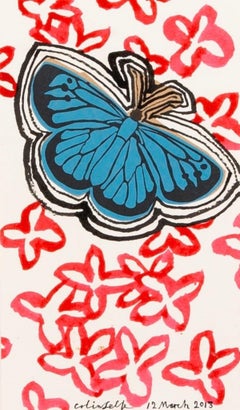
Artist: Colin Self
Butterfly Collage, Ink and Collage by Colin Self, 2013
By Colin Self
Located in Kingsclere, GB
Butterfly Collage, Ink and Collage by Colin Self, 2013
Additional information:
Medium: Ink and Collage
25 x 14.5 cm
9 7/8 x 5 3/4 in
Signed
Colin Self is a British artist, known for his Pop Art affiliations and themes of Cold War culture in his work.
Born in Norfolk in 1941, Self studied first at Wymondham College, followed by Norwich School of Art where he was taught by Jeffrey Camp...
Category
20th Century Colin Self Paintings
Materials
Ink
Related Items
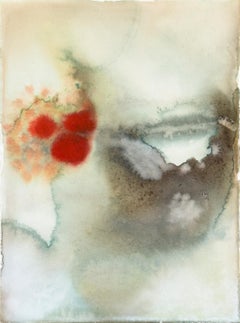
June
Located in Columbia, MO
John Selburg was born and raised in Peoria, Illinois. He holds a BFA in Drawing, Sculpture, and Graphic Design from Bradley University (2006), and an MFA from the University of Misso...
Category
21st Century and Contemporary Contemporary Colin Self Paintings
Materials
Ink, Watercolor, Archival Paper
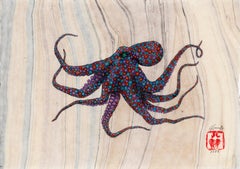
Dippin
Dotopus - Gyotaku Style Sumi Ink Painting of a Multi-Colored Octopus
By Jeff Conroy
Located in Chicago, IL
A small octopus is inked in the Japanese style of Gyo-Taku print making. Using sumi ink to "print" the octopus, the artist then embellishes it with colored pencil to convey an extra...
Category
21st Century and Contemporary Contemporary Colin Self Paintings
Materials
Sumi Ink, Watercolor, Mulberry Paper, Color Pencil

$640 Sale Price
20% Off
H 12.5 in W 18.25 in
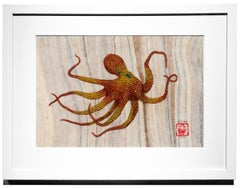
Stay Golden Pony Boy - Gyotaku Style Sumi Ink Painting of an Octopus, Framed
By Jeff Conroy
Located in Chicago, IL
A small octopus is inked in the Japanese style of Gyo-Taku print making. Using sumi ink to "print" the octopus, the artist then embellishes it with colored pencil to convey an extraordinary dimensionality. By printing it on Mulberry paper, which mimics the swirl of water, the artist achieves a beautiful aesthetic. The artwork is matted and framed in a white wooden frame measuring 18.25h x 24.25w x 1d inches.
Jeff Conroy
Stay Golden Pony Boy
sumi ink and colored pencil on mulberry paper
12.50h x 18.25w in
31.75h x 46.35w cm
JEC123
Gyotaku - A Japanese word translated from "gyo" meaning fish and "taku" meaning stone impression and is believed to get its inspiration from Chinese stone rubbings...
Category
21st Century and Contemporary Contemporary Colin Self Paintings
Materials
Sumi Ink, Watercolor, Mulberry Paper, Color Pencil
$975
H 12.5 in W 18.25 in
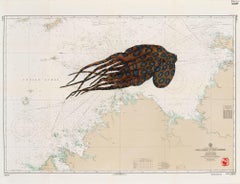
The Blue Ring of Cape Fourcroy - Gyotaku Painting of Octopus on Nautical Chart
By Jeff Conroy
Located in Chicago, IL
An octopus is inked in the Japanese style of Gyo-Taku print making. Using sumi ink to "print" the octopus, the artist then embellishes it with colored pencil to convey an extraordin...
Category
21st Century and Contemporary Contemporary Colin Self Paintings
Materials
Sumi Ink, Watercolor, Mulberry Paper, Color Pencil
$2,240 Sale Price
20% Off
H 36 in W 47.5 in
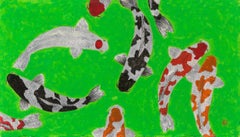
Koi Pond Conclave - Japanese Style Gyotaku Painting on Archival Kraft Paper
By Jeff Conroy
Located in Chicago, IL
In Japan they are known as Nishikigoi, or living jewels. These brilliantly colored varieties of the Amur carp have been selectively bred by family owned fisheries for generations. When I began this series of Gyotaku (Japanese fish printing) I studied the many varieties of Koi, each with their own unique colors and patterns. My particular favorites are the Tanchos which can be identified by the distinct red spot on their heads. To create these pieces I print common carp I catch myself with sumi ink using traditional techniques used by Japanese fisherman...
Category
21st Century and Contemporary Contemporary Colin Self Paintings
Materials
Sumi Ink, Watercolor, Archival Paper
$2,800 Sale Price
43% Off
H 35.5 in W 63 in
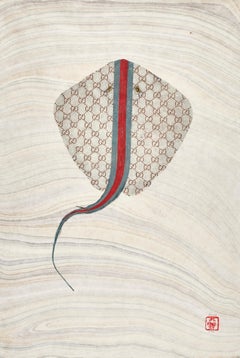
Gucci Ray - Sumi Ink on Mulberry Paper, Original Artwork, Gyotaku Style
By Jeff Conroy
Located in Chicago, IL
Designers have an wide reach through out the world but have yet to reach the depths of the ocean. Artist Jeff Conroy has created this Gyotaku print of large ray entitled simply "Gucci Ray" to fill that void. To achieve this remarkable painting, the artist applies sumi ink to a sting ray he caught himself on Florida's Gulf Coast, then "prints" it onto Marbled Mulberry paper - a soft, handmade paper. He then embellishes the details with watercolor to give extraordinary dimension and interest to its overall aesthetic. The artwork is unframed. Please contact the gallery for framing options.
Jeff Conroy
Gucci Ray
sumi ink and watercolor on mulberry paper
37h x 25w in
93.98h x 63.50w cm
JEC088
Gyotaku - A Japanese word translated from "gyo" meaning fish and "taku" meaning stone impression and is believed to get its inspiration from Chinese stone rubbings of calligraphy, which then gave rise to printing . This tradition dates back to the mid-1800s and was used by fishermen to record their catches, but has also become an art form of its own. Prints were made using Sumi ink and Washi paper. It is rumored that Samurai would settle fishing competitions using Gyotaku prints. This original form of Gyotaku is still utilized today, and can be seen hanging in fish and tackle shops all...
Category
21st Century and Contemporary Contemporary Colin Self Paintings
Materials
Sumi Ink, Watercolor, Mulberry Paper
$1,440 Sale Price
34% Off
H 37 in W 25 in
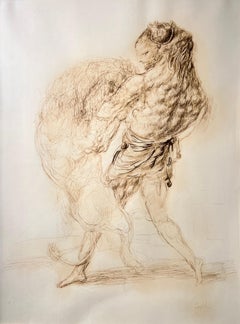
Power
Located in La Canada Flintridge, CA
The artwork size is 24"x18" and artist signed it lower right.
Emil Kazaz's drawing in ink on paper depicts a compelling scene where a man is depicted with intricate detail, showcas...
Category
21st Century and Contemporary Impressionist Colin Self Paintings
Materials
Ink
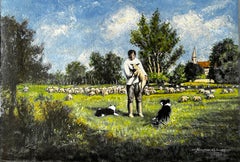
The Shepherd And His Sheep Dog Tending Flock In The Green Pastures Of Spring
Located in Cirencester, Gloucestershire
Artist/ School: Norman A.Olley (British, 20th Century) dated 1993 and inscribed verso
Title - The Shepherd and his flock
Medium: gouache/watercolour/ ink/ pencil on artist paper, u...
Category
19th Century Victorian Colin Self Paintings
Materials
Ink, Watercolor, Gouache, Pencil
$619 Sale Price
30% Off
H 10 in W 14 in
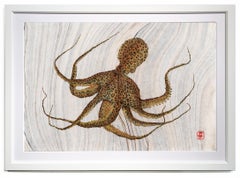
Cheetahpus - Gyotaku Style Japanese Sumi Ink Painting, Cheetah Patterned Octopus
By Jeff Conroy
Located in Chicago, IL
A newly discovered sea creature?? No, just an imaginative artist creating a Gyo-Tako print of large octopus by Jeff Conroy entitled "Cheetahpus". To achieve this remarkable painting, the artist inks the octopus using traditional sumi ink then "prints" it onto Mulberry paper - a soft, handmade paper. He then embellishes the details with watercolor to give extraordinary dimension and interest to its overall aesthetic. Framed as shown.
Jeff Conroy
Cheetahpus
sumi ink and watercolor on mulberry paper
25h x 36.50w in
63.50h x 92.71w cm
JEC080
Gyotaku - A Japanese word translated from "gyo" meaning fish and "taku" meaning stone impression and is believed to get its inspiration from Chinese stone rubbings of calligraphy, which then gave rise to printing . This tradition dates back to the mid-1800s and was used by fishermen to record their catches, but has also become an art form of its own. Prints were made using Sumi ink and Washi paper. It is rumored that Samurai would settle fishing competitions using Gyotaku prints. This original form of Gyotaku is still utilized today, and can be seen hanging in fish and tackle shops all...
Category
21st Century and Contemporary Contemporary Colin Self Paintings
Materials
Sumi Ink, Watercolor, Mulberry Paper
$2,000 Sale Price
33% Off
H 25 in W 36.5 in
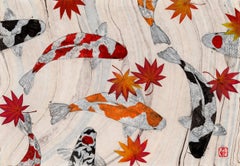
Autumn Cotilion - Japanese Style Gyotaku Painting on Marbled Mulberry Paper
By Jeff Conroy
Located in Chicago, IL
In Japan they are known as Nishikigoi, or living jewels. These brilliantly colored varieties of the Amur carp have been selectively bred by family owned fisheries for generations. When I began this series of Gyotaku (Japanese fish printing) I studied the many varieties of Koi, each with their own unique colors and patterns. My particular favorites are the Tanchos which can be identified by the distinct red spot on their heads. To create these pieces I print common carp I catch myself with sumi ink using traditional techniques used by Japanese fisherman dating back the mid 1800's. I then tint the images using watercolor. In each piece I hope to translate a sense of movement to give the viewer a sense of calm one might experience watching the living versions lazily meandering around a serene pond. —Jeff Conroy
Several koi swim in a circle while autumn leaves fall on the surface of the water in this Gyo-tako method of painting by artist Jeff Conroy. After inking and taking impressions of the koi, the artist then uses watercolors to enhance their beauty. By using marbled mulberry paper to print on, he has created the illusion of water with the swirls of the mulberry paper. The paper itself has a soft hue and slightly wavy texture adding the overall feel of the artwork. This artwork is unframed. Contact gallery for framing options.
Jeff Conroy
Autumn Cotillion
sumi ink and colored pencil on mulberry paper
25h x 37w in
63.50h x 93.98w cm
JEC103
Gyotaku - A Japanese word translated from "gyo" meaning fish and "taku" meaning stone impression. It is the traditional Japanese method of printing fish, a practice which dates back to the mid-1800s. This form of nature printing was used by fishermen to record their catches, but has also become an art form of its own. Gyotaku is a Japanese method of printmaking that traditionally utilizes fish, sea creatures or similar subjects as printing "plates" in its process. The literal translation of the word is "fish stone rubbing...
Category
21st Century and Contemporary Contemporary Colin Self Paintings
Materials
Sumi Ink, Watercolor, Mulberry Paper
$1,480 Sale Price
20% Off
H 25 in W 37 in
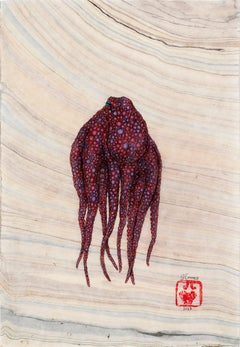
Red Rum - Gyotaku Style Sumi Ink Painting of an Octopus
By Jeff Conroy
Located in Chicago, IL
A small octopus is inked in the Japanese style of Gyo-Taku print making. Using sumi ink to "print" the octopus, the artist then embellishes it with colored p...
Category
21st Century and Contemporary Contemporary Colin Self Paintings
Materials
Sumi Ink, Watercolor, Mulberry Paper, Color Pencil
$640 Sale Price
20% Off
H 18.25 in W 12.5 in
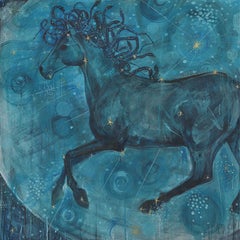
Large Celestial Mythical Horse Painting Acrylic Gouache Ink on Canvas Blue
By Alex K. Mason
Located in Versailles, KY
Large Celestial Mythical Horse Painting by Alex K. Mason "Wardusa", Acrylic Gouache Ink on Canvas, Blue, White, Gold, Yellow
This painting is part of a constellation series I did f...
Category
2010s Contemporary Colin Self Paintings
Materials
Canvas, Ink, Acrylic, Gouache
$10,000
H 48 in W 48 in D 3 in
Colin Self paintings for sale on 1stDibs.
Find a wide variety of authentic Colin Self paintings available for sale on 1stDibs.