Cornelis Bega Art
to
9
Overall Width
to
Overall Height
to
11
11
8
1
10
6
5
4
4
4
3
1
1
1
11
3
2
2
11
10,222
2,785
2,504
1,384
5
11
Artist: Cornelis Bega
17th century etching black and white figures scene
By Cornelis Bega
Located in Milwaukee, WI
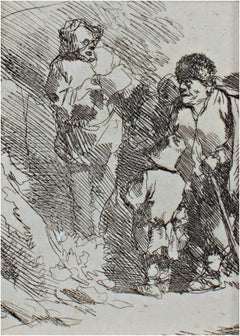
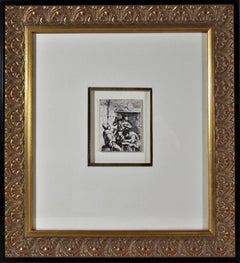
"The Singer" is an original etching by Cornelis-Pietersz Bega. It depicts a performer and onlookers. Publisher: Pearce #50.
4" x 3" art
16 1/2" x 13 1/2" frame
Cornelis Pietersz Be...
Category
Mid-17th Century Old Masters Cornelis Bega Art
Materials
Etching
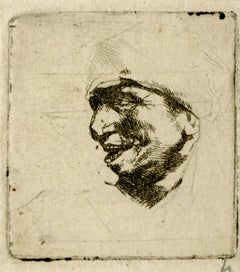
Head of a Laughing Peasant
By Cornelis Bega
Located in Middletown, NY
Etching on white laid paper, 1 5/8 x 1 1/2 inches (41 x 38 mm), thread margins. In excellent condition with a light pencil inscription on the verso.
[Hollstein 6]
Category
17th Century Old Masters Cornelis Bega Art
Materials
Handmade Paper, Laid Paper, Etching
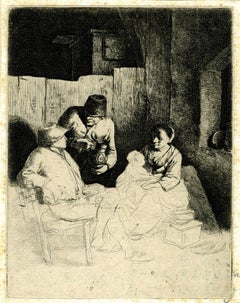
The Mother Seated in an Inn
By Cornelis Bega
Located in Middletown, NY
Etching on cream laid paper with an indiscernible horizontal watermark, 6 1/8 x 4 11/16 inches (154 x 120 mm). Thread margins. The first state (of two), before the additional work on...
Category
17th Century Old Masters Cornelis Bega Art
Materials
Handmade Paper, Laid Paper, Etching
17th century etching black and white figure table tobacco pipe scene
By Cornelis Bega
Located in Milwaukee, WI
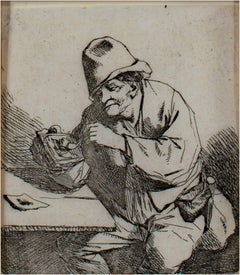
"The Pipe Smoker" is an original etching by Cornelis-Pietersz Bega. It depicts a man sitting at a table with his pipe. Publisher: Pearce #38.
3 1/2" x 3 1/4" art
13 5/8" x 11 3/4" f...
Category
Mid-17th Century Old Masters Cornelis Bega Art
Materials
Etching
The Smoker (Le Fumeur)
original etching by Cornelis-Pietersz Bega
By Cornelis Bega
Located in Milwaukee, WI
'The Smoker (Le Fumeur)' is an original etching by the celebrated Dutch painter and printmaker Cornelis-Pietersz Bega. It presents a genre scene of the type Bega was best known for: Bega's principal subjects were genre representations of taverns, domestic interiors and villages. He depicted nursing mothers, prostitutes, drunks, gamblers and fools such as quack doctors and alchemists. In this case, he shows a man seated on a chair with his foot on a flat stool and holding a smoking pipe. For Bega, this representation was more of a caricature than it was an image of a specific person, and such genre scenes would have held allegorical and symbolic meaning for the seventeenth-century viewer. During the seventeenth century, the Dutch of all levels of society consumed tobacco and alcohol, and these were an important part of the Dutch economy and a major source of wealth. At the same time, however, moralists and ministers sought to curb intoxication: they openly described drinking and smoking as sinful, immoral, and a general threat to one’s reputation. This paradox is reflected in prints such as this, which inherently carry the national pride of the Dutch economy alongside a moral warning in a print that could be just as easily consumed and collected.
2.5 x 2.25 inches, print
12.38 x 10.38 inches, frame
Framed to conservation standards using archival materials including 100 percent rag matting and mounting materials. Housed in a gold finish Spanish-style wood moulding.
Overall good and stable condition; margins cut to plate; some wrinkling in the corners from previous mounting; housed in a new custom frame.
Cornelis Bega was born into prosperous circumstances. His mother, Maria Cornelis, inherited half the estate (gold, silver, paintings, drawings and prints) and all of the red chalk drawings of her father, Cornelis Cornelisz van Haarlem, a renowned Mannerist artist. Bega's father was Pieter Jansz Begijn (d 1648), a gold and silversmith.
Like other family members, Bega was probably Catholic. Houbraken's claim that Bega studied with Adriaen van Ostade is likely to be correct; this was probably before 24 April 1653, when Bega joined Vincent Laurentsz. van der Vinne in Frankfurt for a journey through Germany, Switzerland and France. Bega had returned to Haarlem by 1 September 1654, at which time he joined the Guild of St Luke; he was already a competent draughtsman, as indicated by his first extant dated work, Interior with a Nursing Mother (1652; Frankfurt am Main, Städel. Kstinst.), and by a remarkable double portrait (Amsterdam, Rijksmuseum) drawn by him and Leendert van der Cooghen in 1654.
Bega painted, drew, etched and made counterproofs in a wide variety of materials on different types of small-scale supports. He may have been the first Dutch artist to make monotypes, but this remains controversial. Approximately 160 paintings, 80 drawings and six monotypes by Bega have been catalogued, as well as around 34 etchings.
Bega's principal subjects were genre representations of taverns, domestic interiors and villages. He depicted nursing mothers, prostitutes, drunks, smokers, gamblers and fools such as quack doctors and alchemists. Less common subjects include the ridiculed or pestered woman, as in Two Figures and Mother with a Spirits Bottle (c. 1662; Gouda, Stedel, Museum Catharina Gasthuis) and The Inn (etching), as well as witty satires on traditional scenes of middle-class music-makers, such as the Music Lesson (1663; Paris, Petit Palace).
Bega's early paintings, such as the Weaver's Family (c. 1652; St Petersburg, Hermitage), are freely executed, dark and coarse, recalling the many-figured peasant subjects of van Ostade. Between c. 1660 and 1664 he began to paint genre scenes with fewer figures, which are finely articulated, colourful and psychologically expressive, for example Two Men Singing (1662; Dublin, N.G.). His exquisite, late fijnschilderen ('fine painting') manner, evident in The Alchemist (1663; Malibu, Getty Museum), compares well with that of Gerrit Dou.
As a draughtsman Bega is noted for his single-figure studies, executed mainly in black and white chalk on blue paper or red chalk on white paper. None of the studies, which were drawn naer het leven (from life), seem to relate to a painting or etching. Bega traded drawings or shared models with other artists of the Haarlem school, including van der Cooghen, Gerrit Berckheyde, Dirck Helmbreker and Cornelis Visscher. These artists drew chalk figure studies in a very similar style, characterised by regular and precise parallel shading and well-defined forms; their drawings, especially those of Bega and Berckheyde, have been frequently confused. Unlike the realistic figure studies, Bega's etchings depict interiors with figures or single figures in the manner of van Ostade; the compositions, often with masterful chiaroscuro effects, reflect most closely the paintings of the 1650s.
Bega is likely to have remained in Haarlem, where he paid dues to the Guild in 1661. He probably died from the plague; fees for his expensive funeral at St. Bavo's were paid on 30 August 1664. Among the artists he influenced were Thomas Wijck, Jan Steen, Richard Brakenburg (1650-1702) and Cornelis Dusart. Painters such as R. Oostrzaen ( fl ?1656) and Jacob Toorenvliet...
Category
17th Century Old Masters Cornelis Bega Art
Materials
Paper, Etching
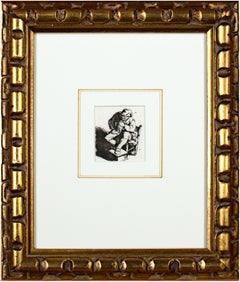
17th century etching black and white indoors table figures scene
By Cornelis Bega
Located in Milwaukee, WI
"The Conversation" is an original etching by Cornelis-Pietersz Bega. It depicts three men conversing in a dark interior. Publisher: Pearce #43.
3" x 2 1/4" art
12 3/4" x 11 5/8" fra...
Category
Mid-17th Century Old Masters Cornelis Bega Art
Materials
Etching
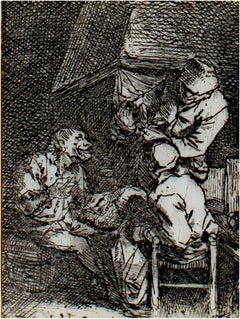
The Young Hostess
By Cornelis Bega
Located in New York, NY
Cornelis Bega (active 1631/32-64), The Young Hostess, c. 1660-64, etching. Reference: Hollstein, Bartsch 33, third state (of 5). With the address of J. Covens and C Mortier bottom left - before the address was removed (in the fourth state) and the artist’s signature was added (in the fifth state). In excellent condition, printed in black/grey ink on an old laid paper, with a 3/16 inch margin outside the plate mark all around, archival matting.
Provenance: Ex collection Graff (with stamp verso, Lugt 1092a), LRV (with stamp verso, Lugt 1761), an unidentified collector’s stamp verso, and Dr. Karl Herveg (his stamp verso, Lugt 3974).
A very good impression, with the guidelines of the address strongly visible.
Dr. Karl Herweg was a noted collector of 17th Century Dutch prints...
Category
1660s Old Masters Cornelis Bega Art
Materials
Etching
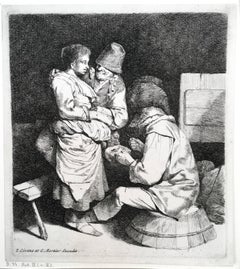
The Mother Seated in an Inn
By Cornelis Bega
Located in New York, NY
Cornelis Bega (1631/2-1664), The Mother Seated in an Inn, etching, circa 1660-64. Reference: Hollstein 31, a later impression, second state (of 2). In good condition, trimmed outside...
Category
1660s Old Masters Cornelis Bega Art
Materials
Etching
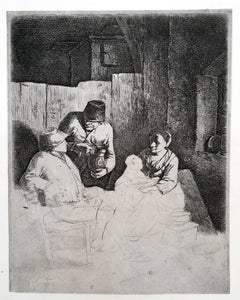
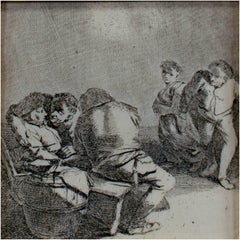
17th century etching black and white indoor dramatic figures scene
By Cornelis Bega
Located in Milwaukee, WI
"The Meeting" is an original etching by Cornelis-Pietersz Bega. It depicts a confrontation between two groups of figures. Publisher: Pearce #48.
2 3/4" x 2 3/4" art
10 1/4" x 10 3/8...
Category
Mid-17th Century Old Masters Cornelis Bega Art
Materials
Etching
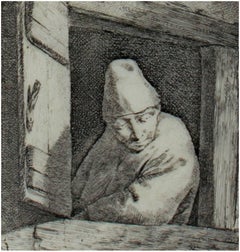
17th century etching black and white dramatic window figure scene
By Cornelis Bega
Located in Milwaukee, WI
"Man Looking Through a Window" is an original etching by Cornelis-Pietersz Bega. It depicts a figure leaning through a window. Publisher: Pearce #37.
3 1/8" x 3" art
14 3/4" x 13 1/...
Category
Mid-17th Century Old Masters Cornelis Bega Art
Materials
Etching
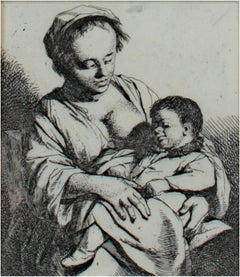
17th century etching black and white mother and child figures scene
By Cornelis Bega
Located in Milwaukee, WI
"Mother & Child" is an original etching by Cornelis-Pietersz Bega. It depicts a mother and her child. Publisher: Pearce #51.
3" x 3" art
13 3/4" x 11 3/4" frame
Cornelis Pietersz B...
Category
Mid-17th Century Old Masters Cornelis Bega Art
Materials
Etching
Related Items
The Anglers
By Herman van Swanevelt
Located in Middletown, NY
Etching with engraving on cream laid paper with a large unidentified alphabetic watermark, 6 1/2 x 9 7/8 inches (165 x 251 mm), the full sheet. In good condition with handling wear a...
Category
Early 17th Century Old Masters Cornelis Bega Art
Materials
Laid Paper, Engraving, Etching

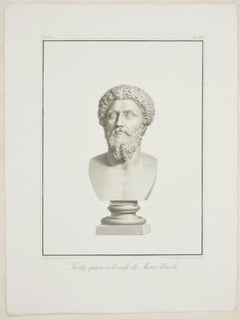
Testa Quasi Colossale di Marco Aurelio - Etching by P. Fontana
By Francesco Cecchini
Located in Roma, IT
“Testa quasi colossale di Marco Aurelio” (Almost colossal head of Marco Aurelio) is a beautiful black and white burin on paper, realized by the Italian artist Pietro Fontana (Bassano Romano,1762 – Rome, 1837), after Teodoro Matteini (Pistoia, 1754 - Venice, 1831), as the inscriptions on plates on lower margins report “Teodoro Matteini delineò./ Pietro Fontana incise a bollino Roma”.
This original print is numbered on plate in Roman numerals on higher margin: “Tom II. /Tav. XXV" and is a plate from the series "Illustrazioni de'Monumenti scelti Borghesiani già esistenti nella Villa sul Pincio (..)date ora per la prima volta in luce dal cav. Gio. Gherardo De Rossi e da Stefano Piale sotto la guida di Vincenzo Feoli", by Ennio Quirino Visconti, published by Stamperia de Romanis in Rome, 1821.
This old master’s original prints shows a precious piece of the Borghese's collection, the marble bust of the Roman philosopher and writer and one of the "good Roman Emperor" (according to Edward Gibbon) Marco Aurelio, represented in neoclassical style and with the traditional iconography with a thick hair and a long beard.
In excellent conditions with a usual yellowing of the paper on the lower margin and some light signs of the time with an imperceptible weaving of the paper on the lower right corner, this wonderful burin preserved his fresh impression.
Illustrazioni de' Monumenti scelti Borghesiani
This collection in two volumes is a beautifully detailed catalog of classical sculptures collected by Prince Borghese (1730-1800) in his Villa on the Pincio. Ennio Quirino Visconti (1751 - 1818) wrote the texts that accompany the large branches depicting. To these writings, which were available by the son of the illustrious archaeologist, the publishers added only a few illustrations relating to some minor monument of which copper had already been engraved.
The engraved title-plate are signed by draughtsmen like Agostino Tofanelli, Stefano Tofanelli, Bernardino Nocchi, Domenico de Angelis or Teodoro Matteini, and by engravers Pietro Fontana Veneto, P. Vitali, Pietro Bettelini, Giovanni Folo Veneto, Giovanni Brunetti da Ravenna, Giovanni Ottaviani, Francesco Cecchini, Gio. Batta. Leonetti, Girolamo Carattoni, Domenico Cunego, Luigi Cunego, Alessandro Mochetti, Luigi Pizzi, Angelo Campanella or Giacomo Bossi.
The Volume I shows ancient full-length statues, of the Borghese warrior by Agasias (two plates), Greek gods and heroes and Roman famous historical figures; the last two plates represents antique Egyptian deities. There are plates representing ancient bas-reliefs, sarcophagi, of mythological subjects, the Borghese Vase, portrait busts, a vase on an altar, two statues of Amor; and two modern statues, by Bernini (the Apollo and Daphne, and the David).
«Très bel ouvrage» writes Brunet, «Grand ouvrage, le seul qui mérite, parmi ceux sur la villa Borgese, de figurer dans le chapitre aux Galeries et Collections» Vinet said, looking at this plate.
Pietro Fontana (Bassano Romano,1762 – Rome, 1837)
The Italian artist and engraver, Pietro Fontana was active in Rome and specialized in subjects dealing with the Vatican and the Papacy. He started his career as a student of Raffaello Morghen...
Category
1820s Old Masters Cornelis Bega Art
Materials
Etching
$949
H 23.23 in W 17.33 in D 0.04 in
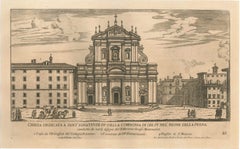
Chiesa Dedicata a Sant
Ignacio - Etching by G.B. Falda
By Giovan Battista Falda
Located in Roma, IT
Chiesa dedicata a Sant’Ignatio is a wonderful black and white etching on cream-colored paper realized in the second half of the XVII century by Giovanbattista Falda.
Signed on plate on the lower left margin "Giò Batta...
Category
Late 17th Century Old Masters Cornelis Bega Art
Materials
Etching
$213
H 10.63 in W 16.15 in D 0.04 in
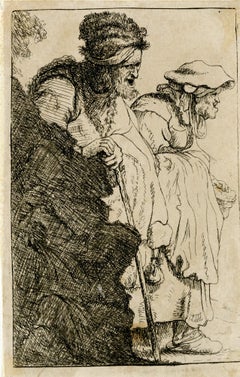
Beggar man and woman coming from behind a bank – after Rembrandt van Rijn
By Charles Amand Durand
Located in Middletown, NY
Etching on cream laid paper laid down to a wove paper support, 4 x 2 5/8 inches (101 x 67 mm) (sheet). In good condition with scattered light areas of discoloration. Printed early 19...
Category
17th Century Old Masters Cornelis Bega Art
Materials
Laid Paper, Etching
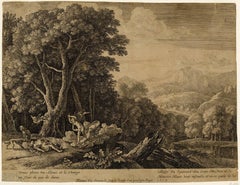
Venus Lamenting over the Death of Adonis
By Herman van Swanevelt
Located in Middletown, NY
c. 1654. Etching with engraving on thin laid paper with an early and large unidentified watermark with a sundial and a many-pointed star, and an unidentified collector's stamp in the...
Category
Mid-17th Century Old Masters Cornelis Bega Art
Materials
Handmade Paper, Engraving, Etching
The Smoker and the Drinker
By Adriaen van Ostade
Located in San Francisco, CA
Artist: Adriaen Van Ostade (Dutch, 1610-1685)
Title: The Smoker and the Drinker
Year: 1650
Medium: Etching
Paper: Laid paper
Image (plate mark) size...
Category
Late 17th Century Old Masters Cornelis Bega Art
Materials
Etching
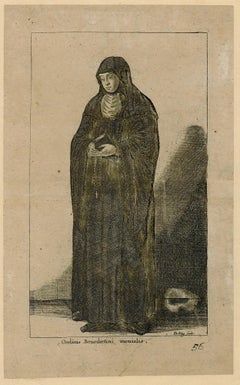
Ordinis Benedictini monialis; Saint Thecla of Kitzengen
Located in Middletown, NY
King, Daniel (with Wenceslaus Hollar)
Ordinis Benedictini monialis; Saint Thecla of Kitzengen
c 1650.
Etching with engraving on cream laid paper with an indiscernible watermark wit...
Category
Mid-19th Century Old Masters Cornelis Bega Art
Materials
Etching, Laid Paper, Engraving
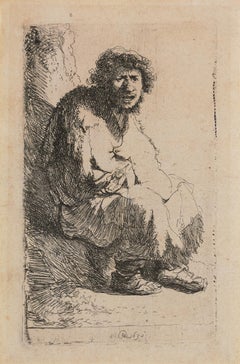
Beggar Seated on a Bank by Rembrandt Van Rijn
By Rembrandt van Rijn
Located in New Orleans, LA
Rembrandt van Rijn
1606-1669 Dutch
Beggar Seated on a Bank
Etching on paper
New Hollstein's first state of two
Signed and dated in plate "RHL 1630" (lower center)
This remarkable...
Category
17th Century Old Masters Cornelis Bega Art
Materials
Paper, Etching
$64,500
H 20.25 in W 16.25 in D 1.25 in
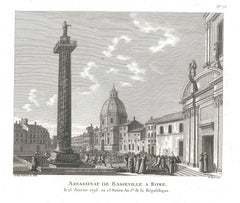
Assassinat de Basseville à Rome - Original Etching by P.G. Berthault - 1793
By Pierre Gabriel Berthault
Located in Roma, IT
Assassinat De Basseville à Rome is an original black and white etching realized by Pierre Gabriel Berthault, after Jacques François Joseph Swebach-Desfontaines in 1793.
Title with caption on plate on the lower center: "Assassinat de Basseville, à Rome/ le 13 Janvier 1793, ou 23 Nivose An Ier de la République".
Below the image on the lower margin, "Swebach Desfontaines onv. et del. / Berthault sculp." is etched on plate. This modern artwork is numbered "N. 76", because it is from the series Les Tableaux historiques de la Révolution française.
As a matter of fact, Pierre-Gabriel Berthault is well-known for having engraved plates from this collection with the collaboration of the engraver Jean Duplessis-Bertaux. A work - hanging in the balance between news and history - with illustrations of salient or minimal events occurred during the French Revolution. As a celebration of the new ideals of brotherhood, justice, and equality, Les Tableaux immediately became a point of reference for journalism at the time. Of traditional cut, namely showing a view with many human figures, the engraving simplified the lines to be immediately readable for the general public.
In our specific case, this original print represents the murder of Hugou de Bassville or Basseville (7 February, 1743 – 13 January, 1793), a French journalist and diplomatist, and protector of the radical Jacobins in Rome.
In excellent conditions, except for a usual yellowing of the paper on the edges and a light trace of oxidations on the lower and right margins, beyond the marginal line of the matrix.
Pierre-Gabriel Berthault (Saint-Maur-des-Fossés, 1737 - Paris, 1831) was a French master who made engravings from drawings by Jean-Claude Richard de Saint-Non (known as the Abbot of Saint-Non) and from paintings by Louis François Cassas. He depicted many views of Italy and created the collections Voyage à Naples and Voyage pittoresque de la Syrie, de la Palestine et de la basse-Egypte. Before the French Revolution, he was famous for being the author of the Vues intérieures de Paris and for tables with architectural elevations.
Category
1790s Old Masters Cornelis Bega Art
Materials
Etching
$415
H 12.05 in W 15.79 in D 0.04 in
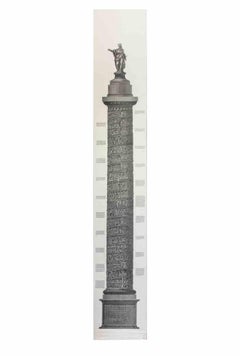
The Trajan
s Column - Offset by G.B. Piranesi - 1990s
By Giovanni Battista Piranesi
Located in Roma, IT
A beautiful reproduction of one of the most celebrated Piranesi's masterpieces, realized in a limited edition of a few hundreds in 1990s.
The Trajan's Column is the last remaining n...
Category
1990s Old Masters Cornelis Bega Art
Materials
Etching
$2,135
H 133.86 in W 41.34 in D 0.04 in
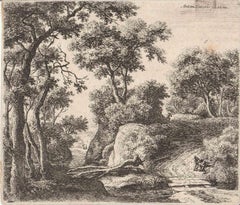
The Plank Bridge – Landschap met een bruggetje van planken
By Anthonie Waterloo
Located in Middletown, NY
Etching on thin cream laid paper with a partial "M" or "W" watermark, 5 x 5 15/16 inches (126 x 150 mm), thread margins. Inscribed in the plate in the upper-right: “Antoni Waterlo fe...
Category
17th Century Old Masters Cornelis Bega Art
Materials
Etching, Laid Paper
$2,750
H 5 in W 5.94 in
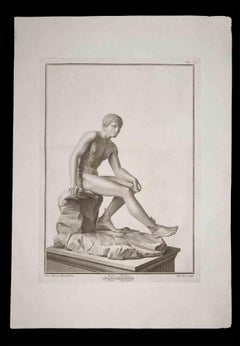
Hermes, Ancient Roman Statue- Etching by Nicola Fiorillo - 18th Century
Located in Roma, IT
Hermes, Ancient Roman Statue, from the series "Antiquities of Herculaneum", is an original etching on paper realized by Nicola Fiorillo in the 18th century.
Signed on the plate, on ...
Category
18th Century Old Masters Cornelis Bega Art
Materials
Etching
Nicola FiorilloHermes, Ancient Roman Statue- Etching by Nicola Fiorillo - 18th Century, 18th Century
$606
H 19.3 in W 13.39 in D 0.04 in
Cornelis Bega art for sale on 1stDibs.
Find a wide variety of authentic Cornelis Bega art available for sale on 1stDibs. You can also browse by medium to find art by Cornelis Bega in etching, paper and more. Much of the original work by this artist or collective was created during the 18th century and earlier and is mostly associated with the Old Masters style. Not every interior allows for large Cornelis Bega art, so small editions measuring 11 inches across are available. Customers who are interested in this artist might also find the work of Adriaen van Ostade, Wenceslaus Hollar, and Israel Silvestre. Cornelis Bega art prices can differ depending upon medium, time period and other attributes. On 1stDibs, the price for these items starts at $500 and tops out at $3,375, while the average work can sell for $2,295.