David Hare Art

American, 1917-1992

David Hare, a surrealist and Abstract Expressionist sculptor and photographer, was born in New York City on March 10, 1917. From 1936–37, he studied biology and chemistry at Bard College in Annandale-on-Hudson, New York. Hare had no formal training in art but began experimenting. He took up photography in the 1930s and by the end of the decade was working in color. The Walker Galleries in New York exhibited his photographs in 1939. From 1941–44, Hare founded and edited the surrealist magazine VVV with André Breton, Marcel Duchamp and Max Ernst. Peggy Guggenheim presented solo shows of Hare's work in her The Art of This Century Gallery from 1944–47. In 1948, he was a founding member, together with William Baziotes, Robert Motherwell and Mark Rothko, of The Subjects of the Artist school in New York and Hare, became friendly with Jean-Paul Sarte. Hare died on December 21, 1992, in Jackson.

to
1
2
5
8
Overall Width
to
Overall Height
to
15
1
1
2
8
3
11
2
7
6
2
1
1
1
1
1
1
11
11
11
7
6
15
9,962
2,752
1,376
1,373
3
8
15
Artist: David Hare
"Cronus Asleep in the Cave" David Hare, Large Abstract Surrealist Composition
By David Hare
Located in New York, NY
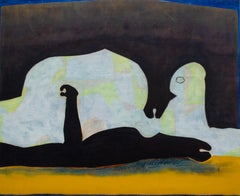
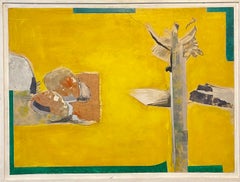
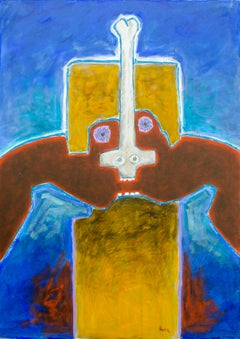
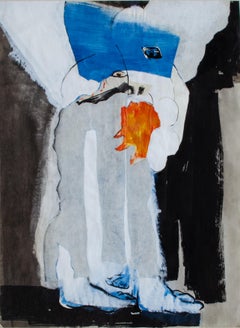
David Hare Cronus Asleep in the Cave, 1971 Acrylic on linen 55 x 67 inches “Freedom is what we want,” David Hare boldly stated in 1965, but then he added the caveat, “and what we are most afraid of.” No one could accuse David Hare of possessing such fear. Blithely unconcerned with the critics’ judgments, Hare flitted through most of the major art developments of the mid-twentieth century in the United States. He changed mediums several times; just when his fame as a sculptor had reached its apogee about 1960, he switched over to painting. Yet he remained attached to surrealism long after it had fallen out of official favor. “I can’t change what I do in order to fit what would make me popular,” he said. “Not because of moral reasons, but just because I can’t do it; I’m not interested in it.” Hare was born in New York City in 1917; his family was both wealthy and familiar with the world of modern art. Meredith (1870-1932), his father, was a prominent corporate attorney. His mother, Elizabeth Sage Goodwin (1878-1948) was an art collector, a financial backer of the 1913 Armory Show, and a friend of artists such as Constantin Brancusi, Walt Kuhn, and Marcel Duchamp. In the 1920s, the entire family moved to Santa Fe, New Mexico and later to Colorado Springs, in the hope that the change in altitude and climate would help to heal Meredith’s tuberculosis. In Colorado Springs, Elizabeth founded the Fountain Valley School where David attended high school after his father died in 1932. In the western United States, Hare developed a fascination for kachina dolls and other aspects of Native American culture that would become a recurring source of inspiration in his career. After high school, Hare briefly attended Bard College (1936-37) in Annandale-on-Hudson. At a loss as to what to do next, he parlayed his mother’s contacts into opening a commercial photography studio and began dabbling in color photography, still a rarity at the time [Kodachrome was introduced in 1935]. At age 22, Hare had his first solo exhibition at Walker Gallery in New York City; his 30 color photographs included one of President Franklin Roosevelt. As a photographer, Hare experimented with an automatist technique called “heatage” (or “melted negatives”) in which he heated the negative in order to distort the image. Hare described them as “antagonisms of matter.” The final products were usually abstractions tending towards surrealism and similar to processes used by Man Ray, Raoul Ubac, and Wolfgang Paalen. In 1940, Hare moved to Roxbury, CT, where he fraternized with neighboring artists such as Alexander Calder and Arshile Gorky, as well as Yves Tanguy who was married to Hare’s cousin Kay Sage, and the art dealer Julian Levy. The same year, Hare received a commission from the American Museum of Natural History to document the Pueblo Indians. He traveled to Santa Fe and, for several months, he took portrait photographs of members of the Hopi, Navajo, and Zuni tribes that were published in book form in 1941. World War II turned Hare’s life upside down. He became a conduit in the exchange of artistic and intellectual ideas between U.S. artists and the surrealist émigrés fleeing Europe. In 1942, Hare befriended Andre Breton, the principal theorist of surrealism. When Breton wanted to publish a magazine to promote the movement in the United States, he could not serve as an editor because he was a foreign national. Instead, Breton selected Hare to edit the journal, entitled VVV [shorth for “Victory, Victory, Victory”], which ran for four issues (the second and third issues were printed as a single volume) from June 1942 to February 1944. Each edition of VVV focused on “poetry, plastic arts, anthropology, sociology, (and) psychology,” and was extensively illustrated by surrealist artists including Giorgio de Chirico, Roberto Matta, and Yves Tanguy; Max Ernst and Marcel Duchamp served as editorial advisors. At the suggestion of Jacqueline Lamba...
Category

1970s David Hare Art

Materials

Linen, Acrylic

"Erotic #1 (Cronus Sex)" David Hare, Surrealist Abstract Composition
By David Hare
Located in New York, NY
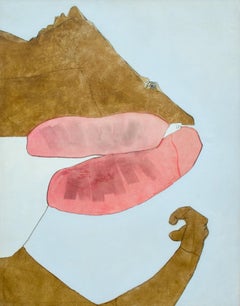
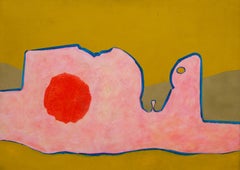
David Hare Erotic #1 (Cronus Sex), 1970 Acrylic and paper collage on linen 68 x 51 inches “Freedom is what we want,” David Hare boldly stated in 1965, but then he added the caveat, ...
Category

1970s Abstract David Hare Art

Materials

Linen, Paper, Acrylic

"Untitled" David Hare, Surrealist, Anthropomorphic, Modernist, Ab-Ex Sculpture
By David Hare
Located in New York, NY
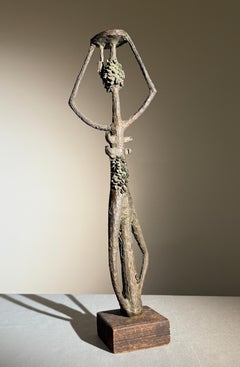
David Hare Untitled, circa 1949 Bronze 25 x 8 x 7 inches Provenance Kootz Gallery, New York Collection of Samuel Kootz New York Estate of the above Collection of Dr. Joyce Kootz, Ne...
Category

1940s Surrealist David Hare Art

Materials

Bronze

"Cronus Elephant" David Hare, Surrealist Abstract Composition Painting
By David Hare
Located in New York, NY
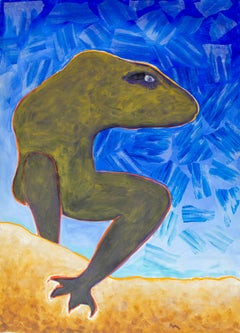
David Hare Cronus Elephant, 1975 Acrylic on linen 82 x 60 inches “Freedom is what we want,” David Hare boldly stated in 1965, but then he added the caveat, “and what we are most afr...
Category

1970s Abstract David Hare Art

Materials

Linen, Acrylic

"Cronus Hunting" David Hare, Surrealist Abstract Mythological Composition
By David Hare
Located in New York, NY
David Hare Cronus Hunting, 1967 Acrylic and paper collage on linen 68 x 53 inches “Freedom is what we want,” David Hare boldly stated in 1965, but then he added the caveat, “and wha...
Category

1960s David Hare Art

Materials

Linen, Paper, Acrylic

"Dancer" David Hare, Male Nude, Figurative Sculpture, Mid-Century Surrealist
By David Hare
Located in New York, NY
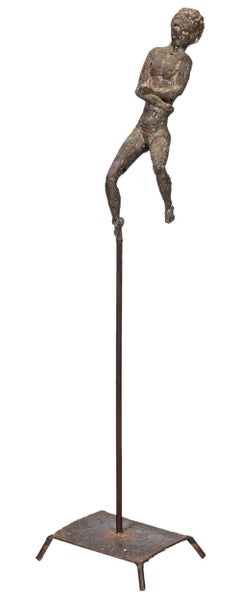
David Hare Dancer, circa 1955 Bronze with integral stand 68 high x 17 wide x 13 1/2 deep inches “Freedom is what we want,” David Hare boldly stated in 1965, but then he added the caveat, “and what we are most afraid of.” No one could accuse David Hare of possessing such fear. Blithely unconcerned with the critics’ judgments, Hare flitted through most of the major art developments of the mid-twentieth century in the United States. He changed mediums several times; just when his fame as a sculptor had reached its apogee about 1960, he switched over to painting. Yet he remained attached to surrealism long after it had fallen out of official favor. “I can’t change what I do in order to fit what would make me popular,” he said. “Not because of moral reasons, but just because I can’t do it; I’m not interested in it.” Hare was born in New York City in 1917; his family was both wealthy and familiar with the world of modern art. Meredith (1870-1932), his father, was a prominent corporate attorney. His mother, Elizabeth Sage Goodwin (1878-1948) was an art collector, a financial backer of the 1913 Armory Show, and a friend of artists such as Constantin Brancusi, Walt Kuhn, and Marcel Duchamp. In the 1920s, the entire family moved to Santa Fe, New Mexico and later to Colorado Springs, in the hope that the change in altitude and climate would help to heal Meredith’s tuberculosis. In Colorado Springs, Elizabeth founded the Fountain Valley School where David attended high school after his father died in 1932. In the western United States, Hare developed a fascination for kachina dolls and other aspects of Native American culture that would become a recurring source of inspiration in his career. After high school, Hare briefly attended Bard College (1936-37) in Annandale-on-Hudson. At a loss as to what to do next, he parlayed his mother’s contacts into opening a commercial photography studio and began dabbling in color photography, still a rarity at the time [Kodachrome was introduced in 1935]. At age 22, Hare had his first solo exhibition at Walker Gallery in New York City; his 30 color photographs included one of President Franklin Roosevelt. As a photographer, Hare experimented with an automatist technique called “heatage” (or “melted negatives”) in which he heated the negative in order to distort the image. Hare described them as “antagonisms of matter.” The final products were usually abstractions tending towards surrealism and similar to processes used by Man Ray, Raoul Ubac, and Wolfgang Paalen. In 1940, Hare moved to Roxbury, CT, where he fraternized with neighboring artists such as Alexander Calder and Arshile Gorky, as well as Yves Tanguy who was married to Hare’s cousin Kay Sage, and the art dealer Julian Levy. The same year, Hare received a commission from the American Museum of Natural History to document the Pueblo Indians. He traveled to Santa Fe and, for several months, he took portrait photographs of members of the Hopi, Navajo, and Zuni tribes that were published in book form in 1941. World War II turned Hare’s life upside down. He became a conduit in the exchange of artistic and intellectual ideas between U.S. artists and the surrealist émigrés fleeing Europe. In 1942, Hare befriended Andre Breton, the principal theorist of surrealism. When Breton wanted to publish a magazine to promote the movement in the United States, he could not serve as an editor because he was a foreign national. Instead, Breton selected Hare to edit the journal, entitled VVV [shorth for “Victory, Victory, Victory”], which ran for four issues (the second and third issues were printed as a single volume) from June 1942 to February 1944. Each edition of VVV focused on “poetry, plastic arts, anthropology, sociology, (and) psychology,” and was extensively illustrated by surrealist artists including Giorgio de Chirico, Roberto Matta, and Yves Tanguy; Max Ernst and Marcel Duchamp served as editorial advisors. At the suggestion of Jacqueline Lamba...
Category

1950s Abstract David Hare Art

Materials

Bronze

"Cronus Descending" David Hare, Mythological Abstract Surrealist Painting
By David Hare
Located in New York, NY
David Hare Cronus Descending, 1971 Acrylic on linen 64 x 46 inches “Freedom is what we want,” David Hare boldly stated in 1965, but then he added the caveat, “and what we are most ...
Category

1970s Abstract David Hare Art

Materials

Linen, Acrylic

"Cronus Waiting" David Hare, Mythological Allegory Surrealist Scene
By David Hare
Located in New York, NY
David Hare Cronus Waiting, 1990 Acrylic on linen 72 x 42 inches “Freedom is what we want,” David Hare boldly stated in 1965, but then he added the caveat, “and what we are most afraid of.” No one could accuse David Hare of possessing such fear. Blithely unconcerned with the critics’ judgments, Hare flitted through most of the major art developments of the mid-twentieth century in the United States. He changed mediums several times; just when his fame as a sculptor had reached its apogee about 1960, he switched over to painting. Yet he remained attached to surrealism long after it had fallen out of official favor. “I can’t change what I do in order to fit what would make me popular,” he said. “Not because of moral reasons, but just because I can’t do it; I’m not interested in it.” Hare was born in New York City in 1917; his family was both wealthy and familiar with the world of modern art. Meredith (1870-1932), his father, was a prominent corporate attorney. His mother, Elizabeth Sage Goodwin (1878-1948) was an art collector, a financial backer of the 1913 Armory Show, and a friend of artists such as Constantin Brancusi, Walt Kuhn, and Marcel Duchamp. In the 1920s, the entire family moved to Santa Fe, New Mexico and later to Colorado Springs, in the hope that the change in altitude and climate would help to heal Meredith’s tuberculosis. In Colorado Springs, Elizabeth founded the Fountain Valley School where David attended high school after his father died in 1932. In the western United States, Hare developed a fascination for kachina dolls and other aspects of Native American culture that would become a recurring source of inspiration in his career. After high school, Hare briefly attended Bard College (1936-37) in Annandale-on-Hudson. At a loss as to what to do next, he parlayed his mother’s contacts into opening a commercial photography studio and began dabbling in color photography, still a rarity at the time [Kodachrome was introduced in 1935]. At age 22, Hare had his first solo exhibition at Walker Gallery in New York City; his 30 color photographs included one of President Franklin Roosevelt. As a photographer, Hare experimented with an automatist technique called “heatage” (or “melted negatives”) in which he heated the negative in order to distort the image. Hare described them as “antagonisms of matter.” The final products were usually abstractions tending towards surrealism and similar to processes used by Man Ray, Raoul Ubac, and Wolfgang Paalen. In 1940, Hare moved to Roxbury, CT, where he fraternized with neighboring artists such as Alexander Calder and Arshile Gorky, as well as Yves Tanguy who was married to Hare’s cousin Kay Sage, and the art dealer Julian Levy. The same year, Hare received a commission from the American Museum of Natural History to document the Pueblo Indians. He traveled to Santa Fe and, for several months, he took portrait photographs of members of the Hopi, Navajo, and Zuni tribes that were published in book form in 1941. World War II turned Hare’s life upside down. He became a conduit in the exchange of artistic and intellectual ideas between U.S. artists and the surrealist émigrés fleeing Europe. In 1942, Hare befriended Andre Breton, the principal theorist of surrealism. When Breton wanted to publish a magazine to promote the movement in the United States, he could not serve as an editor because he was a foreign national. Instead, Breton selected Hare to edit the journal, entitled VVV [shorth for “Victory, Victory, Victory”], which ran for four issues (the second and third issues were printed as a single volume) from June 1942 to February 1944. Each edition of VVV focused on “poetry, plastic arts, anthropology, sociology, (and) psychology,” and was extensively illustrated by surrealist artists including Giorgio de Chirico, Roberto Matta, and Yves Tanguy; Max Ernst and Marcel Duchamp served as editorial advisors. At the suggestion of Jacqueline Lamba...
Category

1990s Abstract David Hare Art

Materials

Linen, Acrylic

1970 Mod Surrealist Painting Collage David Hare Abstract Landscape Summer Land
By David Hare
Located in Surfside, FL
David Hare Summer Land, 1970 Acrylic or oil paint and collage on board Dimensions: 26 X 36 inches. Framed measuring 29 x 38 inches. Hand signed, dated and titled on tape to verso 'Summer Land 1970 Hare'. Provenance: Hamilton Gallery of Contemporary Art, New York David Hare (1917 – 1992) was an American artist, associated with the Surrealist movement. He is primarily known for his sculpture, though he also worked extensively in photography and oil painting. The VVV Surrealism Magazine was first published and edited by Hare in 1942. Born March 10, 1917 in New York City, New York to father Meredith Hare, a lawyer and mother Elizabeth Sage Goodwin, an art collector. In the 1920s the family moved first to Santa Fe, New Mexico and later to Colorado Springs, Colorado, in hope that the fresh air would help heal Meredith Hare's tuberculosis. His mother founded the Fountain Valley School, where David attended high school. After high school Hare married and moved to Roxbury, Connecticut where he worked as a color photographer. He attended Bard College in Annandale-on-Hudson from 1936 to 1937, studying biology and chemistry. In the late 1930s, with no previous artistic training, he began to experiment with color photography. Using his previous education in chemistry Hare developed an automatist technique called "heatage" in which he heated the unfixed negative from an 8 by 10-inch plate, causing the image to ripple and distort. Hare's Surrealist experiments in photography were only one of his many projects. In 1938 he met Susanna Winslow Wilson and the couple soon married. Both David and Susanna pursued their interests in Surrealism and regularly attended Surrealist gatherings in New York Larre French restaurant on 56th street and at Breton's Greenwich Village apartment. In 1940 he received a commission from the American Museum of Natural History to document the Pueblo Indians of the American Southwest, for which he eventually produced 20 prints developed using Eastman Kodak's then-new dye transfer process (a time-consuming and complicated technique). In the same year, he also opened his own commercial photography studio in New York City and exhibited his photographs in a solo show at the Julien Levy Gallery. In the next few years, through his cousin the painter Kay Sage, he came into contact with a number of Surrealist artists who had fled their native Europe because of World War II. Hare became closely involved with the émigré Surrealist movement and collaborated closely with them on projects such as the Surrealist journal VVV, which he co founded and edited from 1941 to 1944 with André Breton, Max Ernst, and Marcel Duchamp. With numerous illustrations by Breton, Leonora Carrington, Marc Chagall, Roberto Matta, Giorgio de Chirico, MarcelDuchamp, Max Ernst, Andre Masson, Joan Miro, Enrico Donati, Dorothea Tanning, and others. Published in only four issues between 1942-44, VVV was an experimental New York-based magazine devoted to the dissemination of Surrealism. Edited by David Hare, the short-lived magazine featured contributions from some of the leading avant-garde artists of the period. David and Susanna divorce in 1945 and Breton’s wife Jacqueline Lamba...
Category

1970s Surrealist David Hare Art

Materials

Acrylic, Board

"Cronus Asleep in the Cave" David Hare, Surrealist Mythological Allegory
By David Hare
Located in New York, NY
David Hare Cronus Asleep in the Cave, 1991 Acrylic on paper on board 26 X 34 1/4 inches “Freedom is what we want,” David Hare boldly stated in 1965, but then he added the caveat, “and what we are most afraid of.” No one could accuse David Hare of possessing such fear. Blithely unconcerned with the critics’ judgments, Hare flitted through most of the major art developments of the mid-twentieth century in the United States. He changed mediums several times; just when his fame as a sculptor had reached its apogee about 1960, he switched over to painting. Yet he remained attached to surrealism long after it had fallen out of official favor. “I can’t change what I do in order to fit what would make me popular,” he said. “Not because of moral reasons, but just because I can’t do it; I’m not interested in it.” Hare was born in New York City in 1917; his family was both wealthy and familiar with the world of modern art. Meredith (1870-1932), his father, was a prominent corporate attorney. His mother, Elizabeth Sage Goodwin (1878-1948) was an art collector, a financial backer of the 1913 Armory Show, and a friend of artists such as Constantin Brancusi, Walt Kuhn, and Marcel Duchamp. In the 1920s, the entire family moved to Santa Fe, New Mexico and later to Colorado Springs, in the hope that the change in altitude and climate would help to heal Meredith’s tuberculosis. In Colorado Springs, Elizabeth founded the Fountain Valley School where David attended high school after his father died in 1932. In the western United States, Hare developed a fascination for kachina dolls and other aspects of Native American culture that would become a recurring source of inspiration in his career. After high school, Hare briefly attended Bard College (1936-37) in Annandale-on-Hudson. At a loss as to what to do next, he parlayed his mother’s contacts into opening a commercial photography studio and began dabbling in color photography, still a rarity at the time [Kodachrome was introduced in 1935]. At age 22, Hare had his first solo exhibition at Walker Gallery in New York City; his 30 color photographs included one of President Franklin Roosevelt. As a photographer, Hare experimented with an automatist technique called “heatage” (or “melted negatives”) in which he heated the negative in order to distort the image. Hare described them as “antagonisms of matter.” The final products were usually abstractions tending towards surrealism and similar to processes used by Man Ray, Raoul Ubac, and Wolfgang Paalen. In 1940, Hare moved to Roxbury, CT, where he fraternized with neighboring artists such as Alexander Calder and Arshile Gorky, as well as Yves Tanguy who was married to Hare’s cousin Kay Sage, and the art dealer Julian Levy. The same year, Hare received a commission from the American Museum of Natural History to document the Pueblo Indians. He traveled to Santa Fe and, for several months, he took portrait photographs of members of the Hopi, Navajo, and Zuni tribes that were published in book form in 1941. World War II turned Hare’s life upside down. He became a conduit in the exchange of artistic and intellectual ideas between U.S. artists and the surrealist émigrés fleeing Europe. In 1942, Hare befriended Andre Breton, the principal theorist of surrealism. When Breton wanted to publish a magazine to promote the movement in the United States, he could not serve as an editor because he was a foreign national. Instead, Breton selected Hare to edit the journal, entitled VVV [shorth for “Victory, Victory, Victory”], which ran for four issues (the second and third issues were printed as a single volume) from June 1942 to February 1944. Each edition of VVV focused on “poetry, plastic arts, anthropology, sociology, (and) psychology,” and was extensively illustrated by surrealist artists including Giorgio de Chirico, Roberto Matta, and Yves Tanguy; Max Ernst and Marcel Duchamp served as editorial advisors. At the suggestion of Jacqueline Lamba...
Category

1990s Abstract David Hare Art

Materials

Paper, Acrylic, Board

"Cronus Dining" David Hare, Yellow White Mythological Surrealist Composition
By David Hare
Located in New York, NY
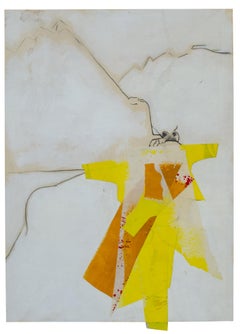
David Hare Cronus Dining, 1968 Graphite, acrylic, paper collage on board 44 x 34 inches “Freedom is what we want,” David Hare boldly stated in 1965, but then he added the caveat, “and what we are most afraid of.” No one could accuse David Hare of possessing such fear. Blithely unconcerned with the critics’ judgments, Hare flitted through most of the major art developments of the mid-twentieth century in the United States. He changed mediums several times; just when his fame as a sculptor had reached its apogee about 1960, he switched over to painting. Yet he remained attached to surrealism long after it had fallen out of official favor. “I can’t change what I do in order to fit what would make me popular,” he said. “Not because of moral reasons, but just because I can’t do it; I’m not interested in it.” Hare was born in New York City in 1917; his family was both wealthy and familiar with the world of modern art. Meredith (1870-1932), his father, was a prominent corporate attorney. His mother, Elizabeth Sage Goodwin (1878-1948) was an art collector, a financial backer of the 1913 Armory Show, and a friend of artists such as Constantin Brancusi, Walt Kuhn, and Marcel Duchamp. In the 1920s, the entire family moved to Santa Fe, New Mexico and later to Colorado Springs, in the hope that the change in altitude and climate would help to heal Meredith’s tuberculosis. In Colorado Springs, Elizabeth founded the Fountain Valley School where David attended high school after his father died in 1932. In the western United States, Hare developed a fascination for kachina dolls and other aspects of Native American culture that would become a recurring source of inspiration in his career. After high school, Hare briefly attended Bard College (1936-37) in Annandale-on-Hudson. At a loss as to what to do next, he parlayed his mother’s contacts into opening a commercial photography studio and began dabbling in color photography, still a rarity at the time [Kodachrome was introduced in 1935]. At age 22, Hare had his first solo exhibition at Walker Gallery in New York City; his 30 color photographs included one of President Franklin Roosevelt. As a photographer, Hare experimented with an automatist technique called “heatage” (or “melted negatives”) in which he heated the negative in order to distort the image. Hare described them as “antagonisms of matter.” The final products were usually abstractions tending towards surrealism and similar to processes used by Man Ray, Raoul Ubac, and Wolfgang Paalen. In 1940, Hare moved to Roxbury, CT, where he fraternized with neighboring artists such as Alexander Calder and Arshile Gorky, as well as Yves Tanguy who was married to Hare’s cousin Kay Sage, and the art dealer Julian Levy. The same year, Hare received a commission from the American Museum of Natural History to document the Pueblo Indians. He traveled to Santa Fe and, for several months, he took portrait photographs of members of the Hopi, Navajo, and Zuni tribes that were published in book form in 1941. World War II turned Hare’s life upside down. He became a conduit in the exchange of artistic and intellectual ideas between U.S. artists and the surrealist émigrés fleeing Europe. In 1942, Hare befriended Andre Breton, the principal theorist of surrealism. When Breton wanted to publish a magazine to promote the movement in the United States, he could not serve as an editor because he was a foreign national. Instead, Breton selected Hare to edit the journal, entitled VVV [shorth for “Victory, Victory, Victory”], which ran for four issues (the second and third issues were printed as a single volume) from June 1942 to February 1944. Each edition of VVV focused on “poetry, plastic arts, anthropology, sociology, (and) psychology,” and was extensively illustrated by surrealist artists including Giorgio de Chirico, Roberto Matta, and Yves Tanguy; Max Ernst and Marcel Duchamp served as editorial advisors. At the suggestion of Jacqueline Lamba...
Category

1960s Abstract David Hare Art

Materials

Paper, Acrylic, Graphite

"Cronus View from the Cave" David Hare, Abstract Surrealist Composition
By David Hare
Located in New York, NY
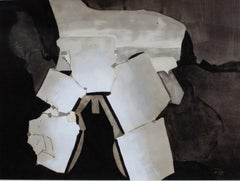
David Hare Cronus View from the Cave, 1971 Graphite, Ink wash, Paper Collage on Paper on Board 25 x 33 inches “Freedom is what we want,” David Hare boldly stated in 1965, but then he added the caveat, “and what we are most afraid of.” No one could accuse David Hare of possessing such fear. Blithely unconcerned with the critics’ judgments, Hare flitted through most of the major art developments of the mid-twentieth century in the United States. He changed mediums several times; just when his fame as a sculptor had reached its apogee about 1960, he switched over to painting. Yet he remained attached to surrealism long after it had fallen out of official favor. “I can’t change what I do in order to fit what would make me popular,” he said. “Not because of moral reasons, but just because I can’t do it; I’m not interested in it.” Hare was born in New York City in 1917; his family was both wealthy and familiar with the world of modern art. Meredith (1870-1932), his father, was a prominent corporate attorney. His mother, Elizabeth Sage Goodwin (1878-1948) was an art collector, a financial backer of the 1913 Armory Show, and a friend of artists such as Constantin Brancusi, Walt Kuhn, and Marcel Duchamp. In the 1920s, the entire family moved to Santa Fe, New Mexico and later to Colorado Springs, in the hope that the change in altitude and climate would help to heal Meredith’s tuberculosis. In Colorado Springs, Elizabeth founded the Fountain Valley School where David attended high school after his father died in 1932. In the western United States, Hare developed a fascination for kachina dolls and other aspects of Native American culture that would become a recurring source of inspiration in his career. After high school, Hare briefly attended Bard College (1936-37) in Annandale-on-Hudson. At a loss as to what to do next, he parlayed his mother’s contacts into opening a commercial photography studio and began dabbling in color photography, still a rarity at the time [Kodachrome was introduced in 1935]. At age 22, Hare had his first solo exhibition at Walker Gallery in New York City; his 30 color photographs included one of President Franklin Roosevelt. As a photographer, Hare experimented with an automatist technique called “heatage” (or “melted negatives”) in which he heated the negative in order to distort the image. Hare described them as “antagonisms of matter.” The final products were usually abstractions tending towards surrealism and similar to processes used by Man Ray, Raoul Ubac, and Wolfgang Paalen. In 1940, Hare moved to Roxbury, CT, where he fraternized with neighboring artists such as Alexander Calder and Arshile Gorky, as well as Yves Tanguy who was married to Hare’s cousin Kay Sage, and the art dealer Julian Levy. The same year, Hare received a commission from the American Museum of Natural History to document the Pueblo Indians. He traveled to Santa Fe and, for several months, he took portrait photographs of members of the Hopi, Navajo, and Zuni tribes that were published in book form in 1941. World War II turned Hare’s life upside down. He became a conduit in the exchange of artistic and intellectual ideas between U.S. artists and the surrealist émigrés fleeing Europe. In 1942, Hare befriended Andre Breton, the principal theorist of surrealism. When Breton wanted to publish a magazine to promote the movement in the United States, he could not serve as an editor because he was a foreign national. Instead, Breton selected Hare to edit the journal, entitled VVV [shorth for “Victory, Victory, Victory”], which ran for four issues (the second and third issues were printed as a single volume) from June 1942 to February 1944. Each edition of VVV focused on “poetry, plastic arts, anthropology, sociology, (and) psychology,” and was extensively illustrated by surrealist artists including Giorgio de Chirico, Roberto Matta, and Yves Tanguy; Max Ernst and Marcel Duchamp served as editorial advisors. At the suggestion of Jacqueline Lamba...
Category

1970s Abstract David Hare Art

Materials

Paper, Ink, Graphite

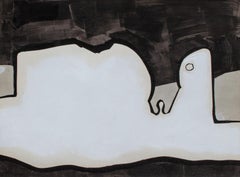
"Cronus Asleep in the Cave" David Hare, Mythological Surrealist Composition
By David Hare
Located in New York, NY
David Hare Cronus Asleep in the Cave, 1971 Acrylic on board 27 1/2 x 38 1/4 inches “Freedom is what we want,” David Hare boldly stated in 1965, but then he added the caveat, “and what we are most afraid of.” No one could accuse David Hare of possessing such fear. Blithely unconcerned with the critics’ judgments, Hare flitted through most of the major art developments of the mid-twentieth century in the United States. He changed mediums several times; just when his fame as a sculptor had reached its apogee about 1960, he switched over to painting. Yet he remained attached to surrealism long after it had fallen out of official favor. “I can’t change what I do in order to fit what would make me popular,” he said. “Not because of moral reasons, but just because I can’t do it; I’m not interested in it.” Hare was born in New York City in 1917; his family was both wealthy and familiar with the world of modern art. Meredith (1870-1932), his father, was a prominent corporate attorney. His mother, Elizabeth Sage Goodwin (1878-1948) was an art collector, a financial backer of the 1913 Armory Show, and a friend of artists such as Constantin Brancusi, Walt Kuhn, and Marcel Duchamp. In the 1920s, the entire family moved to Santa Fe, New Mexico and later to Colorado Springs, in the hope that the change in altitude and climate would help to heal Meredith’s tuberculosis. In Colorado Springs, Elizabeth founded the Fountain Valley School where David attended high school after his father died in 1932. In the western United States, Hare developed a fascination for kachina dolls and other aspects of Native American culture that would become a recurring source of inspiration in his career. After high school, Hare briefly attended Bard College (1936-37) in Annandale-on-Hudson. At a loss as to what to do next, he parlayed his mother’s contacts into opening a commercial photography studio and began dabbling in color photography, still a rarity at the time [Kodachrome was introduced in 1935]. At age 22, Hare had his first solo exhibition at Walker Gallery in New York City; his 30 color photographs included one of President Franklin Roosevelt. As a photographer, Hare experimented with an automatist technique called “heatage” (or “melted negatives”) in which he heated the negative in order to distort the image. Hare described them as “antagonisms of matter.” The final products were usually abstractions tending towards surrealism and similar to processes used by Man Ray, Raoul Ubac, and Wolfgang Paalen. In 1940, Hare moved to Roxbury, CT, where he fraternized with neighboring artists such as Alexander Calder and Arshile Gorky, as well as Yves Tanguy who was married to Hare’s cousin Kay Sage, and the art dealer Julian Levy. The same year, Hare received a commission from the American Museum of Natural History to document the Pueblo Indians. He traveled to Santa Fe and, for several months, he took portrait photographs of members of the Hopi, Navajo, and Zuni tribes that were published in book form in 1941. World War II turned Hare’s life upside down. He became a conduit in the exchange of artistic and intellectual ideas between U.S. artists and the surrealist émigrés fleeing Europe. In 1942, Hare befriended Andre Breton, the principal theorist of surrealism. When Breton wanted to publish a magazine to promote the movement in the United States, he could not serve as an editor because he was a foreign national. Instead, Breton selected Hare to edit the journal, entitled VVV [shorth for “Victory, Victory, Victory”], which ran for four issues (the second and third issues were printed as a single volume) from June 1942 to February 1944. Each edition of VVV focused on “poetry, plastic arts, anthropology, sociology, (and) psychology,” and was extensively illustrated by surrealist artists including Giorgio de Chirico, Roberto Matta, and Yves Tanguy; Max Ernst and Marcel Duchamp served as editorial advisors. At the suggestion of Jacqueline Lamba...
Category

1970s Abstract David Hare Art

Materials

Acrylic

"Cronus Asleep in the Cave" David Hare, Surrealist Mythological Composition
By David Hare
Located in New York, NY
David Hare Cronus Asleep in the Cave, 1971 Acrylic, ink wash, graphite, paper collage on paper on board 26 x 35 inches “Freedom is what we want,” David Hare boldly stated in 1965, b...
Category

1970s Abstract David Hare Art

Materials

Acrylic, Paper, Ink, Graphite

"Cronus Waiting" David Hare, Black and White Surrealist Composition
By David Hare
Located in New York, NY
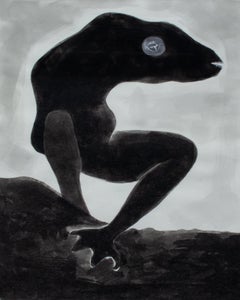
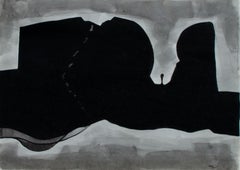
David Hare Cronus Waiting, 1990 Ink and Wash on Paper on Board 34 x 25 1/4 inches “Freedom is what we want,” David Hare boldly stated in 1965, but then he added the caveat, “and what we are most afraid of.” No one could accuse David Hare of possessing such fear. Blithely unconcerned with the critics’ judgments, Hare flitted through most of the major art developments of the mid-twentieth century in the United States. He changed mediums several times; just when his fame as a sculptor had reached its apogee about 1960, he switched over to painting. Yet he remained attached to surrealism long after it had fallen out of official favor. “I can’t change what I do in order to fit what would make me popular,” he said. “Not because of moral reasons, but just because I can’t do it; I’m not interested in it.” Hare was born in New York City in 1917; his family was both wealthy and familiar with the world of modern art. Meredith (1870-1932), his father, was a prominent corporate attorney. His mother, Elizabeth Sage Goodwin (1878-1948) was an art collector, a financial backer of the 1913 Armory Show, and a friend of artists such as Constantin Brancusi, Walt Kuhn, and Marcel Duchamp. In the 1920s, the entire family moved to Santa Fe, New Mexico and later to Colorado Springs, in the hope that the change in altitude and climate would help to heal Meredith’s tuberculosis. In Colorado Springs, Elizabeth founded the Fountain Valley School where David attended high school after his father died in 1932. In the western United States, Hare developed a fascination for kachina dolls and other aspects of Native American culture that would become a recurring source of inspiration in his career. After high school, Hare briefly attended Bard College (1936-37) in Annandale-on-Hudson. At a loss as to what to do next, he parlayed his mother’s contacts into opening a commercial photography studio and began dabbling in color photography, still a rarity at the time [Kodachrome was introduced in 1935]. At age 22, Hare had his first solo exhibition at Walker Gallery in New York City; his 30 color photographs included one of President Franklin Roosevelt. As a photographer, Hare experimented with an automatist technique called “heatage” (or “melted negatives”) in which he heated the negative in order to distort the image. Hare described them as “antagonisms of matter.” The final products were usually abstractions tending towards surrealism and similar to processes used by Man Ray, Raoul Ubac, and Wolfgang Paalen. In 1940, Hare moved to Roxbury, CT, where he fraternized with neighboring artists such as Alexander Calder and Arshile Gorky, as well as Yves Tanguy who was married to Hare’s cousin Kay Sage, and the art dealer Julian Levy. The same year, Hare received a commission from the American Museum of Natural History to document the Pueblo Indians. He traveled to Santa Fe and, for several months, he took portrait photographs of members of the Hopi, Navajo, and Zuni tribes that were published in book form in 1941. World War II turned Hare’s life upside down. He became a conduit in the exchange of artistic and intellectual ideas between U.S. artists and the surrealist émigrés fleeing Europe. In 1942, Hare befriended Andre Breton, the principal theorist of surrealism. When Breton wanted to publish a magazine to promote the movement in the United States, he could not serve as an editor because he was a foreign national. Instead, Breton selected Hare to edit the journal, entitled VVV [shorth for “Victory, Victory, Victory”], which ran for four issues (the second and third issues were printed as a single volume) from June 1942 to February 1944. Each edition of VVV focused on “poetry, plastic arts, anthropology, sociology, (and) psychology,” and was extensively illustrated by surrealist artists including Giorgio de Chirico, Roberto Matta, and Yves Tanguy; Max Ernst and Marcel Duchamp served as editorial advisors. At the suggestion of Jacqueline Lamba...
Category

1990s Abstract David Hare Art

Materials

Paper, Ink, Board

Related Items
"Bird" Abstract Bronze Sculpture with Wooden Base
Located in Houston, TX
W. R. Stevenson's abstract bronze sculpture titled "Bird". The unique sculpture stands on a sleek wooden base and has a plaque that includes the artist and title. Artist Biography: William Robert Stevenson was born in 20 May 1925 in Eugene, Oregon. His family moved to Minneapolis, MN but he promptly returned to Oregon and Washington during the Great Depression to work in the Works Progress Administration (WPA). Hoping to study Art, his future was sidetracked when he was drafted into the United States Army at age 17 years old in early 1942. Being a strong swimmer, and having worked at stables as a child, he initially served in the last US Cavalry Corps, and also as a Swimming Instructor for the United States Army. Upon the abolition of the Cavalry Corps, he was trained as a Gunnar and Tank Commander for the M-4 Sherman Tank under General Patton...
Category

20th Century Abstract David Hare Art

Materials

Bronze

Gymnast (bust), Bronze Sculpture
By Richard MacDonald
Located in Aventura, FL
Bronze sculpture with marble base. Incised artist signature and date. Sculpture size 13.5 x 7 x 6 inches (including base). Sculpture is in excellent condition (marble base has a c...
Category

1980s Surrealist David Hare Art

Materials

Bronze

Gymnast (bust),  Bronze Sculpture
$4,875 Sale Price
25% Off
H 13.5 in W 7 in D 6 in
Reclining Figure (woman)
By William King (b.1925)
Located in Wilton Manors, FL
William King (1925-2015). Reclining figure, ca. 1965. Cast and welded bronze, 7 x 9.5 x 5 inches. Unsigned. William King, a sculptor in a variety of materials whose human figures traced social attitudes through the last half of the 20th century, often poking sly and poignant fun at human follies and foibles, died on March 4 at his home in East Hampton, N.Y. He was 90. His death was confirmed by Scott Chaskey, who is married to Mr. King's stepdaughter, Megan Chaskey. Mr. King worked in clay, wood, bronze, vinyl, burlap and aluminum. He worked both big and small, from busts and toylike figures to large public art pieces depicting familiar human poses -- a seated, cross-legged man reading; a Western couple (he in a cowboy hat, she in a long dress) holding hands; a tall man reaching down to tug along a recalcitrant little boy; a crowd of robotic-looking men walking in lock step. But for all its variation, what unified his work was a wry observer's arched eyebrow, the pointed humor and witty rue of a fatalist. His figurative sculptures, often with long, spidery legs and an outlandishly skewed ratio of torso to appendages, use gestures and posture to suggest attitude and illustrate his own amusement with the unwieldiness of human physical equipment. His subjects included tennis players and gymnasts, dancers and musicians, and he managed to show appreciation of their physical gifts and comic delight at their contortions and costumery. His suit-wearing businessmen often appeared haughty or pompous; his other men could seem timid or perplexed or awkward. Oddly, or perhaps tellingly, he tended to depict women more reverentially, though in his portrayals of couples the fragility and tender comedy inherent in couplehood settled equally on both partners. Mr. King's work is in the collections of the Metropolitan Museum of Art and the Museum of Modern Art in New York and the Smithsonian American Art Museum in Washington, among other places, and he had dozens of solo gallery shows in New York and elsewhere. But the comic element of his work probably caused his reputation to suffer. Reviews of his exhibitions frequently began with the caveat that even though the work was funny, it was also serious, displaying superior technical skills, imaginative vision and the bolstering weight of a range of influences, from the ancient Etruscans to American folk art to 20th-century artists including Giacometti, Calder. and Elie Nadelman. The critic Hilton Kramer, one of Mr. King's most ardent advocates, wrote in a 1970 essay accompanying a New York gallery exhibit that he was, "among other things, an amusing artist, and nowadays this can, at times, be almost as much a liability as an asset." A "preoccupation with gesture is the focus of King's sculptural imagination," Mr. Kramer wrote. "Everything that one admires in his work - the virtuoso carving, the deft handling of a wide variety of materials, the shrewd observation and resourceful invention - all this is secondary to the concentration on gesture. The physical stance of the human animal as it negotiates the social arena, the unconscious gait that the body assumes in making its way in the social medium, the emotion traced by the course of a limb, a torso, a head, the features of a face, a coiffure or a costume - from a keen observation of these materials King has garnered a large stock of sculptural images notable for their wit, empathy, simplicity and psychological precision." William Dickey King...
Category

Mid-20th Century Abstract David Hare Art

Materials

Bronze

Reclining Figure (woman)
$2,800 Sale Price
30% Off
H 7 in W 9.5 in D 5 in
Bintou Italy 1969 Bronze Abstract Sculpture
By Andrea Picini
Located in Brescia, IT
This is an intense bronze abstract sculpture and it was created by the Italian artist Andrea Picini. The artwork is hand made by the technic of the ...
Category

1960s Abstract Expressionist David Hare Art

Materials

Bronze

Homage to Newton (bronze sculpture)
By Salvador Dalí­
Located in Aventura, FL
Bronze with patina sculpture. Incised signature by the artist and stamp numbered with foundry and date. From the edition of 350. Size including marble plinth approx. 15 x 8.5 x 3.5 ...
Category

1980s Surrealist David Hare Art

Materials

Bronze

Homage to Newton (bronze sculpture)
$14,625 Sale Price
25% Off
H 14.6 in W 6.3 in D 2.8 in
Torse Torsade I - original female bronze sculpture art for sale-contemporary Art
By Nicola Godden
Located in London, Chelsea
We offer complimentary worldwide shipping and cover all tariffs and import taxes for this artwork. This exceptional artwork is currently on display and available for sale at Signet C...
Category

21st Century and Contemporary Contemporary David Hare Art

Materials

Bronze

Peace Menorah
By Salvador Dalí­
Located in Missouri, MO
Peace Menorah, 1980 Salvador Dali (Spanish, 1904-1989) Cast Bronze with Silver Finish mounted to Jerusalem Stone base Signed Lower Center Edition H.C. Lower Center (aside from the ed...
Category

1980s Surrealist David Hare Art

Materials

Stone, Silver, Bronze

Peace Menorah
Peace Menorah
$18,000
H 20 in W 12.25 in D 5.75 in
Horizon, Cabo Sardão - Abstract Landscape, Contemporary Painted + Woven Artwork
By Marta Pokojowczyk
Located in Salzburg, AT
‘Horizon. Cabo Sardão’ 2020 Handwoven painting, linen, woollen, silk, cotton yarn, acrylic textile paint, 135 x 65 cm Handwoven painting from the series ‘Horizons’, based on a portuguese landscape...
Category

2010s Contemporary David Hare Art

Materials

Textile, Linen, Yarn, Acrylic

French Contemporary Art by Brigitte Mathé - Abstract 11
By Brigitte Mathé
Located in Paris, IDF
Artwork in acrylic on linen sold with a white frame
Category

2010s Contemporary David Hare Art

Materials

Linen, Acrylic

1976 Abstract Form by Valerie Markwood
Located in New York, NY
Valerie Markwood (American, 20th Century) Black & White & Gray All Over, 1976 Acrylic on linen 42 x 48 x 1 1/2 in. While there is limited information available on Valerie Markwood, ...
Category

1970s Abstract David Hare Art

Materials

Linen, Acrylic

CHROMA aka Rick Wolfryd "CAPTAIN AMERICA:THE SHIELD" huichol sculpture
By CHROMA aka Rick Wolfryd
Located in Cuauhtemoc, Ciudad de México
CAPTAIN AMERICA: THE SHIELD! ! ! ! ! ALTERATION ART . . . is a collaboration process between CHROMA aka Rick Wolfryd, fine artist and art dealer with over 40 years experience, and v...
Category

2010s Surrealist David Hare Art

Materials

Glass, Mixed Media

Flowering - Handwoven Abstract Landscape, Contemporary Woven and Painted Artwork
By Marta Pokojowczyk
Located in Salzburg, AT
From the series Horizons – Sunset 2023 Handwoven painting, linen, cotton yarn, acrylic textile paint, 40 x 50 cm. ‘Horizons’ are a symbiosis of two disciplines of art, Painting and...
Category

2010s Contemporary David Hare Art

Materials

Textile, Cotton, Linen, Yarn, Acrylic

Previously Available Items
"Cronus Dining (Night)" David Hare, Abstract Surrealist Mythological Painting
By David Hare
Located in New York, NY
David Hare Cronus Dining (Night), 1971 Acrylic, ink, paper collage on paper on board 39 1/2 x 29 5/8 inches “Freedom is what we want,” David Hare boldly stated in 1965, but then he ...
Category

1970s Abstract David Hare Art

Materials

Ink, Acrylic, Board

Venus Rising
By David Hare
Located in San Francisco, CA
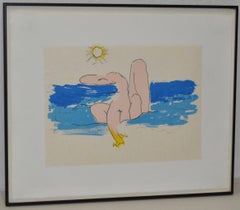
A rare, five-color lithograph by David Hare (American, 1917-1992) from 1987 titled "Venus Rising" Printed by Lynne D. Allen. Printed with aluminum yellow...
Category

Late 20th Century Abstract David Hare Art

Materials

Lithograph

Venus Rising
Venus Rising
H 19.5 in W 23 in D 2 in

David Hare art for sale on 1stDibs.

Find a wide variety of authentic David Hare art available for sale on 1stDibs. You can also browse by medium to find art by David Hare in acrylic paint, board, lithograph and more. Much of the original work by this artist or collective was created during the 20th century and is mostly associated with the Surrealist style. Not every interior allows for large David Hare art, so small editions measuring 23 inches across are available. Customers who are interested in this artist might also find the work of John Hultberg, Valton Tyler, and Thom Cooney-Crawford. David Hare art prices can differ depending upon medium, time period and other attributes. On 1stDibs, the price for these items starts at $750 and tops out at $8,500, while the average work can sell for $4,625.

Recently Viewed

View All