David Hare Mixed Media

American, 1917-1992

David Hare, a surrealist and Abstract Expressionist sculptor and photographer, was born in New York City on March 10, 1917. From 1936–37, he studied biology and chemistry at Bard College in Annandale-on-Hudson, New York. Hare had no formal training in art but began experimenting. He took up photography in the 1930s and by the end of the decade was working in color. The Walker Galleries in New York exhibited his photographs in 1939. From 1941–44, Hare founded and edited the surrealist magazine VVV with André Breton, Marcel Duchamp and Max Ernst. Peggy Guggenheim presented solo shows of Hare's work in her The Art of This Century Gallery from 1944–47. In 1948, he was a founding member, together with William Baziotes, Robert Motherwell and Mark Rothko, of The Subjects of the Artist school in New York and Hare, became friendly with Jean-Paul Sarte. Hare died on December 21, 1992, in Jackson.

to
1
3
Overall Width
to
Overall Height
to
4
2
2
4
3
1
4
3
2
2
2
15
295
264
150
147
3
1
4
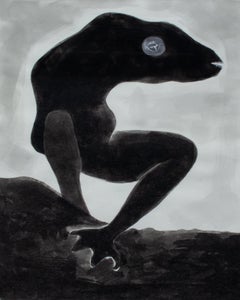
Artist: David Hare
"Cronus Asleep in the Cave" David Hare, Surrealist Mythological Allegory
By David Hare
Located in New York, NY
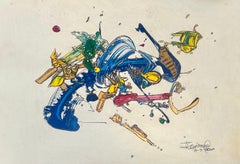
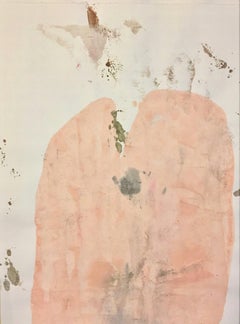
David Hare Cronus Asleep in the Cave, 1991 Acrylic on paper on board 26 X 34 1/4 inches “Freedom is what we want,” David Hare boldly stated in 1965, but then he added the caveat, “and what we are most afraid of.” No one could accuse David Hare of possessing such fear. Blithely unconcerned with the critics’ judgments, Hare flitted through most of the major art developments of the mid-twentieth century in the United States. He changed mediums several times; just when his fame as a sculptor had reached its apogee about 1960, he switched over to painting. Yet he remained attached to surrealism long after it had fallen out of official favor. “I can’t change what I do in order to fit what would make me popular,” he said. “Not because of moral reasons, but just because I can’t do it; I’m not interested in it.” Hare was born in New York City in 1917; his family was both wealthy and familiar with the world of modern art. Meredith (1870-1932), his father, was a prominent corporate attorney. His mother, Elizabeth Sage Goodwin (1878-1948) was an art collector, a financial backer of the 1913 Armory Show, and a friend of artists such as Constantin Brancusi, Walt Kuhn, and Marcel Duchamp. In the 1920s, the entire family moved to Santa Fe, New Mexico and later to Colorado Springs, in the hope that the change in altitude and climate would help to heal Meredith’s tuberculosis. In Colorado Springs, Elizabeth founded the Fountain Valley School where David attended high school after his father died in 1932. In the western United States, Hare developed a fascination for kachina dolls and other aspects of Native American culture that would become a recurring source of inspiration in his career. After high school, Hare briefly attended Bard College (1936-37) in Annandale-on-Hudson. At a loss as to what to do next, he parlayed his mother’s contacts into opening a commercial photography studio and began dabbling in color photography, still a rarity at the time [Kodachrome was introduced in 1935]. At age 22, Hare had his first solo exhibition at Walker Gallery in New York City; his 30 color photographs included one of President Franklin Roosevelt. As a photographer, Hare experimented with an automatist technique called “heatage” (or “melted negatives”) in which he heated the negative in order to distort the image. Hare described them as “antagonisms of matter.” The final products were usually abstractions tending towards surrealism and similar to processes used by Man Ray, Raoul Ubac, and Wolfgang Paalen. In 1940, Hare moved to Roxbury, CT, where he fraternized with neighboring artists such as Alexander Calder and Arshile Gorky, as well as Yves Tanguy who was married to Hare’s cousin Kay Sage, and the art dealer Julian Levy. The same year, Hare received a commission from the American Museum of Natural History to document the Pueblo Indians. He traveled to Santa Fe and, for several months, he took portrait photographs of members of the Hopi, Navajo, and Zuni tribes that were published in book form in 1941. World War II turned Hare’s life upside down. He became a conduit in the exchange of artistic and intellectual ideas between U.S. artists and the surrealist émigrés fleeing Europe. In 1942, Hare befriended Andre Breton, the principal theorist of surrealism. When Breton wanted to publish a magazine to promote the movement in the United States, he could not serve as an editor because he was a foreign national. Instead, Breton selected Hare to edit the journal, entitled VVV [shorth for “Victory, Victory, Victory”], which ran for four issues (the second and third issues were printed as a single volume) from June 1942 to February 1944. Each edition of VVV focused on “poetry, plastic arts, anthropology, sociology, (and) psychology,” and was extensively illustrated by surrealist artists including Giorgio de Chirico, Roberto Matta, and Yves Tanguy; Max Ernst and Marcel Duchamp served as editorial advisors. At the suggestion of Jacqueline Lamba...
Category

1990s Abstract David Hare Mixed Media

Materials

Paper, Acrylic, Board

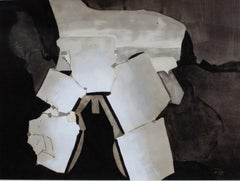
"Cronus View from the Cave" David Hare, Abstract Surrealist Composition
By David Hare
Located in New York, NY
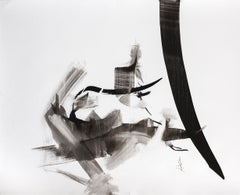
David Hare Cronus View from the Cave, 1971 Graphite, Ink wash, Paper Collage on Paper on Board 25 x 33 inches “Freedom is what we want,” David Hare boldly stated in 1965, but then he added the caveat, “and what we are most afraid of.” No one could accuse David Hare of possessing such fear. Blithely unconcerned with the critics’ judgments, Hare flitted through most of the major art developments of the mid-twentieth century in the United States. He changed mediums several times; just when his fame as a sculptor had reached its apogee about 1960, he switched over to painting. Yet he remained attached to surrealism long after it had fallen out of official favor. “I can’t change what I do in order to fit what would make me popular,” he said. “Not because of moral reasons, but just because I can’t do it; I’m not interested in it.” Hare was born in New York City in 1917; his family was both wealthy and familiar with the world of modern art. Meredith (1870-1932), his father, was a prominent corporate attorney. His mother, Elizabeth Sage Goodwin (1878-1948) was an art collector, a financial backer of the 1913 Armory Show, and a friend of artists such as Constantin Brancusi, Walt Kuhn, and Marcel Duchamp. In the 1920s, the entire family moved to Santa Fe, New Mexico and later to Colorado Springs, in the hope that the change in altitude and climate would help to heal Meredith’s tuberculosis. In Colorado Springs, Elizabeth founded the Fountain Valley School where David attended high school after his father died in 1932. In the western United States, Hare developed a fascination for kachina dolls and other aspects of Native American culture that would become a recurring source of inspiration in his career. After high school, Hare briefly attended Bard College (1936-37) in Annandale-on-Hudson. At a loss as to what to do next, he parlayed his mother’s contacts into opening a commercial photography studio and began dabbling in color photography, still a rarity at the time [Kodachrome was introduced in 1935]. At age 22, Hare had his first solo exhibition at Walker Gallery in New York City; his 30 color photographs included one of President Franklin Roosevelt. As a photographer, Hare experimented with an automatist technique called “heatage” (or “melted negatives”) in which he heated the negative in order to distort the image. Hare described them as “antagonisms of matter.” The final products were usually abstractions tending towards surrealism and similar to processes used by Man Ray, Raoul Ubac, and Wolfgang Paalen. In 1940, Hare moved to Roxbury, CT, where he fraternized with neighboring artists such as Alexander Calder and Arshile Gorky, as well as Yves Tanguy who was married to Hare’s cousin Kay Sage, and the art dealer Julian Levy. The same year, Hare received a commission from the American Museum of Natural History to document the Pueblo Indians. He traveled to Santa Fe and, for several months, he took portrait photographs of members of the Hopi, Navajo, and Zuni tribes that were published in book form in 1941. World War II turned Hare’s life upside down. He became a conduit in the exchange of artistic and intellectual ideas between U.S. artists and the surrealist émigrés fleeing Europe. In 1942, Hare befriended Andre Breton, the principal theorist of surrealism. When Breton wanted to publish a magazine to promote the movement in the United States, he could not serve as an editor because he was a foreign national. Instead, Breton selected Hare to edit the journal, entitled VVV [shorth for “Victory, Victory, Victory”], which ran for four issues (the second and third issues were printed as a single volume) from June 1942 to February 1944. Each edition of VVV focused on “poetry, plastic arts, anthropology, sociology, (and) psychology,” and was extensively illustrated by surrealist artists including Giorgio de Chirico, Roberto Matta, and Yves Tanguy; Max Ernst and Marcel Duchamp served as editorial advisors. At the suggestion of Jacqueline Lamba...
Category

1970s Abstract David Hare Mixed Media

Materials

Paper, Ink, Graphite

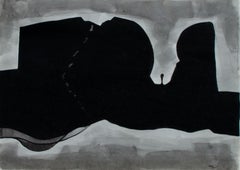
"Cronus Asleep in the Cave" David Hare, Surrealist Mythological Composition
By David Hare
Located in New York, NY
David Hare Cronus Asleep in the Cave, 1971 Acrylic, ink wash, graphite, paper collage on paper on board 26 x 35 inches “Freedom is what we want,” David Hare boldly stated in 1965, b...
Category

1970s Abstract David Hare Mixed Media

Materials

Acrylic, Paper, Ink, Graphite

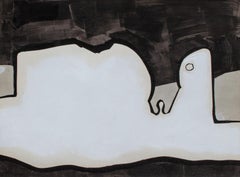
"Cronus Waiting" David Hare, Black and White Surrealist Composition
By David Hare
Located in New York, NY
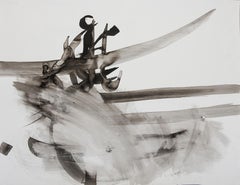
David Hare Cronus Waiting, 1990 Ink and Wash on Paper on Board 34 x 25 1/4 inches “Freedom is what we want,” David Hare boldly stated in 1965, but then he added the caveat, “and what we are most afraid of.” No one could accuse David Hare of possessing such fear. Blithely unconcerned with the critics’ judgments, Hare flitted through most of the major art developments of the mid-twentieth century in the United States. He changed mediums several times; just when his fame as a sculptor had reached its apogee about 1960, he switched over to painting. Yet he remained attached to surrealism long after it had fallen out of official favor. “I can’t change what I do in order to fit what would make me popular,” he said. “Not because of moral reasons, but just because I can’t do it; I’m not interested in it.” Hare was born in New York City in 1917; his family was both wealthy and familiar with the world of modern art. Meredith (1870-1932), his father, was a prominent corporate attorney. His mother, Elizabeth Sage Goodwin (1878-1948) was an art collector, a financial backer of the 1913 Armory Show, and a friend of artists such as Constantin Brancusi, Walt Kuhn, and Marcel Duchamp. In the 1920s, the entire family moved to Santa Fe, New Mexico and later to Colorado Springs, in the hope that the change in altitude and climate would help to heal Meredith’s tuberculosis. In Colorado Springs, Elizabeth founded the Fountain Valley School where David attended high school after his father died in 1932. In the western United States, Hare developed a fascination for kachina dolls and other aspects of Native American culture that would become a recurring source of inspiration in his career. After high school, Hare briefly attended Bard College (1936-37) in Annandale-on-Hudson. At a loss as to what to do next, he parlayed his mother’s contacts into opening a commercial photography studio and began dabbling in color photography, still a rarity at the time [Kodachrome was introduced in 1935]. At age 22, Hare had his first solo exhibition at Walker Gallery in New York City; his 30 color photographs included one of President Franklin Roosevelt. As a photographer, Hare experimented with an automatist technique called “heatage” (or “melted negatives”) in which he heated the negative in order to distort the image. Hare described them as “antagonisms of matter.” The final products were usually abstractions tending towards surrealism and similar to processes used by Man Ray, Raoul Ubac, and Wolfgang Paalen. In 1940, Hare moved to Roxbury, CT, where he fraternized with neighboring artists such as Alexander Calder and Arshile Gorky, as well as Yves Tanguy who was married to Hare’s cousin Kay Sage, and the art dealer Julian Levy. The same year, Hare received a commission from the American Museum of Natural History to document the Pueblo Indians. He traveled to Santa Fe and, for several months, he took portrait photographs of members of the Hopi, Navajo, and Zuni tribes that were published in book form in 1941. World War II turned Hare’s life upside down. He became a conduit in the exchange of artistic and intellectual ideas between U.S. artists and the surrealist émigrés fleeing Europe. In 1942, Hare befriended Andre Breton, the principal theorist of surrealism. When Breton wanted to publish a magazine to promote the movement in the United States, he could not serve as an editor because he was a foreign national. Instead, Breton selected Hare to edit the journal, entitled VVV [shorth for “Victory, Victory, Victory”], which ran for four issues (the second and third issues were printed as a single volume) from June 1942 to February 1944. Each edition of VVV focused on “poetry, plastic arts, anthropology, sociology, (and) psychology,” and was extensively illustrated by surrealist artists including Giorgio de Chirico, Roberto Matta, and Yves Tanguy; Max Ernst and Marcel Duchamp served as editorial advisors. At the suggestion of Jacqueline Lamba...
Category

1990s Abstract David Hare Mixed Media

Materials

Paper, Ink, Board

Related Items
Basement Systems
By Kory Twaddle
Located in Kansas City, MO
Artist : Kory Twaddle Title : Basement Systems Materials : Acrylic, tempera, gouache, and glitter glue on cardboard drawing pad back Date : 2019 Dimensions : 18 x 12 x .2 in. Kory ...
Category

2010s Abstract Expressionist David Hare Mixed Media

Materials

Paint, Paper, Conté, Charcoal, India Ink, Acrylic, Tempera, Watercolor, ...
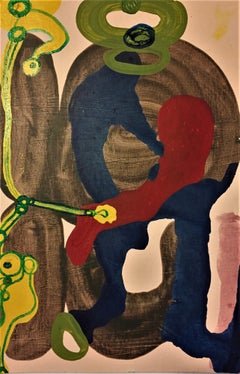
Basement Systems
$1,150
H 18 in W 12 in D 0.2 in
Abstract Composition Diptych
Located in Astoria, NY
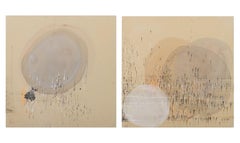
Abstract Composition Diptych, Mixed Media on Paper, laid on board, overlapping transparent circles with a flock of teardrops, apparently unsigned, unframed. Panel: 24" H x 24" W. Pro...
Category

Late 20th Century Abstract David Hare Mixed Media

Materials

Paper, Ink, Watercolor, Gouache, Board

Valentine
By Katherine Bello
Located in Kansas City, MO
Artist : Katherine Bello Title : Valentine Materials : Acrylic and paper on board Date : 1/2020 Dimensions : 18"x18"x.75" Signed and Dated by Hand COA Provided Katherine Bello's aim as an artist is to capture a sense of place, a moment of time, or a feeling - to evoke a sense of wonder. Bello loves paint and paint brushes; bold, gestural mark-making and the interplay of color. She is influenced by light and landscape, poetry, history and science. Formerly educated in Chemical Engineering and Interior Design, Bello is drawn to the process of creating Something out of Nothing. Abstract, sbstract art...
Category

2010s Abstract Expressionist David Hare Mixed Media

Materials

Canvas, Paint, Paper, Mixed Media, Acrylic, Board
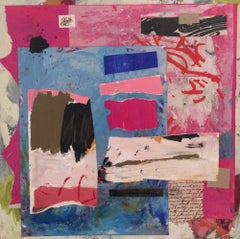
Valentine
$598 Sale Price
40% Off
H 18 in W 18 in D 0.75 in
Song of Jerusalem, Mima amakim
Located in Jerusalem, IL
Touvia b.1980 (Israeli) - SONG OF JERUSALEM - gold leaf, acrylic and lacquer on board Tradition teaches that the 7 colors of the rainbow parallel 7 shades that the soul illuminates ...
Category

21st Century and Contemporary Abstract David Hare Mixed Media

Materials

Acrylic, Board

Song of Jerusalem, Mima
amakim
Song of Jerusalem, Mima
amakim
$9,500
H 39.38 in W 55.12 in
Autumn Biogram of the Nelson
By Kory Twaddle
Located in Kansas City, MO
Artist : Kory Twaddle "Autumn Biogram of the Nelson" Newsprint, graphite, conté crayon pastel, charcoal, beeswax, cardboard, paper, gingko leaves, stickers, and Mixed Media on drawi...
Category

2010s Abstract David Hare Mixed Media

Materials

Paint, Paper, Conté, Charcoal, India Ink, Acrylic, Tempera, Watercolor, ...

Rick Lewis, False Bar, Painting 2021
By Rick Lewis
Located in Stamford, CT
False Bar Oil, bitumen, graphite, sand, dry pigment on paper laid on canvas 38" x 50" I am a visual artist whose work investigates small and large -scale abstraction primarily in t...
Category

2010s Abstract David Hare Mixed Media

Materials

Paper, Ink, Oil, Graphite, Pigment, Canvas, Laid Paper

Rick Lewis, False Bar II, Painting 2021
By Rick Lewis
Located in Stamford, CT
False Bar II Oil, bitumen, graphite, sand, dry pigment on paper laid on canvas 38" x 50" I am a visual artist whose work investigates small and large -scale abstraction primarily i...
Category

2010s Abstract David Hare Mixed Media

Materials

Canvas, Paper, Ink, Oil, Laid Paper, Graphite, Pigment

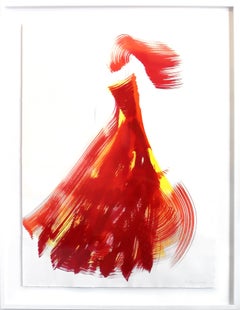
The Red Cloth 49 Original Framed Figurative Abstract Red Dress Painting on Paper
By Bettina Mauel
Located in Los Angeles, CA
Bettina Mauel expresses vitality and sensuality in her abstract and figurative paintings. “I paint what I experience,” she articulates. “This includes landscapes, dancers, and people...
Category

21st Century and Contemporary Abstract Expressionist David Hare Mixed Media

Materials

Graphite, Ink, Paper

Blue Springs Semi Upper Level
By Kory Twaddle
Located in Kansas City, MO
Artist : Kory Twaddle Title : Blue Springs Semi Upper Level Materials : Colored pencil, marker, tempera, gouache, stickers, tape, glitter glue, pastel, oil pastel, acrylic, graphite...
Category

2010s Abstract Geometric David Hare Mixed Media

Materials

Paint, Paper, Conté, Charcoal, India Ink, Acrylic, Tempera, Watercolor, ...

The Wilder Shore of Love, Original painting, Abstract art, Mixed media
By Jon Rowland
Located in Deddington, GB
The Wilder Shore of Love is a paean to the south coast, the celebration of distance, natural power and shoreline. The colours reflect those one finds at the edges of city, where the...
Category

2010s Abstract David Hare Mixed Media

Materials

Paper, Pastel, Ink, Mixed Media, Acrylic, Graphite
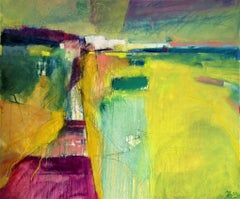
Abstract in Orchid and Jade , San Francisco Art Institute, Large Bay Area Oil
By Kevin Keaney
Located in Santa Cruz, CA
'Abstract in Orchid and Jade' by Kevin Keaney. San Francisco Art Institute, Large Bay Area Oil ---- Signed verso, 'Kevin Keaney' (American, born 1962) and painted circa 1995. This S...
Category

1990s Abstract Expressionist David Hare Mixed Media

Materials

Chalk, House Paint, Acrylic, Board, Laid Paper

California Monoprint
By Kory Twaddle
Located in Kansas City, MO
Artist : Kory Twaddle Title : California Monoprint Materials : Tempera on paper Date : 2008 Dimensions : 36 x 24 x .1 in. Kory Twaddle is a Kansas City based artist and Research A...
Category

Early 2000s Abstract David Hare Mixed Media

Materials

Paint, Paper, Conté, Charcoal, India Ink, Acrylic, Tempera, Watercolor, ...
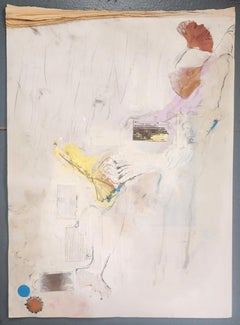
California Monoprint
$1,312
H 36 in W 24 in D 0.1 in

David Hare mixed media for sale on 1stDibs.

Find a wide variety of authentic David Hare mixed media available for sale on 1stDibs. You can also browse by medium to find art by David Hare in board, paper, acrylic paint and more. Much of the original work by this artist or collective was created during the 1990s and is mostly associated with the abstract style. Not every interior allows for large David Hare mixed media, so small editions measuring 26 inches across are available. Customers who are interested in this artist might also find the work of Stanley Boxer, Ivan Chermayeff, and Dan Muller. David Hare mixed media prices can differ depending upon medium, time period and other attributes. On 1stDibs, the price for these items starts at $20,000 and tops out at $25,000, while the average work can sell for $22,500.

Recently Viewed

View All