Delft Dinner Plates
to
2
2
1
2
2
2
1
2
2
2
2
2
2
147
103
81
71
71
Creator: Delft
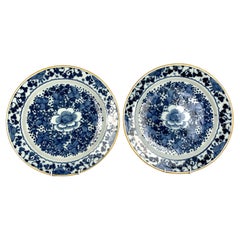
Pair Antique Delft Blue and White Charger Plates Netherlands Circa 1780
By Delft
Located in Katonah, NY
This pair of blue and white Dutch Delft chargers was made in the Netherlands circa 1780.
They feature a vibrant and beautiful design with a large flower at the center, surrounded by ...
Category
Late 18th Century Dutch Chinoiserie Antique Delft Dinner Plates
Materials
Delft
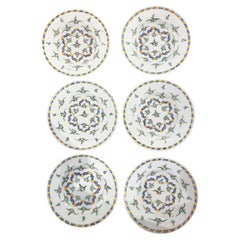
Dutch Delft Set of Six Dinner Plates with Plants and Ribbon
By Delft
Located in Downingtown, PA
Dutch delft set of six dinner plates with plants and ribbon
The charming set of six Dutch delft plates are painted with scattered green and orange plant...
Category
Mid-18th Century Dutch Georgian Antique Delft Dinner Plates
Materials
Ceramic, Delft, Pottery
Related Items
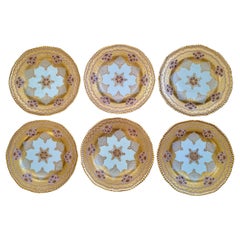
Coalport Six-Piece Set of Gold Dinner Plates
By Coalport Porcelain
Located in San Francisco, CA
Revive the glory of the Gilded Age (minus the backstabbing, corsets vs rib removal, and arsenic for skin whitening) at your dinner table.
If your dining area is all gloomy gray with...
Category
Early 1900s English Edwardian Antique Delft Dinner Plates
Materials
Porcelain

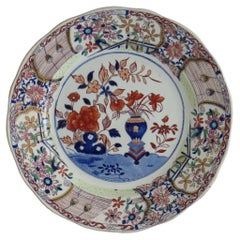
Georgian Masons Ironstone large Dinner Plate in Vase
Rock gilded Ptn, Ca 1818
By Mason
s Ironstone
Located in Lincoln, Lincolnshire
This is a very decorative ironstone pottery Large Dinner Plate produced by the Mason's factory at Lane Delph, Staffordshire, England, circa 1818.
The plate is circular with a wavy indented edge & moulded floral detail to the inner rim edge .
This Plate is beautifully and elaborately decorated in one of Mason's chinoiserie patterns, called Vase and Rock which is sometimes called Peking Vase and tends to be a rarer pattern. The pattern is very richly hand-painted, over-glaze in brilliant enamels of cobalt blue, burnt orange, green, yellow and puce all in varying shades, over a blue transfer printed...
Category
Early 19th Century English Chinoiserie Antique Delft Dinner Plates
Materials
Ironstone
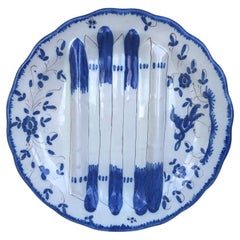
French Faience Blue and White Asparagus Plate, circa 1920
Located in Austin, TX
French faience blue and white asparagus plate, circa 1920.
Category
1920s French Country Vintage Delft Dinner Plates
Materials
Ceramic, Faience
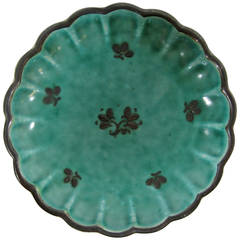
Gustavsberg Argenta Plate, Swedish Art Deco
Located in Hamilton, Ontario
Gustavsberg Argenta plate, Swedish Art Deco.
Stoneware plate with silver inlay, circa 1930s, Sweden.
Free shipping within the United States and...
Category
20th Century Swedish Art Deco Delft Dinner Plates
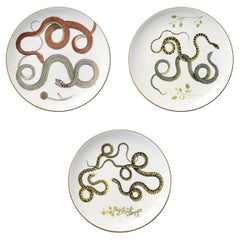
Serpi Dinner Plates N°2 Set of 3 with Red, Green and Grey Snakes
By Laboratorio Paravicini
Located in Milan, IT
Set of 3 smooth white ceramic dinner plates with painted golden rims and geometric undertones. Crafted from finely hand-turned ceramic by Milanese ceramic workshop Paravicini, this s...
Category
2010s Italian Delft Dinner Plates
Materials
Ceramic
$515 / set
H 0.4 in W 9.85 in D 9.85 in
Delft - 18th century
Chinoiserie
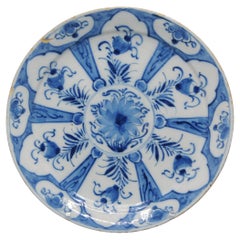
Blue and White Floral Delft Plate
By Delft
Located in DELFT, NL
Delft faience plate with Geometric chinoiserie decoration
Striking blue and white Delftware plate featuring a central medallion with a stylized floral motif. The wide border is finel...
Category
Early 18th Century Dutch Chinoiserie Antique Delft Dinner Plates
Materials
Earthenware, Delft, Faience
English Staffordshire Blue and White Plates
Located in Tampa, FL
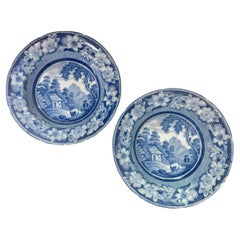
A charming pair of early 19th century blue and white Staffordshire plates dating to circa 1825. Known as the man with the cow pattern each plate features a pastoral scene rendered in...
Category
1820s English Antique Delft Dinner Plates
Materials
Porcelain
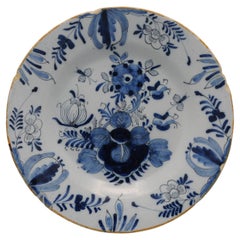
Delft - Blue and white chinoiserie plate - 18th century
By Delft
Located in DELFT, NL
Mid 18th century Blue Delftware plate with chinoiserie inspired decoration comprising flowers and insects.
Condition: some scratching and wear. Some chipping to the rim.
Unmarked...
Category
Late 18th Century Dutch Chinoiserie Antique Delft Dinner Plates
Materials
Earthenware, Faience, Delft
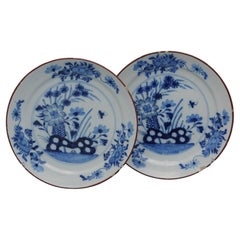
Delft - Pair of blue and white Delftware plates - 18th century
By Delft
Located in DELFT, NL
Good pair of 18th century Dutch Delft Blue chinoiserie dishes decorated with a oriental central flower arrangement behind a rock. The borders adorned with 3 foliage sprigs and brown ...
Category
18th Century Dutch Chinoiserie Antique Delft Dinner Plates
Materials
Earthenware, Delft, Faience
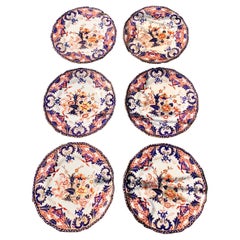
Set of Six Antique Early 19th Century Masons Dinner Plates
By Mason
s Ironstone
Located in New Orleans, LA
A set of six Mason's ironstone Imari Plates, early 19th century, with lovely scalloped, embossed and gilt decorated dinner plates in the typical...
Category
Early 19th Century English George III Antique Delft Dinner Plates
Materials
Stoneware
$960 Sale Price / set
52% Off
H 1 in Dm 10 in
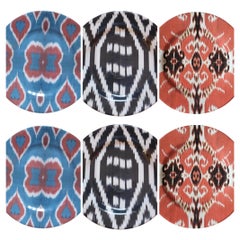
Ikat Ceramic Dinner Plates - Set of 6
By Bertrando Di Renzo
Located in ROCCAVIVARA CB, IT
Ikat patterns are an integral part of our colorful world, celebrating the beauty of this timeless textile technique. Inspired by its rich heritage, we’ve transformed some of our most...
Category
21st Century and Contemporary Italian Modern Delft Dinner Plates
Materials
Ceramic
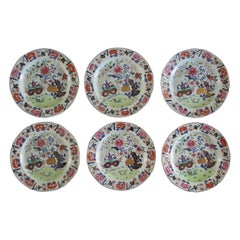
Georgian Set of SIX Masons Dinner Plates in Vase Flowers
Rocks Ptn, Ca 1818
By Mason
s Ironstone
Located in Lincoln, Lincolnshire
These are a fine early set of six ironstone pottery dinner plates made by the Mason's factory at Lane Delph, Staffordshire, England and beautifully decorated in the small vase, flowers and rocks pattern, fully stamped and dating to the earliest period of Mason's Ironstone production, circa 1818.
This design is one of Mason's very decorative Chinoiserie patterns called "Small Vase, Flowers and Rocks" pattern, which is one of Mason's rarer patterns with very rich hand gilding and all hand painted, the detail of each plate being different. This Imari inspired pattern is illustrated on page 110 of a Guide to Mason's Patent Ironstone patterns, circa 1813-1848, produced by The Mason's Collectors Club.
All plates...
Category
Early 19th Century English Georgian Antique Delft Dinner Plates
Materials
Ironstone
$1,571 / set
H 1 in Dm 9.38 in
Previously Available Items
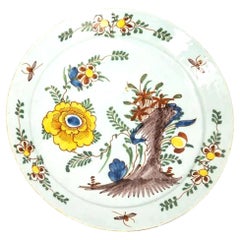
18th century Dutch Delft Polychrome Chinoiserie Plate
By Delft
Located in Downingtown, PA
Dutch Delft Polychrome Chinoiserie Plate
The Dutch Delft pancake plate is colorfully painted with a Chinoiserie design of rockwork with floweri...
Category
Mid-18th Century Georgian Antique Delft Dinner Plates
Materials
Delft
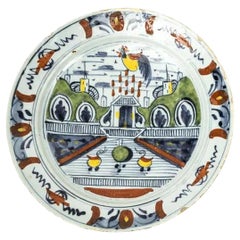
Dutch Delft Polychrome Plate with Garden Scene
By Delft
Located in Downingtown, PA
Dutch Delft polychrome plate with garden scene,
Circa 1765.
The Dutch Delft pancake plate is unusually painted with a garden scene with a stylize...
Category
Mid-18th Century Dutch Georgian Antique Delft Dinner Plates
Materials
Delft
Delft XVIII Century Plate, Pottery white glaze, and Cobalt pattern, Netherland
By Delft
Located in Auribeau sur Siagne, FR
Old Plate in Pottery, with Blue Cobalt Pattern, with white glaze. It has been made in Netherland in the XVIII Century.
Category
Late 18th Century Dutch Antique Delft Dinner Plates
Materials
Pottery
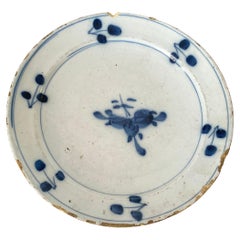
Delft dinner plates for sale on 1stDibs.
Delft dinner plates are available for sale on 1stDibs. These distinctive items are frequently made of earthenware and are designed with extraordinary care. If you’re looking for additional options, many customers also consider dinner plates by Mason's Ironstone, Derby, and John Rose. Prices for Delft dinner plates can differ depending upon size, time period and other attributes — on 1stDibs, these items begin at $550 and can go as high as $550, while a piece like these, on average, fetch $550.
Questions About Delft Dinner Plates
- What is Delft known for?1 Answer1stDibs ExpertApril 5, 2022Delft is known for its blue ceramic pottery called Delftware. Artisans in the Dutch city began producing the earthenware during the 16th century. In addition, Delft is the home of the 17th-century Dutch Baroque painter Johannes Vermeer. You'll find a range of Delftware on 1stDibs.
- 1stDibs ExpertMay 3, 2024To tell how old your Delft is, look for the maker's markings. On most pieces, you will find the painter's initials as well as a two-letter date code. By comparing the date code on your piece to information provided on trusted online resources, you can find out its year of production. If you have trouble locating the date code, a certified appraiser or knowledgeable antiques dealer can assist you with dating. Explore a diverse assortment of Delft pottery on 1stDibs.
- 1stDibs ExpertOctober 7, 2024The difference between Delft and Chinoiserie is that one is a specific type of pottery, and the other is a style of pottery. Chinoiserie is a general term for pottery and other decorative objects produced by Western artisans that draw inspiration from traditional Chinese functional and fine arts. Delft, or Delftware, is tin-glazed pottery made through techniques that originated in Delft, Netherlands. Many pieces of Delftware are examples of Chinoiserie because their decorative embellishments were inspired by Chinese porcelain. On 1stDibs, explore a selection of Delftware and Chinoiserie pottery.
- How can I tell if Delft is real?1 Answer1stDibs ExpertApril 5, 2022To tell if Delft pottery is real, look at it under a magnifying glass. Authentic Delftware should show visible brushstrokes, a sign that the pieces have hand-painted images. You can also turn the piece over and look for a crown cross marking with the words Handpainted, Delft Blue, Made in Holland. On 1stDibs, find a collection of expertly vetted Delft pottery.
- When were Delft tiles made?1 Answer1stDibs ExpertMarch 22, 2022Delft tiles were made during the 17th and 18th centuries. The term refers to earthenware tiles with tin-glaze finishes that were meticulously hand-painted by artisans living in the city of Delft in what is now the Netherlands. Find a selection of Delft tiles on 1stDibs.
- 1stDibs ExpertApril 5, 2022Yes, Delft tiles are still being produced. Delft pottery, also known as Delftware or Delft Blue, refers to a tin-glazed earthenware crafted in the city of Delft in the Netherlands. Delftware is highly coveted due to the intricate nature of the design and is a favorite among home decor enthusiasts. Shop a wide range of authentic Delftware on 1stDibs.
- Is Delft Blue still made?1 Answer1stDibs ExpertApril 5, 2022Delft Blue is in fact still made today. There is one factory left, the Royal Dutch, which has been in operation since 1653. It continues to make delft blue using the traditional methods. You’ll find a variety of Delft blue products from some of the world’s top sellers on 1stDibs.
- How much is Delft pottery worth?1 Answer1stDibs ExpertSeptember 16, 2024How much Delft pottery is worth varies based on characteristics like type, style, age and condition. Selling prices usually start in the low hundreds, with the most valuable examples of Delft pottery worth $10,000 or more. True blue Delftware originates only from a single location: Delft in the Netherlands. These precious pieces pair well with French faience. Unlike Delftware, French faience utilizes a lead-and-tin glaze. To find out how much a specific piece is worth, have a certified appraiser or knowledgeable antique dealer evaluate it. On 1stDibs, shop a large selection of antique Delft pottery.
- 1stDibs ExpertSeptember 23, 2024To identify your Delft pottery marks, try using the factory mark database on the Delfts Aardewerk platform. Several Dutch museums joined forces to create this site in order to educate the public and collectors about Delftware. On it, you'll find hundreds of pictures of makers’ markings and a handy search feature for browsing the images based on a description of your marking. If you're unable to find your mark on the site, a certified appraiser or knowledgeable antique dealer can aid you with making an identification. Explore a selection of Delft pottery on 1stDibs.
- 1stDibs ExpertFebruary 22, 2021Delftware often has a maker's mark on the base or back of the item consisting of letters or figurative symbols to show where the item was manufactured. Today markings will say hand-painted in Holland as well as the phrase Delft blue in Dutch or English.