Dorothy Gillespie Drawings and Watercolor Paintings

to
5
Overall Width
to
Overall Height
to
5
5
5
5
5
5
5
5
6
971
401
358
279
5
Artist: Dorothy Gillespie
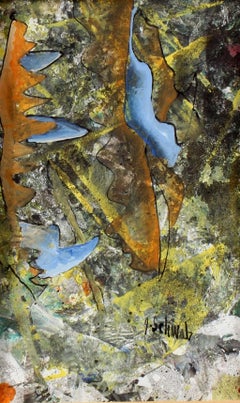
Veiled Series X , Abstract Expressionist Organic Drawing Watercolor Painting
By Dorothy Gillespie
Located in Surfside, FL
Dorothy Gillespie (June 29, 1920 – September 30, 2012) was an American artist and sculptor who became known for her large and colorful abstract metal sculptures. Gillespie became best known for the aluminum sculptures she started to produce at the end of the 1970s. She would paint sheets of the metal, cut them into strips and connect the strips together to resemble cascades or starbursts of bright colored ribbon. The New York Times once summarized her work as “topsy-turvy, merrymaking fantasy,” and in another review declared, “The artist’s exuberant sculptures of colorful aluminum strips have earned her an international reputation.Her works are featured at her alma mater (Radford University) in Virginia, where she later returned to teach, as well as in New York (where she was artist in residence for the feminist Women's Interart Center), Wilmington, North Carolina and Florida. She enrolled both at Radford University near her hometown, and the Maryland Institute College of Art in Baltimore, Maryland. The director of the Maryland Institute, Hans Schuler, helped foster her career in fine art. On June 5, 1943, aged 23, Gillespie moved to New York City. There she took a job at the B. Altman department store as assistant art director. She also joined the Art Students League where she was exposed to new ideas about techniques, materials, and marketing. She also created works at Atelier 17 printmaking studio, where Stanley William Hayter encouraged to experiment with her own ideas. She and her husband, Bernard Israel, opened a restaurant and night club in Greenwich Village to support their family. She returned to making art in 1957, and worked at art full-time after they sold the nightclub in the 1970. In 1977 Gillespie gave her first lecture series at the New School for Social Research, and she would give others there until 1982. She taught at her alma mater as a Visiting Artist (1981-1983) and gave Radford University some of her work to begin its permanent art collection. Gillespie then served as Woodrow Wilson visiting Fellow (1985-1994), visiting many small private colleges to give public lectures and teach young artists. She returned to Radnor University to teach as Distinguished Professor of Art (1997–99).[8] She also hosted a radio program, the Dorothy Gillespie Show on Radio Station WHBI in New York from 1967-1973. Gillespie began moving away from realism and into the abstraction that marked her career. Gillespie returned to New York City in 1963 to continue her career. She maintained a studio through the 70s and advocate worked towards feminist goals in the art industry, picketing the Whitney Museum, helping to organize the Women's Interart Center, curating exhibitions of women's art, and writing articles raising awareness of her cause. Gillespie numbered among her acquaintances such art-world luminaries as Jackson Pollock, Lee Krasner, Alice Neel, Louise Nevelson and Georgia O’Keeffe. “She had amazing stories that unfortunately are gone,” her son said. During the 1960s, she built multimedia art installations that made political statements, such as 1965’s “Made in the USA,” that used blinking colored lights, mirrors, shadow boxes, rotating figures and tape recordings to convey a chaotic look at American commercial fads. The floor was strewn with real dollar bills, which visitors assumed were fake. By the 1980s, Gillespie's work had come to be known internationally. She completed many commissions for sculptures in public places, including Lincoln Center, Rockefeller Center and Walt Disney World Epcot Center in Orlando, Florida. Her work is in many collections across the United States, including the Delaware Museum, the Solomon R. Guggenheim Museum, and the National Museum of Women in the Arts. Her sculptures can also be found in the Frankfurt Museum in Germany and the Tel Aviv Museum in Israel. Group Shows Conceived and Curated by Dorothy Gillespie Women's Interart Center, New York, NY 1974 included: Betty Parsons, Elsie Asher, Alice Baber, Minna Citron, Nancy Spero, Seena Donneson, Alice Neel, Natalie Edgar, Dorothy Gillespie, and Anita Steckel...
Category

Early 2000s Abstract Expressionist Dorothy Gillespie Drawings and Watercolor Paintings

Materials

Paper, Ink, Watercolor, Permanent Marker
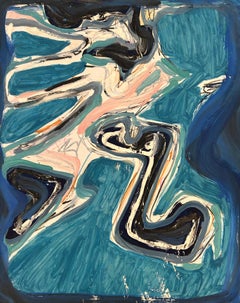
Veiled Series XX , Abstract Expressionist Organic Drawing Watercolor Painting
By Dorothy Gillespie
Located in Surfside, FL
Dorothy Gillespie (June 29, 1920 – September 30, 2012) was an American artist and sculptor who became known for her large and colorful abstract metal sculptures. Gillespie became best known for the aluminum sculptures she started to produce at the end of the 1970s. She would paint sheets of the metal, cut them into strips and connect the strips together to resemble cascades or starbursts of bright colored ribbon. The New York Times once summarized her work as “topsy-turvy, merrymaking fantasy,” and in another review declared, “The artist’s exuberant sculptures of colorful aluminum strips have earned her an international reputation.Her works are featured at her alma mater (Radford University) in Virginia, where she later returned to teach, as well as in New York (where she was artist in residence for the feminist Women's Interart Center), Wilmington, North Carolina and Florida. She enrolled both at Radford University near her hometown, and the Maryland Institute College of Art in Baltimore, Maryland. The director of the Maryland Institute, Hans Schuler, helped foster her career in fine art. On June 5, 1943, aged 23, Gillespie moved to New York City. There she took a job at the B. Altman department store as assistant art director. She also joined the Art Students League where she was exposed to new ideas about techniques, materials, and marketing. She also created works at Atelier 17 printmaking studio, where Stanley William Hayter encouraged to experiment with her own ideas. She and her husband, Bernard Israel, opened a restaurant and night club in Greenwich Village to support their family. She returned to making art in 1957, and worked at art full-time after they sold the nightclub in the 1970. In 1977 Gillespie gave her first lecture series at the New School for Social Research, and she would give others there until 1982. She taught at her alma mater as a Visiting Artist (1981-1983) and gave Radford University some of her work to begin its permanent art collection. Gillespie then served as Woodrow Wilson visiting Fellow (1985-1994), visiting many small private colleges to give public lectures and teach young artists. She returned to Radnor University to teach as Distinguished Professor of Art (1997–99).[8] She also hosted a radio program, the Dorothy Gillespie Show on Radio Station WHBI in New York from 1967-1973. Gillespie began moving away from realism and into the abstraction that marked her career. Gillespie returned to New York City in 1963 to continue her career. She maintained a studio through the 70s and advocate worked towards feminist goals in the art industry, picketing the Whitney Museum, helping to organize the Women's Interart Center, curating exhibitions of women's art, and writing articles raising awareness of her cause. Gillespie numbered among her acquaintances such art-world luminaries as Jackson Pollock, Lee Krasner, Alice Neel, Louise Nevelson and Georgia O’Keeffe. “She had amazing stories that unfortunately are gone,” her son said. During the 1960s, she built multimedia art installations that made political statements, such as 1965’s “Made in the USA,” that used blinking colored lights, mirrors, shadow boxes, rotating figures and tape recordings to convey a chaotic look at American commercial fads. The floor was strewn with real dollar bills, which visitors assumed were fake. By the 1980s, Gillespie's work had come to be known internationally. She completed many commissions for sculptures in public places, including Lincoln Center, Rockefeller Center and Walt Disney World Epcot Center in Orlando, Florida. Her work is in many collections across the United States, including the Delaware Museum, the Solomon R. Guggenheim Museum, and the National Museum of Women in the Arts. Her sculptures can also be found in the Frankfurt Museum in Germany and the Tel Aviv Museum in Israel. Group Shows Conceived and Curated by Dorothy Gillespie Women's Interart Center, New York, NY 1974 included: Betty Parsons, Elsie Asher, Alice Baber, Minna Citron, Nancy Spero, Seena Donneson, Alice Neel, Natalie Edgar, Dorothy Gillespie, and Anita Steckel...
Category

Early 2000s Abstract Expressionist Dorothy Gillespie Drawings and Watercolor Paintings

Materials

Paper, Ink, Watercolor, Permanent Marker
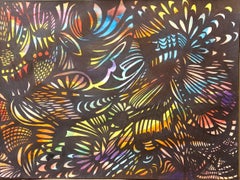
Veiled Series L, Abstract Expressionist Organic Drawing Watercolor Painting
By Dorothy Gillespie
Located in Surfside, FL
Dorothy Gillespie (June 29, 1920 – September 30, 2012) was an American artist and sculptor who became known for her large and colorful abstract metal sculptures. Gillespie became best known for the aluminum sculptures she started to produce at the end of the 1970s. She would paint sheets of the metal, cut them into strips and connect the strips together to resemble cascades or starbursts of bright colored ribbon. The New York Times once summarized her work as “topsy-turvy, merrymaking fantasy,” and in another review declared, “The artist’s exuberant sculptures of colorful aluminum strips have earned her an international reputation.Her works are featured at her alma mater (Radford University) in Virginia, where she later returned to teach, as well as in New York (where she was artist in residence for the feminist Women's Interart Center), Wilmington, North Carolina and Florida. She enrolled both at Radford University near her hometown, and the Maryland Institute College of Art in Baltimore, Maryland. The director of the Maryland Institute, Hans Schuler, helped foster her career in fine art. On June 5, 1943, aged 23, Gillespie moved to New York City. There she took a job at the B. Altman department store as assistant art director. She also joined the Art Students League where she was exposed to new ideas about techniques, materials, and marketing. She also created works at Atelier 17 printmaking studio, where Stanley William Hayter encouraged to experiment with her own ideas. She and her husband, Bernard Israel, opened a restaurant and night club in Greenwich Village to support their family. She returned to making art in 1957, and worked at art full-time after they sold the nightclub in the 1970. In 1977 Gillespie gave her first lecture series at the New School for Social Research, and she would give others there until 1982. She taught at her alma mater as a Visiting Artist (1981-1983) and gave Radford University some of her work to begin its permanent art collection. Gillespie then served as Woodrow Wilson visiting Fellow (1985-1994), visiting many small private colleges to give public lectures and teach young artists. She returned to Radnor University to teach as Distinguished Professor of Art (1997–99).[8] She also hosted a radio program, the Dorothy Gillespie Show on Radio Station WHBI in New York from 1967-1973. Gillespie began moving away from realism and into the abstraction that marked her career. Gillespie returned to New York City in 1963 to continue her career. She maintained a studio through the 70s and advocate worked towards feminist goals in the art industry, picketing the Whitney Museum, helping to organize the Women's Interart Center, curating exhibitions of women's art, and writing articles raising awareness of her cause. Gillespie numbered among her acquaintances such art-world luminaries as Jackson Pollock, Lee Krasner, Alice Neel, Louise Nevelson and Georgia O’Keeffe. “She had amazing stories that unfortunately are gone,” her son said. During the 1960s, she built multimedia art installations that made political statements, such as 1965’s “Made in the USA,” that used blinking colored lights, mirrors, shadow boxes, rotating figures and tape recordings to convey a chaotic look at American commercial fads. The floor was strewn with real dollar bills, which visitors assumed were fake. By the 1980s, Gillespie's work had come to be known internationally. She completed many commissions for sculptures in public places, including Lincoln Center, Rockefeller Center and Walt Disney World Epcot Center in Orlando, Florida. Her work is in many collections across the United States, including the Delaware Museum, the Solomon R. Guggenheim Museum, and the National Museum of Women in the Arts. Her sculptures can also be found in the Frankfurt Museum in Germany and the Tel Aviv Museum in Israel. Group Shows Conceived and Curated by Dorothy Gillespie Women's Interart Center, New York, NY 1974 included: Betty Parsons, Elsie Asher, Alice Baber, Minna Citron, Nancy Spero, Seena Donneson, Alice Neel, Natalie Edgar, Dorothy Gillespie, and Anita Steckel...
Category

Early 2000s Abstract Expressionist Dorothy Gillespie Drawings and Watercolor Paintings

Materials

Paper, Ink, Watercolor, Permanent Marker
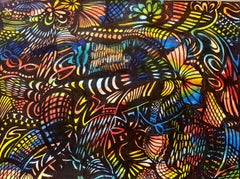
Veiled Series LX , Abstract Expressionist Organic Drawing Watercolor Painting
By Dorothy Gillespie
Located in Surfside, FL
Dorothy Gillespie (June 29, 1920 – September 30, 2012) was an American artist and sculptor who became known for her large and colorful abstract metal sculptures. Gillespie became best known for the aluminum sculptures she started to produce at the end of the 1970s. She would paint sheets of the metal, cut them into strips and connect the strips together to resemble cascades or starbursts of bright colored ribbon. The New York Times once summarized her work as “topsy-turvy, merrymaking fantasy,” and in another review declared, “The artist’s exuberant sculptures of colorful aluminum strips have earned her an international reputation.Her works are featured at her alma mater (Radford University) in Virginia, where she later returned to teach, as well as in New York (where she was artist in residence for the feminist Women's Interart Center), Wilmington, North Carolina and Florida. She enrolled both at Radford University near her hometown, and the Maryland Institute College of Art in Baltimore, Maryland. The director of the Maryland Institute, Hans Schuler, helped foster her career in fine art. On June 5, 1943, aged 23, Gillespie moved to New York City. There she took a job at the B. Altman department store as assistant art director. She also joined the Art Students League where she was exposed to new ideas about techniques, materials, and marketing. She also created works at Atelier 17 printmaking studio, where Stanley William Hayter encouraged to experiment with her own ideas. She and her husband, Bernard Israel, opened a restaurant and night club in Greenwich Village to support their family. She returned to making art in 1957, and worked at art full-time after they sold the nightclub in the 1970. In 1977 Gillespie gave her first lecture series at the New School for Social Research, and she would give others there until 1982. She taught at her alma mater as a Visiting Artist (1981-1983) and gave Radford University some of her work to begin its permanent art collection. Gillespie then served as Woodrow Wilson visiting Fellow (1985-1994), visiting many small private colleges to give public lectures and teach young artists. She returned to Radnor University to teach as Distinguished Professor of Art (1997–99).[8] She also hosted a radio program, the Dorothy Gillespie Show on Radio Station WHBI in New York from 1967-1973. Gillespie began moving away from realism and into the abstraction that marked her career. Gillespie returned to New York City in 1963 to continue her career. She maintained a studio through the 70s and advocate worked towards feminist goals in the art industry, picketing the Whitney Museum, helping to organize the Women's Interart Center, curating exhibitions of women's art, and writing articles raising awareness of her cause. Gillespie numbered among her acquaintances such art-world luminaries as Jackson Pollock, Lee Krasner, Alice Neel, Louise Nevelson and Georgia O’Keeffe. “She had amazing stories that unfortunately are gone,” her son said. During the 1960s, she built multimedia art installations that made political statements, such as 1965’s “Made in the USA,” that used blinking colored lights, mirrors, shadow boxes, rotating figures and tape recordings to convey a chaotic look at American commercial fads. The floor was strewn with real dollar bills, which visitors assumed were fake. By the 1980s, Gillespie's work had come to be known internationally. She completed many commissions for sculptures in public places, including Lincoln Center, Rockefeller Center and Walt Disney World Epcot Center in Orlando, Florida. Her work is in many collections across the United States, including the Delaware Museum, the Solomon R. Guggenheim Museum, and the National Museum of Women in the Arts. Her sculptures can also be found in the Frankfurt Museum in Germany and the Tel Aviv Museum in Israel. Group Shows Conceived and Curated by Dorothy Gillespie Women's Interart Center, New York, NY 1974 included: Betty Parsons, Elsie Asher, Alice Baber, Minna Citron, Nancy Spero, Seena Donneson, Alice Neel, Natalie Edgar, Dorothy Gillespie, and Anita Steckel...
Category

Early 2000s Abstract Expressionist Dorothy Gillespie Drawings and Watercolor Paintings

Materials

Paper, Ink, Watercolor, Permanent Marker
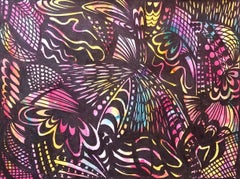
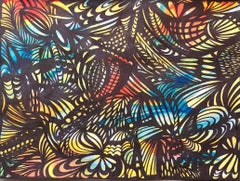
Veiled Series XXX, Abstract Expressionist Organic Drawing Watercolor Painting
By Dorothy Gillespie
Located in Surfside, FL
Dorothy Gillespie (June 29, 1920 – September 30, 2012) was an American artist and sculptor who became known for her large and colorful abstract metal sculptures. Gillespie became best known for the aluminum sculptures she started to produce at the end of the 1970s. She would paint sheets of the metal, cut them into strips and connect the strips together to resemble cascades or starbursts of bright colored ribbon. The New York Times once summarized her work as “topsy-turvy, merrymaking fantasy,” and in another review declared, “The artist’s exuberant sculptures of colorful aluminum strips have earned her an international reputation.Her works are featured at her alma mater (Radford University) in Virginia, where she later returned to teach, as well as in New York (where she was artist in residence for the feminist Women's Interart Center), Wilmington, North Carolina and Florida. She enrolled both at Radford University near her hometown, and the Maryland Institute College of Art in Baltimore, Maryland. The director of the Maryland Institute, Hans Schuler, helped foster her career in fine art. On June 5, 1943, aged 23, Gillespie moved to New York City. There she took a job at the B. Altman department store as assistant art director. She also joined the Art Students League where she was exposed to new ideas about techniques, materials, and marketing. She also created works at Atelier 17 printmaking studio, where Stanley William Hayter encouraged to experiment with her own ideas. She and her husband, Bernard Israel, opened a restaurant and night club in Greenwich Village to support their family. She returned to making art in 1957, and worked at art full-time after they sold the nightclub in the 1970. In 1977 Gillespie gave her first lecture series at the New School for Social Research, and she would give others there until 1982. She taught at her alma mater as a Visiting Artist (1981-1983) and gave Radford University some of her work to begin its permanent art collection. Gillespie then served as Woodrow Wilson visiting Fellow (1985-1994), visiting many small private colleges to give public lectures and teach young artists. She returned to Radnor University to teach as Distinguished Professor of Art (1997–99).[8] She also hosted a radio program, the Dorothy Gillespie Show on Radio Station WHBI in New York from 1967-1973. Gillespie began moving away from realism and into the abstraction that marked her career. Gillespie returned to New York City in 1963 to continue her career. She maintained a studio through the 70s and advocate worked towards feminist goals in the art industry, picketing the Whitney Museum, helping to organize the Women's Interart Center, curating exhibitions of women's art, and writing articles raising awareness of her cause. Gillespie numbered among her acquaintances such art-world luminaries as Jackson Pollock, Lee Krasner, Alice Neel, Louise Nevelson and Georgia O’Keeffe. “She had amazing stories that unfortunately are gone,” her son said. During the 1960s, she built multimedia art installations that made political statements, such as 1965’s “Made in the USA,” that used blinking colored lights, mirrors, shadow boxes, rotating figures and tape recordings to convey a chaotic look at American commercial fads. The floor was strewn with real dollar bills, which visitors assumed were fake. By the 1980s, Gillespie's work had come to be known internationally. She completed many commissions for sculptures in public places, including Lincoln Center, Rockefeller Center and Walt Disney World Epcot Center in Orlando, Florida. Her work is in many collections across the United States, including the Delaware Museum, the Solomon R. Guggenheim Museum, and the National Museum of Women in the Arts. Her sculptures can also be found in the Frankfurt Museum in Germany and the Tel Aviv Museum in Israel. Group Shows Conceived and Curated by Dorothy Gillespie Women's Interart Center, New York, NY 1974 included: Betty Parsons, Elsie Asher, Alice Baber, Minna Citron, Nancy Spero, Seena Donneson, Alice Neel, Natalie Edgar, Dorothy Gillespie, and Anita Steckel...
Category

Early 2000s Abstract Expressionist Dorothy Gillespie Drawings and Watercolor Paintings

Materials

Paper, Ink, Watercolor, Permanent Marker
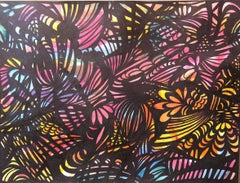
Related Items
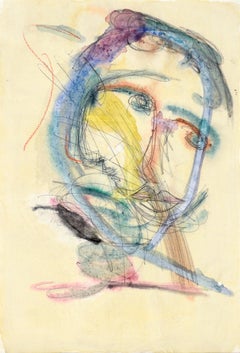
Argentinian Tango, Mixed Media Abstract Expressionist
Located in Soquel, CA
Argentinian Tango, Mixed Media Abstract Expressionist An abstract portrait in cool pastels accented in vibrant yellow and pink and lined in ink, by California-based artist, Ricardo de Silva (American). Paper size: 17.75"H x 12"W From a collection of Ricardo de Silva's work and memorabilia. DeSilva was born in Brazil and grew up in Los Angeles. He was a gallery owner, first in Santa Barbara in the 1960's and 70's, then in San Jose in the 1980's. He was dedicated to promoting the work of talented upcoming artists, including Kogyo and Hasui Kiyochika, Robert Frame, Jim Stuckenberg, Alice Robertson Carr, Deborah Eve Alastra...
Category

21st Century and Contemporary Abstract Expressionist Dorothy Gillespie Drawings and Watercolor Paintings

Materials

Paper, Gouache, Ink, Watercolor

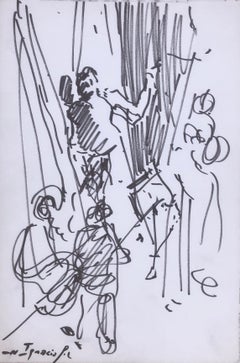
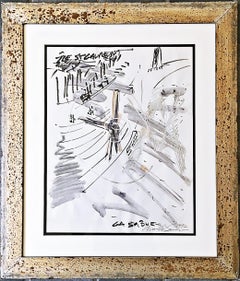
double-sided marker drawing spanish abstract expressionism
By Ignacio Gil Sala
Located in Sitges, Barcelona
One side signed. Lower right corner slightly bent. Measures 29x20. Frameless. Ignacio Gil Sala, was a painter, bohemian character, adventurous and intrepid traveler who knew how to ...
Category

1980s Abstract Expressionist Dorothy Gillespie Drawings and Watercolor Paintings

Materials

Permanent Marker

First Floor Biogram
By Kory Twaddle
Located in Kansas City, MO
Title : First Floor Biogram Materials : Acrylic, gouache, oil pastel, marker, charcoal, graphite, and conté crayon on paper Date : 2018 Dimensions : 24 x 18 x .1 in. Description : ...
Category

2010s Abstract Expressionist Dorothy Gillespie Drawings and Watercolor Paintings

Materials

Paint, Paper, Acrylic, Tempera, Watercolor, Graphite, Conté, Oil Pastel,...
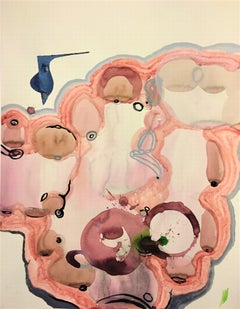
First Floor Biogram
$599 Sale Price
51% Off
H 24 in W 18 in D 0.1 in
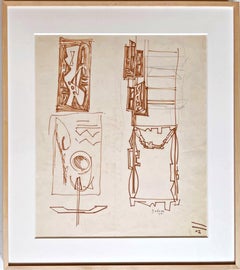
Dorothy Dehner, Mid Century Modern signed abstract sculptural drawing, Framed
By Dorothy Dehner
Located in New York, NY
Dorothy Dehner Untitled Mid Century Modern abstract sculptural drawing, 1955 Marker and graphite on paper Signed and dated by Dorothy Dehner in black felt tip pen on the front Frame ...
Category

1950s Abstract Expressionist Dorothy Gillespie Drawings and Watercolor Paintings

Materials

Mixed Media, Permanent Marker, Graphite
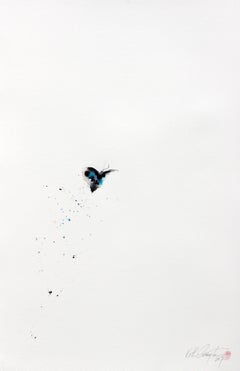
Rise Blue Butterfly Ink Watercolor on Paper
By Keith Carrington
Located in Lake Worth Beach, FL
Rise Blue Butterfly Watercolor, ink on archival paper Keith Carrington’s experiences have led him to express his talents through the fluid & exactin...
Category

2010s Abstract Expressionist Dorothy Gillespie Drawings and Watercolor Paintings

Materials

Ink, Watercolor, Archival Paper

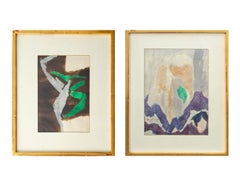
Abstract Compositions, 2
Located in Astoria, NY
Willard MacGregor (American, 1901-1993), Two Abstract Compositions, Watercolor on Paper, 1983 and 1989, each signed and dated lower left, ebonized giltwood frames. Larger image: 11.2...
Category

1980s Abstract Expressionist Dorothy Gillespie Drawings and Watercolor Paintings

Materials

Paper, Ink, Watercolor

Thomas Anderson Abstract Expressionist painting on paper, unique, signed, Framed
By Thomas Anderson
Located in New York, NY
Thomas Anderson Abstract Expressionist painting on paper, ca. 1987 Mixed media watercolor, gouache and marker on paper Signed in black marker lower right front Unique Frame included ...
Category

1980s Abstract Expressionist Dorothy Gillespie Drawings and Watercolor Paintings

Materials

Paper, Watercolor, Gouache, Permanent Marker
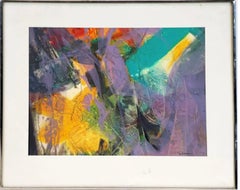
Abstract Composition
Located in Buffalo, NY
An original compact mid century watercolor in its original frame presentation. The work is signed "Schwab" with an illegible first initial.
Category

1960s Abstract Expressionist Dorothy Gillespie Drawings and Watercolor Paintings

Materials

Paper, Watercolor, Pen

Graffiti Style Abstract Blue and Black Mixed Media Painting on Paper
By Renelio Marin
Located in New York, NY
Renelio Marin is a visual artist with a diverse range of influences and styles. Born in Cuba, he received his graduate degree from the San Alejandro School of Fine Arts in Havana in ...
Category

2010s Abstract Expressionist Dorothy Gillespie Drawings and Watercolor Paintings

Materials

Acrylic, Permanent Marker

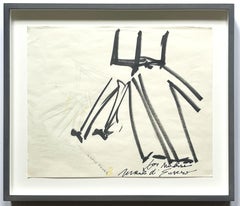
Grass Power, original unique signed drawing, hand signed and inscribed; Framed
By Mark di Suvero
Located in New York, NY
Mark di Suvero Grass Power, 1979-2014 Mixed Media drawing: marker, ink and pencil on paper Hand titled, signed and inscribed to Nadine by Mark di Suvero Frame included: Floated and f...
Category

2010s Abstract Expressionist Dorothy Gillespie Drawings and Watercolor Paintings

Materials

Paper, Ink, Permanent Marker, Pencil, Mixed Media
Orchid Red, unique signed work on handmade hand dyed paper ex Tupperware Coll.
Located in New York, NY
Margie Hughto Orchid & Red, 1983 Dyed Handmade paper Hand signed and dated by the artist on the lower right front. Titled on the back. Unique Frame Inclu...
Category

1980s Abstract Expressionist Dorothy Gillespie Drawings and Watercolor Paintings

Materials

Dye, Handmade Paper, Mixed Media, Permanent Marker
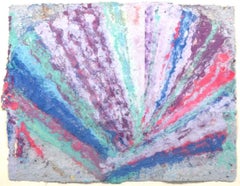
Mark di Suvero - Project for Sculpture, Chalon-sur-Saône, Signed, Unique, Framed
By Mark di Suvero
Located in New York, NY
Mark di Suvero Project for Sculpture in Chalon-sur-Saône, 1992 Marker, Watercolor and Ink Wash on Paper. Hand signed and dated by artist on lower right front Uique Frame included: el...
Category

1990s Abstract Expressionist Dorothy Gillespie Drawings and Watercolor Paintings

Materials

Ink, Watercolor, Permanent Marker

Previously Available Items
Veiled Series X , Abstract Expressionist Organic Drawing Watercolor Painting
By Dorothy Gillespie
Located in Surfside, FL
Dorothy Gillespie (June 29, 1920 – September 30, 2012) was an American artist and sculptor who became known for her large and colorful abstract metal sculptures. Gillespie became best known for the aluminum sculptures she started to produce at the end of the 1970s. She would paint sheets of the metal, cut them into strips and connect the strips together to resemble cascades or starbursts of bright colored ribbon. The New York Times once summarized her work as “topsy-turvy, merrymaking fantasy,” and in another review declared, “The artist’s exuberant sculptures of colorful aluminum strips have earned her an international reputation.Her works are featured at her alma mater (Radford University) in Virginia, where she later returned to teach, as well as in New York (where she was artist in residence for the feminist Women's Interart Center), Wilmington, North Carolina and Florida. She enrolled both at Radford University near her hometown, and the Maryland Institute College of Art in Baltimore, Maryland. The director of the Maryland Institute, Hans Schuler, helped foster her career in fine art. On June 5, 1943, aged 23, Gillespie moved to New York City. There she took a job at the B. Altman department store as assistant art director. She also joined the Art Students League where she was exposed to new ideas about techniques, materials, and marketing. She also created works at Atelier 17 printmaking studio, where Stanley William Hayter encouraged to experiment with her own ideas. She and her husband, Bernard Israel, opened a restaurant and night club in Greenwich Village to support their family. She returned to making art in 1957, and worked at art full-time after they sold the nightclub in the 1970. In 1977 Gillespie gave her first lecture series at the New School for Social Research, and she would give others there until 1982. She taught at her alma mater as a Visiting Artist (1981-1983) and gave Radford University some of her work to begin its permanent art collection. Gillespie then served as Woodrow Wilson visiting Fellow (1985-1994), visiting many small private colleges to give public lectures and teach young artists. She returned to Radnor University to teach as Distinguished Professor of Art (1997–99).[8] She also hosted a radio program, the Dorothy Gillespie Show on Radio Station WHBI in New York from 1967-1973. Gillespie began moving away from realism and into the abstraction that marked her career. Gillespie returned to New York City in 1963 to continue her career. She maintained a studio through the 70s and advocate worked towards feminist goals in the art industry, picketing the Whitney Museum, helping to organize the Women's Interart Center, curating exhibitions of women's art, and writing articles raising awareness of her cause. Gillespie numbered among her acquaintances such art-world luminaries as Jackson Pollock, Lee Krasner, Alice Neel, Louise Nevelson and Georgia O’Keeffe. “She had amazing stories that unfortunately are gone,” her son said. During the 1960s, she built multimedia art installations that made political statements, such as 1965’s “Made in the USA,” that used blinking colored lights, mirrors, shadow boxes, rotating figures and tape recordings to convey a chaotic look at American commercial fads. The floor was strewn with real dollar bills, which visitors assumed were fake. By the 1980s, Gillespie's work had come to be known internationally. She completed many commissions for sculptures in public places, including Lincoln Center, Rockefeller Center and Walt Disney World Epcot Center in Orlando, Florida. Her work is in many collections across the United States, including the Delaware Museum, the Solomon R. Guggenheim Museum, and the National Museum of Women in the Arts. Her sculptures can also be found in the Frankfurt Museum in Germany and the Tel Aviv Museum in Israel. Group Shows Conceived and Curated by Dorothy Gillespie Women's Interart Center, New York, NY 1974 included: Betty Parsons, Elsie Asher, Alice Baber, Minna Citron, Nancy Spero, Seena Donneson, Alice Neel, Natalie Edgar, Dorothy Gillespie, and Anita Steckel. Alice Baber, Isabel Bishop, Audrey Flack, Mary Frank, Buffie Johnson, Yvonne Jacquette, Lila Katzen, Elaine De Kooning, Joyce Wienstein. "Women Artists Paint Women Artists," Virginia Miller Gallery, Miami, FL 1978; "Artist Choice," Clayworks Gallery, New York, NY 1979, included: Marisol, Joyce Weinstein, Marlyn Dintenfass, Clinton Hill, Joe Stallone, Peter Voulkos, David Hare, Susan Weil, Philip Pavia, Ka Kwong Hui...
Category

Early 2000s Abstract Expressionist Dorothy Gillespie Drawings and Watercolor Paintings

Materials

Paper, Ink, Watercolor, Permanent Marker
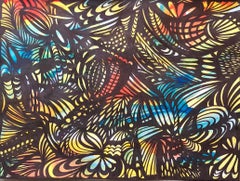
Veiled Series LX , Abstract Expressionist Organic Drawing Watercolor Painting
By Dorothy Gillespie
Located in Surfside, FL
Dorothy Gillespie (June 29, 1920 – September 30, 2012) was an American artist and sculptor who became known for her large and colorful abstract metal sculptures. Gillespie became best known for the aluminum sculptures she started to produce at the end of the 1970s. She would paint sheets of the metal, cut them into strips and connect the strips together to resemble cascades or starbursts of bright colored ribbon. The New York Times once summarized her work as “topsy-turvy, merrymaking fantasy,” and in another review declared, “The artist’s exuberant sculptures of colorful aluminum strips have earned her an international reputation.Her works are featured at her alma mater (Radford University) in Virginia, where she later returned to teach, as well as in New York (where she was artist in residence for the feminist Women's Interart Center), Wilmington, North Carolina and Florida. She enrolled both at Radford University near her hometown, and the Maryland Institute College of Art in Baltimore, Maryland. The director of the Maryland Institute, Hans Schuler, helped foster her career in fine art. On June 5, 1943, aged 23, Gillespie moved to New York City. There she took a job at the B. Altman department store as assistant art director. She also joined the Art Students League where she was exposed to new ideas about techniques, materials, and marketing. She also created works at Atelier 17 printmaking studio, where Stanley William Hayter encouraged to experiment with her own ideas. She and her husband, Bernard Israel, opened a restaurant and night club in Greenwich Village to support their family. She returned to making art in 1957, and worked at art full-time after they sold the nightclub in the 1970. In 1977 Gillespie gave her first lecture series at the New School for Social Research, and she would give others there until 1982. She taught at her alma mater as a Visiting Artist (1981-1983) and gave Radford University some of her work to begin its permanent art collection. Gillespie then served as Woodrow Wilson visiting Fellow (1985-1994), visiting many small private colleges to give public lectures and teach young artists. She returned to Radnor University to teach as Distinguished Professor of Art (1997–99).[8] She also hosted a radio program, the Dorothy Gillespie Show on Radio Station WHBI in New York from 1967-1973. Gillespie began moving away from realism and into the abstraction that marked her career. Gillespie returned to New York City in 1963 to continue her career. She maintained a studio through the 70s and advocate worked towards feminist goals in the art industry, picketing the Whitney Museum, helping to organize the Women's Interart Center, curating exhibitions of women's art, and writing articles raising awareness of her cause. Gillespie numbered among her acquaintances such art-world luminaries as Jackson Pollock, Lee Krasner, Alice Neel, Louise Nevelson and Georgia O’Keeffe. “She had amazing stories that unfortunately are gone,” her son said. During the 1960s, she built multimedia art installations that made political statements, such as 1965’s “Made in the USA,” that used blinking colored lights, mirrors, shadow boxes, rotating figures and tape recordings to convey a chaotic look at American commercial fads. The floor was strewn with real dollar bills, which visitors assumed were fake. By the 1980s, Gillespie's work had come to be known internationally. She completed many commissions for sculptures in public places, including Lincoln Center, Rockefeller Center and Walt Disney World Epcot Center in Orlando, Florida. Her work is in many collections across the United States, including the Delaware Museum, the Solomon R. Guggenheim Museum, and the National Museum of Women in the Arts. Her sculptures can also be found in the Frankfurt Museum in Germany and the Tel Aviv Museum in Israel. Group Shows Conceived and Curated by Dorothy Gillespie Women's Interart Center, New York, NY 1974 included: Betty Parsons, Elsie Asher, Alice Baber, Minna Citron, Nancy Spero, Seena Donneson, Alice Neel, Natalie Edgar, Dorothy Gillespie, and Anita Steckel. Alice Baber, Isabel Bishop, Audrey Flack, Mary Frank, Buffie Johnson, Yvonne Jacquette, Lila Katzen, Elaine De Kooning, Joyce Wienstein. "Women Artists Paint Women Artists," Virginia Miller Gallery, Miami, FL 1978; "Artist Choice," Clayworks Gallery, New York, NY 1979, included: Marisol, Joyce Weinstein, Marlyn Dintenfass, Clinton Hill, Joe Stallone, Peter Voulkos, David Hare, Susan Weil, Philip Pavia, Ka Kwong Hui...
Category

Early 2000s Abstract Expressionist Dorothy Gillespie Drawings and Watercolor Paintings

Materials

Paper, Ink, Watercolor, Permanent Marker
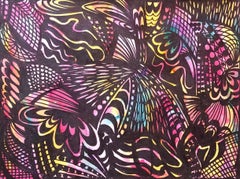
Veiled Series XX , Abstract Expressionist Organic Drawing Watercolor Painting
By Dorothy Gillespie
Located in Surfside, FL
Dorothy Gillespie (June 29, 1920 – September 30, 2012) was an American artist and sculptor who became known for her large and colorful abstract metal sculptures. Gillespie became best known for the aluminum sculptures she started to produce at the end of the 1970s. She would paint sheets of the metal, cut them into strips and connect the strips together to resemble cascades or starbursts of bright colored ribbon. The New York Times once summarized her work as “topsy-turvy, merrymaking fantasy,” and in another review declared, “The artist’s exuberant sculptures of colorful aluminum strips have earned her an international reputation.Her works are featured at her alma mater (Radford University) in Virginia, where she later returned to teach, as well as in New York (where she was artist in residence for the feminist Women's Interart Center), Wilmington, North Carolina and Florida. She enrolled both at Radford University near her hometown, and the Maryland Institute College of Art in Baltimore, Maryland. The director of the Maryland Institute, Hans Schuler, helped foster her career in fine art. On June 5, 1943, aged 23, Gillespie moved to New York City. There she took a job at the B. Altman department store as assistant art director. She also joined the Art Students League where she was exposed to new ideas about techniques, materials, and marketing. She also created works at Atelier 17 printmaking studio, where Stanley William Hayter encouraged to experiment with her own ideas. She and her husband, Bernard Israel, opened a restaurant and night club in Greenwich Village to support their family. She returned to making art in 1957, and worked at art full-time after they sold the nightclub in the 1970. In 1977 Gillespie gave her first lecture series at the New School for Social Research, and she would give others there until 1982. She taught at her alma mater as a Visiting Artist (1981-1983) and gave Radford University some of her work to begin its permanent art collection. Gillespie then served as Woodrow Wilson visiting Fellow (1985-1994), visiting many small private colleges to give public lectures and teach young artists. She returned to Radnor University to teach as Distinguished Professor of Art (1997–99).[8] She also hosted a radio program, the Dorothy Gillespie Show on Radio Station WHBI in New York from 1967-1973. Gillespie began moving away from realism and into the abstraction that marked her career. Gillespie returned to New York City in 1963 to continue her career. She maintained a studio through the 70s and advocate worked towards feminist goals in the art industry, picketing the Whitney Museum, helping to organize the Women's Interart Center, curating exhibitions of women's art, and writing articles raising awareness of her cause. Gillespie numbered among her acquaintances such art-world luminaries as Jackson Pollock, Lee Krasner, Alice Neel, Louise Nevelson and Georgia O’Keeffe. “She had amazing stories that unfortunately are gone,” her son said. During the 1960s, she built multimedia art installations that made political statements, such as 1965’s “Made in the USA,” that used blinking colored lights, mirrors, shadow boxes, rotating figures and tape recordings to convey a chaotic look at American commercial fads. The floor was strewn with real dollar bills, which visitors assumed were fake. By the 1980s, Gillespie's work had come to be known internationally. She completed many commissions for sculptures in public places, including Lincoln Center, Rockefeller Center and Walt Disney World Epcot Center in Orlando, Florida. Her work is in many collections across the United States, including the Delaware Museum, the Solomon R. Guggenheim Museum, and the National Museum of Women in the Arts. Her sculptures can also be found in the Frankfurt Museum in Germany and the Tel Aviv Museum in Israel. Group Shows Conceived and Curated by Dorothy Gillespie Women's Interart Center, New York, NY 1974 included: Betty Parsons, Elsie Asher, Alice Baber, Minna Citron, Nancy Spero, Seena Donneson, Alice Neel, Natalie Edgar, Dorothy Gillespie, and Anita Steckel. Alice Baber, Isabel Bishop, Audrey Flack, Mary Frank, Buffie Johnson, Yvonne Jacquette, Lila Katzen, Elaine De Kooning, Joyce Wienstein. "Women Artists Paint Women Artists," Virginia Miller Gallery, Miami, FL 1978; "Artist Choice," Clayworks Gallery, New York, NY 1979, included: Marisol, Joyce Weinstein, Marlyn Dintenfass, Clinton Hill, Joe Stallone, Peter Voulkos, David Hare, Susan Weil, Philip Pavia, Ka Kwong Hui...
Category

Early 2000s Abstract Expressionist Dorothy Gillespie Drawings and Watercolor Paintings

Materials

Paper, Ink, Watercolor, Permanent Marker
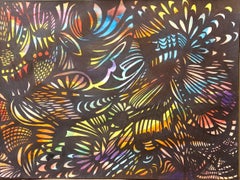
Veiled Series XXX, Abstract Expressionist Organic Drawing Watercolor Painting
By Dorothy Gillespie
Located in Surfside, FL
Dorothy Gillespie (June 29, 1920 – September 30, 2012) was an American artist and sculptor who became known for her large and colorful abstract metal sculptures. Gillespie became best known for the aluminum sculptures she started to produce at the end of the 1970s. She would paint sheets of the metal, cut them into strips and connect the strips together to resemble cascades or starbursts of bright colored ribbon. The New York Times once summarized her work as “topsy-turvy, merrymaking fantasy,” and in another review declared, “The artist’s exuberant sculptures of colorful aluminum strips have earned her an international reputation.Her works are featured at her alma mater (Radford University) in Virginia, where she later returned to teach, as well as in New York (where she was artist in residence for the feminist Women's Interart Center), Wilmington, North Carolina and Florida. She enrolled both at Radford University near her hometown, and the Maryland Institute College of Art in Baltimore, Maryland. The director of the Maryland Institute, Hans Schuler, helped foster her career in fine art. On June 5, 1943, aged 23, Gillespie moved to New York City. There she took a job at the B. Altman department store as assistant art director. She also joined the Art Students League where she was exposed to new ideas about techniques, materials, and marketing. She also created works at Atelier 17 printmaking studio, where Stanley William Hayter encouraged to experiment with her own ideas. She and her husband, Bernard Israel, opened a restaurant and night club in Greenwich Village to support their family. She returned to making art in 1957, and worked at art full-time after they sold the nightclub in the 1970. In 1977 Gillespie gave her first lecture series at the New School for Social Research, and she would give others there until 1982. She taught at her alma mater as a Visiting Artist (1981-1983) and gave Radford University some of her work to begin its permanent art collection. Gillespie then served as Woodrow Wilson visiting Fellow (1985-1994), visiting many small private colleges to give public lectures and teach young artists. She returned to Radnor University to teach as Distinguished Professor of Art (1997–99).[8] She also hosted a radio program, the Dorothy Gillespie Show on Radio Station WHBI in New York from 1967-1973. Gillespie began moving away from realism and into the abstraction that marked her career. Gillespie returned to New York City in 1963 to continue her career. She maintained a studio through the 70s and advocate worked towards feminist goals in the art industry, picketing the Whitney Museum, helping to organize the Women's Interart Center, curating exhibitions of women's art, and writing articles raising awareness of her cause. Gillespie numbered among her acquaintances such art-world luminaries as Jackson Pollock, Lee Krasner, Alice Neel, Louise Nevelson and Georgia O’Keeffe. “She had amazing stories that unfortunately are gone,” her son said. During the 1960s, she built multimedia art installations that made political statements, such as 1965’s “Made in the USA,” that used blinking colored lights, mirrors, shadow boxes, rotating figures and tape recordings to convey a chaotic look at American commercial fads. The floor was strewn with real dollar bills, which visitors assumed were fake. By the 1980s, Gillespie's work had come to be known internationally. She completed many commissions for sculptures in public places, including Lincoln Center, Rockefeller Center and Walt Disney World Epcot Center in Orlando, Florida. Her work is in many collections across the United States, including the Delaware Museum, the Solomon R. Guggenheim Museum, and the National Museum of Women in the Arts. Her sculptures can also be found in the Frankfurt Museum in Germany and the Tel Aviv Museum in Israel. Group Shows Conceived and Curated by Dorothy Gillespie Women's Interart Center, New York, NY 1974 included: Betty Parsons, Elsie Asher, Alice Baber, Minna Citron, Nancy Spero, Seena Donneson, Alice Neel, Natalie Edgar, Dorothy Gillespie, and Anita Steckel. Alice Baber, Isabel Bishop, Audrey Flack, Mary Frank, Buffie Johnson, Yvonne Jacquette, Lila Katzen, Elaine De Kooning, Joyce Wienstein. "Women Artists Paint Women Artists," Virginia Miller Gallery, Miami, FL 1978; "Artist Choice," Clayworks Gallery, New York, NY 1979, included: Marisol, Joyce Weinstein, Marlyn Dintenfass, Clinton Hill, Joe Stallone, Peter Voulkos, David Hare, Susan Weil, Philip Pavia, Ka Kwong Hui...
Category

Early 2000s Abstract Expressionist Dorothy Gillespie Drawings and Watercolor Paintings

Materials

Paper, Ink, Watercolor, Permanent Marker
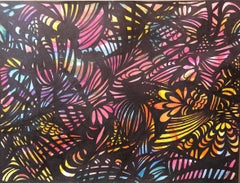
Veiled Series L, Abstract Expressionist Organic Drawing Watercolor Painting
By Dorothy Gillespie
Located in Surfside, FL
Dorothy Gillespie (June 29, 1920 – September 30, 2012) was an American artist and sculptor who became known for her large and colorful abstract metal sculptures. Gillespie became best known for the aluminum sculptures she started to produce at the end of the 1970s. She would paint sheets of the metal, cut them into strips and connect the strips together to resemble cascades or starbursts of bright colored ribbon. The New York Times once summarized her work as “topsy-turvy, merrymaking fantasy,” and in another review declared, “The artist’s exuberant sculptures of colorful aluminum strips have earned her an international reputation.Her works are featured at her alma mater (Radford University) in Virginia, where she later returned to teach, as well as in New York (where she was artist in residence for the feminist Women's Interart Center), Wilmington, North Carolina and Florida. She enrolled both at Radford University near her hometown, and the Maryland Institute College of Art in Baltimore, Maryland. The director of the Maryland Institute, Hans Schuler, helped foster her career in fine art. On June 5, 1943, aged 23, Gillespie moved to New York City. There she took a job at the B. Altman department store as assistant art director. She also joined the Art Students League where she was exposed to new ideas about techniques, materials, and marketing. She also created works at Atelier 17 printmaking studio, where Stanley William Hayter encouraged to experiment with her own ideas. She and her husband, Bernard Israel, opened a restaurant and night club in Greenwich Village to support their family. She returned to making art in 1957, and worked at art full-time after they sold the nightclub in the 1970. In 1977 Gillespie gave her first lecture series at the New School for Social Research, and she would give others there until 1982. She taught at her alma mater as a Visiting Artist (1981-1983) and gave Radford University some of her work to begin its permanent art collection. Gillespie then served as Woodrow Wilson visiting Fellow (1985-1994), visiting many small private colleges to give public lectures and teach young artists. She returned to Radnor University to teach as Distinguished Professor of Art (1997–99).[8] She also hosted a radio program, the Dorothy Gillespie Show on Radio Station WHBI in New York from 1967-1973. Gillespie began moving away from realism and into the abstraction that marked her career. Gillespie returned to New York City in 1963 to continue her career. She maintained a studio through the 70s and advocate worked towards feminist goals in the art industry, picketing the Whitney Museum, helping to organize the Women's Interart Center, curating exhibitions of women's art, and writing articles raising awareness of her cause. Gillespie numbered among her acquaintances such art-world luminaries as Jackson Pollock, Lee Krasner, Alice Neel, Louise Nevelson and Georgia O’Keeffe. “She had amazing stories that unfortunately are gone,” her son said. During the 1960s, she built multimedia art installations that made political statements, such as 1965’s “Made in the USA,” that used blinking colored lights, mirrors, shadow boxes, rotating figures and tape recordings to convey a chaotic look at American commercial fads. The floor was strewn with real dollar bills, which visitors assumed were fake. By the 1980s, Gillespie's work had come to be known internationally. She completed many commissions for sculptures in public places, including Lincoln Center, Rockefeller Center and Walt Disney World Epcot Center in Orlando, Florida. Her work is in many collections across the United States, including the Delaware Museum, the Solomon R. Guggenheim Museum, and the National Museum of Women in the Arts. Her sculptures can also be found in the Frankfurt Museum in Germany and the Tel Aviv Museum in Israel. Group Shows Conceived and Curated by Dorothy Gillespie Women's Interart Center, New York, NY 1974 included: Betty Parsons, Elsie Asher, Alice Baber, Minna Citron, Nancy Spero, Seena Donneson, Alice Neel, Natalie Edgar, Dorothy Gillespie, and Anita Steckel. Alice Baber, Isabel Bishop, Audrey Flack, Mary Frank, Buffie Johnson, Yvonne Jacquette, Lila Katzen, Elaine De Kooning, Joyce Wienstein. "Women Artists Paint Women Artists," Virginia Miller Gallery, Miami, FL 1978; "Artist Choice," Clayworks Gallery, New York, NY 1979, included: Marisol, Joyce Weinstein, Marlyn Dintenfass, Clinton Hill, Joe Stallone, Peter Voulkos, David Hare, Susan Weil, Philip Pavia, Ka Kwong Hui...
Category

Early 2000s Abstract Expressionist Dorothy Gillespie Drawings and Watercolor Paintings

Materials

Paper, Ink, Watercolor, Permanent Marker
Dorothy Gillespie drawings and watercolor paintings for sale on 1stDibs.

Find a wide variety of authentic Dorothy Gillespie drawings and watercolor paintings available for sale on 1stDibs. You can also browse by medium to find art by Dorothy Gillespie in ink, paint, paper and more. Much of the original work by this artist or collective was created during the 21st century and contemporary and is mostly associated with the abstract style. Not every interior allows for large Dorothy Gillespie drawings and watercolor paintings, so small editions measuring 16 inches across are available. Customers who are interested in this artist might also find the work of David Stephens, Carmen Cicero, and Joseph Glasco. Dorothy Gillespie drawings and watercolor paintings prices can differ depending upon medium, time period and other attributes. On 1stDibs, the price for these items starts at $750 and tops out at $750, while the average work can sell for $750.

Still Thinking About These?

All Recently Viewed