Edmund Lewandowski Paintings
American, 1914-1998
Regarded as a leading American precisionist and exemplary arts educator, Edmund D. Lewandowski once explained that his “overwhelming desire . . . through the years has been to record the beauty of man-made objects and energy of American industry,” a goal he successfully achieved in a career that spanned five decades and numerous locations, including the American Midwest, South, and New England. Born to Polish parents in Milwaukee, Wisconsin, Lewandowski attended the Layton School of Art, studying under regionalist artist Gerrit Sinclair. Inspired by Sinclair’s modern style and urban subjects, Lewandowski’s early paintings reflect a similar approach that would later evolve to industrial themes executed in a hard-edged precisionist manner. His most well-known subjects include chemical plants, shipyards, factories, farms, and oil rigs.
Following graduation, Lewandowski worked as a public school teacher and commercial artist while pursuing his painting. His career took a significant step forward when, in 1936, his work caught the eye of the progressive art dealer Edith Halpert, who offered him representation at her celebrated Downtown Gallery in New York City. A key figure in modern art, Halpert encouraged Lewandowski to experiment with Precisionism and to remain in Milwaukee. In 1937, Lewandowski met Charles Sheeler, considered a leader in the American Precisionist movement, whose style would most significantly influence the younger artist’s career. Through his association with the Downtown Gallery and the work he executed for the Federal Art Project between 1936 and 1939, Lewandowski attracted important critical notice and was included in exhibitions at such notable institutions as the Metropolitan Museum of Art, Museum of Modern Art (Magic Realism exhibition), and Art Institute of Chicago during the 1940s alone. At the Downtown Gallery, he exhibited alongside other artists such as Charles Demuth, Georgia O'Keeffe, Ralston Crawford, George Ault, and Niles Spencer.
Following military service as an Air Force mapmaker and camouflage artist from 1942–1946, Lewandowski joined the faculty of his alma mater, the Layton School of Art, in 1947. From that time on, he divided his time between creating art and teaching another generation of aspiring artists. His teaching career took him to institutions throughout the United States, including Florida State University. Following his tenure at Florida State, Lewandowski returned to Layton as its director, remaining until 1972. Throughout these years, the artist would create and exhibit works on paper and canvas, as well as execute commissioned large-scale mosaic murals. In 1973, Lewandowski joined the faculty at Winthrop University in Rock Hill, South Carolina, where he would serve as the art department chair until his retirement in 1984.
Edmund Lewandowski’s art showcases an exacting technical skill honed in his early training and advanced by his relationship with Sheeler. His ultrarealistic works painted in watercolor, gouache, or oil range from early farmscapes to industrial scenes and marine subjects, a variety that reflects the artist’s constant quest for aesthetic evolution. Today, Lewandowski’s work can be seen at prestigious national museums.to
2
1
1
Overall Width
to
Overall Height
to
2
1
1
1
1
1
1
1
1
1
1
1
2
2
2
1
3
775
747
732
681
2
Artist: Edmund Lewandowski
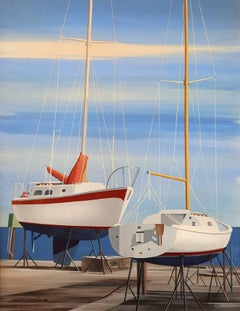
Sail Boats
By Edmund Lewandowski
Located in Miami, FL
A precise and exact rendering and meticulous spacial arrangement are on full display in Lewandowski's this later work.
The work looks better in person. The artwork is in pristine co...
Category
1990s Photorealist Edmund Lewandowski Paintings
Materials
Watercolor, Gouache

$24,000 Sale Price
29% Off
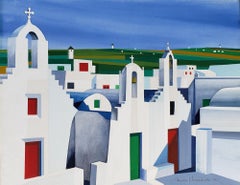
Mykonos Church Landscape
By Edmund Lewandowski
Located in Miami, FL
A vibrant example of the artist's precisionist style where a tight semi-abstract geometric composition is inspired by architecture and is reduced to simplified geometric shapes with...
Category
1960s Abstract Geometric Edmund Lewandowski Paintings
Materials
Gouache, Board
$11,200 Sale Price
20% Off
Related Items
Ecole de Paris Mid 20th Century City Architectural Winter Scene
By Henri Miloch
Located in Cirencester, Gloucestershire
Paris: City Winter Scene
by Henri Miloch (1898-1979)
watercolour and gouache painting with charcoal on artist's paper, unframed
Sheet: 9.75 x 13.5 inches
Intriguing painting by the...
Category
1940s Impressionist Edmund Lewandowski Paintings
Materials
Watercolor, Gouache, Charcoal
$484 Sale Price
20% Off
H 9.75 in W 13.5 in D 0.1 in
A Charming 1940s Watercolor of Mexico w/ Cathedral and Rooftops by Rudolph Pen
Located in Chicago, IL
A Charming 1940s Watercolor of Mexico with Cathedral and Rooftops by Noted Chicago Artist, Rudolph T. Pen. Most likely completed during the artist's trip to Mexico in 1944 after rec...
Category
1940s American Modern Edmund Lewandowski Paintings
Materials
Paper, Watercolor, Gouache
$1,200
H 12 in W 22.5 in D 0.13 in
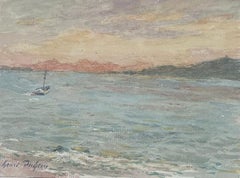
Fine Antique French Impressionist Painting Coastal Seascape with Boat at Sunset
Located in Cirencester, Gloucestershire
The artist:
Henri Aime Duhem (1860-1941) French *see notes below, signed
Title: Sunset
Medium:
signed gouache on paper, loosely laid over card, unfram...
Category
19th Century Impressionist Edmund Lewandowski Paintings
Materials
Gouache
$947 Sale Price
20% Off
H 10 in W 12.75 in
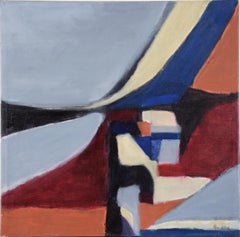
"New World City" Abstract Geometric Landscape in Oil on Canvas
Located in Soquel, CA
"New World City" Abstract Geometric Landscape in Oil on Canvas
Bold abstract composition by Veronica "Roni" Bloch (American, 1925-1998). Strong shapes of dark red, blue, grey-blue, ...
Category
Late 20th Century Abstract Geometric Edmund Lewandowski Paintings
Materials
Canvas, Oil
$1,050
H 24 in W 24 in D 1.5 in
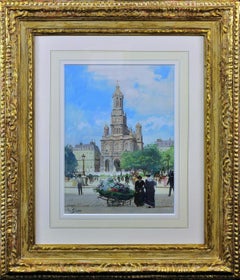
The Church Of The Holy Trinity Paris Early 20th Century Framed Parisian Painting
By Victor Gabriel Gilbert
Located in Sutton Poyntz, Dorset
Victor Gabriel Gilbert.
French ( b.1847 - d.1933 ).
L’ Eglise De La Sainte-Trinite, Place De La Trinite, Paris.
Gouache & Watercolor On Paper.
Signed Lower Right.
Image size 15 inch...
Category
Early 20th Century Impressionist Edmund Lewandowski Paintings
Materials
Paper, Watercolor, Gouache
$9,039
H 28.15 in W 24.22 in
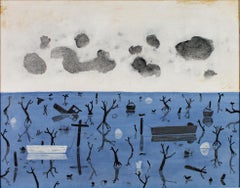
"Boats Amongst the Mangroves, " Watercolor
Gouache on Paper signed by Doris Lee
By Doris Lee
Located in Milwaukee, WI
"Boats Amongst the Mangroves" is an original watercolor and gouache painting on paper by Doris Lee. The artist signed the piece lower right. It depicts boats and other objects on a f...
Category
1930s American Modern Edmund Lewandowski Paintings
Materials
Watercolor, Gouache
$47,000
H 28.25 in W 34 in
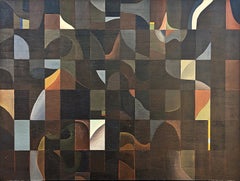
"Library" Contemporary Neutral Toned Cubist Inspired Geometric Abstract Painting
Located in Houston, TX
Brown and blue abstract painting by contemporary artist James McCahon. This painting features dark brown and dark blue geometric shapes in a rectangular pattern with a few red, white, and green shapes spread throughout. Signed and dated by artist on reverse. Currently unframed but options are available.
Artist Biography: James McCahon is a multi-disciplinary designer and artist based in Southern California. With experience in product design, art direction, fine art and photography, James is an expert in visual story telling. Through storytelling, James' artwork consists of abstract shapes and a wide range of colors. James believes the unifying factor of any successful project is a clear point of view. James has a BFA in Design from the Biola University in La Mirada...
Category
2010s Abstract Geometric Edmund Lewandowski Paintings
Materials
Canvas, Acrylic
$2,600
H 36 in W 48 in D 1.5 in
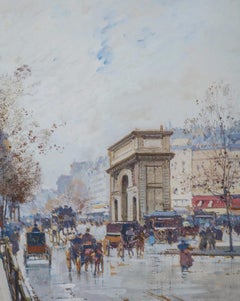
La Porte Saint Martin, Paris
By Eugene Galien-Laloue
Located in Wiscasett, ME
A waterclolor and gouache painting depicting a traditional Parisian street scne on paper by French artist Eugene Galien-Laloue. Presented in an appropriate frame and signed in the lo...
Category
Early 20th Century Post-Impressionist Edmund Lewandowski Paintings
Materials
Gouache
$6,700
H 25 in W 22.33 in D 1.5 in
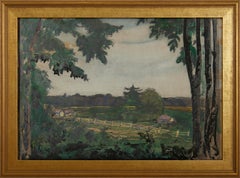
Farm Landscape, Zoar, Ohio, Early 20th Century
By August F. Biehle
Located in Beachwood, OH
August Frederick Biehle (1885-1979)
Farm Landscape, Zoar, c. 1923
Gouache, litho crayon and graphite on paper
Signed lower right
14 x 19 inches
17 x 23 inches, framed
A versatile pa...
Category
1920s American Modern Edmund Lewandowski Paintings
Materials
Crayon, Gouache, Graphite
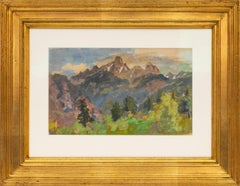
Charles Partridge Adams, Colorado Landscape Gouache, 20th-Century Plein Air Art
By Charles Partridge Adams
Located in Denver, CO
This original circa 1910s plein air field study by celebrated Colorado landscape painter Charles Partridge Adams (1858–1942) beautifully captures the tranquil majesty of the Rocky Mo...
Category
1910s American Impressionist Edmund Lewandowski Paintings
Materials
Gouache
$1,880
H 13.75 in W 17.75 in D 0.75 in
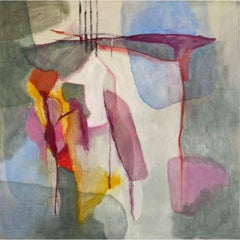
Deja Vu #1, Judith North, Oil on Canvas Abstract Painting, Geometric Abstract
Located in Deddington, GB
Deja Vu #1 by Judith North [2022]
Deja Vu is a series of abstract paintings which aim to capture my response to something previously experienced.
Additi...
Category
21st Century and Contemporary Abstract Geometric Edmund Lewandowski Paintings
Materials
Canvas, Oil
$1,781
H 31.5 in W 31.5 in D 0.79 in
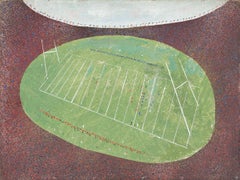
"Harvard vs Yale" Charles Green Shaw, Football, Ivy League Sports, Abstract
By Charles Green Shaw
Located in New York, NY
Charles Green Shaw
Harvard vs. Yale, 1944
Signed and dated on the reverse
Oil on canvasboard
9 x 12 inches
Provenance:
Harvey and Francois Rambach, New Jersey
Private Collection, California
Washburn Gallery, New York
D. Wigmore Fine Art, New York
Private Collection, New York
Charles Green Shaw, born into a wealthy New York family, began painting when he was in his mid-thirties. A 1914 graduate of Yale, Shaw also completed a year of architectural studies at Columbia University. During the 1920s Shaw enjoyed a successful career as a freelance writer for The New Yorker, Smart Set and Vanity Fair, chronicling the life of the theater and café society. In addition to penning insightful articles, Shaw was a poet, novelist and journalist. In 1927 he began to take a serious interest in art and attended Thomas Hart Benton's class at the Art Students League briefly in New York. He also studied privately with George Luks, who became a good friend. Once he had dedicated himself to non-traditional painting, Shaw's writing ability made him a potent defender of abstract art.
After initial study with Benton and Luks, Shaw continued his artistic education in Paris by visiting numerous museums and galleries. From 1930 to 1932 Shaw's paintings evolved from a style imitative of Cubism to one directly inspired by it, though simplified and more purely geometric. Returning to the United States in 1933, Shaw began a series of abstracted cityscapes of skyscrapers he called Manhattan Motifs which evolved into his most famous works, the shaped canvases he called Plastic Polygons.
The 1930s were productive years for Shaw. He showed his paintings in numerous group exhibitions, both in New York and abroad, and was also given several one-man exhibitions. Shaw had his first one-man exhibition at the Valentine Dudensing Gallery in New York in 1934, which included 25 Manhattan Motif paintings and 8 abstract works. In the spring of 1935 Shaw was introduced to Albert Gallatin and George L.K. Morris. Gallatin was so impressed with Shaw's work, he broke a policy against solo exhibitions at his museum, the Gallery of Living Art, and offered Shaw an exhibition there. In the summer of 1935 Shaw traveled to Paris with Gallatin and Morris who provided introductions to many great painters. Shaw regularly spent time with John Ferren and Jean Hélion. The following year Gallatin organized an exhibition called Five Contemporary American Concretionists at the Reinhardt Gallery that included Shaw, Ferren, and Morris, Alexander Calder, and Charles Biederman...
Category
1940s Abstract Geometric Edmund Lewandowski Paintings
Materials
Oil, Board
$28,000 Sale Price
20% Off
H 15 in W 18 in
Previously Available Items
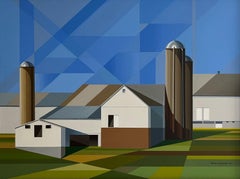
Amish Farmscape #3
By Edmund Lewandowski
Located in Los Angeles, CA
Amish Farmscape #3, 1984, oil on canvas, 40 x 30 inches, signed and dated lower right; signed, dated, and titled verso
About the Painting
Amish Farmscape #3 is part of a multi-painting series of barns completed in the early 1980s for an exhibition at New York’s prestigious Sid Deutsch Gallery. Lewandowski painted this work at an important point in his career. It was the first major project undertaken by Lewandowski after his retirement from serving as the Chairman of Winthrop University’s Art Department, the last academic position he held after teaching for nearly thirty years. Lewandowski had been inspired to work on the series by a visit to Lancaster County, Pennsylvania. Like his friend and mentor, Charles Sheeler, Lewandowski had always been fascinated by vernacular architecture and the Amish barns of Pennsylvania brought back memories of rural scenes Lewandowski had painted in the Midwest much earlier in his career. Amish Farmscape #3 is a strong example of Lewandowski’s late precisionist work. The complexity of the composition and Lewandowski’s technical acumen are on full display. Being relieved of the burdens of teaching and administering a university art department likely allowed Lewandowski greater freedom and most importantly more time to complete the Amish Farmscape series. Although Lewandowski’s brand of precisionism changed throughout the years, he never deviated from the core tenets of the Immaculate School artists. In this work, we see simplified and flattened forms, the use of ray-lines to define light and space, the elimination of extraneous details, a polished almost machine-like finish, and the complete lack of visible brushstrokes, all hallmarks of the precisionist painters. Lewandowski was the last of the 20th century precisionists and in Amish Farmscape #3, we see just how successfully he continued to work in this style until his death in 1998.
About the Artist
Edmund Lewandowski was among the best of the second-generation precisionist painters. He was born and raised in Milwaukee, Wisconsin and studied at the Layton School of Art with Garrett Sinclair. Lewandowski achieved early success when in 1936 two of his watercolors were shown at the Phillips Collection as part of a Federal Art Project exhibition. Then, in 1937, his work was first exhibited at Edith Halpert’s Downtown Gallery which represented Lewandowski into the 1950s. Under Halpert’s guidance, Lewandowski continued to explore watercolor as his main medium during the 1930s and 1940s, since the gallery already represented Charles Sheeler, who worked primarily in oils. Sheeler became Lewandowski’s major influence as the primary leader of the ill-defined, but very recognizable Immaculate School artists, which included other Downtown Gallery painters, Niles Spencer, George Ault, and Ralston Crawford, as well as Charles Demuth and Preston Dickinson, both of whom died at a young age and had been represented by the Charles Daniel Gallery. Sheeler is credited with giving Lewandowski technical advice on how to make his paintings more precise and tightly rendered and by all accounts, Sheeler was a fan of Lewandowski’s work. Through the Downtown Gallery, Lewandowski’s paintings were accepted into major national and international exhibitions and purchased by significant museums and collectors. Franklin and Eleanor Roosevelt and Nelson Rockefeller acquired works by Lewandowski. He was included in the Museum of Modern Art’s important 1943 exhibition, American Realists and Magic Realists as well as juried exhibitions at the Whitney Museum of American Art, the Pennsylvania Academy of Fine Arts, and the Art Institute of Chicago. Lewandowski also completed commissions for magazines during the 1940s and 1950s, including several covers for Fortune. Throughout his career, Lewandowski explored urban and rural architecture, industry, machinery, and nautical themes. Looking back on his career, Lewandowski wrote, “My overwhelming desire as an artist through the years has been to record the beauty of man-made objects and energy of American industry on canvas. For as far back as I can recall, the cityscapes, farms and depictions of industrial power and technological efficiency has had a great attraction for me. I try to treat these observations with personal honesty and distill these impressions to a visual order.” Lewandowski is credited with extending precisionism to the Midwest and successfully continuing the style into the 1990s, three decades after Sheeler’s death and six decades after Demuth’s passing. Late in his career, Lewandowski enjoyed a resurgence of popularity as he was represented during the 1980s by New York’s Sid Deutsch and Allison Galleries...
Category
Mid-20th Century American Modern Edmund Lewandowski Paintings
Materials
Canvas, Oil
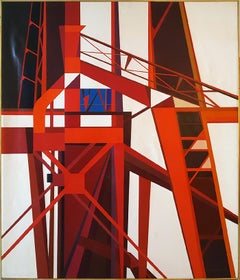
Blast Furnace
By Edmund Lewandowski
Located in Miami, FL
This work is monumental in size and will make a signture statement in any room.
signed lower right and dated 1975; also signed and titled on the stretcher 70" x 60" Frame: 71" x 60.7...
Category
1970s Abstract Geometric Edmund Lewandowski Paintings
Materials
Oil
Edmund Lewandowski paintings for sale on 1stDibs.
Find a wide variety of authentic Edmund Lewandowski paintings available for sale on 1stDibs. If you’re browsing the collection of paintings to introduce a pop of color in a neutral corner of your living room or bedroom, you can find work that includes elements of purple and other colors. You can also browse by medium to find art by Edmund Lewandowski in paint, gouache, watercolor and more. Much of the original work by this artist or collective was created during the 20th century and is mostly associated with the Photorealist style. Not every interior allows for large Edmund Lewandowski paintings, so small editions measuring 20 inches across are available. Customers who are interested in this artist might also find the work of Franklin Jonas, Edmund Quincy, and Arthur Boden. Edmund Lewandowski paintings prices can differ depending upon medium, time period and other attributes. On 1stDibs, the price for these items starts at $14,000 and tops out at $30,000, while the average work can sell for $22,000.