Edward Willis Redfield Art
to
1
1
2
Overall Width
to
Overall Height
to
1
3
2
4
4
3
1
1
1
1
1
1
1
1
4
4
4
4
4
10,225
2,785
2,504
1,382
4
4
Artist: Edward Willis Redfield
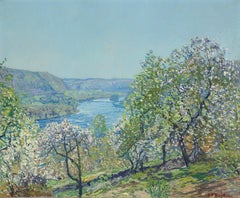
Hills of Point Pleasant
By Edward Willis Redfield
Located in Bryn Mawr, PA
Hills of Point Pleasant
Signed lower right: EW Redfield.
Oil on canvas, 24 x 29 inches (61 x 73.7 cm)
Framed dimensions: 31 3/4 x 36 3/4 inches
Provenance
Grand Central Art Gallerie...
Category
Early 20th Century American Impressionist Edward Willis Redfield Art
Materials
Canvas, Oil
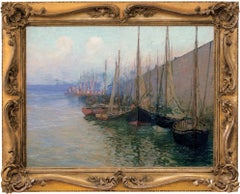
"In Port"
By Edward Willis Redfield
Located in Lambertville, NJ
Jim’s of Lambertville is proud to offer this artwork by:
Edward Willis Redfield (1869 - 1965)
Edward W. Redfield was born in Bridgeville, Delaware, moving to Philadelphia as a young child. Determined to be an artist from an early age, he studied at the Spring Garden Institute and the Franklin Institute before entering the Pennsylvania Academy from 1887 to 1889, where he studied under Thomas Anshutz, James Kelly, and Thomas Hovenden. Along with his friend and fellow artist, Robert Henri, he traveled abroad in 1889 and studied at the Academie Julian in Paris under William Bouguereau and Tony Robert-Fleury. While in France, Redfield met Elise Deligant, the daughter of an innkeeper, and married in London in 1893.
Upon his return to the United States, Redfield and his wife settled in Glenside, Pennsylvania. He remained there until 1898, at which time he moved his family to Center Bridge, a town several miles north of New Hope along the Delaware River. Redfield painted prolifically in the 1890s but it was not until the beginning of the twentieth century that he would develop the bold impressionist style that defined his career. As Redfield’s international reputation spread, many young artists gravitated to New Hope as he was a great inspiration and an iconic role model. Edward Redfield remained in Center Bridge throughout his long life, fathering his six children there.
Around 1905 and 1906, Redfield’s style was coming into its own, employing thick vigorous brush strokes tightly woven and layered with a multitude of colors. These large plein-air canvases define the essence of Pennsylvania Impressionism. By 1907, Redfield had perfected his craft and, from this point forward, was creating some of his finest work.
Redfield would once again return to France where he painted a small but important body of work between 1907 and 1908. While there, he received an Honorable Mention from the Paris Salon for one of these canvases. In 1910 he was awarded a Gold Medal at the prestigious Buenos Aires Exposition and at the Panama-Pacific Exposition of 1915 in San Francisco, an entire gallery was dedicated for twenty-one of his paintings.
Since Redfield painted for Exhibition with the intent to win medals, his best effort often went into his larger paintings. Although he also painted many fine smaller pictures, virtually all of his works were of major award-winning canvas sizes of 38x50 or 50x56 inches. If one were to assign a period of Redfield’s work that was representative of his “best period”, it would have to be from 1907 to 1925. Although he was capable of creating masterpieces though the late 1940s, his style fully matured by 1907 and most work from then through the early twenties was of consistently high quality. In the later 1920s and through the 1930s and 1940s, he was like most other great artists, creating some paintings that were superb examples and others that were of more ordinary quality.
Redfield earned an international reputation at a young age, known for accurately recording nature with his canvases and painting virtually all of his work outdoors; Redfield was one of a rare breed. He was regarded as the pioneer of impressionist winter landscape painting in America, having few if any equals. Redfield spent summers in Maine, first at Boothbay Harbor and beginning in the 1920s, on Monhegan Island. There he painted colorful marine and coastal scenes as well as the island’s landscape and fishing shacks. He remained active painting and making Windsor style furniture...
Category
Early 1900s American Impressionist Edward Willis Redfield Art
Materials
Canvas, Oil
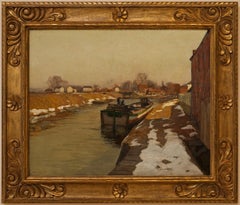
"The Canal"
By Edward Willis Redfield
Located in Lambertville, NJ
Jim’s of Lambertville is proud to offer this artwork.
Signed lower left. Complemented by a hand carved and gilt frame.
Illustrated in "Edward Redfield: Just Values and Fine Seeing" by Constance Kimmerle and the Pennsylvania Academy of the Fine Arts's Exhibition of Paintings by Edward Redfield (April 17 to May 16, 1909) brochure
Edward Willis Redfield (1869 - 1965)
Edward W. Redfield was born in Bridgeville, Delaware, moving to Philadelphia as a young child. Determined to be an artist from an early age, he studied at the Spring Garden Institute and the Franklin Institute before entering the Pennsylvania Academy from 1887 to 1889, where he studied under Thomas Anshutz, James Kelly, and Thomas Hovenden. Along with his friend and fellow artist, Robert Henri, he traveled abroad in 1889 and studied at the Academie Julian in Paris under William Bouguereau and Tony Robert-Fleury. While in France, Redfield met Elise Deligant, the daughter of an innkeeper, and married in London in 1893.
Upon his return to the United States, Redfield and his wife settled in Glenside, Pennsylvania. He remained there until 1898, at which time he moved his family to Center Bridge, a town several miles north of New Hope along the Delaware River. Redfield painted prolifically in the 1890s but it was not until the beginning of the twentieth century that he would develop the bold impressionist style that defined his career. As Redfield’s international reputation spread, many young artists gravitated to New Hope as he was a great inspiration and an iconic role model. Edward Redfield remained in Center Bridge throughout his long life, fathering his six children there.
Around 1905 and 1906, Redfield’s style was coming into its own, employing thick vigorous brush strokes tightly woven and layered with a multitude of colors. These large plein-air canvases define the essence of Pennsylvania Impressionism. By 1907, Redfield had perfected his craft and, from this point forward, was creating some of his finest work.
Redfield would once again return to France where he painted a small but important body of work between 1907 and 1908. While there, he received an Honorable Mention from the Paris Salon for one of these canvases. In 1910 he was awarded a Gold Medal at the prestigious Buenos Aires Exposition and at the Panama-Pacific Exposition of 1915 in San Francisco, an entire gallery was dedicated for twenty-one of his paintings.
Since Redfield painted for Exhibition with the intent to win medals, his best effort often went into his larger paintings. Although he also painted many fine smaller pictures, virtually all of his works were of major award-winning canvas sizes of 38x50 or 50x56 inches. If one were to assign a period of Redfield’s work that was representative of his “best period”, it would have to be from 1907 to 1925. Although he was capable of creating masterpieces though the late 1940s, his style fully matured by 1907 and most work from then through the early twenties was of consistently high quality. In the later 1920s and through the 1930s and 1940s, he was like most other great artists, creating some paintings that were superb examples and others that were of more ordinary quality.
Redfield earned an international reputation at a young age, known for accurately recording nature with his canvases and painting virtually all of his work outdoors; Redfield was one of a rare breed. He was regarded as the pioneer of impressionist winter landscape painting in America, having few if any equals. Redfield spent summers in Maine, first at Boothbay Harbor and beginning in the 1920s, on Monhegan Island. There he painted colorful marine and coastal scenes as well as the island’s landscape and fishing shacks. He remained active painting and making Windsor style furniture...
Category
Early 1900s American Impressionist Edward Willis Redfield Art
Materials
Canvas, Oil
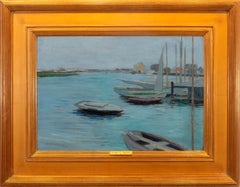
"Sail Boats in Harbor"
By Edward Willis Redfield
Located in Lambertville, NJ
Jim’s of Lambertville is proud to offer this artwork by:
Edward Willis Redfield (1869 - 1965)
Edward W. Redfield was born in Bridgeville, Delaware, moving to Philadelphia as a youn...
Category
1890s American Impressionist Edward Willis Redfield Art
Materials
Canvas, Oil
Related Items
"View of the Empire State NYC in Snow" Impressionistic Ashcan School Style
By Cindy Shaoul
Located in New York, NY
An impressionistic depiction of a figure in the snow with cars and buildings in the busy City Streets. The Empire State Building is portrayed in the background as the snow filled str...
Category
2010s American Impressionist Edward Willis Redfield Art
Materials
Canvas, Oil, Board
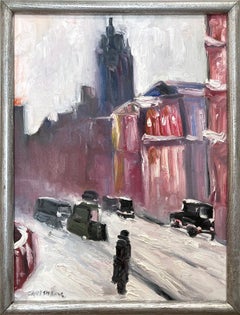

$1,200
H 17 in W 13 in D 1.25 in
"Trumans Beach, East Marion 06.06.2022" contemporary impressionist seascape, oil
By Nelson H. White
Located in Sag Harbor, NY
"Trumans Beach, East Marion 06.06.2022" is an almost-abstract palette knife landscape painting of a beach and beach shrubs. Off in the distance is a little white triangle of paint to emulate a sailboat...
Category
21st Century and Contemporary American Impressionist Edward Willis Redfield Art
Materials
Canvas, Oil, Panel
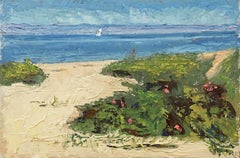
$4,500
H 9 in W 12 in D 0.5 in
Coastal Cliffs and Rocks - Hurricane Point - Big Sur Seascape in Oil on Canvas
By Kathleen Murray
Located in Soquel, CA
Coastal Cliffs and Rocks - Hurricane Point - Big Sur Seascape in Oil on Canvas
Gorgeous seascape of Big Sur coast by California artist Kathleen Murray (American, b. 1958). The brill...
Category
2010s American Impressionist Edward Willis Redfield Art
Materials
Canvas, Oil
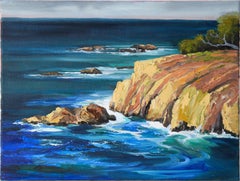
$575
H 12 in W 16 in D 0.75 in
"Brunch at Tartine" Impressionist Oil Painting in Soho Restaurant on White Frame
By Cindy Shaoul
Located in New York, NY
"With shades of Pierre Bonnard’s Parisian street vistas and Edward Hopper’s New York shopfronts, American impressionist Cindy Shaoul’s oil paintings depict the much-loved locales and...
Category
2010s American Impressionist Edward Willis Redfield Art
Materials
Oil, Canvas
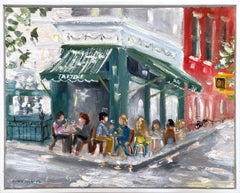
$1,600
H 17.5 in W 21.5 in D 2 in
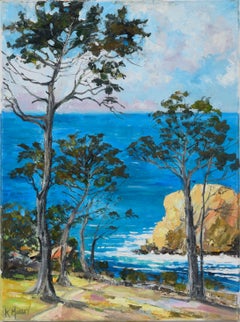
Path to the Ocean - Pacific Coast - Point Lobos Seascape in Oil on Canvas
By Kathleen Murray
Located in Soquel, CA
Path to the Ocean - Pacific Coast Seascape in Oil on Canvas
Gorgeous seascape of Big Sur coast by California artist Kathleen Murray (American, b. 1958). The viewer stands at a path ...
Category
2010s American Impressionist Edward Willis Redfield Art
Materials
Canvas, Oil
$795
H 16 in W 11.75 in D 0.75 in
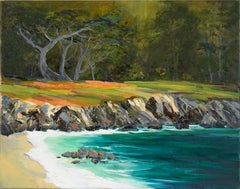
California Rocky Cove - Pacific Coast - Big Sur - Seascape in Oil on Canvas
By Kathleen Murray
Located in Soquel, CA
California Rocky Cove - Pacific Coast Seascape in Oil on Canva
Gorgeous seascape of Big Sur coast by California artist Kathleen Murray (American, b. 1958). The brilliant blue Pacifi...
Category
2010s American Impressionist Edward Willis Redfield Art
Materials
Oil, Canvas
$895
H 16 in W 20 in D 0.75 in
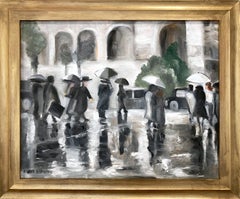
"Rainy Day by the Met" Impressionistic NYC Street Scene Oil Painting on Canvas
By Cindy Shaoul
Located in New York, NY
"With shades of Pierre Bonnard’s Parisian street vistas and Edward Hopper’s New York shopfronts, American impressionist Cindy Shaoul’s oil paintings depict the much-loved locales and...
Category
2010s American Impressionist Edward Willis Redfield Art
Materials
Canvas, Oil
$2,000
H 19.5 in W 23.5 in D 1 in
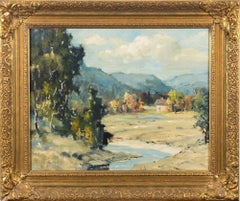
American Impressionist Original Oil Painting The Valley in Spring, framed
By Charles E. Buckler
Located in Cirencester, Gloucestershire
The Valley in Spring
by Charles E. Buckler (American 1869-1953), signed lower corner
titled verso
oil painting on canvas: 16 x 20 inches
framed: 21.5 x 25.5 inches
condition: very go...
Category
Mid-20th Century American Impressionist Edward Willis Redfield Art
Materials
Canvas, Oil
$2,630 Sale Price
20% Off
H 21.5 in W 25.5 in D 2 in
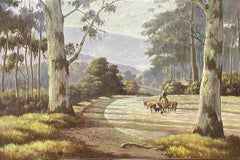
LARGE AMERICAN SIGNED OIL PAINTING - CATTLE HERDER ON HORSEBACK WIDE LANDSCAPE
Located in Cirencester, Gloucestershire
Artist/ School: American School, signed lower corner.
Title: Leading them Home.
Medium: oil painting on canvas, framed
Size: painting: 25.5 x 37.5 inches, frame: 28.5 x 40.5 inch...
Category
20th Century American Impressionist Edward Willis Redfield Art
Materials
Canvas, Oil
$2,137 Sale Price
20% Off
H 28.5 in W 40.5 in D 1 in
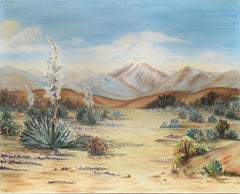
Desert Landscape with Agave and Yucca - Oil on Canvas
Located in Soquel, CA
Desert Landscape with Agave and Yucca - Oil on Canvas
Oil painting of a desert landscape by an unknown California artist (American, 20th C). California high desert with vibrant gree...
Category
1960s American Impressionist Edward Willis Redfield Art
Materials
Canvas, Oil
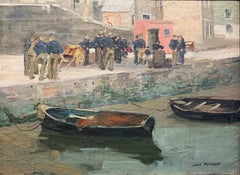
"Stone Wharf, Brittany" Jane Peterson, American Impressionist, Boats in Canal
By Jane Peterson
Located in New York, NY
Jane Peterson
Stone Wharf, Brittany, circa 1910
Signed lower right
Oil on canvas
18 x 24 inches
Provenance
Private Collection, New York
Born Jennie Christine in Elgin, Illinois, s...
Category
1910s American Impressionist Edward Willis Redfield Art
Materials
Canvas, Oil
$36,000
H 25.25 in W 31.25 in
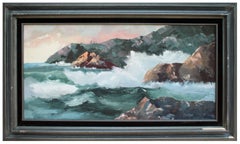
Big Sur Coast, Vintage 1970s Panoramic Pacific Seascape by John Zaccheo
By John Zaccheo
Located in Soquel, CA
Big Sur Coast, Vintage 1970s Panoramic Pacific Seascape by John Zaccheo
Gorgeous vintage oil painting of waves crashing along the rocks on the coast...
Category
1970s American Impressionist Edward Willis Redfield Art
Materials
Canvas, Oil
$1,850
H 22 in W 37 in D 2 in
Previously Available Items
Road to New Hope
By Edward Willis Redfield
Located in Lambertville, NJ
Ashley John is proud to offer this artwork by:
Edward Willis Redfield (1869 - 1965)
Edward W. Redfield was born in Bridgeville, Delaware, moving to Philadelphia as a young child. D...
Category
20th Century American Impressionist Edward Willis Redfield Art
Materials
Canvas, Oil
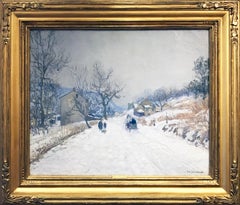
"The Road to the Mill"
By Edward Willis Redfield
Located in Lambertville, NJ
Signed lower right. Complemented by animi original period Newcomb Macklin frame.
Edward Willis Redfield (1869 - 1965)
Edward W. Redfield was born in Bridgeville, Delaware, moving...
Category
1920s American Impressionist Edward Willis Redfield Art
Materials
Canvas, Oil
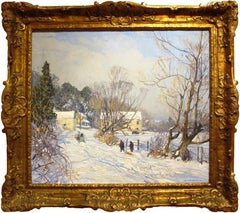
"88 Club"
By Edward Willis Redfield
Located in Lambertville, NJ
Signed and titled lower center.
Complemented by a hand carved and gilt frame.
Edward Willis Redfield (1869 - 1965)
Edward W. Redfield was born in Bridgeville, Delaware, moving to Philadelphia as a young child. Determined to be an artist from an early age, he studied at the Spring Garden Institute and the Franklin Institute before entering the Pennsylvania Academy from 1887 to 1889, where he studied under Thomas Anshutz, James Kelly, and Thomas Hovenden. Along with his friend and fellow artist, Robert Henri, he traveled abroad in 1889 and studied at the Academie Julian in Paris under William Bouguereau and Tony Robert-Fleury. While in France, Redfield met Elise Deligant, the daughter of an innkeeper, and married in London in 1893.
Upon his return to the United States, Redfield and his wife settled in Glenside, Pennsylvania. He remained there until 1898, at which time he moved his family to Center Bridge, a town several miles north of New Hope along the Delaware River. Redfield painted prolifically in the 1890s but it was not until the beginning of the twentieth century that he would develop the bold impressionist style that defined his career. As Redfield’s international reputation spread, many young artists gravitated to New Hope as he was a great inspiration and an iconic role model. Edward Redfield remained in Center Bridge throughout his long life, fathering his six children there.
Around 1905 and 1906, Redfield’s style was coming into its own, employing thick vigorous brush strokes tightly woven and layered with a multitude of colors. These large plein-air canvases define the essence of Pennsylvania Impressionism. By 1907, Redfield had perfected his craft and, from this point forward, was creating some of his finest work.
Redfield would once again return to France where he painted a small but important body of work between 1907 and 1908. While there, he received an Honorable Mention from the Paris Salon for one of these canvases. In 1910 he was awarded a Gold Medal at the prestigious Buenos Aires Exposition and at the Panama-Pacific Exposition of 1915 in San Francisco, an entire gallery was dedicated for twenty-one of his paintings.
Since Redfield painted for Exhibition with the intent to win medals, his best effort often went into his larger paintings. Although he also painted many fine smaller pictures, virtually all of his works were of major award-winning canvas sizes of 38x50 or 50x56 inches. If one were to assign a period of Redfield’s work that was representative of his “best period”, it would have to be from 1907 to 1925. Although he was capable of creating masterpieces though the late 1940s, his style fully matured by 1907 and most work from then through the early twenties was of consistently high quality. In the later 1920s and through the 1930s and 1940s, he was like most other great artists, creating some paintings that were superb examples and others that were of more ordinary quality.
Redfield earned an international reputation at a young age, known for accurately recording nature with his canvases and painting virtually all of his work outdoors; Redfield was one of a rare breed. He was regarded as the pioneer of impressionist winter landscape painting in America, having few if any equals. Redfield spent summers in Maine, first at Boothbay Harbor and beginning in the 1920s, on Monhegan Island. There he painted colorful marine and coastal scenes as well as the island’s landscape and fishing shacks. He remained active painting and making Windsor style furniture...
Category
1950s American Impressionist Edward Willis Redfield Art
Materials
Paper, Ink
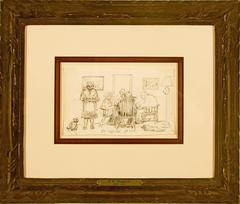
"Fisherman Beach, Monhegan"
By Edward Willis Redfield
Located in Lambertville, NJ
Signed and dated lower right.
Complemented by a hand carved and gilt frame.
Edward Willis Redfield (1869 - 1965)
Edward W. Redfield was born in Bridgeville, Delaware, moving to Philadelphia as a young child. Determined to be an artist from an early age, he studied at the Spring Garden Institute and the Franklin Institute before entering the Pennsylvania Academy from 1887 to 1889, where he studied under Thomas Anshutz, James Kelly, and Thomas Hovenden. Along with his friend and fellow artist, Robert Henri, he traveled abroad in 1889 and studied at the Academie Julian in Paris under William Bouguereau and Tony Robert-Fleury. While in France, Redfield met Elise Deligant, the daughter of an innkeeper, and married in London in 1893.
Upon his return to the United States, Redfield and his wife settled in Glenside, Pennsylvania. He remained there until 1898, at which time he moved his family to Center Bridge, a town several miles north of New Hope along the Delaware River. Redfield painted prolifically in the 1890s but it was not until the beginning of the twentieth century that he would develop the bold impressionist style that defined his career. As Redfield’s international reputation spread, many young artists gravitated to New Hope as he was a great inspiration and an iconic role model. Edward Redfield remained in Center Bridge throughout his long life, fathering his six children there.
Around 1905 and 1906, Redfield’s style was coming into its own, employing thick vigorous brush strokes tightly woven and layered with a multitude of colors. These large plein-air canvases define the essence of Pennsylvania Impressionism. By 1907, Redfield had perfected his craft and, from this point forward, was creating some of his finest work.
Redfield would once again return to France where he painted a small but important body of work between 1907 and 1908. While there, he received an Honorable Mention from the Paris Salon for one of these canvases. In 1910 he was awarded a Gold Medal at the prestigious Buenos Aires Exposition and at the Panama-Pacific Exposition of 1915 in San Francisco, an entire gallery was dedicated for twenty-one of his paintings.
Since Redfield painted for Exhibition with the intent to win medals, his best effort often went into his larger paintings. Although he also painted many fine smaller pictures, virtually all of his works were of major award-winning canvas sizes of 38x50 or 50x56 inches. If one were to assign a period of Redfield’s work that was representative of his “best period”, it would have to be from 1907 to 1925. Although he was capable of creating masterpieces though the late 1940s, his style fully matured by 1907 and most work from then through the early twenties was of consistently high quality. In the later 1920s and through the 1930s and 1940s, he was like most other great artists, creating some paintings that were superb examples and others that were of more ordinary quality.
Redfield earned an international reputation at a young age, known for accurately recording nature with his canvases and painting virtually all of his work outdoors; Redfield was one of a rare breed. He was regarded as the pioneer of impressionist winter landscape painting in America, having few if any equals. Redfield spent summers in Maine, first at Boothbay Harbor and beginning in the 1920s, on Monhegan Island. There he painted colorful marine and coastal scenes as well as the island’s landscape and fishing shacks. He remained active painting and making Windsor style furniture...
Category
1920s American Impressionist Edward Willis Redfield Art
Materials
Canvas, Oil
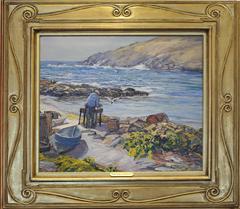
"Winter Sports"
By Edward Willis Redfield
Located in Lambertville, NJ
Signed Lower Left
Period Newcomb Macklin Frame
Edward W. Redfield was born in Bridgeville, Delaware, moving to Philadelphia as a young child. Determined to be an artist from a...
Category
20th Century American Impressionist Edward Willis Redfield Art
Materials
Canvas, Oil
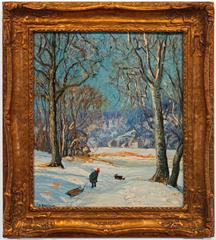
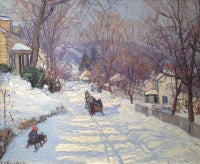
Lumberville
By Edward Willis Redfield
Located in Lambertville, NJ
Winter village sleigh Landscape town snow
Category
20th Century Edward Willis Redfield Art
Materials
Oil, Canvas
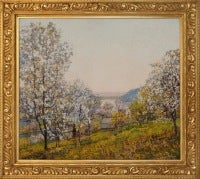
Early Morning Sunlight, Spring
By Edward Willis Redfield
Located in Lambertville, NJ
Category
20th Century Edward Willis Redfield Art
Materials
Oil, Canvas
Edward Willis Redfield art for sale on 1stDibs.
Find a wide variety of authentic Edward Willis Redfield art available for sale on 1stDibs. You can also browse by medium to find art by Edward Willis Redfield in canvas, fabric, oil paint and more. Much of the original work by this artist or collective was created during the early 1900s and is mostly associated with the Impressionist style. Not every interior allows for large Edward Willis Redfield art, so small editions measuring 37 inches across are available. Customers who are interested in this artist might also find the work of Edward Henry Potthast, Irving Ramsey Wiles, and Henry Bacon. Edward Willis Redfield art prices can differ depending upon medium, time period and other attributes. On 1stDibs, the price for these items starts at $61,875 and tops out at $781,250, while the average work can sell for $531,250.