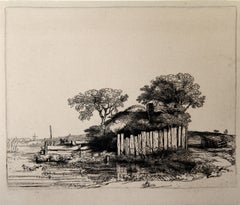
Elizabeth Verner More Prints
South Carolina artist, Elizabeth Quale O'Neill, was born on December 21, 1883, at 38 Chalmers Street in Charleston, South Carolina. She was one of 11 sisters and 2 brothers. She showed an early interest in art. Starting in her teen years, she began painting cityscapes of Charleston and set up her first studio in the rear of her parents' house at 43 Legare Street. Her artistic gifts were encouraged and developed by her maternal grandfather, Henry Franklin Baker, who had been a student at the Pennsylvania Academy of the Fine Arts and by Alice Ravenel Huger Smith, a Charleston artist. After graduating in 1900 from Ursuline College in Columbia, South Carolina, Miss O'Neill enrolled at the Pennsylvania Academy of the Fine Arts. She fell under the influence of Thomas Anshutz, and his encouragement caused her to work hard at her technique. After two years she left, and taught for a year in Aiken, South Carolina, before returning to Charleston, where she lived out her life. She remained in the realist school of painting as exemplified by Thomas Eakins when the art world was swept away by the international modernist movement. Her sex was no hindrance to success and she was showered with acclaim and honors. In 1907, she married E. Pettigrew Verner., together tThey had two children, Elizabeth Pettigrew (born 1908) and David Battle (born 1911). From 1910 to 1936, she had her second studio in the garden at 3 Atlantic Street and also shared other studio space with Alice Huger Ravenel Smith. In the early 1920s, she began etching and widely exhibiting. Her husband, E. Pettigrew Verner, died in 1925. She attended the London Central Arts School as an honored artist in 1930 and traveled through Europe, while abroad.
a_7693
She married Thomas E. Myers in 1932 and ceased etching in 1933. Her third studio (1936) was at 85 Church Street in Charleston, South Carolina. In 1937, she traveled to Japan and produced drypoints of Japan, but by 1937, she began work as a pastelist.In 1938, she established her fourth and last studio at 38 Tradd Street, Charleston, South Carolina. During this time she traveled to the Caribbean, Mexico, Europe, the Orient and produced pastels and watercolors from her trips.
A leader in establishing Charleston, South Carolina as a dynamic cultural center, Elizabeth Verner depicted the historic city's seemingly endless supply of subject matter including lush landscape, architectural landmarks and local people. Many of her paintings were pastel on silk. She was also proficient as an etcher and a part of the Charleston Etcher's Club, whose members did etchings of Charleston's historic architecture. Their work, published in national media, brought widespread attention to the charms of the area. She worked especially hard, printing her own plates and selling prints, and during the spring seasons, opened her studio to tourists and housed visitors in her home. She also served as a guide to Charleston and wrote and illustrated several books that furthered her own career as well as promoted Charleston as a visitor destination. When the mayor tried to outlaw flower vendors, she fought to retain the black women who came from outlying areas to sell their flowers and hand made baskets. She wrote: I wanted the flower women because I painted them and I need them as models (Magazine Antiques 11/98). These subjects appear regularly in her etchings.
She was also one of the few artists of the Charleston Renaissance to work in pastel, which she pursued after being inspired by an exhibition of floral pastels by Laura Coombs Hills in Boston. From that time, Verner was persuaded that pastels were a more effective medium for conveying her flower vendors. Art was her avocation. In 1968 she suffered a broken back and in 1979, she died in Charleston. Her long career, which stretched from the turn of the Twentieth Century until her last large work in 1967, includes all the etchings that were made between 1925 and 1932 and all the drypoints that were produced between 1932 and 1937. Her former home and studio from 1938 is now The Elizabeth O'Neill Verner Museum at 79 Church Street in Charleston.
Verner was a founder of the Charleston Sketch Club. Etching was then popular among amateur art associations, and she learned the techniques of printmaking with Alice Smith. Verner was among the founders of the Charleston Etching Club in 1921. That year, the Southern States Art League held its first exhibition in Charleston, and she served on its board from 1922 to 1933 and exhibited with it until its demise in 1950. In 1923, one of her etchings won third prize at the Charleston County Fair, a humble beginning for one who was to achieve a national reputation. In 1924 she was represented at the International Exhibition of the Chicago Society of Etchers. Alice Smith then persuaded her to become a professional artist. She opened a workshop and showroom on Atlantic Street, where Leila Waring, Alice Smith and Anna Heyward worked. In Mrs. Verner's words: Until 1925, I had two hobbies, art and love of Charleston. I combined them into one profession.
From the outset, her favorite subject was the Lowcountry of South Carolina, its marshes, flowers, trees and birds, but above all, Charleston itself. Her interest in the architectural environment of Charleston was not limited to art. She was a charter member of the Society for the Preservation of Old Buildings. Her art, more than mere words, conveyed what it was about Charleston that merited preservation. In 1926, Verner received her first commercial commission - for twelve drawings to illustrate a promotional brochure on Hollywood-by-the-Sea in Florida. That year, she bought her own press for printing etchings. Most of her works were sold to tourists as souvenirs of the city. In 1928, she did etchings of Savannah, the preservation of which also interested her. In 1929, Verner was asked by the Mount Vernon Ladies’ Association to execute drawings of that house for use in fundraising, which was a labor of love for the artist. A trip to New York City in 1932 resulted in the sale of drawings to Rockefeller Center, and of twelve others for reproduction as postcards. At Doll and Richards Gallery in Boston, she exhibited etchings in 1934, including one called Kitchen Courtyard, In 1935, she showed not only prints, but pastels, which she had just begun doing. After a trip to Japan in 1937, she perfected a technique for applying layers of pastel to silk mounted on wood, which she called vernercolor. Although increasingly interested in pastels, she did not abandon drawing and etching.
In 1939, she exhibited 12 etchings of Japan in Boston. In 1950, she was commissioned to depict Princeton University. Verner's first book, Prints and Impressions of Charleston appeared in 1939, and in a larger format in 1945. It was called the best book of Charleston pictures that has been published by the Christian Science Monitor, the New York Herald Tribune and the Boston Post. A second book, Mellowed by Time, appeared in 1941, and her drawings were accompanied by her romantic reminiscences of Charleston in bygone days. Forty-three of her non-Charleston etchings appeared in "Other Places", her term for the world apart at the area at the confluence of the Ashley and Cooper rivers. In the late 1920s, she had illustrated the title page of the Charleston edition of DuBose Heyward's Porgy and Bess and Peter Mitchell Wilson's Southern Exposure, Howard Mumford Jones' French and American Culture and The Carolina Low Country, a compendium of spirituals. In 1947, Verner was awarded honorary degrees by the University of North Carolina and the University of South Carolina. Other honors followed.
She had solo shows in Charleston in 1963, at Manila in the Philippines in 1964, in Spartanburg in 1970, Columbia and Sumter in 1971 and Beaufort in 1972. She died in 1979 at age 95. A body of her work was bequeathed by George Graves to the Metropolitan Museum of Art in 1933. Her work is also represented in Boston at the Museum of Fine Arts, the High Museum in Atlanta, the Library of Congress and the Chicago Society of Etchers. Besides the already-mentioned Charleston Sketch Club, Charleston Etching Club and Southern States Art League, she was also a member of the Carolina Art Association, the Art Association of New Orleans, the Chicago Society of Etchers and the Washington Watercolor Club. Verner considered her contribution to historic preservation to be her greatest achievement. Her efforts resulted in the preservation of many buildings, but the character of the city changed nonetheless. Her artworks capture something of what DuBose Heyward called the faded aroma of the past. Artists have played an important role in the life of Charleston since the 1700s, but none managed to become so closely identified with that unique city as Elizabeth O'Neill Verner. In recognition of her contribution to the arts, the state of South Carolina named a prestigious annual art award after Verner.
Early 20th Century Elizabeth Verner More Prints
Etching
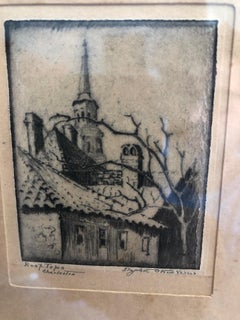
1940s Elizabeth Verner More Prints
Etching

1970s Modern Elizabeth Verner More Prints
Paper, Etching
Late 19th Century Elizabeth Verner More Prints
Etching
Late 19th Century Elizabeth Verner More Prints
Etching
Late 19th Century Elizabeth Verner More Prints
Etching
Late 19th Century Old Masters Elizabeth Verner More Prints
Etching
Late 19th Century Old Masters Elizabeth Verner More Prints
Etching
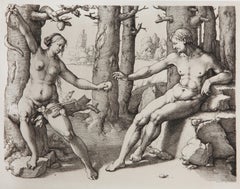
Late 19th Century Elizabeth Verner More Prints
Etching
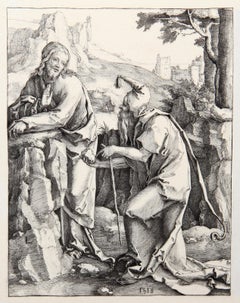
1960s Modern Elizabeth Verner More Prints
Etching, Aquatint
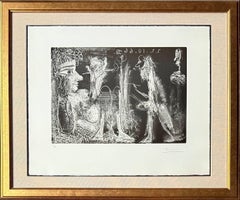
Late 19th Century Elizabeth Verner More Prints
Etching
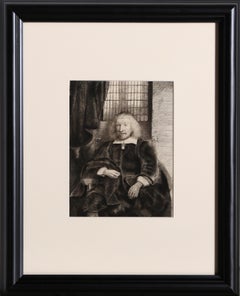
Late 19th Century Elizabeth Verner More Prints
Etching
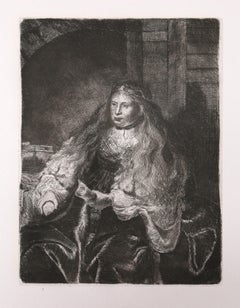
Late 19th Century Old Masters Elizabeth Verner More Prints
Etching