Ernest Trova Sculptures
American, 1927-2009
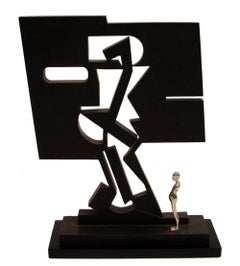
In the early 1960s, St. Louis Sculptor Ernest Trova—who was entirely self-taught—began developing his pivotal theme of Falling Man, a stark and startling image that combines references to classical sculpture with an industrial aesthetic. In his Profile Canto series, Falling Man—depicted as an androgynous, mechanical figure—is folded and segmented as to be nearly undetectable amid the various geometric forms that comprise these works.to
1
1
2
Overall Width
to
Overall Height
to
3
1
1
2
1
1
1
1
4
4
11
214
213
150
131
4
Artist: Ernest Trova
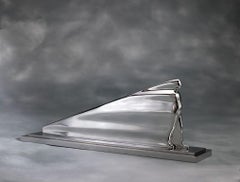
Flowing Man
By Ernest Trova
Located in Boca Raton, FL
Edition 37/99
Category
21st Century and Contemporary Contemporary Ernest Trova Sculptures
Materials
Stainless Steel
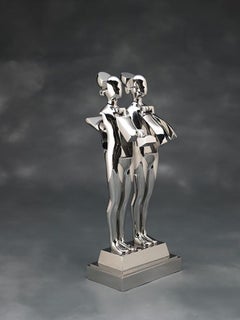
Double Walking Figure
By Ernest Trova
Located in Boca Raton, FL
rnest Trova was an artist whose signature creation, a gleaming humanoid known as “Falling Man,” appeared in a series of sculptures and paintings and became a symbol of an imperfect humanity hurtling into the future. Mr. Trova was largely known as a sculptor, but his “Falling Man,” a standard of Pop Art, began life as a painted figure, taking shape on his easel in the early 1960s. Faceless, armless, with a hint of a belly and, its name notwithstanding, of indeterminate sex, the figure struck a variety of poses, sometimes juxtaposed with other like figures, sometimes with mechanical appendages.
In October 1963 his one-man show, “Falling Man Paintings,” was the inaugural exhibition of the Pace Gallery on West 57th Street in Manhattan; it sold out, with the works purchased by the Museum of Modern Art, the Whitney Museum, the architect Philip Johnson and others. In three dimensions, the “Falling Man” figure was made from different materials over the years — nickel and chrome-plated bronze, enamel on aluminum, stainless steel — and often, like the Oscar statuette, was polished to an industrial sheen. It was clearly a space age creation, a forerunner of C3PO, the golden robot in “Star Wars.”
“He found the space age both inspiring and dehumanizing,” Arne Glimcher, who founded the Pace Gallery, now PaceWildenstein, said in an interview on Friday. By the end of the 1960s, “Falling Man” had become Mr. Trova’s trademark, provoking Hilton Kramer, the art critic of The New York Times, to write that Mr. Trova had subjected his favorite figure “to almost as many variations as the Kama Sutra describes for the act of love.”
Ernest Tino Trova Jr. was born in St. Louis on Feb. 19, 1927. Shortly after his high school graduation his father, an industrial tool designer and inventor, died, and young Ernie, as he was known, went to work, most significantly as a window dresser for a department store. His early paintings were in the Abstract Expressionist mode, but his attentiveness to the mannequins had an influence on his art. Through the 1970s and 1980s he continued with “Falling Man,” though he also became interested in formalized, almost mechanical-seeming landscapes, and the figures began to appear, reduced in size, within the context of abstractly rendered gardens.
A self-taught artist with an impish wit and an eccentric turn of mind, Mr. Trova craved the recognition that was available to artists only in New York City, but he never visited for more than a week at a time and made almost no friends among New York artists. He did befriend Ezra Pound. As a fevered fan of Julio Iglesias, he went to the singer’s concerts all over the United States. “Ernie had a fabulous fantasy life,” Richard Solomon, the president of Pace Prints, the publishing arm of PaceWildenstein, said in an interview. “He had a persona he used to hide behind that he called ‘Junior Person.’ He was a wonderful man, but an oddball to beat the band.”
Mr. Trova left the Pace Gallery in the mid-1980s and signed with an inexperienced dealer in St. Louis. His profile went into decline, except in his hometown, where his donation of many of his works helped create the Laumeier Sculpture Park. He continued to work until shortly before his death. Most recently he was making collages using magazine...
Category
20th Century Ernest Trova Sculptures
Materials
Stainless Steel

Double Flapman
By Ernest Trova
Located in Boca Raton, FL
AP 2
Ernest Trova was an artist whose signature creation, a gleaming humanoid known as “Falling Man,” appeared in a series of sculptures and paintings and became a symbol of an imperfect humanity hurtling into the future. Mr. Trova was largely known as a sculptor, but his “Falling Man,” a standard of Pop Art, began life as a painted figure, taking shape on his easel in the early 1960s. Faceless, armless, with a hint of a belly and, its name notwithstanding, of indeterminate sex, the figure struck a variety of poses, sometimes juxtaposed with other like figures, sometimes with mechanical appendages.
In October 1963 his one-man show, “Falling Man Paintings,” was the inaugural exhibition of the Pace Gallery on West 57th Street in Manhattan; it sold out, with the works purchased by the Museum of Modern Art, the Whitney Museum, the architect Philip Johnson and others. In three dimensions, the “Falling Man” figure was made from different materials over the years — nickel and chrome-plated bronze, enamel on aluminum, stainless steel — and often, like the Oscar statuette, was polished to an industrial sheen. It was clearly a space age creation, a forerunner of C3PO, the golden robot in “Star Wars.”
“He found the space age both inspiring and dehumanizing,” Arne Glimcher, who founded the Pace Gallery, now PaceWildenstein, said in an interview on Friday. By the end of the 1960s, “Falling Man” had become Mr. Trova’s trademark, provoking Hilton Kramer, the art critic of The New York Times, to write that Mr. Trova had subjected his favorite figure “to almost as many variations as the Kama Sutra describes for the act of love.”
Ernest Tino Trova Jr. was born in St. Louis on Feb. 19, 1927. Shortly after his high school graduation his father, an industrial tool designer and inventor, died, and young Ernie, as he was known, went to work, most significantly as a window dresser for a department store. His early paintings were in the Abstract Expressionist mode, but his attentiveness to the mannequins had an influence on his art. Through the 1970s and 1980s he continued with “Falling Man,” though he also became interested in formalized, almost mechanical-seeming landscapes, and the figures began to appear, reduced in size, within the context of abstractly rendered gardens.
A self-taught artist with an impish wit and an eccentric turn of mind, Mr. Trova craved the recognition that was available to artists only in New York City, but he never visited for more than a week at a time and made almost no friends among New York artists. He did befriend Ezra Pound. As a fevered fan of Julio Iglesias...
Category
20th Century Contemporary Ernest Trova Sculptures
Materials
Stainless Steel
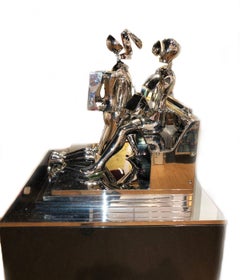
The Encounter
By Ernest Trova
Located in Missouri, MO
Ernest Trova
"The Encounter" 1994
Chrome Plated Steel
Approx 24 x 26 x 24 inches
Edition 1/8
Known for his Falling Man series in abstract figural sculpture, he created hard-edge ima...
Category
1990s American Modern Ernest Trova Sculptures
Materials
Stainless Steel

Price Upon Request
Related Items
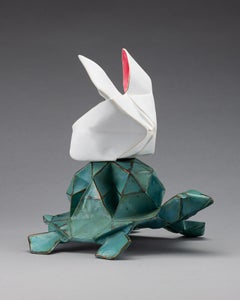
Road Trip- desktop 11/50- Kevin Box and Beth Johnson
By Kevin Box
Located in Napa, CA
It took two years of tireless experimentation for me to develop the process of casting paper into bronze, another seven years to perfect, and it continues to evolve today.” - Kevin B...
Category
2010s Contemporary Ernest Trova Sculptures
Materials
Bronze, Stainless Steel
Arabesque, Female Ballet Dancer in Motion, Bronze Gray Bas Relief Sculpture Art
By Eric Bransby
Located in Denver, CO
This stunning figurative bas relief sculpture captures a female ballet dancer gracefully poised in the arabesque position, created by the acclaimed Colorado/Missouri artist Eric Bransby (1916-2020). Crafted from bronze and polymer Forton casting, the piece beautifully exemplifies Bransby’s mastery of motion and form.
Provenance:
Collection of the artist, Eric Bransby
About Eric Bransby:
Eric James Bransby was a highly respected muralist, painter, illustrator, and educator. His education at the Colorado Springs Fine Art Center included studies with renowned artists like Thomas Hart Benton, Jean Charlot, Boardman Robinson, and Josef Albers. He also studied at the prestigious Yale School of Fine Art.
Bransby’s career is defined by his exceptional work as a muralist, with notable commissions including the Rockhurst Library Triptych Mural at the University of Missouri, murals at Brigham Young University, the U.S. Air Force Academy...
Category
20th Century American Modern Ernest Trova Sculptures
Materials
Bronze
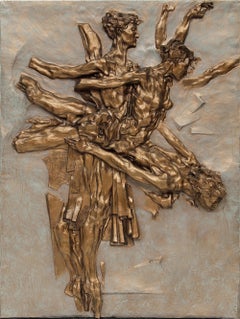
$6,400 Sale Price
20% Off
H 40 in W 30 in D 3 in
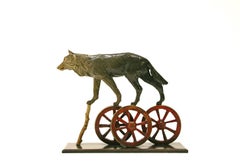
Renegade
By Brad Rude
Located in Bozeman, MT
Ed. 3/6
Artist Brad Rude was born in Montana and has lived in Walla Walla, Washington most of his life. His journeys through his grandfather's folk art st...
Category
2010s American Modern Ernest Trova Sculptures
Materials
Bronze, Enamel
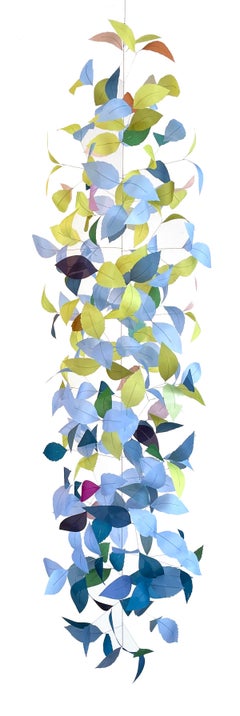
"Renewal" (2024) By Jan R Carson, Original Sculpture, Silk and Steel Wire
Located in Denver, CO
"Renewal" (2024) By Jan R Carson is an original handmade sculpture made with silk and stainless-steel wire. This piece depicts leaves falling and changing color as they fall.
Category
2010s Ernest Trova Sculptures
Materials
Stainless Steel
$2,800
H 60 in W 16 in D 16 in
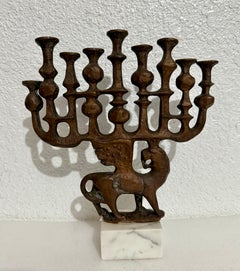
Milton Hebald Mid Century Bronze Menorah Sculpture WPA Artist Modernist Judaica
Located in Surfside, FL
Milton Hebald (American, 1917-2015)
Lion of Judah menorah
bronze on a white marble plinth base
signed in bronze
12" H x 10.5" W x 2.5" D
Milton Elting Hebald (1917 – 2015) was a s...
Category
1960s American Modern Ernest Trova Sculptures
Materials
Marble, Bronze
$6,500
H 12 in W 10.5 in D 2.5 in
Vintage Arthur Court Aluminum Sculpture Cast Bouquet Flowers, Ladybug Home Decor
Located in Surfside, FL
A designer decor bouquet of aluminum floral forms by Arthur Court Designs (California). Produced 1989. Includes: four (4) aluminum flowers on stems; and...
Category
1980s American Modern Ernest Trova Sculptures
Materials
Metal
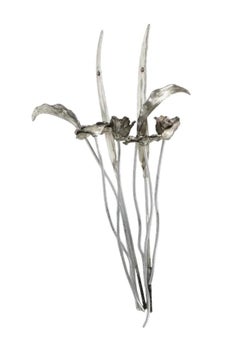
Arthur CourtVintage Arthur Court Aluminum Sculpture Cast Bouquet Flowers, Ladybug Home Decor, c.1989
$1,500
H 21 in W 10 in D 3 in
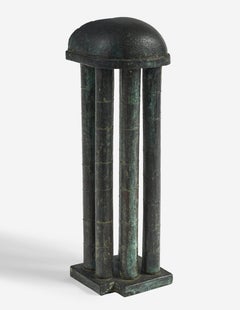
Bronze Architectural Model Sculpture Tempio Bretton Architecture Maquette
Located in Surfside, FL
TEMPIO BRETTON: from the catalogue MONUMENTA, 19th International Sculpture Biennale, Antwerp, Belgium.
Tempio Bretton was created in homage to the celebrated English landscapist Capability Brown for the occasion of an exhibition at Bretton Hall in the Yorkshire Sculpture Park , a park in the style of the great master of English garden design. The inclusion in the English garden of a temple ruin, or "eye-catcher," (architectural folly) was used to draw the eye and mind to a focus in time and space, present the beholder with an immediate relationship to an historic past made new within his or her own surroundings, and create a depth of space never before seen in garden design.
I took the idea of the temple ruin eye-catcher and reduced it to a scale at the point where architecture and sculpture merged. Tempio Bretton is not capacious enough to walk into, yet it is considerably larger than a man.
One view of it presents a knot of golden columns clustered together, topped by a dome shape. The only clue from this side to the temple's non-conformity to historic principle is a sharp notch cut into the square base.
Viewed from the opposite side, the cluster of columns capped by an angular top opens up as if to welcome someone in, yet the mysterious core is still impenetrable. These contradictions articulate a confrontation between past and present, and an exciting truth. The past is always at the heart of our constructions in the present.
Walter Dusenbery (born September 21, 1939 in Alameda, California) is an American sculptor. He attended the San Francisco Art Institute, earned an MFA from California College of Arts and Crafts, and then studied in Japan and Italy under Isamu Noguchi. He also held teaching positions at Harvard University and University of California, Berkeley Graduate School of Design. From 1971 to 1988, he lived both in Pietrasanta,Italy, and in Little Italy, New York City. Dusenbery's preferred material is stone, particularly travertine or granite. Dusenbery has a particular interest in adding sculpture to public places, such as federal buildings, to humanize the space, but in 1988, he assembled a show of small, entirely hand-carved alabaster sculptures, called "Walter Dusenbery, The Personal Side," at the Fendrick Gallery in Washington, D.C.. In 1977, Dusenbery created Pedogna, on permanent loan from The Metropolitan Museum of Art to Landmarks, the public art program of The University of Texas at Austin.
That same year, 1988, he was awarded a large commission for the Fulton County Building Atrium in Atlanta, Georgia. The commission was for three fountains and related structures over three stories in height, designed for informal and ceremonial public events, Limestone, marble, granite and travertine fountains, pavilions, seating and meeting areas, performance and concert platforms, staircases and planters for hanging gardens. After completion of the "Atlantacropolis," Dusenbery withdrew from the gallery world and focused his energy on site-specific commissions. (like the landscape works of Maya Lin and Beverly Pepper) Seeking a large-scale stone studio for projects closer to home, he discovered there were none. In 1995, he approached sculptor and patron of sculpture J. Seward Johnson Jr. with the idea of creating a state-of-the-art stone-carving studio, so that American sculptors would not have to travel abroad to realize their work. Johnson agreed to fund such a facility, if Dusenbery would direct it. In 1996, Dusenbery designed the facility for the Stone Division at Johnson Atelier Technical Institute of Sculpture, and was its first director. The facility was situated in "a building resembling an airplane hangar," The studio offered the ability to digitally scan three-dimensional forms. The Stone Division was a success and attracted a strong group of sculptors: Magdalena Abakanowicz, Lawrence Argent, Barry X Ball...
Category
20th Century American Modern Ernest Trova Sculptures
Materials
Bronze
$4,000
H 12.5 in W 3.5 in D 3.5 in
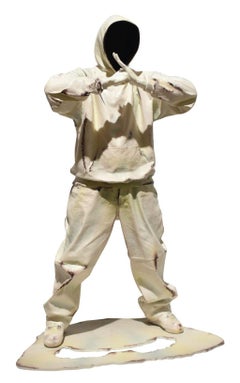
"The Party" Sculpture 20.5" x 13" x 8" inch Ed. of 333 by Huang Yulong
By Huang Yulong
Located in Culver City, CA
"The Party" Sculpture 20.5" x 13" x 8" inch Ed. of 333 by Huang Yulong
The Party/党派
2018 was special. That period reminded me of the friends I faced when I was dancing in college. S...
Category
21st Century and Contemporary Contemporary Ernest Trova Sculptures
Materials
Stainless Steel
$3,500
H 20.5 in W 13 in D 8 in
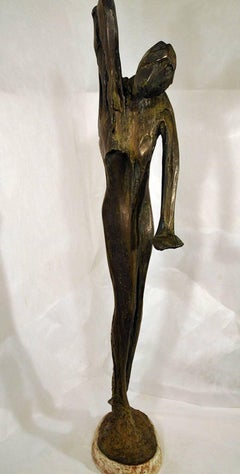
Up
By Robert Cook
Located in New York, NY
Bronze, 1967. Height 59" (149.9 cm) width max 15" (38 cm).
Signed on base "R Cook." This unique large sculpture was made using the lost wax process.
“ ...
Category
Mid-20th Century American Modern Ernest Trova Sculptures
Materials
Stone, Bronze
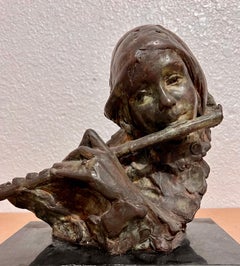
Bronze Sculpture Flutist American Modernist Art Stanley Bleifeld Girl with Flute
By Stanley Bleifeld
Located in Surfside, FL
Retaining a fine patina and in overall good condition.
Signed with initials SB.
I believe the edition size was 7 But I cannot find a mark.
Stanley Bleifeld (1924 – 2011) was an American sculptor.
Stanley Bleifeld was born and raised in Brooklyn, New York, Bleifeld earned bachelor of fine arts, bachelor of science in education and in 1949 a master of fine arts degree in painting at Tyler School of Art of Temple University. After a trip to Rome in 1959 or 1960 he gave up painting for sculpture. He began his fine-art career as a painter. However, a visit to Italy and exposure to the bronzes of Donatello, Michelangelo, and Ghiberti changed his direction He worked with the Art Foundry of Massimo del Chiaro and alongside artists such as Lucchesi, Harry Marinsky, Fernando Botero, Igor Mitoraj and Ivan Theimer. Many of his early pieces were religious subjects, and reflected both painting and sculptural techniques in bas reliefs* that had "liquid landscapes in undulating reliefs and free-flowing portraits reminiscent of classical fragments" (166-167). He later turned from these abstract pieces to more realistic figures in bronze.
Bleifeld was a National Academician in Sculpture, and a member of the National Academy of Design, and helped set policy for that organization. He was also President of the National Sculpture Society. Past presidents of the society have included John Quincy Adams Ward, James Earle Fraser, Chester Beach, Wheeler Williams, Leo Friedlander, Neil Estern, and Cecil de Blaquiere Howard. The first woman to gain admission into the NSS was Theo Alice Ruggles Kitson, in 1893. She was followed a few years later by Enid Yandell and Bessie Potter Vonnoh in 1898; Janet Scudder in 1904; Anna Hyatt Huntington in 1905 and Evelyn Longman and Abastenia St. Leger Eberle in 1906. In 1946, Richmond Barthé was likely the first African-American to be admitted.
In 1994, the NSS held their first exhibition outside the United States at the Palazzo Mediceo Di Seravezza in Italy. Titled “100 Years of the National Sculpture Society of the United States of America in Italy” it ran from the 16th of July through the 4th of September and was curated by Nicky and Stanley Bleifeld along with Costantino Paolicchi, Lodovico Gierut and Paolo Giorgi. Among the 60 notable American sculptors whose work was selected for the exhibition were Stanley Bleifeld, Andrew DeVries, Neil Estern, Leonda Finke...
Category
1970s American Modern Ernest Trova Sculptures
Materials
Bronze
$6,500
H 12 in W 14 in D 6 in
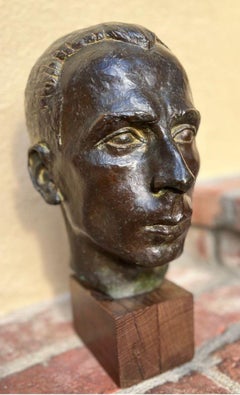
Untitled Portrait Head (perhaps Arnold Geissbuhler, the artist’s husband)
Located in Los Angeles, CA
Untitled Portrait Head (perhaps Arnold Geissbuhler, the artist’s husband), c. 1920s, bronze, signed verso, 11 x 9 x 7 inches (excluding base)
Elizabeth Chase was a sculptor, printma...
Category
1920s American Modern Ernest Trova Sculptures
Materials
Bronze
$2,500
H 11 in W 9 in D 7 in
Love Jaguar
By Michael Benisty
Located in New York, NY
The electro-love collection was inspired by the artist's time spent in South America and South Africa and seeing these supernatural creatures.
Technique: Clay mold...
Category
2010s Contemporary Ernest Trova Sculptures
Materials
Stainless Steel

Previously Available Items
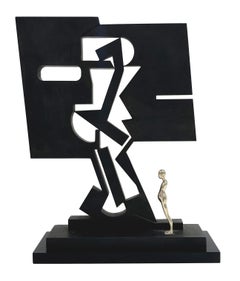
FALLING MAN GOX (SCULPTURE)
By Ernest Trova
Located in Aventura, FL
Bronze and steel sculpture with black patination, on black acrylic base. Etched artist signature with title, date and edition to base underside. Published by Pace Editions. From t...
Category
1970s Pop Art Ernest Trova Sculptures
Materials
Bronze, Steel
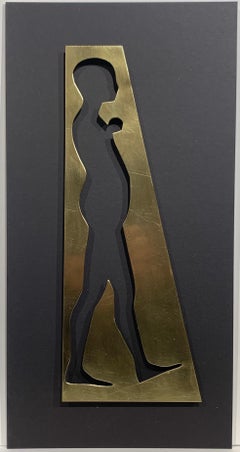
Walking Man with Disc
By Ernest Trova
Located in Wilton Manors, FL
Beautiful figural sculpture by American artist, Ernest Tino Trova (1927-2009). Walking Man with Disc (working study), 1966. Brass sheet with cut-out figure in profile, sheet measures...
Category
Mid-20th Century Abstract Ernest Trova Sculptures
Materials
Brass
TRISTAN GOX (SCULPTURE)
By Ernest Trova
Located in Aventura, FL
Steel and bronze sculpture. Inscribed signature and numbered. Artwork is in excellent condition. Certificate of authenticity included. Edition of 125. All reasonable offers will be...
Category
1970s Pop Art Ernest Trova Sculptures
Materials
Bronze, Steel
Ernest Trova sculptures for sale on 1stDibs.
Find a wide variety of authentic Ernest Trova sculptures available for sale on 1stDibs. You can also browse by medium to find art by Ernest Trova in metal, stainless steel, brass and more. Much of the original work by this artist or collective was created during the 20th century and is mostly associated with the contemporary style. Not every interior allows for large Ernest Trova sculptures, so small editions measuring 9 inches across are available. Customers who are interested in this artist might also find the work of Anthony Quinn, Peter Reginato, and Walter Peter Brenner. Ernest Trova sculptures prices can differ depending upon medium, time period and other attributes. On 1stDibs, the price for these items starts at $1,200 and tops out at $55,000, while the average work can sell for $18,500.