Fredric Karoly Art
to
2
2
1
Overall Width
to
Overall Height
to
3
1
3
2
1
3
3
2
2
1
3
10,225
2,785
2,504
1,382
1
3
Artist: Fredric Karoly
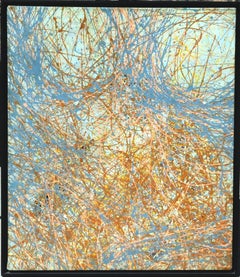
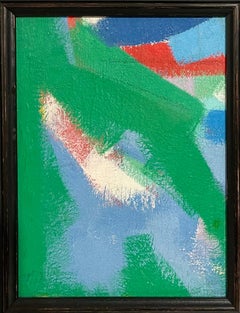
Frederic Karoly Vintage Drip Painting
By Fredric Karoly
Located in Phoenix, AZ
Fred Karoly (1897-1987) Oil on Canvas created 1963. In excellent condition.
A very attractive abstract subject and typical for the artist.
Signed and dated 1963 on the verso. Framed simply in a modern black wood frame.
Measures 28"h x 24"w. Frame size: 29.5"h x 25.5"w x 1.25"d.
Fredric Karoly was born in Budapest in 1897. According to Karoly's own vitae, his exhibition history began in New York in 1947, when at the age of 54 he took part in a four-person group show at Hugo Gallery. His involvement with visual art however was apparently lifelong. In a brief introduction to his solo show at Galerie Mai in Paris in June of 1949, Jen Luc de Rudder, reports that Karoly began painting at the age of 12 in Budapest.
After several years of studying, then working in London, Paris and Berlin, Karoly emigrated to the United States in 1925 or 1926. In New York, Karoly worked in women's fashion as a designer. By the early 1950's, Karoly started experimenting with the drip...
Category
1960s Abstract Fredric Karoly Art
Materials
Canvas, Oil
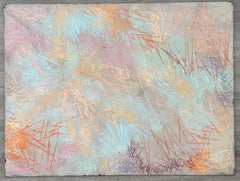
Etude (abstract expressionist painting)
By Fredric Karoly
Located in Wilton Manors, FL
Fredric Karoly (1898-1987). Etude, 1950. Oil on masonite panel measures 18 x 24 inches. Unframed. Signed, titled, dated on reverse. Good condition with minor paint loss at edges.
Biography:
An abstract painter, Karoly was born in Hungary and studied painting in Paris, architectural eingineering in Berlin, and emigrated to the U.S. in 1926. He began a successful career as a fashion and fabric designer. In 1948 he was working as a fashion director for Simplicity Patters, when he had a solo exhibition of of his oil paintings, wire montages, dry-pen drawings and abstract photography.
Solo Exhibitions:
Hugo Gallery (Alexandre Iolas) New York 1948; Gallery Mai. Paris 1949; New Gallery (Eugene Thaw) New York 1950; Museu de Arte, Sao Paulo, Brazil 1951; Miami Museum of Modern Art, Miami, Florida 1959; Loft Gallery, New York City, 1966.Group Exhibitions:
Hugo Gallery, New York 1947; Salon des Realities Nouvelles, Paris 1949-1953; Whitney Museum of American Art, New York (Annual) 1951-1953, 1963; Biennale of Sao Paulo, Brazil, 1951; International Independent Exhibition, Tokyo, 1951; Martha Jackson Gallery, New York, 1959; The Butler Institute of Art, Youngstown, Ohio, 1960; Stuttman Gallery, New York, 1960; The Art Institute of Chicago (Annual), 1960; International Watercolor Exhibition, Brookyln Museum, 1961; Westchester Art Museum, White Plains, NY, 1963; Whitney Museum, Annual, NY 1963; Cleveland Art Festival, Park Synagogue, Cleveland, 1963; Whitney Museum, Sculpture Annual, NY, 1964.Works in Institutional Collections:
Museu de Arte, San Paulo, Brazil; Museu de Bellas Artes, Buenos Aires, Argentina; New York University, New York; Washington University, St. Louis, Missouri; Finch College, NY; Barnard College, NY; Metropolitan Museum, Whitney Museum and Guggenheim Museum, New York; Museum of Fine Arts, St. Petersburg, FL.
Awards: National Council Arts Awards, 1968.
Frederic Karoly died on December 15, 1987 at the Inter-Continental Hotel in Manhattan, where he had made his home for many years.
Fredric Karoly was born in Budapest in 1893. According to Karoly’s own vitae, his exhibition history began in New York in 1947, when at the age of 54 he took part in a four-person group show at Hugo Gallery. His involvement with visual art however was apparently life long. In a brief introduction to his solo show at Galerie Mai in Paris in June of 1949, Jen Luc de Rudder, reports that Karoly began painting at the age of 12 in Budapest.
After several years of studying, then working in London, Paris and Berlin, Karoly emigrated to the United States in 1925 or 1926 (he probably first came to the US on a work visa in 1925). In New York, Karoly worked in women’s fashion as a designer.
In 1948 Karoly worked in a manner than was clearly influenced by the work of such European surrealists as Max Ernst, creating spiked automatic bi-chromatic paintings. His style progressed into a progressively more biomorphic vein, similar to explorations by Theodore Stamos, Daphnis, Milton Avery and Mark Rothko around the same period. He was supported with patronage during this period by Mrs. Mimi Baliff, who apparently supported the “Industrial Design Workshop” that she helped open to feature Karoly’s designs in 1948.
By the early 1950’s (1951) Karoly started experimenting with the drip and splatter process as well. Drip paintings dominated his process until the late 50’s-early 60’s, when linear compositional elements began to reemerge. By the late 50’s multi-layered drip grid motifs asserted a masque of spatial organization over looser washed fields and splatters of paint that Karoly worked off of. This development was consistent with concurrent explorations into the grid by artist Agnes Martin and others.
By the mid-50’s Karoly’s style began another transition into a more surface concerned “Color Field” style of painting. There are elements still reminding one of Abstract Expressionist concerns as such painters as Clifford Still. But the works that began to emerge from Karoly’s studio in 1958 presaged the Morris Lewis fan motifs and Friedl Dzubas’s epic and romantic color spewing expanses of canvas.
In 1959 Karoly began experiments using washes of turpentine diluted oil paint directly onto raw linen, and all of these subsequently suffered the consequences of oil oxidation and acidity upon the surfaces. However, many of Karoly’s washes in color field happily occurred on lightly prepared primed canvas surfaces as well.
By 1960 Karoly began reintroducing imagistic references to his visual content. There were also various references to Japanese and Zen influences. He experimented with a variety of processes that included mixed media and marbleized surfaces achieved by the intermixture of oil and water mediums. A calligraphic element also enter Karoly’s work in the early 60’s. Then in 1961 glued and assembled objects begin to show up in Karoly’s work in earnest. The influence of early POP artists, particularly Jasper Johns, and Robert Rauschenberg, become apparent. From 1961-63, a series of the assemblage works transition from canvas to the sculptural to pieces obviously intended for full scale installation. Many of these pieces were among the most fragile of his works primarily due to their reliance upon the of gluing of objects such as plastic or paper cups on flexible surfaces of stretched linen or canvas.
In the mid-60’s Karoly apparently produced a number of photo-silk screened series of Picasso, De Kooning and other significant artists of his generation. These were executed in a style somewhere between Rauschenberg’s and Roy Lichtenstein’s, primarily because of their reliance upon half tones and Ben-Day dot effects. Then Karoly began a series of paintings conflating his drip and grid styles with super imposed and painted over string. In the late 60’s Karoly embarked upon a series of multi-paneled stretched linen constructions often with slits and fiber optic back-lit elements that were prescient of the work of Dan Flavin and others. It was this body of work that was shown at Hofstra University’s Emily Lowe Gallery, and it was these works that suffered perhaps the most irreparable damage from a steam/water infiltration in a space where they were being stored.
The late professional start that Karoly had into the art world was balanced by his long life span and early immersion into the design issues of modernism as it emerged in turn of the century Europe and later evolved in America. He was clearly an artist who subscribed to the ethos of the new in abstraction and was obviously impressionable and in some instances prescient with regard to various trends in abstraction.
Several noteworthy and influential collectors and institutions during his 40 years of professional engagement acquired his work. The Whitney Museum of American Art had and may still own a large Karoly canvas from 1960, but this is doubtful as the artist failed to list it on the vitae he filed with MoMA in 1965. His work was recognized and honored by the Whitney with its inclusion in four of their annual survey shows (1951,1953, 1963 and 1964).
The artist’s surrealist influenced paintings from 1948-1950 were the focus of a solo exhibition held of his work by the Museo de Art in Sao Paulo and eight years later a ten year survey of his work was the focus of a solo show at the Miami Museum of Modern art. The Sao Paulo Museum in Brazil, and the Museo de Bellas Artes in Buenos Aires, Argentina each acquired Karoly paintings for their collections in the 1950’s.
One of Karoly’s surrealist pieces was apparently purchased by Christian Zervos, Picasso’s designated chronicler, who apparently also wrote a piece on Karoly in Cahiers D’Art in 1949. A 60’s piece of Karoly art that is in the New York University’s permanent collection is included in the MoMA Library’s catalog...
Category
Mid-20th Century Abstract Expressionist Fredric Karoly Art
Materials
Masonite, Oil

$2,000 Sale Price
20% Off
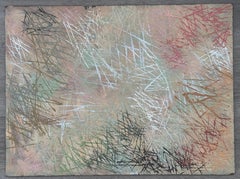
Etude III (abstract expressionist painting)
By Fredric Karoly
Located in Wilton Manors, FL
Fredric Karoly (1898-1987). Etude III, 1950. Oil on masonite panel measures 18 x 24 inches. Unframed. Signed, titled, dated on reverse. Good condition with minor paint loss at edges.
Biography:
An abstract painter, Karoly was born in Hungary and studied painting in Paris, architectural eingineering in Berlin, and emigrated to the U.S. in 1926. He began a successful career as a fashion and fabric designer. In 1948 he was working as a fashion director for Simplicity Patters, when he had a solo exhibition of of his oil paintings, wire montages, dry-pen drawings and abstract photography.
Solo Exhibitions:
Hugo Gallery (Alexandre Iolas) New York 1948; Gallery Mai. Paris 1949; New Gallery (Eugene Thaw) New York 1950; Museu de Arte, Sao Paulo, Brazil 1951; Miami Museum of Modern Art, Miami, Florida 1959; Loft Gallery, New York City, 1966.Group Exhibitions:
Hugo Gallery, New York 1947; Salon des Realities Nouvelles, Paris 1949-1953; Whitney Museum of American Art, New York (Annual) 1951-1953, 1963; Biennale of Sao Paulo, Brazil, 1951; International Independent Exhibition, Tokyo, 1951; Martha Jackson Gallery, New York, 1959; The Butler Institute of Art, Youngstown, Ohio, 1960; Stuttman Gallery, New York, 1960; The Art Institute of Chicago (Annual), 1960; International Watercolor Exhibition, Brookyln Museum, 1961; Westchester Art Museum, White Plains, NY, 1963; Whitney Museum, Annual, NY 1963; Cleveland Art Festival, Park Synagogue, Cleveland, 1963; Whitney Museum, Sculpture Annual, NY, 1964.Works in Institutional Collections:
Museu de Arte, San Paulo, Brazil; Museu de Bellas Artes, Buenos Aires, Argentina; New York University, New York; Washington University, St. Louis, Missouri; Finch College, NY; Barnard College, NY; Metropolitan Museum, Whitney Museum and Guggenheim Museum, New York; Museum of Fine Arts, St. Petersburg, FL.
Awards: National Council Arts Awards, 1968.
Frederic Karoly died on December 15, 1987 at the Inter-Continental Hotel in Manhattan, where he had made his home for many years.
Fredric Karoly was born in Budapest in 1893. According to Karoly’s own vitae, his exhibition history began in New York in 1947, when at the age of 54 he took part in a four-person group show at Hugo Gallery. His involvement with visual art however was apparently life long. In a brief introduction to his solo show at Galerie Mai in Paris in June of 1949, Jen Luc de Rudder, reports that Karoly began painting at the age of 12 in Budapest.
After several years of studying, then working in London, Paris and Berlin, Karoly emigrated to the United States in 1925 or 1926 (he probably first came to the US on a work visa in 1925). In New York, Karoly worked in women’s fashion as a designer.
In 1948 Karoly worked in a manner than was clearly influenced by the work of such European surrealists as Max Ernst, creating spiked automatic bi-chromatic paintings. His style progressed into a progressively more biomorphic vein, similar to explorations by Theodore Stamos, Daphnis, Milton Avery and Mark Rothko around the same period. He was supported with patronage during this period by Mrs. Mimi Baliff, who apparently supported the “Industrial Design Workshop” that she helped open to feature Karoly’s designs in 1948.
By the early 1950’s (1951) Karoly started experimenting with the drip and splatter process as well. Drip paintings dominated his process until the late 50’s-early 60’s, when linear compositional elements began to reemerge. By the late 50’s multi-layered drip grid motifs asserted a masque of spatial organization over looser washed fields and splatters of paint that Karoly worked off of. This development was consistent with concurrent explorations into the grid by artist Agnes Martin and others.
By the mid-50’s Karoly’s style began another transition into a more surface concerned “Color Field” style of painting. There are elements still reminding one of Abstract Expressionist concerns as such painters as Clifford Still. But the works that began to emerge from Karoly’s studio in 1958 presaged the Morris Lewis fan motifs and Friedl Dzubas’s epic and romantic color spewing expanses of canvas.
In 1959 Karoly began experiments using washes of turpentine diluted oil paint directly onto raw linen, and all of these subsequently suffered the consequences of oil oxidation and acidity upon the surfaces. However, many of Karoly’s washes in color field happily occurred on lightly prepared primed canvas surfaces as well.
By 1960 Karoly began reintroducing imagistic references to his visual content. There were also various references to Japanese and Zen influences. He experimented with a variety of processes that included mixed media and marbleized surfaces achieved by the intermixture of oil and water mediums. A calligraphic element also enter Karoly’s work in the early 60’s. Then in 1961 glued and assembled objects begin to show up in Karoly’s work in earnest. The influence of early POP artists, particularly Jasper Johns, and Robert Rauschenberg, become apparent. From 1961-63, a series of the assemblage works transition from canvas to the sculptural to pieces obviously intended for full scale installation. Many of these pieces were among the most fragile of his works primarily due to their reliance upon the of gluing of objects such as plastic or paper cups on flexible surfaces of stretched linen or canvas.
In the mid-60’s Karoly apparently produced a number of photo-silk screened series of Picasso, De Kooning and other significant artists of his generation. These were executed in a style somewhere between Rauschenberg’s and Roy Lichtenstein’s, primarily because of their reliance upon half tones and Ben-Day dot effects. Then Karoly began a series of paintings conflating his drip and grid styles with super imposed and painted over string. In the late 60’s Karoly embarked upon a series of multi-paneled stretched linen constructions often with slits and fiber optic back-lit elements that were prescient of the work of Dan Flavin and others. It was this body of work that was shown at Hofstra University’s Emily Lowe Gallery, and it was these works that suffered perhaps the most irreparable damage from a steam/water infiltration in a space where they were being stored.
The late professional start that Karoly had into the art world was balanced by his long life span and early immersion into the design issues of modernism as it emerged in turn of the century Europe and later evolved in America. He was clearly an artist who subscribed to the ethos of the new in abstraction and was obviously impressionable and in some instances prescient with regard to various trends in abstraction.
Several noteworthy and influential collectors and institutions during his 40 years of professional engagement acquired his work. The Whitney Museum of American Art had and may still own a large Karoly canvas from 1960, but this is doubtful as the artist failed to list it on the vitae he filed with MoMA in 1965. His work was recognized and honored by the Whitney with its inclusion in four of their annual survey shows (1951,1953, 1963 and 1964).
The artist’s surrealist influenced paintings from 1948-1950 were the focus of a solo exhibition held of his work by the Museo de Art in Sao Paulo and eight years later a ten year survey of his work was the focus of a solo show at the Miami Museum of Modern art. The Sao Paulo Museum in Brazil, and the Museo de Bellas Artes in Buenos Aires, Argentina each acquired Karoly paintings for their collections in the 1950’s.
One of Karoly’s surrealist pieces was apparently purchased by Christian Zervos, Picasso’s designated chronicler, who apparently also wrote a piece on Karoly in Cahiers D’Art in 1949. A 60’s piece of Karoly art that is in the New York University’s permanent collection is included in the MoMA Library’s catalog...
Category
Mid-20th Century Abstract Expressionist Fredric Karoly Art
Materials
Oil, Masonite
$2,000 Sale Price
20% Off
Related Items
"Stairway to Nirvana"
Located in Astoria, NY
20th Century School, "Stairway to Nirvana", Oil on Masonite, unsigned, titled verso, unframed.
24" H x 48" W x 1" D.
Provenance: From the Collection of Laura and Lewis Kruger.
Category
20th Century Abstract Expressionist Fredric Karoly Art
Materials
Masonite, Oil
Series "Ocean Waves - 10" gold leaf, black abstraction 3D, textured, minimalism
Located in Vienna, AT
Series "Ocean Waves" is a powerful series of three-dimensional abstract paintings that captures the rhythmic essence of nature through sculptural textures and elemental contrasts. In...
Category
2010s Abstract Fredric Karoly Art
Materials
Gold, Gold Leaf
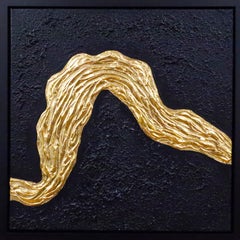
Nataliia KrykunSeries "Ocean Waves - 10" gold leaf, black abstraction 3D, textured, minimalism, 2025
$1,427
H 11.82 in W 11.82 in D 0.79 in
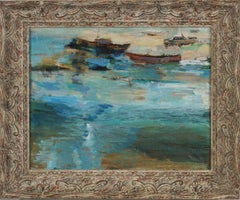
Boats Near Shore - Abstracted Seascape
By Robert Canete
Located in Soquel, CA
Abstracted seascape of three boats near the shore with broad, painterly strokes of blue, turquoise, and neutrals by Robert Canete (American, b. 1948). Signed lower right. Image: 16"H...
Category
1980s Abstract Expressionist Fredric Karoly Art
Materials
Masonite, Oil
$1,720 Sale Price
20% Off
H 16 in W 20 in D 0.25 in
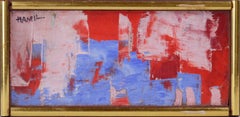
Out of the Blue, Miniature Red
Blue Abstract
By Tom Hamil
Located in Soquel, CA
Bright, small abstract expressionist painting of red, white and blue hues by California artist Tom Hamil (American, b. 1928). Signed upper left corner "Hamil". Condition: Excellent. Presented in rustic wooden shadow box frame. Image size: 2.75"H x 6.75"W.
Tom Hamil, was born in New York in 1928 and raised primarily in California. After attending the US Naval Academy in Annapolis, he returned to California to begin his formal art training at the California School of Fine Arts in San Francisco (now known as the San Francisco Art Institute). He completed his education at the University of Washington with a Master’s Degrees and Doctorate in Fine Arts and Education. His first solo exhibition was held in 1956. Since then, he has participated in numerous one man shows, group shows, and has been represented in galleries in the US and Mexico.
In addition to his painting, Hamil has authored and illustrated a number of books. While at the Naval Academy, he received recognition for his paintings, drawings, and illustrations. Listed among Hamil’s many awards and honors are a Ford Foundation Fellowship and an Award of Excellence from the American Graphics Society.
Currently, he lives in Zirahuen, Michoacan, Mexico and Truth or Consequences, New Mexico. Hamil’s statement: “I am a man...
Category
Mid-20th Century Abstract Expressionist Fredric Karoly Art
Materials
Masonite, Oil
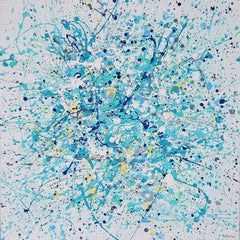
Series "Ocean of Light #2" yellow, blue, white, colourful Pollock’s style
Located in Vienna, AT
Artist : Natalia Krykun ©
Size : 50 H x 50 W x 2 D cm
Medium: Professional Acrylic Paints on canvas
Year: 2025
________________________________________________
Series "Ocean of Li...
Category
2010s Abstract Fredric Karoly Art
Materials
Canvas, Cotton Canvas, Mixed Media, Oil, Spray Paint, Acrylic
$1,195
H 19.69 in W 19.69 in D 0.79 in
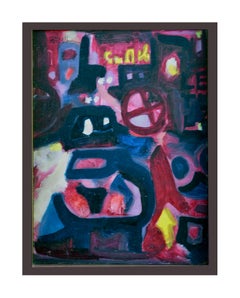
Nocturnal Train In The City Abstract Expressionism
By Tom Hamil
Located in Soquel, CA
Bright, small abstract expressionist painting of train and town at night by Tom Hamil (American, b. 1928). Signed upper left corner "Hamil". Condition: Excellent. Presented in rustic wooden shadow box frame. Image size: 8"H x 6"W.
Tom Hamil, was born in New York in 1928 and raised primarily in California. After attending the US Naval Academy in Annapolis, he returned to California to begin his formal art training at the California School of Fine Arts in San Francisco (now known as the San Francisco Art Institute). He completed his education at the University of Washington with a Master’s Degrees and Doctorate in Fine Arts and Education. His first solo exhibition was held in 1956. Since then, he has participated in numerous one man shows, group shows, and has been represented in galleries in the US and Mexico.
In addition to his painting, Hamil has authored and illustrated a number of books. While at the Naval Academy, he received recognition for his paintings, drawings, and illustrations. Listed among Hamil’s many awards and honors are a Ford Foundation Fellowship and an Award of Excellence from the American Graphics Society.
Currently, he lives in Zirahuen, Michoacan, Mexico and Truth or Consequences, New Mexico. Hamil’s statement: “I am a man...
Category
1960s Abstract Expressionist Fredric Karoly Art
Materials
Masonite, Oil
$420 Sale Price
20% Off
H 7 in W 9 in D 1.5 in
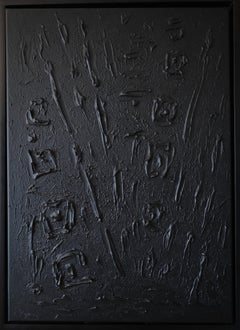
Series "Touch of Tranqullity - 2" black abstraction in 3D, textured, minimalism
Located in Vienna, AT
Series "Touch of Tranquility" is a sculptural painting series that delves into the silent strength of black and the tactile language of texture. Through three-dimensional abstract su...
Category
2010s Abstract Fredric Karoly Art
Materials
Gold, Gold Leaf
Nataliia KrykunSeries "Touch of Tranqullity - 2" black abstraction in 3D, textured, minimalism, 2025
$1,434
H 27.56 in W 19.69 in D 0.79 in
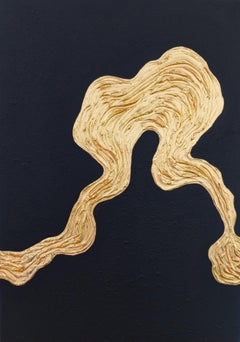
Series "Ocean Waves - 8" gold leaf black abstraction in 3D, textured, minimalism
Located in Vienna, AT
Series "Ocean Waves" is a powerful series of three-dimensional abstract paintings that captures the rhythmic essence of nature through sculptural textures and elemental contrasts. In...
Category
2010s Abstract Fredric Karoly Art
Materials
Gold, Gold Leaf
$2,868
H 27.56 in W 19.69 in D 0.79 in
Bright Colorful Abstract Expressionist
By Anthony Rappa
Located in Soquel, CA
Bright, colorful abstract expressionist piece by Monterey, California artist Anthony Rappa (American, 20th Century). Heavy, textured pa...
Category
1980s Abstract Expressionist Fredric Karoly Art
Materials
Canvas, Oil, Cardboard
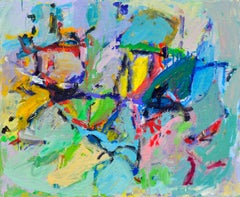
Bold German American Abstract Expressionist Color Field Oil Painting Carl Holty
By Carl Holty
Located in Surfside, FL
Carl Robert Holty (American 1900-1973)
Abstract Expressionism Oil on Masonite board.
Abstract with greens blues and red,
Dimensions 12 x 9-1/2 inches. Framed 17 X 14 inches
Hand...
Category
20th Century Abstract Expressionist Fredric Karoly Art
Materials
Masonite, Oil
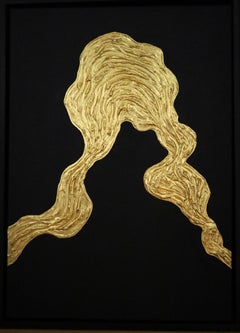
Series "Ocean Waves - 6" gold leaf black abstraction in 3D, textured, minimalism
Located in Vienna, AT
Series "Ocean Waves" is a powerful series of three-dimensional abstract paintings that captures the rhythmic essence of nature through sculptural textures and elemental contrasts. In...
Category
2010s Abstract Fredric Karoly Art
Materials
Gold, Gold Leaf
$2,868
H 27.56 in W 19.69 in D 0.79 in
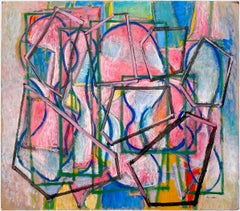
Concert (unique, signed Abstract Expressionist painting by celebrated artist)
By Ben Wilson
Located in New York, NY
Ben Wilson
Concert, ca. 1989
Oil on masonite board (Hand Signed by the artist; also bears the Estate Stamp)
Boldly signed front and back, titled and dated on the back by Ben Wilson and also stamped on the back by the estate of Ben Wilson
42 × 48 inches
Unframed
This stunning painting is done by the second generation Abstract Expressionist artist Ben Wilson - one of the youngest artists to be given a show at prestigious ACA Gallery in 1940. This work "Concert" - depicting instruments, in a light, lyrically abstract painting. Exquisite colors and subtle imagery.
In 2017, he was the subject of a retrospective at the George Segal Gallery at Montclair State University from September 6 to November 4 and it was accompanied by a catalogue.
About Ben Wilson:
Ben Wilson was born in Philadelphia in 1913 to Jewish parents who had emigrated from Kiev and settled in New York City. He was educated in Manhattan public schools and graduated from City College in 1935. To gain exposure to a wider range of styles, he also studied at the National Academy of Design and at the Educational Alliance.
Admired by critics throughout his long career, Wilson was singled out as a “discovery” by the New York Times art critic Edward Alden Jewel even before his first one-man show at the Galerie Neuf in 1946. His paintings of the ’30s and ’40s were expressionistically rendered, often Biblical parables, filled with what he called “the grief of the intolerable” and reflecting an acute awareness of the agony of the time, from the Holocaust to the Spanish Civil War. A WPA artist who identified strongly with the plight of the Jews in Europe, he relentlessly explored themes of war, torment, and futility in his early decades of painting.
When times changed and social pressures subsided, Wilson’s mood lifted. He spent 1952-54 in Paris working at the Academie Julien. During the ’50s his involvement with specific imagery persisted but became more psychological and mythic in orientation. Influenced by Cubism, he created a vocabulary of interlocking shapes and bold, sweeping gestures that served as a transition between his early figurative expressionism and his later abstract constructivist concerns. Towards the end of the decade Wilson reached a crossroads, moving towards abstraction and searching for what he called “a scaffolding under the externals.”
By 1960, influenced by the Russian Constructivists, Mondrian, and Abstract Expressionism, Wilson turned to abstraction. Reexamining the basic elements of painting, he evolved his own personal vocabulary and structure, fusing the cerebral and the emotive. He became increasingly experimental, using house paint, sand, and other unorthodox materials in paintings that he worked from all directions, dripping, spraying, stenciling, and collaging. He employed elements of disjunction, repetitions of geometric motifs, linear networks, and complex overlays to create the transparent, multi-layer development of space that characterizes his later paintings. A consummate draftsman, Wilson filled notebook after notebook with drawings that he amplified in his paintings.
Eschewing popular movements, Wilson was always one to pursue a personal aesthetic. Despite more than 30 one-man shows and 50 years of teaching, he increasingly withdrew from the gallery scene but continued to paint daily until his death at age 88 in 2001 in Blairstown, New Jersey, where he and his sculptor wife Evelyn Wilson...
Category
1980s Abstract Expressionist Fredric Karoly Art
Materials
Masonite, Oil
Previously Available Items
Untitled (abstract expressionist painting)
By Fredric Karoly
Located in Wilton Manors, FL
Fredric Karoly (1898-1987). Oil on canvas, it is 4 1/2 x 37 inches. 2 inches deep from wall. Signed and dated on back. Very good condition with minor m...
Category
Mid-20th Century Abstract Expressionist Fredric Karoly Art
Materials
Metal
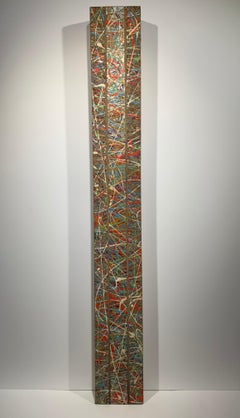
Untitled (abstract expressionist painting)
By Fredric Karoly
Located in Wilton Manors, FL
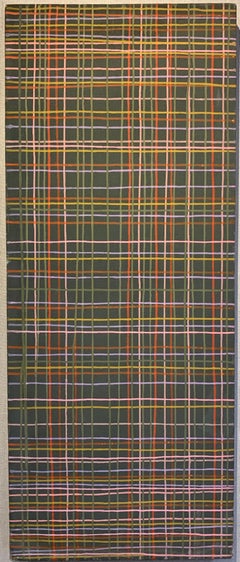
Fredric Karoly (1898-1987). Untitled, ca.1960. Oil on canvas measures 49 x 20 inches. Unframed. Signed on reverse. Good condition with some water staini...
Category
Mid-20th Century Abstract Expressionist Fredric Karoly Art
Materials
Oil
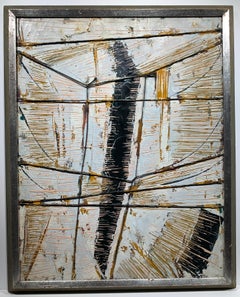
Black Boom w/ Twine (Abstract Expressionist painting)
By Fredric Karoly
Located in Wilton Manors, FL
Fredric Karoly (1898-1987). Black Boom with Twine, 1952. Oil on canvas measures 22 x 28 inches; 24 x 30 inches in a period, custom frame. Signed, dated...
Category
1950s Abstract Expressionist Fredric Karoly Art
Materials
Canvas, Oil
Fredric Karoly art for sale on 1stDibs.
Find a wide variety of authentic Fredric Karoly art available for sale on 1stDibs. Customers who are interested in this artist might also find the work of Vicki Sher, Mattia Novello, and Yamilet Sempe.