G. Harvey Sculptures

American

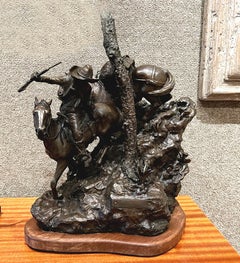
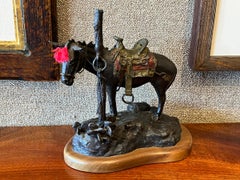
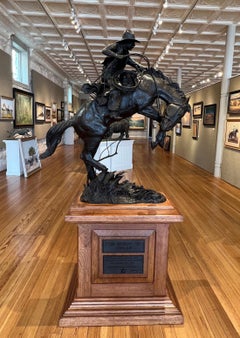
Gerald Harvey Jones was born in San Antonio, Texas, in 1933. His grandfather was a cowboy during the trail-driving era when legends grew up along the dusty trails north from Texas. Family stories of wild cattle and tough men were absorbed by Harvey and became the genesis of his art. Known for paintings closely linked in mood and subject matter to Edouard Cortes, G Harvey created romanticized street scenes of the turn of the century towns in America. Rain slick streets reflect urban lights, and the weather, which was obviously cold. Harvey's early interest in sketching and drawing slowly evolved into a passion for painting in oils. After graduating cum laude from North Texas State University, Harvey took a position with the University of Texas in Austin, but he soon realized that weekends and nights at the easel did not satisfy his love of painting. He abandoned the security of a full-time job in 1963 and threw his total energy into a fine art career. It was through painting that he found his greatest satisfaction, and his native central Texas hill country provided the inspiration for most of his earlier work. He sought the essence that is Texas and found it not only along the banks of the Guadalupe, but in cow camps west of the Pecos, and in the shadows of tall buildings in big Texas cities and the streets of Dallas, which once echoed with the sound of horses hooves and the jingle of spurs. Historic photographs reveal what it looked like, but artists like Harvey can enable a viewer to experience the mood and flavor or the time. In his paintings, the viewer only sees the physical elements of his subject but also senses the mood that surrounds them. It is a remarkable aspect of fine art, which few artists are able to master.

Harvey painted the spirit of America from its western hills and prairies to the commerce of its great cities. His original paintings and bronze sculptures are in the collections of major corporations, prestigious museums, the United States government, American presidents, governors, foreign leaders and captains of industry. The Smithsonian Institution chose Harvey to paint The Smithsonian Dream, commemorating its 150th Anniversary. The Christmas Pageant of Peace commissioned Harvey to create a painting celebrating this national event. He has been the recipient of many awards and the subject of three books. Harvey was a soft-spoken and unassuming man who cared deeply about what he painted without becoming maudlin or melodramatic. Before his death, Harvey lived in Fredericksburg, Texas, with his wife Pat in a 150-year old stone home built by German settlers. His studio and residence were nestled within the Historic District of Fredericksburg.

to
4
Overall Width
to
Overall Height
to
3
1
1
2
4
2
2
1
1
1
1
1
1
1
1
3
3
1
1
13
214
209
160
132
2
2
4
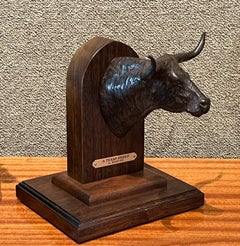
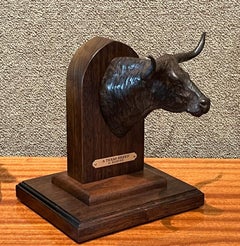
Artist: G. Harvey
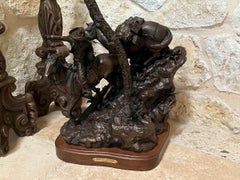
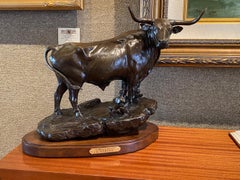
"A TEXAS BREED" G. HARVEY SCULPTURE. BRONZE TEXAS LONGHORN SCULPTURE
By G. Harvey
Located in San Antonio, TX
G. Harvey (Gerald Harvey Jones) (1933-2017) San Antonio, Austin, and Fredericksburg Artist Image Size: 8 inches tall Frame Size: 8 inches across Medium: Bronze Sculpture "A Texas Bre...
Category

2010s Impressionist G. Harvey Sculptures

Materials

Bronze

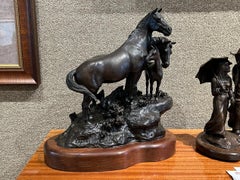
" PROUD AND PROTECTIVE " G. HARVEY BRONZE SCULPTURE HORSES AND COLT
By G. Harvey
Located in San Antonio, TX
G. Harvey (Gerald Harvey Jones) (1933-2017) San Antonio, Austin, and Fredericksburg Artist Image Size: 14 x 14 Medium: Bronze Sculpture 1982 "Proud & Protective" I am the largest G. ...
Category

1980s Impressionist G. Harvey Sculptures

Materials

Bronze

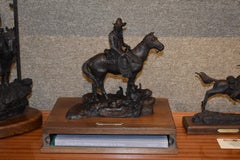
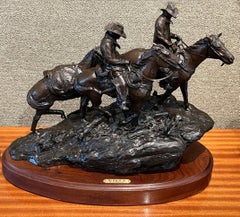
"TAKING STOCK" WESTERN G. HARVEY SCULPTURE W/BOOK BRONZE 1986
By G. Harvey
Located in San Antonio, TX
G. Harvey (Gerald Harvey Jones) (1933-2017) San Antonio, Austin, and Fredericksburg Artist Image Size: Overall size: 14" x 15" x 11.50" Medium: Bronze Sculpture Signed & Dated 1986 "...
Category

1980s Impressionist G. Harvey Sculptures

Materials

Bronze

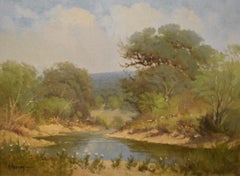
"BEND IN THE CREEK" G. HARVEY TEXAS LANDSCAPE RIVER CREEK
By G. Harvey
Located in San Antonio, TX
G. Harvey (Gerald Harvey Jones) (1933-2017) San Antonio, Austin, and Fredericksburg Artist Image Size: 12 x 16 Frame Size: 21 x 25 Medium: Oil on Canvas Signed Lower Left "Bend In T...
Category

1960s Impressionist G. Harvey Sculptures

Materials

Oil

Related Items
Kindred
By Jane DeDecker
Located in Greenwich, CT
American, b. 1961 Jane DeDecker’s energetic and dynamic bronze sculptures serve as a reflection of her own life experiences and those of her closely-knit family. Her twelve nieces and nephews are the primary source of her inspiration, though DeDecker’s sculptures are not portraits. In fact, her loose style leaves her viewers with room for interpretation, so as to see their own lives within her sculptures. This imprecision, combined with her unique ability to capture specific moments to which each viewer can relate on a personal level, regardless of age, give DeDecker’s work a timeless quality that spans generations. DeDecker began her artistic training as a painter at the University of Northern Colorado, until a professor, noticing her joy in the portrayal of shapes and forms, suggested she try her hand at sculpture. Taking his advice, DeDecker went on to study at Gobelins School of Tapestry in Paris...
Category

2010s American Impressionist G. Harvey Sculptures

Materials

Bronze

Kindred
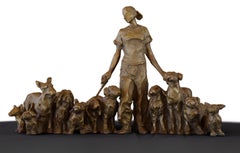
$5,100
H 10.5 in W 16.5 in D 9 in
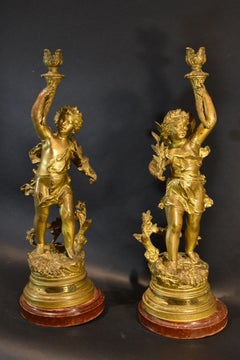
Pair Bronze Candlesticks Rancoulet Signature 19th Century France Sculpture
Located in Riva del Garda, IT
Ernest Rancoulet (Bordeaux 1842 - Bordeaux 1905) Signature on reverse side ‘Rancoulet’ Pair of bronze candlesticks depicting winged cupids ‘Allegory of Autumn and Spring’ Gilt bron...
Category

19th Century Impressionist G. Harvey Sculptures

Materials

Bronze

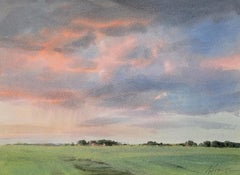
"After a Summer Rain" (2023) By Andy Evansen, Original Watercolor Painting
Located in Denver, CO
"Beasts of Burden" (2023) by Andy Evansen is an original handmade watercolor painting on paper that depicts a midwestern plain, with a sunset from a passing storm. This piece measures 11 x 15 inches, and 16 x 20 inches in its frame. Andy Evansen’s interest in art started in childhood, as he can’t recall a time when he wasn’t drawing. He began painting watercolors in the mid 1990s as a change of pace from his career as a medical illustrator. Choosing a ‘style’ was not difficult, as Andy was always inspired by the watercolor paintings of British artists Trevor Chamberlain, David Curtis...
Category

2010s Impressionist G. Harvey Sculptures

Materials

Oil, Board

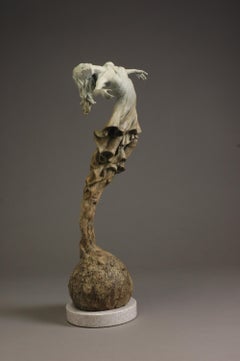
Soaring , Contemporary bronze sculpture.
By Marsha Gertenbach
Located in La Canada Flintridge, CA
Sculptor Marsha Gertenbach signed and numbered this bronze sculpture, edition 11/50. Here is the artist's message about this unique piece: 'I’ve often thought about what the experie...
Category

2010s Impressionist G. Harvey Sculptures

Materials

Bronze

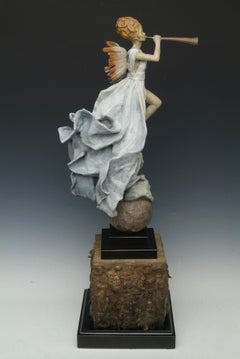
The forth Angel, Contemporary Angel, Angel Sculptor.
By Marsha Gertenbach
Located in La Canada Flintridge, CA
"Sculptor Marsha Gertenbach signed and numbered this bronze sculpture, edition 2/25. Here is the artist's message about this unique piece: IT IS MY STRONG BELIEF THAT GOD HAS GIVEN ...
Category

2010s Impressionist G. Harvey Sculptures

Materials

Bronze

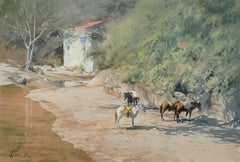
"Beasts of Burden" (2023) By Andy Evansen, Original Watercolor Painting
Located in Denver, CO
"Beasts of Burden" (2023) by Andy Evansen is an original handmade watercolor painting on paper that depicts horses resting in the shade alongside a small creek. This piece measures 15 x 22 inches and 21 x 28 inches in its frame. Andy Evansen’s interest in art started in childhood, as he can’t recall a time when he wasn’t drawing. He began painting watercolors in the mid 1990s as a change of pace from his career as a medical illustrator. Choosing a ‘style’ was not difficult, as Andy was always inspired by the watercolor paintings of British artists Trevor Chamberlain, David Curtis...
Category

2010s Impressionist G. Harvey Sculptures

Materials

Oil, Board

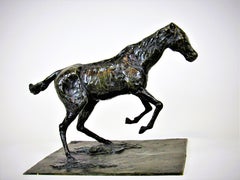
Edgard Degas: Horse Clearing an Obstacle (work 48 /certified by Comité Degas)
By Edgar Degas
Located in Gent, VOV
Horse Clearing an Obstacle (work number 48) Bronze with dark brown green patina bearing the stamp of the signature "Degas", Numbered IV/IX and dated 1998 Posthumous lost wax casting as of 1998. Stamp of Valsuani. Signed Degas The work is a sought-after rarity in terms of Degas’ sculptures. This bronze is distinguished by the fact that it is a Valsuani bronze, meaning it faithfully records Degas’ wax version’s as it appeared at the time of its creation. Most Degas' bronzes that are found on the market were cast by Hébrard – these serialized bronzes are surmoulages, or “aftercasts,” that were cast from the modèle bronzes currently in the Norton Simon Museum (Pasadena). Because these Hebrard bronzes...
Category

1880s Impressionist G. Harvey Sculptures

Materials

Bronze

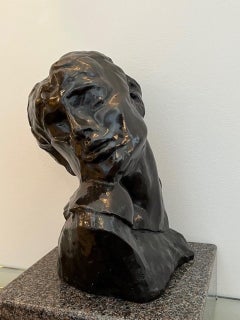
Head of Lust (Tete de la Luxure)
By Auguste Rodin
Located in New York, NY
Originally conceived in 1880-82 for the tympanum of the Gates of Hell, where she is cradled in the arms of L'homme qui tombe, as well as crouching in slightly varied form to the lef...
Category

1880s Impressionist G. Harvey Sculptures

Materials

Bronze

Head of Lust (Tete de la Luxure)
$32,500
H 16 in W 10 in D 4 in
"Ex Nihilo Figure 4", Frederick Hart, Bronze Sculpture, Figurative Man
By Frederick Hart
Located in Dallas, TX
Don't miss this opportunity to own a piece of history! Ex Nihilo Figure 4, a full-scale plaster from the final stone sculpture of Ex Nihilo, commissioned as part of the Creation Scul...
Category

Early 2000s American Impressionist G. Harvey Sculptures

Materials

Bronze

Spring Song
Located in La Canada Flintridge, CA
Spring Song, Edition AP 1/5, signed. Nobe's art is highly integrated, deeply sensitive, and provocative of thought in a manner seldom reached by the multi...
Category

2010s Impressionist G. Harvey Sculptures

Materials

Bronze

Spring Song
Spring Song
$4,500
H 10.5 in W 12 in D 5 in
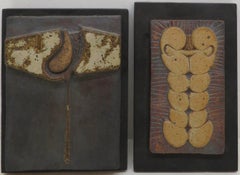
A PAIR OF ORIGINAL Scottish Wall Hung Sculpture Compositions GLASGOW INTEREST
Located in Cirencester, GB
Artist: John Taylor (1936-) Scottish Title: "Wall Relief Tiles" (a pair) Medium: oil on board Size: 15cm x 20cm inc. frame & 13cm x 21cm inc. frame Notes: Painter, notably in watercolour, and printmaker, gallery owner and teacher, born in Darvel, Ayrshire. Graduated from Glasgow School of Art in 1959, some years later taking a higher diploma in art. Taylor made a big impact on the Scottish gallery scene when in 1963 he opened the New Charing Cross Gallery in Glasgow, giving young artists a chance to exhibit more adventurous work. Taylor had a long association with the Glasgow Print Studio as senior technician. In 1977, with Ainslie Yule, he was recommended by Scottish Arts Council for a residency at Editions Alecto to work on a screenprint. Taylor’s own work could sometimes have a strong polemical element, notably regarding war and the nuclear threat. As well as taking part in many group shows across Europe he was a regular solo exhibitor. Notable among these were Compass Gallery, Glasgow, 1985 and 1987; Richard Demarco Gallery in Edinburgh and Glasgow Print Studio in 1987; and Edinburgh Print...
Category

Mid-20th Century Impressionist G. Harvey Sculptures

Materials

Oil, Plaster

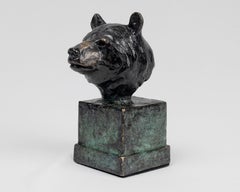
Sir Bear - Bronze - Contemporary Bear Sculpture
Located in Boston, MA
Sir Bear - Bronze 6.0 x 4.0 x 2.75, 15.0 lbs Bronze Hand signed by artist Artist's Commentary: "This bronze sculpture is the first in a series celebrating the black bears of my a...
Category

21st Century and Contemporary Impressionist G. Harvey Sculptures

Materials

Bronze

Previously Available Items
" THOSE THAT PLUNDER " G. HARVEY BRONZE SCULPTURE BANDITS
By G. Harvey
Located in San Antonio, TX
G. Harvey (Gerald Harvey Jones) (1933-2017) San Antonio, Austin, and Fredericksburg Artist Image Size: 16 Tall x 18 across Medium: Bronze Sculpture 1977 "Those That Plunder" Known fo...
Category

1970s Impressionist G. Harvey Sculptures

Materials

Bronze

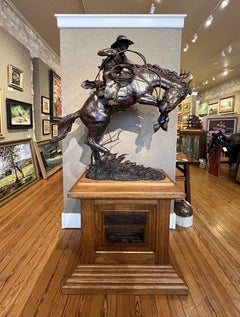
" THE SPIRIT OF TEXAS " HUGE, 84" TALL BRONZE BUCKING BRONCO COWBOY WESTERN
By G. Harvey
Located in San Antonio, TX
G. Harvey (Gerald Harvey Jones) (1933-2017) San Antonio, Austin, and Fredericksburg Artist Image Size: 84 Inches Tall Medium: Bronze Sculpture Dated 2006 I can deliver in Texas or o...
Category

Early 2000s Impressionist G. Harvey Sculptures

Materials

Bronze

" THE SPIRIT OF THE WEST " G. HARVEY BRONZE SCULPTURE BUCKING BRONCO
By G. Harvey
Located in San Antonio, TX
G. Harvey (Gerald Harvey Jones) (1933-2017) San Antonio, Austin, and Fredericksburg Artist Image Size: 22 x 14 x 6 Frame Size: 8/30 Medium: Bronze Sculpture Dated 1979 "The Spirit Of...
Category

1970s Impressionist G. Harvey Sculptures

Materials

Bronze

" BLOWIN IN " G. HARVEY BRONZE SCULPTURE COWBOYS HORSES RIDERS MORE
By G. Harvey
Located in San Antonio, TX
G. Harvey (Gerald Harvey Jones) (1933-2017) San Antonio, Austin, and Fredericksburg Artist Image Size: Height 15" Across 20" Depth 9" Medium: Bronze Sculpture 1975 "Blowin' In" I am...
Category

1970s Impressionist G. Harvey Sculptures

Materials

Bronze

" THOSE THAT PLUNDER " G. HARVEY BRONZE BANDITS
By G. Harvey
Located in San Antonio, TX
G. Harvey (Gerald Harvey Jones) (1933-2017) San Antonio, Austin, and Fredericksburg Artist Image Size: 16 Tall x 18 across Medium: Bronze Sculpture 1977 "Those That Plunder" Known fo...
Category

1970s Impressionist G. Harvey Sculptures

Materials

Bronze

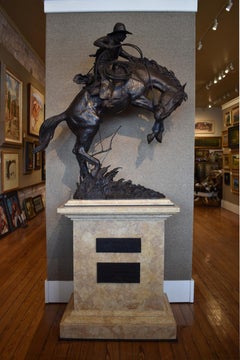
" THE SPIRIT OF TEXAS " HUGE, 81" TALL BRONZE BUCKING BRONCO COWBOY WESTERN
By G. Harvey
Located in San Antonio, TX
G. Harvey (Gerald Harvey Jones) (1933-2017) San Antonio, Austin, and Fredericksburg Artist Image Size: 81 Inches Tall Medium: Bronze Sculpture Dated 2006 "The Spirit Of Texas" Bucking Bronco & Rider They are very scarce. I only know about 2 others that have even come up for sale in the last 10 years or so. Please not the dedication on the wooden base of the sculpture. There is one on Gerald Harvey Jones (G. Harvey) tombstone in the Texas State Cemetery in Austin, Texas. Western, Cowboy, Horse, Bronc, Bronco Riata, Rodeo G. Harvey (Gerald Harvey Jones) (1933-2017) Known for paintings closely linked in mood and subject matter to Edouard Cortes [1882-1962], G Harvey creates romanticized street scenes of turn of the century towns in America. Rain slick streets reflect urban lights, and the weather is obviously cold. He grew up in the rugged hills north of San Antonio, Texas from where herds of longhorn cattle were once driven up dusty trails to the Kansas railheads. His grandfather was a trail boss at 18 and helped create an American legend for his grandson. So the American West is not only the artist's inspiration but his birthright. Harvey's early interest in sketching and drawing slowly evolved into a passion for painting in oils. After graduating cum laude from North Texas State University, Harvey took a position with the University of Texas in Austin, but he soon realized that weekends and nights at the easel did not satisfy his love of painting. He abandoned the security of a full-time job in 1963 and threw his total energy into a fine art career. Harvey paints the spirit of America from its western hills and prairies to the commerce of its great cities. His original paintings and bronze sculptures are in the collections of major corporations, prestigious museums, the United States government, American presidents, governors, foreign leader and captains of industry. The Smithsonian Institution chose Harvey to paint The Smithsonian Dream, commemorating its 150th Anniversary. The Christmas Pageant of Peace commissioned Harvey to create a painting celebrating this national event. He has been the recipient of innumerable awards and the subject of three books. G. Harvey lived in Fredericksburg, Texas, with his wife Pat in a 150-year-old stone home built by German settlers. His studio and residence are nestled within the Historic District of Fredericksburg. It is obligation of fine artists to present us with more than pretty pictures. They must also make us feel. Among the western painters of today, there is none more capable of accomplishing this than G. Harvey. In his paintings, the viewer into only sees the physical elements of his subject, but also senses the mood that surrounds them. It is a remarkable aspect of fine art, which few artists are able to master. Gerald Harvey Jones was born in San Antonio, Texas, in 1933. His grandfather was a cowboy during the trail-driving era when legends grew up along the dusty trails north from Texas. Family stories of wild cattle and tough men were absorbed by a wide-eyed boy and became the genesis of G. Harvey's art. A graduate in fine arts at North Texas State University, Harvey taught full-time and painted nights and weekends for several years. It was through painting that he found his greatest satisfaction, and his native central Texas hill country provided the inspiration for most of his earliest work. With the development of his talent and the growth of his following, Harvey began to expand his artistic horizons. He left teaching and concentrated on a career in fine art. He sought the essence that is Texas and found it not only along the banks of the Guadalupe, but in cow camps west of the Pecos, and in the shadows of tall buildings in big Texas cities. The streets of Dallas once echoed with the sound of horse hooves and the jingle of spurs. Historic photographs reveal what it looked like, but only an artist like Harvey can enable a viewer to experience the mood and flavor or the time. Contemporary western art has too often centered on the literal representations from its roots in illustrations. Artists like G. Harvey take us a step further, to the subjective impressions that are unique to each great talent and which constitutes something special and basic to fine art expression. Harvey was a soft-spoken and unassuming man who cared deeply about what he painted without becoming maudlin or melodramatic. We sense there is more in each Harvey painting than just that which is confined to the canvas. Resources include: The American West: Legendary Artists of the Frontier, Dr. Rick Stewart, Hawthorne Publishing Company, 1986 Artist G. Harvey grew up in the rugged hills north of San Antonio, Texas from where herds of longhorn cattle were once driven up dusty trails to the Kansas railheads. His grandfather was a trail boss at 18 and helped create an American legend. The American West is not only the artist's inspiration but his birthright. Harvey's early interest in sketching and drawing slowly evolved into a passion for painting in oils. After graduation cum laude from North Texas State University, Harvey took a position with the University of Texas in Austin, but he soon realized that weekends and nights at the easel did not satisfy his love of painting. He abandoned the security of a full-time job in 1963 and threw his total energy into a fine art career. Two years as a struggling artist followed, but 1965 brought acclaim for the artist's first prestigious show, The Grand National exhibition in New York, and the American Artists' Professional League presented him with their New Master's Award. President Lyndon Johnson discovered his fellow Texan's talent, became a Harvey collector and introduced John Connally to the artist's work. Connally was enthusiastic about Harvey's art, and, on one occasion, he presented a G. Harvey original to each governor of Mexico's four northern states. Harvey paints the spirit of America from its western hills and prairies to the commerce of its great cities. His original paintings and bronze sculptures are in the collections of major corporations, prestigious museums, the United States government, American presidents, governors, foreign leader and captains of industry. The Smithsonian Institution chose Harvey to paint The Smithsonian Dream commemorating its 150th Anniversary. The Christmas Pageant of Peace commissioned Harvey to create a painting celebrating this national event. He has been the recipient of innumerable awards and the subject of three books. Through his art, our history lives. Gerald Harvey Jones, better known as G. Harvey, grew up in the Texas Hill Country listening to his father and grandfather tell stories about ranch life, frontier days in Texas, and driving cattle across the Red River. Early in his career, he began to draw inspiration from that collective memory for paintings that would eventually earn him the reputation as one of America's most recognized and successful artists. His art is rooted in the scenic beauty of the land he grew up in and the staunch independence of the people who live there. He says, "My paintings have never been literal representations. They are part first-hand experience, and part dreams generated by those early stories I heard. They are a product of every place I have been, everything I have ever seen and heard." G. Harvey graduated from North Texas State University. He taught in Austin, but continued to study art in his spare time, eventually devoting full time to his painting. The year 1965 was a turning point when he won the prestigious New Masters Award in the American Artist Professional League Grand National Exhibition in New York. It is often said that in viewing a work of art, one is granted a unique look into the thoughts and expressions of values that give meaning to the artist work. Nowhere does this ring truer than the art of G. Harvey. Though Harvey has had nearly two decades of sell-out shows, an outstanding honor came with a series of one-man shows in Washington, D.C. in 1991. The first was at the National Archives featuring his paintings of the Civil War era, then a selection of paintings of notable Washington landmarks was exhibited at the Treasury Department, culminating in a one-man show of 35 paintings at the Smithsonian Institution during their exhibition of The All-American Horse. His work was featured in Gilcrease Museum exhibitions from 1992-1997. In 1987 his alma matter...
Category

Early 2000s Impressionist G. Harvey Sculptures

Materials

Bronze

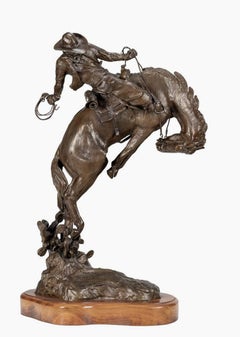
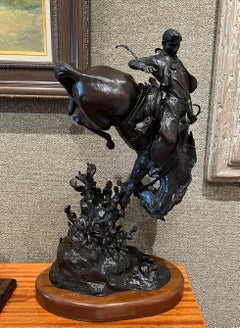
"GREEN BROKE" G. HARVEY SCULPTURE. BRONZE TEXAS BRONC BUSTER SCULPTURE
By G. Harvey
Located in San Antonio, TX
G. Harvey (Gerald Harvey Jones) (1933-2017) San Antonio, Austin, and Fredericksburg Artist Image Size: 27 inches tall Medium: Bronze Sculpture 1983 "Green Broke" Bronco Buster G. Harvey, known for paintings closely linked in mood and subject matter to Edouard Cortes [1882-1962], G Harvey creates romanticized street scenes of turn of the century towns in America. Rain slick streets reflect urban lights, and the weather is obviously cold. He grew up in the rugged hills north of San Antonio, Texas from where herds of longhorn cattle were once driven up dusty trails to the Kansas railheads. His grandfather was a trail boss at 18 and helped create an American legend for his grandson. So, the American West is not only the artist's inspiration but his birthright. Harvey's early interest in sketching and drawing slowly evolved into a passion for painting in oils. After graduating cum laude from North Texas State University, Harvey took a position with the University of Texas in Austin, but he soon realized that weekends and nights at the easel did not satisfy his love of painting. He abandoned the security of a full-time job in 1963 and threw his total energy into a fine art career. Harvey paints the spirit of America from its western hills and prairies to the commerce of its great cities. His original paintings and bronze sculptures are in the collections of major corporations, prestigious museums, the United States government, American presidents, governors, foreign leader and captains of industry. The Smithsonian Institution chose Harvey to paint The Smithsonian Dream, commemorating its 150th Anniversary. The Christmas Pageant of Peace commissioned Harvey to create a painting celebrating this national event. He has been the recipient of innumerable awards and the subject of three books. Today, G. Harvey lives in Fredericksburg, Texas, with his wife Pat in a 150-year-old stone home built by German settlers. His studio and residence are nestled within the Historic District of Fredericksburg. It is obligation of fine artists to present us with more than pretty pictures. They must also make us feel. Among the western painters of today, there is none more capable of accomplishing this than G. Harvey. In his paintings, the viewer into only sees the physical elements of his subject, but also senses the mood that surrounds them. It is a remarkable aspect of fine art, which few artists are able to master. Gerald Harvey Jones was born in San Antonio, Texas, in 1933. His grandfather was a cowboy during the trail-driving era when legends grew up along the dusty trails north from Texas. Family stories of wild cattle and tough men were absorbed by a wide-eyed boy and became the genesis of G. Harvey's art. A graduate in fine arts at North Texas State University, Harvey taught full-time and painted nights and weekends for several years. It was through painting that he found his greatest satisfaction, and his native central Texas hill country provided the inspiration for most of his earliest work. With the development of his talent and the growth of his following, Harvey began to expand his artistic horizons. He left teaching and concentrated on a career in fine art. He sought the essence that is Texas and found it not only along the banks of the Guadalupe, but in cow camps west of the Pecos, and in the shadows of tall buildings in big Texas cities. The streets of Dallas once echoed with the sound of horse's hooves and the jingle of spurs. Historic photographs reveal what it looked like, but only an artist like Harvey can enable a viewer to experience the mood and flavor or the time. Contemporary west art has too often centered on the literal representations from its roots in illustrations. Artists like G. Harvey take us a step further, to the subjective impressions that are unique to each great talent, and which constitutes something special and basic to fine art expression. Harvey is a soft-spoken and unassuming man who cares deeply about what he paints without becoming maudlin or melodramatic. We sense there is more in each Harvey painting than just that which is confined to the canvas. Resources include: The American West: Legendary Artists of the Frontier, Dr. Rick Stewart, Hawthorne Publishing Company, 1986 Artist G. Harvey grew up in the rugged hills north of San Antonio, Texas from where herds of longhorn cattle were once driven up dusty trails to the Kansas railheads. His grandfather was a trail boss at 18 and helped create an American legend. So, the American West is not only the artist's inspiration but his birthright. Harvey's early interest in sketching and drawing slowly evolved into a passion for painting in oils. After graduation cum laude from North Texas State University, Harvey took a position with the University of Texas in Austin, but he soon realized that weekends and nights at the easel did not satisfy his love of painting. He abandoned the security of a full-time job in 1963 and threw his total energy into a fine art career. Two years as a struggling artist followed, but 1965 brought acclaim for the artist's first prestigious show, The Grand National exhibition in New York, and the American Artists' Professional League presented him with their New Master's Award. President Lyndon Johnson discovered his fellow Texan's talent, became a Harvey collector and introduced John Connally to the artist's work. Connally was enthusiastic about Harvey's art, and, on one occasion, he presented a G. Harvey original to each governor of Mexico's four northern states. Harvey paints the spirit of America from its western hills and prairies to the commerce of its great cities. His original paintings and bronze sculptures are in the collections of major corporations, prestigious museums, the United States government, American presidents, governors, foreign leader and captains of industry. The Smithsonian Institution chose Harvey to paint The Smithsonian Dream commemorating its 150th Anniversary. The Christmas Pageant of Peace commissioned Harvey to create a painting celebrating this national event. He has been the recipient of innumerable awards and the subject of three books. Through his art, our history lives. Today, G. Harvey lives in Fredericksburg, Texas, with his wife Pat in a 150-year-old stone home built by German settlers. His studio and residence are nestled within the Historic District of Fredericksburg. Gerald Harvey Jones, better known as G. Harvey, grew up in the Texas Hill Country listening to his father and grandfather tell stories about ranch life, frontier days in Texas, and driving cattle across the Red River. Early in his career, he began to draw inspiration from that collective memory for paintings that would eventually earn him the reputation as one of America's most recognized and successful artists. His art is rooted in the scenic beauty of the land he grew up in and the staunch independence of the people who live there. He says, "My paintings have never been literal representations. They are part first-hand experience, and part dreams generated by those early stories I heard. They are a product of every place I have been, everything I have ever seen and heard." G. Harvey graduated from North Texas State University. He taught in Austin, but continued to study art in his spare time, eventually devoting full time to his painting. The year 1965 was a turning point when he won the prestigious New Masters Award in the American Artist Professional League Grand National Exhibition in New York. It is often said that in viewing a work of art, one is granted a unique look into the thoughts and expressions of values that give meaning to the artist work. Nowhere does this ring truer than the art of G. Harvey. Though Harvey has had nearly two decades of sell-out shows, an outstanding honor came with a series of one-man shows in Washington, D.C. in 1991. The first was at the National Archives featuring his paintings of the Civil War era, then a selection of paintings of notable Washington landmarks was exhibited at the Treasury Department, culminating in a one-man show of 35 paintings at the Smithsonian Institution during their exhibition of The All-American Horse. His work was featured in Gilcrease Museum exhibitions from 1992-1997. In 1987 his alma matter...
Category

1980s Impressionist G. Harvey Sculptures

Materials

Bronze

"A TEXAS BREED" G. HARVEY SCULPTURE. BRONZE TEXAS LONGHORN SCULPTURE
By G. Harvey
Located in San Antonio, TX
G. Harvey (Gerald Harvey Jones) (1933-2017) San Antonio, Austin, and Fredericksburg Artist Image Size: 8 inches tall Frame Size: 8 inches across Medium: Bronze Sculpture "A Texas Breed" Longhorn Dated 2011 G. Harvey, known for paintings closely linked in mood and subject matter to Edouard Cortes [1882-1962], G Harvey creates romanticized street scenes of turn of the century towns in America. Rain slick streets reflect urban lights, and the weather is obviously cold. He grew up in the rugged hills north of San Antonio, Texas from where herds of longhorn cattle were once driven up dusty trails to the Kansas railheads. His grandfather was a trail boss at 18 and helped create an American legend for his grandson. So, the American West is not only the artist's inspiration but his birthright. Harvey's early interest in sketching and drawing slowly evolved into a passion for painting in oils. After graduating cum laude from North Texas State University, Harvey took a position with the University of Texas in Austin, but he soon realized that weekends and nights at the easel did not satisfy his love of painting. He abandoned the security of a full-time job in 1963 and threw his total energy into a fine art career. Harvey paints the spirit of America from its western hills and prairies to the commerce of its great cities. His original paintings and bronze sculptures are in the collections of major corporations, prestigious museums, the United States government, American presidents, governors, foreign leader and captains of industry. The Smithsonian Institution chose Harvey to paint The Smithsonian Dream, commemorating its 150th Anniversary. The Christmas Pageant of Peace commissioned Harvey to create a painting celebrating this national event. He has been the recipient of innumerable awards and the subject of three books. Today, G. Harvey lives in Fredericksburg, Texas, with his wife Pat in a 150-year-old stone home built by German settlers. His studio and residence are nestled within the Historic District of Fredericksburg. It is obligation of fine artists to present us with more than pretty pictures. They must also make us feel. Among the western painters of today, there is none more capable of accomplishing this than G. Harvey. In his paintings, the viewer into only sees the physical elements of his subject, but also senses the mood that surrounds them. It is a remarkable aspect of fine art, which few artists are able to master. Gerald Harvey Jones was born in San Antonio, Texas, in 1933. His grandfather was a cowboy during the trail-driving era when legends grew up along the dusty trails north from Texas. Family stories of wild cattle and tough men were absorbed by a wide-eyed boy and became the genesis of G. Harvey's art. A graduate in fine arts at North Texas State University, Harvey taught full-time and painted nights and weekends for several years. It was through painting that he found his greatest satisfaction, and his native central Texas hill country provided the inspiration for most of his earliest work. With the development of his talent and the growth of his following, Harvey began to expand his artistic horizons. He left teaching and concentrated on a career in fine art. He sought the essence that is Texas and found it not only along the banks of the Guadalupe, but in cow camps west of the Pecos, and in the shadows of tall buildings in big Texas cities. The streets of Dallas once echoed with the sound of horse's hooves and the jingle of spurs. Historic photographs reveal what it looked like, but only an artist like Harvey can enable a viewer to experience the mood and flavor or the time. Contemporary west art has too often centered on the literal representations from its roots in illustrations. Artists like G. Harvey take us a step further, to the subjective impressions that are unique to each great talent, and which constitutes something special and basic to fine art expression. Harvey is a soft-spoken and unassuming man who cares deeply about what he paints without becoming maudlin or melodramatic. We sense there is more in each Harvey painting than just that which is confined to the canvas. Resources include: The American West: Legendary Artists of the Frontier, Dr. Rick Stewart, Hawthorne Publishing Company, 1986 Artist G. Harvey grew up in the rugged hills north of San Antonio, Texas from where herds of longhorn cattle were once driven up dusty trails to the Kansas railheads. His grandfather was a trail boss at 18 and helped create an American legend. So, the American West is not only the artist's inspiration but his birthright. Harvey's early interest in sketching and drawing slowly evolved into a passion for painting in oils. After graduation cum laude from North Texas State University, Harvey took a position with the University of Texas in Austin, but he soon realized that weekends and nights at the easel did not satisfy his love of painting. He abandoned the security of a full-time job in 1963 and threw his total energy into a fine art career. Two years as a struggling artist followed, but 1965 brought acclaim for the artist's first prestigious show, The Grand National exhibition in New York, and the American Artists' Professional League presented him with their New Master's Award. President Lyndon Johnson discovered his fellow Texan's talent, became a Harvey collector and introduced John Connally to the artist's work. Connally was enthusiastic about Harvey's art, and, on one occasion, he presented a G. Harvey original to each governor of Mexico's four northern states. Harvey paints the spirit of America from its western hills and prairies to the commerce of its great cities. His original paintings and bronze sculptures are in the collections of major corporations, prestigious museums, the United States government, American presidents, governors, foreign leader and captains of industry. The Smithsonian Institution chose Harvey to paint The Smithsonian Dream commemorating its 150th Anniversary. The Christmas Pageant of Peace commissioned Harvey to create a painting celebrating this national event. He has been the recipient of innumerable awards and the subject of three books. Through his art, our history lives. Today, G. Harvey lives in Fredericksburg, Texas, with his wife Pat in a 150-year-old stone home built by German settlers. His studio and residence are nestled within the Historic District of Fredericksburg. Gerald Harvey Jones, better known as G. Harvey, grew up in the Texas Hill Country listening to his father and grandfather tell stories about ranch life, frontier days in Texas, and driving cattle across the Red River. Early in his career, he began to draw inspiration from that collective memory for paintings that would eventually earn him the reputation as one of America's most recognized and successful artists. His art is rooted in the scenic beauty of the land he grew up in and the staunch independence of the people who live there. He says, "My paintings have never been literal representations. They are part first-hand experience, and part dreams generated by those early stories I heard. They are a product of every place I have been, everything I have ever seen and heard." G. Harvey graduated from North Texas State University. He taught in Austin, but continued to study art in his spare time, eventually devoting full time to his painting. The year 1965 was a turning point when he won the prestigious New Masters Award in the American Artist Professional League Grand National Exhibition in New York. It is often said that in viewing a work of art, one is granted a unique look into the thoughts and expressions of values that give meaning to the artist work. Nowhere does this ring truer than the art of G. Harvey. Though Harvey has had nearly two decades of sell-out shows, an outstanding honor came with a series of one-man shows in Washington, D.C. in 1991. The first was at the National Archives featuring his paintings of the Civil War era, then a selection of paintings of notable Washington landmarks was exhibited at the Treasury Department, culminating in a one-man show of 35 paintings at the Smithsonian Institution during their exhibition of The All-American Horse. His work was featured in Gilcrease Museum exhibitions from 1992-1997. In 1987 his alma matter...
Category

Late 20th Century Impressionist G. Harvey Sculptures

Materials

Bronze

"IXTAPAN BURRO" G. HARVEY SCULPTURE. BRONZE DONKEY IN G. HARVEY BOOK
By G. Harvey
Located in San Antonio, TX
G. Harvey (Gerald Harvey Jones) (1933-2017) San Antonio, Austin, and Fredericksburg Artist Image Size: 9 inches across Frame Size: 10 inches tall Medium: Bronze Sculpture Dated 1982 "Ixtapan Burro" G. Harvey, known for paintings closely linked in mood and subject matter to Edouard Cortes [1882-1962], G Harvey creates romanticized street scenes of turn of the century towns in America. Rain slick streets reflect urban lights, and the weather is obviously cold. He grew up in the rugged hills north of San Antonio, Texas from where herds of longhorn cattle were once driven up dusty trails to the Kansas railheads. His grandfather was a trail boss at 18 and helped create an American legend for his grandson. So, the American West is not only the artist's inspiration but his birthright. Harvey's early interest in sketching and drawing slowly evolved into a passion for painting in oils. After graduating cum laude from North Texas State University, Harvey took a position with the University of Texas in Austin, but he soon realized that weekends and nights at the easel did not satisfy his love of painting. He abandoned the security of a full-time job in 1963 and threw his total energy into a fine art career. Harvey paints the spirit of America from its western hills and prairies to the commerce of its great cities. His original paintings and bronze sculptures are in the collections of major corporations, prestigious museums, the United States government, American presidents, governors, foreign leader and captains of industry. The Smithsonian Institution chose Harvey to paint The Smithsonian Dream, commemorating its 150th Anniversary. The Christmas Pageant of Peace commissioned Harvey to create a painting celebrating this national event. He has been the recipient of innumerable awards and the subject of three books. Today, G. Harvey lives in Fredericksburg, Texas, with his wife Pat in a 150-year-old stone home built by German settlers. His studio and residence are nestled within the Historic District of Fredericksburg. It is obligation of fine artists to present us with more than pretty pictures. They must also make us feel. Among the western painters of today, there is none more capable of accomplishing this than G. Harvey. In his paintings, the viewer into only sees the physical elements of his subject, but also senses the mood that surrounds them. It is a remarkable aspect of fine art, which few artists are able to master. Gerald Harvey Jones was born in San Antonio, Texas, in 1933. His grandfather was a cowboy during the trail-driving era when legends grew up along the dusty trails north from Texas. Family stories of wild cattle and tough men were absorbed by a wide-eyed boy and became the genesis of G. Harvey's art. A graduate in fine arts at North Texas State University, Harvey taught full-time and painted nights and weekends for several years. It was through painting that he found his greatest satisfaction, and his native central Texas hill country provided the inspiration for most of his earliest work. With the development of his talent and the growth of his following, Harvey began to expand his artistic horizons. He left teaching and concentrated on a career in fine art. He sought the essence that is Texas and found it not only along the banks of the Guadalupe, but in cow camps west of the Pecos, and in the shadows of tall buildings in big Texas cities. The streets of Dallas once echoed with the sound of horse's hooves and the jingle of spurs. Historic photographs reveal what it looked like, but only an artist like Harvey can enable a viewer to experience the mood and flavor or the time. Contemporary west art has too often centered on the literal representations from its roots in illustrations. Artists like G. Harvey take us a step further, to the subjective impressions that are unique to each great talent, and which constitutes something special and basic to fine art expression. Harvey is a soft-spoken and unassuming man who cares deeply about what he paints without becoming maudlin or melodramatic. We sense there is more in each Harvey painting than just that which is confined to the canvas. Resources include: The American West: Legendary Artists of the Frontier, Dr. Rick Stewart, Hawthorne Publishing Company, 1986 Artist G. Harvey grew up in the rugged hills north of San Antonio, Texas from where herds of longhorn cattle were once driven up dusty trails to the Kansas railheads. His grandfather was a trail boss at 18 and helped create an American legend. So, the American West is not only the artist's inspiration but his birthright. Harvey's early interest in sketching and drawing slowly evolved into a passion for painting in oils. After graduation cum laude from North Texas State University, Harvey took a position with the University of Texas in Austin, but he soon realized that weekends and nights at the easel did not satisfy his love of painting. He abandoned the security of a full-time job in 1963 and threw his total energy into a fine art career. Two years as a struggling artist followed, but 1965 brought acclaim for the artist's first prestigious show, The Grand National exhibition in New York, and the American Artists' Professional League presented him with their New Master's Award. President Lyndon Johnson discovered his fellow Texan's talent, became a Harvey collector and introduced John Connally to the artist's work. Connally was enthusiastic about Harvey's art, and, on one occasion, he presented a G. Harvey original to each governor of Mexico's four northern states. Harvey paints the spirit of America from its western hills and prairies to the commerce of its great cities. His original paintings and bronze sculptures are in the collections of major corporations, prestigious museums, the United States government, American presidents, governors, foreign leader and captains of industry. The Smithsonian Institution chose Harvey to paint The Smithsonian Dream commemorating its 150th Anniversary. The Christmas Pageant of Peace commissioned Harvey to create a painting celebrating this national event. He has been the recipient of innumerable awards and the subject of three books. Through his art, our history lives. Today, G. Harvey lives in Fredericksburg, Texas, with his wife Pat in a 150-year-old stone home built by German settlers. His studio and residence are nestled within the Historic District of Fredericksburg. Gerald Harvey Jones, better known as G. Harvey, grew up in the Texas Hill Country listening to his father and grandfather tell stories about ranch life, frontier days in Texas, and driving cattle across the Red River. Early in his career, he began to draw inspiration from that collective memory for paintings that would eventually earn him the reputation as one of America's most recognized and successful artists. His art is rooted in the scenic beauty of the land he grew up in and the staunch independence of the people who live there. He says, "My paintings have never been literal representations. They are part first-hand experience, and part dreams generated by those early stories I heard. They are a product of every place I have been, everything I have ever seen and heard." G. Harvey graduated from North Texas State University. He taught in Austin, but continued to study art in his spare time, eventually devoting full time to his painting. The year 1965 was a turning point when he won the prestigious New Masters Award in the American Artist Professional League Grand National Exhibition in New York. It is often said that in viewing a work of art, one is granted a unique look into the thoughts and expressions of values that give meaning to the artist work. Nowhere does this ring truer than the art of G. Harvey. Though Harvey has had nearly two decades of sell-out shows, an outstanding honor came with a series of one-man shows in Washington, D.C. in 1991. The first was at the National Archives featuring his paintings of the Civil War era, then a selection of paintings of notable Washington landmarks was exhibited at the Treasury Department, culminating in a one-man show of 35 paintings at the Smithsonian Institution during their exhibition of The All-American Horse. His work was featured in Gilcrease Museum exhibitions from 1992-1997. In 1987 his alma matter...
Category

1980s Impressionist G. Harvey Sculptures

Materials

Bronze

"THE SPIRIT OF TEXAS" 80 INCH BRONZE BUCKING BRONCO RARE WESTERN WITH STORY.
By G. Harvey
Located in San Antonio, TX
G. HARVEY (1933-2017) Fredericksburg, Texas Artist "The Spirit of Texas" Medium: Bronze Although the original number to be cast was 25 only 15 were cast. One is mounted on his tombstone at the Texas State Cemetery Size: 80 inches tall on Stand 80 x 43 x 23 Dated 2006 We can ship but you would have to authorize it with 1stdibs. This is a special bronze. The artist, Gerald Harvey Jones actually designated one be mounted on his Tombstone at the Texas State Cemetery in Austin Texas. The guidelines on who may be buried within the Texas State Cemetery were first established in 1953 and are currently set by Texas state law. Currently, all persons to be buried in the cemetery must be one of the following:[2] 1. A former member of the legislature or a member who dies in office. 2. A former elected state official or an official who dies in office (e.g., Governors of Texas, Lieutenant Governors of Texas, state Attorneys-General and departmental commissioners). 3. State official appointed by the governor and confirmed by the Legislature who served at least 10 years in the office. After September 1, 2015, this criterion may be used only upon approval of the State Cemetery Committee if it finds the official made a significant contribution to Texas history. 4. Individual designated by governor's proclamation, concurrent resolution of the Legislature, or order of the State Cemetery Committee; but only after approval of the committee if it finds the individual made a significant contribution to Texas history. The statute as written permits the committee to deny burial under this criterion even if requested by the governor or Legislature. 5. The spouse of anyone meeting the above criteria. 6. The child of an eligible member, but only if he or she was dependent on another due to a long-standing physical or mental condition during the lifetime of one of the child's parents. After the death of Edward Burleson in 1851, the Texas Legislature arranged for his burial on land formerly belonging to Andrew Jackson Hamilton. In 1854, the Legislature established a monument at Burleson's gravesite for $1,000 and purchased the surrounding land. The burial ground was virtually ignored until the Civil War, when Texas Confederate officers killed in battle were buried there. In 1864 and 1866 more land was purchased for veterans' burials. An area of 1-acre (4,000 m2) was also set aside for graves of Union veterans (all but one later removed to Fort Sam Houston National Cemetery in San Antonio). The remaining Union soldier...
Category

Early 2000s Impressionist G. Harvey Sculptures

Materials

Bronze

"THE TRAIL DRIVER" G. HARVEY BRONZE LONGHORN ROUNDUP COWBOY WESTERN
By G. Harvey
Located in San Antonio, TX
G. Harvey (Gerald Harvey Jones) (1933-2017) San Antonio, Austin, and Fredericksburg Artist Image Size: 16 x 18.5 x 15 Frame Size: 14/30 Medium: Bronze Dated 1973 "The Trail Driver" C...
Category

1980s Impressionist G. Harvey Sculptures

Materials

Bronze

"A BREED APART" TEXAS LONGHORN BRONZE FOR MERRILL LYNCH ARTIST S PERSONAL COPY
By G. Harvey
Located in San Antonio, TX
G. Harvey (Gerald Harvey Jones) (1933-2017) San Antonio, Austin, and Fredericksburg Artist Image Size: 16 X 21 X 10 Medium: Bronze Artists (Copy) Proof of 40. Dated 1981 "A Breed Apart" Longhorn and Prickly Pear Cactus G. Harvey (San Antonio / Austin / Fredericksburg Artist) "A Breed Apart" 1981 This is the one and only "Artists Copy". Commissioned by Merrill Lynch...
Category

1980s Impressionist G. Harvey Sculptures

Materials

Bronze

G. Harvey sculptures for sale on 1stDibs.

Find a wide variety of authentic G. Harvey sculptures available for sale on 1stDibs. You can also browse by medium to find art by G. Harvey in bronze, metal, oil paint and more. Much of the original work by this artist or collective was created during the 20th century and is mostly associated with the Impressionist style. Not every interior allows for large G. Harvey sculptures, so small editions measuring 9 inches across are available. Customers who are interested in this artist might also find the work of and Jane DeDecker. G. Harvey sculptures prices can differ depending upon medium, time period and other attributes. On 1stDibs, the price for these items starts at $3,300 and tops out at $17,900, while the average work can sell for $5,900.
Questions About G. Harvey Sculptures
  • 1stDibs ExpertMarch 22, 2022
    The artist G. Harvey was a painter and sculptor who lived from 1933 to 2017. His work fits into the American Traditionalist movement and is largely focused on landscapes and cityscapes. Margaret Thatcher and Lyndon B. Johnson were avid collectors of his work. On 1stDibs, find a range of G. Harvey art.

Recently Viewed

View All