George Wesley Bellows Art
American, 1882-1925
George Bellows, an American artist, was born in Columbus, Ohio in 1882, the only child of a successful building contractor from Sag Harbor, New York. He entered Ohio State University in 1901, where he played baseball and basketball and made drawings for college publications. He dropped out of college in 1904, went to New York, and studied under Robert Henri (American, 1865 – 1929) at the New York School of Art, where Edward Hopper (American, 1882 – 1967), Rockwell Kent (American, 1882 – 1971), and Guy Pène du Bois (American, 1884 – 1958) were his classmates. A superb technician who worked in a confident, painterly style, Bellows soon established himself as the most important realist of his generation. He created memorable images of club fights, street urchins swimming in the East River, and the Pennsylvania Station excavation site and garnered praise from both progressive and conservative critics.
In 1910 Bellows began teaching at the Art Students League and married Emma Story, by whom he had two daughters. After 1910 Bellows gradually abandoned the stark urban realism and dark palette characteristic of his early work and gravitated toward painting landscapes, seascapes, and portraits.
Bellows helped organize the Armory Show in 1913, in which five of his paintings and a number of drawings were included. That year he was elected a full member of the National Academy of Design. He had leftist political views and contributed illustrations to the Socialist publication The Masses from 1912 to 1917. Bellows began to make lithographs in 1916 and his exceptional talent engendered a revival of interest in the medium. He worked in Maine, in Carmel, California, and in Middletown, Rhode Island, and was a founding member of the Society of Independent Artists and a charter member of the Association of American Painters and Sculptors. In 1919 he taught at the Art Institute of Chicago.
Bellows, who never went to Europe, is regarded as a quintessential American artist whose vigorous style enabled him to explore a wide range of subjects from scenes of modern urban life to portraits of his daughters, to turbulent Maine seascapes. As an early biographer noted, Bellows “caught the brute force of the prizefighter, the ruggedness of the country pasture, the essence of childhood and recorded them appropriately not only for his own generation but for all time.”[1]
[1] [Frederick A. Sweet], George Bellows: Paintings, Drawings and Prints (Art Institute of Chicago, IL, 1946).
Robert Torchia September 29, 2016to
4
4
2
Overall Width
to
Overall Height
to
10
3
6
8
2
7
5
5
4
1
1
1
1
1
8
1
1
1
1
10
10,222
2,785
2,504
1,384
4
10
Artist: George Wesley Bellows
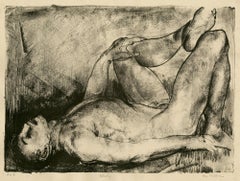
Man on His Back, Nude
By George Wesley Bellows
Located in Fairlawn, OH
Man on His Back, Nude
Lithograph, c. 1916
Signed by the artist lower right: Geo Bellows (see photo)
Annotated bottom left: No. 3 by the artist (see photo)
An unredorded trial proof b...
Category
1910s Ashcan School George Wesley Bellows Art
Materials
Lithograph
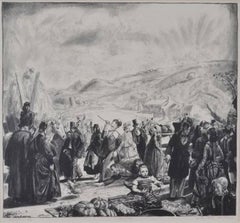
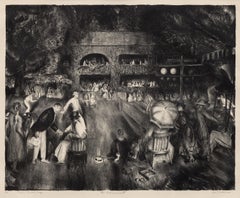
The Irish Fair
By George Wesley Bellows
Located in Fairlawn, OH
Irish Fair
Lithograph, 1923
Signed and numbered in pencil by the artist (see photo)
Titled "Irish Fair" by the artist in pencil
Edition: 84
Housed in an archival frame with acid free matting (see photo)
Provenance:
Estate of the artist, Bellows Family Trust
H.V. Allison & Company (label)
Private Collection, Columbus
References And Exhibitions:
Reference: Mason 153
Note: An illustration commissioned by The Century Company for Don Byrne's novel The Wind Bloweth
Image: 18 7/8 x 21 3/8"
Frame: 29 1/2 x 30 1/2"
“Eleven on a hot July morning, and the little town...
Category
1920s Ashcan School George Wesley Bellows Art
Materials
Lithograph
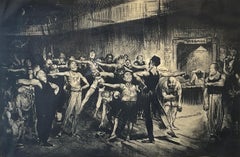
"Business-Men
s Class, Y.M.C.A." George Bellows, Ashcan School Print
By George Wesley Bellows
Located in New York, NY
George Bellows
Business-Men's Class, Y.M.C.A, 1916
Signed, numbered "No. 41" and titled lower margin
Lithograph on wove paper
11 1/2 x 17 1/8 inches
Edition of 64
Provenance:
Hirschl & Adler Galleries, New York
Private Collection, Ohio
Literature:
Mason, 20.
After his arrival from Columbus, Ohio in 1904, Bellows lived at the West Side YMCA. It was there that he met Eugene Speicher, another aspiring young artist who was to become his lifelong friend. Always interested in the anatomy of the human body, Bellows often satirized the various types who, while leading a sedentary life, feel compelled to devote a portion of their daily routine to physical self-improvement.
Throughout his brief but illustrious career, George Wesley Bellows created striking scenes that documented ordinary American life in all its beauty and banality. Considered an American Realist, the artist eschewed embellishment, finding inspiration in the gritty boroughs of New York City, the rocky coastline of Maine, and, later, in his friends and family. Bellows garnered early recognition for his arresting portrayals of illegal prizefighting, dramatic works executed in dark tonal palettes that underscore the brutality of the violent sport.
Bellows’ elderly Methodist parents hoped their son might pursue the ministry, a calling the extroverted athlete never received. The Columbus native competed on the baseball team at Ohio State University and also served as an illustrator for the college yearbook. In the fall of 1904—just months shy of his expected graduation—Bellows defied his father’s wishes and boarded a train to New York City in hopes of becoming a magazine illustrator like his idols Howard Chandler Christy and Charles Dana Gibson. Before leaving, he reportedly turned down an offer to play professional baseball with the Cincinnati Reds...
Category
1910s Ashcan School George Wesley Bellows Art
Materials
Paper, Lithograph
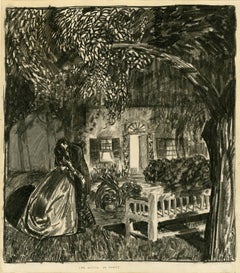
The Mouth of Honey
By George Wesley Bellows
Located in Fairlawn, OH
The Mouth of Honey
Lithographic crayon and mixed media on paper mounted to support paper
Initialed by the artist "GB" bottom center on image. (see photo)
Titled in pencil in bottom m...
Category
1920s Ashcan School George Wesley Bellows Art
Materials
Crayon
Tennis (Tennis Tournament)
By George Wesley Bellows
Located in Palm Desert, CA
A lithograph by George Bellows. “Tennis (Tennis Tournament)” is a realistic lithograph on paper in black and white by American Realist, George Bellows. Bellows’ depictions of sportin...
Category
1920s American Realist George Wesley Bellows Art
Materials
Lithograph
PUNCHINELLO IN THE HOUSE OF DEATH.
By George Wesley Bellows
Located in Portland, ME
Bellows, George (American 1882-1925). PUNCHINELLO IN THE HOUSE OF DEATH.Mason 151 Lithograph, 1923. Edition of 60. Titled and signed in pencil by Bellows, and also signed "Bolton Bro...
Category
1920s George Wesley Bellows Art
Materials
Lithograph

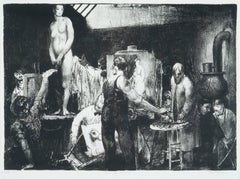
THE LIFE CLASS - SECOND STONE (THE MODEL, LIFE CLASS).
By George Wesley Bellows
Located in Portland, ME
Bellows, George. THE LIFE CLASS - SECOND STONE (THE MODEL, LIFE
CLASS). Mason 43, Bellows 193. Lithograph, 1917. Edition of 49,
signed by Bellows. Inscribed "No.20," titled and sign...
Category
Early 20th Century George Wesley Bellows Art
Materials
Lithograph
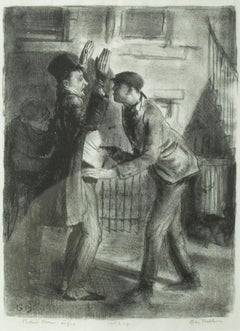
The Hold Up, First State
By George Wesley Bellows
Located in Fairlawn, OH
Signed in pencil by the artist lower right
Titled "Hold Up" by the artist in pencil.
Signed by the printer Bolton Brown lower left.
Edition: 42 in this state
Note: In The Hold Up, se...
Category
1920s American Realist George Wesley Bellows Art
Materials
Lithograph
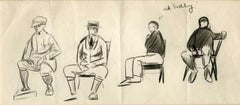
red ballboy or Studies for "Tennis Tournament"
By George Wesley Bellows
Located in Fairlawn, OH
Red Ballboy or Studies for "Tennis Tournament"
Crayon on paper, c. 1920
Unsigned
Condition: three vertical folds created by the artist to transport the drawing from the tennis match ...
Category
1910s Ashcan School George Wesley Bellows Art
Materials
Graphite
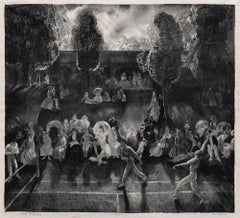
The Tournament (Tennis at Newport)
By George Wesley Bellows
Located in Palm Desert, CA
A lithograph by George Bellows. “The Tournament (Tennis at Newport)” is a realistic lithograph on paper in black and white by American Realist artist, George Bellows. Bellows' depictions of sporting / leisure scenes are unique and valuable. This artwork is edition 56/63 with framed dimensions of 26 x 29 x 1 1/4 inches and has been in the same private collection for almost four decades. The artwork is signed in pencil, lower right, "G. Bellows.”
Provenance:
Catherine E Burns...
Category
1920s American Realist George Wesley Bellows Art
Materials
Lithograph
Related Items
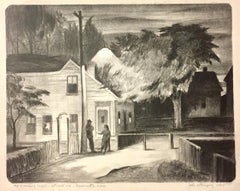
John W. Gregory, Approaching Night, Atwood Avenue, Provincetown, MA
By John W. Gregory
Located in New York, NY
Gregory worked mostly in lithography, probably learned at the Art Students League in New York City. However he often drew New England subjects, so this evening Provincetown scene is ...
Category
1930s Ashcan School George Wesley Bellows Art
Materials
Lithograph
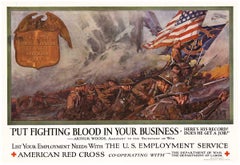
Put Fighting Blood in Your Business
Located in Spokane, WA
Original WW1 poster. Put Fighting Blood in Your Business. Here’s his record! Does he get a Job? Arthur Woods, Assistant to the Secretary of...
Category
1910s American Realist George Wesley Bellows Art
Materials
Lithograph

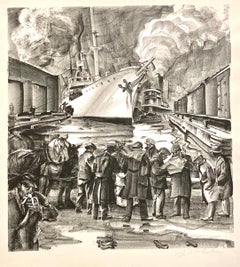
Joseph Webster Golinkin, On the Dock, Banana Boat, New Orleans
By Joseph Webster Golinkin
Located in New York, NY
Chicago-born Golinkin studied at the Artist Students League with George Luks. After working as an illustrator for New York papers he joined the Navy in 1939 and retired as a Rear Adm...
Category
1930s Ashcan School George Wesley Bellows Art
Materials
Lithograph
$1,200
H 14.5 in W 13.25 in
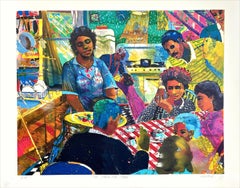
NO PLACE LIKE HOME Signed Lithograph, Black Family, Vintage Kitchen Scene
By Louis Delsarte
Located in Union City, NJ
NO PLACE LIKE HOME is a hand drawn, limited edition lithograph(not a photo reproduction or digital print) by the African American artist Louis Delsarte ...
Category
1990s Contemporary George Wesley Bellows Art
Materials
Lithograph
$2,400 Sale Price
20% Off
H 27 in W 34.5 in
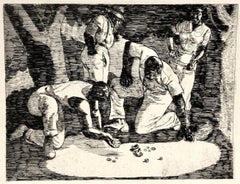
Irving Guyer, Roll Them Bones, Depression-era African-American men at craps
By Irving Guyer
Located in New York, NY
An American Depression-Era subject of African-American men playing craps by Irving Guyer.. (Craps is a game of chance that required neither skill nor strategy. The object is to predi...
Category
1930s Ashcan School George Wesley Bellows Art
Materials
Etching
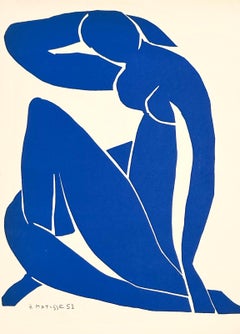
Henri Matisse Lithograph, Unsigned, 1958, Framed, "Nus Bleus II"
By (after) Henri Matisse
Located in Washington, DC
Artist: Henri Matisse (after)
Title: Nus Bleus II
Portfolio: The Last Works of Henri Matisse
Medium: Lithograph
Year: 1958
Edition: 2000
Framed Size: 22" x 18"
Sheet Size: 14" x 10 ...
Category
1950s George Wesley Bellows Art
Materials
Lithograph
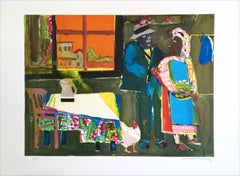
AUTUMN OF THE ROOSTER Signed Lithograph, Black Couple, African American Culture
By Romare Bearden
Located in Union City, NJ
AUTUMN OF THE ROOSTER is an original hand drawn, limited edition lithograph by the American master artist and collagist Romare Bearden printed usi...
Category
1980s Contemporary George Wesley Bellows Art
Materials
Lithograph
$5,480 Sale Price
20% Off
H 21.5 in W 29 in
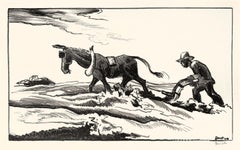
Plowing It Under
— WPA Era American Regionalism
By Thomas Hart Benton
Located in Myrtle Beach, SC
Thomas Hart Benton, 'Goin' Home', lithograph, 1937, edition 250, Fath 14. Signed in pencil. Signed in the stone, lower right. A fine, richly-inked impression, on off-white, wove pape...
Category
1930s American Realist George Wesley Bellows Art
Materials
Lithograph
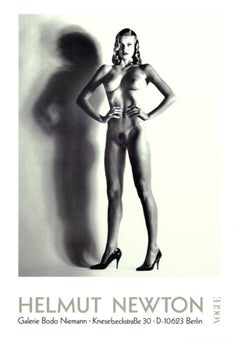
Big Nude By Helmut Newton
By Helmut Newton
Located in Dubai, Dubai
Big Nude
By Helmut Newton
1992
Medium: Offset Lithograph
Paper Size: 33 x 23.25 inches ( 84 x 59 cm )
Image Size: 25.5 x 19.75 inches ( 65 x 50 cm )
Edition Size: Unknown
Category
1990s Contemporary George Wesley Bellows Art
Materials
Lithograph, Offset
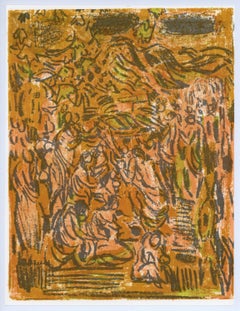
original lithograph
By André Cottavoz
Located in Henderson, NV
Medium: original lithograph. Printed on Arjomari paper in 1969 at the Mourlot Freres atelier and published by Editions Richelieu in a limited edition of 2400 for the L'Odyssee portfo...
Category
1960s George Wesley Bellows Art
Materials
Lithograph
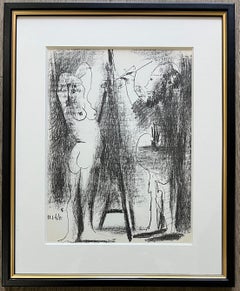
Le Peintre Et Son Modele
By (after) Pablo Picasso
Located in London, GB
After Pablo Picasso
Le Peintre Et Son Modele, 1964
Original Lithograph on Arches paper
unsigned
25.4 x 19.1 cm - sheet
35.6 x 29 cm - framed
Edition of 2000
Limited edition lithogra...
Category
1960s Modern George Wesley Bellows Art
Materials
Lithograph
original lithograph
By André Cottavoz
Located in Henderson, NV
Medium: original lithograph. Printed on Arjomari paper in 1969 at the Mourlot Freres atelier and published by Editions Richelieu in a limited edition of 2400 for the L'Odyssee portfo...
Category
1960s George Wesley Bellows Art
Materials
Lithograph
Previously Available Items
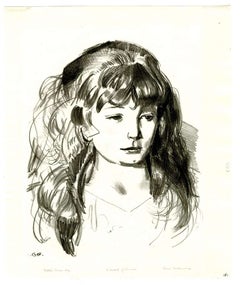
Sketch of Anne
By George Wesley Bellows
Located in Fairlawn, OH
Sketch of Anne
Lithograph, 1923-1924
Signed and titled by the artist, signed by his printer Bolton Brown
Edition: 42
Printed by Bolton Brown (see photo of his signature in pencil)
Pr...
Category
1920s Ashcan School George Wesley Bellows Art
Materials
Lithograph
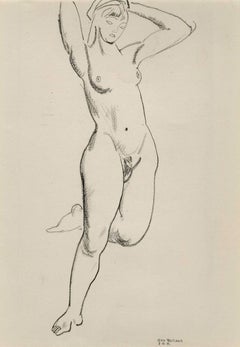
Standing Female Nude
By George Wesley Bellows
Located in Fairlawn, OH
Standing Female Nude
Graphite on wove paper, c. 1915
Signed by the artist's daughter, Jean Bellows Booth (JBB) (see photo)
Provenance:
Estate of the artist
H. V. Allison Galleries (#94 on partial label), agent for Bellows Trust
Ronald Sloter, Columbus, OH, noted collector
Columbus College of Art and Design
Biography
George Wesley Bellows grew up in Columbus, Ohio, the son of a devout and solidly Midwestern building contractor, and a mother who hoped that her son would become a Methodist Bishop. He always felt deeply ambivalent about his father, noting at the time of his death that, "He was a wonderfully fine man, yet being fifty-five when I appeared, his point of view, his character even, belonged to so remote a past that I look upon many of his ideas to this day with amazement and sorrow."
Teased as a sissy by his classmates, George Bellows quickly learned to defend himself with his fists, and compensated for his gangling awkwardness by becoming an outstanding athlete, particularly in baseball. His love of drawing was kindled early since he was forbidden to play outside on Sundays but allowed to draw while his mother read aloud from the Bible.
At Ohio State University, George Bellows proved a spirited extrovert, excelling in baseball as well as in the new sport of basketball, singing in theatricals, and producing drawings of Gibson-like girls for the university's magazine. Bellows's athletic prowess almost diverted him from a career in art, but in 1904 he decided to turn down a professional baseball contact and move to New York City to study painting.
The sprawling, teaming city of New York was a revelation to him after the neat lawns and tidy homes of Columbus. There he quickly fell under the spell of the charismatic teacher Robert Henri, who introduced him to Shaw, Ibsen and socialism, and inspired him to shift from drawing Gibson Girls to painting the life of the streets. Bellows was still a relative newcomer to New York when Henri and his followers staged their famous exhibition of "The Eight" at the Macbeth Gallery, and consequently he was not included. But in spirit his work belongs with that display - perhaps someday Henri’s group will be rechristened "The Nine" to pay tribute to the fact that George Bellows was the painter whose work best expresses the goals of the group.
In 1906 Bellows painted his first masterpiece, "The Cross-Eyed Boy." He followed with several other equally memorable likenesses of street urchins, and then expanded his vision with a series of masterful urban scenes that record such subjects as boys swimming...
Category
1920s Ashcan School George Wesley Bellows Art
Materials
Graphite
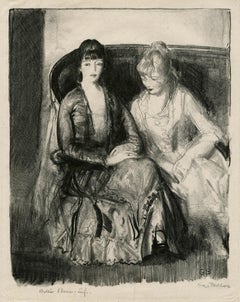
Emma and Marjorie on a Sofa
By George Wesley Bellows
Located in Fairlawn, OH
Emma and Marjorie on a Sofa
Lithograph printed on chine paper, 1921
Signed by the artist lower right (see photo)
Signed by the printer Bolton Brown lower left (see photo)
Edition: 44...
Category
1920s Ashcan School George Wesley Bellows Art
Materials
Lithograph
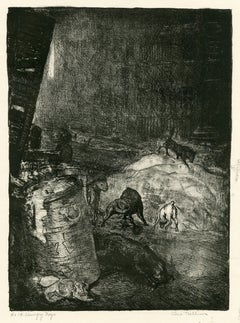
Hungry Dogs, Second State
By George Wesley Bellows
Located in Fairlawn, OH
Hungry Dogs, Second State
Lithograph, 1916
Considered to be the artist's first lithograph
Signed, titled and numbered in pencil by the artist (see photo)
Titled "Hungry Dogs" by the artist in pencil (see photo)
Edition: at least 41 impressions, this "No. 14"
Reference: Masson 1B ii/II
Condition: Printer's ink in margins, otherwise very good condition.
Note: The artist's first lithograph. The "Ash Can School" is derived from this image and its' depiction of an ash can in the lower left of the composition. A very important American 20th Century print. This image gave rise to the naming of the most important American style of painting in the first quarter of the 20th century.
Provenance: Estate of the artist
H. V. Allison & Co., New York (Bellows estate dealer)
Private Collection, Columbus, Ohio (Bellows city of birth)
From 2001 to 2018, Thomas French Fine Art was the exclusive agent for the Bellows Family Trust. Thomas French Fine Art and The Bellows Trust hold a large inventory of original lithographs and drawings created by George Wesley Bellows that were left in the artist’s studio at the time of his unexpected early death. All of George Bellows’ original lithographs were printed by the artist or under his direct supervision. There are no posthumous impressions of any of George Bellows’ lithographs...
Category
1910s American Realist George Wesley Bellows Art
Materials
Lithograph
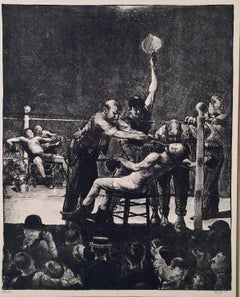
BETWEEN ROUNDS
By George Wesley Bellows
Located in Portland, ME
Bellows, George (American 1882-1925). BETWEEN ROUNDS NO.1 (LARGE). Mason 25, Bellows 52. Lithograph, 1916.
Edition of 58, this signed by Jean Bellows Beeth, the artist's daughter, a...
Category
1910s George Wesley Bellows Art
Materials
Lithograph
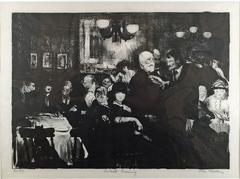
ARTIST
S EVENING (AT PETIPAS)
By George Wesley Bellows
Located in Portland, ME
Bellows, George. ARTIST'S EVENING (AT PETIPAS). M.19. Lithograph, 1916. Edition of 65. A lifetime impression, signed by the artist in pencil and numbered "57." Printed on thin Japane...
Category
Early 20th Century American Modern George Wesley Bellows Art
Materials
Lithograph
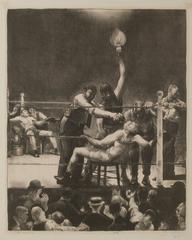
Between Rounds, Small, Second Stone
By George Wesley Bellows
Located in Fairlawn, OH
Signed and titled by the artist
Signed lower left by the printer, Bolton Brown
Edition 42
Printed on fine chine paper, mounted to paper board, most probably by the artist’s first print dealer, Frederick Keppel & Company, in the mid 1920’s. This is consistent with other similar mounted examples in the estate of the artist. The Keppel firm was active from 1868 to 1941, when Harry V. Allison started his own gallery, H. V. Allison Gallery...
Category
1920s Ashcan School George Wesley Bellows Art
Materials
Lithograph
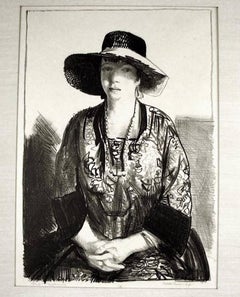
The Black Hat (Emma in a Black Hat)
By George Wesley Bellows
Located in New York, NY
George Bellows (1882-1925), The Black Hat (Emma in a Black Hat), lithograph, 1921. Reference: Morse 113. From the edition of 55. Signed in pencil by the arti...
Category
1920s American Realist George Wesley Bellows Art
Materials
Lithograph
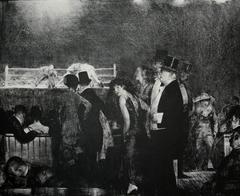
Preliminaries (to the Big Bout).
By George Wesley Bellows
Located in Plano, TX
Mason 24. 15 7/8 x 19 5/8 (sheet 23 x 27 1/4). Edition 67, #2. A rich impression printed on white wove paper paper, with full margins. Provenance: ACA Galleries, private New York collection. This is a fine lifetime impression. Signed, numbered and titled in pencil by the artist.
In this early impression, there are four spotlights in the top of the image. The three in the right were eliminated in subsequent impressions.
-----------------------------------------------------------------------------------------
Bellows...
Category
20th Century Ashcan School George Wesley Bellows Art
Materials
Lithograph
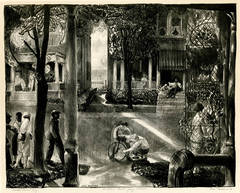
Sixteen East Gay Street
By George Wesley Bellows
Located in Fairlawn, OH
Signed by the artist and his printer Bolton Brown
Edition: 72
Provenance:
H.V. Allison & Co., Inc., New York (label)
References And Exhibitions:
This nostalgic scene o...
Category
1920s George Wesley Bellows Art
Materials
Lithograph
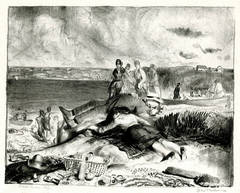
Legs of the Sea
By George Wesley Bellows
Located in Fairlawn, OH
Signed by the artist and his printer Bolton Brown
Edition: 53
Provenance:
H.V. Allison & Co., Inc., New York (label)
References:
Lauris Ma...
Category
1920s George Wesley Bellows Art
Materials
Lithograph
Top I
the World
By George Wesley Bellows
Located in Fairlawn, OH
Signed by the artist lower right "G.B."
Preliminary drawing for the frontispiece illustration of The Wind Bloweth by Donn Byrne
Exhibited:
Gallery of Modern Art, 1966
A C...
Category
1920s George Wesley Bellows Art
Materials
India Ink, Oil Crayon
George Wesley Bellows art for sale on 1stDibs.
Find a wide variety of authentic George Wesley Bellows art available for sale on 1stDibs. You can also browse by medium to find art by George Wesley Bellows in lithograph, graphite, pencil and more. Not every interior allows for large George Wesley Bellows art, so small editions measuring 8 inches across are available. Customers who are interested in this artist might also find the work of Fred Nagler, Frank Benson, and John Sloan. George Wesley Bellows art prices can differ depending upon medium, time period and other attributes. On 1stDibs, the price for these items starts at $3,500 and tops out at $55,000, while the average work can sell for $7,800.
Artists Similar to George Wesley Bellows
Questions About George Wesley Bellows Art
- 1stDibs ExpertApril 5, 2022George Bellows created paintings that focussed on realism. His oil paintings mixed urban studies with social and political themes, mainly centered around New York City. On 1stDibs, you can shop a selection of George Bellow’s pieces from some of the world’s top art dealers from the comfort of your home.
- 1stDibs ExpertApril 5, 2022Cliff Dwellers by George Bellows is a painting created in 1913 that’s meant to depict the explosive population growth that New York City was experiencing at the time. Specifically, the painting is of a hot summer’s day in New York City’s Lower East Side. On 1stDibs, find a variety of original artwork from top artists.